Quick Summary: Finding a truly family-raised puppy means asking breeders specific questions about daily care, socialization, health testing, and pickup plans. Good breeders provide clear, detailed answers about their routines, parent health, and socialization efforts, while dodging or vague responses are red flags. The first call helps identify responsible breeders who prioritize transparency, temperament, and long-term support, making your search for a healthy, well-adjusted puppy much easier.
That first breeder call often tells you more than a gallery of cute photos. If you are searching for family raised puppy breeders near me, you are likely trying to sort out one big question fast: is this a real home-based program, or just a polished listing with a puppy attached?
That is the hard part. Many breeders say puppies are raised in a family setting, but their answers can feel vague once you ask about daily care, parent dogs, health testing, social time, pickup, or delivery. A kind tone is not enough. Clear, direct answers matter.
This guide helps you know what to ask first, what strong answers sound like, and which replies should make you pause. If you have been comparing family raised puppy breeders near me, this will help you cut through the noise and focus on transparency, temperament, and fit.
At Sage Puppies, we speak with families in Utah, South Jordan, and across the country every week. We know how qualified buyers shop, what first-time owners worry about, and how to spot the difference between family raised puppy breeders near me and a rushed sale.
Ask What the Puppies Are Like Day to Day
Ask this early. A puppy’s daily life tells you more than a polished website ever will. According to the AVMA, puppies benefit from diverse, positive experiences during their socialization period, and those early exposures can help prevent fear later on AVMA’s socialization review.
Where are the puppies raised, and who handles them?
Start with the setting. You want a clear picture, not a vague answer like “they’re raised with love.”
Ask:
- Are the puppies in the home or in a separate kennel building?
- Who handles them each day?
- How often do adults and children interact with them?
- Do they spend time in normal family spaces?
A strong answer usually includes:
- Daily hands-on care
- Regular contact with one family or a small, known team
- Exposure to normal home routines
- Clean, calm spaces with room to rest and play
Watch for red flags:
- The breeder cannot explain the puppies’ daily schedule.
- Handling sounds rare or rushed.
- The puppies are mostly kept apart from household life.
If you want a family companion, ask whether the puppy is being raised like a future family dog right now.
What household experiences do they get before they go home?
This question shows whether the breeder is building confidence, not just keeping puppies alive until pickup. Early, safe socialization matters. The Ohio State guidance notes that the first 12 weeks are prime time for puppy socialization, with disease prevention and careful exposure balanced together Ohio State’s puppy socialization guide.
Ask for specific examples like:
- Vacuum sounds
- Kitchen noise
- Doorbells
- Gentle grooming
- Nail trims
- Crate introduction
- Car rides
- Different floor textures
- Calm visitors
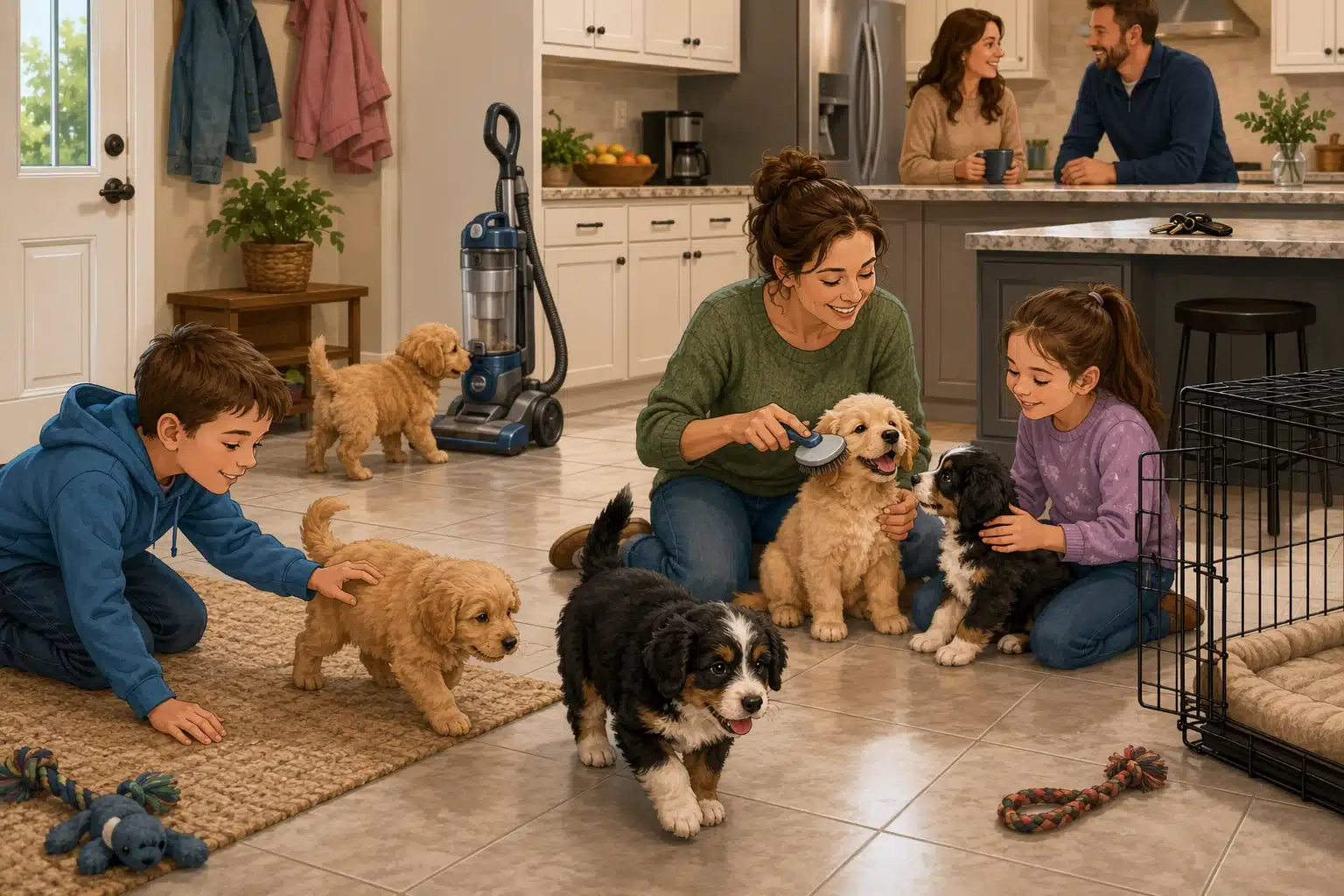
A helpful breeder should be able to say what the puppies have already seen, heard, and practiced.
| Good sign | Why it matters |
|---|---|
| Puppies hear normal household sounds | Less shock in a busy home |
| Puppies meet different people | Better adjustment with guests and kids |
| Puppies start grooming and crate routines | Easier transition after pickup |
How does the breeder describe each puppy’s temperament?
Ask how they match puppies to homes. Good breeders do not just say every puppy is “sweet.” They notice patterns.
Look for descriptions like:
- More cuddly than bold
- Quick to recover after a new sound
- Playful with siblings
- Gentle and observant with people
- More independent during play
Ask:
- How do you tell the puppies apart in personality?
- Which puppy fits a quieter home?
- Which puppy seems more easygoing with children?
A careful breeder describes temperament with real examples, not sales words.
That is one reason families often start with a breeder’s daily notes, videos, and honest guidance. If you are comparing programs, look for the same kind of clear, home-based detail Sage Puppies shares about puppy fit, family handling, and early preparation.
Confirm Health Testing and Veterinary Care
Ask for records, not promises. A good breeder should show you what was done for the parents and what care the puppies have already had.
What testing has been done on the parents?
Start here. Parent testing tells you more than a quick puppy exam ever can. Cornell notes that responsible breeders test for conditions recommended by the breed club and may also use DNA screening, eye exams, heart checks, or orthopedic screening depending on the breed Cornell veterinary guidance.
Ask these questions:
- Which tests were done on the sire and dam?
- Can I see the actual results, not just a summary?
- Were both parents cleared before breeding?
- Were any results “carrier” or “at risk”? If so, how was that handled?
Look for specifics like:
- Patella, eye, heart, or hip screening
- Breed-related DNA panels
- Dates and names on the reports
- Results for both parents, not one
“Vet checked” is not the same as health tested.
If you are looking at Havanese, Havapoo, or Cavapoo puppies, ask how the breeder tracks health across generations, not just one litter. That is usually where careful programs stand apart from casual breeding.
What veterinary care have the puppies already received?
Puppies should leave with a clear care record. VCA says most puppies begin exams, vaccines, and parasite care at 6 to 8 weeks, and vaccine series continue every 3 to 4 weeks until at or after 16 weeks.
Ask for a written list that includes:
- Date of each vet exam
- Deworming dates and product used
- Vaccines already given
- Any stool testing
- Microchip status, if done
- Food and feeding schedule
| Record to Request | Why It Matters | Good Sign |
|---|---|---|
| Vet exam note | Confirms baseline health | Dated paperwork |
| Vaccine record | Prevents missed or repeated shots | Clear next due date |
| Deworming history | Puppies often need repeat treatment | Multiple dates listed |
| Take-home instructions | Helps your first week go smoothly | Simple written guide |
If the breeder cannot hand you records the same day, slow down.
What should I expect for breed-related health and size?
Ask for the expected adult size range, coat type, and common health watch-outs for that mix or breed. Pure breeds tend to be more predictable in size and traits, while mixes can vary more, even within one litter.
Use this quick check:
- Havanese – small companion size, longer coat, sturdy but toy-sized
- Havapoo – small, often softer curl or wave, size may vary by Poodle parent
- Cavapoo – small companion build, often gentle temperament, size can range a bit more
Ask the breeder:
- What size were both parents?
- What health patterns have you seen in past litters?
- What should my own vet monitor as this puppy grows?
At Sage Puppies or any transparent family-raised program, you should expect calm answers, paperwork, and a clear handoff plan for your vet.
Also Read: Family-Raised Puppies for Sale Near Me: What to Look For
Ask About the Contract Before You Reserve
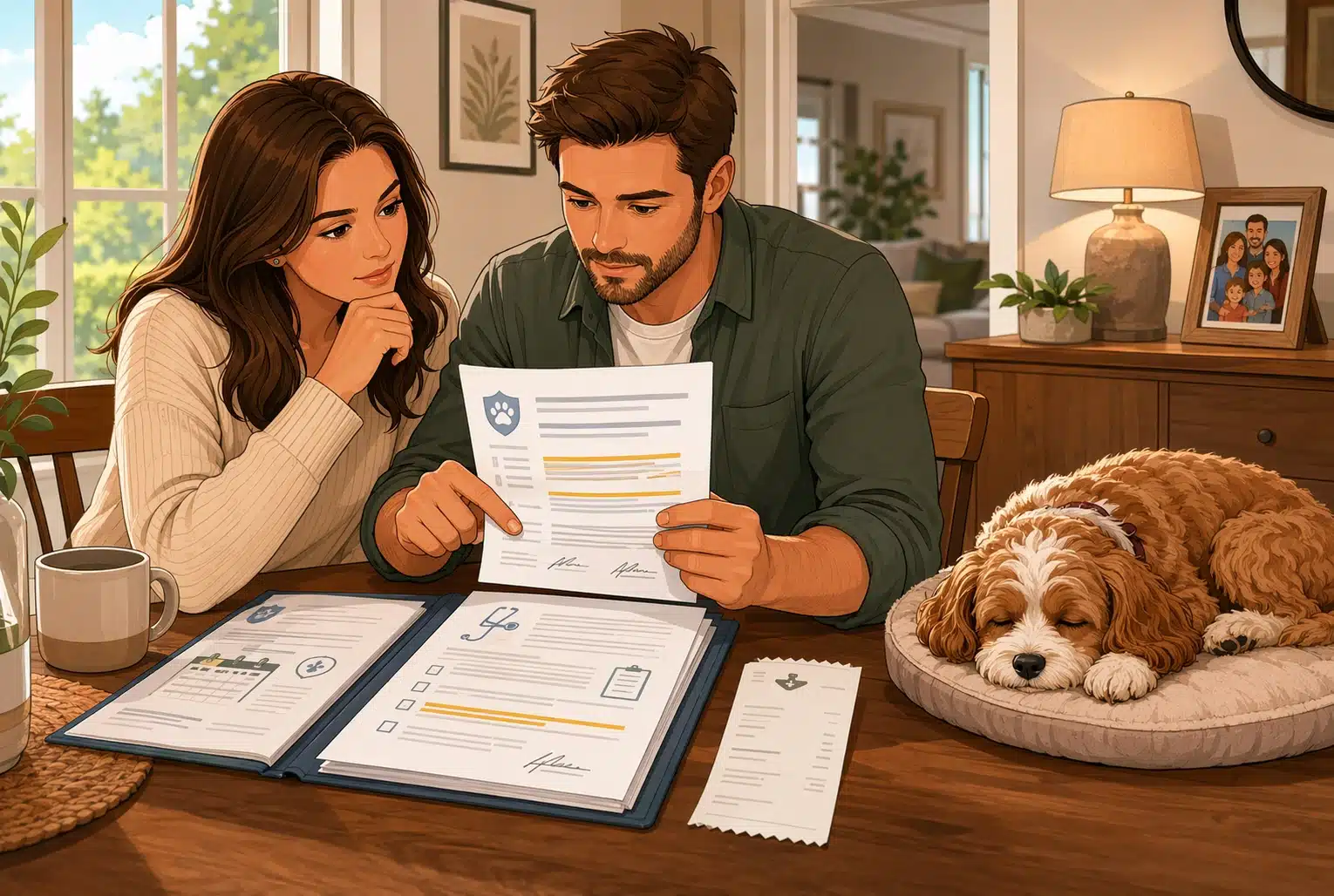
A good breeder should show you the contract before you send a deposit. If they dodge that step, slow down. The contract tells you what happens if the puppy gets sick, if your timing changes, and what both sides must do next. The AKC notes that the contract should be available for review before you decide to buy, not as a last-minute surprise, and some state buyer protection laws require clear written disclosures and remedies for health issues according to AKC guidance and Minnesota’s pet sale law summary.
What does the health guarantee actually cover?
Ask for plain words, not vague promises.
You want to know:
- What conditions are covered
- How long coverage lasts
- What proof is required
- What remedy applies if there is a problem
Many contracts cover certain congenital or hereditary issues, but not every future illness. Some also require you to take the puppy to your vet within a short window after pickup.
A health guarantee is only useful if you understand the deadline, the exclusions, and the exact next step.
| Question to ask | Why it matters |
|---|---|
| Does the guarantee cover genetic issues, infection, or both? | Coverage can be narrow |
| How soon must my vet exam happen? | Missing the deadline can void remedies |
| Is the remedy a refund, replacement, or credit? | Each option affects your decision |
| What records do you need from my vet? | You need the process in writing |
What happens if my plans change later?
Life changes. Good breeders plan for that.
Ask:
- Is the deposit refundable, partially refundable, or non-refundable?
- Can I move to a later litter?
- Is there a deadline to tell you?
- Do you require the puppy to come back to you if I cannot keep it later?
A strong contract protects the puppy first. That often means a return-to-breeder clause. For family-raised programs like Sage Puppies, that is usually a good sign. It shows they care where their puppies end up, not just that they got paid.
If a breeder has no clear plan for returns or rehoming, ask why.
What details should be in the contract right now?
Before you reserve, the contract should clearly list:
- Breeder and buyer names
- Puppy description or litter details
- Price and deposit terms
- Pickup or delivery terms
- Health records provided
- Spay-neuter or breeding terms, if any
- Return policy
- What happens if the breeder cannot provide the puppy
Read it line by line. If a term sounds slippery, ask for it in simpler words or in writing by email.
A clear contract does not feel pushy. It feels calm, direct, and fair.
Also Read: Family-Raised Puppies Near Me: Red Flags to Avoid
Understand Pickup, Delivery, and the Next Step
When is the puppy ready to go home?
Ask for a clear go-home date, not a rough guess. In most cases, puppies should stay with their litter long enough to be fully weaned and socially ready. USDA rules say dogs must be at least 8 weeks old and weaned before commercial transport, according to USDA APHIS guidance. Many companion puppies also benefit from staying a bit longer depending on size, confidence, and travel plans.
Use this quick check:
| Question | Good answer | Red flag |
|---|---|---|
| Exact age at pickup | Specific date | “Anytime now” |
| Eating on their own | Yes, consistently | Not sure |
| Ready for travel | Planned by puppy and family needs | Rushed to close sale |
If a breeder seems eager to send a tiny puppy home too fast, slow down.
How will pickup or delivery work for my family?
You want the handoff to feel organized, calm, and safe. Ask whether you will pick up in person, meet at an airport, or use a nanny or ground delivery. Then ask what your puppy will travel with, how long the trip will be, and what support you get that day. AVMA notes that interstate travel may require a certificate of veterinary inspection and that air travel plans should be checked early with the airline and vet, per AVMA travel guidance.

Ask for these details in writing:
- Pickup or delivery date
- Meeting location and timing
- Travel crate or carrier plan
- Paperwork included
- Feeding, potty, and comfort routine that day
A good breeder explains the trip in simple steps and does not leave you guessing.
Who can I contact after the puppy comes home?
This matters more than families think. Your first few days bring normal questions about sleep, food, potty breaks, and settling in. Ask who your contact person will be and how quickly they usually reply.
A helpful breeder should offer:
- A direct point of contact
- Basic go-home guidance
- Clear next steps if you have concerns
- Easy links to Available Puppies, Application, Pricing/Reservation, How It Works, and Delivery/Pickup
For Sage Puppies, this kind of after-home support should feel like part of the process, not an extra favor.
Also Read: 10 Signs a California Puppy Listing Is a Scam – Sage Puppies
Look for the Questions a Good Breeder Asks You
A good breeder should not sound like a cashier. They should sound careful.
If the first call feels easy because they ask almost nothing, pause. Responsible breeders screen buyers because they want the right match, not just a quick sale. The AKC notes that strong breeders ask about your living situation, schedule, children, other pets, and who will care for the puppy when screening homes.
Here is what a breeder should want to know about your home:
- Who is home during the day
- Whether you rent or own
- If you have kids, and their ages
- What pets already live with you
- How many hours the puppy will be alone
- What your plan is for training, exercise, and grooming
- Whether you want a calm lap dog or a more playful companion

| Good question from breeder | Why it matters | Green flag answer from breeder |
|---|---|---|
| Do you have children or other pets? | Safety and fit | They explain how they match temperament |
| How long will the puppy be alone? | Routine and stress | They care about daily life, not just pickup day |
| What is your housing setup? | Potty training, space, noise | They ask without judgment |
| What are you hoping for in a puppy? | Matching personality | They do not promise every puppy fits every home |
If a breeder never asks about your routine, they may not be thinking about the puppy’s long-term welfare.
A thoughtful breeder may also ask about your vet plan, training classes, and budget. The AKC says these are normal signs of careful placement, not pushiness when choosing the best homes.
For family-raised companion breeds like Havanese, Havapoos, and Cavapoos, this kind of screening is a good sign. It shows the breeder is protecting both sides.

If you want a breeder who welcomes smart questions, start with Sage Puppies. Their family-raised Havanese, Havapoo, and Cavapoo puppies come from a clear, home-based process with health-tested parents, early socialization, and straightforward pickup or delivery options. View Available Puppies, review Pricing and How It Works, then submit your application when the fit feels right.
Frequently Asked Questions
Q1: family-raised puppies for sale near me?
Ask where the puppies spend their day, who handles them, and how often they hear normal home sounds. A true family-raised program should explain daily routines, social time, parent dogs, health testing, and pickup or delivery steps without dodging.
Q2: What should I ask in the first call with a breeder?
Start with five basics:
- where puppies are raised
- how parents are screened
- what socialization starts early
- what goes home with the puppy
- how reservations work
Clear answers now save stress later.
Q3: How do I spot a breeder who is not truly family-raised?
Watch for vague answers, rush pressure, no details about parent temperament, and no clear process. If every puppy sounds identical, that is a red flag. Good breeders can describe each litter’s home setup, handling, and fit for different families.
Q4: Is local pickup better than delivery?
Not always. Pickup gives you face-to-face time. Delivery can still be a great option if the breeder explains timing, transport, handoff, and support. Ask for exact steps so you know how your puppy travels and arrives.
Q5: What makes Sage Puppies worth comparing first?
If you are looking in Utah or beyond, Sage Puppies stands out by focusing only on Havanese, Havapoo, and Cavapoo puppies, with a home-raised approach, health-tested parents, and a clear family-first process instead of a broad marketplace model.
Conclusion
The first call tells you a lot. If a breeder answers clearly about health testing, parent dogs, home raising, socialization, records, and pickup or delivery, you are likely in a much better place. If they dodge simple questions, rush payment, or avoid showing how puppies live, pause.
A good breeder should also ask you questions. Cornell notes that responsible breeders test for breed-related conditions, provide early socialization, and offer lifelong support in many cases, according to Cornell Veterinary Medicine. That standard matters for Havanese, Havapoo, and Cavapoo families alike.
Clear answers beat polished ads.
It also helps to remember that federal attention on dog exercise and socialization standards is still active, as shown in the 2026 USDA APHIS request for information. Ask better questions first, and the right breeder usually becomes obvious.