Havanese Puppy Cost Guide
How Much Does a Havanese Puppy Cost From a Reputable Breeder?
A well-bred Havanese puppy is more than a purchase price. The total reflects the care invested in the parents, responsible breeding decisions, veterinary support, early development, and the preparation that happens before a puppy joins your family.
Planning Range $3,000–$4,500+ for the puppy
First-Year Care Often $2,200–$6,300+
Biggest Variables Grooming, training, veterinary care, and delivery

The Quick Answer
What Should You Expect to Pay for a Havanese Puppy?
$3,000–$4,500+
For planning purposes, a Havanese puppy from a reputable, small-scale breeder will commonly fall within the several-thousand-dollar range. A boutique breeding program that invests heavily in parent care, health testing, veterinary oversight, early socialization, temperament evaluation, and family support may be toward the upper end of that range.
The puppy purchase price is only one part of the budget. Depending on your veterinarian, grooming schedule, training choices, supplies, insurance, and transportation, first-year ownership expenses can add approximately $2,200 to $6,300 or more.
Important: These are planning ranges, not a current price quote from Sage Puppies. Review the Pricing & Reservation page for current pricing, inclusions, and reservation details.
Understanding the Purchase Price
What Goes Into a Reputable Breeder’s Price?
Responsible breeders incur substantial expenses long before a puppy is available. The price is not simply based on a puppy’s appearance. It reflects the breeding program, parent dogs, professional care, puppy development, and support provided to each family.
1
Parent Health Testing
Responsible breeding begins with carefully selected parent dogs. Breed-relevant health screening, professional evaluations, genetic testing when appropriate, and ongoing veterinary care help breeders make more informed pairing decisions.
2
Pregnancy and Whelping Care
Breeders must prepare for prenatal care, nutrition, veterinary consultations, whelping supplies, monitoring, emergency contingencies, and the intensive supervision required during a puppy’s earliest days.
3
Puppy Veterinary Care
Depending on the program and puppy’s age, early care may include wellness examinations, age-appropriate vaccinations, deworming, microchipping, health records, and individualized veterinary recommendations.
4
Early Socialization
Thoughtful exposure to people, sounds, surfaces, household activities, handling, grooming tools, crates, and age-appropriate challenges requires daily planning and hands-on involvement.
5
Nutrition and Daily Care
Quality food, sanitation, laundry, temperature control, safe housing, enrichment materials, grooming products, and around-the-clock supervision are part of raising a healthy litter.
6
Family Support
A reputable breeder should provide clear communication, records, transition guidance, care information, and reasonable support as the puppy settles into its new home.

Cost Factor One
Parent Health Testing and Breeding Decisions
Health testing does not guarantee that a puppy will never experience a medical concern. It does, however, give a conscientious breeder additional information to use when evaluating potential parent dogs and planning a pairing.
When comparing breeders, ask which health evaluations were completed, why those tests were selected, and whether the results can be verified. A registration certificate or pedigree can provide useful background information, but it does not replace health screening.
- Ask for testing that is relevant to the Havanese breed and the individual parent dogs.
- Confirm that testing was completed before the breeding decision—not added after puppies were born.
- Look for a breeder who can explain the results without making unrealistic guarantees.
- Ask how temperament, structure, health history, and family suitability influenced the pairing.
Cost Factor Two
Veterinary Care Before Go-Home Day
Puppies require professional care and careful observation during the weeks they remain with the breeder. The exact services included can vary based on age, veterinary recommendations, local requirements, and the breeder’s program.
Families should receive clear information about what has already been completed and what remains due after the puppy comes home. Ask for dates, records, and instructions rather than relying on vague statements such as “all shots included.” Young puppies are generally not finished with their full vaccination series when they leave a breeder.
Questions to Ask
- Has the puppy received a veterinary wellness examination?
- Which vaccinations and deworming treatments have been completed?
- Is the puppy microchipped, and how is registration transferred?
- What records will be provided at pickup or delivery?
- When should the family schedule the first appointment with its own veterinarian?
Cost Factor Three
Early Socialization Is Labor-Intensive
Puppies do not become confident family companions through exposure alone. Good early development requires structured, age-appropriate experiences and close observation of how each puppy responds.
A thoughtful program may introduce puppies to household noises, different textures, gentle handling, grooming routines, crates, short separations, visitors, toys, problem-solving activities, and positive human interaction. The goal is not to overwhelm puppies or claim they are fully trained. The goal is to give them a thoughtful foundation for future learning.
First-Year Ownership Budget
How Much Does a Havanese Cost During the First Year?
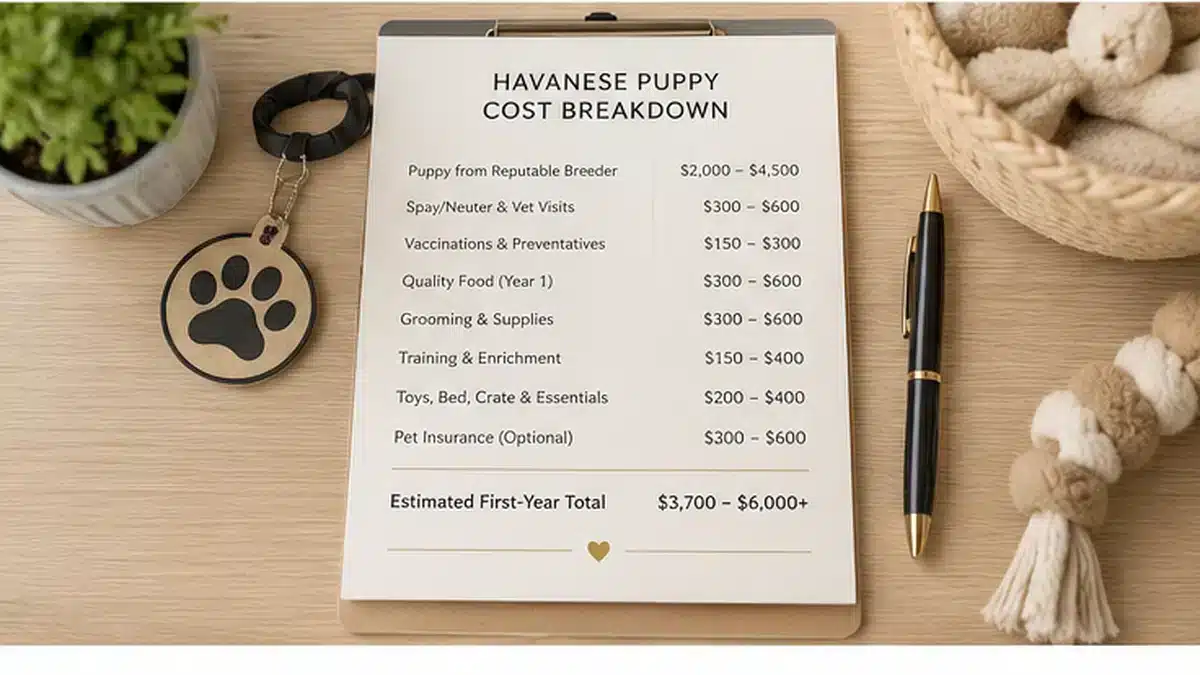
The first year is usually the most expensive because families are paying for both recurring care and one-time setup items. The ranges below are planning estimates and will vary by location, veterinary recommendations, product choices, training needs, grooming frequency, and whether transportation is required.
| Expense | Planning Range | What It May Include |
|---|---|---|
| Havanese puppy | $3,000–$4,500+ | Breeder program, parent care, health screening, early development, veterinary care, records, and family support |
| Initial veterinary care | $300–$800+ | New-puppy examination, remaining vaccine appointments, parasite screening, and veterinarian-recommended care |
| Routine veterinary care | $300–$700+ | Wellness care, preventatives, follow-up visits, and routine testing based on location and lifestyle |
| Initial supplies | $350–$800+ | Crate, exercise pen, bed, bowls, harness, leash, identification, grooming tools, gates, cleaners, toys, and travel equipment |
| Professional grooming | $450–$1,200+ | Regular grooming appointments based on coat length, condition, local rates, and home maintenance |
| Food and treats | $300–$700+ | Quality food, training treats, chews, supplements when veterinarian-recommended, and feeding accessories |
| Training and enrichment | $200–$1,200+ | Puppy classes, private lessons, online programs, enrichment toys, and structured social experiences |
| Pet insurance | $300–$900+ | Optional accident-and-illness coverage; premiums and exclusions vary considerably |
| Delivery or travel | Varies | Local pickup, family travel, flight nanny, ground delivery, lodging, carrier, or airline-related expenses |
| Estimated first-year care excluding puppy price | $2,200–$6,300+ | The total depends heavily on grooming, training, veterinary care, insurance, and transportation choices |
These figures are for general budgeting only. They are not a veterinary estimate, insurance quote, delivery quote, or guarantee of future expenses. Spay or neuter costs are not included because timing, recommendations, and breeder agreements can differ.
Ongoing Havanese Expenses
Grooming, Supplies, Training, and Daily Care
Havanese dogs are known for their soft, continuously growing coats. Even when a Havanese is kept in a shorter puppy trim, coat care is an ongoing part of ownership. Families should budget for professional grooming, at-home brushing, combs, shampoo, nail care, ear care, and replacement tools.
Training is another meaningful investment. Puppy classes or private instruction can help families establish routines for house training, crate comfort, handling, recall, leash skills, polite greetings, and calm behavior.
Good supplies do not need to be luxurious, but they should be safe, correctly sized, and appropriate for a small puppy. Spending strategically on a secure crate, exercise pen, washable bedding, quality grooming tools, and safe containment can prevent frustration later.
Why Prices Differ
Factors That Can Change a Havanese Puppy’s Price
Breeding Program
Small, hands-on programs may have higher per-puppy costs because they produce fewer litters and invest more individual time in parent dogs, puppies, communication, and development.
Health and Veterinary Investment
The extent of parent testing, professional care, prenatal monitoring, emergency readiness, puppy examinations, microchipping, and records can influence program expenses.
Age and Preparation
An older puppy that has remained with the breeder for additional training or development may have a different price than a puppy leaving at the program’s standard go-home age.
Training Foundations
Structured crate work, grooming preparation, handling exercises, name recognition, or more advanced training requires additional professional time and resources.
Transportation
Delivery is typically separate from the puppy price. Costs may vary depending on distance, travel dates, flight arrangements, ground transportation, and the level of personal service.
Current Availability
Availability, litter timing, and program demand may influence wait times and reservation procedures. Families should avoid breeders who use artificial urgency or pressure tactics.
Color should not be treated as a measure of quality. Coat color may affect family preference or availability, but it does not determine health, temperament, suitability, or the quality of a breeding program.
Compare the Whole Program
Do Not Choose a Breeder Based on Price Alone
The lowest advertised price may omit important information, while the highest price does not automatically indicate responsible breeding. Evaluate what the breeder does, what documentation is available, how puppies are raised, and how clearly the program communicates.
A responsible breeder should be willing to answer practical questions without rushing you into a deposit. You should understand the application process, reservation terms, expected timeline, veterinary records, parent information, delivery or pickup plan, and what happens if the timing is not right.
Parent Information Can you review the parents, health information, temperament, and reason for the pairing?
Transparent Process Are the application, reservation, payment, selection, and go-home steps clearly explained?
Real Communication Can you speak with the breeder, ask questions, and receive current photos or video?
Written Records Will you receive agreements, veterinary records, care information, and clear policies?
Early Development Can the breeder explain what puppies experience before go-home day?
Safe Transportation Are pickup and delivery methods explained with attention to timing, comfort, and safety?
Be Cautious With Unusually Low Prices
A price far below comparable breeders may indicate missing health information, limited veterinary care, unsafe payment practices, a high-volume seller, or an outright puppy scam. A lower price is not proof of wrongdoing, but it should lead to more questions—not fewer.
Never send money until you have verified the breeder, reviewed the process, understood the agreement, and confirmed that the puppy and seller are real.
Value Beyond Go-Home Day
What Are You Really Paying For?
When families purchase from a responsible breeder, they are paying for the work that happens before the puppy is born, the care provided during the litter’s development, and the support that helps make the transition successful.
The strongest programs do not rely on vague claims or expensive branding alone. Their value is visible in their planning, records, parent care, puppy environment, communication, policies, and willingness to help families make an informed decision.
A Havanese puppy is a long-term commitment. Spending time evaluating the breeder and planning for the full first-year budget is more important than focusing only on the initial deposit or purchase price.
Havanese Puppy Cost FAQs
Frequently Asked Questions
How much does a Havanese puppy cost from a reputable breeder?
A practical planning range is approximately $3,000 to $4,500 or more, depending on the breeder’s program, parent care, health testing, veterinary investment, early development, training, location, and included services. Check the breeder’s current pricing rather than relying on an older article or advertisement.
Why are Havanese puppies so expensive?
A responsible breeder’s costs begin before a litter is born. Parent health screening, veterinary care, breeding expenses, prenatal care, whelping preparation, quality nutrition, sanitation, puppy veterinary care, socialization, supplies, records, and family support all contribute to the price.
What should be included in the price of a Havanese puppy?
Inclusions vary by breeder. Ask specifically about veterinary examinations, vaccinations, deworming, microchipping, records, agreements, transition supplies, early development, support, and any health-related policies. Do not assume that every breeder includes the same services.
How much should I budget for a Havanese during the first year?
In addition to the puppy price, a planning budget of approximately $2,200 to $6,300 or more may be appropriate for veterinary care, supplies, food, grooming, training, insurance, and other expenses. Transportation can add additional costs.
Does a more expensive Havanese puppy guarantee better health?
No. Price alone cannot guarantee health, temperament, or breeder quality. Families should evaluate parent testing, veterinary records, breeding practices, puppy care, transparency, agreements, and communication rather than assuming that a higher price automatically means a better puppy.
Is delivery included in the Havanese puppy price?
Delivery is often priced separately because the cost depends on distance, travel arrangements, timing, and the delivery method. Ask for a written delivery estimate and a clear explanation of how the puppy will travel safely.
Meet Your Future Companion
Explore Available Havanese Puppies
Review our available puppies, learn how our reservation process works, and take the next step when the timing and puppy are right for your family.