A puppy traveling from Utah to Alabama needs more than proof of a vet visit. The Puppy Health Certificate should identify that exact puppy, show the exam date, and match the vaccine details needed for travel.
Buyers often see a form and assume it covers every health question. It does not. A Vet Certificate Puppy document may meet travel needs while leaving gaps in parent testing, records, or puppy identity.
This guide gives you a practical Puppy Health Checklist for reviewing each Puppy Health Certificate. You will learn what names, dates, vaccines, and vet details must line up before pickup or delivery. Sage Puppies raises Havanese, Havapoo, and Cavapoo puppies in South Jordan, Utah, with clear records for families planning an Alabama arrival.
1. Identify the Document You Are Actually Receiving
Certificate of Veterinary Inspection Versus a Wellness Note
Ask for the document name before you pay a balance. A Puppy Health Certificate for travel is usually a Certificate of Veterinary Inspection, or CVI. It identifies the puppy, exam date, vet, and travel fitness. A wellness note may list a routine visit, but it is not the same travel record.
| Document | What it shows | What it does not replace |
|---|---|---|
| CVI or health certificate | A vet exam tied to shipment or travel | Parent health testing |
| Wellness note | A general clinic visit | A current travel document |
| Vaccine record | Doses given and dates | A vet’s travel clearance |
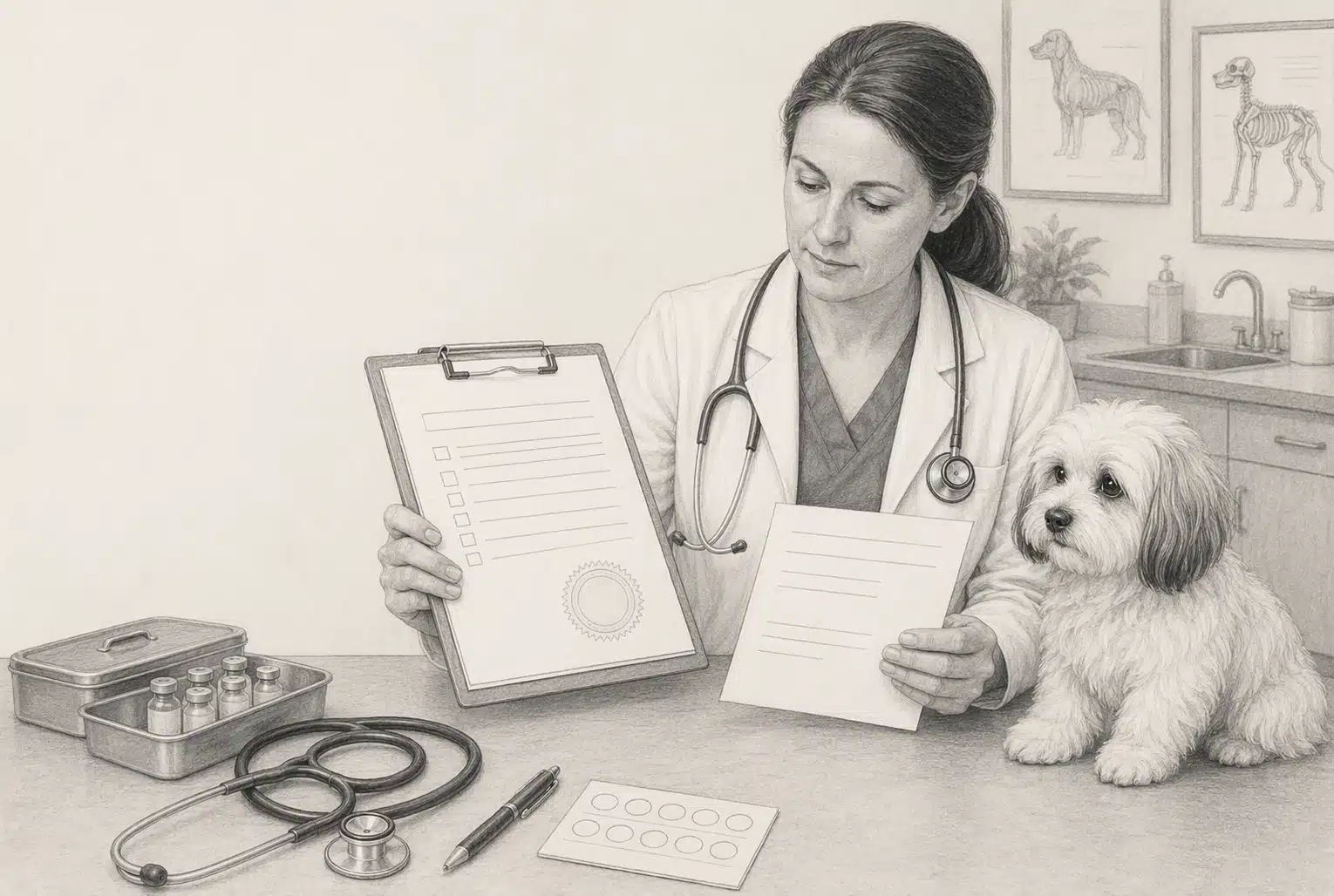
Match the puppy’s sex, breed, color, microchip number, and exam date to the puppy you are bringing home.
Why the Old APHIS Form 7001 Can Be a Warning Sign
APHIS Form 7001 is not automatically bad. USDA still lists it for some travel uses, including cases where an airline accepts it. But it is not a universal proof of health or a substitute for the destination’s required form. APHIS says each country sets its own certificate rules.
- Ask why this form was used.
- Confirm the issuing vet signed and dated it.
- Check whether Alabama, your airline, or your delivery plan needs something else.
What the Certificate Is-and Is Not-Proving
A Puppy Health Certificate shows that a veterinarian examined the named puppy on a specific date. It does not prove lifelong health, sound breeding, or that parents passed breed-relevant testing.
Ask separately for:
- The full vaccine and deworming record.
- The rabies record, if age and travel rules make it relevant.
- Parent test results and clear answers on family health history.
Treat the certificate as one time-stamped piece of evidence, not the whole health picture.
Also Read: Havanese, Havapoo & Cavapoo Puppy Care Blog
2. Match Every Identification Detail to the Puppy in Front of You
Compare the Puppy Description, Birth Date, and Sex
Read the certificate while the puppy is beside you. Confirm the breed or mix, sex, color, markings, and date of birth match the puppy and the breeder’s records. A fluffy coat can change as a puppy grows, but a wrong sex, birth date, or major marking is not a small typo.
The USDA health certificate form includes these identity details for a reason. APHIS warns that mismatched animal identification across documents can delay travel.
- Ask for a corrected document before pickup or delivery.
- Compare every date with the vaccine record and sales agreement.
A health certificate belongs to one specific puppy, not simply to the litter.
Verify the Microchip, Tag, or Other Permanent Identifier
Ask the breeder to scan the microchip in front of you. Write down the full number and compare it character by character with the health certificate, vaccine record, and any lab results.
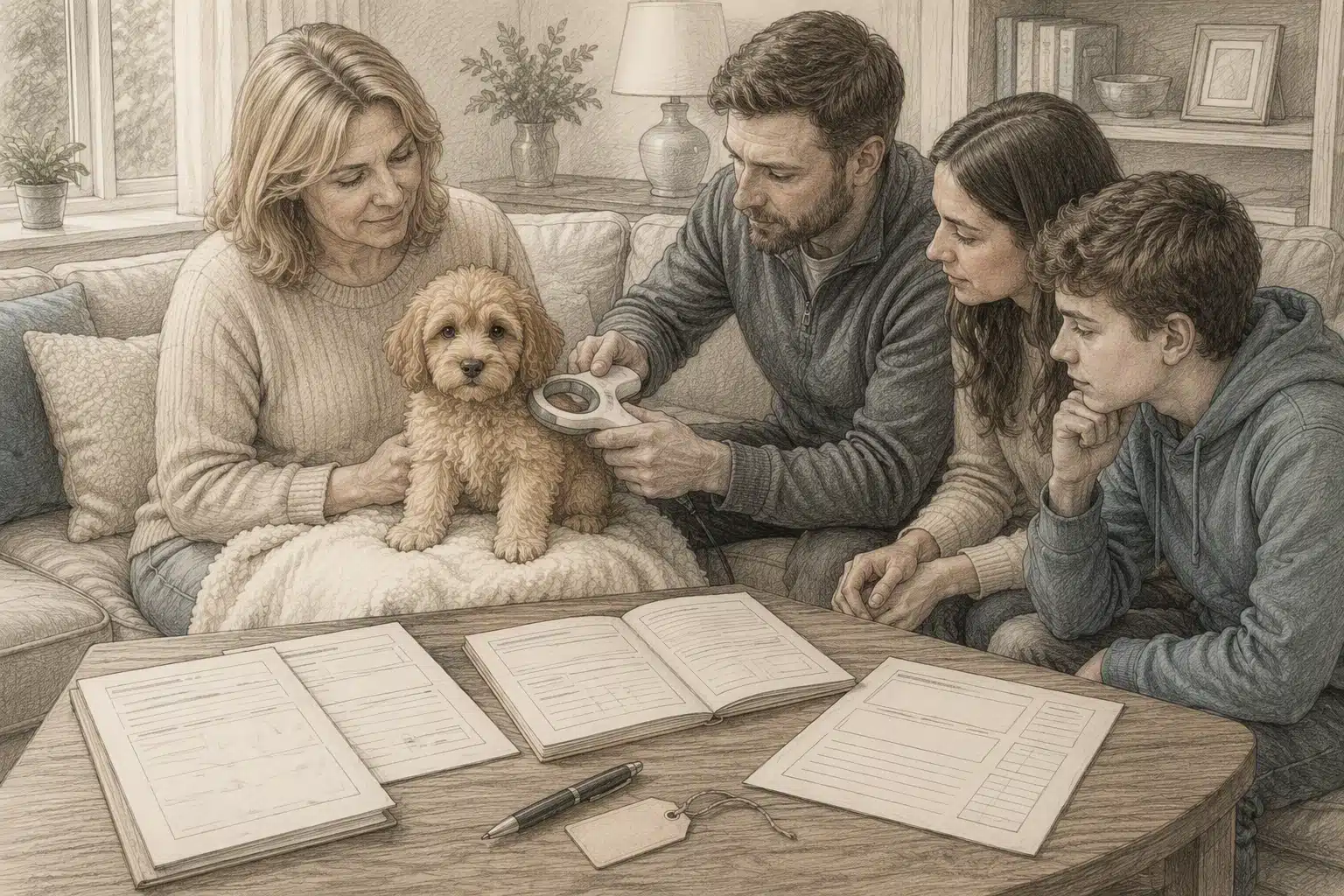
USDA guidance tells veterinarians to scan the chip rather than rely only on paperwork. Its certificate training also lists microchip number, sex, breed, age, and markings as key identifiers.
- Confirm the scanner reads a live chip.
- Keep a photo of the number with your puppy file.
- If no chip is listed, ask what identifier links the records.
Check Consignor, Consignee, and Destination Information
The consignor should identify the person or business sending the puppy. The consignee should be you, or the adult receiving the puppy. Check the destination address, phone number, and travel route before the puppy leaves.
A spelling slip may be fixable. A different buyer, city, or breeder needs a clear answer and corrected paperwork.
Do not accept a certificate that appears copied from another family’s shipment.
Also Read: 10 Must-Ask Questions Before Buying a Puppy Locally
3. Check the Veterinarian, Examination Date, and Certificate Validity
Confirm the Issuing Veterinarian Is Authorized
Ask for the clinic name, veterinarian’s full name, license details, and contact number. Then call the clinic using a number you find independently. Confirm the vet examined this puppy and issued the CVI.
Alabama requires an official CVI for dogs entering the state. It must come from an accredited veterinarian, not a breeder-created health form. Alabama’s dog entry rules also require rabies proof once a dog reaches three months old.
- Match the puppy’s breed, sex, color, and ID to your records.
- Ask whether the practice can verify the document.
A real clinic should confirm the appointment and veterinarian without hesitation.
Read the Examination and Travel Dates Together
The exam date proves when the vet saw the puppy. The travel or issue date must fit your pickup or delivery plan. Do not accept a certificate completed well before the puppy travels.
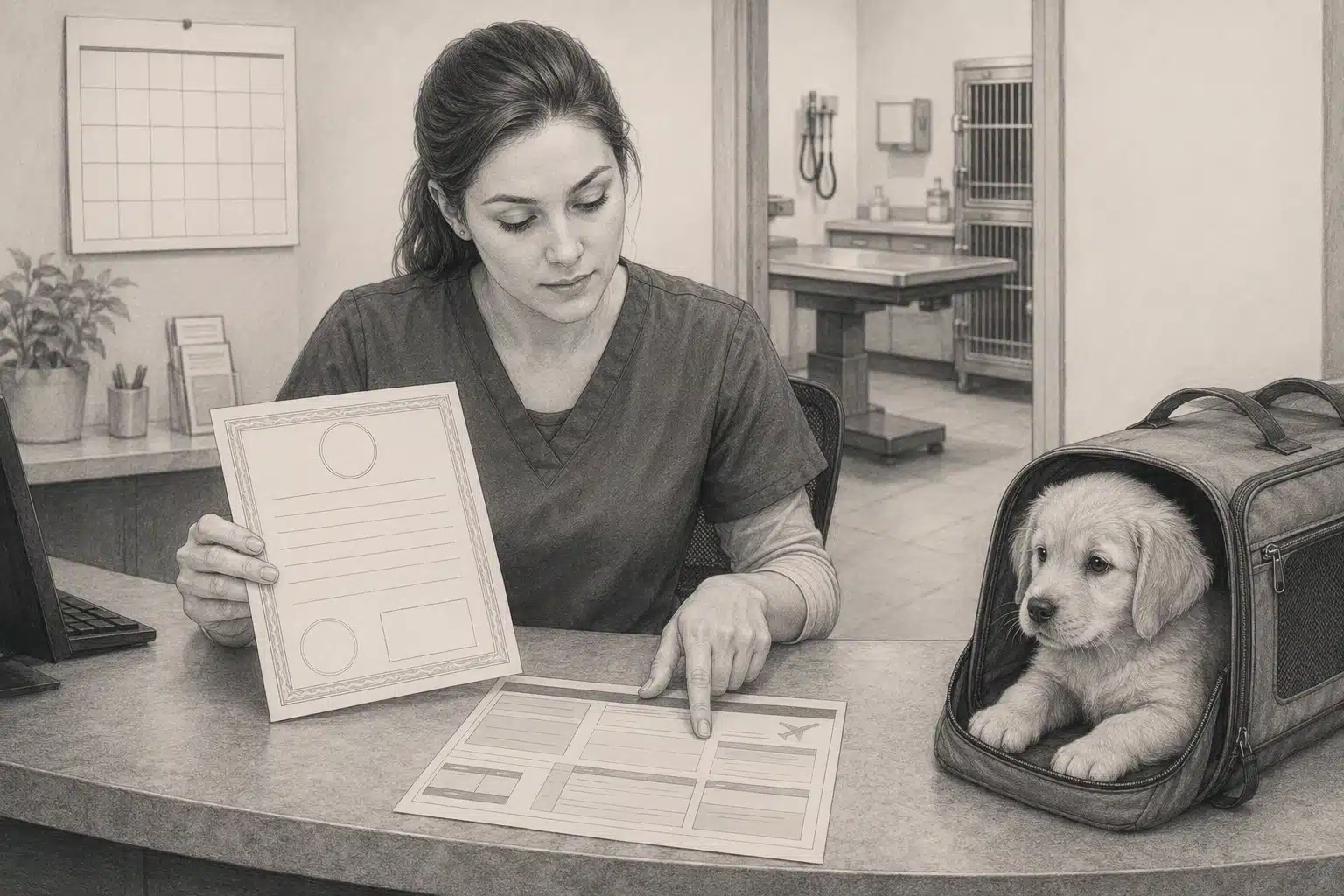
Check these details side by side:
| Item | What to verify |
|---|---|
| Examination date | It is close to the planned Alabama arrival |
| Issue date | It matches or follows the exam |
| Travel date | It is within the certificate’s valid period |
| Rabies record | It applies if the puppy is three months or older |
Look for Legibility, Completeness, and Corrections
Read every field before you pay the final balance. Names, addresses, puppy details, rabies data, exam findings, vet signature, and certificate number should be clear.
- Reject blurry scans, missing signatures, or altered dates.
- Ask for a newly issued document if a correction is unclear.
- Keep the original and a phone copy during travel.
A CVI supports legal travel. It does not replace parent health testing, vaccine records, or your own new-puppy vet visit.
Also Read: Health-Tested Puppies for Sale Near Me: A Buyer Safety Guide
4. Verify Rabies Documentation Without Assuming Every Puppy Should Already Be Vaccinated
Start With the Puppy’s Age at Entry
Ask for the puppy’s date of birth before asking for a rabies record. A young puppy may not yet be due for rabies vaccination. That alone is not a red flag.
For an Alabama delivery or pickup, confirm the receiving-state rules with the breeder and your vet. USDA APHIS notes that pet entry rules vary by destination state.
A missing rabies certificate can be normal for an age-appropriate puppy. A breeder who cannot clearly explain the plan is not.
Match the Rabies Certificate and Tag
If the puppy has received rabies vaccine, request a clear copy of the certificate. Check that these details agree:
| Item | What to verify | Why it matters |
|---|---|---|
| Puppy identity | Name, breed, sex, color, microchip if listed | Confirms it covers your puppy |
| Vaccine date | Date matches the puppy’s age | Flags timing errors |
| Vet details | Clinic name, signature, and license details | Shows a real veterinary record |
| Tag number | Matches the tag or record provided | Connects the tag to the certificate |
A tag is helpful, but it is not proof by itself. Keep the certificate with your health records and bring it to your first vet visit.
Do Not Confuse Core Puppy Vaccines With Rabies Proof
DHPP or similar puppy shots protect against diseases such as parvo and distemper. They do not replace a rabies certificate.
Ask for both records separately:
- A dated puppy vaccine log
- A rabies certificate, if the puppy is old enough and vaccinated
- The veterinarian’s plan for any vaccines still due
A Certificate of Veterinary Inspection is travel paperwork, not automatic proof of every vaccine. APHIS explains that a CVI documents movement details and animal information when required.
Also Read: 10 Adorable Havapoo Colors You Need to See (2026)
5. Use the Puppy Health Checklist to Evaluate the Rest of the Record
A travel health certificate is only one snapshot. Use the rest of the file to see whether the puppy’s care is clear, dated, and easy to confirm.
Review Vaccines, Deworming, and Parasite Notes
Check each entry for the date, product name, dose, and clinic or veterinarian. A puppy vaccine series usually starts at 6-8 weeks and continues through at least 16 weeks, so a young puppy is not fully protected yet, according to the AVMA vaccine guidance.
- Match every date to the puppy’s age.
- Ask what dewormer was given and when.
- Note any fecal test, flea, tick, or heartworm notes.
Read the Examination Findings and Disclosures
Look past a simple “healthy” mark. The exam should address eyes, ears, heart, lungs, skin, bite, abdomen, joints, and any concern found that day.
| Record detail | What to verify |
|---|---|
| Puppy ID | Matches the puppy you are bringing home |
| Exam date | Fits the travel or pickup timeline |
| Finding or concern | Written clearly, not explained only by phone |
| Treatment plan | Names, dates, and follow-up advice |
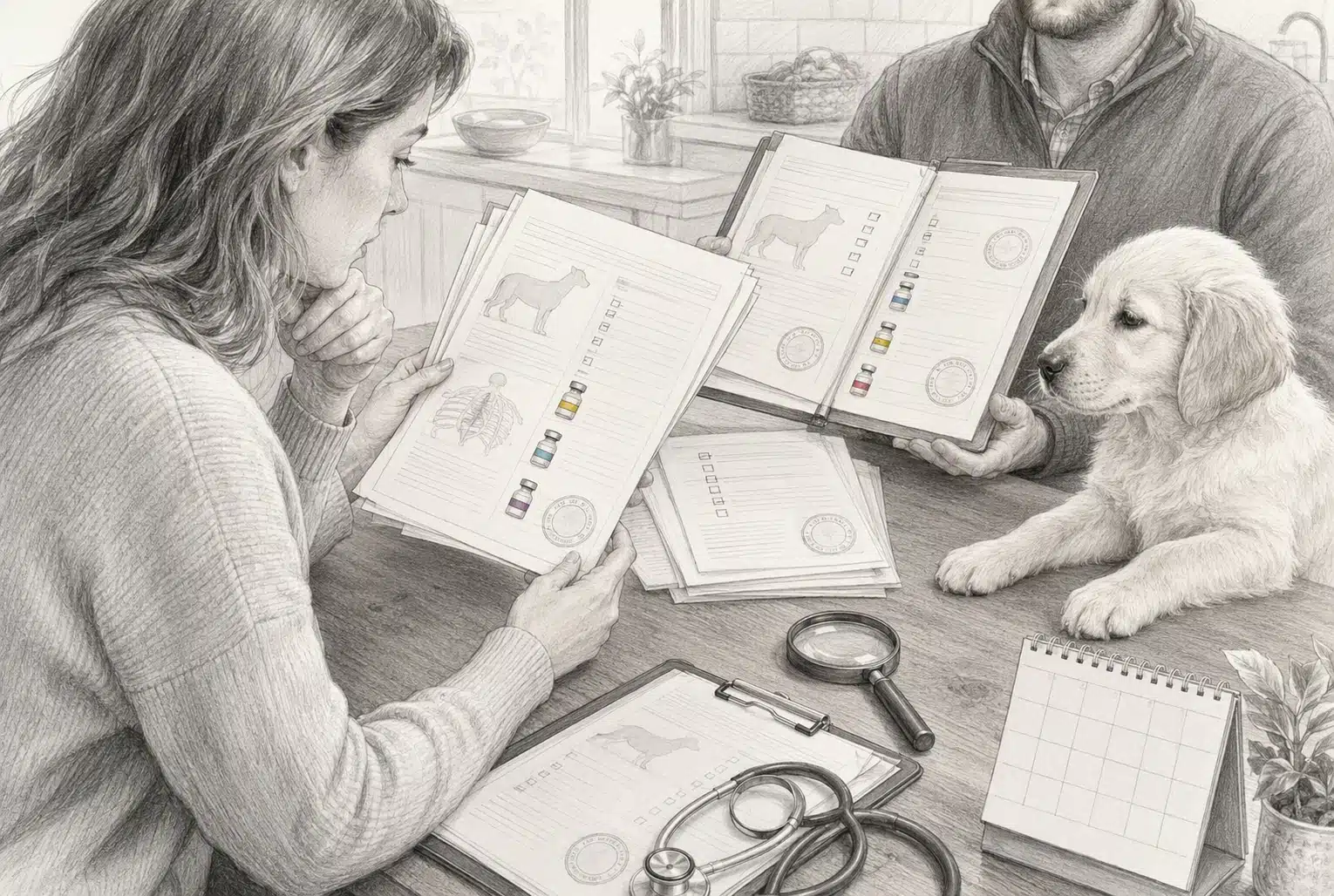
A disclosure is not always a deal-breaker. A vague answer, missing record, or refusal to share details is.
Plan the Independent Post-Arrival Examination
Book your own veterinarian before pickup or delivery. Bring every record and ask for a full exam, including a fecal test if your vet advises it. A hands-on exam helps your veterinarian make sound care decisions and establish a care relationship, as AVMA explains.
- Schedule promptly after arrival.
- Save photos of all documents.
- Ask your vet to set the next vaccine and parasite plan.
Also Read: Puppy Mill Laws in Alabama: What Buyers Need to Know
6. Verify the Parents’ Health Testing Separately From the Puppy Certificate
A puppy health certificate shows a recent exam. It does not prove the parents were screened before breeding.
Ask for the Sire and Dam by Identifiable Name
Ask for each parent’s registered name, breed, date of birth, and permanent ID if available. “Our healthy mom and dad” is not enough to verify records.
Use those details to match reports, not just screenshots. Check that the names, test dates, and sex match the parent described.
- Ask who performed each test.
- Request the full result, not a summary.
- Confirm the tested dog is the puppy’s actual sire or dam.
A breeder who shares parent records early makes it easier for you to make a calm, informed choice.
Use OFA and Breed-Specific Protocols as Verification Tools
Search both parents in the OFA database and breed screening guidance. OFA records can include hips, patellas, eyes, heart, and DNA-based results.
The right panel differs by breed and mix. A Cavapoo needs sound evidence from both Cavalier King Charles Spaniel and Poodle lines. A Havapoo needs Havanese and Poodle records.
| What to check | What it tells you |
|---|---|
| Parent identity | The report belongs to that dog |
| Test type and date | The screen fits the risk and was done at a useful age |
| Public result | You can verify the claim yourself |
A CHIC number means a dog completed its breed club’s listed screens with results made public, but it is not a promise that every result was normal. OFA explains the distinction.
Interpret DNA Results Without Overreading ‘Clear’
“Clear” applies only to the gene variants tested. It does not rule out every inherited condition, heart issue, joint problem, or future illness.
Ask which condition each DNA result covers and how the breeder paired the parents. A carrier is not automatically a poor parent. A careful match can avoid affected puppies.
- Look for DNA results beside physical exams.
- Treat missing reports as missing information.
- Ask direct follow-up questions before reserving.
7. Recognize Red Flags and Know When to Pause the Purchase
Document and Identity Red Flags
Pause if the puppy’s name, sex, color, microchip number, breeder name, or exam date differs across records. A health certificate should be complete, signed by the veterinarian, and match the puppy you are bringing home.
- Blurry screenshots instead of readable records
- A clinic name with no way to confirm it
- Pressure to pay before you can review documents
A Certificate of Veterinary Inspection is travel paperwork, not proof of lifelong health. Alabama requires an official certificate for dogs entering the state. Review Alabama’s dog entry guidance.
Timing and Vaccination Red Flags
Check dates against the pickup or delivery date. A certificate issued long before travel may not fit the trip. For puppies under three months, rabies vaccination is not required for Alabama entry. A breeder should explain that clearly, not add a false rabies record.
- Vaccine dates that predate the puppy’s birth date
- Missing vaccine product, lot number, or clinic details
- A rushed delivery plan with no current exam record
Transparency and Parent-Testing Red Flags
Walk away if a breeder will not discuss the parents, share test results, or answer plain health questions. Ask what was tested, which parent received each result, and how the breeder uses those results in pairing decisions.
| Breeder response | What it may signal |
|---|---|
| Shares records and explains them | Open, buyer-first process |
| Says testing is “private” | Reason to pause |
| Avoids live questions about the puppy | Verify before reserving |
Also Read: Puppies for Sale in Alabama: Find Responsible Local Breeders
8. Complete Your Alabama Buyer Verification Before Pickup or Delivery
Before You Reserve or Schedule Travel
Ask for the puppy’s draft health record, parent test results, and the veterinarian’s name before you send a reservation payment. Confirm the puppy’s date of birth, microchip number if used, and travel date match every record.
For puppies entering Alabama, an official CVI is required. Puppies under three months may enter without rabies vaccination, according to the Alabama Department of Agriculture.
- Verify the veterinarian signed the certificate.
- Ask which original documents come with the puppy.
- Keep copies in one folder.
A health certificate supports travel. It does not replace parent health testing or your own veterinary exam.
At Handoff and During the First Veterinary Visit
At pickup or delivery, compare the puppy to each document. Check sex, color, date of birth, microchip number, vaccine dates, deworming record, and CVI issue date.
| Check | What should match |
|---|---|
| Puppy identity | Sex, markings, microchip number |
| CVI | Vet, exam date, destination |
| Health record | Vaccine and deworming dates |
Book your Alabama veterinarian promptly and bring every paper. Ask them to review the record and examine the puppy.
If names, dates, or details conflict, pause and ask for a clear written correction.
A Calm Next Step With Sage Puppies
Sage Puppies helps families plan pickup or nationwide delivery from South Jordan, Utah with clear records and thoughtful communication. Review available Havanese, Havapoo, and Cavapoo puppies, then submit an Application when the fit feels right. Ask your document questions early. A careful breeder will welcome them.

Choose a breeder who welcomes careful questions about records, dates, and parent health testing. Sage Puppies offers home-raised Havanese, Havapoo, and Cavapoo puppies with a clear, family-first process. View available puppies or begin an application with confidence.
Frequently Asked Questions
Q1: What health tests must Alabama puppy sellers provide for parents?
Ask for breed-relevant parent records, such as eye, heart, patella, and DNA results. The exact tests vary by breed. A seller should explain each result and identify both parents.
Q2: How do I verify a puppy’s rabies vaccination certificate in Alabama?
Check the puppy’s name, vaccine date, vet clinic, vaccine maker, and due date. Call the clinic using its public number. Puppies too young for rabies vaccination should have a clear plan.
Q3: What red flags should I watch for in Alabama puppy health certificates?
Watch for altered dates, missing vet details, a generic puppy description, or no exam findings. A rushed seller who will not let you call the vet is also a concern.
Q4: Does a health certificate prove the puppy is healthy?
No. It shows a vet examined the puppy on a specific date. Review parent testing, vaccine records, growth notes, and the breeder’s answers too.
Q5: Should an out-of-state puppy have Alabama paperwork?
For travel into Alabama, ask about the interstate health certificate and its valid travel dates. Keep copies before delivery or pickup.
Conclusion
A health certificate helps a puppy travel legally. It does not replace proof of careful breeding. Verify that the puppy’s name, breed, age, vet, exam date, and travel dates match every record. For puppies entering Alabama, the state requires an official CVI, with rabies proof when age requires it, according to Alabama Animal Industries. Ask for parent health testing and clear answers, too. A breeder who welcomes these checks gives your family a far stronger start.