
A South Jordan condo, Salt Lake City high-rise, or compact apartment can suit either breed. A Havacavapoo often fits tighter spaces and moderate routines a bit better. A Cavapoo may suit families who want a slightly sturdier, more social companion. Neither is guaranteed quiet or ready for a full workday alone.
Families comparing Apartment Dog Breeds need more than a small-dog label. They need a puppy that can settle indoors, handle elevators, and cope with hallway sounds.
This guide weighs Cavapoo Barking Tendencies, energy, potty needs, and a careful Havacavapoo Size Comparison. At Sage Puppies, we help families assess parent size and each puppy’s temperament, because responsible choices about Apartment Dog Breeds start there.
Cavapoo vs Havacavapoo: Apartment Living at a Glance
| Cavapoo | Havacavapoo | |
|---|---|---|
| Apartment footprint | Small, but adult size varies with Poodle parent | Often compact; adult size depends on all parent lines |
| Daily energy and enrichment | Moderate; needs walks, play, and mental activity | Moderate; short walks, play, and training can work well |
| Barking and shared-wall fit | Often manageable; alert or separation barking still possible | May settle well, but alert and social barking remain individual |
| Alone-time considerations | People-focused; gradual independence training is important | Highly companion-oriented; independence must be built thoughtfully |
| Potty and routine logistics | Scheduled breaks are especially important during puppyhood | Frequent, predictable breaks help a small puppy succeed |
| Best apartment match | Families wanting a social, sturdy-feeling companion with a consistent routine | Families wanting a compact companion and flexible, engaged indoor routine |
How Cavapoo and Havacavapoo Compare
Cavapoo
A Cavapoo blends a Cavalier King Charles Spaniel and Poodle. It suits apartment families who want a cuddly, social dog with moderate daily needs. Among apartment dog breeds, size and barking habits still vary by puppy and home routine.
Havacavapoo
A Havacavapoo combines Havanese, Cavalier King Charles Spaniel, and Poodle lines. It may fit families seeking a compact, affectionate companion for a smaller home. This mix needs close attention to each puppy’s confidence, voice, and comfort with alone time.
Apartment Footprint and Real-World Space
Why Adult Size Matters More Than Puppy Size
A tiny puppy can fit in one arm. Your adult dog must fit into your daily routine.
Cavapoos and Havacavapoos can vary because they are mixes. Ask for the parents’ adult weights, heights, and photos. This gives you a more useful range than a puppy’s current size. The Havanese parent is a small dog, with an ideal height of 9 to 10.5 inches, according to the AKC breed standard.
| Space question | What to check |
|---|---|
| Sleep area | Room for an open crate away from foot traffic |
| Play space | Clear floor for a short toss-and-return game |
| Walkway | Your dog can pass without squeezing around furniture |
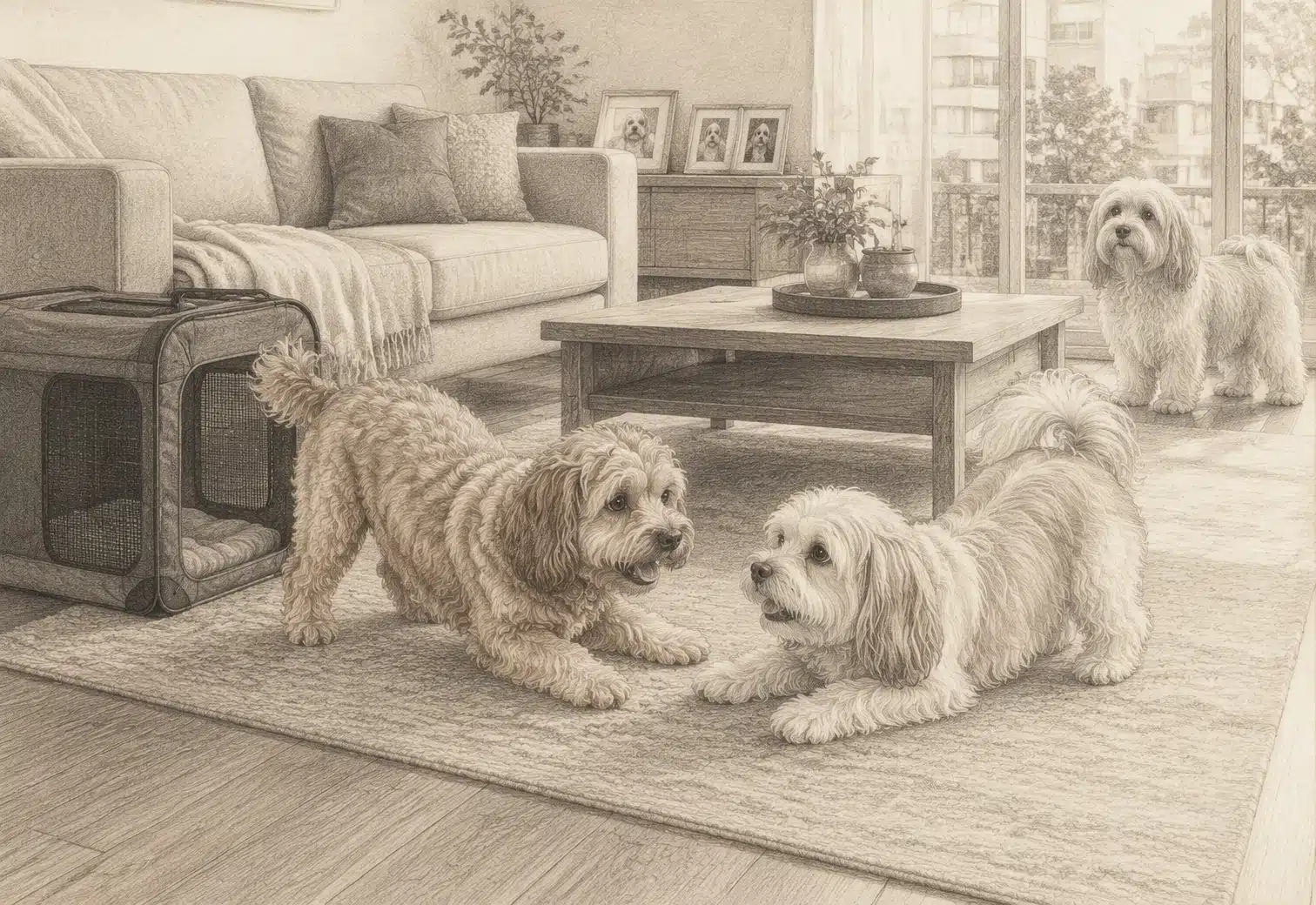
A smaller adult is helpful, but a calm puppy with a known family size is the better apartment match.
The Apartment Layout Test
Walk through your apartment before you apply. Look for how a dog will move, rest, and settle while you work or cook.
- Mark a quiet crate spot that is not beside the front door.
- Clear one small play lane using a rug or open floor.
- Check elevator, stairs, leash routes, and safe potty access.
- Plan two daily walks plus short indoor training games.
| Layout feature | Better choice |
|---|---|
| Studio with one clear room | A puppy that settles easily |
| Busy hallway entry | A crate set farther from door sounds |
| No private yard | Reliable walk and potty routine |
The AKC notes that toy dogs can suit city homes, but they still bring real energy and personality. Size helps, yet your family’s schedule and the individual puppy’s off-switch matter more.
Also Read: Havanese, Havapoo & Cavapoo Puppy Care Blog
Energy, Enrichment, and Settling Indoors
A Weekday Routine Without a Yard
A small apartment can work well for either mix if you plan the day. The key is not nonstop activity. It is a repeatable rhythm of potty breaks, sniffing, play, training, and real rest.
- Start with a calm potty trip and short sniff walk.
- Serve breakfast through a food toy or simple scatter feed.
- Add 5 minutes of cues, then a nap in a quiet pen or crate.
- Schedule a midday potty break and gentle play.
- End the evening with a short walk, chew, and low-key settle time.
Puppies need age-fit exercise. Long forced runs and repeated jumping are not a smart substitute for a yard. The AKC puppy exercise guide advises tailoring activity to the individual puppy, age, and breed.
| Apartment need | Practical outlet |
|---|---|
| Morning energy | Sniff walk and short training |
| Midday reset | Potty trip and gentle tug |
| Evening wind-down | Chew, mat work, and nap |
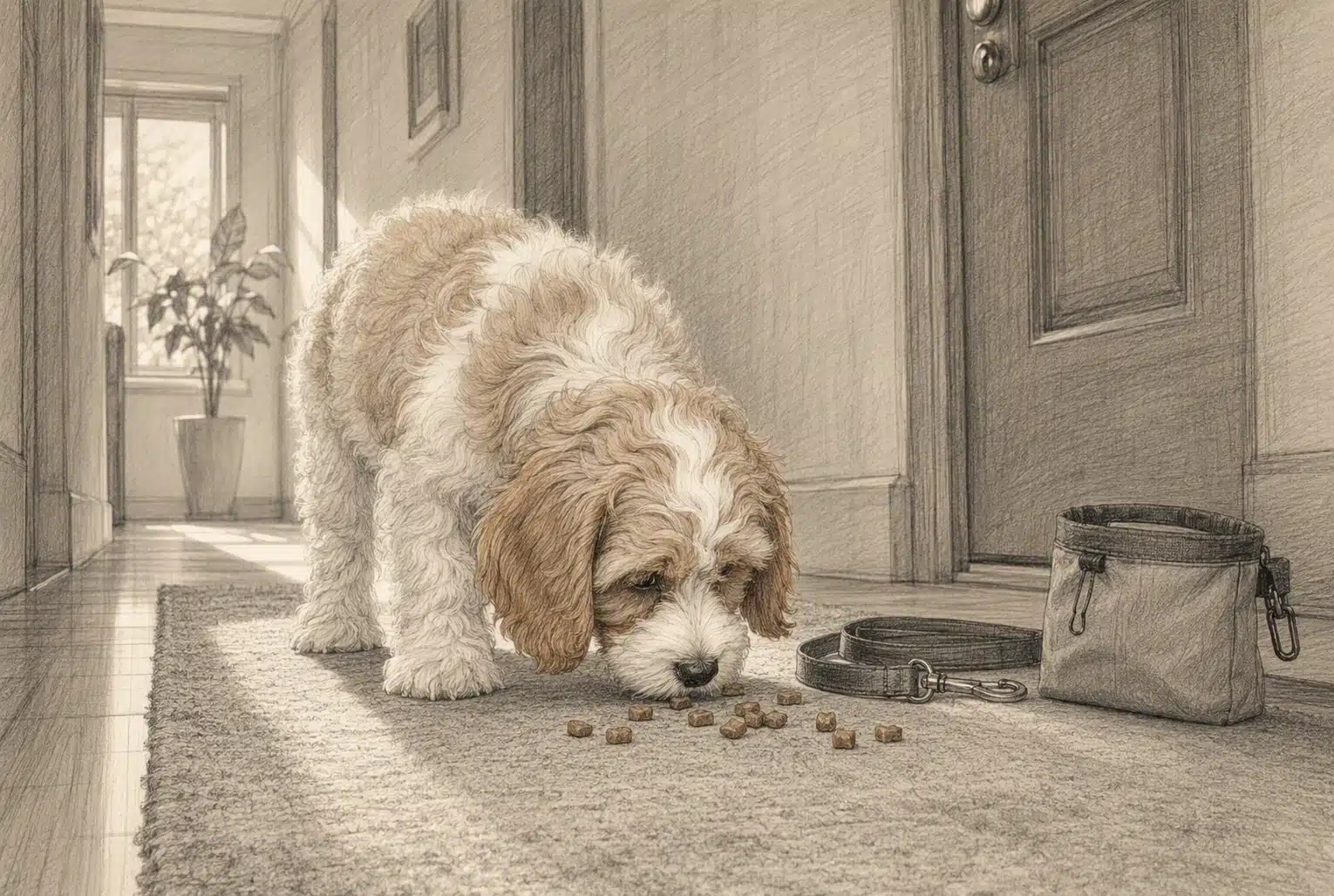
A puppy who cannot settle may be overtired, not under-exercised. Protect daily naps.
Why Mental Enrichment Helps in Small Spaces
Brain work gives a puppy a job without laps around the living room. It can also redirect chewing and restless behavior.
Rotate two or three easy options:
- Hide kibble in a snuffle mat.
- Toss pieces of dinner into a towel or cardboard box under supervision.
- Practice find it, touch, sit, and settle.
- Offer a safe food toy only after you have watched your puppy use it.
The AKC’s indoor activity ideas include scent games and treat-dispensing toys. Keep sessions short, then reward quiet recovery.
Choose routines based on the puppy in front of you. A calmer Havacavapoo or a more settled Cavapoo may be the better apartment fit.
Also Read: Puppy Care Blog & Resources | Sage Puppies
Barking, Noise Triggers, and Shared Walls
Apartment success depends less on the mix name and more on how each puppy responds to sounds, people, and time alone. Both need early practice with calm indoor routines.
Cavapoo Barking Tendencies in an Apartment
Cavapoos can be warm, people-focused companions, but that closeness can turn into alert barking or protest when they hear a door, elevator, or neighbor nearby. Do not assume a small Cavapoo will be naturally quiet.
Watch for patterns during visits: does the puppy recover fast after a new sound, or stay worked up? Barking may stem from boredom, excitement, fear, or loneliness. AKC guidance recommends matching the fix to the trigger.
- Block window views during busy hours.
- Give a chew before you leave.
- Reward a quiet settle on a bed.
Havacavapoo Noise Sensitivity and Alert Behavior
A Havacavapoo may notice hallway steps, voices, and delivery knocks quickly. That does not mean the puppy is a poor apartment fit. It means you need to build a calm response before the habit grows.
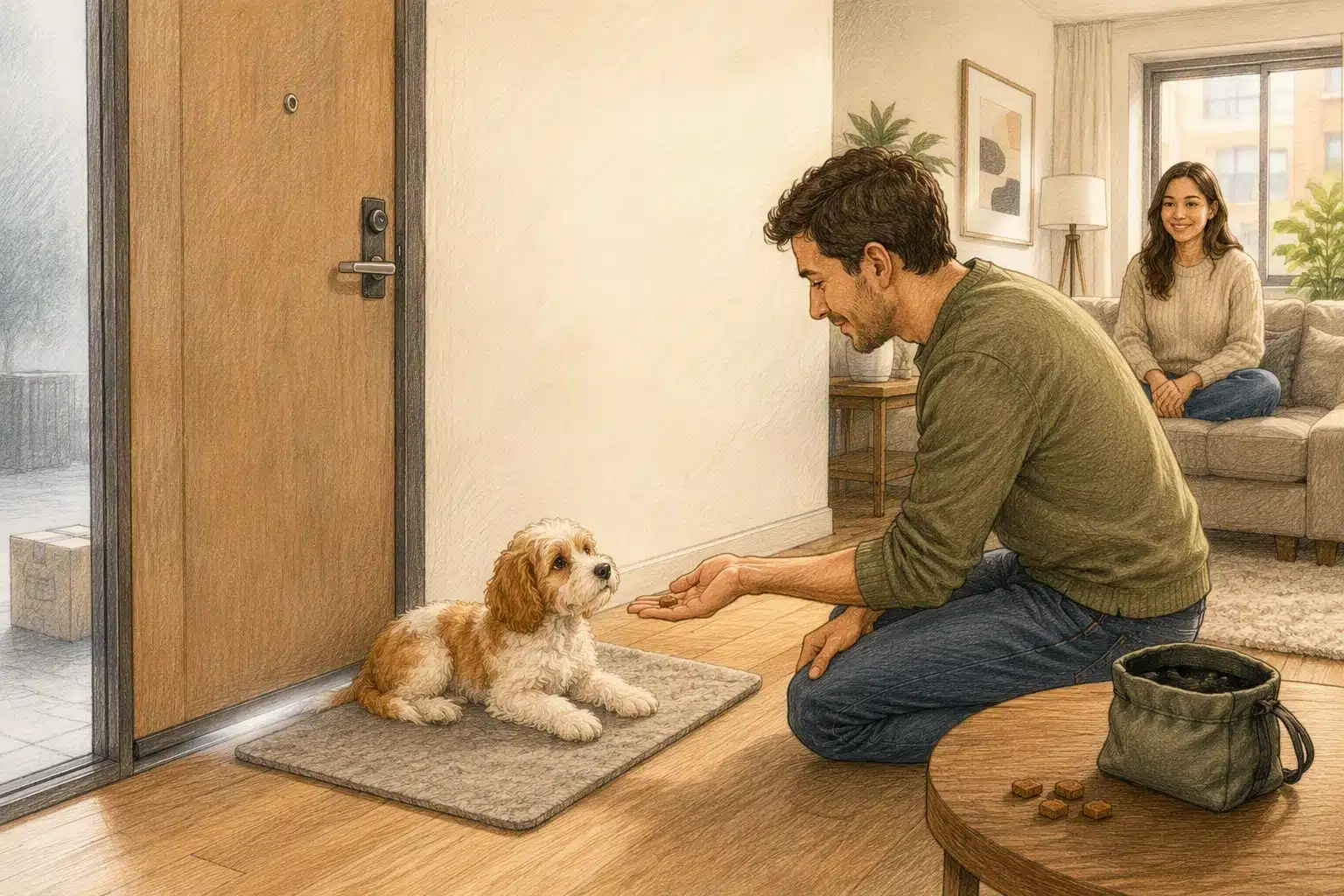
Start with low-level recordings of knocks or hallway sounds. Pair each sound with a treat while your puppy stays relaxed. Increase volume slowly. Loud, sudden sounds can trigger fear, pacing, hiding, and barking, so stop before your puppy feels overwhelmed, as AKC explains.
Choose the puppy that can notice a sound, check in with you, and settle again. That recovery matters more than breed labels.
The Shared-Wall Quiet Plan
Use this simple plan from day one:
- Set a bed or crate away from the shared wall and front door.
- Run a fan or soft background sound during naps and alone-time practice.
- Teach “place,” then reward calm silence for a few seconds at first.
- Practice brief departures daily. Return before panic barking starts.
- Ask visitors to ignore excited greetings until all four paws are down.
| Trigger | Best first response | Avoid |
|---|---|---|
| Hallway noise | Treat calm check-in | Yelling “quiet” |
| Door knock | Send puppy to mat | Letting them rush the door |
| Neighbor dog | Create distance and redirect | Window guarding practice |
Also Read: 10 Adorable Havapoo Colors You Need to See (2026)
Alone Time, Separation, and the Workday
What Long Hours Alone Really Mean for a Puppy
A new Cavapoo or Havacavapoo should not be expected to handle a full workday alone. Small puppies need frequent potty breaks, calm contact, and short training sessions. A puppy under 10 weeks may only manage about one hour alone, while older puppies can build time slowly, according to the AKC’s age-based guidance.
For apartment families, distress can become a neighbor issue fast. Repeated barking, frantic scratching, or accidents are not signs that a puppy is being stubborn.
- Plan midday help if everyone works away from home.
- Use a puppy-safe pen or crate only after positive practice.
- Check a camera for pacing, vocalizing, or panic.
- Do not choose either mix based on size alone. Individual temperament matters most.
A calm adult dog starts with a realistic puppy schedule. Arrange time off, a sitter, or a family handoff before pickup day.
Building Independence Without Creating Panic
Start while you are home. Give your puppy a safe chew in their pen, step out for a few seconds, then return quietly before they escalate. Add time in tiny, successful steps.
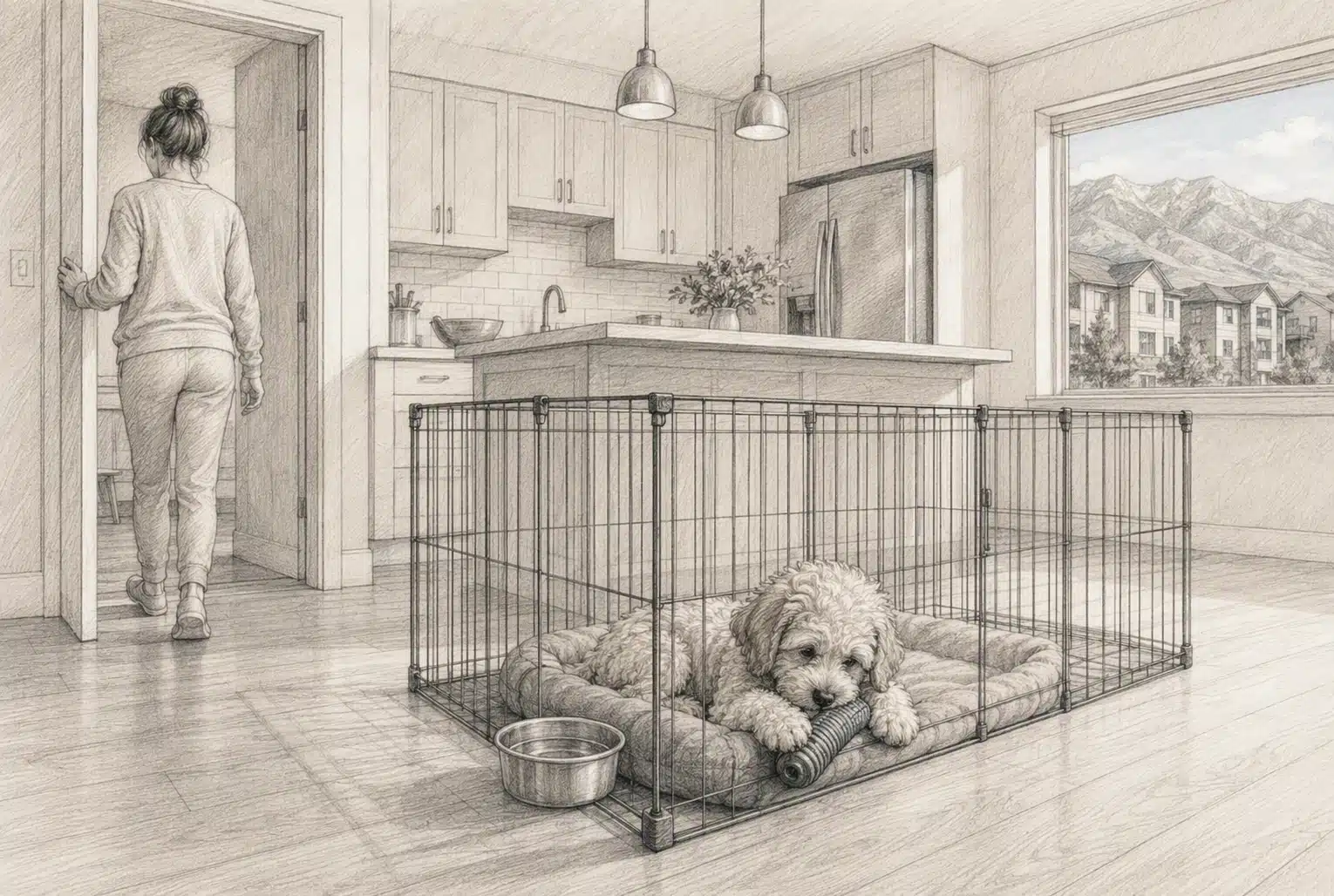
Use this simple workday practice:
- Potty, play, then settle the puppy with a safe activity.
- Leave the room briefly and return with no big greeting.
- Repeat several times daily, adding duration only when the puppy stays relaxed.
- Practice your normal keys, shoes, and exit routine without always leaving.
The AKC recommends gradual alone-time practice and making confinement areas feel rewarding, not like punishment.
If your puppy pants, drools, howls for long periods, or tries to escape, shorten the session. A crate helps some puppies settle. Others do better in a larger pen. Adjust the setup to the puppy in front of you.
Potty Training, Elevators, and Apartment Logistics
The First Weeks Are More Demanding Than Adult Apartment Life
A puppy cannot wait for a long elevator ride. Expect frequent, planned trips during the first weeks, especially after waking, meals, play, and naps. The AKC notes that an 8-week-old puppy may only hold their bladder for about two hours, so your routine matters more than breed label at this stage. Apartment potty-training guidance recommends close supervision and positive rewards.
- Keep leash, treats, bags, and keys by the door.
- Carry a young puppy through busy halls if needed.
- Use one calm outdoor potty spot and one simple cue, such as “go potty.”
- Clean accidents without scolding, then shorten the next interval.
Tip: A grass patch or indoor potty area can be a short-term backup when an elevator delay makes an outdoor trip unrealistic. Do not let it replace walks or outdoor practice.
Apartment Rules and Safe Shared Spaces
Read your lease before bringing a puppy home. Check pet limits, breed or weight rules, deposits, balcony policies, and where dogs may relieve themselves.
| Apartment moment | Teach this skill |
|---|---|
| Elevator doors open | Wait, then enter on cue |
| Hallway encounter | Walk close on a short leash |
| Neighbor greeting | Sit before saying hello |
| Lobby noise | Look at you, then earn a treat |
Practice elevator rides when the building is quiet. Keep your puppy beside you, not greeting every person or dog. The AKC Urban CGC framework includes controlled elevator behavior and city distractions for good reason.
Also Read: Havapoo Puppies: Costs, Coat Type, and Family-Friendly Traits
Grooming, Comfort, and Indoor Quality of Life
The Coat You Can Live With Matters More Than the Label
A small dog can still make a big mess if its coat care slips. Both Cavapoos and Havacavapoos can inherit a wavy, curly, or soft long coat. That changes how much brushing, trimming, and cleanup your apartment needs.
The Havanese side often brings a long, silky coat, while Cavalier traits may add feathering and loose hair. The AKC notes that coat type drives grooming needs, so meet the puppy and ask about its current texture.
| Apartment concern | Best practical response |
|---|---|
| Mats behind ears or legs | Comb these spots every few days |
| Hair on furniture | Brush near an easy-clean mat |
| Warm indoor rooms | Keep a sensible pet trim |
Choose the puppy whose coat routine fits your real schedule, not the one with the lowest-shed label.
Make Grooming Part of Apartment Training
Teach calm handling from day one. A puppy that accepts brushing, paw checks, and ear care is easier to keep comfortable in a small home.
- Brush for one minute after a walk.
- Touch paws, ears, and muzzle gently.
- Give a small treat for stillness.
- End before the puppy gets restless.
Keep the routine near the same spot each time. Regular brushing helps prevent mats and lets you spot skin changes early, as AKC grooming guidance explains.
Also Read: Small Breed Puppies: Best Family Dogs for Small Homes
Which Should You Choose: Cavapoo or Havacavapoo?
Choose a Havacavapoo If Your Apartment Life Looks Like This
Choose a Havacavapoo if you want a small companion with a playful side and can build short training sessions into each day. This mix may suit families who are often home, enjoy neighborhood walks, and want a pup that joins daily life closely.
- You can practice calm greetings at the door.
- You have time for a morning walk and indoor play.
- You will teach alone time in small, easy steps.
Shared walls make early quiet-time practice worth the effort.
Choose a Cavapoo If Your Apartment Life Looks Like This
Choose a Cavapoo if your home is calm and you want an affectionate dog that can enjoy both couch time and regular outings. Cavaliers are known as adaptable, people-focused companions, but they do not thrive on long, lonely days, according to the AKC’s Cavalier breed guide.
- Someone is home often or can arrange a midday visit.
- You want a willing partner for positive training.
- You can provide steady social time without constant excitement.
| Apartment need | Better starting fit |
|---|---|
| Frequent family contact | Cavapoo |
| Playful, engaged routine | Havacavapoo |
| Quiet behavior training | Either, by puppy |
The Best Match Is the Individual Puppy Who Can Settle
Breed mix helps, but it cannot promise a quiet adult dog. Temperament varies within every litter, and early care plus ongoing social time shape behavior, as the AKC explains.
Ask Sage Puppies which puppy recovers quickly after play, rests calmly, and handles new sounds with confidence. Then plan daily alone-time practice, a predictable routine, and rewards for quiet settling.

Choose a puppy for the life you actually live. Sage Puppies helps apartment families find a well-started Cavapoo or Havapoo with thoughtful temperament guidance, local South Jordan pickup, or nationwide delivery. View available puppies and begin your application today.
Frequently Asked Questions
Q1: Which breed, Havacavapoo or Cavapoo, is better for apartment living with limited space?
A Havacavapoo may suit a small apartment slightly better if it has a calm, people-focused nature. Still, the individual puppy matters more than the breed label.
Q2: How do Havacavapoos and Cavapoos differ in energy levels for apartment dwellers?
Both need daily walks, play, and short training sessions. Cavapoos may show more lively bursts, while some Havacavapoos settle faster indoors after activity.
Q3: Can a Havacavapoo or Cavapoo handle long hours alone in an apartment?
Neither should routinely stay alone all workday. Build alone time slowly, use a safe puppy area, and arrange a midday break when possible.
Q4: Which breed is less likely to bark at apartment sounds?
Neither is guaranteed quiet. Early exposure to hall noise, doors, and neighbors helps prevent alert barking.
Q5: How can I choose the right puppy for shared-wall living?
Ask Sage Puppies about each puppy’s confidence, recovery after noise, play style, and ability to settle.
Conclusion
For most apartment families, the better choice is the individual puppy, not a breed label. Cavapoos may suit homes that want a playful, people-focused companion. Havacavapoos can be a strong fit for families drawn to Havanese traits and a smaller companion style.
Prioritize a puppy’s adult-size range, confidence, noise response, and ability to settle alone. Shared walls make calm training essential. The AKC recommends building alone time in short, gradual steps and rewarding quiet behavior. Daily walks, indoor games, and a steady routine matter far more than square footage alone.



