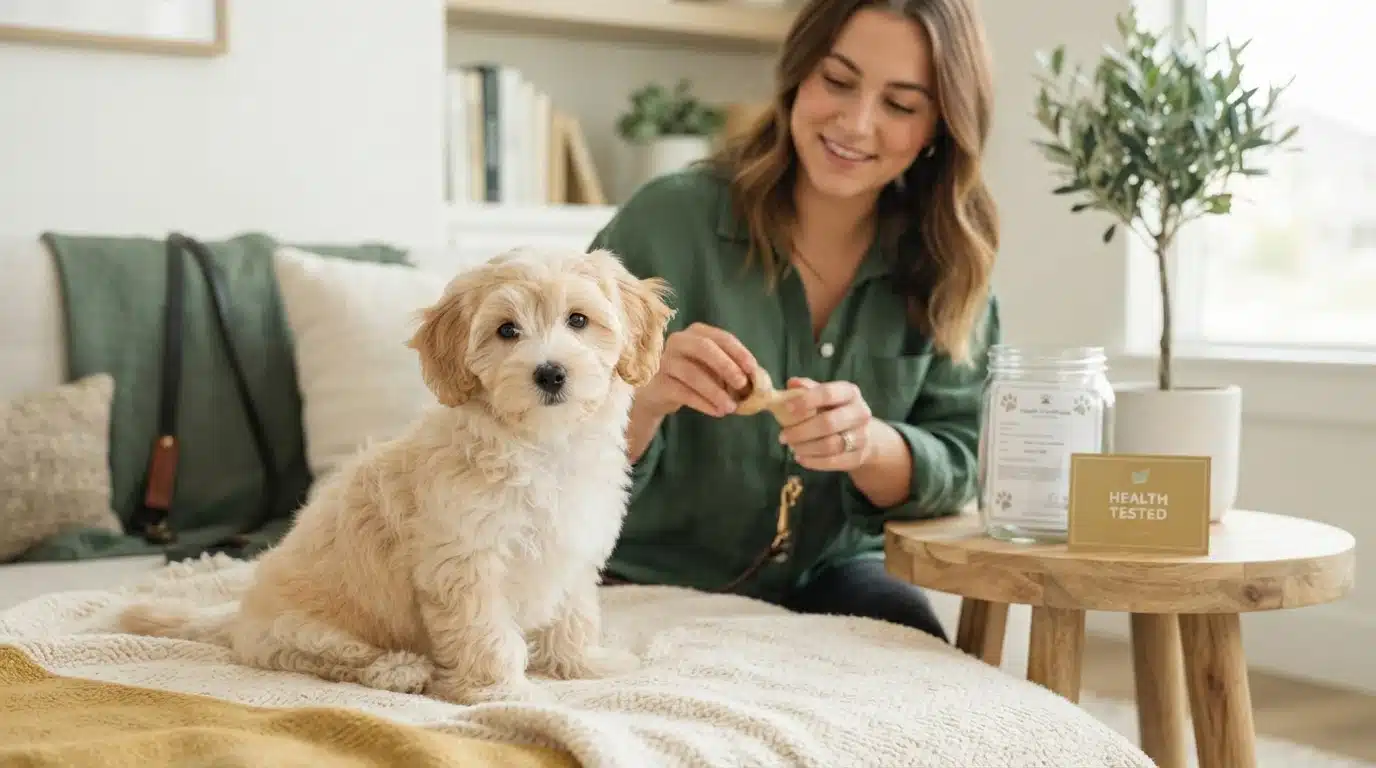
Quick Summary: Alabama lacks a unified breeder licensing system, leaving buyers to rely on patchwork rules-USDA oversight kicks in only for breeders with more than four breeding females selling sight unseen, but even that doesn’t ensure ethical care. The state requires a health certificate for puppies entering Alabama, but buyers should also insist on seeing parent health-test records, a clear view of the puppies’ living conditions (either in person or via live video), and a detailed contract before handing over money. Red flags include refusal to show where puppies are raised, pressure to pay quickly, or vague answers about health and socialization.
Families looking at puppies for sale in Alabama face a legal patchwork, not one statewide breeder licensing system. Alabama puppy breeders may fall under cruelty laws, animal-health rules, local ordinances, or federal USDA rules. USDA oversight can apply to remote sales, while some face-to-face sellers are exempt. Dogs entering Alabama usually need a veterinary health certificate and rabies vaccine after three months. This guide helps families assess Alabama puppy breeders beyond a license, including health tests, home care, records, pickup, and delivery practices.
Alabama Does Not Give Buyers a Simple State Breeder License to Check
What Alabama Regulates – and What It Does Not
Alabama regulates animal movement and some livestock businesses, but it does not offer families a simple public state license lookup for ordinary dog breeders. The state’s listed livestock dealer and market rules focus on cattle, swine, sheep, goats, horses, poultry, and similar animals, not pet-breeder standards. Alabama’s licensing page explains that program covers livestock markets, dealers, haulers, and brands.
That means a seller can operate without a state breeder license you can search.
- Ask who raised the litter.
- Ask to meet the mother where she lives.
- Request parent health-test results before sending money.
A business registration, social media page, or clean pickup spot does not prove good breeding care.
Why a Legal Seller Can Still Be the Wrong Choice
Legal status is a floor, not a quality score. It does not tell you whether puppies were raised in a home, handled daily, or bred from tested parents.
Use a practical comparison list:
| Check | A strong answer |
|---|---|
| Parent health | Named tests and shareable results |
| Living conditions | A real visit or clear live video tour |
| Puppy records | Vet, vaccine, and deworming records |
| Support | Written next steps and honest answers |

Walk away if a seller refuses to show where puppies are raised, pushes fast payment, or will not discuss the mother. A careful breeder welcomes fair questions.
Local Rules Can Change the Answer
City and county rules can still affect kennel use, zoning, noise limits, and the number of dogs kept at a property. Check the local planning or animal-control office for the seller’s exact address.
If your puppy will enter Alabama from another state, the state requires official health paperwork. Its dog import guidance says dogs need an official Certificate of Veterinary Inspection, while puppies under three months may enter without rabies vaccination.
Confirm travel documents before delivery day, not after your reservation is paid.
Also Read: Texas Puppy Breeders vs Puppy Mills: Spot the Differences
When USDA Rules Apply to an Alabama Breeder
Federal USDA rules may apply even when Alabama does not require a breeder license. The key questions are how many breeding females live on the premises and whether buyers see the puppy in person before purchase or pickup.
The Federal Sales and Breeding Thresholds
A breeder with four or fewer breeding females may qualify for an exemption if they sell only puppies born and raised on their own premises. The count can include breeding females kept by different people at the same location.
Breeders with more than four breeding females who sell puppies sight unseen often need a USDA Animal Welfare Act license. Sight unseen can include sales completed online or by phone when the buyer does not physically view the puppy before buying or taking custody.
The federal rule defines the small-breeder exemption in 9 CFR 2.1. Direct, in-person sales can fall under the retail pet store exemption, even for a larger program.
- Ask where the puppy was born and raised.
- Ask if you can meet the puppy or arrange an in-person visit.
- Ask whether other breeding females live on the property.
A video call is useful, but it is not the same as an in-person visit for the federal retail-sales exemption.
What a USDA License Can Tell You
A current USDA license tells you the breeder operates in a category subject to federal oversight. Before issuing a new three-year license, APHIS requires an announced inspection and proof of compliance with Animal Welfare Act standards, according to the USDA licensing rule.
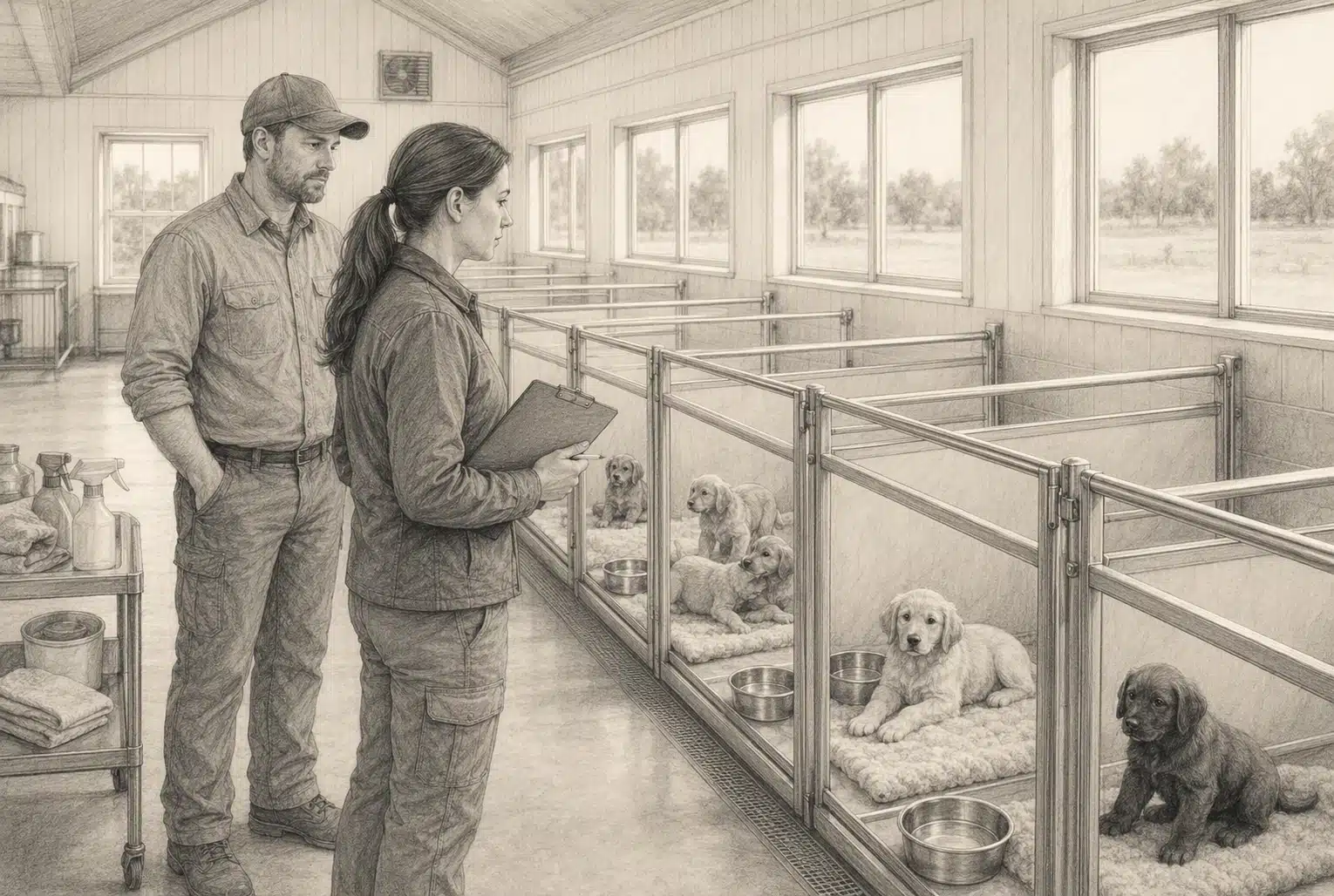
Use that fact as one screening point, not your final answer. Ask the breeder for their license number, then review the public inspection record and ask clear questions about:
| Check | What to ask |
|---|---|
| Veterinary care | How are routine exams, vaccines, and illness handled? |
| Housing | Where do puppies sleep, play, and spend time with people? |
| Parent dogs | Can you review health testing and meet the dam? |
| Records | Will you receive vaccine, deworming, and health paperwork? |
What a USDA License Cannot Tell You
A USDA license does not prove that every puppy has ideal early training, tested parents, or the right fit for your family. It also does not replace your own visit, questions, and review of records.
A breeder can be legally exempt and still raise puppies with great care. A licensed breeder can still fall short of the personal standards you want.
Look for the full picture:
- Clean, calm living spaces.
- Parents with relevant health testing.
- Honest answers about temperament and routine.
- Written medical and pickup or delivery details.
Treat a license as a baseline. Choose a breeder based on transparent, family-raised care above that baseline.
Also Read: Puppies for Sale in Alabama: Find Responsible Local Breeders
The Alabama Paperwork Buyers Should Expect Before Travel or Delivery
Certificate of Veterinary Inspection
Before an out-of-state puppy enters Alabama, ask for an Interstate Certificate of Veterinary Inspection, often called a CVI or health certificate. An accredited veterinarian issues it after examining the puppy and confirming it appears healthy for travel.
Alabama requires dogs entering the state to travel with an official CVI. The state no longer accepts the old APHIS Form 7001 for small-animal entry, according to Alabama Agriculture and Industries.
Ask the breeder to send a clear copy before pickup or delivery. Check that it lists:
- Your puppy’s breed, sex, age, and color
- The breeder’s and buyer’s names and addresses
- Exam date and veterinarian details
- Rabies status, if age requires it
- Any required transport notes
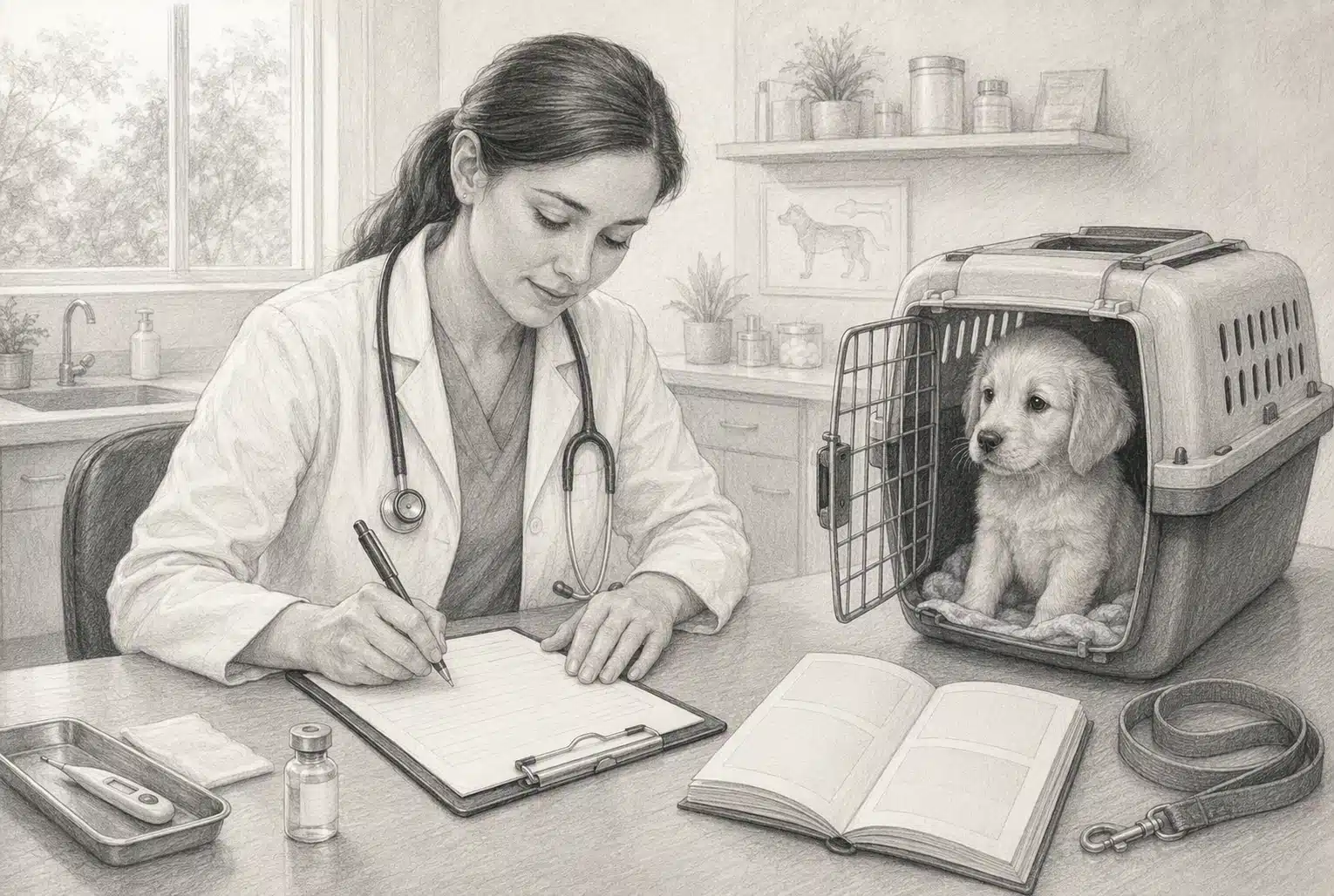
A health certificate is not a full health history. Also request vaccine records, deworming dates, parent testing details, and your sales agreement.
| Document | Why it matters |
|---|---|
| CVI | Shows the puppy was examined for interstate travel |
| Vaccine record | Tracks shots already given |
| Sales agreement | States the breeder’s terms and next steps |
Rabies, Age, and Transport Questions
Puppies under 3 months old may enter Alabama without a rabies vaccine. Dogs three months and older need documented rabies vaccination under Alabama’s entry rules.
Before you book travel, confirm these points in writing:
- Who holds the original CVI?
- Does your airline, flight nanny, or ground carrier need its own form?
- Will the puppy be old enough for rabies rules on travel day?
- Has Alabama issued any short-term disease-related entry updates?
Alabama’s current import page also lists added CVI steps for animals arriving from certain screwworm risk areas. Ask the breeder to check the rule close to departure, not weeks earlier.
Do not accept “the paperwork will come later.” Review copies before the puppy starts the trip.
How to Vet Alabama Puppy Breeders Beyond the Legal Minimum
State rules set a floor, not a family standard. Use this checklist before you send any deposit to an Alabama breeder.
Ask for Parent-Dog Health Evidence
Ask for each parent’s full name, test dates, and copies of results. A vague claim like “health tested” is not enough.
For Havanese, Havapoos, and Cavapoos, testing should fit the parent breeds and the planned pairing. Check records yourself when possible. The OFA buyer guide advises families to review parent health screenings and meet at least one parent.
- Request hip, patella, eye, cardiac, and DNA test evidence as relevant.
- Match the dog’s name and microchip or registration details to each record.
- Ask what a carrier result means for the pairing.
- Walk away if records arrive only after a deposit.
A test result lowers risk. It does not promise a puppy will never face a health issue.
Look for Family-Raised Socialization
Ask where the litter sleeps, plays, and meets people. A good breeder can explain daily handling, safe exposure to household sounds, grooming, crate time, and age-right play.

A video call can help if you cannot visit. Watch the mother’s body language, the puppies’ space, and how the breeder handles questions. Clean does not mean sterile. It should mean calm, safe, and well managed.
- See current, unedited video of the litter.
- Ask how pups meet adults, children, and gentle handling.
- Confirm the breeder limits visitors when disease risk calls for it.
- Notice whether the breeder asks about your home and routine.
Read the Contract Before the Deposit
Get the full agreement before money changes hands. Read it slowly and save a copy.
| Contract item | What to confirm |
|---|---|
| Deposit | Amount, refund terms, and when it applies |
| Health terms | What is covered, excluded, and required of you |
| Pickup or delivery | Date range, cost, and who carries travel risk |
| Return policy | What happens if your family cannot keep the puppy |
Look for clear terms, not broad promises. Responsible breeders should explain both sides of the agreement, which aligns with OFA guidance on written sales agreements.
Never let a “last puppy” message rush your decision.
Also Read: Puppy Care Blog & Resources | Sage Puppies
Questions to Ask Before Buying a Puppy in Alabama
Clear answers matter more than a polished listing. Ask them before you send a deposit.
Questions About the Breeding Program
Ask the breeder:
- Which health tests did both parents complete, and may I see the results?
- Can I meet the mother, or see a live video of her with the litter?
- Where are puppies raised, and how are they socialized each day?
- How do you match puppy temperament to a family with children?
- What happens if a puppy shows illness before go-home day?
A responsible breeder welcomes thoughtful questions and does not rush your choice. Ask how they limit disease risk, too. State animal-health guidance advises buyers to work with reputable sellers and obtain health records for incoming animals, a useful standard even for family pets according to Washington State Department of Agriculture.
Warning: Walk away if a seller refuses a visit or live video, cannot name the parents, or pressures you to pay immediately.
Questions About Records and Handoff
Before pickup or delivery, confirm exactly what comes home with your puppy.
| Record or detail | Ask for |
|---|---|
| Health history | Vet exam, vaccines, deworming dates |
| Parent proof | Health-test records and breed details |
| Identity | Microchip number, if used |
| Handoff plan | Pickup, delivery, food, and transition steps |
Ask who to contact after go-home day and when your own vet should see the puppy. Keep every record in one folder. If the puppy travels across state lines, ask which health paperwork applies to the route and destination.
Also Read: 10 Signs a California Puppy Listing Is a Scam – Sage Puppies
If You Suspect Neglect, Misrepresentation, or a Scam
Stop payment before sending more money. Save every message, listing, receipt, contract, health record, and payment detail. Take dated notes of what you saw or were told.
If puppies appear sick, crowded, dirty, injured, or without water, contact local law enforcement if there is immediate danger. You can also use the Alabama Department of Agriculture and Industries’ animal abuse reporting guidance.
For a suspected sale scam or false business claim:
- Contact your bank or card company right away to ask about a dispute or transfer recall.
- Report the listing and account to the platform where you found it.
- File a report with local police, especially if money changed hands.
- Keep screenshots even if the seller deletes their page.
| Problem | Best first step |
|---|---|
| Unsafe or neglected animals | Report details to animal authorities or local law enforcement |
| Fake puppy listing or stolen photos | Stop payment and report the account |
| False health or parent claims | Preserve records and seek legal advice if needed |
Never meet a seller alone or accept pressure to pay by wire, gift card, crypto, or a payment app marked “friends and family.”
Alabama’s Secretary of State advises people unsure where to report suspected business fraud to contact local law enforcement, the district attorney, or the Attorney General based on the complaint type.
What Families Should Expect From a Transparent Breeder
A transparent breeder answers direct questions before asking for a deposit. You should see clear details about the puppy, the parents, the home setting, price, and next steps.
Ask for proof, not broad promises. For USDA-regulated breeders, the USDA public search tool lets families review available facility and inspection records.
| Ask to See | Why It Matters |
|---|---|
| Parent health testing | Shows what was screened before breeding |
| Puppy health and vaccine records | Helps your veterinarian plan care |
| Written price and reservation terms | Prevents surprise fees or unclear refunds |
| Pickup or delivery plan | Confirms who handles the puppy and paperwork |
A responsible breeder should also explain how puppies are raised, socialized, and matched to homes. They should welcome thoughtful questions about temperament, grooming, and the first weeks at home.
A USDA license is not a substitute for your own review. USDA-covered facilities must keep veterinary records available for inspection, including health issues, vaccinations, and tests, under APHIS care rules.
Use this simple check before moving forward:
- Speak with the breeder directly.
- Review records in writing.
- Read every agreement before paying.
- Walk away if answers change or feel rushed.
Also Read: How to Find a Reputable Local Puppy Breeder Before You Visit
How the Regulatory Layers Fit Together
From Federal Minimums to Buyer Standards
Alabama buyers should see regulation as a floor, not a full quality score. State and local rules may address cruelty, business practices, or animal health. Federal USDA rules apply only to certain commercial sales.
For example, USDA licensing generally covers wholesale sales and sales where the buyer cannot see the dog in person before purchase. A breeder selling puppies face-to-face from their own home may be exempt in some cases, according to USDA APHIS guidance.
Use each layer for a different check:
| Layer | What it can tell you | What you still need to verify |
|---|---|---|
| Alabama and local rules | Basic legal operation | Parent health and puppy care |
| USDA oversight, if applicable | Required care and records | Temperament and home raising |
| Your buyer review | Day-to-day breeder standards | Nothing – this is your decision |
Ask for:
- Parent health-test results.
- Veterinary and vaccine records.
- Clear pickup or delivery details.
- A chance to meet the breeder and see where puppies begin life.
A USDA license can matter, but it does not replace your own careful screening.

Choose proof over promises. Sage Puppies offers home-raised Havanese, Havapoo, and Cavapoo puppies from health-tested parents, with clear adoption steps, local pickup, and nationwide delivery. View available puppies, then apply when the fit feels right.
Frequently Asked Questions
Q1: What does Alabama regulate for puppy buyers?
Alabama mainly regulates animal welfare through cruelty laws and rabies rules. Buyers should not expect a broad state breeder licensing system. Ask for health records, parent details, and a written sales agreement.
Q2: Does a USDA license prove a breeder is ethical?
No. A USDA license may apply to certain breeders who sell sight unseen or across state lines. It is one useful check, not proof of strong home care or health testing.
Q3: Should an Alabama puppy have a health certificate?
Yes. Interstate travel often requires a current veterinary health certificate. Even for local pickup, request vaccination records, deworming dates, and the veterinarian’s contact details.
Q4: Can I visit before placing a deposit?
A responsible breeder should explain their visit policy clearly. If visits are limited for puppy health, ask for live video, current photos, and a clear view of where puppies are raised.
Q5: What records should I keep after purchase?
Save the contract, payment receipt, health records, microchip details, and all breeder messages. These papers help your veterinarian and protect you if a problem appears.
Conclusion
Alabama’s rules do not replace careful buyer research. Ask every breeder for clear health-testing records, parent details, living-condition access, and a written contract. Be wary of pressure, vague answers, or sellers who will not explain where puppies are raised.
For a puppy coming from another state, confirm the health paperwork early. The Alabama Department of Agriculture requires an official Certificate of Veterinary Inspection for dogs entering the state, with limited exceptions for young puppies.
A breeder’s openness, care standards, and lifelong focus matter more than a polished listing.