Quick Summary: Safety depends on the breeder’s transparency and care-not just whether you pick up locally or get a shipped puppy. Local pickup lets you verify conditions firsthand, but shipped puppies can be just as safe if the breeder provides detailed health records, a clear travel plan (like in-cabin flights or ground delivery with rest stops), and a calm handoff. New Hampshire requires puppies to be at least 8 weeks old with up-to-date health certificates, so always confirm paperwork matches the puppy’s age, vaccinations, and travel method. Sage Puppies, for example, offers both options but emphasizes matching puppies to families based on health testing, socialization, and travel logistics rather than just convenience.
A nearby puppy is not automatically a safer puppy. For families seeking puppies for sale in New Hampshire, Safe Puppy Sources matter more than miles. Local pickup is often best when you can meet a transparent breeder and manage the ride home. Still, Shipped Puppy Safety can be strong when records, transport, and handoff details are clear.
A Havanese, Havapoo, or Cavapoo choice involves more than ease. You must weigh breeder access, vet care, cost, travel stress, and Local Puppy Risks.
This guide compares Safe Puppy Sources by health, care, transport control, communication, cost, and New Hampshire rules. It also helps you spot Safe Puppy Sources before you apply or reserve.
Local Pickup vs Shipped Puppies: Safety at a Glance
| Local pickup | Shipped delivery | |
|---|---|---|
| Safety control | Highest buyer control when the buyer visits and drives the puppy home | Depends on breeder oversight, transporter standards, and communication |
| Breeder verification | In-person observation may reveal useful details, but it does not replace records | Requires video calls, records, references, and transparent policies |
| Puppy health documentation | Review records before departure and carry them home | Records should be reviewed before departure and transferred at handoff |
| Travel stress and exposure | Usually one continuous trip with a familiar buyer | Varies by airline, ground route, weather, stops, and number of animals |
| Cost and planning | Buyer pays for fuel, lodging, meals, and time | Separate delivery charge varies by route, service, timing, and provider |
| Best fit | Families able to travel and comfortable managing the journey | Families outside the breeder’s region or unable to travel |
How Local pickup and Shipped delivery Compare
Local pickup
You travel to the breeder or an agreed handoff spot, then bring your puppy home yourself. It suits families who can make the trip and want direct control over the ride, records, and first day together. A visit can reveal useful details, but still review health and parent records before leaving.
Key strengths
- One continuous trip with your family
- Direct review of paperwork at pickup
Shipped delivery
A breeder or agreed transport provider brings the puppy to your area. It suits families who cannot travel, but safety depends on clear oversight, transport plans, and timely records. Interstate rules can vary by destination state, so confirm requirements early with USDA APHIS guidance.
Key strengths
- Works for families nationwide
- Delivery plans can match route and timing
What Actually Makes a Puppy Source Safe?
Health Testing Is a Starting Point, Not a Guarantee
A safe source shows proof, welcomes questions, and puts each puppy’s long-term welfare ahead of a fast sale. Health testing matters, but it cannot promise a puppy will never face a health issue.
Ask to see each parent’s results, not just a claim that they were “tested.” The OFA explains that breed-specific screening helps reduce inherited disease risk, but results are not guarantees.
Check for:
- Parent names that match the records
- Tests that fit the breed and parent age
- Clear discussion of family health history
- A written agreement and return plan
- Honest answers about limits and risks

Warning: A seller who rushes a deposit, avoids live video, or will not identify the parents is not offering enough proof.
Early Care and Temperament Evidence
Safe care starts well before pickup or delivery. Puppies need a clean home setting, steady handling, time with their litter, and gentle exposure to normal family life.
Ask how the breeder watches each puppy’s nature and matches it to a home. The OFA advises buyers to visit, meet parent dogs when possible, and see where puppies sleep and play. If distance prevents a visit, request a live video call instead.
Look for practical evidence:
- Current photos and unedited video.
- Clear notes on feeding, sleep, and social exposure.
- A calm, curious puppy rather than promises of a “perfect” temperament.
- Pickup or delivery plans that protect the puppy from stress.
Sage Puppies gives families a clear view of its family-raised Havanese, Havapoo, and Cavapoo puppies, whether they pick up in South Jordan or arrange nationwide delivery.
Also Read: FTC Reports Social Media Ad Scams Surged Before Holiday Pet Sales
Local Pickup: Where It Helps and Where It Does Not
The Advantages of Seeing the Program in Person
Local pickup gives you a useful firsthand view, but it is not a safety seal. You can meet the breeder, see how the puppy responds to people, and ask questions before the ride home.
Look for a clean, calm setting and dogs that seem well cared for. The AKC recommends observing the premises, the dogs, and their interaction with the breeder. This can help you judge daily care and early social time.

Use the visit to review records, not just cuddle puppies:
- Parent health-testing results
- Puppy vet and vaccine records
- Feeding routine and social exposure
- Contract, pickup plan, and post-home contact
At Sage Puppies, local families can have that face-to-face handoff while still following the same careful application process.
Tip: Ask to meet the mother if she is on site. Do not treat a friendly visit as proof of sound breeding.
Local Pickup Risks Buyers Still Need to Manage
A nearby puppy can still come from a weak program. Distance does not prove health, ethics, or a good match for your home.
Confirm what you see with records. Health testing should fit the parent breeds, and the AKC advises buyers to ask about parent testing, socialization, vaccines, and take-home timing.
- Avoid same-day pressure or cash-only deals.
- Read the agreement before you arrive.
- Do not take a puppy home too early.
- Keep the first car ride calm, secure, and short.
Also Read: 10 Must-Ask Questions Before Buying a Puppy Locally
Shipped Puppy Safety: When Delivery Can Be Responsible
Compare the Transport Method, Not Just the Word Shipping
“Shipping” can mean a trained flight nanny carrying a puppy in-cabin, a breeder meeting you partway, or a puppy traveling as cargo. Those are not equal experiences.
A responsible plan puts the puppy’s comfort first. It should limit handoffs, avoid long waits, and give you a clear point of contact from pickup to home. The USDA regulates for-hire carriers that take custody of animals sold as pets, and those carriers must meet transport standards under the Animal Welfare Act. See USDA APHIS transport guidance.
| Method | What to look for | Main concern |
|---|---|---|
| In-cabin flight nanny | One caregiver and confirmed handoff | Flight changes |
| Ground delivery | Direct route, rest plan, live updates | Long drive time |
| Airline cargo | Written carrier plan and weather limits | More handling and separation |
Tip: A breeder who can explain the exact route, caregiver, and backup plan is safer than one who simply says, “We ship nationwide.”
The Delivery Questions to Ask Before Paying
Ask for details before you send a reservation fee. A good breeder welcomes these questions and answers them in writing.
- Who stays with the puppy during travel?
- Will the puppy ride in-cabin, by car, or as cargo?
- What is the door-to-door travel time?
- What happens if weather or a flight delay interrupts the plan?
- When will the puppy receive its health exam and paperwork?
- How will you confirm the handoff and help after arrival?
Sage Puppies can explain its pickup and nationwide delivery options before you apply, so your family can choose the calmer fit.
Warning: Walk away if a seller will not name the transport method, asks for rushed payment, or will not let you verify the puppy by live video.
Also Read: 10 Signs a California Puppy Listing Is a Scam – Sage Puppies
Health, Age, Records, and New Hampshire Requirements
A safe handoff starts with clear records, not a promise. Whether you pick up locally or arrange delivery, review the puppy’s file before go-home day.
Documents to Review Before Go-Home Day
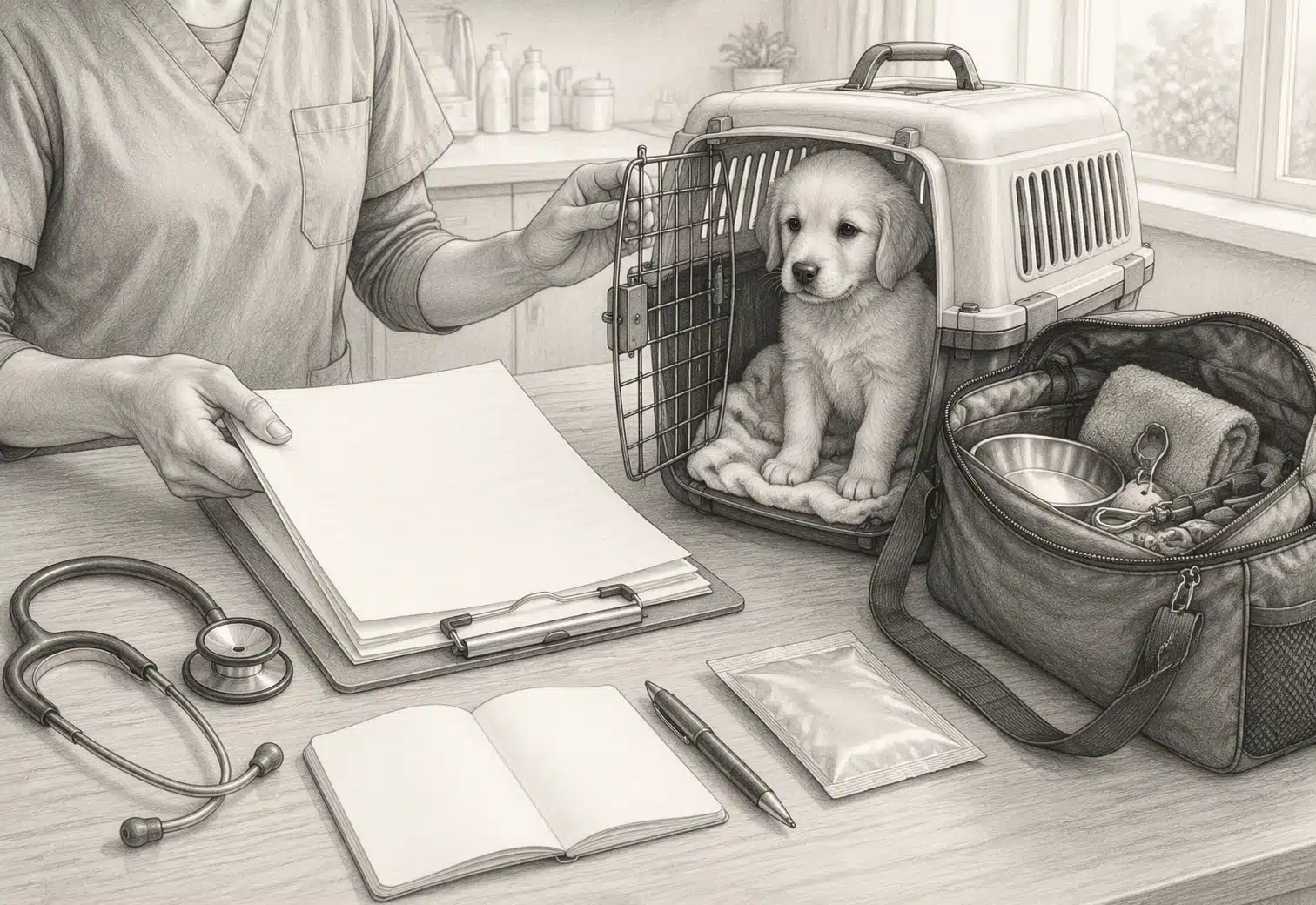
Ask for records early enough to read them without pressure. Match the puppy’s name, birth date, color, and microchip number across every document.
- Official health certificate or transfer record from a licensed veterinarian
- Vaccination and deworming history, with dates and product names
- Parent health-testing results relevant to the breed or mix
- Feeding, routine, and socialization notes for the first week home
- Written details on the pickup or delivery plan
New Hampshire requires a health certificate issued within the prior 14 days for a dog transfer, and it must list vaccines and medicines given, according to RSA 437:8.
Tip: A breeder should welcome record questions. Missing dates, vague answers, or documents sent only after payment are reasons to pause.
Check Current State and Destination Rules
Rules apply to the puppy’s destination, not just the breeder’s home state. Confirm requirements before booking a flight nanny, ground delivery, or interstate pickup.
- Ask the breeder which documents travel with the puppy.
- Check New Hampshire entry and local licensing rules.
- Call your town clerk if you are unsure about timing.
New Hampshire does not allow dogs offered for transfer to be under 8 weeks old. Dogs aged 3 months or older need rabies vaccination, while younger puppies follow the state’s age-based schedule under New Hampshire rabies law.
Warning: State rules can change. Verify the destination state’s current requirements before travel, especially if delivery crosses several states.
Cost, Convenience, and the Real Trade-Off
What Local Pickup Really Costs
Local pickup can save a delivery fee, but it is not always the lower-cost choice. Add fuel, meals, lodging, missed work, and the time needed for a long round trip from New Hampshire to a breeder.
| Cost factor | Local pickup | Delivered puppy |
|---|---|---|
| Travel planning | Family handles it | Breeder or transport team handles it |
| Time away | Can mean a full day or more | Usually a scheduled handoff |
| First meeting | You meet the breeder in person | You need strong remote verification |

The real benefit is control. You can see the setting, ask questions face to face, and bring your puppy home yourself.
Tip: Ask for the full out-the-door total before you reserve. A cheap puppy price can hide costly travel.
What Shipped Delivery May Include
Delivery can make sense when the breeder is the right fit and distance makes pickup hard. Confirm exactly what is included: travel method, carrier, handoff point, timing, records, and who stays with the puppy.
For air travel, airlines can set rules separate from health paperwork, according to USDA APHIS guidance. That is why a clear travel plan matters more than the word shipping.
- Ask whether your puppy travels with a person or as cargo.
- Request the pickup or handoff window in writing.
- Confirm what happens if weather or a flight delay changes plans.
Sage Puppies can explain its delivery or pickup options before you apply. Choose the route that keeps the process calm, clear, and safe for your family.
Also Read: 10 Adorable Havapoo Colors You Need to See (2026)
A Practical Safety Checklist for New Hampshire Puppy Buyers
Before You Apply or Reserve
A polished website is not proof of a safe start. Ask clear questions before sending a deposit, then compare each answer with the breeder’s written records.
- Confirm the breeder’s legal name, address, phone number, and who raised the litter.
- Ask to see health testing for both parents and the puppy’s health records.
- Read the contract, reservation terms, and return or support details before you pay.
- Ask how puppies are raised, socialized, and matched to family needs.
- Verify the puppy’s age and planned go-home date. New Hampshire does not allow dogs under eight weeks old to be offered for transfer, according to state pet-transfer law.
Warning: Walk away if a seller pushes same-day payment, avoids live conversation, or will not share parent and puppy records.
Before Pickup or Delivery
Your puppy should arrive with clear paperwork, a calm handoff plan, and time for your questions. Transport can be safe, but only if breeder care and travel details are solid.
- Confirm the pickup location or delivery contact, date, and expected arrival window in writing.
- Ask who handles the puppy during travel and how they manage temperature, breaks, water, and delays.
- Match the puppy to its records, including sex, color, date of birth, and any microchip details.
- Receive the official health certificate, vaccine and medication record, feeding guide, and contract copy.
- Book a prompt visit with your own veterinarian after arrival.
New Hampshire requires a health certificate issued within the prior 14 days for a puppy transfer, and it must go to the new owner, under RSA 437:8.
Tip: Keep every message, receipt, and record in one folder before you bring your puppy home.
Also Read: Havanese, Havapoo & Cavapoo Puppy Care Blog
Which Choice Is Safer for Your Family: Local Pickup or Delivery?
Choose Local Pickup When You Want Maximum Direct Control
Local pickup is often the safer fit if you can visit the breeder and drive your puppy home yourself. You control the timing, car temperature, stops, and who handles your puppy.
Ask to meet the puppy where it was raised and review records before you leave. This makes it easier to spot rushed handoffs or answers that do not match the breeder’s claims.
- Confirm pickup time and exact address.
- Bring a secure carrier, water, and clean bedding.
- Review feeding, vaccine, and care records in person.
Local does not automatically mean safe. A nearby breeder still needs clear health testing, honest answers, and a clean, calm handoff.
Choose Delivery When the Plan Is More Verifiable Than the Alternative
Delivery can be a sound choice when each part of the trip is clear and documented. A long, stressful drive by an unprepared family is not safer than a well-planned route with a trusted handler.
Ask who travels with the puppy, how long the trip takes, where handoff occurs, and how updates work. Airlines may set their own pet travel rules, so confirm the plan directly, as USDA APHIS advises.
At Sage Puppies, choose delivery only after you understand the full plan and feel comfortable asking questions.
Also Read: Georgia Puppy Pickup vs Delivery: Which Buying Option Is Better?

Choose the breeder first, then choose pickup or delivery with clear facts. Sage Puppies raises Havanese, Havapoo, and Cavapoo puppies at home with health-tested parents and early social time. View available puppies, review the process, and apply when your family is ready.
Frequently Asked Questions
Q1: How do I know if a shipped puppy from New Hampshire is safe and healthy?
Ask for parent health records, vet paperwork, travel plans, and clear recent updates. A responsible breeder explains the handoff, carrier, timing, and support after arrival.
Q2: What are the risks of shipping a puppy vs. local pickup in New Hampshire?
Travel can add stress, weather delays, and less control over the handoff. Pickup lets you see the breeder and puppy in person, but quality still matters more than distance.
Q3: How much does it cost to ship a puppy from New Hampshire to my home?
Costs vary by distance, travel method, crate needs, and escort service. Get the full amount in writing before reserving, including any fees for delays or route changes.
Q4: Should I avoid flying a young puppy?
Not always. Choose a breeder who plans age-appropriate travel, avoids extreme weather, and uses a direct, well-managed route.
Q5: What should I check when my puppy arrives?
Confirm identity, review records, offer water and a quiet space, and book a prompt vet visit.
Conclusion
Local pickup is not automatically safer, and delivery is not automatically risky. The breeder’s standards, clear records, and travel plan matter most.
Choose local pickup if meeting the breeder and seeing the puppy’s setting brings peace of mind. Choose shipped or delivered puppies only when the breeder confirms fitness to travel, uses safe handling, and provides the right paperwork. The AVMA advises that transport plans should account for the puppy’s age, trip length, weather, rest, food, water, and stress.
For Havanese, Havapoo, and Cavapoo families, verify health testing, puppy care, travel details, and communication before reserving. A thoughtful match is worth more than the shortest distance.