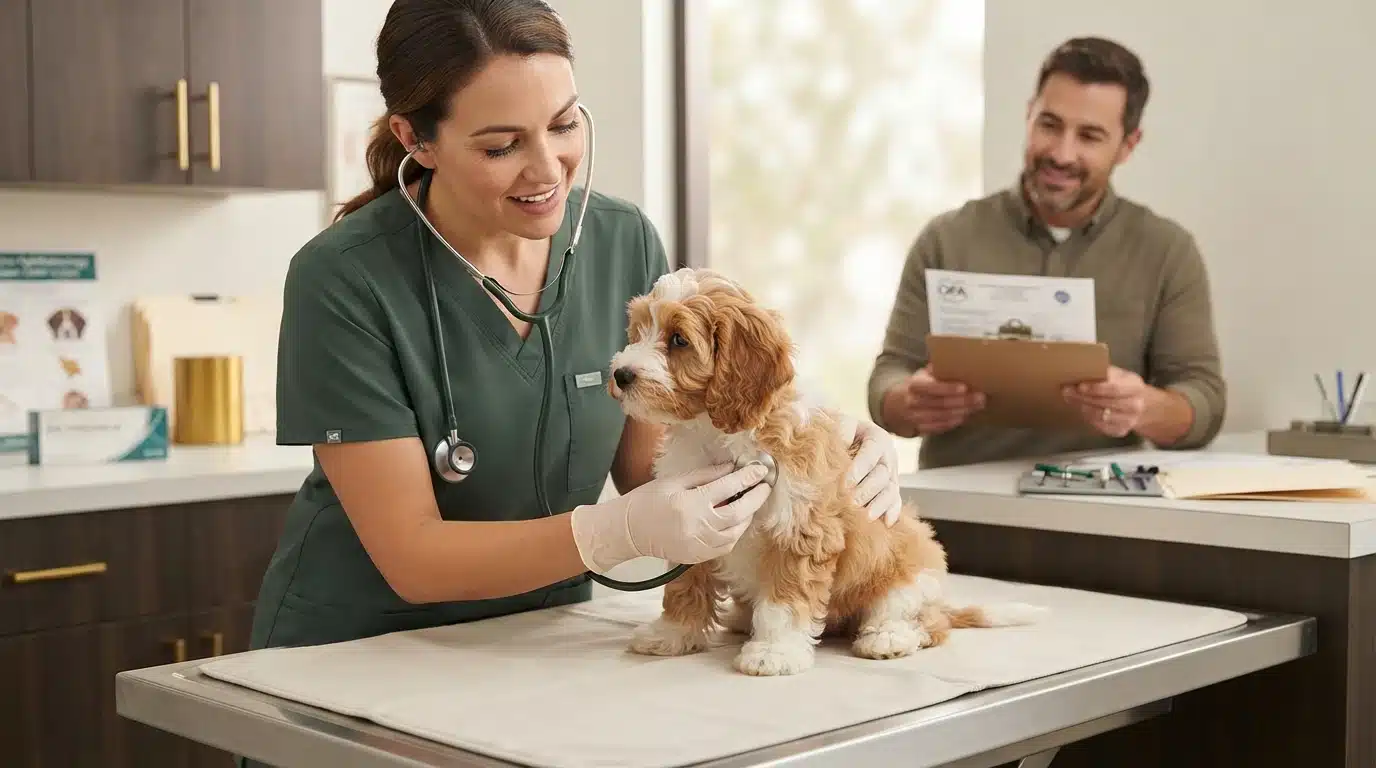
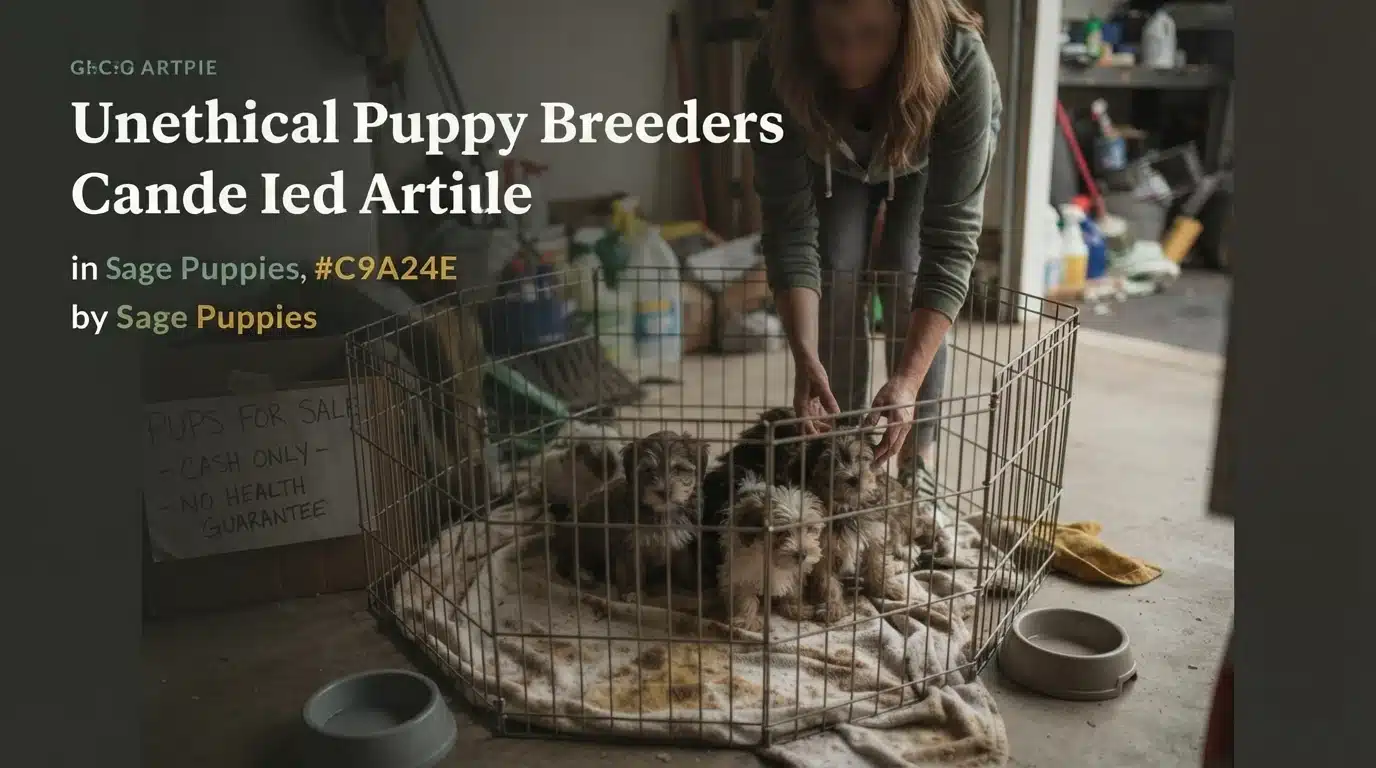
Quick Summary: Before reserving a puppy from an Alabama breeder, ask eight key questions covering breeding purpose, parent health testing, actual records, socialization, temperament, care plans, contract terms, and pickup or delivery details. Good breeders welcome these questions and provide written proof, while vague answers or pressure to pay first are red flags. The article also notes that the same standards apply whether comparing Alabama breeders or a Utah-based program like Sage Puppies, which offers home-raised Havanese, Havapoo, and Cavapoo puppies with clear health and reservation details.
One calm call can tell you more than polished puppy photos. Ask to see parent health records, discuss the puppy’s early weeks, and clarify what happens after a deposit.
Families looking at puppies for sale in Alabama often hear “health checked” or “family raised.” Those phrases alone do not show what testing was done, how puppies were socialized, or what protects your reservation. This breeder questions list helps first-time owners compare visits, video calls, pickup, and delivery without rushing.
These Alabama breeder questions are ranked by health, welfare, openness, and reservation risk. Use them as practical questions for breeders, then request written or verifiable records before reserving. The framework follows AKC and OFA guidance, with Alabama pickup and delivery details in mind. Good breeders welcome thoughtful Alabama breeder questions and ask about your family, too.
The Eight Alabama Breeder Questions at a Glance
| Question | Best for | Evidence to request | Warning sign | Decision value |
|---|---|---|---|---|
| Why did you choose this litter and these parent dogs? | Understanding breeding purpose and program values | Clear explanation of parent selection, goals, and breed experience | The only reason given is that puppies are available or profitable | Shows whether the breeder is planning for lifelong companion quality |
| What health testing has been completed on both parents? | Evaluating inherited-health planning | Specific parent tests, results, identifiers, and verification method | Only a puppy vet check, vague DNA-tested wording, or no parent records | Helps assess whether the pairing was made with documented health information |
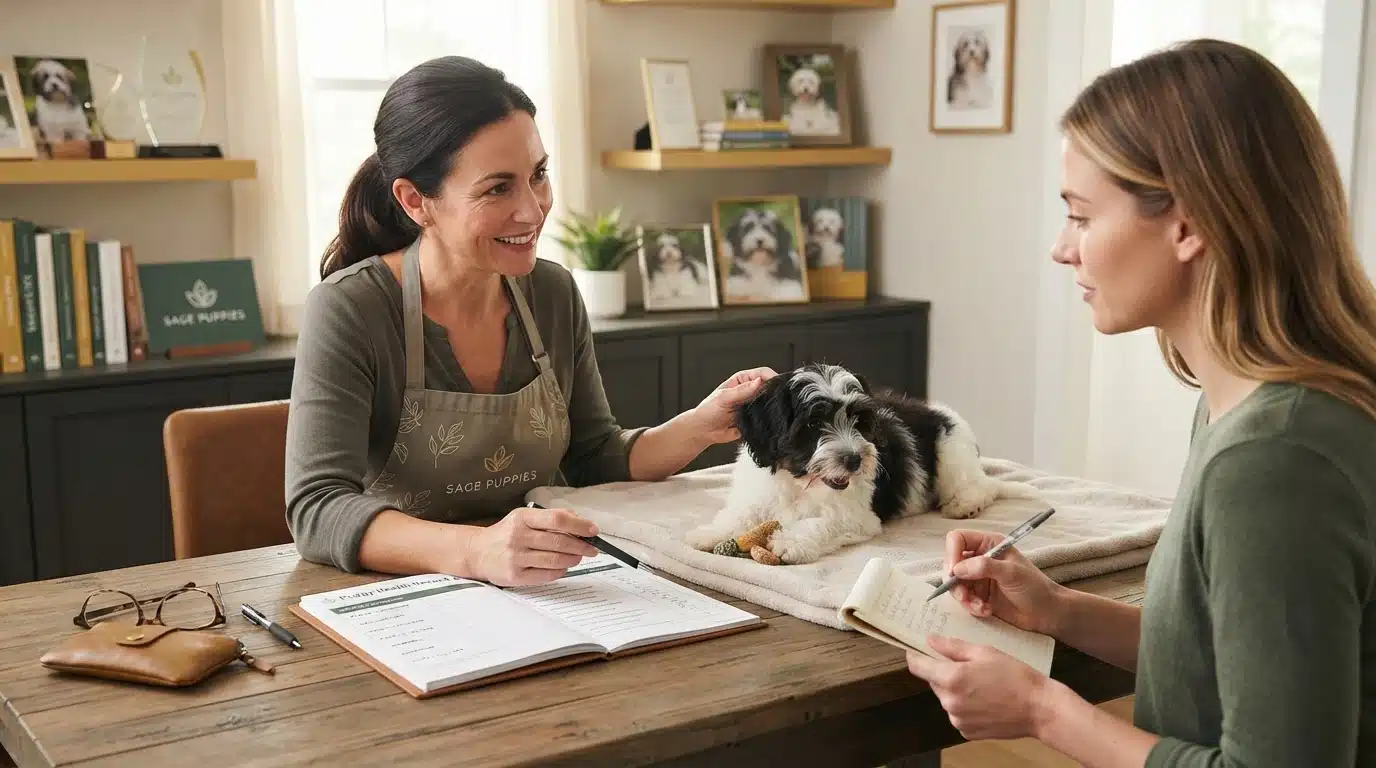
| Can I see the actual health records and veterinary information? | Checking documentation and breeder transparency | Parent certificates or registry records plus puppy veterinary records | Repeated delays, mismatched names, edited screenshots, or refusal to explain records | Confirms that health claims are connected to identifiable dogs and dates |
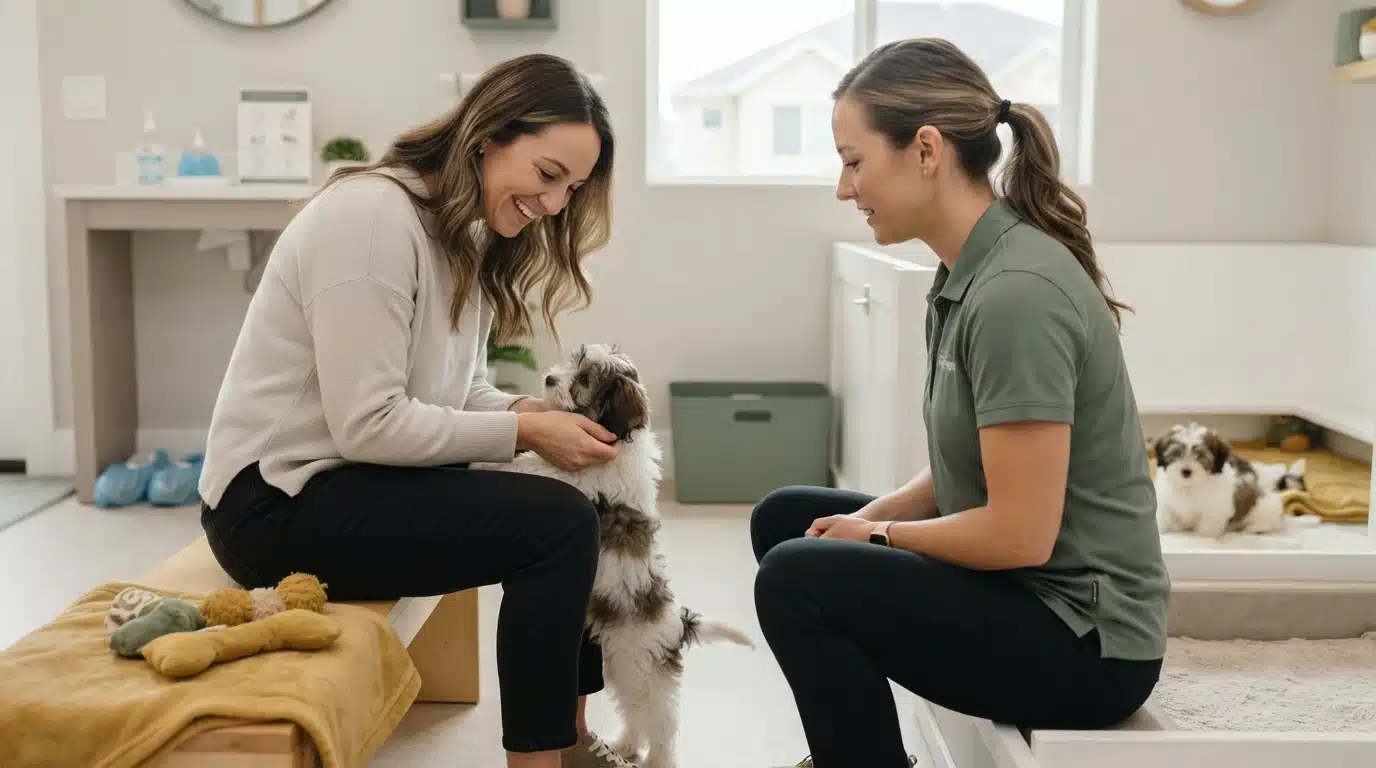
| Where are the puppies raised, and how are they socialized? | Assessing early development and living conditions | Concrete socialization plan, current video or visit, and puppy observations | No access to the environment, fearful or unwell puppies, or only staged photos | Shows whether the puppy is being prepared for ordinary family life |
| How would you describe this puppy’s temperament and family fit? | Matching a puppy to household lifestyle | Individual observations and a genuine conversation about your home | Every puppy is described identically or the breeder discourages questions about fit | Reduces the chance of choosing based only on appearance or urgency |
| What care, records, and support come with the puppy? | Preparing for the first days and weeks | Written care summary, veterinary records, feeding plan, and support terms | No records, unclear care history, or no contact process after pickup | Makes the handoff more organized and reduces avoidable confusion |
| Can I review the contract, health policy, and return terms before reserving? | Understanding legal, financial, and welfare responsibilities | Complete contract and health-policy documents before payment | Pressure to pay first, verbal-only promises, or no return plan | Prevents avoidable surprises and clarifies what happens after placement |
| When can the puppy go home, and how will pickup or delivery work? | Planning a safe and clear transition home | Birth date, go-home timing, transport plan, costs, and written instructions | Immediate handoff, vague meeting details, or unclear delivery responsibility | Protects puppy readiness, family logistics, and reservation expectations |
What to know before reserving a puppy from an Alabama breeder
A good breeder conversation should feel like a two-way fit check, not a rushed sale. Before you reserve, you should understand how the parents were chosen, how puppies are raised, and what support or terms come with your decision.
Strong answers connect documented health work, daily care, honest temperament guidance, and a clear go-home plan. Vague replies, missing records, or pressure to pay quickly are reasons to pause.
Whether you compare Alabama breeders or a Utah-based program like Sage Puppies, use the same standard: clear, complete information should come before a reservation.
1. Why did you choose this litter and these parent dogs?
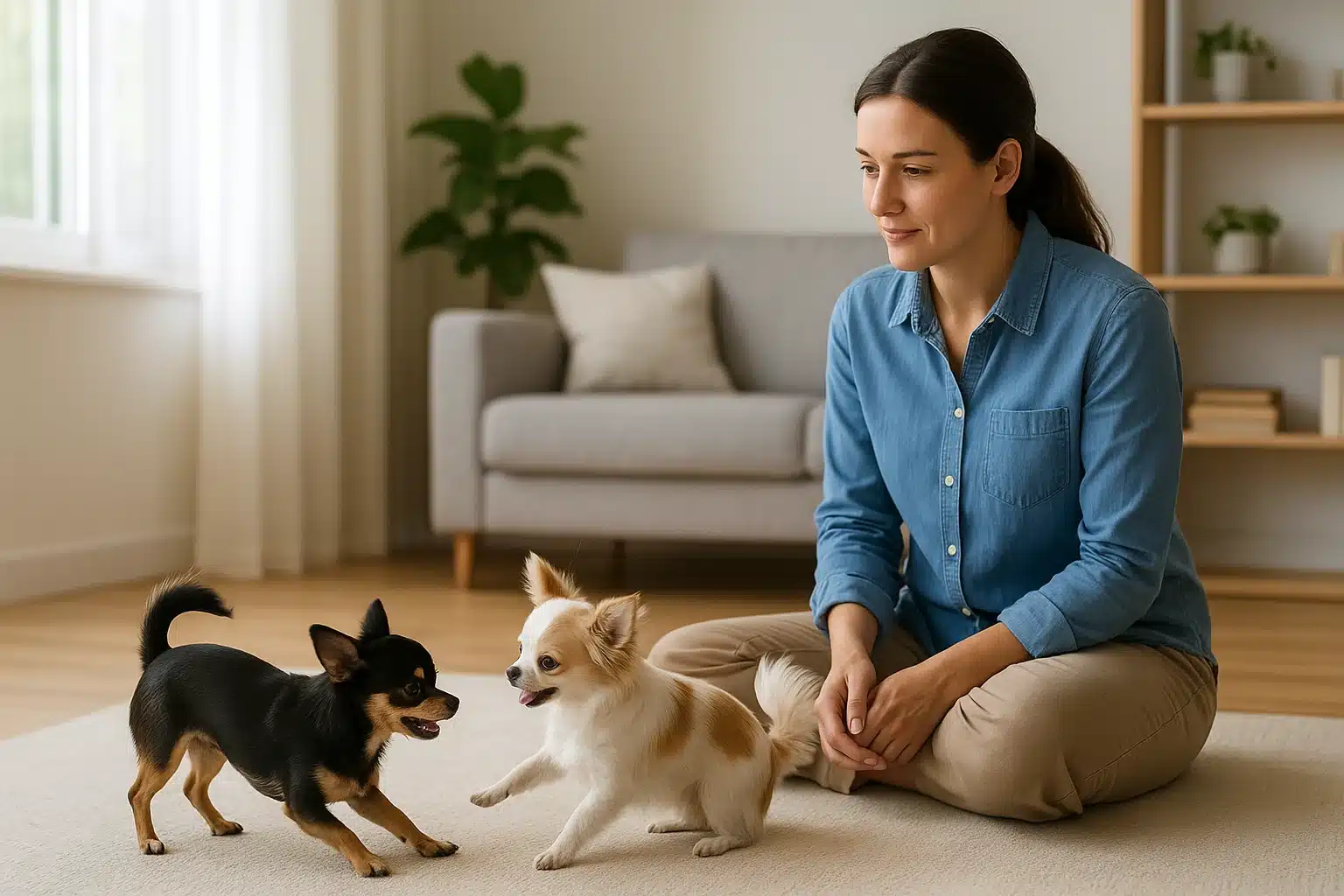
Start with the breeding purpose, not the puppy photo. Ask why these two dogs were paired and what the breeder hoped to preserve or improve.
Highlights
- Ask how long they have worked with this breed or mix, and which traits they value in each parent.
- Request real-life temperament details: comfort with children, visitors, household noise, grooming, and handling.
- Ask how health history, size, coat, and family fit shaped the pairing. The OFA advises buyers to ask why a litter was bred, not only whether puppies are available.
- A newer breeder can still give a strong answer if they explain their mentor, breed community, or health guidance. Breed-specific screening plans help breeders make more informed choices, notes the OFA health guidance.
Pros
- Shows whether choices are intentional.
- Opens a useful talk about temperament and inherited risks.
Cons
- A sincere answer does not replace records or a written contract.
- A new program may have less history to review.
Pause if the only answer is demand, color, or profit. That is not enough reason to reserve.
This ranks first because breeding purpose shapes every answer that follows.
Last updated: September 13, 2026
Also Read: 10 Red Flags to Avoid When Visiting a Local Puppy Breeder
2. What health testing has been completed on both parents?
Ask for the testing plan in specific terms. A puppy vet check matters, but it does not replace health screening completed on the sire and dam before breeding.

Highlights
- Ask for each parent’s registered name or clear identifying details, then request the exact physical screenings and DNA tests. The AKC notes that test needs differ by breed and come from breed-parent club guidance. Review breed health testing guidance
- Ask what each result means for this pairing. A carrier result for a recessive condition may be managed by pairing that dog with a clear mate.
- For Havanese, Havapoo, and Cavapoo puppies, ask how the breeder reviewed risks from both sides of the pairing.
- Request copies, registry links, or another way to verify results before you reserve. OFA records can help buyers review documented testing. AKC advises buyers to seek parent results
Pause the reservation if the answer is only “DNA tested,” a puppy exam, or no parent records.
| Ask for | Useful answer |
|---|---|
| Parent IDs | Names and records for sire and dam |
| Test list | Physical screenings and DNA tests |
| Results | Clear explanation of the pairing |
| Verification | Copies or registry links |
Pros
- Keeps attention on both parents, not just the puppy.
- Helps you assess documented inherited-health planning.
Cons
- Testing lowers risk but cannot promise a disease-free lifetime.
- Mixed-breed pairings require questions about both parent breeds.
This ranks here because parent testing is one of the clearest signs that a breeder planned the pairing with documented health information.
Last updated: September 13, 2026
Also Read: 7 Alabama Puppy Socialization Signs to Look for During Visits
3. Can I see the actual health records and veterinary information?
Trust grows when you can review records before money changes hands. Ask for proof, not just a promise, and make sure each document matches the parents and puppy discussed.

Highlights
- Request parent health-test results before reserving. The OFA advises buyers to review and verify screening results, including names that match the parents.
- Ask when the puppy had its veterinary exam, what the vet checked, and whether follow-up was advised.
- Request vaccination, deworming, and preventive-care records.
- Ask directly about known illness, treatment, or concerns in the litter or either parent.
- Confirm how records will reach your own veterinarian after pickup or delivery.
Specs
- Best for: Checking documents and breeder transparency
- Evidence to request: Parent certificates or registry records, plus puppy veterinary records
- Warning sign: Delays, mismatched names, edited screenshots, or refusal to explain details
- Decision value: Links health claims to identifiable dogs and dates
| Record type | What to check |
|---|---|
| Parent testing | Registered name, test date, result, and issuing group |
| Puppy care record | Exam date, vaccines, deworming, and treatments |
| Transfer plan | Copies your veterinarian can review |
A clean record is not a lifetime health guarantee. It shows what was tested and observed. The OFA notes that breed-specific screens vary, so ask why each test fits the puppy’s background.
Pros
- Gives your veterinarian a useful starting record.
- Makes gaps easier to spot before a reservation.
Cons
- Some results need a veterinarian’s help to interpret.
Records rank here because they turn reassuring words into facts you can check.
Last updated: September 13, 2026
4. Where are the puppies raised, and how are they socialized?
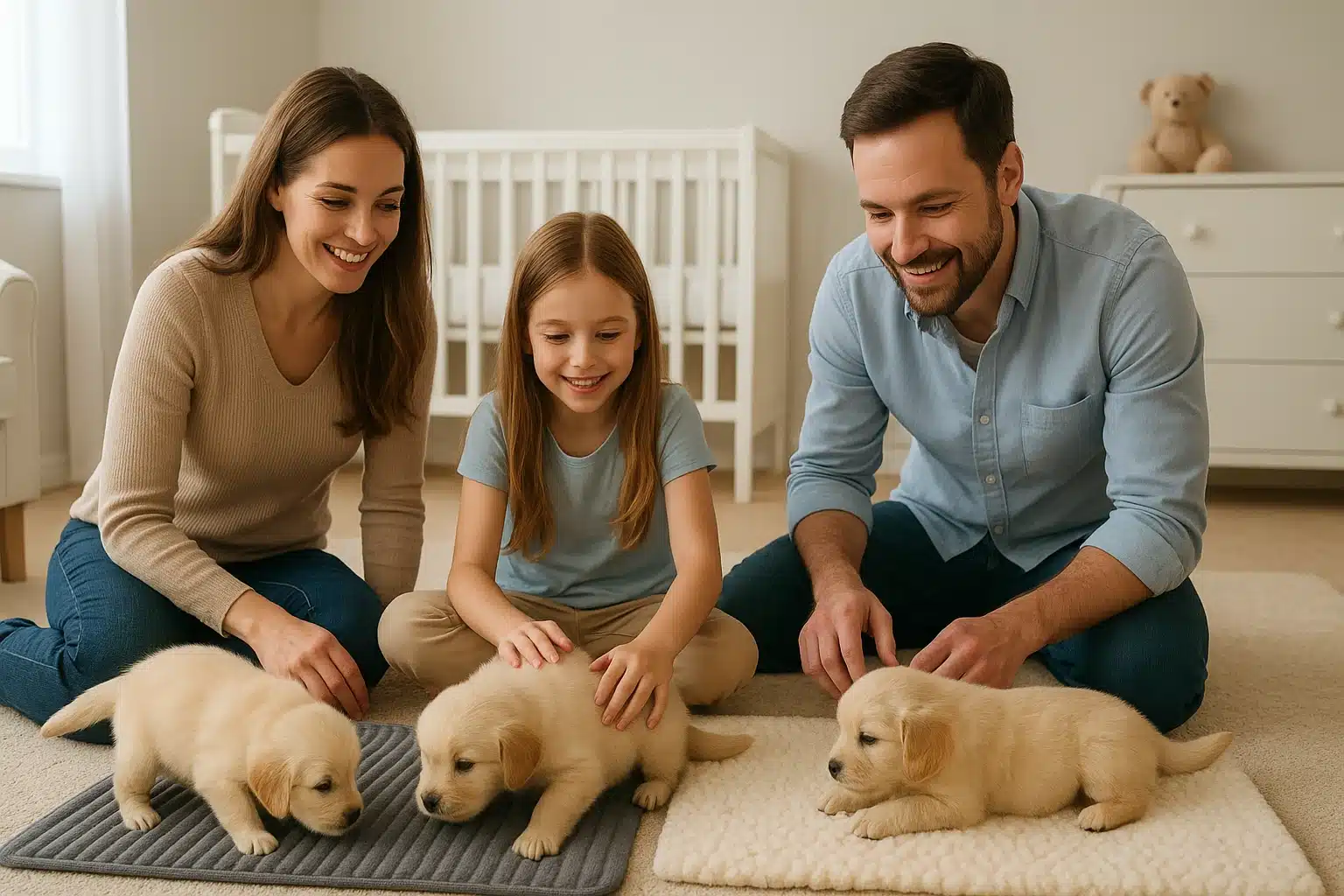
Ask what the puppy experiences before joining your home. Labels like home-raised help, but specific details tell you far more.
Highlights
- Ask whether puppies live in a home, nursery, kennel, or another setting. During an Alabama puppy breeder visit, look for a clean, safe space and a relaxed mother.
- Ask which everyday sounds, surfaces, people, and gentle routines puppies meet. Cornell notes that early exposure to people, sights, sounds, and smells can help pups handle new experiences later Cornell’s breeder guidance.
- Ask how the breeder introduces handling, brushing, nail care, crate time, and rest. Request real examples of each puppy’s confidence, curiosity, stress signals, and recovery.
- See the mother and litter when possible. The sire may live elsewhere. If you are remote, request a live video tour, not only polished photos. The AKC advises families to observe cleanliness, puppy condition, and the mother’s comfort when meeting a litter.
Specs
- Best for: Assessing early development and living conditions
- Evidence to request: Socialization plan, current video or visit, and puppy observations
- Warning sign: No access, fearful or unwell puppies, or staged photos only
- Decision value: Shows preparation for ordinary family life
Pros
- Sets realistic transition and training expectations.
- Encourages you to observe the mother and litter.
Cons
- Socialization cannot promise a fixed adult temperament.
- Health and safety may limit visits, so arrange them respectfully.
It ranks here because early weeks shape a puppy’s first response to everyday life.
Last updated: September 13, 2026
Also Read: 10 Signs a California Puppy Listing Is a Scam – Sage Puppies
5. How would you describe this puppy’s temperament and family fit?
Choose a personality match, not simply the puppy with the prettiest photo. Ask what the breeder has seen in this individual puppy during play, rest, handling, and new experiences.

Highlights
- Ask which puppy may fit a first-time owner or a busy Alabama family.
- Request specific examples of confidence, activity, affection, recovery after surprises, and play with littermates.
- Share your children’s ages, other pets, work hours, grooming plans, and training goals.
- Ask what the breeder can and cannot predict about adult size, coat, and temperament.
- A thoughtful application or matching call is a good sign. The AKC advises breeders to match puppy personality with lifestyle, not just color or sex.
Ask for observations, not promises. A puppy’s temperament is still developing.
Specs
- Best for: Matching a puppy to your household lifestyle
- Evidence to request: Individual observations and an honest conversation about your home
- Warning sign: Every puppy gets the same description, or the breeder pushes you to reserve before discussing fit.
- Decision value: Helps you avoid choosing from photos or urgency alone.
Pros
- Supports a better family-puppy match.
- Helps first-time owners plan for real care needs.
- Creates room for honest uncertainty and individual differences.
Cons
- Early observations are snapshots, not fixed predictions.
- No breeder can guarantee an adult dog’s personality.
A responsible breeder asks questions too, since a good placement is a two-way fit.
Last updated: September 13, 2026
Also Read: How to Check Alabama Puppy Breeder Licensing and Facility Standards
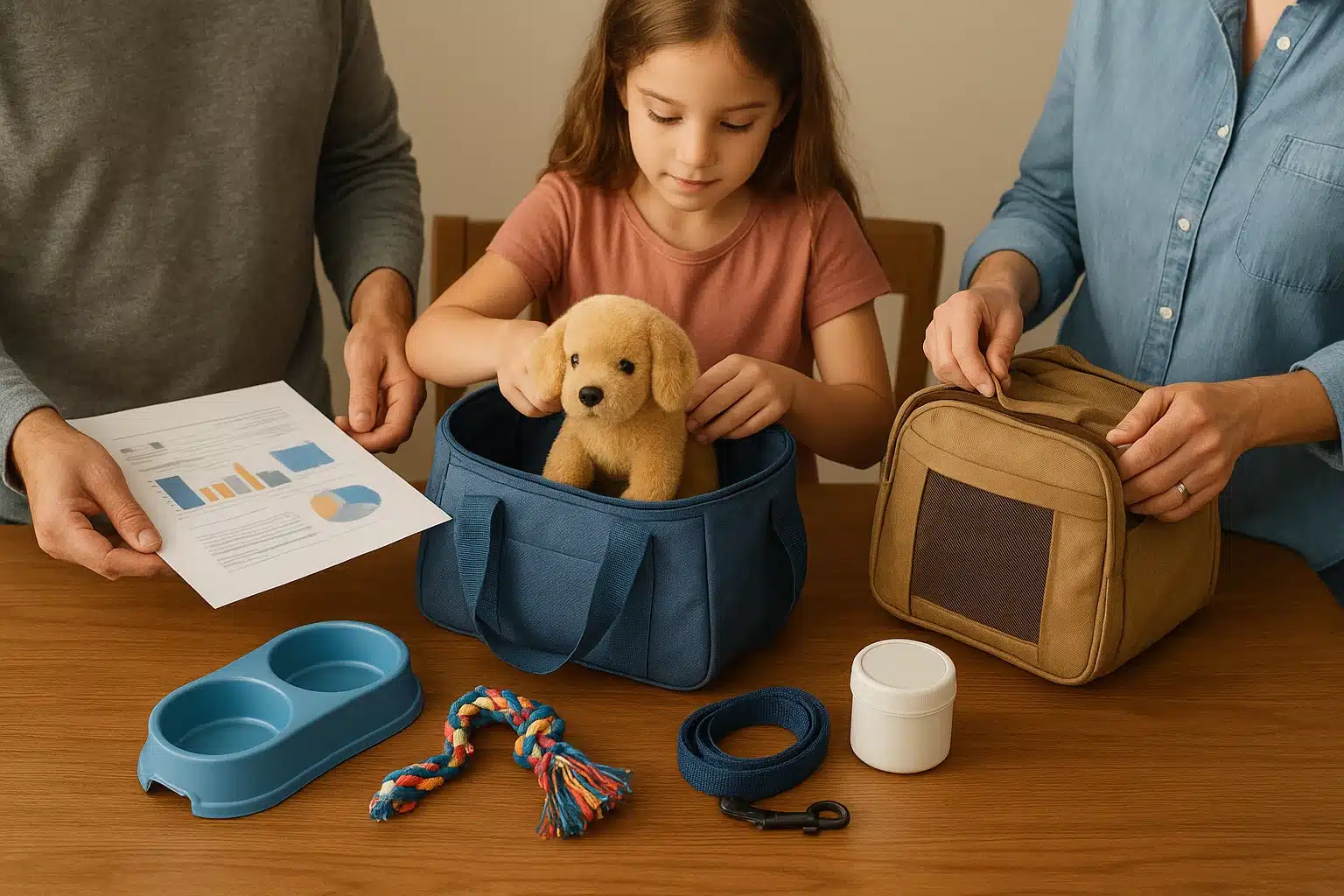
6. What care, records, and support come with the puppy?
Clarify what has been done and what help continues after go-home day. Ask for the details in writing before you reserve.
Highlights
- Request veterinary records, vaccine and deworming dates, identification details, and what care is still due. Puppies need a vaccine series, so your veterinarian should set the next steps based on their record and needs, as the AVMA explains.
- Ask for the current food, meal times, sleep routine, and transition plan.
- Confirm how to contact the breeder after pickup or delivery. The AVMA advises that a provider should supply current health records and be easy to contact.
- Separate included care from optional services, then ask what your own vet should review.
Specs
- Evidence to request: Written care summary, veterinary records, feeding plan, and support terms
- Warning sign: No records, unclear care history, or no contact process after pickup
- Best for: Preparing for the first days and weeks
Clear handoff details rank here because they reduce avoidable confusion once your puppy is home.
Last updated: September 13, 2026
7. Can I review the contract, health policy, and return terms before reserving?
Read the terms before you pay a deposit. Ask for the complete contract and health policy, then review them at home without pressure.

Highlights
- Ask when you receive the contract and whether you can take time to read it. The AKC advises buyers to review contracts before deciding.
- Confirm the puppy’s ID, parent details, price, registration status, vet-check deadline, and any spay or neuter terms.
- Ask exactly what the health policy covers, excludes, and requires if your puppy becomes ill after pickup.
- Clarify which Alabama breeder deposit terms are refundable, transferable, or non-refundable.
- Ask if you must contact or return the dog to the breeder if life changes. A return-to-breeder plan helps keep the dog out of unsafe resale or shelter situations.
Pros
- Gives both sides a clear written plan.
- Helps you make an informed financial choice.
- Sets expectations for care, support, and rehoming.
Cons
- Health policies do not promise perfect lifelong health.
- Some terms may need clarification from your vet or attorney.
Pause the reservation if promises stay verbal, terms arrive only after payment, or no return plan exists.
This ranks here because written terms make responsibilities visible before money and emotion complicate the choice, as AKC contract guidance notes.
Last updated: September 13, 2026
Also Read: Havanese, Havapoo & Cavapoo Puppy Care Blog
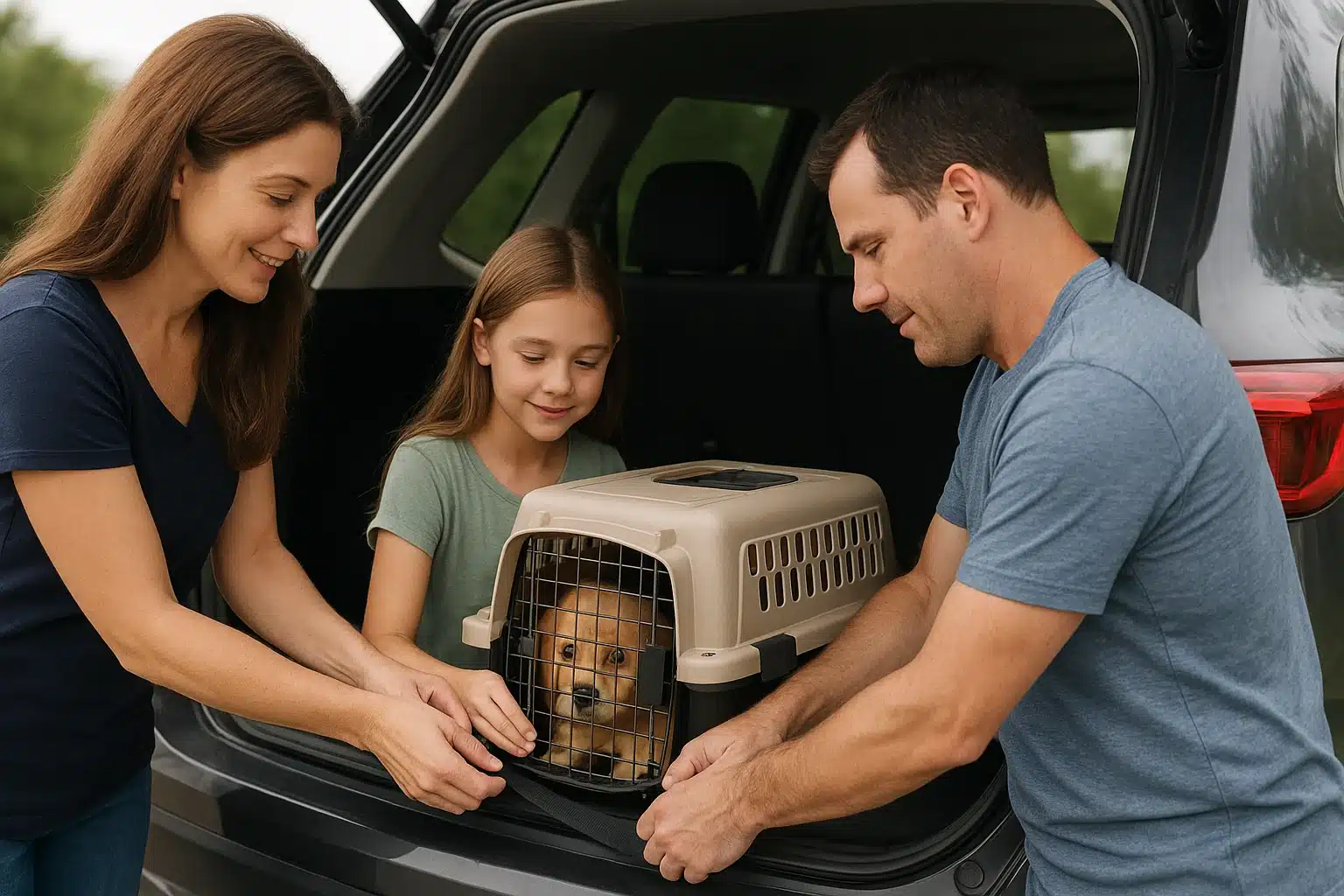
8. When can the puppy go home, and how will pickup or delivery work?
A safe go-home plan matters as much as a reservation date. Ask for the puppy’s birth date, expected go-home date, and the reasons behind that timing.
Highlights
- Most puppies go home around 8 to 10 weeks, but small breeds or travel plans may call for more time. AKC guidance supports waiting until a puppy is mature, eating well, and ready for the change.
- Ask whether the breeder will delay pickup if the puppy is unwell or not ready.
- Confirm the exact pickup site, required ID, paperwork, and who handles delivery.
- For travel, ask if transport is direct, by flight nanny, or by ground service. Safe transport plans should name the handler, carrier, timing, and cost.
Specs
- Evidence to request: Birth date, go-home timing, written transport plan, full costs, and feeding instructions.
- Best for: Families planning Alabama pickup or national delivery from a breeder in Utah or elsewhere.
- Warning sign: An immediate handoff, vague meeting location, or unclear delivery responsibility.
Pros
- Helps you budget, plan travel, and prepare food, a crate, and a calm first night.
- Keeps puppy readiness ahead of convenience.
Cons
- Weather, distance, and puppy health can change the plan.
This ranks here because a reservation is not complete until you know how the puppy will safely reach home.
Last updated: September 13, 2026
How to choose the right Alabama breeder after asking your questions
Choose the breeder with the clearest proof, not just the friendliest reply.
- Ask to review parent health results, puppy records, and written reservation terms.
- Favor breeders who ask about your home, children, pets, work schedule, grooming plans, and timing.
- For Havanese, Havapoo, or Cavapoo puppies, expect honest guidance on adult size, coat, shedding, and temperament. No breeder can promise every trait.
- If you cannot visit, request a live video call, a view of the puppies with their mother when appropriate, and clear details about where they are raised.
- Read the contract, health policy, deposit rules, delivery plan, and return terms before you pay.
Get any term that affects money, vet care, or pickup confirmed in writing.
Use this same checklist with Sage Puppies in South Jordan, Utah. Their family-first approach makes them a strong choice for families seeking a carefully matched small-breed companion, with local pickup or nationwide delivery.

Ready to ask the right questions before you reserve? Sage Puppies gives families clear health, temperament, reservation, and pickup or delivery details for home-raised Havanese, Havapoo, and Cavapoo puppies. View available puppies, then begin with confidence.
Frequently Asked Questions About Alabama Breeder Questions
Q1: What questions should I ask a puppy breeder in Alabama before reserving a puppy?
Ask about parent health records, home raising, puppy socialization, vet care, contract terms, reservation refunds, pickup plans, and delivery. Request documents before paying. A breeder should answer clearly and welcome follow-up questions.
Q2: How do I know if a puppy breeder in Alabama is reputable?
Look for open communication, proof of health testing, clear pricing, and realistic timing. They should explain how puppies are raised and match puppies to homes, not rush you into a deposit.
Q3: What health tests should Alabama breeders perform on puppy parents?
Tests depend on breed, but often include eye, heart, patella, and DNA screening. Ask for parent results, not a verbal promise. Review the documents and ask what findings mean for the litter.
Q4: Should I pay a reservation fee before meeting the breeder?
Only after you understand the contract, refund terms, total price, and expected pickup plan. Keep payment records and confirm what the fee holds.
Q5: What if a breeder will not share health records?
Pause the reservation. A responsible breeder should explain testing and provide supporting records.