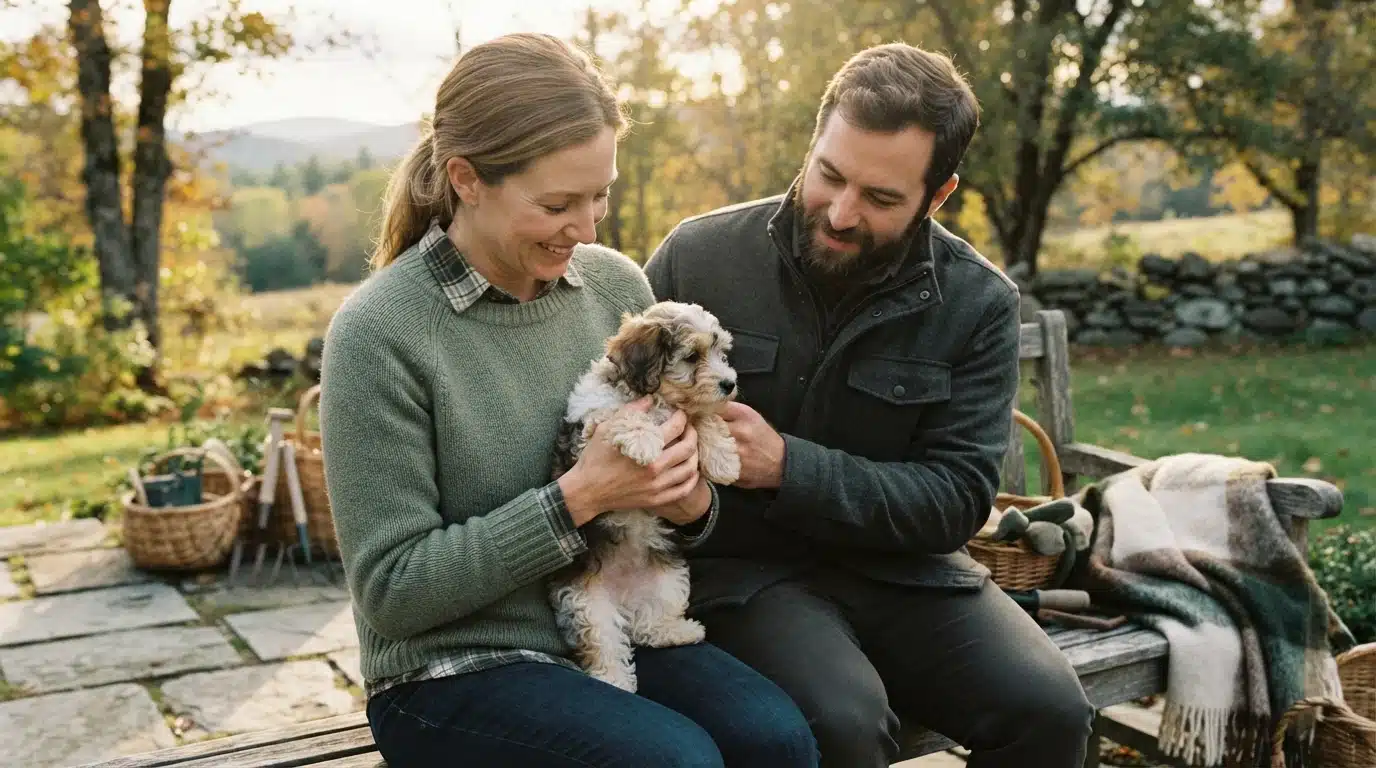
Quick Summary: When visiting Alabama puppies, focus on recovery after a surprise, curiosity toward people, and acceptance of gentle handling, not just a cute first reaction. A well-socialized puppy shows brief pauses followed by re-engagement, settles after play, and interacts politely with littermates. Ask the breeder about daily routines and handling, since one visit is only a snapshot. Choose the puppy that fits your real life, not the one with the flashiest greeting.
The key moment during Alabama puppy visits often comes after the first hello. Notice what happens when someone enters the room, the puppy steps onto a new surface, or play pauses with a small surprise.
A wagging tail and sweet face matter, but one happy minute cannot show the whole picture. You want a well socialized puppy that can show curiosity, accept gentle handling, and settle after a brief concern. Still, do not expect an eight-week-old puppy to act like a trained adult dog.
These seven puppy socialization signs give you a calm way to observe, ask better questions, and tell normal caution from ongoing distress. The puppy socialization signs are ranked for what you can use in a short visit. Look for patterns, not one reaction. Consider age, sleep, recent meals, litter play, and the breeder’s notes from other days. Those details make puppy socialization signs far more useful.
Puppy Visit Checklist at a Glance
| Sign | Best for | What to observe | Healthy response | Question to ask |
|---|---|---|---|---|
| Recovers calmly after a small surprise | Families seeking an adaptable companion | Response to a mild, naturally occurring change | Brief pause followed by re-engagement or calm observation | How does this puppy usually recover from unfamiliar experiences? |
| Approaches people with curiosity | Families wanting a people-focused small companion | Approach, sniffing, checking in, and ability to pause | Relaxed curiosity without forced greeting | How does the puppy respond to new visitors at home? |
| Accepts gentle handling | Families prepared for grooming and routine care | Brief touch to paws, ears, coat, and body | Manageable wiggling with recovery and relaxed interaction | What handling and grooming foundations has this puppy experienced? |
| Explores new surfaces and spaces | Families wanting a flexible household companion | Movement and curiosity in a safe unfamiliar area | Careful investigation with access to retreat and rest | Which surfaces, rooms, sounds, and routines has the puppy experienced? |
| Can settle after play | Families seeking a balanced home companion | Transition from play or greeting into rest | Quiet pause, chewing, resting, or calm contact | How are rest and stimulation balanced each day? |
| Communicates appropriately with littermates | Families evaluating early dog-to-dog communication | Pauses, feedback, turn-taking, and disengagement | Play that can pause and adjust with social cues | How does this puppy interact with littermates and adult dogs? |
| The breeder can explain a consistent socialization routine | Families comparing breeder programs carefully | Specific, consistent answers about early experiences | Transparent explanation without exaggerated guarantees | What socialization has this puppy received, and what should we continue? |
What to know about puppy socialization signs
Puppy socialization means more than teaching a puppy to greet strangers. It is a gradual, positive process that helps a young dog feel safe with people, gentle handling, common sounds, new surfaces, daily routines, and small changes.
During a breeder visit, do not expect every puppy to run straight to you. A thoughtful puppy may pause, watch, then come closer once they feel safe. What matters is their ability to engage, recover after a surprise, and return to calm behavior at an age-appropriate pace.
A puppy that needs a moment to warm up is not automatically shy. Look for steady recovery, curiosity, and comfort with kind guidance.
1. Recovers calmly after a small surprise
Look for recovery, not a complete absence of surprise. A door closing or a new sound may cause a pause, and that is normal.

Highlights
- Watch a naturally occurring change. Do not create a frightening test.
- A brief startle, glance, or step back can be healthy.
- Good puppy recovery after startle may look like sniffing, taking a treat, returning to play, or calmly watching from a short distance.
- The AVSAB socialization guidance advises families to watch each puppy’s body language and adjust exposure to its comfort level.
- Ask the breeder whether they have seen this puppy recover in other new settings.
Specs
- Best for: Families seeking an adaptable companion
- What to observe: Response to a mild, naturally occurring change
- Healthy response: Brief pause followed by re-engagement or calm observation
- Question to ask: How does this puppy usually recover from unfamiliar experiences?
Pros
- Offers a practical view of early emotional resilience.
- Does not demand a performance from the puppy.
Cons
- One visit cannot predict adult behavior.
- Sleepiness, hunger, or an unfamiliar room can shape the response.
Persistent trembling, hiding, frantic escape attempts, or no return to comfort deserves a calm conversation and another observation.
This ranks first because recovery is one of the clearest puppy socialization signs, yet a single moment should never decide the match.
Last updated: September 10, 2026
Also Read: Georgia Puppies: How to Assess Early Puppy Socialization
2. Approaches people with curiosity
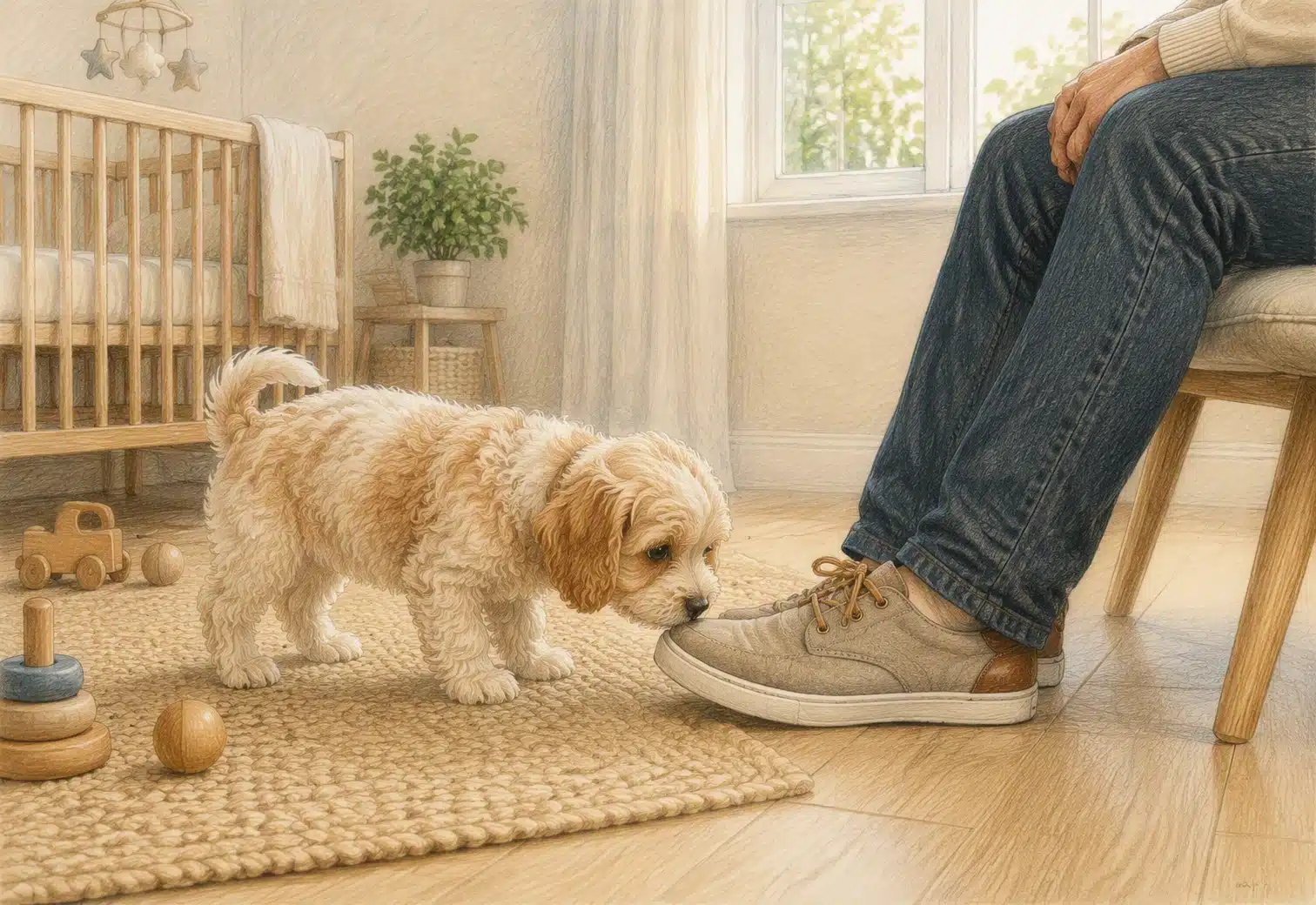
A well-socialized puppy can notice new people without being pushed into contact. During Alabama puppy visits, look for interest at the puppy’s own pace.
Highlights
- Watch for a chosen approach, such as a sniff, gentle touch, toy offer, or brief check-in with the breeder before returning.
- Look for loose movement, a soft face, relaxed mouth, play, or calm observation nearby. AVSAB body-language guidance notes that relaxed dogs often show soft eyes and an open mouth.
- Let the puppy move away and come back. Do not chase, scoop up, or coax it into a greeting.
- Ask, “How does the puppy respond to new visitors at home?” Also ask about visitors of different ages and appearances.
Specs
- Best for: Families wanting a people-focused small companion
- What to observe: Approach, sniffing, checking in, and the ability to pause
- Healthy response: Relaxed curiosity without a forced greeting
- Question to ask: How does the puppy respond to new visitors at home?
A puppy comfortable with strangers does not need to greet every person. Positive socialization should match the puppy’s pace and avoid overwhelm, as AVSAB explains.
Pros
- Relevant for homes with visitors and frequent family interaction
- Shows social interest without a formal temperament test
Cons
- Excitement can look like confidence
- A reserved puppy may still become a wonderful companion
This ranks here because easy engagement matters, but recovery after a surprise shows broader flexibility.
Last updated: September 10, 2026
Also Read: 10 Adorable Havapoo Colors You Need to See (2026)
3. Accepts gentle handling
Comfort with kind touch supports grooming, vet care, and daily family routines. Ask the breeder to demonstrate brief, age-appropriate handling before visitors pass the puppy around.

Highlights
- Watch brief touches to the ears, paws, coat, collar area, and body.
- Look for soft muscles, normal breathing, and a return to play after handling.
- Short, reward-based grooming sessions help puppies build positive links with care.
Specs
- Best for: Families ready for grooming and routine care
- What to observe: Gentle touch to paws, ears, coat, and body
- Healthy response: Manageable wiggling, quick recovery, relaxed interaction
- Question to ask: What handling and grooming foundations has this puppy experienced?
A puppy does not need to stay perfectly still. Brief protest or wiggling is normal. Avoid judging a puppy harshly for acting like a puppy.
Pros
- Connects directly to brushing, nail trims, baths, and vet visits.
- Shows whether the breeder uses patient, positive interaction. The AKC notes that calm handling of ears and feet supports future basic exams.
Cons
- Young puppies have short attention spans.
- Puppy handling tolerance needs steady practice after go-home day.
It ranks here because respectful handling and recovery are clear signs of thoughtful puppy socialization before buying.
Last updated: September 10, 2026
Also Read: How to Check Alabama Puppy Breeder Licensing and Facility Standards
4. Explores new surfaces and spaces
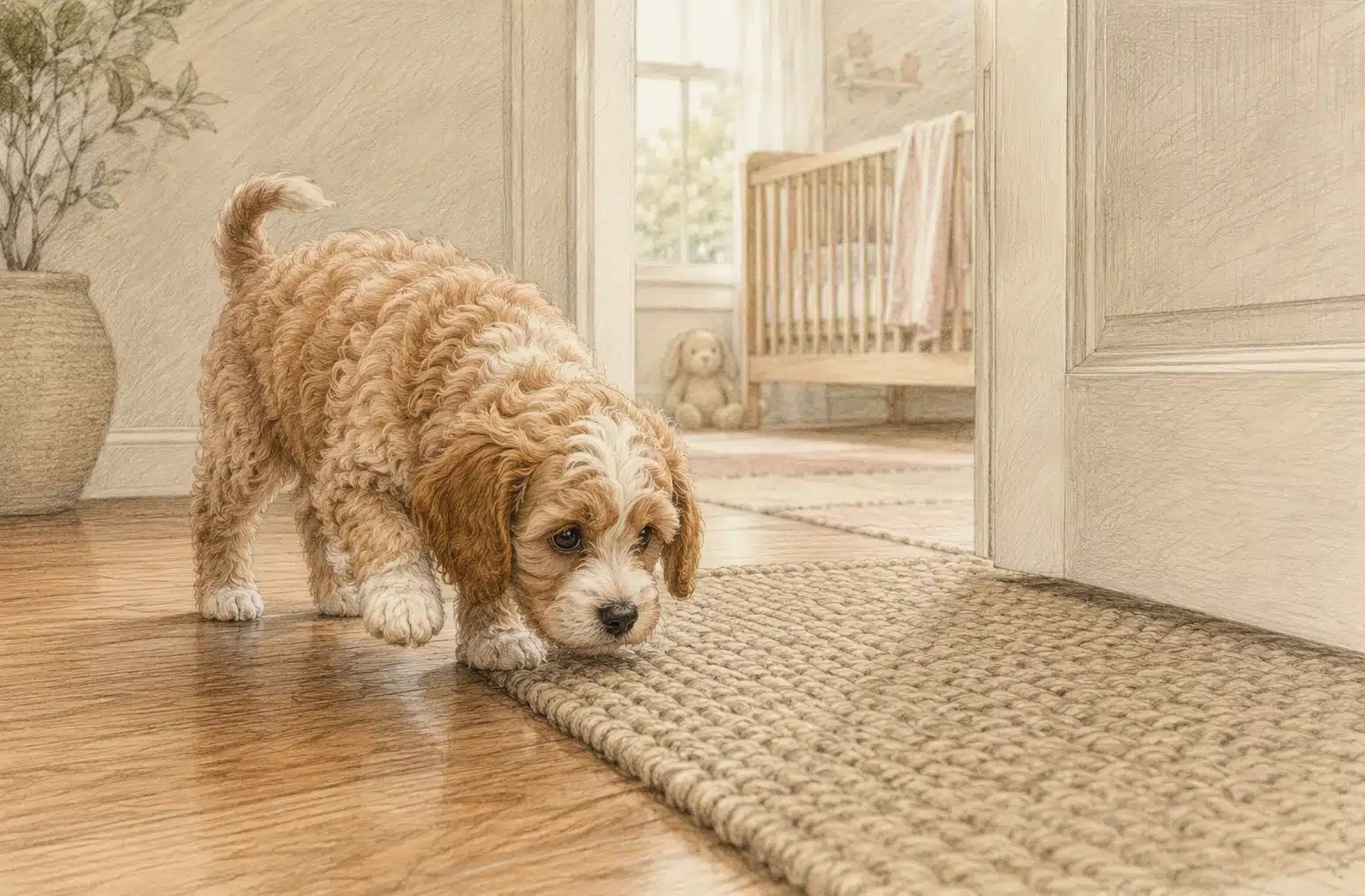
Curiosity across safe environments suggests a growing ability to adapt. During Alabama puppy visits, watch for sniffing, careful steps, and a choice to investigate.
Highlights
- Ask which floors, rooms, textures, sounds, and daily routines the puppy has experienced. A veterinary behavior guide supports safe exposure to varied surfaces and settings.
- Look for voluntary movement into a new area, then a return to a familiar person or bed. A well socialized puppy does not need to be fearless.
- Avoid judging a tired puppy harshly. Exploration can change quickly with age, nap time, and the activity around them.
- Confirm that public or outdoor exposure follows veterinary guidance and infection-control steps. AAHA advises controlled, low-risk exposure while vaccines are still in progress.
Do not drag a puppy across a surface or push it toward a doorway. Choice, retreat, and rest are part of healthy learning.
Specs
- Best for: Families wanting a flexible household companion
- What to observe: Movement and curiosity in a safe unfamiliar area
- Healthy response: Careful investigation with access to retreat and rest
- Question to ask: Which surfaces, rooms, sounds, and routines has the puppy experienced?
Pros
- Shows more than people-focused friendliness
- Relates to travel, grooming, visitors, and home changes
Cons
- A short visit may show limited variety
- Public exposure must stay balanced with health precautions
It ranks here because adaptability matters, but the breeder’s record of repeated safe exposure is stronger evidence than one brief visit.
Last updated: September 10, 2026
5. Can settle after play
A puppy who can shift from activity to rest shows an important early life skill. Watch what happens after the first exciting greeting, not just during it.

Highlights
- After a few minutes of play, look for a quiet sniff, gentle chewing, resting near littermates, or calm contact.
- Young puppies need plenty of sleep. The AKC notes that active time should be followed by quiet time.
- Ask: How are rest and stimulation balanced each day?
Specs
- Best for: Families seeking a balanced home companion
- What to observe: Transition from play or greeting into rest
- Healthy response: A quiet pause, chewing, resting, or calm contact
- Remember: A well socialized puppy may be overtired or unusually energetic during a short visit.
Pros
- Helps first-time owners judge a puppy’s rhythm, not just excitement.
- Matters for busy homes, visitors, travel, and later training.
Cons
- Settling develops with age, routine, and continued training.
- One visit is only a snapshot of puppy temperament during a visit.
A puppy who can settle is not showing formal obedience. They are showing that a predictable routine can help them recover after stimulation.
This ranks here because a family puppy needs friendly energy, but also the ability to pause and rest.
Last updated: September 10, 2026
Also Read: 10 Signs a California Puppy Listing Is a Scam – Sage Puppies
6. Communicates appropriately with littermates
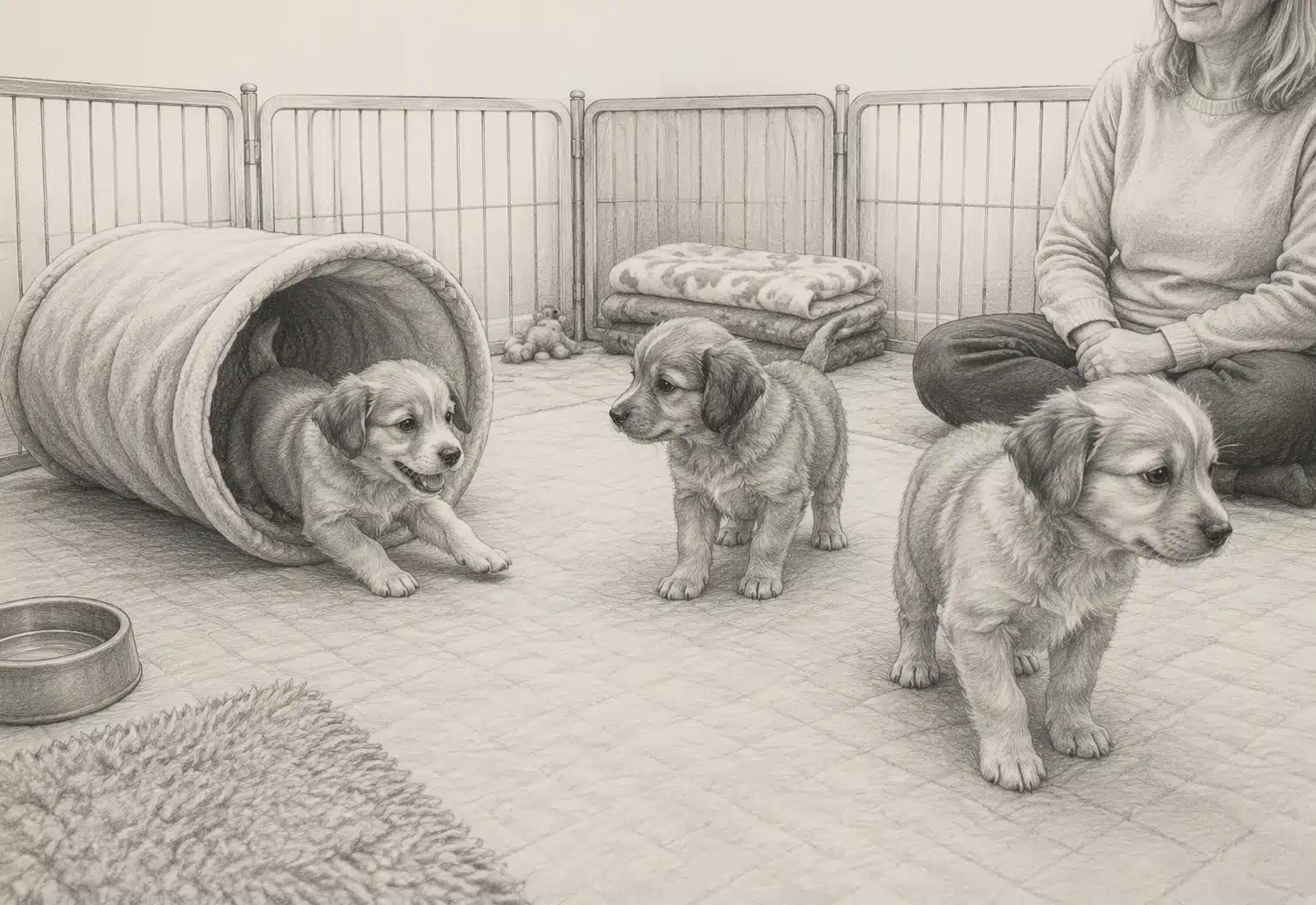
Healthy puppy play includes pauses, feedback, and respect for boundaries. Watch the litter only under the breeder’s supervision, and focus on how a puppy responds when another puppy needs space.
Highlights
- Look for loose, back-and-forth puppy play behavior: short chases, role changes, play bows, and breaks. AVSAB notes that role reversal and self-handicapping can help play stay friendly.
- A good sign is a puppy that pauses or changes course when a littermate walks away, then returns without escalating.
- Ask: How does this puppy interact with littermates and adult dogs?
- One loud wrestling session does not define a puppy. Watch several minutes and consider the whole group.
Specs
- Best for: Families assessing early dog-to-dog communication
- What to observe: Pauses, feedback, turn-taking, and disengagement
- Healthy response: Play that adjusts to social cues
Do not label normal puppy noise or mouthing as aggression. Look for repeated stiffness, hard staring, or refusal to give another puppy space. Body posture matters as much as tail movement.
Pros
- Offers useful context about early canine communication.
- Helps families see play style and energy.
Cons
- New visitors can misread puppy play.
- Littermate behavior cannot predict every future dog interaction.
This ranks here because it adds helpful context, but human interaction and recovery matter more for a family companion.
Last updated: September 10, 2026
Also Read: 10 Red Flags to Avoid When Visiting a Local Puppy Breeder
7. The breeder can explain a consistent socialization routine
One calm visit can reflect a puppy’s mood, nap schedule, or the novelty of meeting you. The stronger sign is transparent, repeatable care that explains the moment you see.

Highlights
- Ask what puppies experience each week: gentle handling, home sounds, safe surfaces, play, rest, and grooming prep.
- Look for a calm explanation of how exposure changes with age. AVSAB guidance stresses that each puppy needs a pace that fits its response.
- Ask how the breeder tracks each puppy’s temperament, including areas still growing.
- Confirm what you should continue after pickup or delivery. Early experiences work best when families keep building them.
Specs
- Best for: Families comparing breeder programs carefully
- What to observe: Specific, consistent answers about early experiences
- Healthy response: Clear details without promises of a perfect adult dog
- Question to ask: What socialization has this puppy received, and what should we continue?
Pros
- Adds context a short visit cannot provide.
- Helps assess care and communication.
Cons
- The explanation should match the care you observe.
- No puppy socialization program can guarantee adult temperament. AVMA’s review notes that early work must continue with the owner.
Sage Puppies describes family-raised care, gentle handling, household exposure, routine, potty foundations, and temperament observation for its small-breed puppies.
This ranks seventh because it is context, not body language, but it helps you read every other sign accurately.
Last updated: September 10, 2026
Questions to Ask Before You Reserve
Use the breeder’s answers to put what you saw during the visit in context. Look for clear, specific details rather than vague reassurance.
- How has the puppy responded to visitors over several days?
- What handling and household experiences has the puppy had?
- How does this puppy compare with its littermates?
- What does the puppy need after going home?
- Can I review health and go-home information before reserving?
- How do you handle a puppy that seems overwhelmed?
- What are the pickup or delivery arrangements?
How to choose the right puppy after your visit
Choose the puppy that fits your real life, not just the one with the cutest first reaction. A calm match often matters more than color or a burst of play.
Use these checks before you reserve:
- Match your household: Share your children’s ages, work hours, travel plans, grooming comfort, and how closely you want a companion to stay by your side.
- Look for a pattern: Compare the visit with breeder notes, updates, and videos. One sleepy, shy, or excited moment is not the whole puppy.
- Plan the next stage: Ask how to continue safe social exposure, rest, routine, training, and veterinary care after go-home day.
- Review the records: Read parent health testing, vaccination details, go-home readiness, and written reservation policies.
- Confirm logistics: Alabama families should ask about appointment visits, live video options, and how pickup or delivery will work.
- Choose for traits, not color: Ask how Havanese, Havapoo, and Cavapoo coat care and observed temperaments may suit your home.
Sage Puppies is a strong choice for families who want thoughtful matching, health-tested parents, and a home-raised start, with pickup or nationwide delivery options.

Ready to look beyond a cute face? Sage Puppies raises Havanese, Havapoos, and Cavapoos in a home setting with early socialization and health-tested parents. Review available puppies, ask about each pup’s daily experiences, then apply when you find the right fit. Local pickup and nationwide delivery are available.
Frequently Asked Questions About Puppy Socialization Visits
Q1: What are the signs of a well-socialized puppy?
A well-socialized puppy recovers quickly after a new sound, approaches people with calm interest, and accepts gentle handling. Expect normal caution, not nonstop boldness. Look for loose body posture, curious sniffing, and a willingness to rejoin play.
Q2: How do I know if a puppy is socialized before buying?
Ask what the puppy has experienced each day: household sounds, people, grooming, surfaces, car rides, and short separations. During your visit, watch the puppy respond to you. A brief pause is normal. Recovery matters most.
Q3: What should I look for when visiting a puppy breeder?
Look for clean, home-like spaces, relaxed puppies, and clear answers about daily care. Meet the puppy without rushing. Notice how the breeder handles the litter and discusses fit, not just availability or a quick sale.
Q4: Is a shy puppy always poorly socialized?
No. Some puppies are naturally quieter. Give the puppy time to observe, then see whether it warms up with calm voices, treats, or play. Avoid choosing a puppy that stays frozen, panicked, or unable to recover.
Q5: Can a puppy stay socialized after coming home?
Yes, but your work continues. Use short, positive outings, kind visitors, safe puppy classes, and gentle handling. Do not overwhelm your puppy with busy events. Sage Puppies families should keep building confidence at the puppy’s pace.