Quick Summary: Alabama has no statewide puppy breeder license, so buyers must verify USDA licensing, local rules, and facility conditions themselves. Use the USDA public search tool to check license status and inspection reports, but always visit or do a live video tour to assess cleanliness, adult dog health, and puppy care. A license is only a baseline, not proof of quality, so request health records, parent testing, and a contract before paying. Trust transparency and the full care picture, not just a license number.
Before you send a deposit for a Havanese, Havapoo, or Cavapoo advertised in Alabama, ask this: which rules govern this breeder, and what proof shows the facility meets them?
A puppy breeder license can be useful, but it does not answer every safety or care question. Alabama breeder laws, county rules, and federal USDA rules may apply in different ways. Some sellers may need no state puppy breeder license at all. That makes buyer checks more important, not less.
This guide gives you a clear way to check a puppy breeder license, review USDA records where relevant, and compare breeder facility standards with what you can see and verify. You will also learn what paperwork, visits, and honest answers should look like before you commit to a puppy.
Start With the Alabama Licensing Question
What Alabama Does and Does Not License at the State Level
Ask what license applies before treating a license claim as proof of quality. Alabama’s livestock dealer rules cover cattle, swine, sheep, goats, horses, poultry, and catfish, not pet dogs. The state’s livestock dealer law is not a puppy breeder license.
That means a home breeder may not hold a statewide Alabama dog-breeder license simply because one is not required. It does not mean you should skip checks.
Ask the seller:
- Do you hold a USDA license, and what is the license number?
- What local business, kennel, or zoning rules apply at your address?
- Can I see health records, parent testing, and where puppies are raised?
A license can show legal status. It cannot show clean routines, kind handling, or honest communication.
| Claim you hear | What to verify |
|---|---|
| “State licensed” | Ask which agency and what activity the license covers |
| “USDA licensed” | Request the exact license number and facility address |
| “No license needed” | Confirm local rules and assess care standards yourself |
Why the Breeder’s Exact Address Matters
Get the physical breeding address, not only a mailing address or meeting spot. The city and county control local zoning, kennel, business, and animal rules. They also tell you which office to call.
Use the address to check whether puppies truly live where the breeder says they do. Then ask for a live video visit or an in-person visit when practical. Watch for clean sleeping areas, water, room to move, and calm adult dogs.
For puppies delivered into Alabama, the state requires an official veterinary inspection certificate for dogs entering from another state, with limited age-related rabies exceptions. Review Alabama’s dog entry rules before delivery.
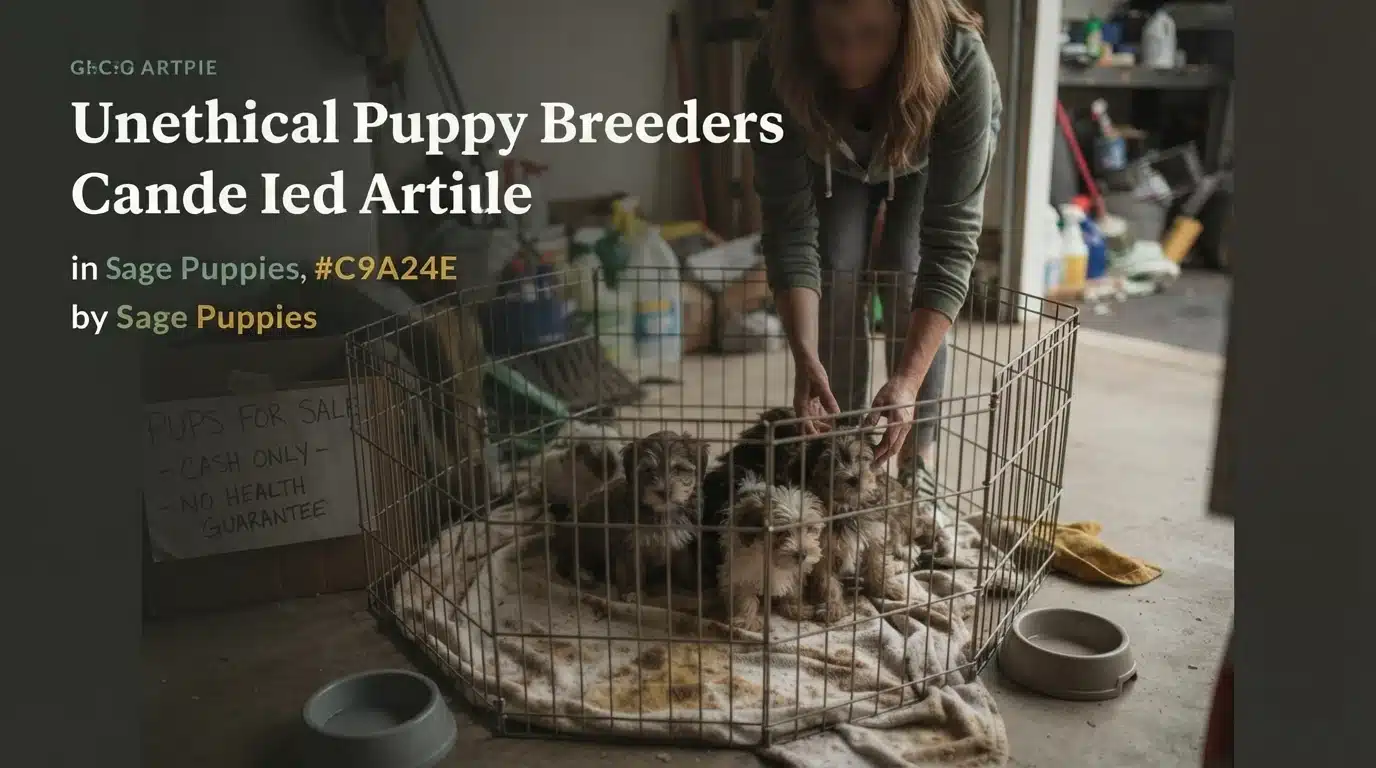
A breeder who will not share a real address or show the puppy’s living space deserves extra caution.
Also Read: 10 Signs a California Puppy Listing Is a Scam – Sage Puppies
Determine Whether USDA Licensing Applies
The Four-Question USDA Screening Test
Ask the breeder these four questions before treating a USDA license as expected:
- Do you sell puppies as pets? This screen applies to pet sales, not every dog-related activity.
- Do buyers see each puppy in person before purchase or pickup? A real visit or agreed meeting can count. Photos, video calls, and social media do not.
- Do you maintain more than four breeding females at the premises? USDA rules count breeding females across the location, not just those a seller claims as personal dogs.
- Are puppies shipped or sold without a buyer seeing them first? Sight-unseen sales can trigger federal oversight when the other conditions apply.
USDA licensing is not a simple quality score. It is a federal rule tied to how an operation sells and manages dogs. The USDA narrowed the retail pet store exemption so buyers must be physically present with the seller and available animal to personally observe it before purchase or custody, according to the federal rule.
Important: A breeder may be lawfully exempt from USDA licensing. That exemption does not prove excellent care. Still ask to see where puppies are raised, meet the dam when possible, and review health records.
Face-to-Face Sales and Sight-Unseen Sales Are Different
A face-to-face sale means the buyer, seller, and puppy are physically together before the buyer purchases or takes custody. The meeting can be at the breeder’s home or another agreed location.
A sight-unseen sale happens when a family reserves or buys based only on online photos, videos, messages, or a delivery handoff. Federal guidance says internet-based sellers that sell pets sight unseen may need APHIS licensing and inspection, while true face-to-face retail sellers remain exempt.
| Sale method | What the buyer does | USDA relevance |
|---|---|---|
| In-person visit before sale | Personally observes the puppy | May fit the retail pet store exemption |
| Video call then delivery | Sees the puppy only online | May be sight-unseen |
| Deposit online, visit before pickup | Meets puppy before taking custody | Facts and timing matter |
| Delivery with no prior meeting | Does not observe puppy in person | Strong reason to ask about USDA status |
Do not let a claimed license replace your own checks. Clear answers, a transparent home or facility visit, and complete puppy records matter just as much.
Also Read: 10 Adorable Havapoo Colors You Need to See (2026)
Search the USDA Animal Care Public Records
Collect the Right Identification Details First
Ask the breeder for their legal business name, USDA certificate number, kennel address, and any former business names. A website name alone may not match the record.
Keep the puppy listing, contract, and email trail. These details help you spot a name change or a facility located in another state.
| Detail to collect | Why it matters |
|---|---|
| Legal name | Matches the USDA record |
| Certificate number | Narrows results fast |
| Physical address | Confirms the inspected site |
| Other names used | Finds related records |
A breeder who must hold a USDA license should be able to give clear identifying details without pressure or delay.
Use the Official Search Tool and Match the Result
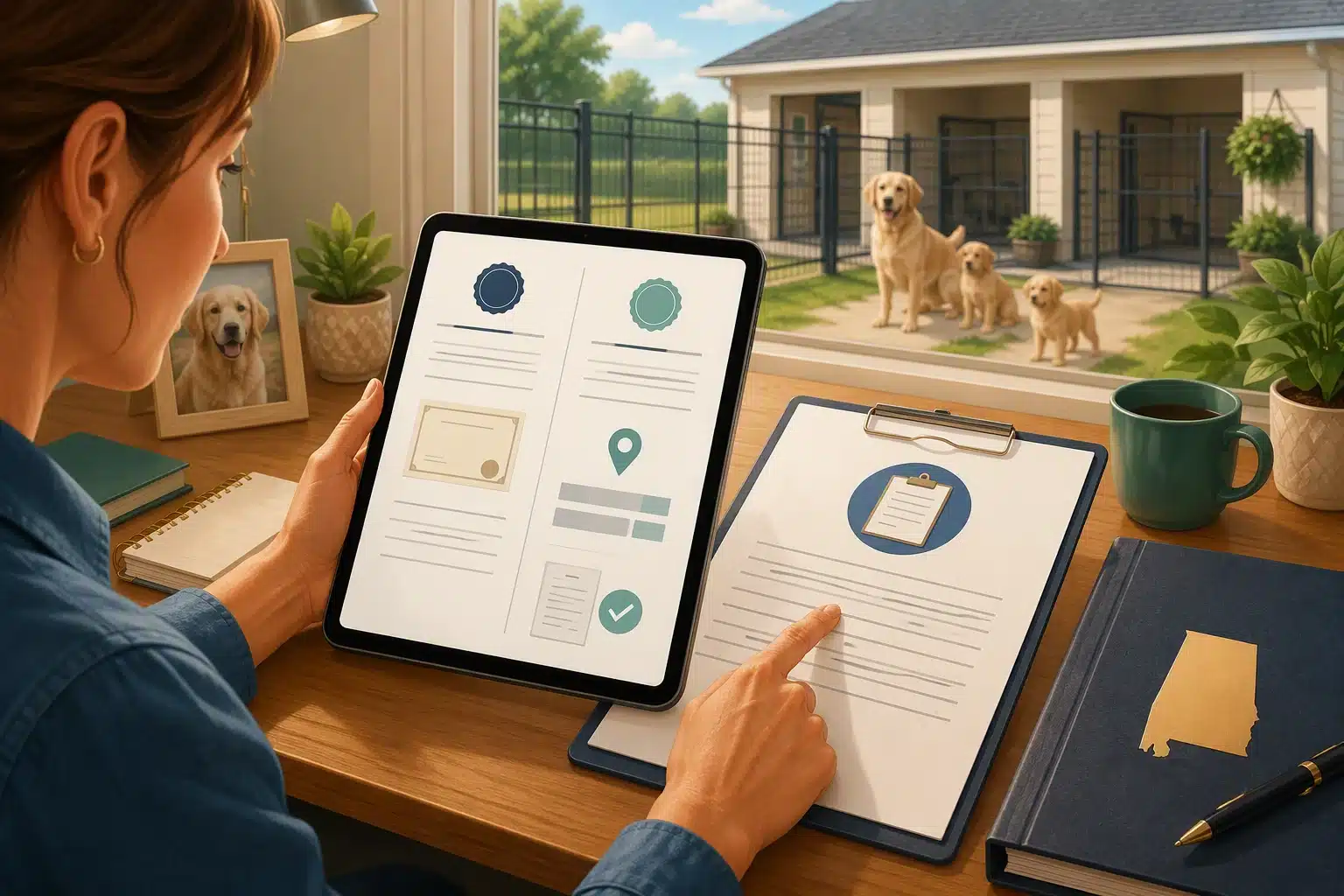
Use the USDA Animal Care Public Search Tool rather than a third-party badge or directory. Search the active licensee list first. Then use the Inspection Reports tab.
- Select Breeder as the license type.
- Choose Alabama as the state.
- Search by certificate number if the breeder gave one.
- Match the legal name, site name, address, and certificate status.
- Open the inspection reports tied to that exact record.
The USDA guide notes that you can search by breeder and state, then download linked inspection reports. Clear your filters before a new search so old criteria do not affect results.
A missing result does not prove wrongdoing. Some small home breeders may fall outside federal licensing rules. It does mean you should ask more questions, verify Alabama and local rules, and inspect the home or arrange a live video visit.
Read Inspection Information in Context
USDA inspectors review facilities, records, animal care, and handling practices during inspections. The agency says routine inspections are unannounced, but one clean report is still only a snapshot in time. Read the USDA inspection overview alongside the breeder’s own answers.
- Check dates and look for repeat issues.
- Read each finding, not only the total count.
- Ask what changed after a cited item.
- Watch for direct or critical noncompliance.
A current license is a baseline, not proof of great breeding. Health testing, clean living spaces, early social time, and open communication still matter.
Also Read: How to Verify Arizona Puppy Breeder Licensing and Records
Evaluate Alabama Breeder Facility Standards in Person
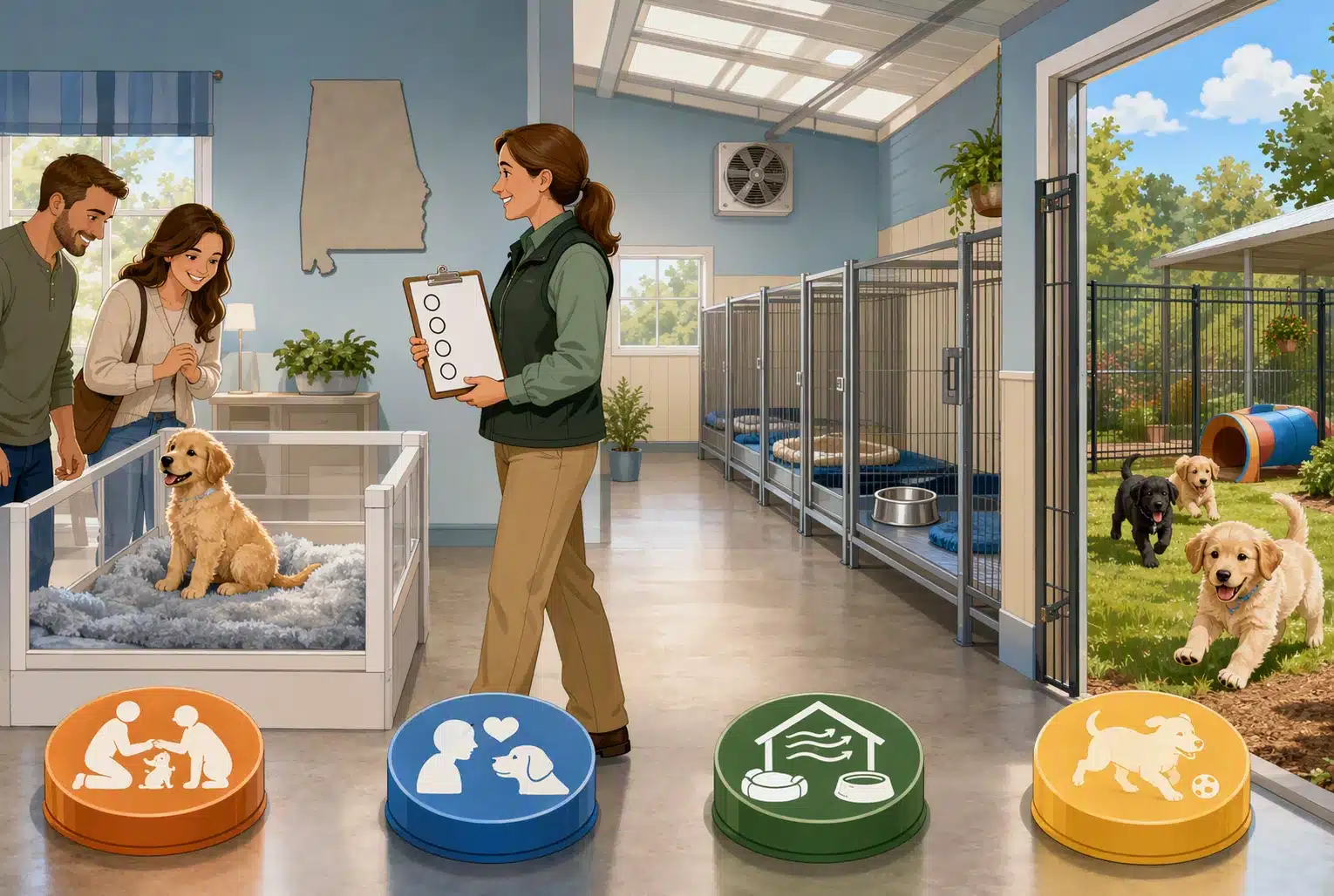
A license is a starting point, not proof of great care. If an Alabama breeder welcomes a visit, use it to judge what records cannot show. If a visit is not possible, ask for a live video tour that includes adult dogs, puppy spaces, and outdoor areas.
Inspect Housing, Cleanliness, and Safety
Look beyond a tidy front room. Puppies and adult dogs should have clean water, dry bedding, fresh air, safe flooring, and room to rest and move without crowding.
| What to check | Good sign | Concern |
|---|---|---|
| Living areas | Clean, dry, low odor | Heavy urine smell or dirty bedding |
| Safety | Secure gates and chew-safe spaces | Loose wires, sharp edges, broken crates |
| Outdoor access | Shaded, secure, clean run areas | Mud, waste buildup, no shelter |
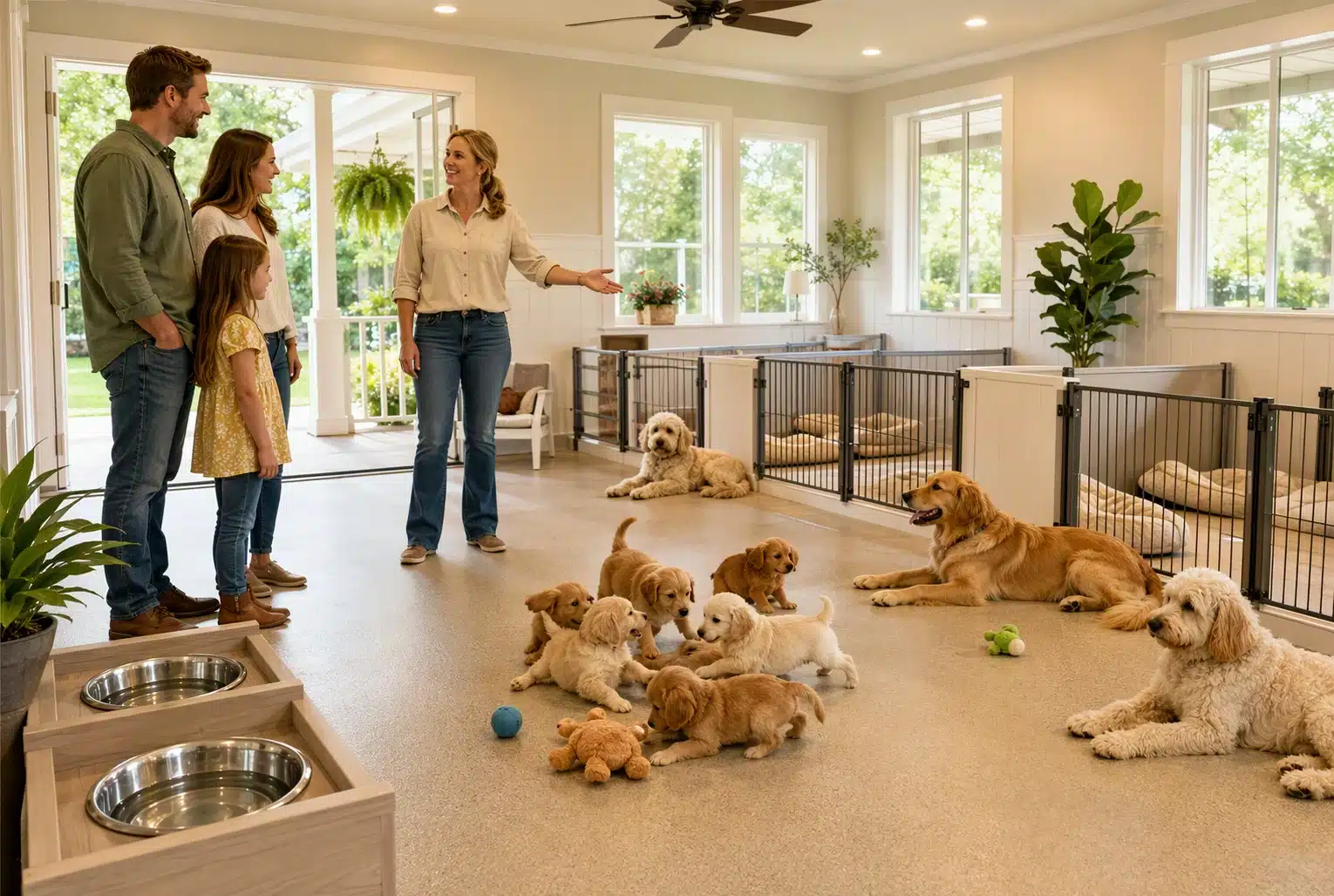
Ask to see where dogs spend most of their day, not only the puppy play area.
A breeder may limit access to protect young puppies from illness. That is reasonable. They should still explain their setup clearly and offer a transparent view.
Observe Adult Dogs and Puppy Development
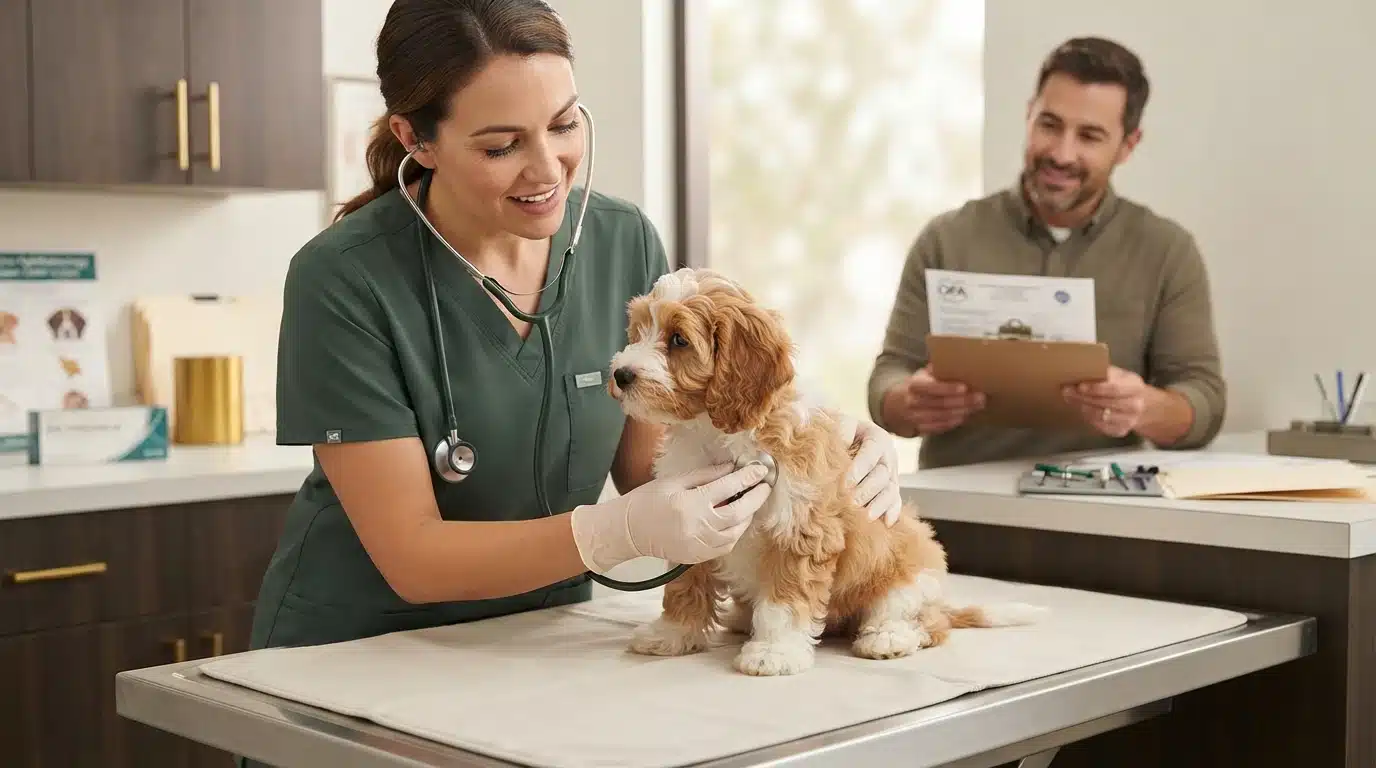
Meet the mother when possible. She should appear alert, comfortable with the breeder, and in healthy body condition. A shy dog is not automatically a red flag, but fear, untreated skin issues, limping, or obvious distress deserve direct answers.
Watch the puppies for a few minutes. Look for:
- Curious movement and age-fit play
- Clear eyes and clean noses
- Normal breathing and clean rear ends
- Gentle handling by the breeder
- Exposure to normal home sounds and people
Ask how they build confidence before placement, including handling, grooming, crate time, and short car rides. Good care is not just clean housing. It includes daily attention and planned early experiences.
Ask How Veterinary Care Is Managed
Ask for the name of the attending veterinarian, the vaccine and deworming record, and the plan for sick dogs or puppies. USDA-regulated facilities must keep a written veterinary care program, including yearly exams, vaccine schedules, parasite control, and medical records, under APHIS dog-care rules.
A clear answer should cover:
- How often dogs receive exams.
- How illness is isolated and treated.
- Who handles after-hours emergencies.
Walk away if a breeder dismisses health questions, will not show records, or pressures you to pay before you are comfortable.
Verify the Breeder’s Documents and Answers
Request a Complete Verification Packet
Ask for records before you send a deposit. A careful breeder should be able to explain each document and let you match names, dates, and puppy details.
Request:
- The breeder’s full legal name, physical address, and phone number
- Any applicable USDA license number
- Recent USDA inspection reports, if the breeder is USDA licensed
- Parent health-test results and the lab or registry used
- A sample purchase contract and health terms
- Puppy vaccination, deworming, and vet records
- Clear details on pickup or delivery, including who handles transport
Use the USDA Animal Care Public Search Tool to search the breeder’s name, business name, and Alabama location. It lists regulated facilities, inspection reports, and enforcement records.
| Document | What to check |
|---|---|
| USDA record | Name, location, active status, inspection history |
| Health results | Parent names match the breeder’s dogs |
| Vet record | Puppy date of birth and care dates make sense |
| Contract | Return terms, buyer duties, and breeder contact details |
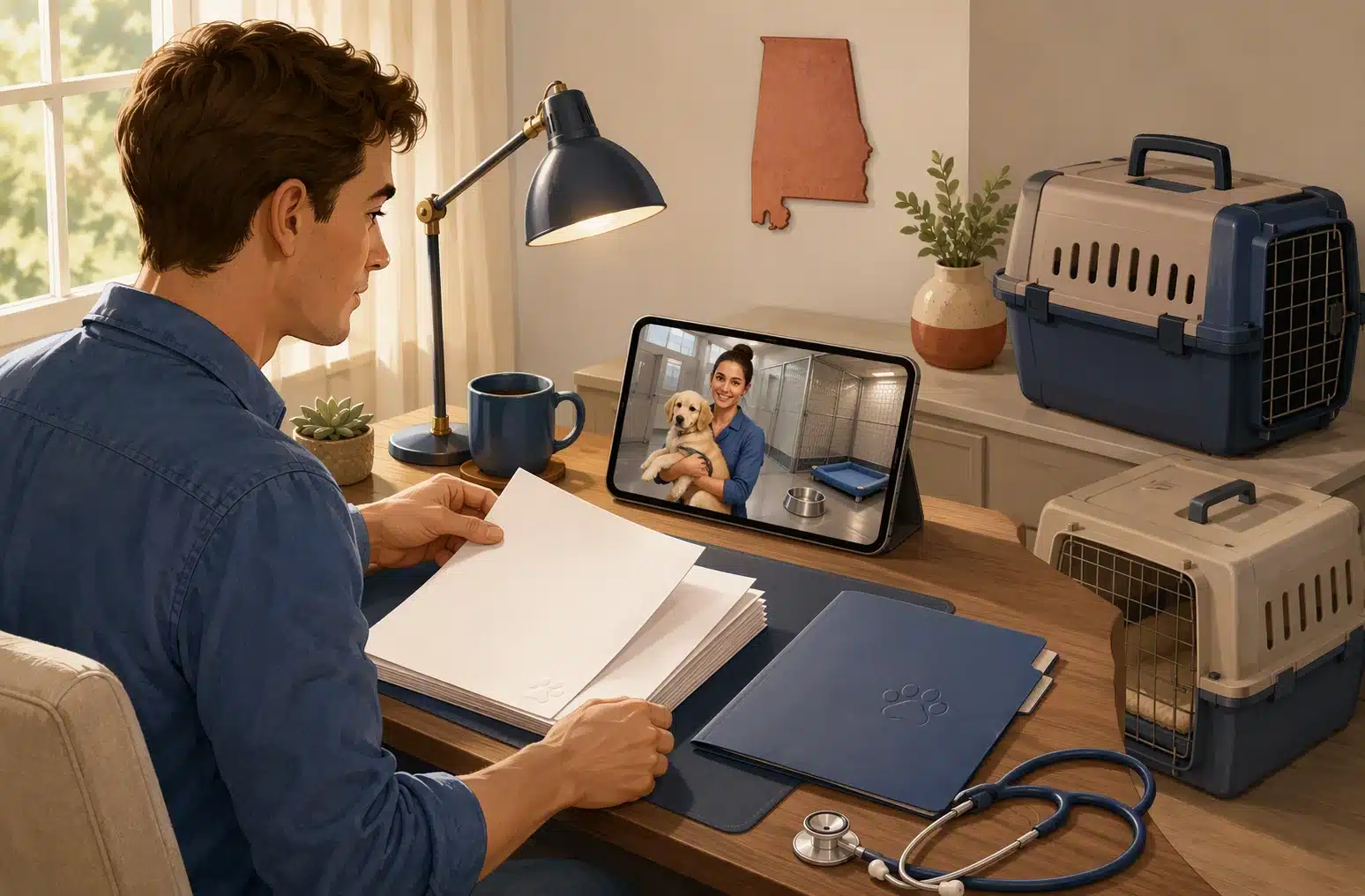
A license is a starting point, not proof that every puppy receives thoughtful, home-based care.
Judge Transparency, Not Just Presentation
Ask direct questions and listen for clear, steady answers. Photos, polished websites, and a license do not replace real access to information.
Ask how puppies are raised, where they sleep, how often adult dogs are bred, and what happens if a family cannot keep a puppy. Request a live video call if an in-person visit is not possible.
USDA inspectors review facilities, records, husbandry, veterinary care, and handling practices during inspections, according to APHIS guidance. Still, review the reports yourself and ask about any noted issue.
Walk away if the breeder:
- Rushes payment before answering questions
- Refuses live video or current photos
- Cannot connect parents to health records
- Gives vague answers about the puppy’s home or delivery
Also Read: Reputable Puppy Breeder Near Me: 9 Signs to Trust
Understand What a License Cannot Tell You
Separate Legal Minimums From Family Expectations
A breeder license is a useful starting point. It is not a seal of perfect care, strong genetics, or a puppy that fits your family.
USDA inspectors review regulated facilities, records, care routines, and animal handling. You can search licensees, inspection reports, and enforcement records through the USDA Animal Care Public Search Tool. Still, a record cannot show every part of daily life with the dogs.
| A license may help confirm | A license cannot prove |
|---|---|
| The breeder meets applicable legal rules | Parents received breed-relevant health testing |
| The facility has faced inspection | Puppies were raised with calm, daily family contact |
| Records and basic care practices are reviewed | The breeder matches each puppy to the right home |
| The business can be identified in public records | The breeder will answer hard questions openly |
Ask for the details that matter after you confirm the legal basics:
- Meet the mother, if possible, and ask about the father.
- Review health test results for both parents.
- Ask where puppies sleep, play, and meet people.
- Request a clear record of vaccines, deworming, and veterinary care.
- Read recent inspection reports, not only the license status.
A clean license record is good news. It should begin your review, not end it.
A careful breeder welcomes these questions. They should explain their puppy-raising routine, share records plainly, and give you time to decide. This is especially vital if you are arranging delivery and cannot visit in person. USDA notes that its inspections can be routine, unannounced, or complaint-based, so use reports as one piece of your decision, not the whole picture.
Also Read: Havanese, Havapoo & Cavapoo Puppy Care Blog
Use a Final Alabama Breeder Verification Checklist
Mark Each Item Before You Reserve
A license is one check, not the full answer. Mark each item only after you have seen clear proof.
| Check | What to confirm |
|---|---|
| Identity | Breeder name, address, and phone match across records and contract |
| Facility | You can see where puppies live, rest, eat, and play |
| Parents | Health test results, temperament details, and access to parent information |
| Records | Vaccines, deworming, vet paperwork, and a written purchase agreement |
| Transport | Clear pickup or delivery plan and paperwork for an out-of-state puppy |
- Ask whether USDA licensing applies, then check the breeder’s public inspection history.
- Confirm local zoning or business rules with the city or county.
- For a puppy entering Alabama, ask for the required official health paperwork. Alabama says dogs moved into the state need an official Certificate of Veterinary Inspection.
Keep copies of every answer, record, and payment receipt before sending a reservation fee.
Know When to Pause
Pause the process if the breeder will not answer basic care questions.
- You cannot see the puppy’s living area, in person or live.
- Health claims have no test results or records behind them.
- The seller rushes payment, changes the price, or avoids a contract.
- The puppy is offered with no clear source, parent details, or pickup plan.
A state listing or license does not prove daily care is good. Use Alabama’s Animal Industries contacts and updates to verify unclear state requirements.
A careful breeder welcomes calm questions. Pressure is a reason to wait.

Ready to choose a breeder who welcomes careful questions? Sage Puppies offers home-raised Havanese, Havapoo, and Cavapoo puppies with health-tested parents and a clear family-first process. Review available puppies, ask about pickup or nationwide delivery, and take the next step with confidence.
Frequently Asked Questions
Q1: Does Alabama have puppy breeder licensing laws?
Alabama does not use one statewide breeder license for every seller. Requirements can vary by business activity, animal count, and local rules. Ask the breeder which permits apply and confirm details with the relevant county or city office.
Q2: How do I check if a breeder is USDA licensed in Alabama?
Search the USDA Animal Care public records using the breeder’s legal name, business name, or license number. Review the current status and inspection reports. A USDA license may apply to certain dealers, not every home breeder.
Q3: What are Alabama puppy breeder facility standards?
Standards should cover clean housing, safe temperatures, fresh water, daily care, space to move, and veterinary attention. Buyers should also look for social contact, calm puppies, and honest access to the areas where dogs live.
Q4: Is a license enough to prove a breeder is responsible?
No. A license shows basic oversight, not excellent care. Visit when possible, ask about parent health tests, and review records.
Q5: Can an out-of-state buyer verify an Alabama breeder?
Yes. Request live video, dated records, contract copies, and clear delivery details before sending a deposit.
Conclusion
A license is a useful starting point, not proof that a breeder meets your standards. Check which rules apply in Alabama, confirm any USDA record when relevant, and ask for clear answers about parent health tests, puppy care, housing, and records.
A responsible breeder welcomes reasonable questions and does not rush your decision. Pay close attention to clean living areas, calm and social puppies, honest paperwork, and a plan for safe transport if your puppy will travel from out of state.
Trust the full pattern of care and transparency, not a license number alone.