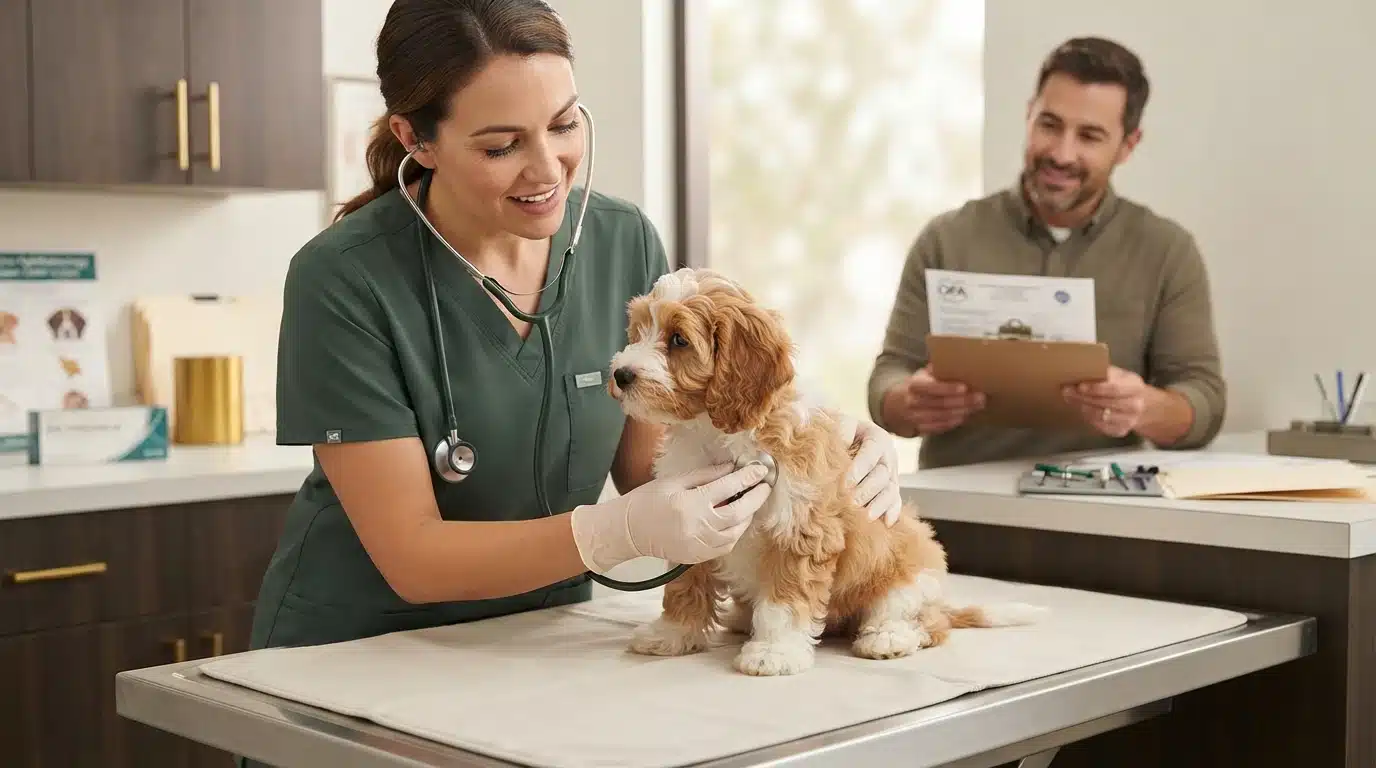
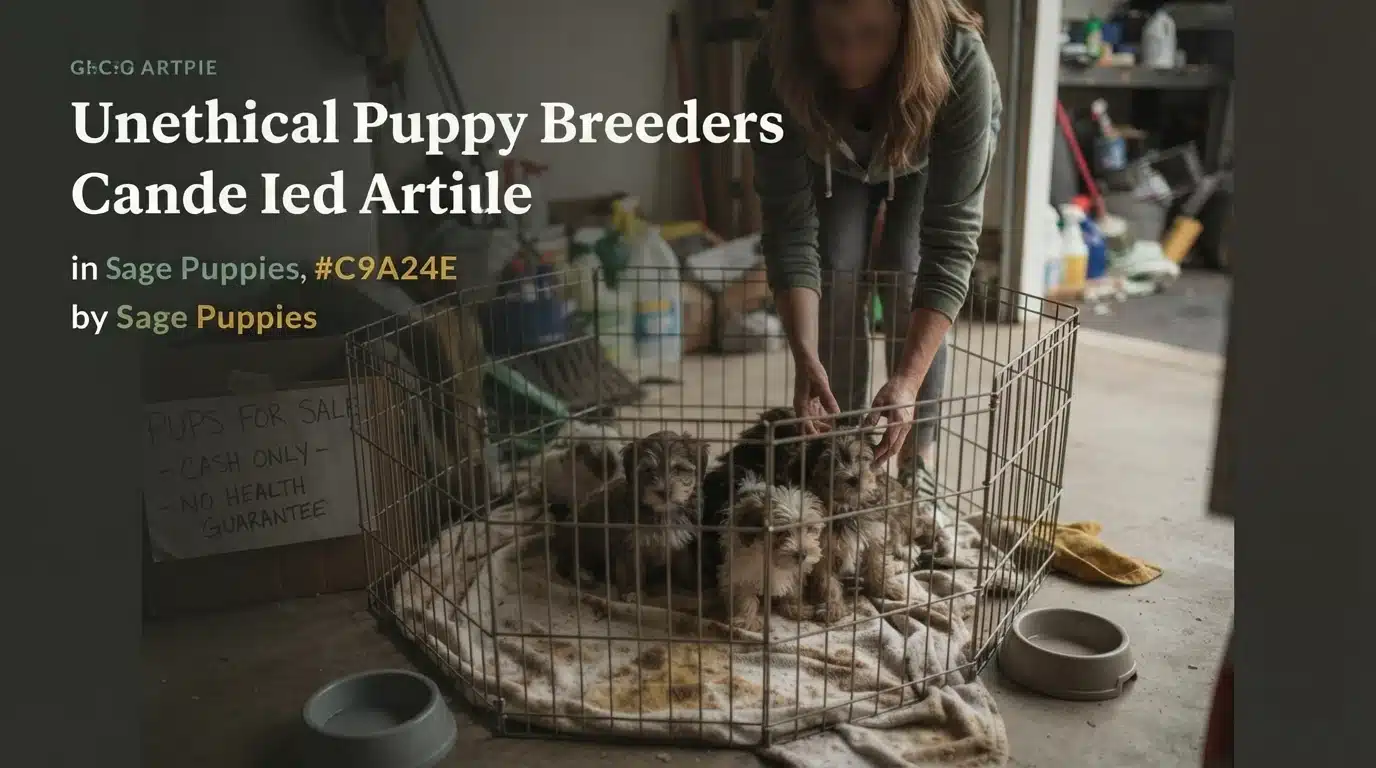
Quick Summary: Before paying a deposit for an Arizona puppy, verify the breeder’s legal name and physical address against local kennel permits, business licenses, or USDA records, since Arizona lacks a single statewide breeder license. Then match the specific puppy to dated vet, vaccine, deworming, and parent health-test records, plus a contract that aligns with all conversations. A missing record or license is not automatic proof of a problem, but any mismatch or vague answer warrants a written explanation before you commit. Walk away if the breeder pressures payment or avoids clear, document-backed answers.
Before you send a reservation payment for a Havanese, Havapoo, or Cavapoo puppy in Arizona, match the breeder’s legal name and location to the right public record. Then match the puppy to clear vet records and parent health tests.
AZ puppy licensure can feel confusing because Arizona rules do not work like one simple statewide breeder license search. A business listing alone is not proof of sound breeding care. Missing names, vague addresses, or records that do not match the seller deserve a closer look.
This guide shows you how to verify breeder license details, search Arizona breeder records, and request the documents that matter before you commit. You will also learn how to read gaps without making unfair assumptions.
Good AZ puppy licensure checks combine public records, direct questions, and puppy-specific paperwork. That approach helps families make a calm, informed choice.
Step 1: Identify Which License or Permit Should Apply
Separate a Breeder License from a Local Kennel Permit
Start with the breeder’s physical address, not the puppy listing. Arizona does not use one simple statewide breeder license that covers every home-raised litter. Your AZ puppy licensure check may instead lead to a city or county kennel permit, zoning approval, or business license.
Ask the breeder for the exact legal business name and where puppies are raised. Then contact that local animal-control or planning office.
| Record to check | Who may issue it | What it can show |
|---|---|---|
| Kennel permit | City or county | Approval to keep dogs at that address |
| Business license | City or county | Registered business activity |
| Zoning approval | City or county | Whether breeding is allowed on the property |
A local permit is not proof of health testing or good care. It only answers whether that local rule applies.
Know When to Check USDA Records
Check USDA records when a breeder sells puppies sight unseen, uses a broker, or routinely ships puppies to buyers. Federal rules can apply to certain commercial sellers, while breeders who sell puppies in person from their home may fall under a different path.
Ask one direct question: “Do you hold a USDA license, and if not, why does your sales model not require one?” A clear answer matters more than a vague badge on a website.
For a useful AZ puppy licensure review:
- Match the license name to the breeder’s legal name.
- Confirm the address or business identity.
- Save any record you find.
- Still request parent health tests, vet records, and a written contract.
Missing USDA records are not automatic proof of a problem. They are a reason to check the breeder’s sales method and supporting documents more closely.
Also Read: Puppies for Sale in Arizona: Safe Pickup and Buyer Tips
Step 2: Search the Breeder’s Exact Identity in Public Databases
Start with the Legal Name and Physical Location
Ask for the breeder’s full legal name, business name, and physical city or street address before you search. A website name, social profile, or payment handle may not match the name used in records.
Write down:
- The breeder’s personal and business names
- Any DBA, LLC, or kennel name
- City, county, and ZIP code
- Phone number and website
- The name shown on the sales contract
Search each version. A mismatch is not proof of a problem, but it deserves a plain answer. For example, an LLC may own the business while a family member handles puppy inquiries.
A breeder who avoids sharing a physical location or legal identity gives you too little to verify. Pause before sending a deposit.
Use the USDA APHIS Public Search Tool Carefully
The USDA APHIS Public Search Tool lets buyers look up Animal Welfare Act licensees, inspection reports, and enforcement records. Search by legal name first, then try the business name and Arizona city.
Review results with context:
| What you find | What it tells you | Next step |
|---|---|---|
| Active license record | The listed entity is federally licensed | Match the name and location to the breeder |
| Inspection report | An inspector recorded conditions on that date | Read the full report, not just the status |
| No result | The breeder may not be federally regulated or may use another name | Ask why, then verify local records |
| Different address or owner | The listing may relate to another operation | Request a written explanation |
USDA inspectors conduct unannounced inspections of regulated entities and review records, care, and handling practices, according to APHIS inspection guidance. Still, a USDA listing is not a full character reference, and no search result is not an automatic red flag.
Confirm Local Records with the Correct Authority
Arizona licensing can depend on the breeder’s location and business setup. Contact the city or county tied to the physical address, not just the city named in an ad. Ask whether the address needs a business license, kennel permit, zoning approval, or animal limit permit.
Use this short checklist:
- Confirm the address is real and matches the contract.
- Ask which local office handles animal-business records.
- Request the permit status and any public complaint process.
- Compare every answer with what the breeder told you.
Good records support trust. They do not replace health records, a clear contract, or direct questions about how puppies are raised.
Also Read: 10 Adorable Havapoo Colors You Need to See (2026)
Step 3: Read Inspection and Compliance Records Without Overinterpreting Them
Check Dates, Patterns, and Corrective Actions
Read the full record, not just a search result label. Start with the inspection date, the exact finding, and any follow-up.
| What to review | A reassuring sign | A reason to ask more |
|---|---|---|
| Inspection date | Recent record | Years-old record with no newer context |
| Finding | One isolated, minor issue | The same issue appears again |
| Corrective action | Clear steps and completion date | Vague response or no resolution shown |
| Enforcement | None, or a closed matter with proof of correction | Open or repeated enforcement action |
Look for a pattern across records. A single paperwork error that was fixed is different from repeated sanitation, animal-care, or recordkeeping problems.
- Match the breeder name and address to the record.
- Note whether the issue was corrected.
- Ask what changed and how the breeder checks that it stays fixed.
- Compare the record with the current environment during a visit or video call.
A correction plan shows a response to a finding. It does not erase the finding, but it also should not be treated as proof of ongoing harm.
Understand What an Inspection Record Cannot Prove
An inspection is a point-in-time review. It cannot prove that every puppy is healthy, every parent has completed breed-relevant health testing, or that a home-raised setting meets your family’s needs.
Arizona’s own guidance notes that inspection findings are documented in a Statement of Deficiencies, while a plan of correction may follow when no enforcement action applies. Review both pieces, not one alone, in the ADHS compliance survey process.
Ask for records that fill the gaps:
- Parent health-testing results
- Puppy veterinary and vaccine records
- A clear contract and pickup or delivery plan
- Current photos or a live video visit
A clean record is one useful signal. Open answers, current documents, and calm access to the puppies matter just as much.
Also Read: How to Evaluate Arizona Puppy Breeders Through Virtual Visits
Step 4: Request the Arizona Breeder Records That Follow the Puppy
Match the Puppy to the Paperwork
Ask for records before you send final payment or arrange pickup or delivery. Every page should identify the same puppy through its date of birth, sex, color or markings, microchip number if used, and breeder name.
Use this quick check:
| Record | Match it to |
|---|---|
| Sales contract | Puppy description, birth date, and breeder details |
| Vet record | Puppy name or ID, visit date, and clinic |
| Vaccine and deworming log | Puppy ID, dates, products, and doses |
| Registration papers, if offered | Litter, parent names, and puppy identity |
A nickname can change. A microchip number, clear puppy ID, and dates create a stronger paper trail.
Review Veterinary, Vaccine, and Deworming Records
Request a copy of the puppy’s exam record, vaccine history, and deworming log. The record should show what was given, when, and by whom. If a veterinarian gave the vaccine, confirm the clinic name and contact details.
Arizona’s immunization record format shows why complete entries matter: good records include dates, vaccine manufacturer, lot number, and the person who gave it, as shown on the ADHS administration record.
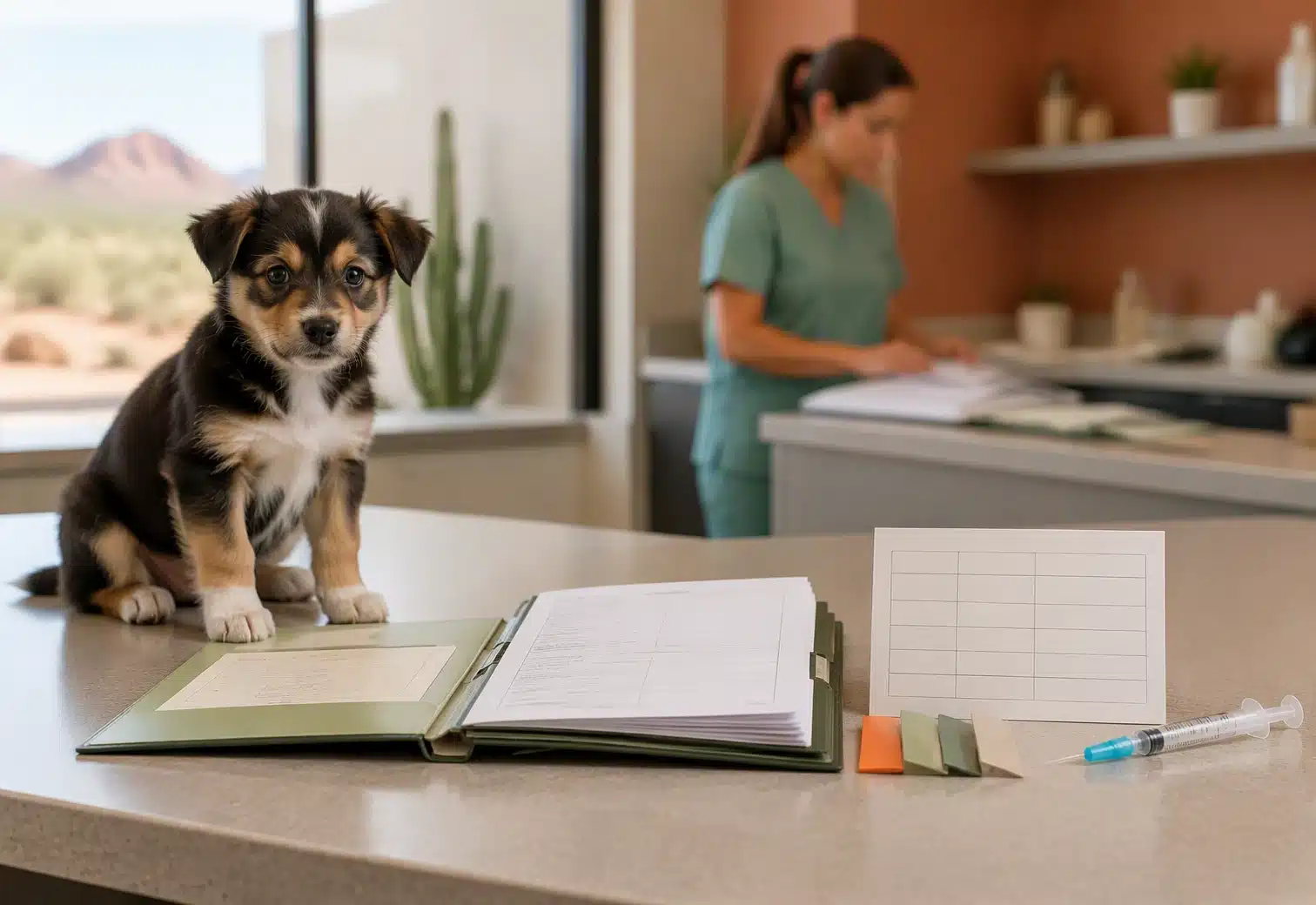
Ask the breeder to explain any blank period. A gap may have a normal reason, such as the puppy being too young for a dose. Still, the answer should be clear and fit the timeline.
- Confirm the next vaccine due date with your own veterinarian.
- Keep digital copies before travel or delivery.
- Do not treat a breeder’s verbal summary as a replacement for records.
Verify Parent Health Testing and Breeding Context
Ask for the actual parent test results, not only a statement that parents are “health tested.” Match each report to the sire or dam by registered name, microchip, or another unique ID.
Request:
- Genetic screening results that apply to the breed or mix.
- Any available eye, heart, joint, or patella results.
- The parents’ ages and prior litter history.
- A plain explanation of any carrier result and the pairing used.
A carrier result is not automatically a red flag. The key question is whether the other parent was tested so the puppy was not at risk for the matching condition.
A careful breeder welcomes record questions and gives you time to read the answers.
Step 5: Verify the Sale, Pickup, and Delivery Details
Compare the Contract with the Conversations
Read the signed contract beside every text, email, and listing. The puppy’s price, deposit, balance due, breed, sex, birth date, pickup date, and delivery plan should match.
| Item | What should match |
|---|---|
| Puppy identity | Breed, sex, color, birth date, and parents |
| Payment | Deposit amount, due date, balance, and refund terms |
| Handoff | Pickup location, delivery method, date, and who receives the puppy |
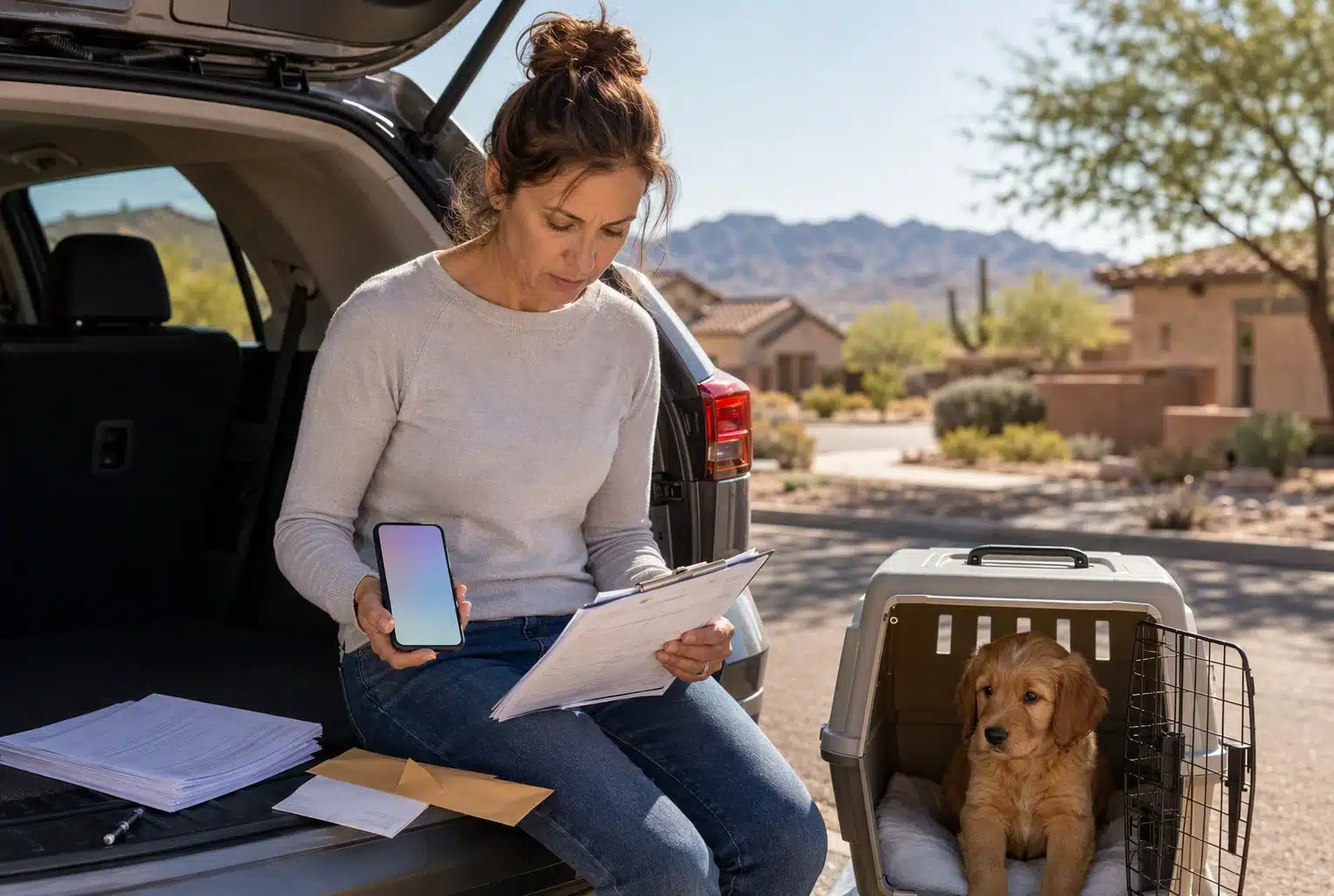
Ask the breeder to correct any mismatch in writing before you pay the final balance. Keep signed copies, payment receipts, health records, and all messages together.
Warning: A breeder who changes the pickup place, payment method, or delivery promise at the last minute should give a clear written reason. Do not send more money until the paperwork matches.
Ask What Applies to Your Destination
Rules can change once a puppy crosses state lines. Ask who arranges the trip, what travel records come with the puppy, and whether your state requires a health certificate or other entry paperwork.
- Confirm the exact pickup or delivery address.
- Ask when you will receive the contract and medical records.
- Get the driver or transport contact, if delivery is used.
- Confirm what happens if weather or travel delays occur.
For an Arizona puppy going to Utah or another state, check the destination state’s animal entry rules yourself. A reputable program, including Sage Puppies for nationwide families, should explain the handoff plan clearly without vague promises.
Also Read: 10 Signs a California Puppy Listing Is a Scam – Sage Puppies
Step 6: Resolve Mismatches Before You Reserve a Puppy
Use a Specific Follow-Up Message
A mismatch does not always mean fraud. A business name may differ from an owner name, or a record may be old. Still, get a clear answer before sending a deposit.
Send this message in writing:
“I found a difference between the breeder name, address, or records provided. Please explain which legal business name and location apply to this puppy, and send the matching health-test records, veterinary paperwork, and contract before I reserve.”
Keep the reply with your records. Ask the breeder to point out each match:
- Parent dog names on health results
- Puppy date of birth and litter details
- Seller name and physical location
- Vaccination and deworming dates
- Contract terms and reservation amount
Arizona’s online agriculture system lists licensing paths by license type, but it does not replace breeder-provided puppy records. Review both sources and ask direct questions through the Arizona Department of Agriculture licensing portal.
Know When to Pause the Transaction
Pause if the breeder cannot explain a mismatch in plain terms. Do not let a promised pickup date, delivery slot, or “last puppy” claim rush you.
| What you find | Best next step |
|---|---|
| A name change with paperwork | Ask for written proof and review it |
| One date typo | Request a corrected record |
| Different parent names | Stop until health records match |
| Different seller or address | Do not reserve until fully explained |
| Pressure to pay first | Walk away |
Warning: Never treat a screenshot, verbal promise, or social post as a substitute for records tied to the specific puppy.
A responsible breeder welcomes reasonable checks. If answers stay vague, choose another puppy rather than trying to solve the issue after payment.
Also Read: Havanese, Havapoo & Cavapoo Puppy Care Blog
Step 7: Make Your Final Records Review Part of the Puppy Decision
Use the Seven-Point Final Check
Review the full file before you send a deposit or set pickup. A kind conversation is helpful, but records should support the breeder’s claims.
| Check | What to confirm | What to do if it is missing |
|---|---|---|
| Breeder identity | Name, address, and contact details match across documents | Ask why the details differ |
| Parent records | Both parents have clear health-test results | Request the actual reports |
| Puppy vet record | Exam date, findings, vaccines, and deworming are listed | Ask for a dated record from the clinic |
| Contract | Price, deposit, pickup or delivery terms, and return terms are clear | Do not rely on verbal promises |
| Registration claims | Registry names and puppy details match the paperwork | Treat vague claims as unverified |
| Arizona search | Search the breeder name and address in available state records | Save the result with your file |
| Your comfort level | Answers are calm, direct, and consistent | Pause if you feel rushed |
Arizona’s ADHS record-request portal allows the public to ask for records, though some details may be redacted under privacy laws. Use the ADHS records request form if a relevant agency record should exist.
A missing record is not always proof of a problem. A breeder who avoids simple questions or pushes payment before sharing records is a reason to walk away.
Keep screenshots, emails, and signed documents in one folder. Then decide based on the complete picture, not a single promise.

Ready to choose a puppy with clear records and thoughtful care? Sage Puppies offers home-raised Havanese, Havapoo, and Cavapoo puppies with health-tested parents and a transparent family process. View available puppies, ask direct questions, and choose local pickup or nationwide delivery with confidence.
Frequently Asked Questions
Q1: How do I verify an Arizona puppy breeder’s license online?
Ask the breeder for their legal business name, license number, and issuing agency. Match every detail in the relevant Arizona public record. If records do not match, ask why before sending money.
Q2: What records should an Arizona puppy breeder provide?
Request parent health-test results, vaccination and deworming records, a vet exam record, purchase contract, and puppy details. Keep copies before pickup or delivery.
Q3: What are the red flags when buying a puppy in Arizona?
Watch for rushed payment demands, vague answers, missing records, stock photos, no live visit option, or claims that cannot be verified. A responsible breeder welcomes fair questions.
Q4: Can I buy a puppy if the breeder has no license?
Possibly, because licensing rules can vary by operation. Still verify identity, care standards, health records, and contract terms. Missing documents remain a reason to pause.
Q5: Should I verify records before paying a deposit?
Yes. Review records first, confirm what the deposit covers, and get refund terms in writing. Never rely on a verbal promise alone.
Conclusion
Verify the breeder’s legal name, address, and any local business record first. Then ask for the puppy’s health file, parent test results, vaccine record, contract, and clear pickup or delivery details.
A missing state listing is not proof of poor care. Arizona’s rules do not create one simple breeder database for every home program. Still, gaps deserve calm, direct questions.
Keep copies of every record and compare names and dates before sending money. Arizona’s public licensing search can help with applicable facility records, but it does not replace breeder-provided proof. Choose the program that answers plainly, welcomes review, and puts the puppy’s long-term health first.