Quick Summary: Small breed puppies such as Havanese, Havapoo, and Cavapoo should usually switch to adult food around 9 to 12 months, once they reach about 80 percent of their expected adult weight and a vet confirms growth is complete. Use a small-breed adult formula with kibble suited to their jaws, move from puppy food gradually over 7 to 10 days, and feed two measured meals daily afterward. Switching too early can leave growth needs unmet, while waiting too long can add excess body fat.
A Havapoo in South Jordan usually reaches about 80 percent of adult weight between 8 and 12 months, and that window, not the calendar on the food bag, should decide the switch. Published guidance from the American Kennel Club, Royal Canin and veterinary hospitals clusters in the same 8 to 12 month range for toy and small breeds. Yet owners get conflicting instructions: the bag names one month, the breeder’s paperwork implies another, and your puppy looks grown one week and like a baby the next. This guide compares small breed puppy food, adult and all-life-stages formulas, offers a readiness checklist, and gives a labelled 7 to 10 day transition protocol so the change is measured, with your veterinarian making the final call.
Small Breed Puppy Food vs Adult Food vs All-Life-Stages Food: At a Glance
| Small breed puppy food | Small breed adult dog food | All-life-stages dog food | |
|---|---|---|---|
| Energy and nutrient density | Higher energy density with more protein, fat, calcium and phosphorus to support bone and muscle growth | Lower energy density with adult-level calcium and phosphorus balance for maintenance | Balanced for all life stages, so it is not specifically calibrated for either growth or maintenance |
| Kibble size | Small or mini kibble formulated for small breeds and developing jaws | Small breed kibble sized for adult small dogs and full-size jaws | Available in standard kibble sizes for small breeds |
| Feeding schedule | Typically 3 to 4 measured meals per day from 8 weeks until the switch | Two meals per day is common once growth is complete, adjusted to body condition | Follows the same measured-meal schedule as the puppy stage it replaces |
| Transition timeline | The starting point; transition out over 7 to 10 days | Introduce over 7 to 10 days by increasing the adult share each day | No life stage switch needed, only a gradual food change if the brand changes |
| Best for | Growth from 8 weeks until the puppy reaches adult size, which is early for small breeds | Small breeds past maturity, roughly 9 to 12 months depending on growth and activity | Owners who prefer one food for life and want to avoid a transition decision |
How Small Breed Puppy Food, Adult Food and All-Life-Stages Food Compare
Small breed puppy food
A growth-stage formula built for the months when bone and muscle develop fastest. It carries more calories, protein, fat, calcium and phosphorus than adult food, in kibble sized for small jaws. For Havanese, Havapoo and Cavapoo puppies, that window closes early, often between 8 and 12 months.
Key strengths
- High energy and nutrient density matched to growth
- Mini kibble sized for developing jaws
Small breed adult dog food
A maintenance formula with a lower energy density and adult-level calcium and phosphorus balance. It suits small dogs once growth is complete, usually around 9 to 12 months. Feeding settles into two measured meals a day, adjusted to body condition.
Key strengths
- Nutrient balance designed for maintenance, not growth
- Supports a simple two-meal daily routine
All-life-stages dog food
A single formula intended to meet nutritional needs from puppyhood through adulthood, so no life-stage switch is required. It is balanced for all stages rather than calibrated for growth or maintenance specifically. Owners who prefer one food for life choose it to avoid the transition decision entirely.

When Should Small Breed Puppies Switch to Adult Food?
Most small breed puppies are ready for adult food between 9 and 12 months of age. The right moment is not a birthday. It is when your puppy stops growing, which for small breeds lands earlier than for larger dogs. Published guidance puts it in a fairly narrow window:
- Toy breeds (under about 10 pounds): often 8 to 9 months
- Small breeds (under 25 pounds): around 9 to 10 months, per PetMD’s guidance
- Medium breeds: about 12 months
- Large and giant breeds: 12 to 18 months or later
The published maturity windows for small breeds
PetMD places small breeds that finish under 25 pounds at adult size by 10 to 12 months, ready for adult food around 9 or 10 months. Hill’s Pet uses a similar range of 9 to 12 months. Treat these as guides, not deadlines, and watch your own puppy instead of the calendar alone.
Why size changes the calendar
Big dogs grow for a year or more, and their bones and joints need puppy food’s controlled calcium and calories the whole time. Small breeds finish most growth by 9 to 12 months, so extra puppy calories past that point often turn into extra body fat. Adult food also matches their smaller adult portions.
How to adjust for a Havanese, Havapoo or Cavapoo
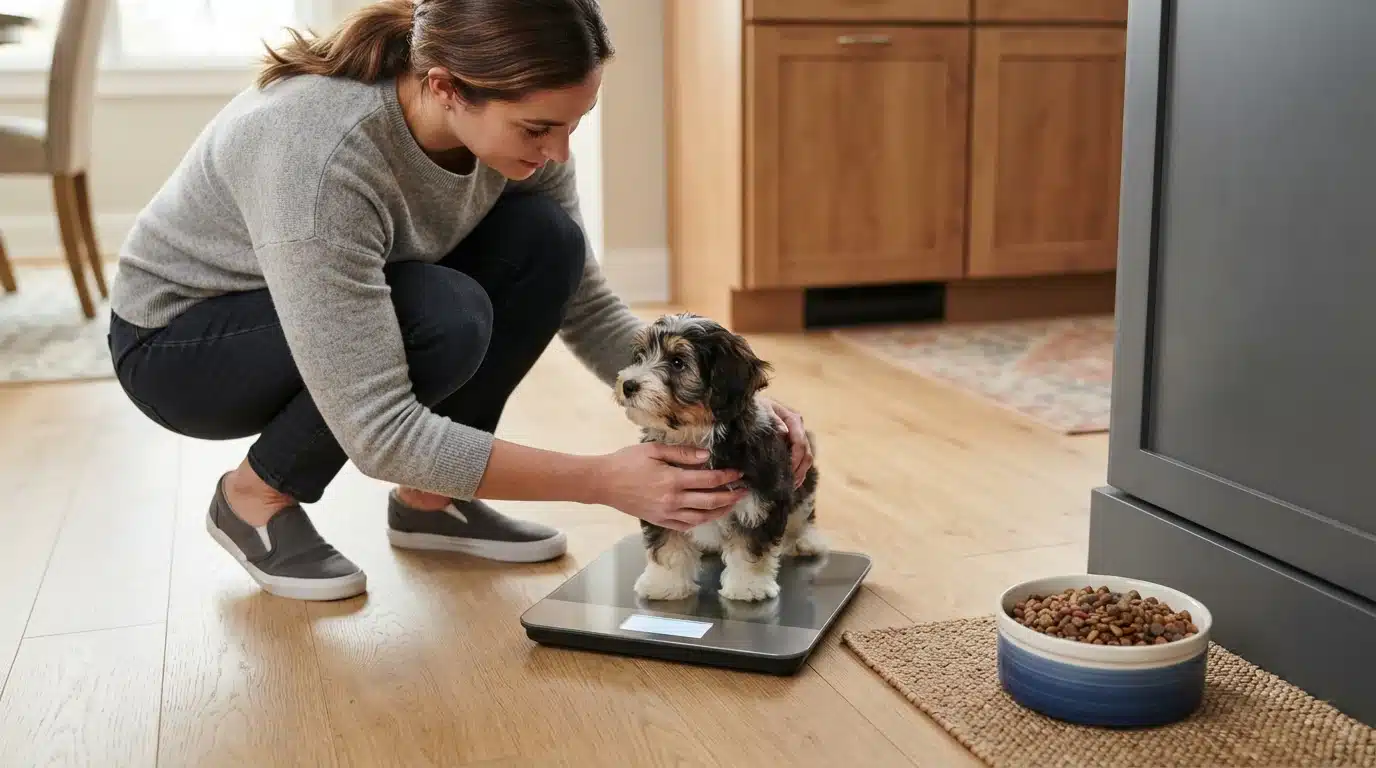
These mixes usually land between 9 and 15 pounds as adults, so expect the switch near 9 to 12 months, or when your puppy hits about 80 percent of expected adult weight. Confirm the target weight with your breeder or vet, then score your puppy’s body condition monthly. Our guide to small breed puppy nutrition covers portion checks in more detail.
What Actually Changes in the Bowl at the Switch
Growth formulas versus maintenance formulas
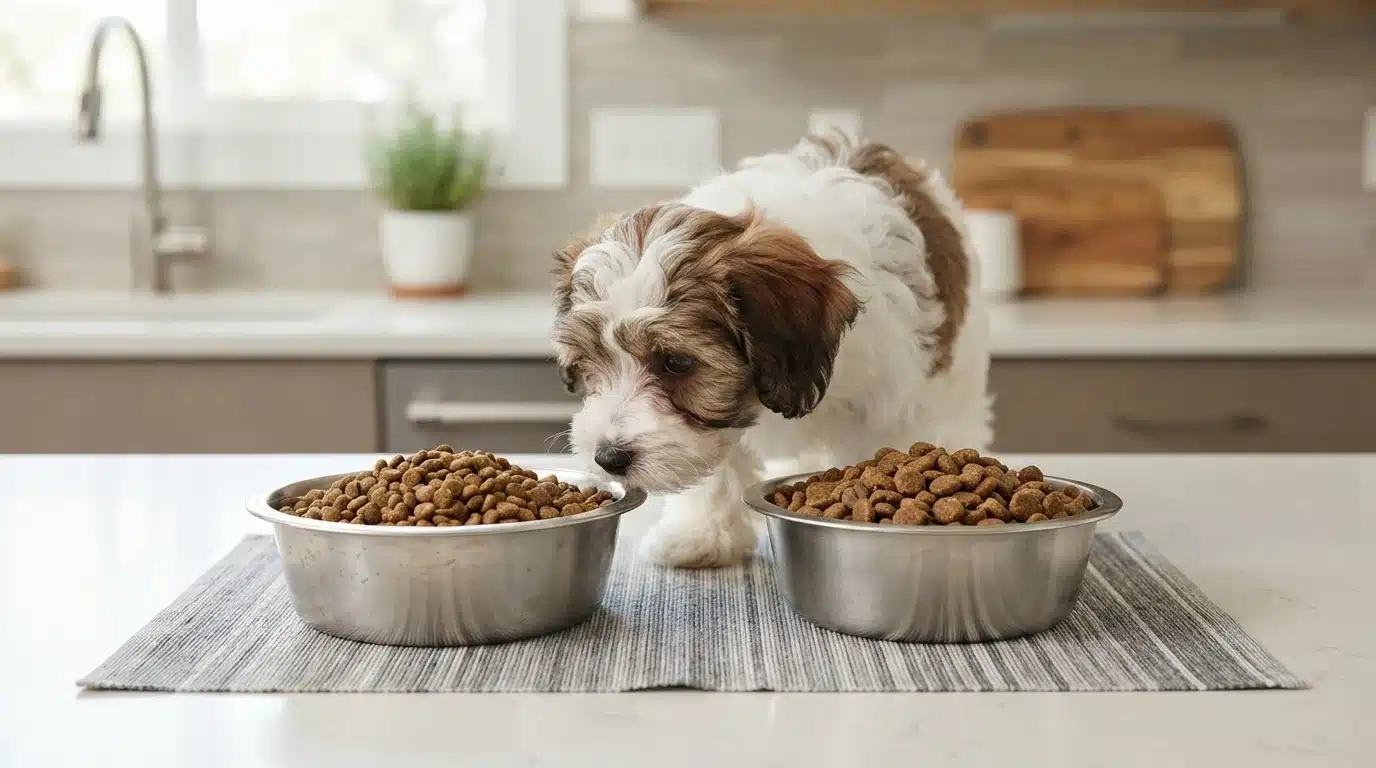
Puppy food and adult food differ in three main ways. Growth formulas carry more calories per cup, higher protein and fat, and extra calcium and phosphorus for building bone. Adult formulas trim the calories and adjust minerals for a body that has finished growing. The switch is mostly a calorie and mineral change, not a total recipe overhaul, so most small dogs handle it well when you blend the two over a week or so.
The risk of switching too early
Move to adult food before growth is done and your puppy misses nutrients it still needs. Calcium levels, protein and calorie density all support bone and muscle development, especially through the final growth spurts. Small breeds finish early, but a 7-month-old Havapoo that is still filling out is not ready. Watch weight and body condition rather than the calendar, and keep the puppy formula until growth clearly slows.
The risk of switching too late
Stay on puppy food too long and the extra calories usually show up as body fat. Small breeds that keep eating a dense growth formula past maturity often gain weight quickly, and extra pounds stress small joints and make body condition scoring harder to judge. If your 10-month-old is at adult size and still on puppy food, start the transition now, and keep portions measured as you make the change.
Track the change alongside other milestones in the first-year training timeline.
Kibble Size, Meals and the Daily Routine After the Switch
Kibble size and jaw mechanics
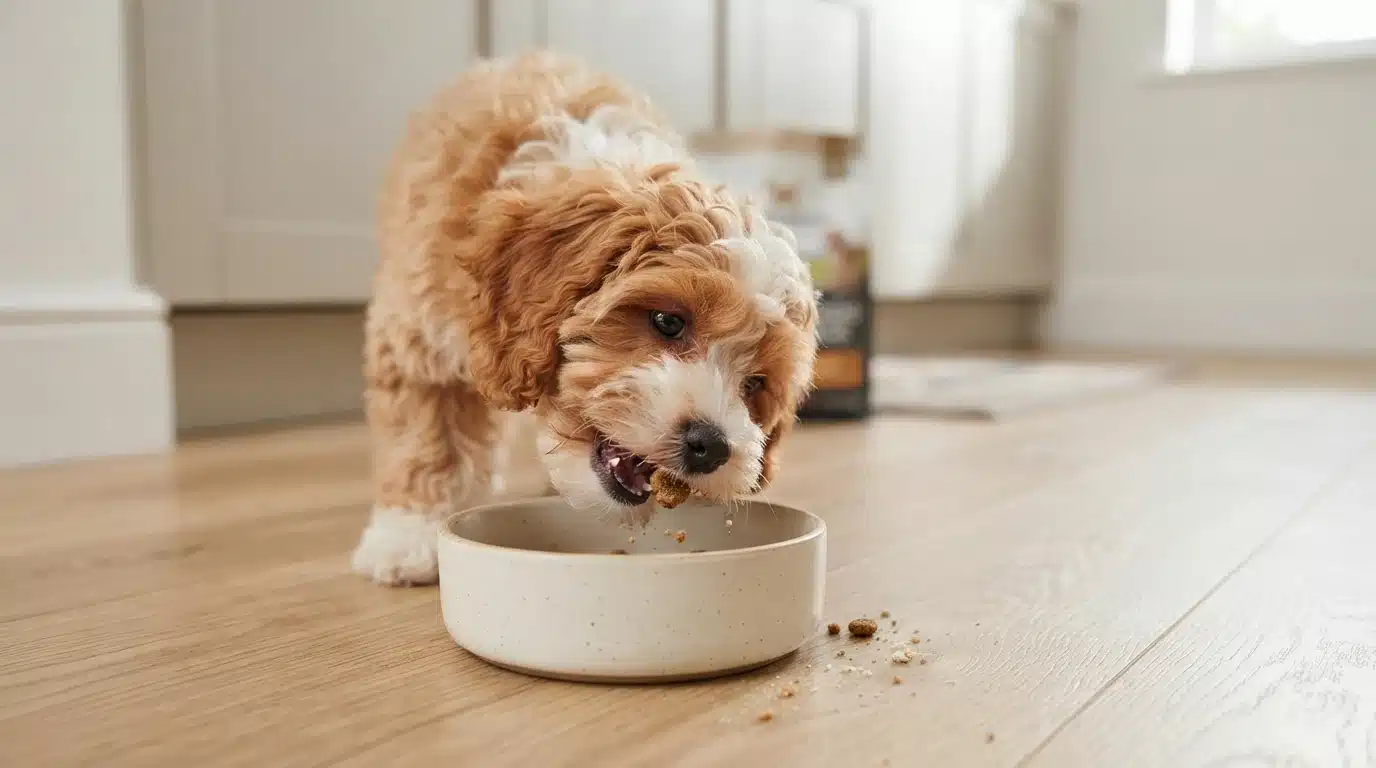
Small breed adult formulas keep a kibble sized for tiny jaws, so your Havapoo or Cavapoo can still crunch rather than swallow whole pieces. That crunch helps slow eating and scrape plaque. Check the bag for a “small breed” or “small bites” label, and watch one meal to confirm your dog chews comfortably.
How many meals per day after the switch
Most adult small breeds do well on two meals a day, spaced roughly 10 to 12 hours apart. VCA Hospitals recommends at least two meals daily for adult dogs, which steadies energy and lowers the bloat risk that comes with one large meal.
| Life stage | Meals per day |
|---|---|
| 8 weeks to 4 months | 3 to 4 small meals |
| 4 to 6 months | 3 meals |
| 6 to 12 months | 2 to 3 meals |
| After the switch to adult food | 2 meals |
Measuring portions instead of guessing
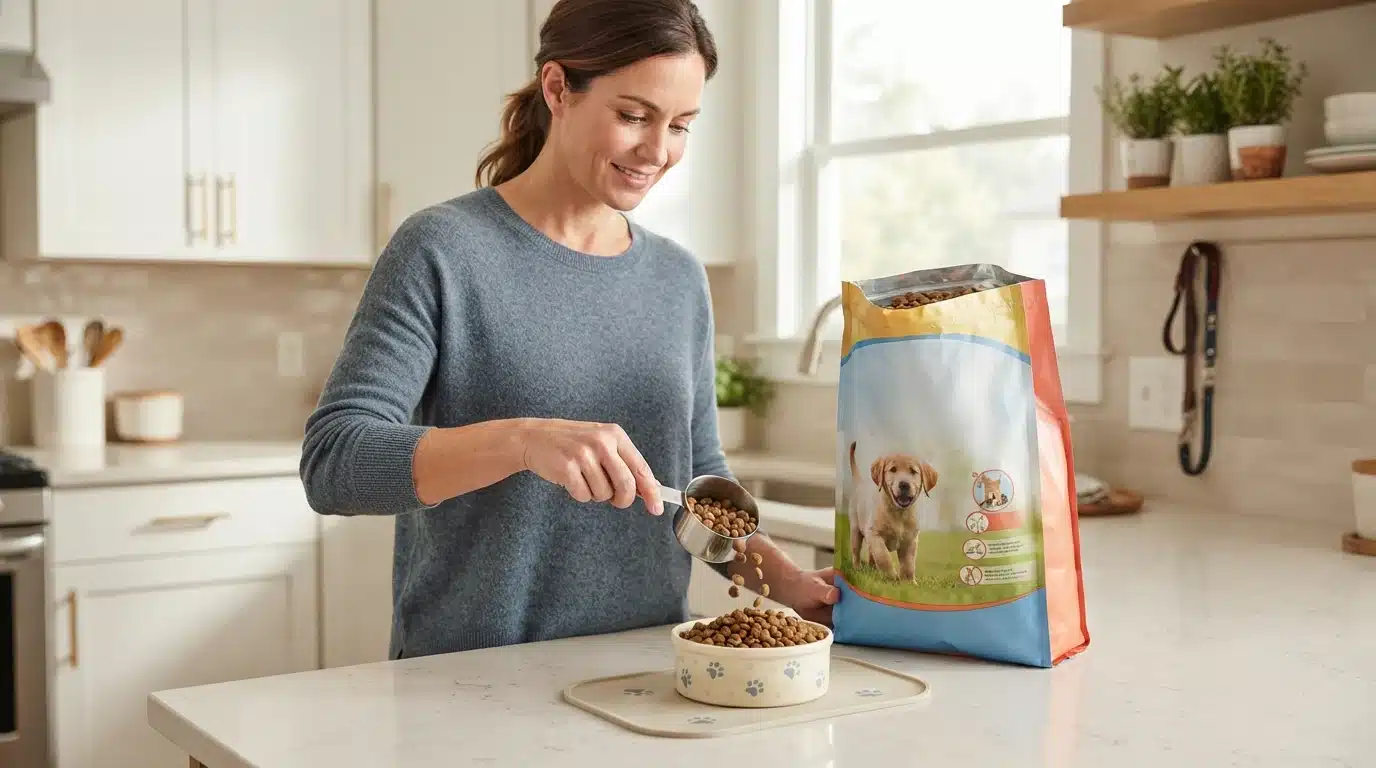
Adult food is less calorie dense than puppy food, so portions change at the switch. Use a standard measuring cup or kitchen scale, start with the bag’s guideline for your dog’s target weight, and adjust every few weeks based on body condition. A set meal schedule also makes house-training and crate routines more predictable, something our small breed puppy care checklist builds around.
Choosing the Formula: Puppy Food, Adult Food or All Life Stages
Once the timing question is settled, the next decision is which bag to bring home. Three options exist for small breeds, and each one trades something.
When staying on the same puppy food is right
If your Havanese or Cavapoo is still filling out at 10 months, keep the puppy formula. It carries the higher calorie density and calcium levels growing bodies need. Finish the bag, then start a 7 to 10 day switch rather than changing mid-bag. The food your breeder sent home was matched to a plan, so hold that line until your puppy’s body, not a birthday, says otherwise.
The case for a dedicated small breed adult formula
Small breed adult food does two things puppy food does not. It lowers calorie density to match a slower metabolism, and it keeps kibble pieces small enough for a 10-pound mouth. That second point matters more than most shoppers expect. A big-breed formula’s chunky pieces can frustrate a Havanese, and a standard adult formula packs more calories per cup than these dogs need.
What all-life-stages food gives up
All life stages food is formulated to meet puppy growth standards, so it stays calorie-dense for adult dogs. That works for a hard-working sporting dog. For a couch-loving Havapoo, it often means smaller portions and a hungrier dog. Some families use it anyway and manage portions carefully. It is a legitimate choice, just not the default one for a small companion breed.
Reading a label without being overwhelmed
Ignore the front of the bag and flip it over. Check three things: the AAFCO statement (it should name the intended life stage), the calorie content per cup, and the first few ingredients. That is enough to compare two bags side by side in under five minutes, without a nutrition degree.
A Seven to Ten Day Transition You Can Actually Follow
The fastest way to move your puppy onto adult food without stomach trouble is a gradual mix over 7 to 10 days. Keep meals, timing and portions the same, and change only the ratio each day. Here is the schedule:
- Days 1 to 2: 25% adult food, 75% puppy food
- Days 3 to 4: 50% adult food, 50% puppy food
- Days 5 to 6: 75% adult food, 25% puppy food
- Days 7 to 10: 100% adult food
The week long mixing schedule
Measure both foods by the cup before you combine them, so the ratios stay honest. If your puppy eats half a cup per meal, day one looks like two tablespoons adult plus the rest puppy. A slower puppy can stretch days 5 and 6 across two extra days, which is why the plan runs 7 to 10 days. Never skip straight from all puppy food to all adult food in one meal.
Adjusting portions during the change
Adult formulas usually carry fewer calories per cup than puppy food, so the volume in the bowl may shift slightly. Watch your puppy’s body condition, not just the scale: you should feel the ribs easily under a thin fat layer. If weight drops during the week, add a little back. If it climbs, trim the portion.
What to watch for and when to call the vet
Loose stool for a day or two is common and usually settles. Call your vet if diarrhea lasts more than 48 hours, contains blood, or your puppy refuses food, vomits repeatedly or seems low in energy. Those signs mean slow the schedule back a stage, or pause the switch until you get advice.
Readiness Signals That Beat the Calendar
Maturity dates vary, so your puppy’s own body tells you more than the bag’s feeding chart. Watch three things: weight, teeth and what your vet sees at a checkup.
Body weight and body condition
Weigh your puppy every two to three weeks. When a Havapoo, Cavapoo or Havanese reaches about 80 percent of its expected adult weight, growth is slowing and the switch window opens. Also run a quick body condition check: you should feel ribs easily under a thin fat layer and see a waist from above. If ribs are hard to find, cut portions first, because extra puppy calories past 9 months often settle as fat.
Teeth and adult jaw
Adult teeth are a reliable signal. Small breed puppies usually have a full set of 42 adult teeth by around 6 to 7 months, and the muzzle lengthens as the jaw finishes growing. Once adult teeth are in and chewing has slowed, calorie demands drop. A puppy still teething at 8 months needs puppy food longer than one who finished months ago.
What your veterinarian checks
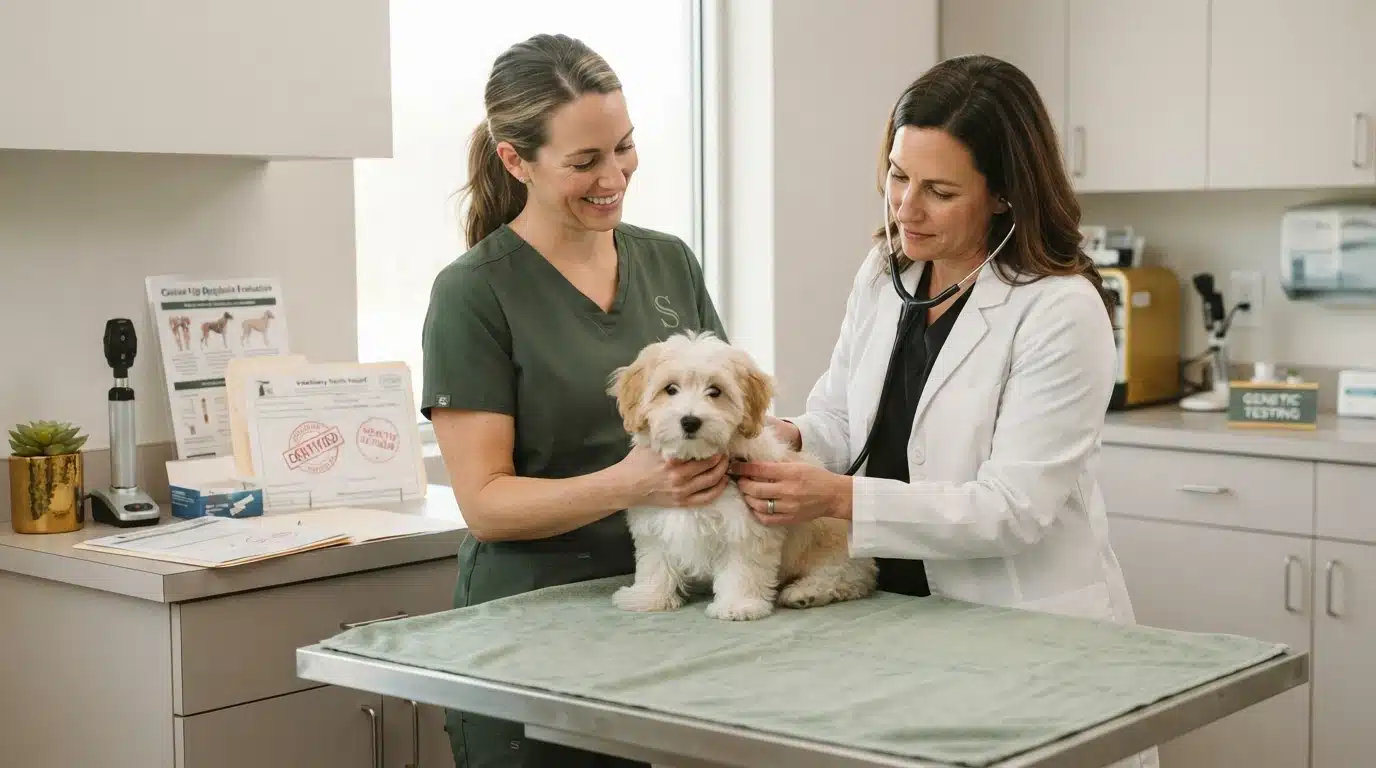
Your vet reads signals you cannot. At a wellness exam they track the weight curve against age, score body condition on a 9-point scale, and feel growth plates near the joints to judge whether bone growth has finished. Ask directly: “Is he ready for adult food?” Bring your feeding plan and measured portions so the answer fits your puppy, not a generic chart.
Which Should You Choose: A Staged Switch or a Single All Life Stages Food?
The default recommendation for a small breed owner
For most Havanese, Havapoo and Cavapoo families, a staged switch is the safer default. Feed small breed puppy food until your puppy reaches about 80 percent of expected adult weight, usually between 9 and 12 months, then move to an adult small breed formula over 7 to 10 days. That two-step plan matches how small breeds actually grow, and each stage gives you a checkpoint to adjust portions before the next one starts.
When all life stages food is the better fit
An all life stages food suits families who want one formula from day one. It is the better fit if your breeder’s feeding plan already uses one, if your puppy is a picky eater who resists recipe changes, or if you share care with another household. You still control growth pace through measured portions, so the food’s flexibility does not mean losing control of calories.
When to delay or move the switch earlier
Delay the staged switch if your 7-month-old is still visibly filling out or your vet flags slower growth. Move it earlier if a 10-month-old has reached adult size and is picking up extra body fat. Let body condition call the timing, not the calendar, and keep whichever change you make gradual.

Your puppy’s switch window is short, and guessing can cost you the checklist. Start the 7 to 10 day transition with confidence, and if you are still choosing a puppy, Sage Puppies pairs every Havanese, Havapoo and Cavapoo with a breeder feeding plan. Wisely Bred. Beautifully Loved.
Frequently Asked Questions
Q1: When should small breed puppies switch to adult food?
Between 9 and 12 months for most small breeds, once your puppy reaches about 80 percent of expected adult weight. Your vet makes the final call.
Q2: Can I mix puppy and adult food during the transition?
Yes. Blend them over 7 to 10 days, increasing the adult share every two days.
Q3: What happens if I switch too early?
Growing bones miss calcium, protein and calories, especially through final growth spurts.
Q4: How many meals a day after the switch?
Two measured meals, spaced roughly 10 to 12 hours apart.
Q5: Should I worry about loose stool during the change?
A day or two is common. Call your vet if diarrhea lasts beyond 48 hours.
Conclusion
Timing is the whole decision. Small breeds like the Havanese, Havapoo and Cavapoo finish growing between 9 and 12 months, so watch for about 80 percent of expected adult weight rather than a birthday. Then blend the new food over 7 to 10 days, keep portions measured, and check body condition along the way. Switch too early and growth nutrients fall short; too late and the extra calories become fat. Your vet confirms the timing, and a staged switch remains the simplest default for small breeds.