Quick Summary: Size changes the type of risk with children: small dogs cause less severe bites but may bite more often and are easier to injure, while large dogs can cause much deeper injuries. Individual temperament, early socialization, health testing, and constant adult supervision matter more than size. A well-bred small companion can suit families with young children, but children must be taught gentle handling and every interaction must be supervised.
You’re holding a toddler in one arm and deciding between a Havapoo puppy and a Labrador retriever puppy. The research-based answer is messier than the internet suggests. Small dogs cause far less severe injury when a bite happens, but some studies show they bite family members more often, and they’re much easier to hurt. Big dogs aren’t reliably gentler, either. In the small breed puppy vs big dog question, size turns out to be the least reliable safety variable.
Most families get the opposite advice: big dogs are naturally good with kids, small dogs are risky. That leaves you guessing which risk actually matters in your home. This comparison separates dog bite severity from frequency using veterinary epidemiology, weighs the overlooked risk of a small puppy being injured, and covers the supervision and handling habits that change outcomes more than size does. It ends with a checklist for judging an individual puppy and a health-tested breeder.
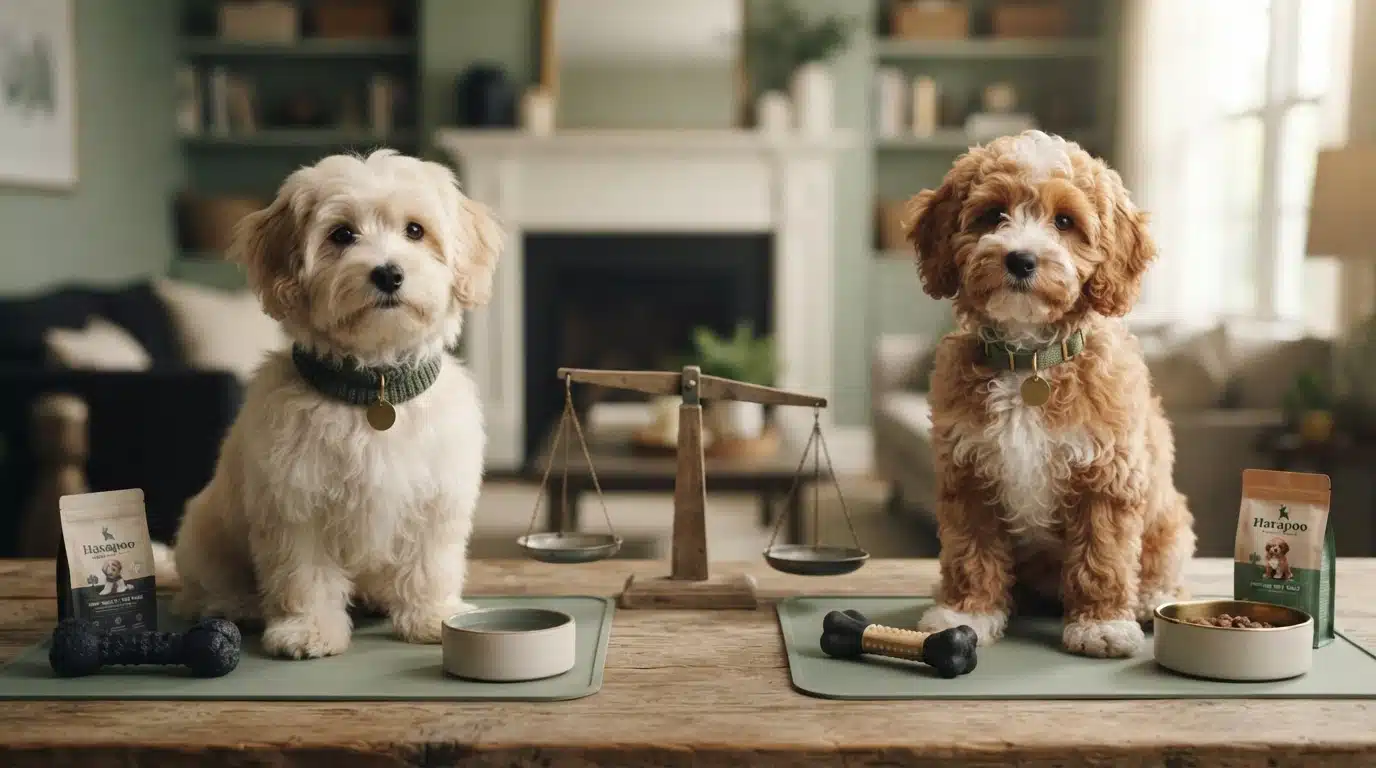
Small Breed Puppy vs Big Dog With Kids: At a Glance
| Small breed puppy | Big dog (large breed dog) | |
|---|---|---|
| Severity of injury if a bite occurs | Typically minor: less force, smaller bite depth, rarely requires surgical repair | higher: larger jaws and bite depth; in one pediatric trauma study, surgical repair was needed in 17.1 percent of cases |
| Frequency of biting family members | Higher in some studies, including a bi-national study where smaller breeds were at higher risk of biting children in the home | Lower relative risk of biting children than small breeds in some analyses, though breed and training matter |
| Risk to the dog from children | elevated: fragile bones, easily stepped on, dropped or handled roughly | Lower risk of physical injury to the dog, but higher risk of being overpowered or poorly controlled |
| Ease of adult handling and supervision | Easy to physically redirect, carry and separate from a child | Harder for a child to hold, guide or physically stop without an adult |
| Space, cost and exercise demands | Lower food, gear and space costs; moderate daily exercise still required | Higher food, gear, veterinary and housing costs; greater daily exercise needs |
| Fit for a family with young children | Strong for handling and severity reasons, conditional on gentle handling and supervision | Workable only with adult control of interactions, training and space |
How Small Breed Puppies and Large Breed Dogs Compare
Small breed puppy
A small breed puppy matures under roughly 25 pounds, and breeds like the Havanese, Havapoo, and Cavapoo are bred mainly as companions. Families pick them for manageable size and easy handling in busy homes. The trade-off is fragility: these dogs need gentle handling and adult supervision to stay safe around young children.
Key strengths
- Easy to redirect, carry, and separate from a child
- Bites, when they happen, cause less force and rarely need surgical repair
- Lower food, gear, and space costs
Big dog (large breed dog)
A large breed dog matures above roughly 50 pounds; think Labrador retrievers, Golden retrievers, and German Shepherds raised as family dogs. They suit families who want a sturdier, more tolerant playmate for rambunctious kids. That size cuts both ways, though, because a child cannot physically control one without an adult nearby.
Key strengths
- Lower relative risk of biting children in some analyses
- Harder for kids to overwhelm or hurt the dog
- Sturdy frame tolerates rougher play when supervised
Is a Small Breed Puppy Safer With Kids Than a Big Dog?
Not automatically. Size shifts which risk your child faces, it does not remove it. A small breed puppy is less able to cause a serious bite injury, but the research separates two different questions: how often bites happen, and how badly they hurt when they do.
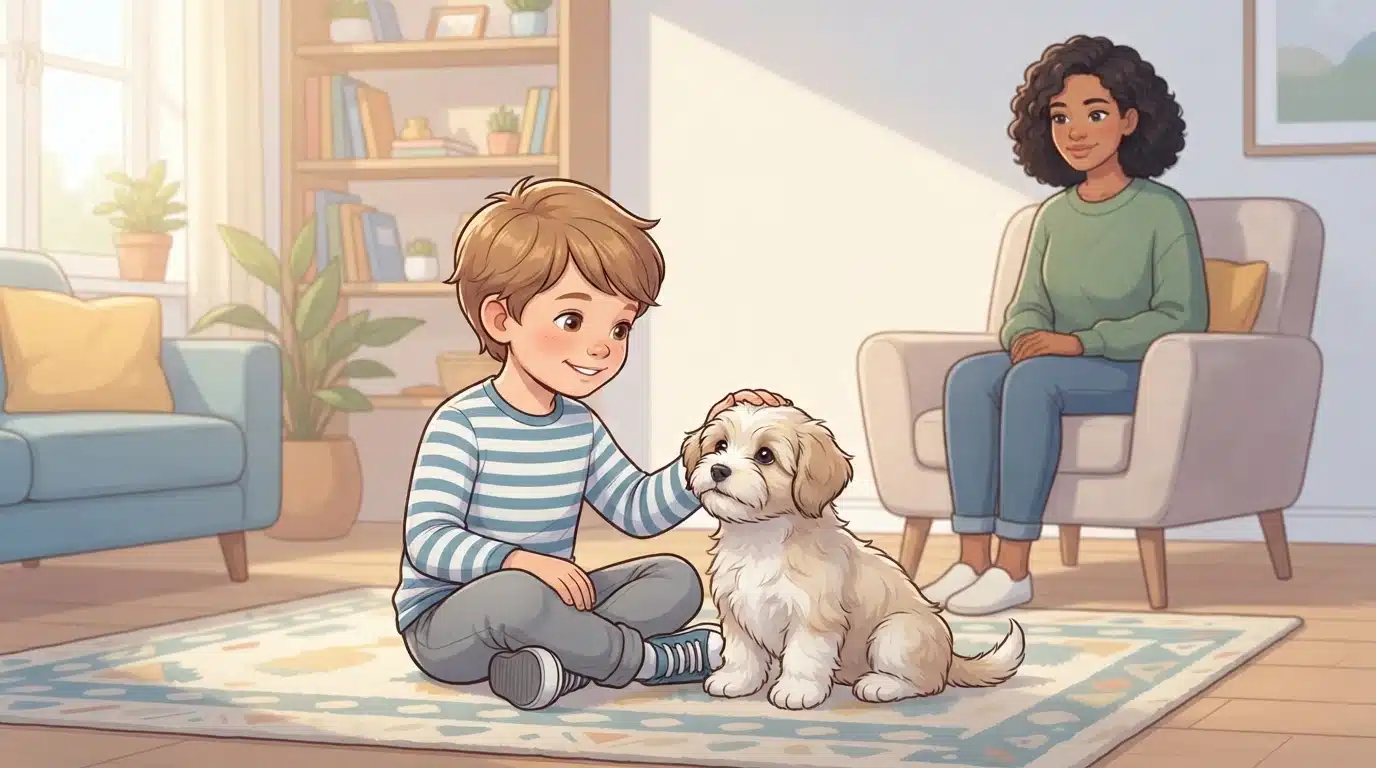
Bite frequency is mostly about the individual dog and its handling, not its size. The AVMA’s review of breed and bite risk finds no breed is born dangerous and that most bites trace to socialization gaps, lack of supervision, and how the dog is treated. Children carry most of that risk: CDC hospital data show roughly 42 percent of dog bites treated in emergency departments involve kids, with rates highest at ages 5 to 9 (CDC).
Severity is where size matters. Pediatric trauma studies show large, muscular breeds cause deeper wounds and more surgical repairs, and about 62 percent of children’s bites land on the head and neck (CHOC). A Havanese or Cavapoo cannot do that kind of damage at adult weight under 25 pounds.
The flip side most lists skip: small dogs get hurt. Big kids play rough with small dogs, so you still need supervision either way.
Severity and Frequency: Where the Two Size Categories Diverge
So, are small dogs more likely to bite children? Studies point that way: small dogs show more growling, snapping, and reported bites in household surveys, but the AVMA’s review of breed and bite risk notes their size limits how much harm a bite can do. Big dogs bite less often in the home, yet their bites land harder. Frequency and severity move in opposite directions, and parents need both numbers to judge risk honestly.
Why small dogs show up more often in household bite statistics
Small dogs record more bites partly because families report them more. A nip from a Havanese that breaks skin gets logged and laughed off. Nobody calls an emergency room, so the small-dog numbers that survive in research come mostly from owner surveys and behavior studies rather than hospital data.
The AVMA background paper makes a second point: small dogs often get less training and socialization because their behavior seems manageable. Owners tolerate growling from a 12-pound dog they would never accept from a 70-pound one. That tolerance lets warning signs go uncorrected, so the snapping continues.
There is also a physical mismatch. Kids crowd small dogs, pick them up, and startle them at close range. A child’s face sits right at a small dog’s eye level on the sofa. Close contact plus tolerated warnings equals more recorded bites.
Why the injuries from larger dogs are more serious
Hospital data tell the other half of the story. Bites that require treatment skew toward larger, stronger breeds. One pediatric hospital review of bite cases found severe injuries concentrated in big, muscular breeds, with surgical repair far more common after their attacks.
The physics is simple. Jaw width, head weight, and bite force scale with body size. A large dog clamps down on a child’s head, neck, or face, and the wound goes deep enough to damage muscle and bone. A small breed’s bite, at the same spot, usually stops at the skin.
That is why a small dog’s higher bite frequency does not translate into higher danger for a child.
The Risk Nobody Mentions: Small Dogs Are Easier to Hurt
Fragility, fear behavior and the defensive snap
Most comparisons stop at what a dog can do to a child. The reverse matters just as much. A toy breed’s bones are thin, its joints are loose, and a fall from a toddler’s arms can break a leg. Emergency vets see it often: small dogs injured by drops, steps on tails, rough hugs, or being tripped over.
Pain changes behavior. A small dog that has been squeezed or stepped on learns to guard itself. It may growl when picked up, snap when startled awake, or bite to end an interaction it cannot escape. Researchers describe this as defensive aggression, and it shows up in small dogs partly because handling is more invasive. They get carried, grabbed, and lifted over a child’s head.
Here is the trap: families often excuse it. A growl from a 12-pound Havanese feels harmless, so it goes uncorrected, while the same signal from a large dog would trigger immediate training. That double standard teaches the puppy that growling works, and the biting can escalate.
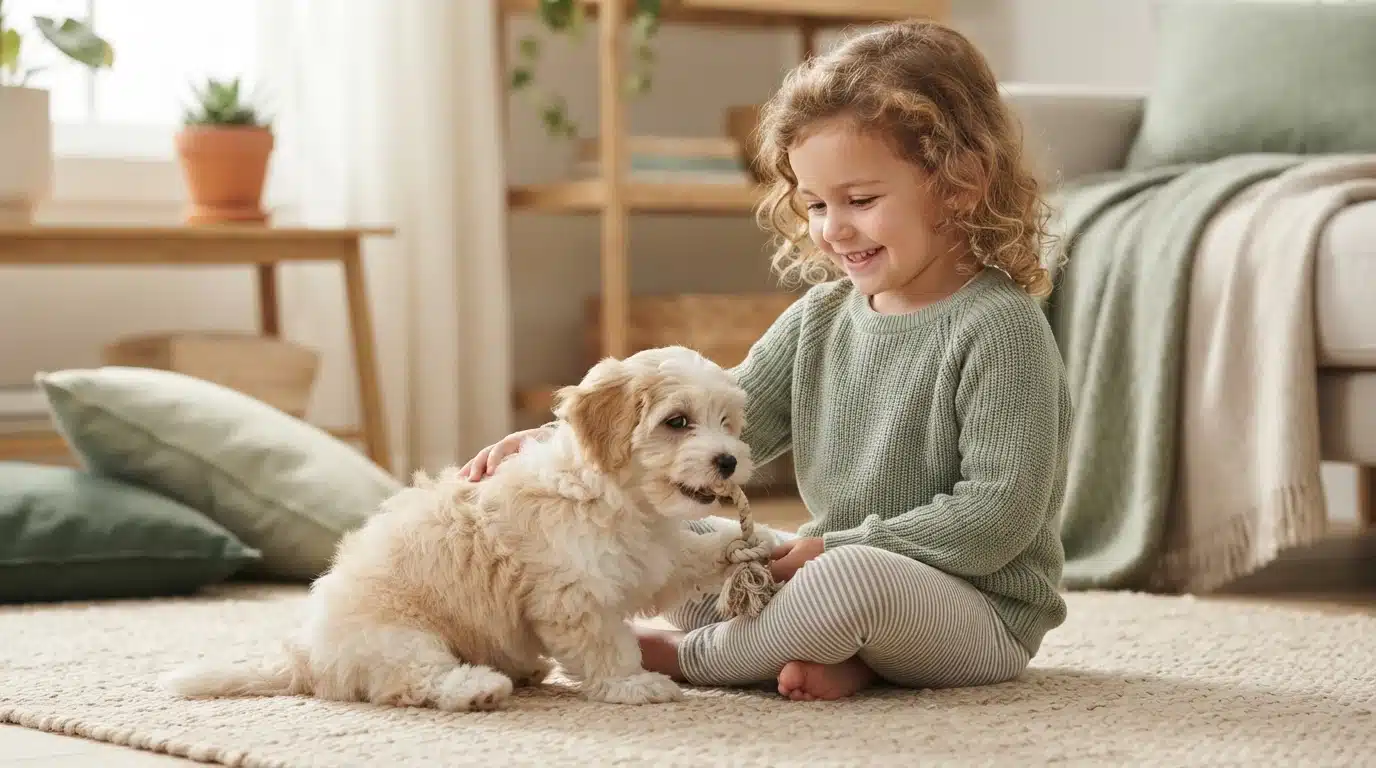
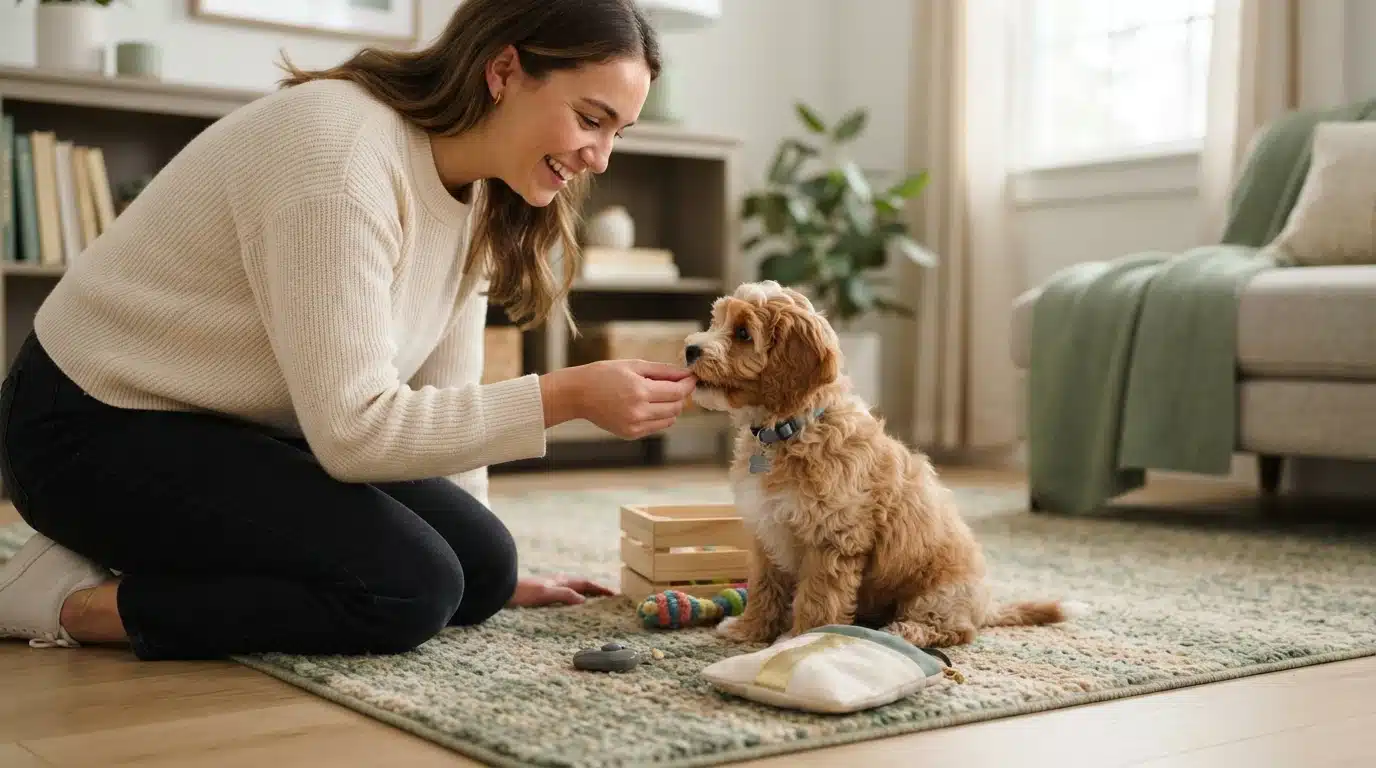
Prevention is straightforward. Teach children to sit on the floor for puppy time, never carry the dog without an adult nearby, and wake it gently. Consistent early handling builds tolerance, and a structured plan like a small breed puppy training timeline helps you shape it month by month.
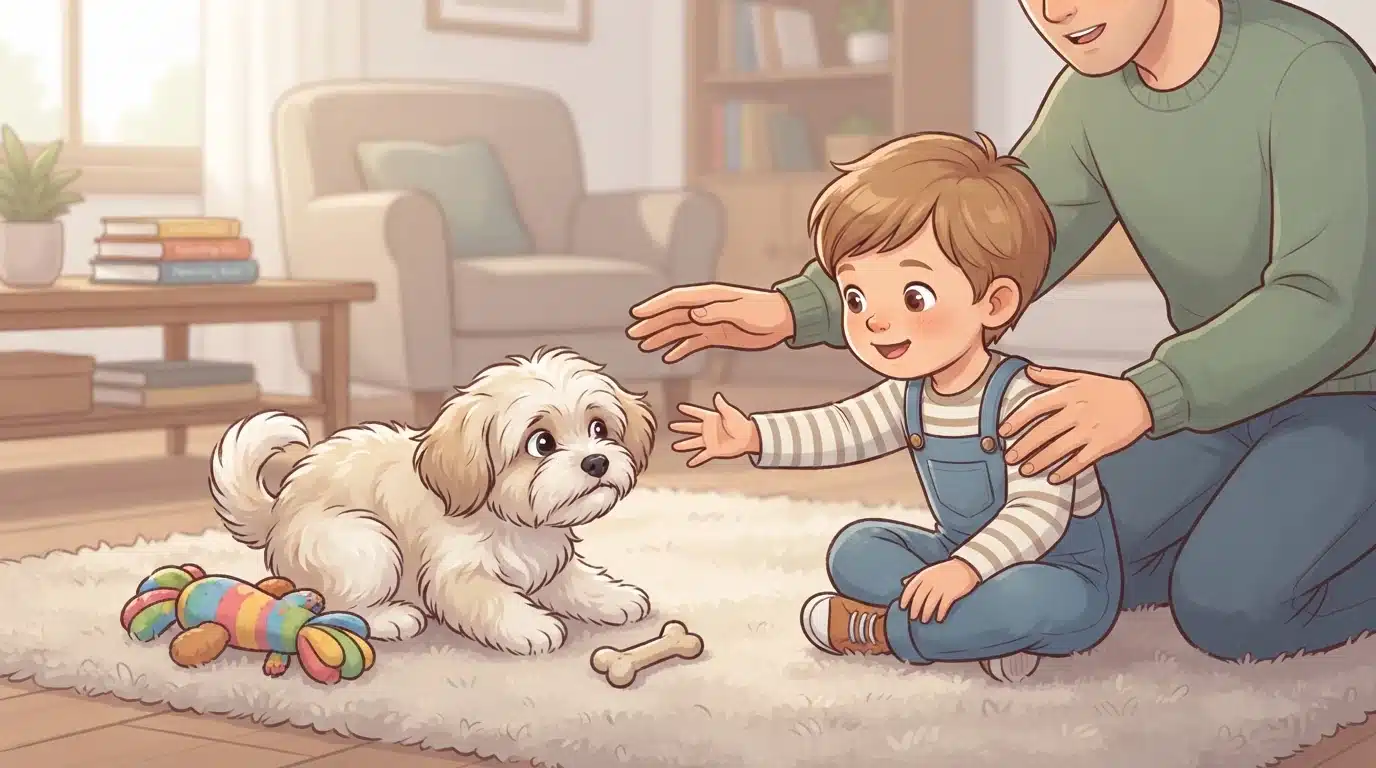
Ask any breeder how the puppy’s parents respond to being handled. At Sage Puppies, matching a family to a puppy whose parents show calm tolerance is part of the process, because a good fit protects both the child and the dog.
Supervision, Handling and Household Setup
The physical setup matters less than how you run it. An adult should always be present when your child and puppy share space, because most bites to young children happen during unsupervised moments. The AVSAB position statement also points out that the first three months shape a puppy’s comfort with handling, so calm, supervised contact now pays off later.
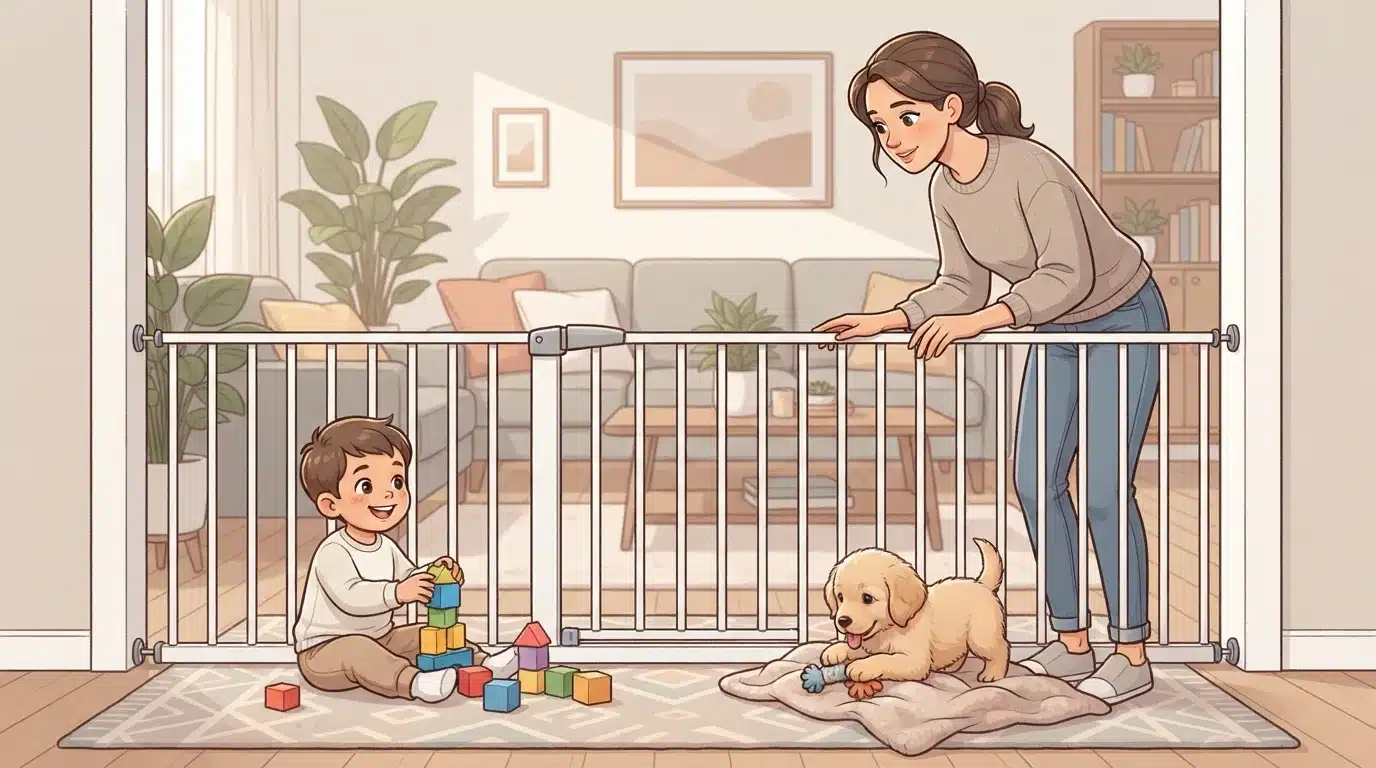
A supervision protocol that works for either size
Use three rules, and post them where everyone can see them:
- One adult, one job. When the puppy and child are together, one adult watches the dog-child pair. Holding a conversation or cooking dinner is not watching.
- Teach gentle, still hands. Children sit on the floor to pet, touch the body rather than the face, and never take food, toys or the sleeping puppy. Practice until it is habit.
- End on a good note. Separate them before either party gets tired or frustrated, not after. Short, happy sessions beat long tense ones.
Watch the puppy too. Lip licking, turning away, stiffening or leaving the room all mean your puppy needs a break, so honor that signal every time. The same protocol protects a 12-pound Havanese and a 70-pound Lab; only the stakes change.
These habits pair naturally with the month-by-month work in Sage Puppies’ training timeline, which walks through what to expect as your small breed puppy matures.
Equipment and handling differences by size
The gear changes with the dog’s weight:
| Item | Small breed puppy | Large breed puppy |
|---|---|---|
| Gates | Any standard pressure gate works | Hardware-mounted, since bigger dogs push through |
| Carrying | Two hands, support the chest | Never carry; use a leash |
| Play surfaces | Floor only; falls injure tiny bones | Floor, then grass |
| Toys | Small, soft, squeaky | Large, tough, no swallowable parts |
| Child’s lap | Fine with supervision | Keep play on the floor |
The biggest handling difference is who carries whom. A child can pick up a Havanese and should learn to hold it properly, feet supported, never squeezed. That same gesture with a Lab risks a back injury, so the rule becomes: small dogs come to laps, large dogs stay on the floor.
Matching an Individual Puppy Rather Than a Size Category
A size category is a starting point, not a promise. Two puppies from the same litter can differ sharply in how they react to noise, grabbing, and rough handling, so the individual in front of you matters more than the average for the breed.
What to verify before you commit to a puppy
Ask these questions before you put down a deposit:
- How are puppies raised? Home-raised puppies handled daily by adults and children show calmer responses to touch.
- What temperament testing do you do? A structured puppy temperament assessment at seven weeks reveals a pup’s reaction to being held, startled, and restrained.
- Can I see health testing? Ask for parent screening and DNA results, plus eye and hip checks where the breed standard calls for them.
- What socialization plan do you follow? Look for a program that follows the AVSAB position statement on early socialization.
- How do you match puppies to families? A breeder who asks about your children, schedule, and experience is screening you as carefully as you screen them.
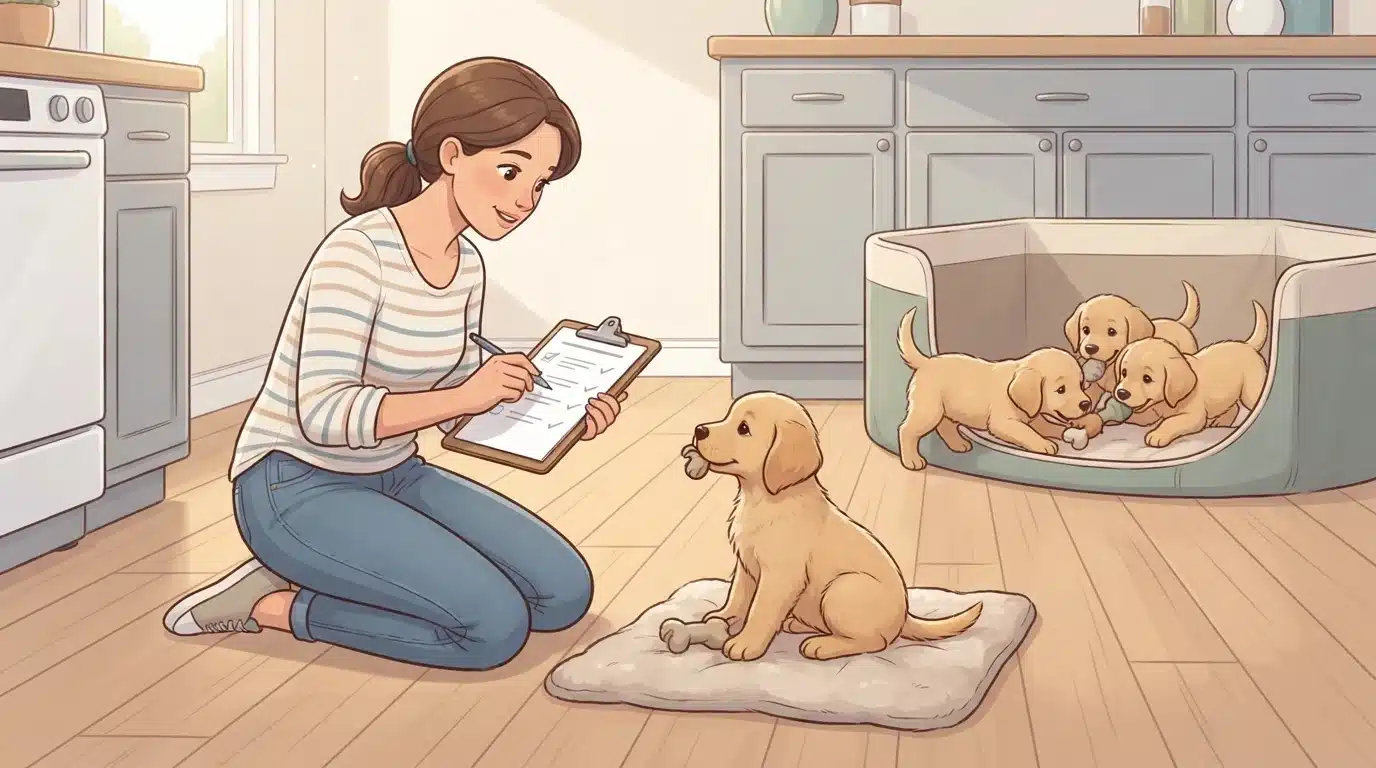
A responsible breeder answers all five without hesitation. If any answer feels vague, keep looking.
Where small breed companion programs fit
Small companion breeds give families a lower-severity starting point, but the breeding program still decides whether you get an easy puppy or a difficult one. Ask how the breeder socializes litters and what they observe about each pup before matching. A program that documents daily handling and screens both parents, the way boutique programs such as Sage Puppies do, removes much of the guesswork. The rest comes from your own household: teaching children the handling rules, supervising every interaction, and building your puppy’s confidence with patient early training.
Size lowers the ceiling on injury. The breeder and your supervision decide whether a bite ever happens at all.
Which Should You Choose: Small Breed Puppy or Big Dog?
There is no universal winner. The safer choice depends on your children’s ages, your supervision capacity, and how the puppy itself was bred and raised.
Choose a small breed puppy when
Small breeds fit families with children under about 6, apartments or small yards, and first-time owners who want a manageable dog. A Havanese or Cavapoo reaches adult weight under 25 pounds, so bite force and depth stay lower, and a child cannot be knocked down during play. You can also carry a small dog away from a tense situation instead of managing it through one. The trade-off is fragility: small puppies break more easily when stepped on, dropped, or carried rough, so they need protection from young kids as much as the reverse. Start with the basics early using a small breed puppy training timeline so good habits form before a baby or toddler arrives.
Choose a large breed dog when
Large breeds make sense with older children, usually 8 and up, who can follow handling rules consistently, and in homes with space and active time to match a 50-plus-pound dog. A well-bred Golden or Lab often brings a stable, tolerant temperament and can absorb rough play without injury. But the physics go the other way: one clumsy knock sends a small child to the floor, and deeper bites mean more surgical repairs when something does go wrong. Choose a puppy from a breeder who does temperament assessment and health testing on the parents, not just a size-based pick. Individual temperament and supervision matter more than the size category in either direction.

If safety with young kids is your priority, a well-bred small companion is the honest fit. Sage Puppies matches families with Havanese, Havapoo, and Cavapoo puppies through a simple application, with Utah pickup or nationwide delivery. Start yours today.
Frequently Asked Questions
Q1: Is a small breed puppy safer with kids than a big dog?
Not automatically. Small dogs cause less severe bites, but some studies show they bite family members more often, and they’re easier to injure. Individual temperament and supervision matter more than size.
Q2: At what age can my child be alone with the puppy?
Never plan on it. An adult should supervise every interaction until the child is older and consistently follows handling rules.
Q3: Why do small dogs bite more often in studies?
Owners tolerate growling and snapping from small dogs, and kids crowd or startle them at close range, so more warnings go uncorrected and get recorded.
Q4: How do I protect a small puppy from rough play?
Keep play on the floor, teach still hands, and never let a child carry the puppy without adult help.
Q5: What should I ask a breeder before choosing?
Ask about temperament testing, health testing of parents, socialization plans, and how puppies are matched to families with children.
Q6: Are big dogs better with older kids?
Often yes. Children 8 and up can follow rules consistently, and sturdy breeds tolerate supervised rough play better than fragile toy breeds.
Conclusion
Size changes the shape of the risk, not the fact of it. A small breed puppy lowers the ceiling on bite severity, while large dogs lower the odds of frequent nips but raise the stakes when a bite lands. Both sizes can be hurt, and both need the same core habits: adult supervision, gentle-handling rules for children, and early socialization. The dog bite severity and frequency research points one way: judge the individual puppy, not the category. A temperament assessment, health testing, and parent screening tell you more than weight does. Match the puppy to your children’s ages and your supervision capacity, and either choice can work safely.