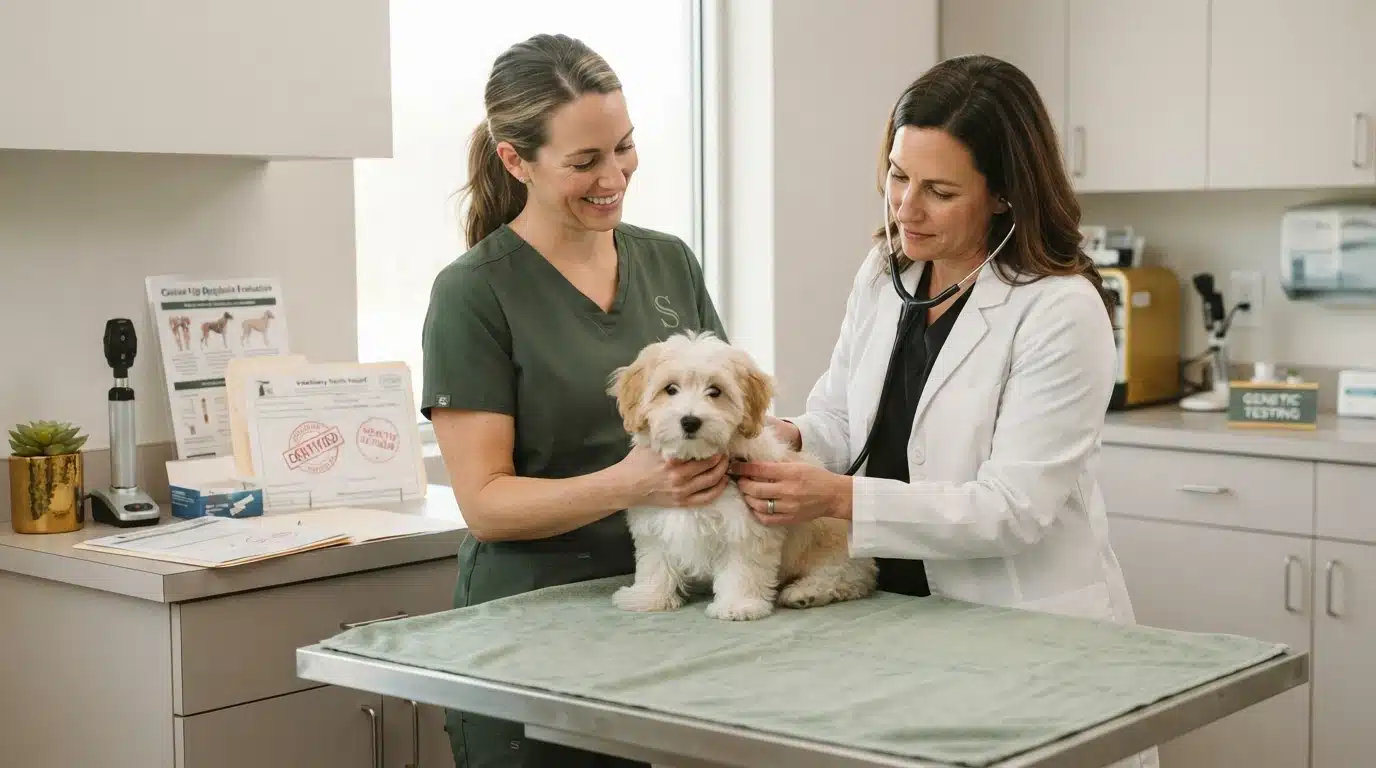
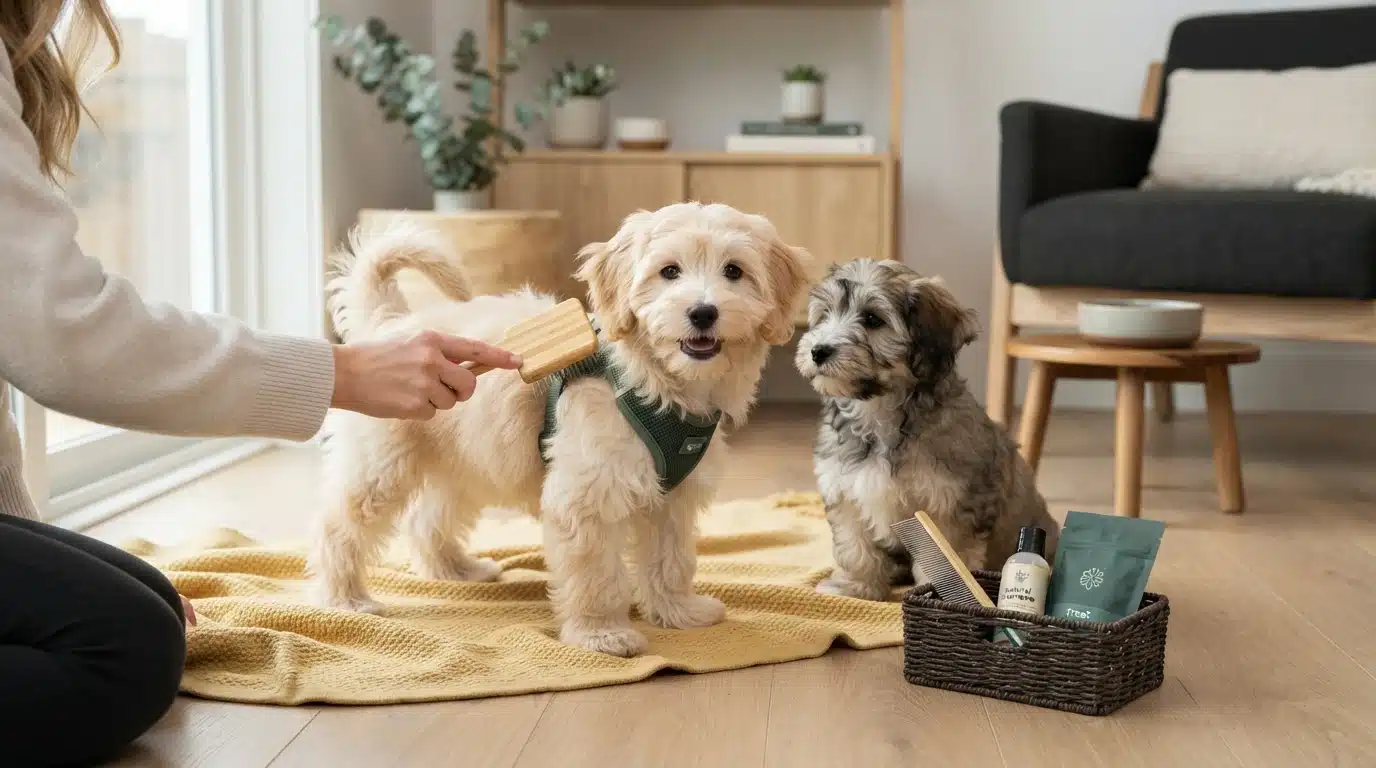
Quick Summary: Havapoo puppies need deworming at 2, 4, 6, and 8 weeks, then monthly until 6 months, while DHPP vaccines begin at 6 to 8 weeks and continue through 14 to 16 weeks. Rabies vaccination depends on state law, and DHPP and rabies boosters are generally due at one year. Verify every vaccine and deworming record at pickup, confirm weight-based dosing and fecal testing with a veterinarian, and avoid high-traffic places until the core series is complete.
The paperwork that comes home with a Havapoo puppy is usually a stack of dates, and the earliest entry is often a deworming treatment logged before eight weeks of age, not a vaccine. Reading that stack correctly tells you whether your puppy is actually protected on day one, or whether you are only assuming it is.
That is the problem this guide solves. Havapoo vaccination and deworming follow overlapping but separate timelines, and mixing them up leads to missed boosters or double-dosed treatments. We walk through a breed-specific schedule from two weeks of age, through the core puppy series ending near 16 weeks, and into first-year boosters, following guidance aligned with AAHA and CAPC recommendations. You will also get a record-verification checklist for pickup day and a clear handoff plan between the breeder and your veterinarian, so nothing falls through the cracks in your Havapoo puppy deworming care.
What Is the Vaccination Schedule for Havapoo Puppies?
A Havapoo puppy’s first vaccine usually happens between 6 and 8 weeks of age, with boosters every 3 to 4 weeks until the core series finishes near 16 weeks, and the rabies shot comes at 12 to 16 weeks depending on state law. Deworming starts earlier, at 2 weeks, and repeats through the vaccine series. Your breeder covers the early doses, then your veterinarian takes over.
The Short Version: Core and Non-Core Vaccines
Core vaccines protect every puppy against widespread, serious disease. These are distemper, adenovirus, parvovirus, parainfluenza (often combined as one DHPP shot) and rabies. Non-core vaccines depend on your puppy’s lifestyle. Bordetella matters if your puppy will board or attend training classes. Leptospirosis fits dogs exposed to standing water or wildlife. Canine influenza is a risk-based choice your vet will discuss. The AAHA canine vaccination guidelines frame it this way: core vaccines are given to all puppies, non-core vaccines are added where real exposure exists. Small breeds like the Havapoo sometimes get adjusted doses, so your vet decides what fits.
Week-by-Week Vaccination Timeline for Havapoo Puppies
| Age | What Happens | Given By |
|---|---|---|
| 2 weeks | First deworming | Breeder |
| 4 weeks | Second deworming | Breeder |
| 6-8 weeks | First DHPP; third deworming; Bordetella sometimes | Breeder or vet |
| 10-12 weeks | Second DHPP, plus leptospirosis if chosen | Veterinarian |
| 14-16 weeks | Final DHPP; rabies at 12-16 weeks | Veterinarian |
| 1 year | DHPP booster; rabies booster per law | Veterinarian |
Why the repeats? Maternal antibodies from nursing can block early doses, so no single shot fully protects a young puppy. Following AVMA guidance on finishing the full series matters more than hitting an exact date.
When Does a Havapoo Puppy Get the Rabies Vaccine?
Most states require rabies vaccination between 12 and 16 weeks of age. Your local rules set the exact timing, so ask your veterinarian at the first visit rather than scheduling it yourself. Rabies boosters follow one year later, then every one to three years by vaccine type and state law. Because Havapoos are small, vets often prefer giving rabies as its own visit, not stacked with other shots.
The Havapoo Deworming Schedule: Weeks 2 Through 6 Months
Why the First Eight Weeks Matter Most
Roundworms are nearly universal in puppies. Larvae can hide in the mother’s muscle tissue, reactivate during pregnancy, and pass to puppies before birth or through her milk. That is why deworming starts at 2 weeks of age, before most puppies even open their eyes fully. Hookworms follow a similar path and can cause anemia in a small Havapoo quickly. Left untreated, a heavy worm burden leads to poor growth, a pot-bellied look, diarrhea, and in serious cases, death. Treating early and repeating on schedule breaks the worm life cycle instead of just pausing it.
The Full Treatment Timeline
So, how often should Havapoo puppies be dewormed? The CAPC guidelines call for treatments at 2, 4, 6, and 8 weeks of age, then monthly until 6 months old. Here is that Havapoo deworming schedule at a glance:
| Age | Treatment | Who Gives It |
|---|---|---|
| 2 weeks | First deworming | Breeder |
| 4 weeks | Second deworming | Breeder |
| 6 weeks | Third deworming | Breeder |
| 8 weeks | Fourth deworming, often with first vet visit | Breeder or vet |
| 8 to 12 weeks | A fecal test confirms the treatment worked | Veterinarian |
| 12 weeks to 6 months | Monthly dewormer or a heartworm product that covers worms | Veterinarian |
The breeder handles the first doses, which is one reason a documented puppy health record matters so much. At Sage Puppies, every deworming date and product goes in the record that travels with your puppy.
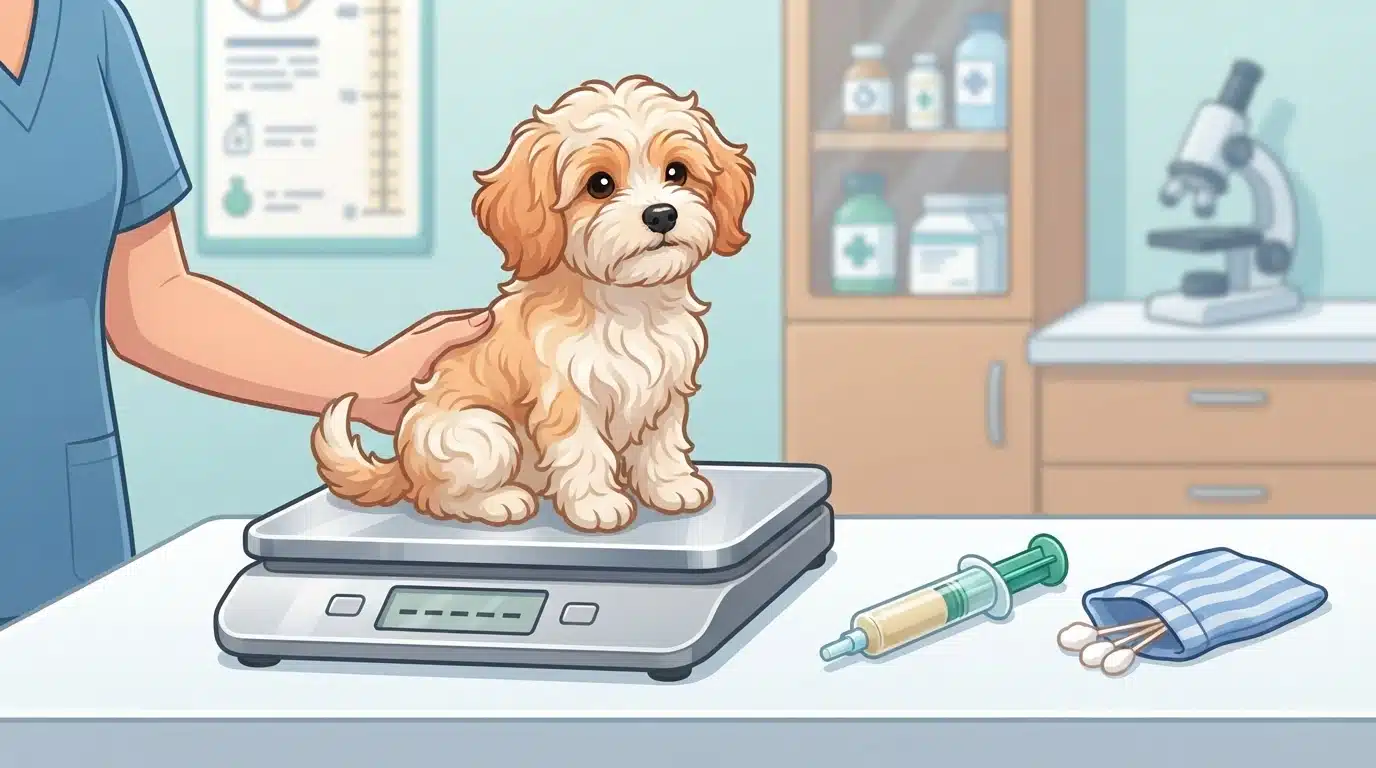
Choosing a Product and Dose Without Guesswork
Use a broad-spectrum dewormer, such as pyrantel or fenbendazole, that covers roundworms and hookworms. Dose by weight, not age, so weigh the puppy right before each treatment. A UC Davis resource for new puppy owners recommends bringing any existing deworming records to the first visit. Your vet can confirm the dose, run a fecal test, and fold monthly prevention into a heartworm plan. Never split an adult dog’s pill or guess a fraction of a dose for a 4-pound puppy. Small breed puppies have little margin for error, so accurate weight and a labeled product keep the schedule safe and simple.
Reading the Health Records That Come With Your Havapoo
The paperwork you get on pickup day tells you exactly where your puppy stands in the Havapoo vaccination and deworming schedule. Read it before you book the first vet visit, because that appointment builds on what has already been done.
What a Complete Vaccine Record Should Show
A complete record answers the same question every time: what was given, when, and by whom. Check for these items:
- Puppy’s name, birth date, and microchip or ID number
- Each vaccine by name (DHPP, Bordetella, and any others) with the date given
- Vaccine manufacturer and serial or lot number
- Each deworming treatment with the product name and dose
- A vet clinic letterhead, stamp, or signature on each entry
This matches the standards for licensed breeders, where medical records must include identification, vaccinations, and preventive care (USDA). If you want to go deeper on breeder paperwork, we explain how to read puppy health records before you choose a litter.

Questions to Ask the Breeder or Your Vet on Day One
Bring the record to your first appointment and ask directly:
- Was the first DHPP given at 6 to 8 weeks, and when is the next dose due?
- Which dewormer was used, and at what weight?
- Was a fecal test done, and what did it show?
- Has the puppy had leptospirosis or Bordetella yet?
Ask when the rabies shot is due, since most states set it between 12 and 16 weeks. Good breeders answer without hesitating, and AVMA guidance backs a tailored schedule either way.
If the Record Is Incomplete or a Dose Was Missed
Do not restart the series out of panic. Most vaccine labels allow picking up where the record leaves off, and your vet decides whether an extra dose is needed. Bring every paper you have, including dates the breeder logged by hand. If a vaccine date is missing entirely, your vet may repeat that dose for safety. Budget for a possible catch-up visit, as our Havapoo puppy cost breakdown explains.
Keeping the Schedule on Track Through the First Year
The work does not stop at 16 weeks. When your Havapoo turns one year old, the core series needs a booster, and rabies needs its renewal.
The 1-Year Boosters and Rabies Renewals
Plan a wellness visit around your puppy’s first birthday. Your vet gives a DHPP booster, and most states require a rabies booster about one year after the first dose. This visit is also a good time for a fecal test, since small dogs pick up parasites easily. Ask whether your state allows a three-year rabies vaccine or requires annual shots, because the rules differ by state.
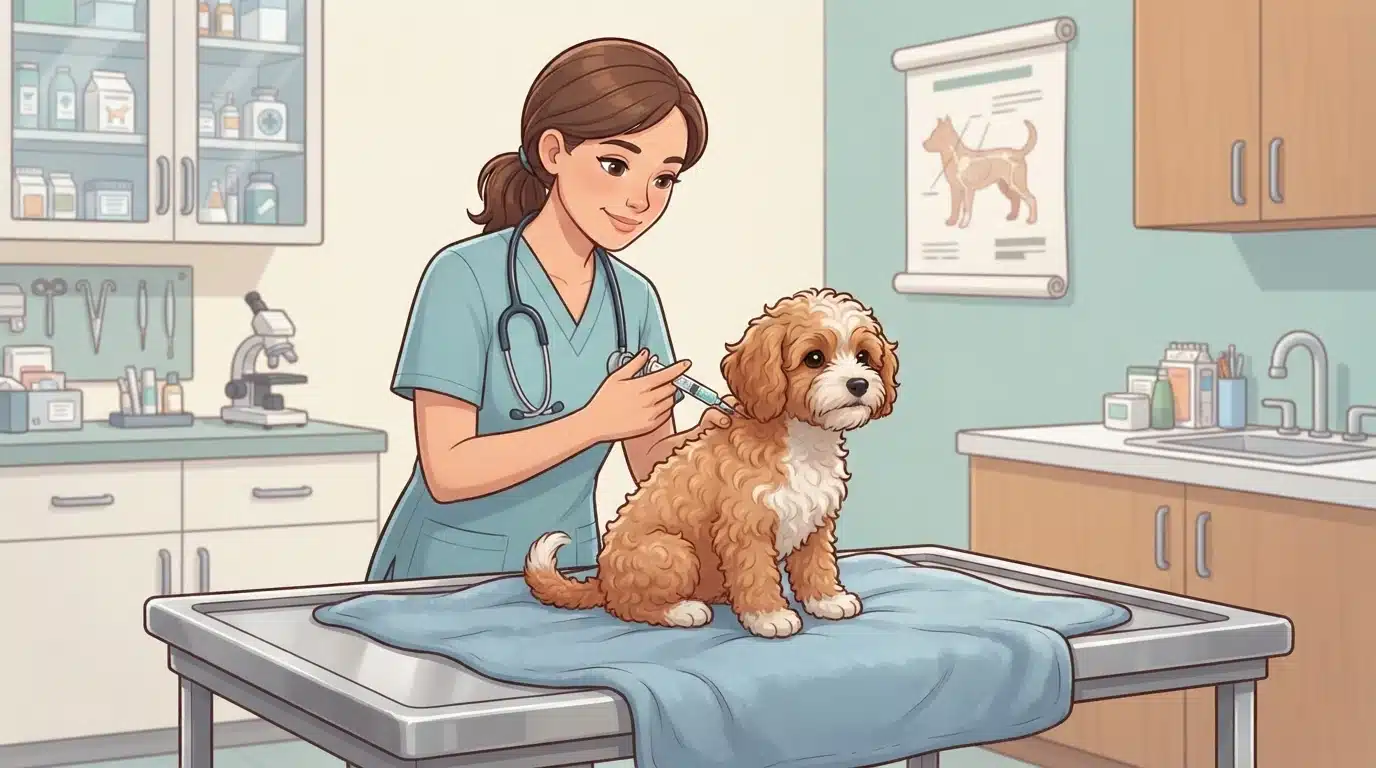
Non-Core Boosters for a Social Small Breed
Leptospirosis, Bordetella, and canine influenza fall into the non-core category, which means your vet recommends them based on your dog’s life. If your Havapoo visits dog parks, plays with other pups, boards during trips, or attends grooming appointments, these vaccines make sense. Many boarding facilities require proof of Bordetella before accepting a reservation. A social small breed benefits from this extra layer of protection, so talk through your dog’s routine with your vet.
A Simple System for Tracking Due Dates
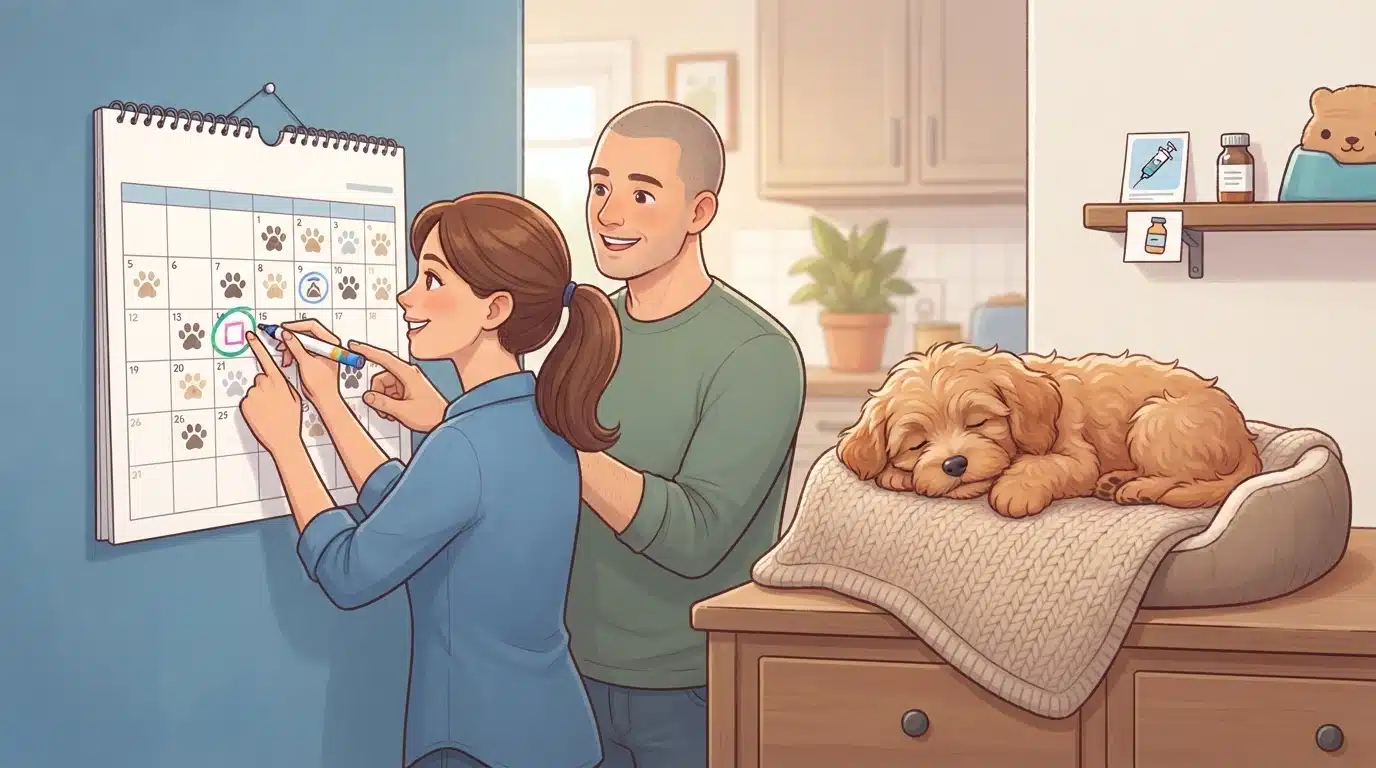
Set calendar reminders the day you bring your puppy home. Save the vet’s contact number, photograph every record page, and note each vaccine’s next due date right on the reminder. One folder, digital or paper, keeps everything together. When we prepare puppy families for pickup, we hand over a record folder with the breeder-side entries already filled in, so the vet handoff starts clean.
Common Mistakes to Avoid in Your Havapoo’s First Year
Most first-year health slips are easy to prevent. Three come up again and again with small breed puppies.
Skipping Boosters Because the Puppy Seems Fine
A healthy-looking puppy is not a protected puppy. Maternal antibodies fade at different rates, so early shots can wear off before the series ends. Skipping the 14-16 week DHPP or the one-year booster leaves a real gap. Set each next appointment before you leave the clinic, and mark the dates on your calendar so nothing slides.
Buying Dewormer or Vaccines on Your Own
Feed store dewormers and online vaccine kits look convenient, but weight-based dosing for a 4-pound puppy leaves little room for error. A vet confirms the dose, records it properly, and checks for roundworm and hookworm with a fecal test. Some breeders, including ours, hand over documented treatment records so your vet starts from facts, not guesses.
Exposing a Partially Vaccinated Puppy to High-Traffic Places
Parvo and distemper survive in soil and on surfaces for months. Until the core series finishes near 16 weeks, skip dog parks, pet stores, and puppy classes that mix unknown dogs. Carry your puppy instead of letting paws touch the ground in shared areas. Short car rides and visits to vaccinated, healthy dogs are safe middle ground.
Putting the Havapoo Vaccination and Deworming Schedule Together
Here is the complete timeline, from first deworming at 2 weeks to the 1-year boosters:
| Age | Vaccine or Dewormer | Given By |
|---|---|---|
| 2 weeks | First deworming | Breeder |
| 4 weeks | Second deworming | Breeder |
| 6-8 weeks | First DHPP, third deworming, sometimes Bordetella | Breeder or vet |
| 10-12 weeks | Second DHPP, leptospirosis if chosen | Veterinarian |
| 14-16 weeks | Final DHPP, rabies at 12-16 weeks | Veterinarian |
| 1 year | DHPP booster and rabies booster per law | Veterinarian |
Your breeder should hand over dated records at pickup, and every Havapoo family should verify them against this table before the first vet visit. If any dose is missing or undated, treat the series as if it never happened and let your vet restart it safely.
Your First Week Home: Three Things to Do
First, book a vet visit within a few days of arrival so the next due date lands on your calendar. Second, check the paperwork the same way you would review a new puppy’s health records, dose by dose. Third, confirm the fecal test and the monthly dewormer plan through 6 months. For pickup families in Utah and for delivery puppies alike, the breeder-versus-veterinarian handoff is where schedules succeed or slip.

A clear schedule takes the guesswork out of your Havapoo’s first year, from that first deworming at 2 weeks to the 16-week finish line. If you want a puppy whose records you can trust from day one, explore the well-bred Havapoos at Sage Puppies. Review the timeline, then check available puppies and start your application with confidence.
Frequently Asked Questions
Q1: What is the vaccination schedule for Havapoo puppies?
Havapoos start the DHPP series at 6 to 8 weeks, with boosters every 3 to 4 weeks until the series finishes near 16 weeks. Rabies comes at 12 to 16 weeks by state law, and a DHPP booster follows at 1 year.
Q2: How often should Havapoo puppies be dewormed?
Deworming starts at 2 weeks and repeats at 4, 6, and 8 weeks, per CAPC guidelines. After that, monthly treatment or a heartworm product covering worms continues until 6 months old, with a fecal test in between.
Q3: When should a Havapoo puppy get its first vaccine and rabies shot?
The first DHPP lands between 6 and 8 weeks, usually given by the breeder. Rabies comes later, at 12 to 16 weeks, timed to your state’s legal requirements and often given as its own visit.
Q4: Can my Havapoo puppy go to puppy classes before 16 weeks?
Wait until the core series finishes. Parvo and distemper survive on shared surfaces for months, so carry your puppy in high-traffic places until your vet confirms protection.
Q5: What if a vaccine dose is missing from the health record?
Don’t restart everything. Bring all paperwork to your vet, who may repeat the missing dose for safety and schedule the remaining boosters from there.
Q6: Does my Havapoo need the Bordetella vaccine?
It depends on lifestyle. Boarding facilities and training classes usually require proof of Bordetella, so plan that shot before any reservation.
Q7: Which dewormer is safe for a small Havapoo puppy?
Use a broad-spectrum product like pyrantel or fenbendazole, dosed by current weight. Never split adult pills; a 4-pound puppy has little dosing margin, so your vet should confirm each amount.
Conclusion
The Havapoo vaccination and deworming schedule works as two timelines running side by side. Deworming starts at 2 weeks and repeats through 8 weeks, then monthly until 6 months. The DHPP series begins at 6 to 8 weeks and finishes near 16 weeks, with rabies timed to your state’s law and a booster at 1 year. Your breeder handles the early doses, and your vet takes over from the first visit.
The records make the difference. Verify every date, product, and signature at pickup, and treat any missing dose as a gap your vet needs to close. Book the first appointment within a few days of bringing your puppy home, set reminders for each next due date, and keep the series on track. Done in order, the schedule protects your Havapoo through its whole first year.