Quick Summary: Feed your Havanese puppy a complete-and-balanced food labeled for growth, using measured portions based on weight and age, with treats kept under 10 percent of daily calories. Start with four meals a day at eight weeks, then move to three and finally two, while monitoring ribs, waist, and weekly weight gain to prevent easy weight gain. Change foods over seven to ten days, avoid toxic foods such as chocolate, grapes, onions, and xylitol, and call your vet the same day for food refusal lasting over 24 hours, repeated vomiting, bloody diarrhea, low energy, or a swollen belly.
A Havanese puppy can polish off a whole bowl of kibble and still stare at you like you have personally failed him. That look is how new owners end up tossing a seven-pound dog three extra treats, then wondering why the belly is rounding out. Feeding a tiny breed is less about quantity and more about timing, portions and reading your puppy’s body instead of his eyes.
This guide gives you a clear Havanese puppy diet plan: what to feed, how much at each age, a feeding schedule you can follow, safe foods and foods to avoid, and the signs that mean a call to your vet. Every recommendation draws on primary sources, including AAFCO’s nutritional standards for growth and guidance from the AKC, so you can trust the numbers rather than guesswork. No brand pushing, no scare tactics. Just a calm, practical plan for the first months with your puppy.
Before You Start: Get These Three Things Sorted
Ask Your Breeder What the Puppy Is Already Eating
Before you buy a bag of food, ask what your puppy eats today. A sudden switch upsets a small breed puppy’s stomach. Good breeders, including our program, send puppies home with a feeding sheet, so plan your Havanese puppy diet around that first week.
Know What to Look for on a Food Label
Flip the bag and find two things. First, a named protein such as chicken or salmon should be the first ingredient, not a vague “meat meal.” Second, look for the nutritional adequacy statement for growth, which confirms the food meets AAFCO standards for puppies. Small breed puppy nutrition also matters here, because tiny jaws do better with a kibble sized for small mouths. Skip foods marketed as “all life stages” without the growth statement, and check the guarantee analysis for protein above about 22 percent. Anything else on the front of the bag is marketing.
What Should a Havanese Puppy Eat?
The One-Sentence Answer
Feed your Havanese puppy a food labeled complete and balanced for growth, made for small breeds, in measured portions set by weight. That is the whole answer. Everything else, like brand choice, feeding schedule, and treats, flows from those two rules: right label, right amount. A Havanese puppy diet is simple once you ignore marketing and read the actual label on the bag.
Complete and Balanced Means Exactly That
That phrase is not advertising language. The AAFCO nutritional adequacy statement, printed in small text on the back of the bag, tells you whether the food was tested or formulated to meet growth standards. You want wording for “growth” or “all life stages,” which covers puppies. The FDA explains that this statement is the fastest way to judge a food’s nutritional fit. Small breed formulas matter too, because tiny kibble fits a Havanese’s small mouth better than large breed chunks.
Portion First, Brand Second
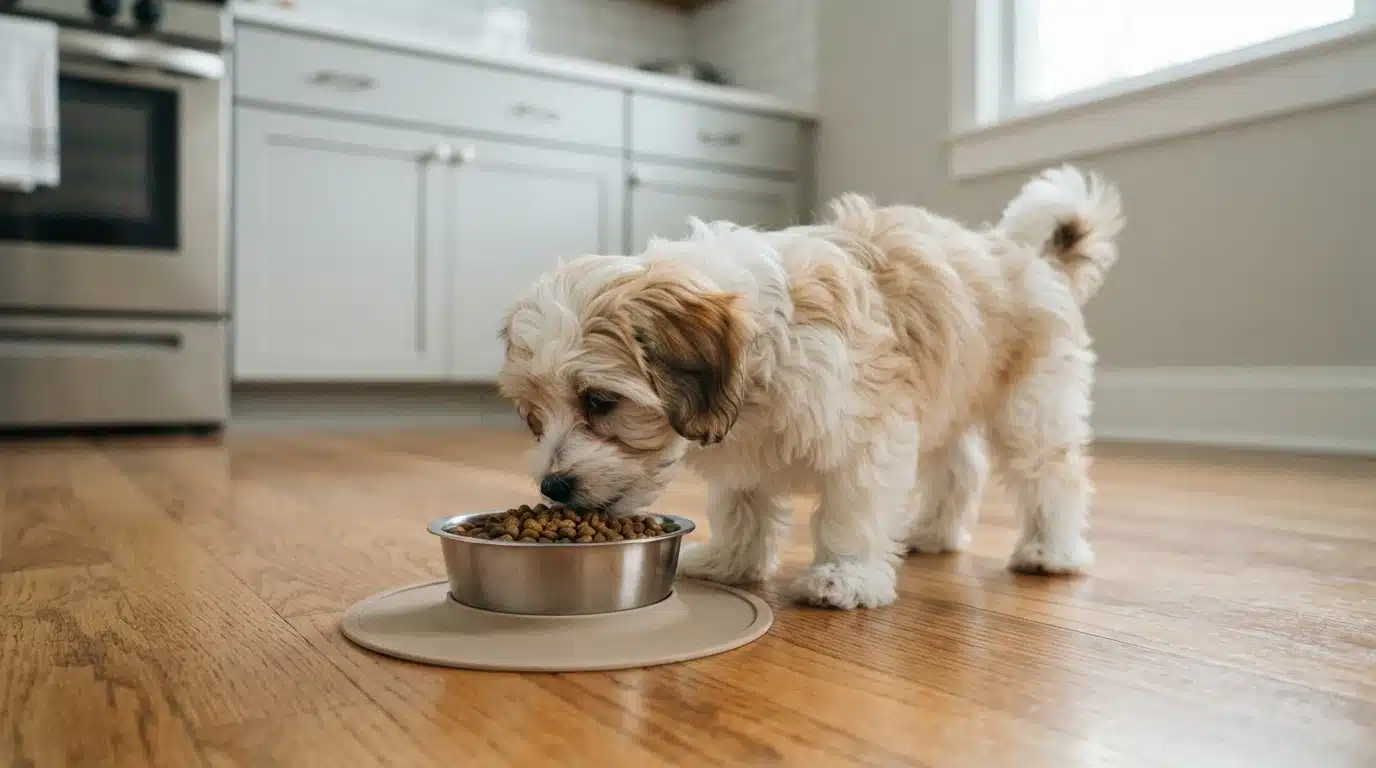
Most new owners worry about the wrong thing. Brand quality matters far less than how much you serve. Overfeeding a small breed puppy strains growing joints and sets up lifelong weight habits. Use the bag’s chart as a starting point, weigh your puppy weekly, and adjust so you can feel ribs without seeing them. Your vet can show you a body condition score at the first visit.
The Four Parts of a Complete Puppy Diet
A Havanese puppy’s daily intake includes:
- Complete puppy kibble, the base of every meal
- Fresh water, available at all times
- Measured treats, under ten percent of daily calories
- Consistent meal times, which steady digestion and house training
Choosing the Right Food: Kibble, Wet, Fresh, or Raw
For most Havanese puppies, a complete and balanced dry puppy food is the simplest, cheapest choice. But every format can work if it meets AAFCO growth standards, so pick the one that fits your budget and your pup’s teeth.
Accurate Portions and Easy Storage
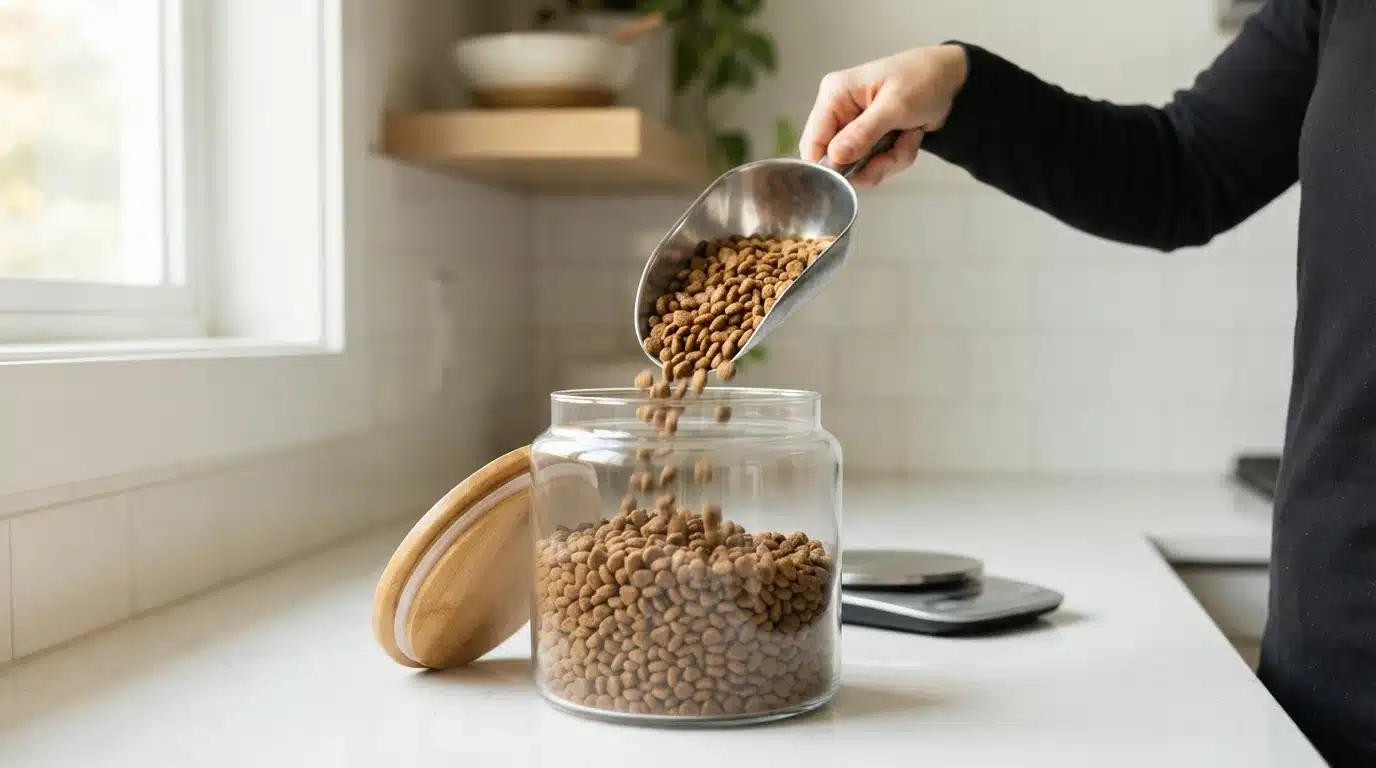
Kibble is the most practical format for a small breed. It stores well, measures exactly, and doubles as training treats. Dry food also gives teething puppies something firm to chew, which can help with mild gum soreness. Measure each meal with a real cup or kitchen scale rather than eyeballing it.
Wet Food: Palatable and Hydrating
Wet food smells stronger and tastes better to fussy eaters, and its moisture helps hydration. The downsides: it costs more per calorie, spoils fast once opened, and leaves more film on teeth. Mixing a spoonful into kibble is a common middle ground.
Fresh and Raw: Real Benefits and Real Questions
Fresh, gently cooked diets are usually complete and very palatable, but they cost far more and need fridge space. Raw diets are the most debated choice. The FDA notes raw pet foods carry a higher risk of bacterial contamination for both pets and people handling them. If you go raw or fresh, choose a brand with an AAFCO growth statement and loop in your vet first.
How to Check Any Food You Buy
Whatever format you choose, read the label the same way. Look for a nutritional adequacy statement naming growth or all life stages, then confirm protein sits above the levels discussed earlier. Our vet-approved food picks show labels that pass this test.
How Often and How Much to Feed a Havanese Puppy
A Havanese puppy needs three to four meals a day at eight weeks, three meals until about six months, then two meals as an adult. Small, steady meals keep blood sugar level in toy breeds, which is safer than one or two large servings.
A Feeding Schedule by Age
| Age | Meals Per Day | Notes |
|---|---|---|
| 8 to 12 weeks | 4 | Small portions, spread evenly |
| 3 to 6 months | 3 | Cut one meal after a vet visit |
| 6 to 12 months | 2 | Shift to a young adult routine |
| 12 months and up | 2 | Keep times consistent |
Feed at roughly the same times daily. A predictable havanese puppy feeding schedule also makes house training easier, because puppies usually need a potty break soon after eating.
Working Out Portions for a Toy and Small Breed
Start with the feeding chart on your puppy food bag. It lists cups per day by current weight, so split that total across your scheduled meals. A Havapoo or Cavapoo puppy follows the same method. The bag guides you, but the right havanese puppy food amount varies with activity, so treat the chart as a starting point, not a rule.
Weigh your puppy every week or two and adjust portions as growth picks up or slows down.
Body Condition as Your Real Check
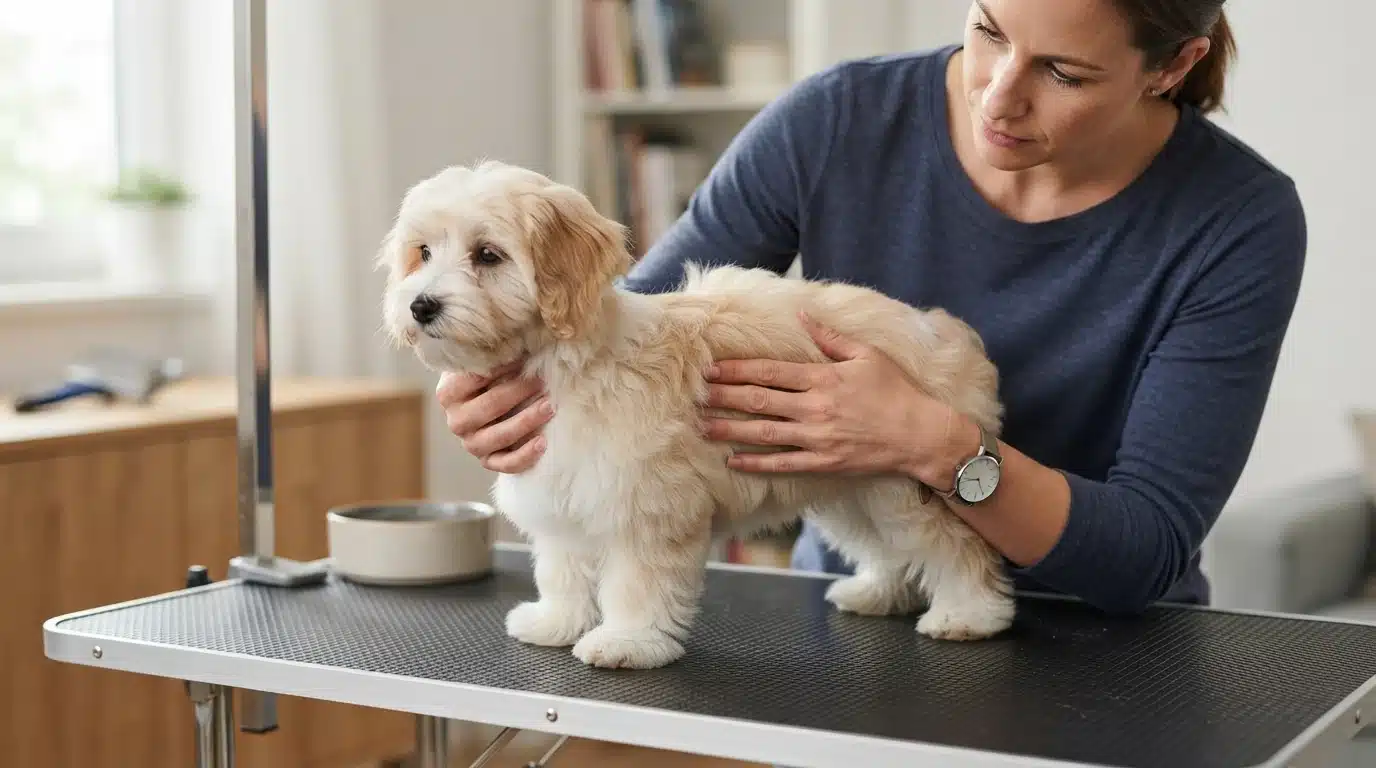
You know your puppy is eating the right amount when you can feel the ribs with light pressure, see a waist from above, and watch a steady weight gain of a few ounces a week. That is a quick puppy body condition score you can do at home.
Ribs clearly visible, hips sharp, or weight stalled? Portion up slightly. No waist and ribs you cannot find? Cut back a little. Havanese mature slowly, so judge shape, not just the scale number.
Water, Treats, and the Ten Percent Rule
Keep fresh water available all day and refill it often. Treats, training bits and chews should stay under ten percent of daily calories, or they crowd out balanced nutrition. Count everything your puppy eats, including table scraps, and save safe foods for special training moments. Puppies drink more after play and meals, so check the bowl during the day.
Safe Foods to Add and Foods to Keep Out of the Bowl
Small Portions That Are Generally Fine
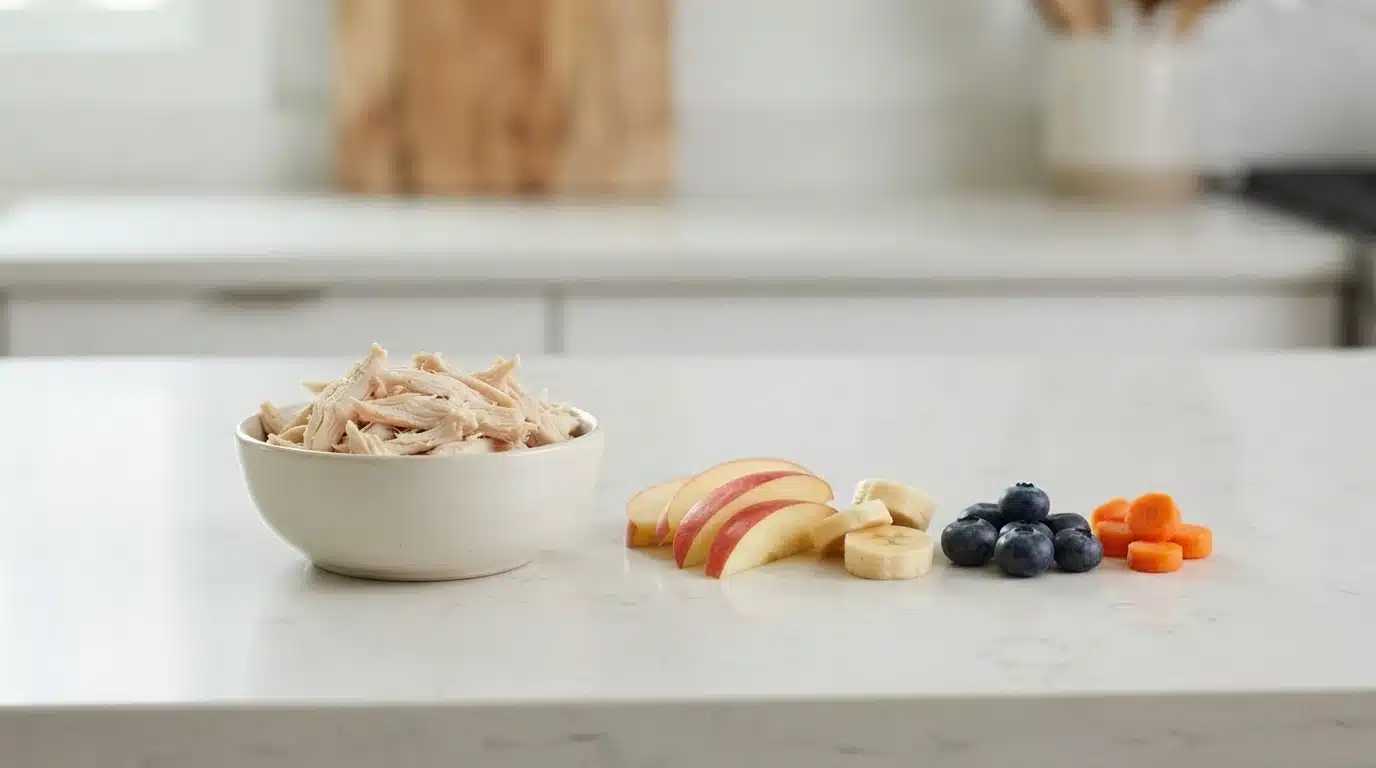
A few plain human foods make safe foods for puppies when the portions stay tiny. Try bits of cooked chicken, plain scrambled egg, seedless apple, banana, blueberries, carrots, and green beans. Skip butter, salt, and seasoning. Treats should stay under ten percent of daily calories so they do not crowd out the balanced puppy food doing the real work.
Foods to Keep Out of the Bowl
What foods are toxic to puppies? These cause the most harm:
- Chocolate and caffeine (coffee, tea, energy drinks)
- Grapes, raisins, and sultanas
- Onions, garlic, and chives, cooked or raw
- Xylitol, the sweetener in sugar-free gum and candy
- Alcohol, macadamia nuts, and cooked bones
- Salty, fatty table scraps like bacon and ham drippings
The FDA lists many of these as potentially dangerous items for pets. If your puppy eats any of them, call your vet or a poison control line right away.
Why Cow’s Milk Is Not a Treat
Many dogs cannot digest lactose well after weaning, so milk often triggers gas, soft stool, or diarrhea. Keep water as the only bowl drink, and offer plain yogurt sparingly if you want a dairy taste.
Adding New Foods One at a Time
Introduce one new food at a time and wait two to three days before the next. If soft stool or itching appears, drop that food and note it.
Switching Foods Without Upsetting His Stomach
Switching puppy food too fast is the most common cause of tummy trouble in a new Havanese. The fix is simple: blend the old food into the new one over seven to ten days so his gut adjusts a little at a time.
The Seven to Ten Day Transition
Follow this mix ratio day by day:
| Days | Old Food | New Food |
|---|---|---|
| 1-2 | 75% | 25% |
| 3-4 | 50% | 50% |
| 5-6 | 25% | 75% |
| 7-10 | 0% | 100% |
Keep portions the same size as usual during the switch. If he seems sensitive, stretch each step to three or four days. Reputable breeders, including our own Havanese program, send puppies home with a sample of their current food so you can start this transition on day one.
When Your Puppy Will Not Eat
Some puppies pick out the new kibble and leave the old, or refuse the bowl entirely. Try warming the food slightly or adding a spoonful of warm water to release the smell. If he skips two meals but acts normal, stay calm and keep the schedule. A puppy who refuses food for more than 24 hours, seems tired, or vomits needs a vet call the same day.
Loose Stool After a Change
Soft stool for a day or two during a switch is common. Slow back to the previous mix ratio for a few days, then move forward again. Watch for warning signs: watery diarrhea, blood, vomiting, or low energy means call your vet, not wait it out. Keep fresh water available at all times, since loose stools can dehydrate a small puppy quickly. If your vet rules out illness, ask about a bland diet until his stool firms up.
Havanese Feeding Details That Matter
Easy Weight Gain Is the Big One to Watch
A grown Havanese weighs only 7 to 13 pounds, so one extra pound is a big jump in body fat. Free-feeding (leaving food out all day) makes that easy. Measure each meal, count treats toward daily calories, and check the puppy body condition score: you should feel ribs under a thin fat layer and see a waist from above. Weigh your puppy monthly and adjust portions before weight creeps up.
Small Stomach, Picky Appetite, Tender Tummy
Little dogs fill up fast, so three to four small meals beat one large bowl. Havanese are smart and food-motivated, which helps training but invites treat overload. Keep meals boring and consistent. If soft stool shows up after a new food, slow the switch rather than guessing.
Joints and Eye Staining
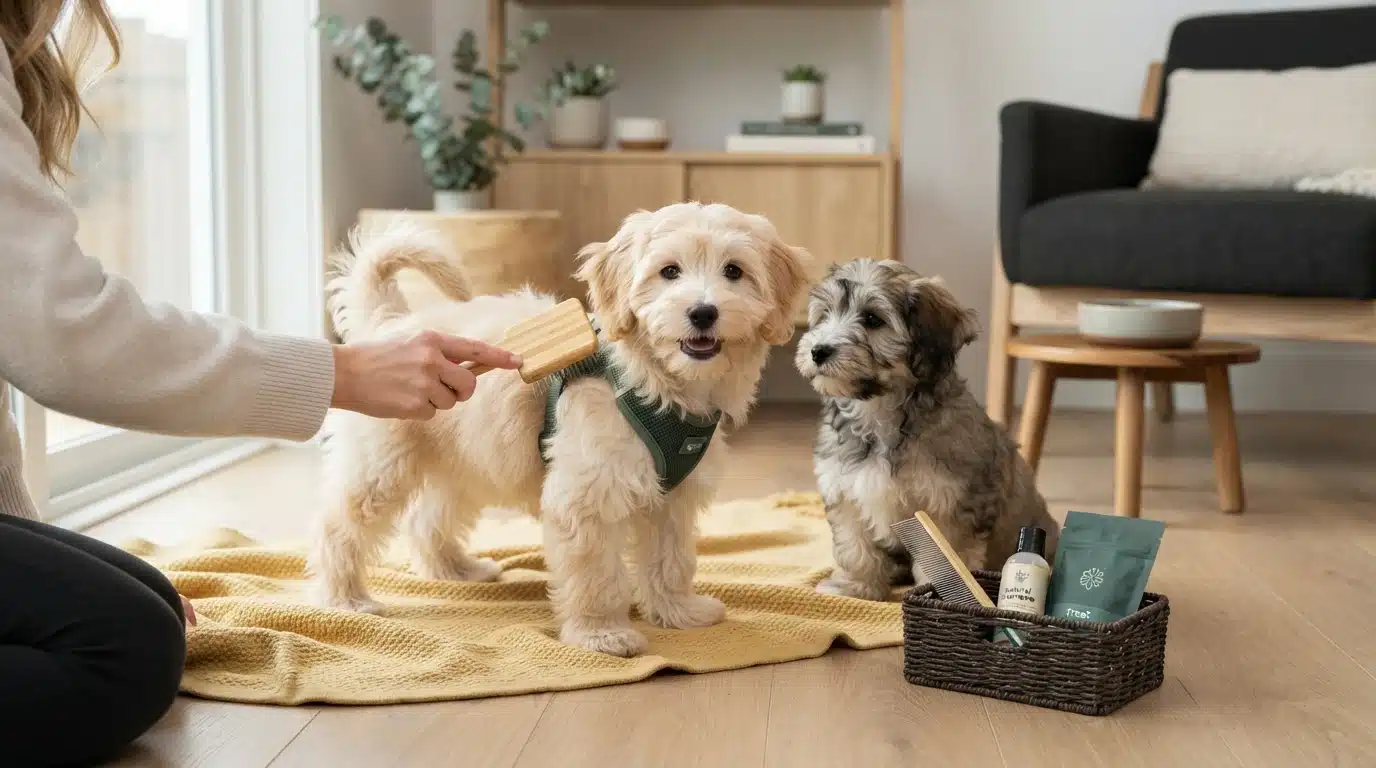
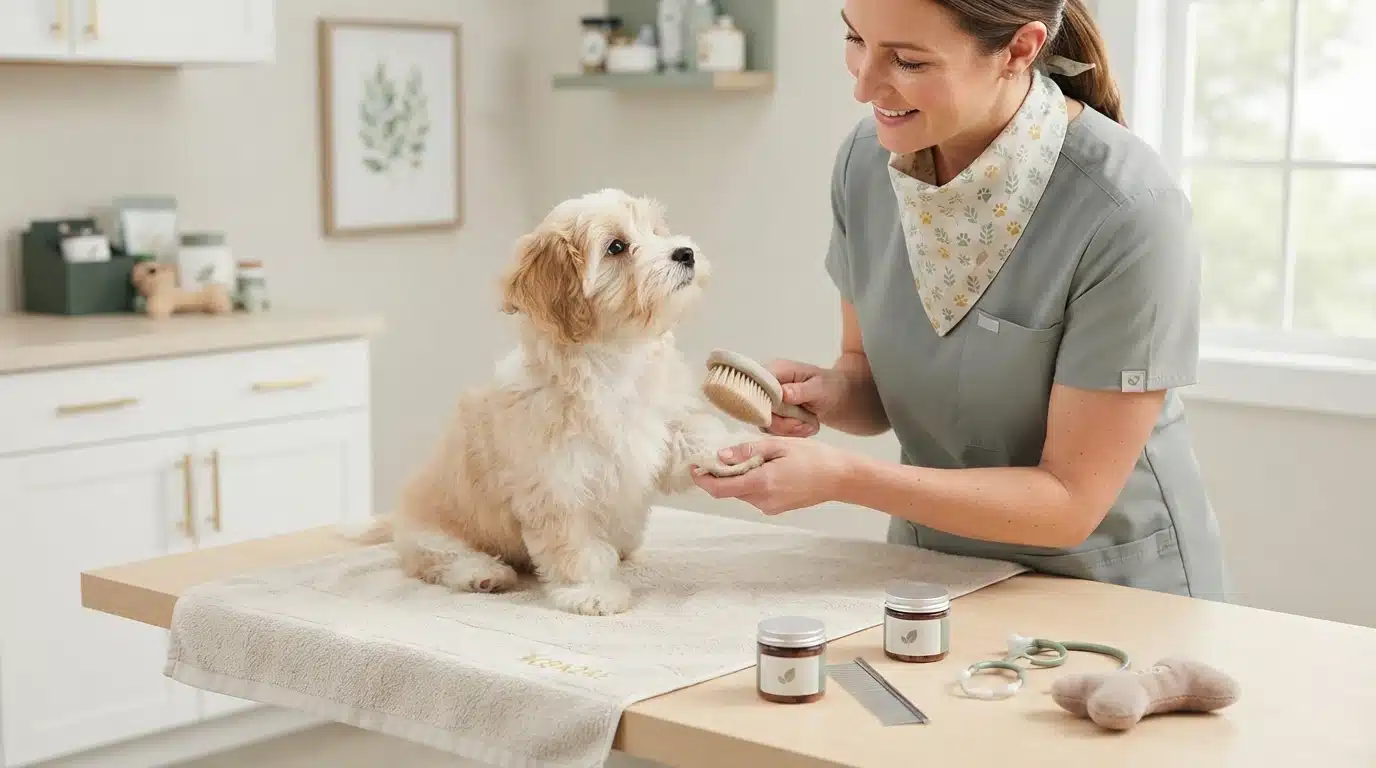
Extra weight strains small joints, so lean feeding protects knees and hips for life. Tear staining around those big brown eyes can worsen with certain minerals or food sensitivities. Keep the face trimmed and dry, and ask your vet if staining persists despite a steady, balanced diet.
Feeding Red Flags and When to Call Your Veterinarian
Signs That Need a Vet, Not a Food Swap
Most puppies skip a meal or have one soft stool and bounce back. Call your vet the same day instead of changing foods if your puppy refuses food for more than 24 hours, vomits repeatedly, has diarrhea with blood, seems very tired, or retches with a swollen belly. These signs point to illness, not picky eating, and young puppies dehydrate fast, so waiting makes things worse. Because a Havanese is so small, fluid loss adds up quickly.
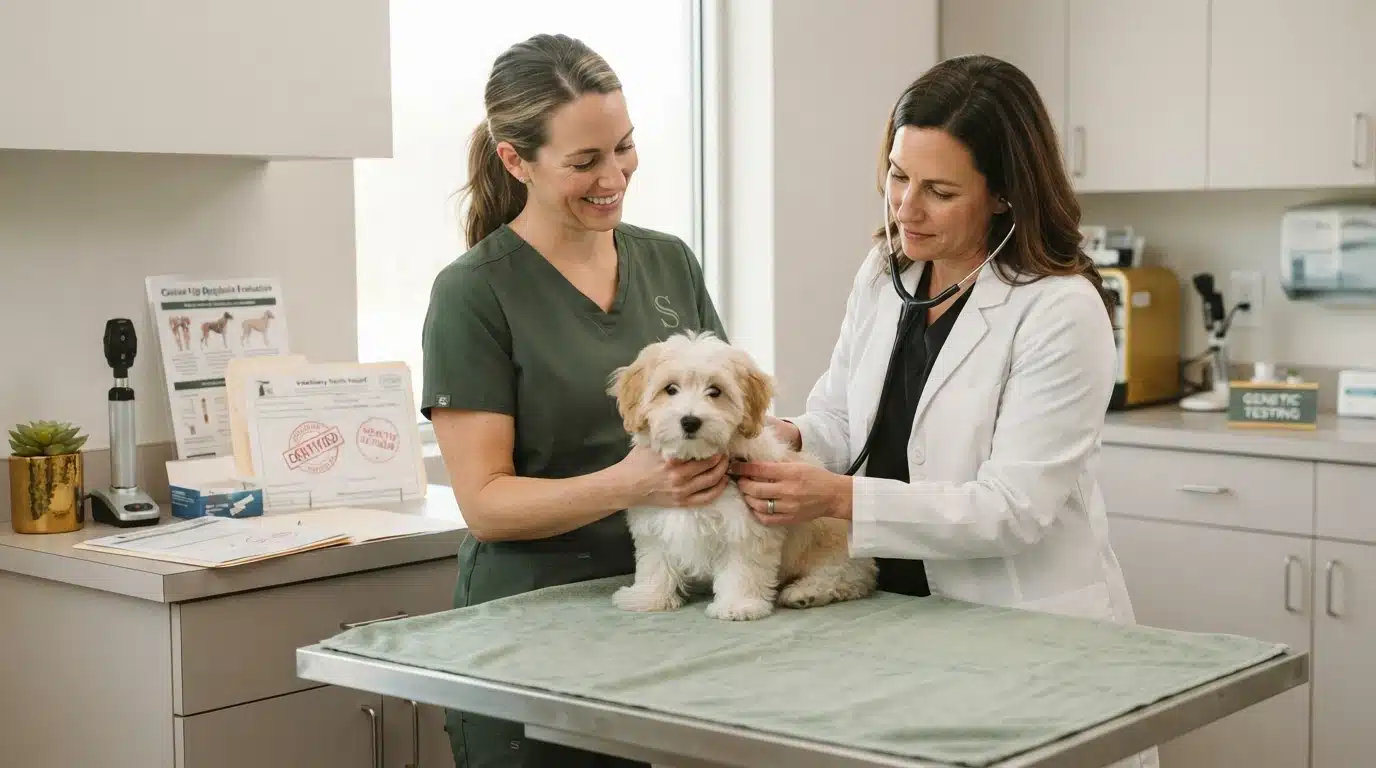
What to Bring to the Vet Visit
Bring a fresh stool sample, a photo of the food bag with its lot number, and a short note of what your puppy ate, when symptoms started, and how often vomiting happened. That lot number also helps if a pet food recall is later announced, and your vet can report a suspected problem to the FDA.

A good feeding plan turns those first noisy weeks into a steady routine, and it starts before your puppy walks through the door. If you are still choosing a breeder, Sage Puppies sends every puppy home with honest preparation guidance. Browse available litters and start your application today.
Frequently Asked Questions
Q1: What should a Havanese puppy eat?
A food labeled complete and balanced for growth, made for small breeds. Confirm the AAFCO nutritional adequacy statement, feed measured portions by weight, and keep treats under ten percent of daily calories.
Q2: How many meals a day does a Havanese puppy need?
Four at eight weeks, three until six months, then two. Small, steady meals keep blood sugar level in toy breeds.
Q3: Can Havanese puppies eat human food?
Plain cooked chicken, scrambled egg, apple, banana, blueberries, carrots and green beans in tiny amounts. Never chocolate, grapes, onions or xylitol.
Q4: How do I switch puppy food without upsetting his stomach?
Blend old and new food over seven to ten days, starting with mostly old food. Stretch the steps if stools stay soft.
Q5: Should I free-feed my Havanese puppy?
No. Adults weigh just 7 to 13 pounds, so measured meals protect him from fast weight gain.
Q6: When should I call the vet about feeding?
Call the same day for refusal past 24 hours, repeated vomiting, bloody diarrhea, low energy or a swollen belly.
Conclusion
Feeding a Havanese puppy comes down to a few steady habits. Choose a food with an AAFCO nutritional adequacy statement for growth, made for small breeds. Follow an age-based feeding schedule of four meals, then three, then two. Measure portions by weight, keep treats under ten percent of daily calories, and switch foods slowly over seven to ten days.
Watch your puppy’s body rather than the bag’s chart alone. Feel for ribs, look for a waist, and weigh him every week or two. Skip the toxic foods entirely: chocolate, grapes, onions and xylitol never belong in the bowl.
And trust your instincts. Most problems show up in soft stool or a skipped meal first. If refusal lasts past 24 hours, or vomiting and low energy appear, call your vet the same day instead of changing foods.