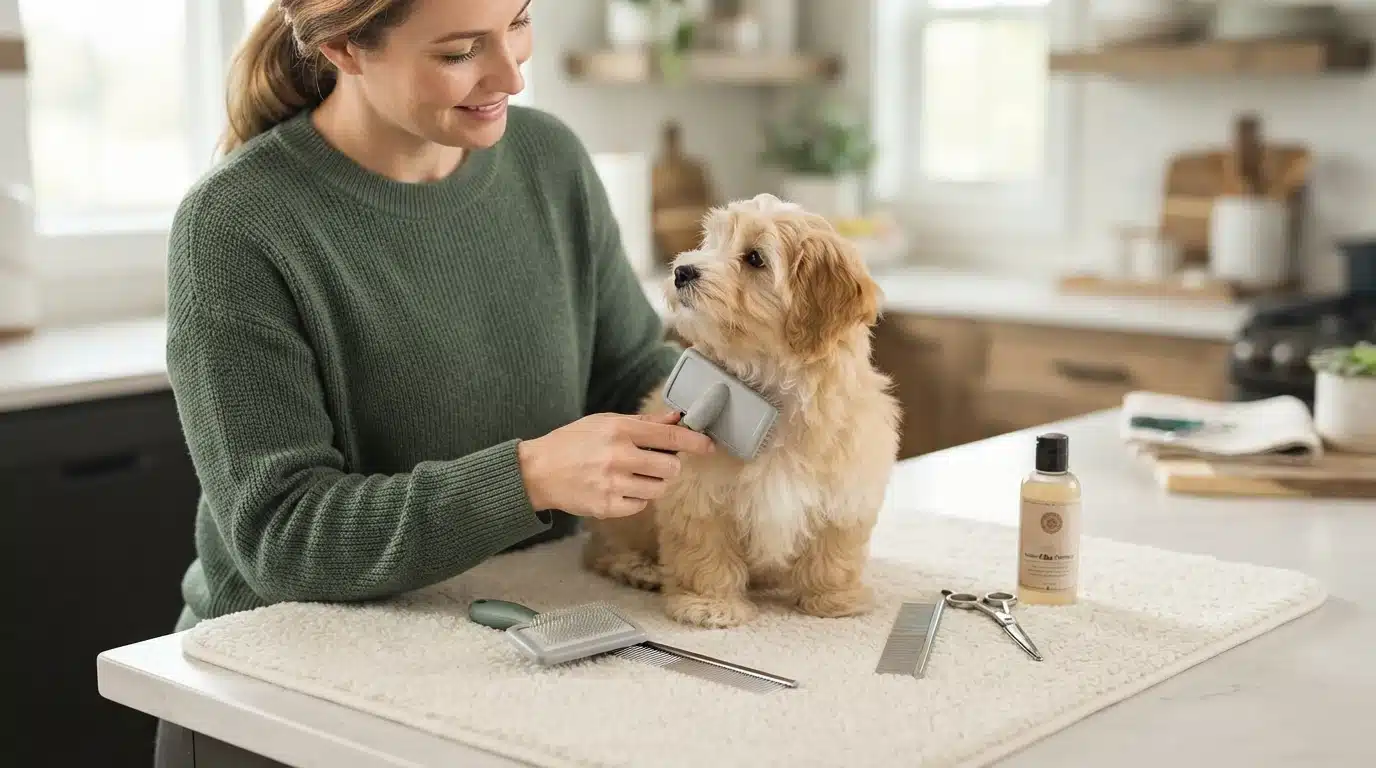
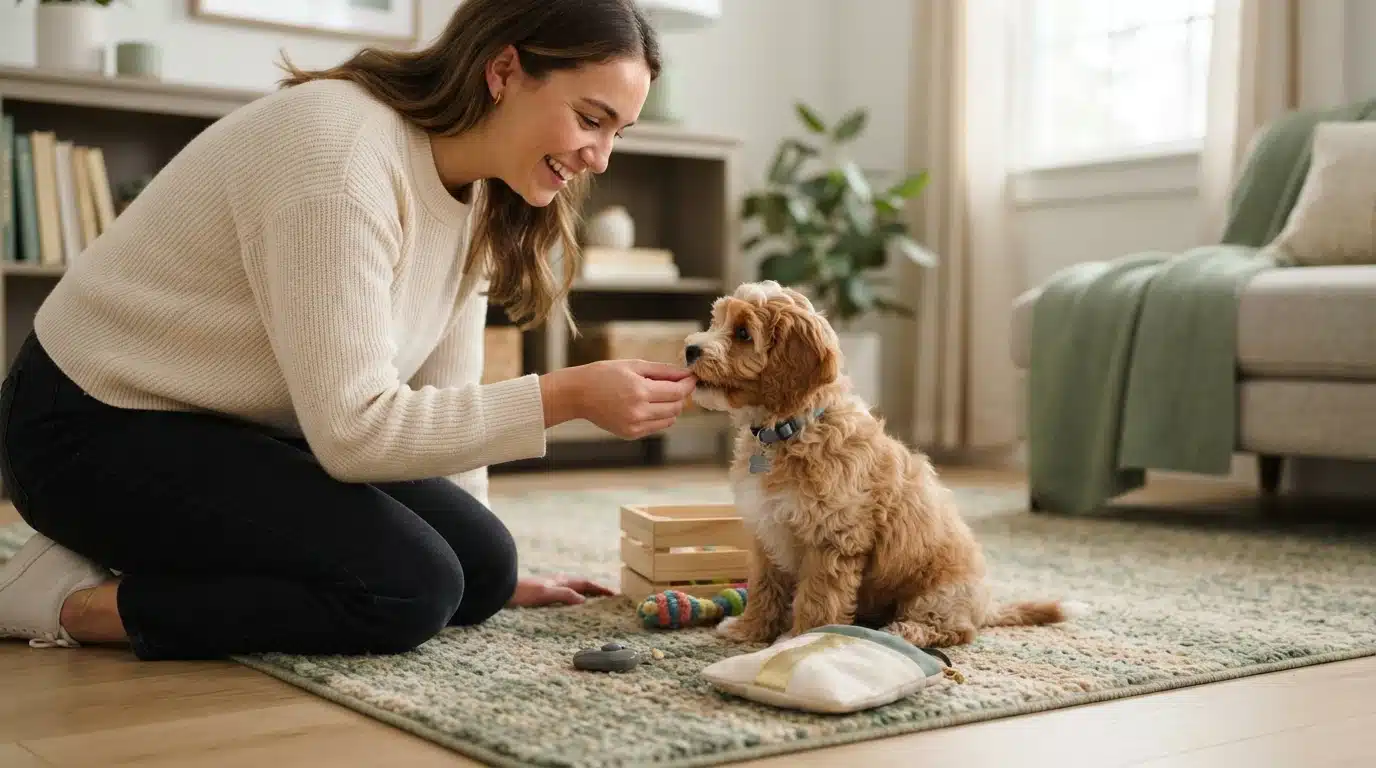
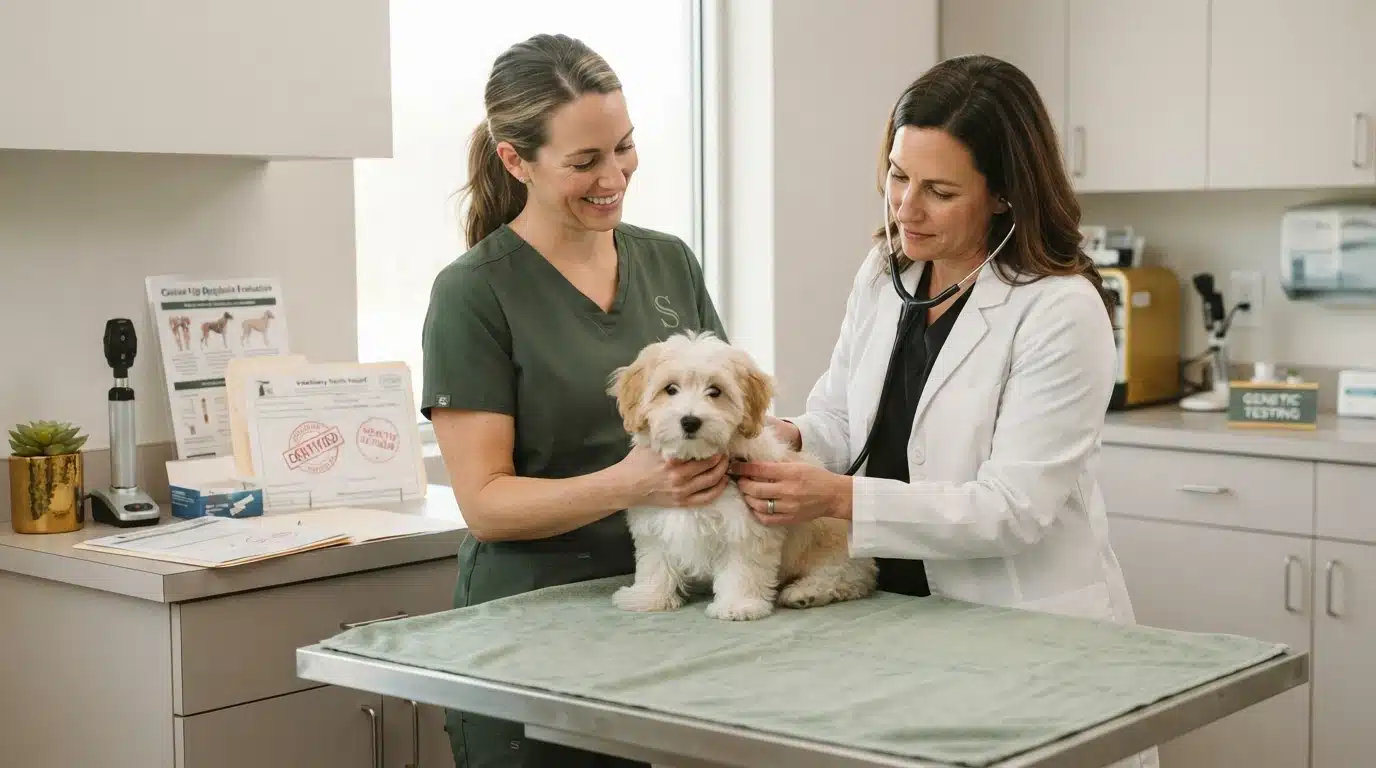
Quick Summary: Choose a small-breed puppy food labeled complete and balanced for growth or all life stages, with kibble small enough for a tiny mouth, about 400 calories per cup, and a named protein listed first. Feed roughly 200 to 400 calories daily in three or four measured meals, include treats in that total, and adjust portions weekly based on body condition. Most Havanese puppies can switch to adult food at 7 to 9 months through a seven-day transition, though a vet should confirm the timing.
A Havanese puppy weighs less than a bag of flour at eight weeks, yet the food you scoop into that bowl sets the calorie pattern for a breed that gains weight easily and carries a mouthful of teeth meant to last a lifetime. The wrong puppy formula is rarely a dramatic error. It shows up slowly, as a round belly at six months and a dull, loose coat at ten.
This guide walks you through choosing the best dog food for Havanese puppies: what the label must say, how many calories a growing pup needs, and how kibble size, coat health and weight control fit together. Every pick is checked against AAFCO growth standards rather than brand hype, so you can feed with confidence from the first week home.
What Actually Makes a Food Right for a Havanese Puppy
Skip the brand rankings for a minute. Two things matter more: the formula must be built for growth, and the kibble must suit a tiny mouth with a double coat to feed.
Complete and Balanced Growth Versus Adult Formulas
Puppies need more protein, fat and calcium per pound than adults, so an adult formula can shortchange a growing Havanese. Look for the AAFCO statement saying the food is complete and balanced for growth or all life stages. That wording, not a picture of a puppy on the bag, is what matters.

Kibble Size, Coat Condition and the Havanese-Specific Factors
Choose a small breed puppy formula with kibble small enough for a Havanese to chew comfortably. Calories per cup run higher in these blends, so measure portions instead of free feeding, because this breed gains weight easily. The same protein and fat that fuel growth support the Havanese double coat, and omega-3s help skin stay calm under all that hair. Before you switch formulas, review year one vet basics and the best puppy food for Havanese options we cover next.
The Best Dog Food for a Havanese Puppy, by Food Type
The best dog food for a Havanese puppy is any formula that carries a complete and balanced AAFCO growth statement, comes in small-breed kibble size, and delivers enough calories per cup for a tiny stomach. One brand name matters less than these three checks.
A formula qualifies when it meets these criteria:
- States it is complete and balanced for growth or all life stages
- Uses kibble small enough for a 4 to 8 pound puppy mouth
- Packs at least 400 calories per cup, so small portions still fuel growth
- Names a real protein first, not a grain or by-product
Here is how each food type stacks up against those checks.
| Food Type | Growth Nutrition | Kibble or Texture | Fit for Havanese |
|---|---|---|---|
| Small-breed dry kibble | Complete and balanced growth formulas are common | Tiny kibble, easy to measure | Best daily default |
| Wet or canned | Complete options exist, but calorie density is lower | Soft, palatable | Good topper, not the main diet |
| Fresh, gently cooked | Balanced formulas available, usually subscription | Soft, portioned for you | Works well, costs more |
| Raw-oriented | Rarely meets AAFCO growth profiles | Varies | Ask your vet first |
Dry Kibble Formulas Formulated for Small and Toy Breeds
Dry food labeled for small or toy breeds is the default pick. Kibble is made for small mouths, calories per cup run high, and daily portions are easy to measure with a real cup, not a guess. Keep the bag sealed and buy bag sizes your puppy finishes within a few weeks.
Wet Food and Canned Options for Havanese Puppies
Canned food often tempts fussy eaters because it smells stronger and feels softer. The tradeoff is lower calories per can, so portions look generous while nutrition comes up short. Use it as a topper on dry kibble, and brush the teeth more often, since soft food clings.
Fresh, Gently Cooked and Raw-Oriented Diets
Gently cooked fresh diets can work if the label carries the same complete and balanced growth statement dry food must show. Raw-oriented diets rarely meet that bar, and vets caution against them for puppies. Budget examples belong on paper first, since fresh plans cost the most per month.
What to Look for on the Bag When You Compare Formulas
Read the back, not the front. Confirm the AAFCO statement mentions growth, check calories per cup, and scan the first five ingredients for a named protein. Many Havanese owners also watch for formulas that limit tear staining, though evidence there is thin. For portion sizes once you choose, our feeding chart by age and weight does the math for you.
Budget, Mid-Tier and Premium: Where the Money Actually Goes
Price usually buys sourcing and quality control, not magic. Mid-tier foods that meet the growth standard outperform premium ones that skip it, so never pay up for a label that fails the bag checks above. Spend the difference on measured portions and a seven day food transition instead.
How Much Should a Havanese Puppy Eat Per Day
A Havanese puppy needs roughly 200 to 400 calories per day, depending on age and weight. Don’t start with the bag’s chart, though. Use your puppy’s calories-per-cup figure and work through these four steps:
- Find the calories per cup printed on your food bag.
- Weigh your puppy and check the bag’s age-by-weight chart for a starting daily amount.
- Calculate calories yourself: daily calories divided by calories per cup equals total cups per day.
- Split that total across three or four meals.
Small errors matter here. A puppy eating food with 400 calories per cup needs far less volume than one eating a 350-calorie formula, so measuring by scoops alone can quietly overfeed.

An Illustrative Daily Feeding Chart for a Havanese Puppy
Every puppy differs, so treat this as a starting point, not a rule. Numbers below assume a 400-calorie-per-cup food, matching what we use as the baseline throughout this guide.
| Puppy Age | Typical Weight | Approx. Daily Calories | Daily Cups | Meals |
|---|---|---|---|---|
| 8 to 10 weeks | 2 to 3 lbs | 250 | about 5/8 cup | 4 |
| 3 to 4 months | 3 to 5 lbs | 300 | about 3/4 cup | 3 to 4 |
| 5 to 6 months | 5 to 8 lbs | 350 | about 7/8 cup | 3 |
| 7 to 9 months | 8 to 10 lbs | 300 | about 3/4 cup | 2 to 3 |
Using Body Condition to Adjust Portions Weekly
Charts get you close; your puppy’s body gets you exact. Each week, run a simple body condition check. You should feel ribs easily under a thin fat layer and see a visible waist from above. If ribs disappear under padding, cut portions about 10 percent. If ribs and hip bones show sharply, add a little more. Adjust one meal at a time, then recheck in seven days. Slow changes protect growing joints better than big swings.
Meals Per Day and Why Frequency Matters for a Small Breed
Very young puppies, 8 to 12 weeks old, do best with four meals spread across the day. Drop to three meals around 3 to 6 months, then two by adulthood. Small stomachs store limited food, and long gaps can trigger low blood sugar, a real risk in toy breeds. Even spacing also keeps energy steady and helps house training, since puppies usually need to go shortly after eating.
When Should a Havanese Puppy Switch to Adult Dog Food
Most Havanese puppies move to adult food between 7 and 9 months of age, once growth slows. Small breeds mature faster than large ones, so they stop needing the extra calories and calcium in puppy formulas early. Your vet can confirm the timing at a routine visit.

The 7-to-9-Month Window for Small Breeds
By 7 to 9 months, a Havanese usually weighs close to its adult 8 to 10 pounds. The feeding chart earlier in this guide already drops calories to about 300 per day in this window. That dip is your signal: growth is winding down.
Two Reasons to Keep a Havanese on Puppy Food Longer
Some puppies need the puppy formula a bit longer. A pup that is still filling out, or one your vet calls underweight, benefits from the higher calories per cup. Havanese also burn energy through that double coat, so a lean, slow-growing puppy may stay on puppy food until 10 or even 12 months.
A Seven-Day Transition to Adult Food
Switch slowly to avoid stomach upset. Blend the two foods across a week:
| Days | Mix |
|---|---|
| 1 to 2 | 75% puppy, 25% adult |
| 3 to 4 | 50% puppy, 50% adult |
| 5 to 6 | 25% puppy, 75% adult |
| 7 | 100% adult |
If loose stools appear, hold at the current mix for two more days.
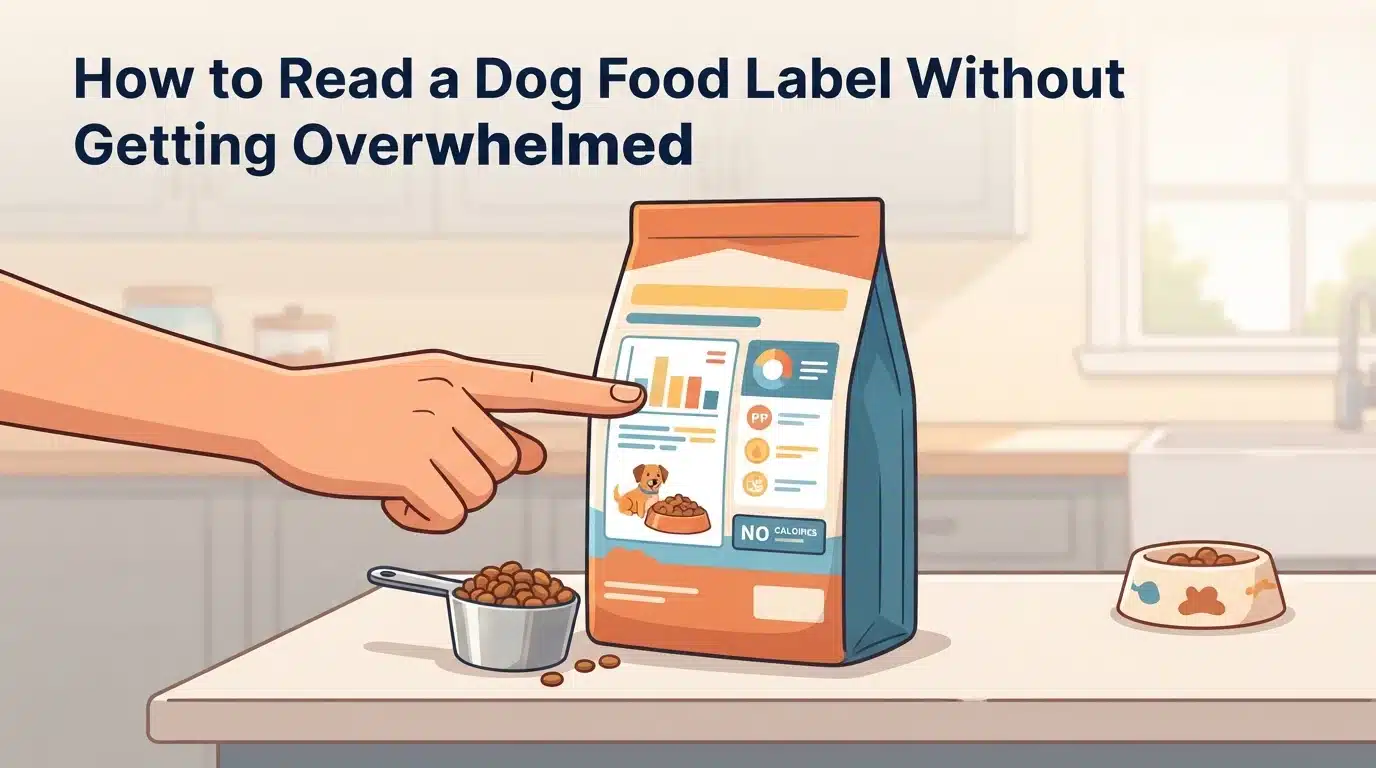
How to Read a Dog Food Label Without Getting Overwhelmed
A puppy food label asks five questions, in this order: 1. Does the nutritional adequacy statement say “complete and balanced” for growth? 2. Is it formulated for all life stages or growth specifically? 3. How many calories per cup does it list? 4. Does the kibble size suit a toy-breed mouth? 5. Does the feeding chart match your puppy’s weight? Work down the list and stop at the first failure.
The Five Checks That Matter Most
- Adequacy statement. It should name growth or all life stages, per the FDA.
- Named protein first. Chicken, not “meat.”
- Calories per cup. Aim near 400 so small portions still fuel growth.
- Kibble size. Toy or small-breed formulas fit tiny jaws.
- Feeding chart. Compare it to your puppy’s current weight, not age alone.
Ingredient Lists, Marketing Terms and What to Ignore
Ingredients are listed by weight before cooking, so fresh meat early on partly reflects water content, not superiority. Treat “human grade,” “ancestral” and “premium” as marketing, not standards. Skip anything lacking an adequacy statement, whatever the front of the bag promises.
Wet, Dry or Fresh: Choosing a Format for a Small Breed
Should a Havanese puppy eat wet or dry food? For most, dry small-breed kibble is the best base, because it packs more calories per cup than canned food, so tiny portions still meet a 250 to 400 calorie day. Wet and fresh foods work well as toppers or occasional meals.
Comparing Formats on the Factors That Actually Differ
| Format | Calories per cup | Moisture | Cost per day | Portion accuracy | Storage |
|---|---|---|---|---|---|
| Dry kibble | 350 to 500 | about 10 percent | lowest | easy to measure | sealed bag, weeks |
| Wet canned | 250 to 400 per can | 70 to 80 percent | higher | harder to split | refrigerate after opening |
| Fresh cooked | varies by recipe | high | highest | weighed portions | refrigerated or frozen |
Moisture differences are large: dry food holds about 10 percent water while wet food holds 75 to 78 percent. Compare foods on calories per cup, not bowl volume.
Mixing Wet and Dry Food Correctly
Mixing works if you count both foods toward the daily total. Try one quarter cup kibble plus a spoonful of wet at each meal, then subtract the wet food’s calories from the chart target. Keep the seven day transition rule when you add any new format, and refrigerate opened cans for up to three days.
Havanese-Specific Watch Points: Coat, Teeth, Weight and Tear Stains
Coat Condition, Protein and Fat
A Havanese double coat mirrors what goes in the bowl. Diets with quality protein at the levels needed for growth also supply the amino acids hair requires, and fat carries the omega-3s that keep skin calm under all that hair. If the coat turns dry or brittle, check the food’s fat level before assuming a grooming problem. Coat changes can also point to a food sensitivity, so note any switch that lines up with dull fur or extra scratching. Give any new diet about eight weeks before you judge the coat, because hair grows slowly.
Weight, Teeth and Tear Staining: Sorting Nutrition From Anatomy
Tear stains look like a food problem, but they often are not. The discoloration comes from porphyrins in tears, and the AKC notes it is common in Bichon-family breeds like the Havanese. Eye shape plays a role, so keep the face trimmed and clean rather than blaming the kibble. Weight and teeth respond more directly to diet. Keep portions measured, since 8 to 10 pounds is adult size, and use body condition scoring monthly. Small kibble also helps puppy teeth, though toy breeds still need dental checks.
Common Feeding Mistakes and How to Avoid Them
Portion, Treat and Transition Errors
Free-feeding is the first trap. Havanese puppies graze, so a bowl that never empties hides whether the dog is actually eating. Measure portions with a real measuring cup, and count treats within the daily total of roughly 250 to 350 calories. Training treats add up fast in a puppy this small. The second error is switching foods cold turkey. A seven day food transition, mixing a little more new food each day, prevents the stomach upset that mimics illness. Watch the ribs: if padding covers them, cut portions about 10 percent.
Expectation Errors and When to Call a Veterinarian
Havanese puppies grow slowly, and that is normal. A lean, fine-boned puppy is not underfed just because it looks slight next to a stockier littermate. Judge by steady weight gain and body condition, not roundness. Do call your veterinarian when a puppy refuses food for more than a day, has repeated diarrhea or vomiting, or stops gaining weight. Soft stool during a food switch is common, but anything bloody or lasting beyond a week needs professional eyes.

Feeding a tiny Havanese right in the first weeks sets up steady growth, a healthy coat, and easier weight control for life. If you’re still choosing your puppy, Sage Puppies sends each one home with an honest feeding plan, so you can start confident from day one.
Frequently Asked Questions
Q1: What is the best dog food for Havanese puppies?
Any small-breed puppy formula with a complete and balanced AAFCO growth statement, toy-sized kibble, and about 400 calories per cup. Check the bag, not the brand name, then confirm a real protein tops the ingredient list.
Q2: How much should a Havanese puppy eat per day?
Roughly 200 to 400 calories, depending on age and weight. Divide daily calories by your food’s calories per cup, split across three or four meals, and adjust weekly using body condition.
Q3: When should a Havanese puppy switch to adult dog food?
Most switch between 7 and 9 months, once growth slows. Lean or slow-filling puppies may stay on puppy food until 10 or 12 months. Use the seven day transition to avoid stomach upset.
Q4: Can I mix wet and dry food for my Havanese puppy?
Yes, if you count both toward the daily calorie total. Use wet as a topper on measured kibble and follow the transition rule when adding any new format.
Q5: Do treats count toward daily calories?
They do. Keep treats inside the roughly 250 to 350 calorie day, since training treats add up fast in a puppy this small.
Conclusion
Feeding a Havanese puppy well comes down to a few checks, not a brand name. Confirm a complete and balanced growth statement, toy-sized kibble, and about 400 calories per cup, then measure portions and adjust weekly by body condition. Skip free feeding, keep treats inside the daily total, and plan the switch to adult food between 7 and 9 months with a seven day transition. Watch the coat, weight and tear staining in Havanese without blaming the food for anatomy. Every pick in this guide was justified against those standards, so the best dog food for Havanese puppies is the one that passes all of them.