Quick Summary: Both Havapoos and Havanese benefit from crate training, but Havapoos often learn the routine a little faster while Havanese may need more patience with separation. Use a properly sized crate with a divider, reward-based training, and frequent potty trips after meals and naps, since individual temperament and consistency matter more than breed. Progress usually takes weeks to months, and a Havapoo may suit active homes, while a Havanese may fit calmer homes with flexible schedules and plenty of company.
Yes, both breeds benefit from crate training, but they arrive at the crate differently. A Havanese puppy usually settles once the crate feels like a den close to you, while a Havapoo puppy settles when the crate becomes a contained space with a chew and a steady routine. Havapoo potty training often shows a shorter leash-to-outside trip, and Havanese are commonly reported to need a longer, more consistent schedule. The real difference lies in how you run the routine, not in a headline timeline.
Most first-time small breed owners want to know which puppy fits a work schedule, an apartment, or a second dog. You have heard crate training helps with housebreaking, but you may not know whether it is required, how to size a crate, or what to do about crying and crate soiling. This guide compares crate need, fit, responsiveness, method, schedule, and troubleshooting, then matches each breed to household types. Sage Puppies draws on documented experience raising both breeds in Utah, and every method below follows humane, reward-based puppy training guidance you can start in the first week home.
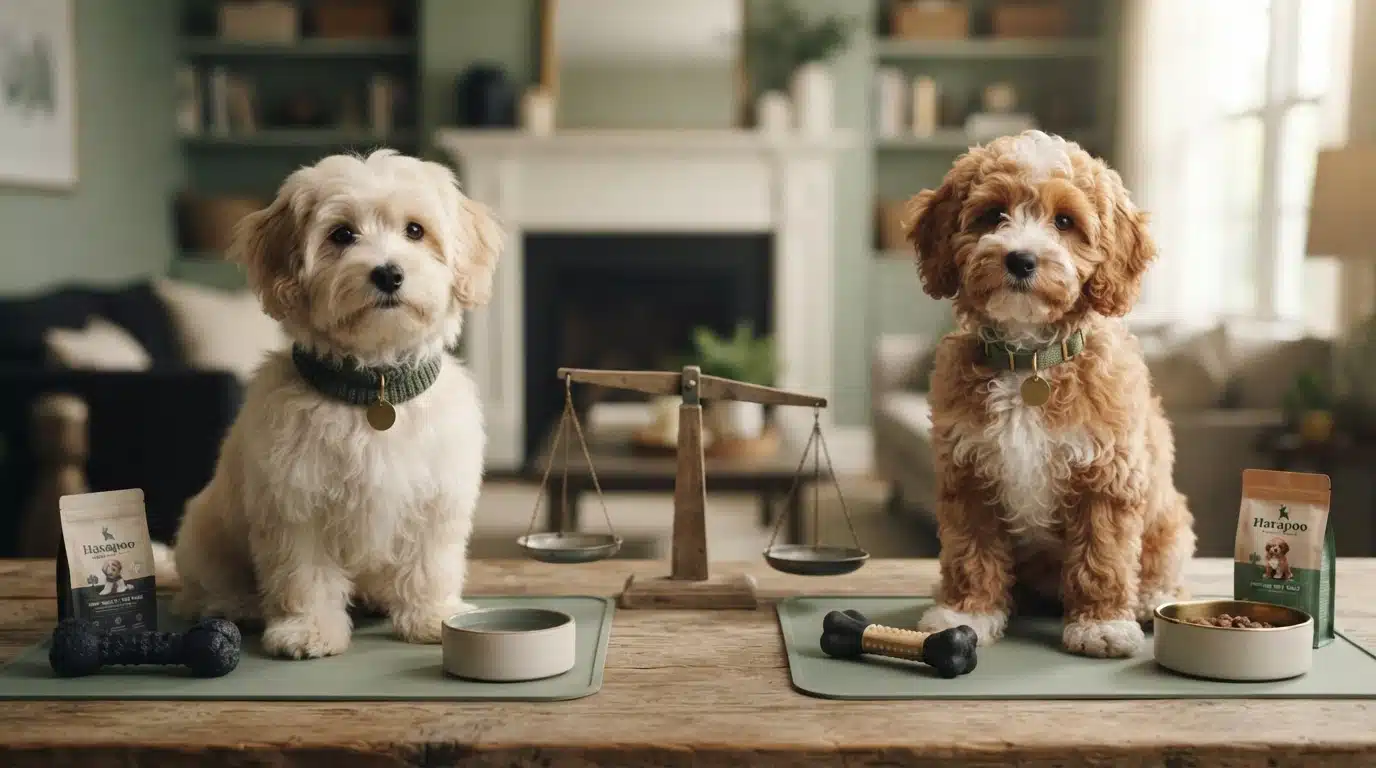
Havapoo vs Havanese: Crate and Potty Training At a Glance
| Havapoo | Havanese | |
|---|---|---|
| Crate training need | High value for structure; energy can turn an open crate into a puzzle to solve | Useful as a den and housebreaking tool; clingy puppies may protest separation |
| Crate size and fit | Sized for a young small puppy, then adjusted upward as the puppy grows | Same measured fit approach, with attention to jumper tendencies in pen setups |
| Potty training responsiveness | Often quick to connect outdoor trips with the cue, if energy is directed | Often reported as slower to fully reliable, and more schedule dependent |
| Ideal training method | Short reward-based sessions, food and toy rewards, clear cue words | Gentle, low-pressure reward-based handling, avoiding raised voices and leash pressure |
| Best fit for the household | Active owners with time for exercise and mental work | Calmer homes, stay-at-home or flexible schedules, near-constant company |
| Owner support and documentation | Breeders commonly provide temperament notes and health records; ask what training each puppy has had | Breeders commonly provide temperament notes and health records; ask what training each puppy has had |
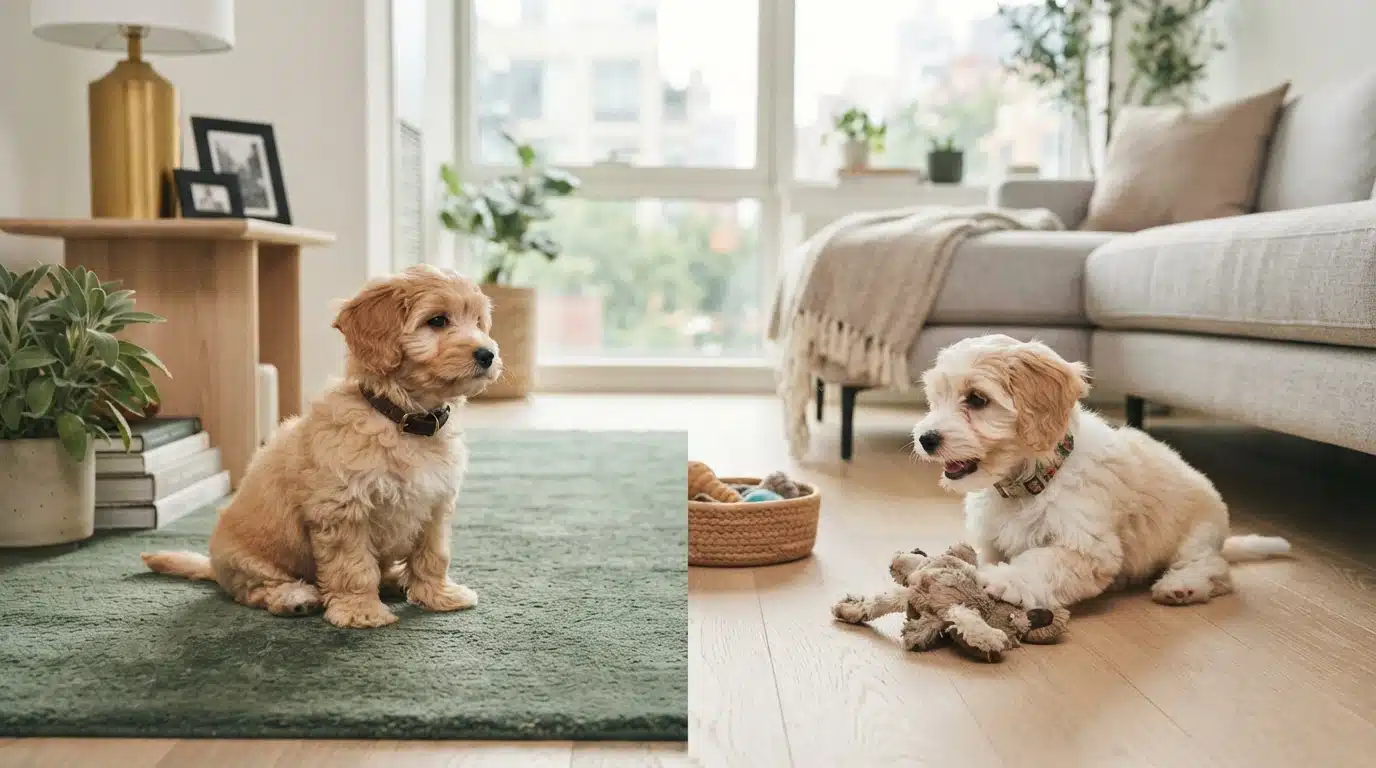
How Havapoo and Havanese Puppies Compare for Crate and Potty Training
Havapoo
The Havapoo blends the Havanese with a Toy or Miniature Poodle, combining a companion-bred sensitive side with the Poodle’s problem-solving drive. Havapoo crate training usually goes well because food motivation is high, though that same energy can turn an open crate into a puzzle. This mix suits active owners with time for exercise and short, reward-based sessions.
Havanese
The Havanese is Cuba’s only native breed, a small companion dog bred for close human company. Gentle handling matters here, since these puppies respond poorly to raised voices or leash pressure and may protest separation in the crate. Potty training often runs slower and more schedule dependent, making them a fit for calmer homes with flexible schedules.
Do Havapoo and Havanese Puppies Need Crate Training?
Yes. Both breeds respond well to crate training, and for a small breed it is one of the most useful habits you can build in the first week with a new puppy. The crate is not a punishment box. It is a safe, cozy den that speeds up housebreaking, protects your puppy when you cannot supervise, and makes travel or a vet stay far less stressful, which is how groups like Humane World for Animals describe it.
- For both breeds, the crate supports havapoo crate training and Havanese housebreaking by using the puppy’s instinct to keep a sleeping area clean.
- It prevents unsupervised chewing and potty accidents while you work or sleep.
- It gives each breed a quiet retreat, which lowers stress in busy households.
What Crate Training Actually Does for a Small Breed
Small breed crate training works the same way it does for big dogs, just in a smaller package. The crate helps control potty training because puppies avoid soiling where they sleep, so each short crate period becomes a built-in bathroom cue. It also keeps a tiny puppy safe from stairs, cords, and big dogs when your eyes are elsewhere. For havapoo potty training especially, the crate and a consistent schedule do most of the heavy lifting.
Havanese Versus Havapoo: Different Reasons to Love the Crate
| Breed | Best crate reason |
|---|---|
| Havanese | A den retreat helps this people-loving breed settle alone and eases separation stress |
| Havapoo | Crate time pairs with potty breaks and burns off the structure a young doodle craves |
Havanese crate training shines because the breed bonds hard with its people, so a calm, positive crate becomes a self-soothing tool. Our guide to crate training a Havanese puppy walks through the steps without stress.
When Crate Training Is the Wrong First Move
Skip the crate as a first tool if your puppy panics, cries nonstop past a normal adjustment period, or has already had scary crate experiences. Forcing it can feed real separation anxiety in small breeds. Start with an open-door pen instead, and let reward-based crate training rebuild the crate as a good place. Crates should never be used for hours-long confinement; long stretches without exercise or company can make a puppy anxious or depressed, a warning Vetdogs notes plainly.
Crate Size and Fit: What Small Breed Puppies Actually Need
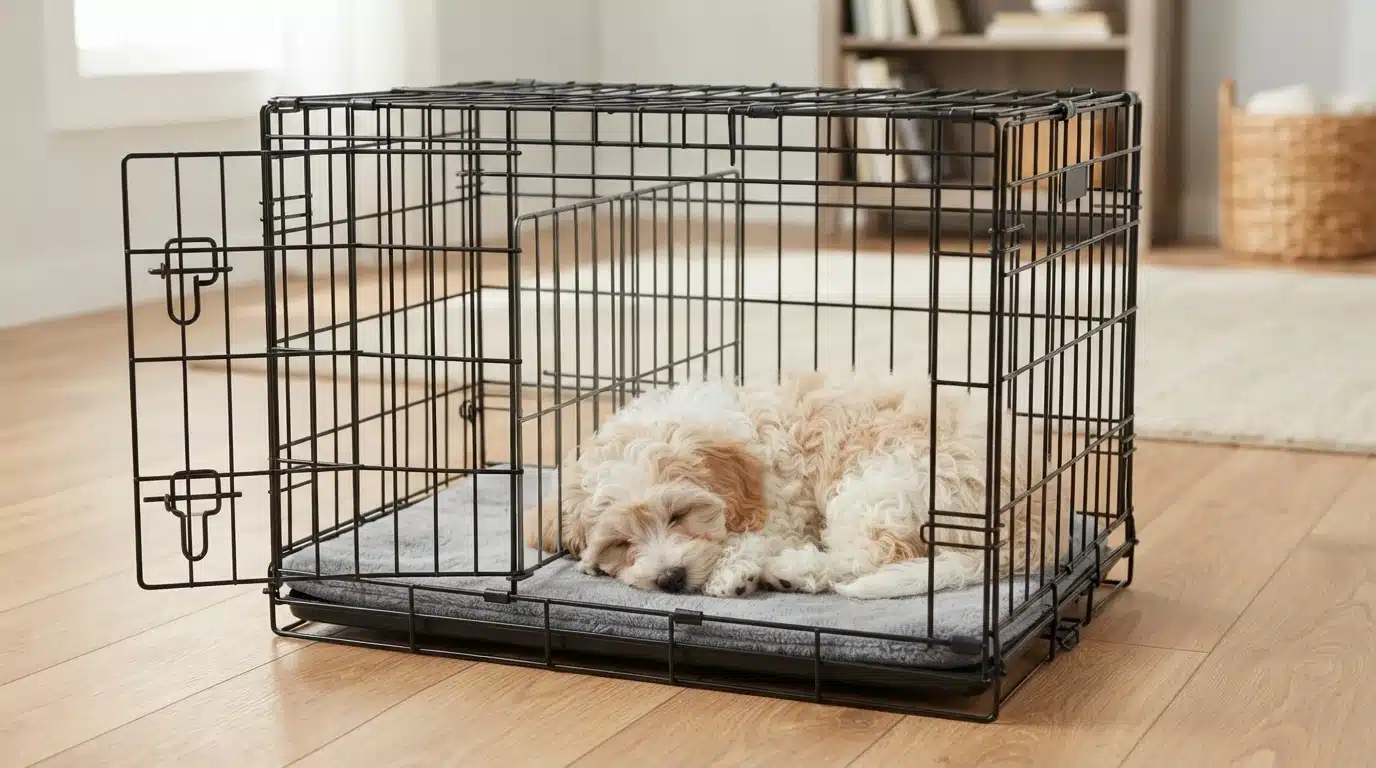
A Havapoo puppy or Havanese puppy does not need a big crate. Adult size lands somewhere around 10 to 20 pounds, so most breeders and trainers point to a crate roughly 24 inches long, often sold as a “small” or “intermediate” size. What matters more than the label is fit, and you can check it with three quick measurements:
- Stand room: your puppy can stand up fully without a hunched back.
- Turn room: he can spin around without bumping the walls.
- Lie-down room: she can stretch out flat on her side, legs extended.
The working rule: if the crate gives much more room than that, the extra corner becomes a bathroom, and potty training stalls.
Measuring Fit Instead of Guessing From Breed
Adult weight ranges overlap for these two breeds, so start with the size the breeder expects at maturity, then adjust. For crate size planning in your Havapoo budget, assume one crate buy. Many wire crates ship with a divider panel, a sliding wall that shrinks the space for a young puppy and moves back as he grows. That one purchase covers the whole first year.
Crate Versus Playpen for Each Breed
A crate is for sleep and short alone time. A playpen is for supervised play. Havapoo crate training usually goes smoothly because the poodle mix often settles fast, while Havanese crate training can take more patience since the breed bonds hard and may fuss at first. In both cases, the pen protects the crate from becoming a place the puppy resents.
Gear Errors That Slow Down Housebreaking
Three mistakes cost families weeks. First, buying one large crate with no divider, which invites accidents. Second, padding the entire floor with absorbent bedding, which soaks up messes instead of discouraging them. Third, placing the crate far from family activity, so the puppy whines and you cave early. Fix those and small breed puppy housebreaking moves faster than any schedule trick.
Potty Training Needs: Are Havapoos Easier to Potty Train Than Havanese?
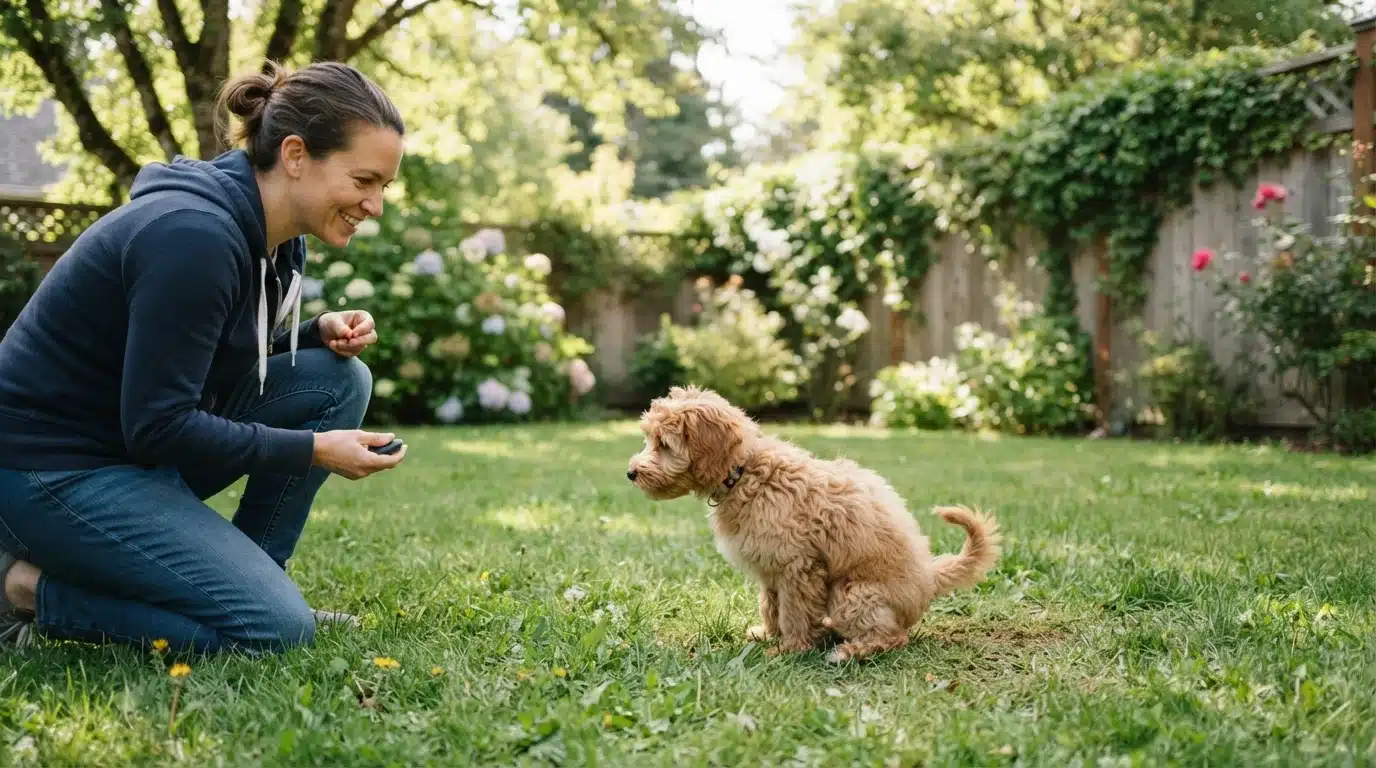
Most owners find Havapoos and Havanese fairly close in potty trainability, and neither breed is reliably “easy.” Both are small, intelligent companion breeds with small bladders, so small breed puppy housebreaking depends more on your schedule than on the puppy’s pedigree. Havapoos sometimes pick up a routine a little faster because their poodle parent line is known for quick learning, but individual variation matters more than breed. Plan on weeks to months of consistency for either puppy, not a fixed deadline.
What Owners Report About Timeline
Owner reports vary widely. Many Havapoo families describe a puppy that connects the dots within two to four weeks, while Havanese owners often report four to eight weeks of steady progress. Some puppies in either breed take three to four months, especially through winter or in apartments without quick yard access. Treat these numbers as ranges, not promises. A puppy’s age at pickup, bladder capacity and your consistency shape the timeline far more than breed averages do.
Why the Two Breeds Respond Differently to a Schedule
Both breeds respond well to reward-based methods, but they bring slightly different temperaments to the same routine. Havanese are biddable and people-focused, so they want to get it right, yet they can be sensitive to scolding, which slows progress. Havapoos often show the poodle’s problem-solving streak, so they learn that ringing a bell or heading to the door pays off. With either puppy, reward within seconds of success outdoors and keep a written schedule of meals, naps and potty breaks.
Accidents in the Crate and How to Respond
Crate accidents happen, and how you respond matters more than the accident itself. First, check fit: a crate that is too large lets a puppy sleep in one corner and soil another, which is why trainers recommend a divider panel. Then rule out causes such as too long an interval, a late meal or water right before bedtime. Clean with an enzymatic cleaner, never ammonia-based products, because lingering scent invites repeat visits. Punishing a crate accident teaches the puppy to hide and makes small breed crate training harder. If accidents repeat daily, a vet visit rules out a urinary issue.
For a deeper walkthrough of the crate side of this routine, the guide to how to crate train a Havanese puppy without stress covers setup, night schedules and divider use step by step.
Training Method: How Sensitivity and Energy Change Your Approach
Both breeds learn fastest with reward-based methods. The AVSAB recommends positive reinforcement for all dog training, and research backs it up: punishment-based methods correlate with more stress and problem behaviors, not faster learning. The difference between a Havanese and a Havapoo is not the method. It is the pace, the reward, and how much patience you need for distractions.
Working With a Sensitive Havanese
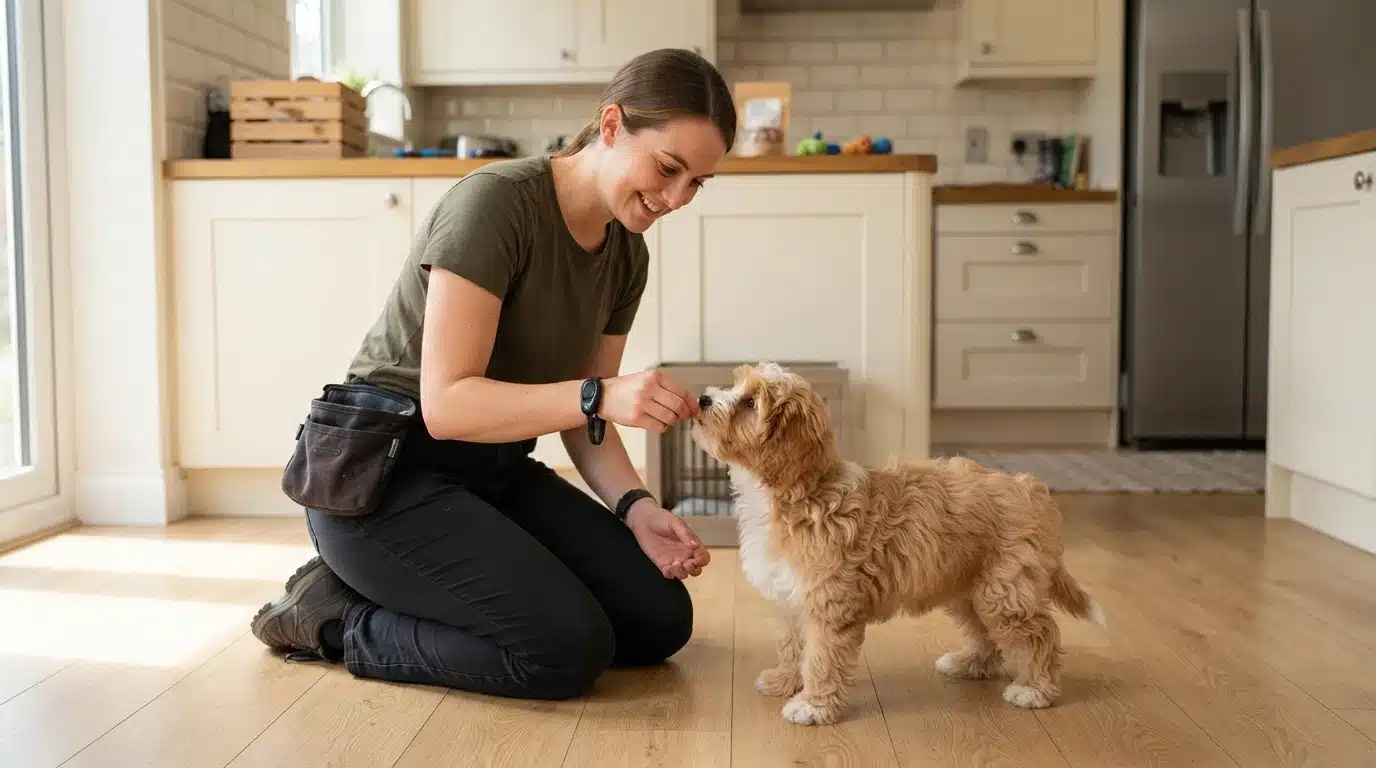
A Havanese notices everything, including your mood. Harsh words or a slammed crate door can set crate training back a week. Keep sessions short, two to five minutes, and end on a win. Soften your voice, move slowly, and let the puppy choose to walk into the crate rather than being placed there. Reward calm behavior in small doses. If your puppy hesitates, that is information, not defiance. Lower the difficulty and rebuild confidence before moving on.
Working With a Busy Havapoo
Havapoos bring more energy and curiosity, so your main job is managing distraction. Train after play or a potty break, when the tank is partly empty. Use higher-value rewards for hard skills like settling in the crate, and rotate treats so they stay interesting. Expect a livelier potty stage too. Havapoo potty training usually improves once you tighten the schedule rather than the corrections. Consistency beats intensity every time.
Cue Words That Make Both Breeds Faster
Pick one word per behavior and never change it. A sample set:
- “Crate” or “bed” for entering the crate
- “Potty” for eliminating outside
- “Settle” for lying down calmly
- “Yes” as a marker the instant the puppy gets it right
Say the cue once, then wait. Repeating it teaches your puppy to ignore the first ask. Pair each word with an immediate reward so the meaning sticks. Short, consistent cues help both breeds connect the sound to the action quickly, and small breed puppy housebreaking depends on that clarity. Our beginner training tips for a small breed puppy walk through these cues week by week.
Designing a Schedule That Survives Workdays and Weather
A Daily Rhythm That Scales With the Puppy
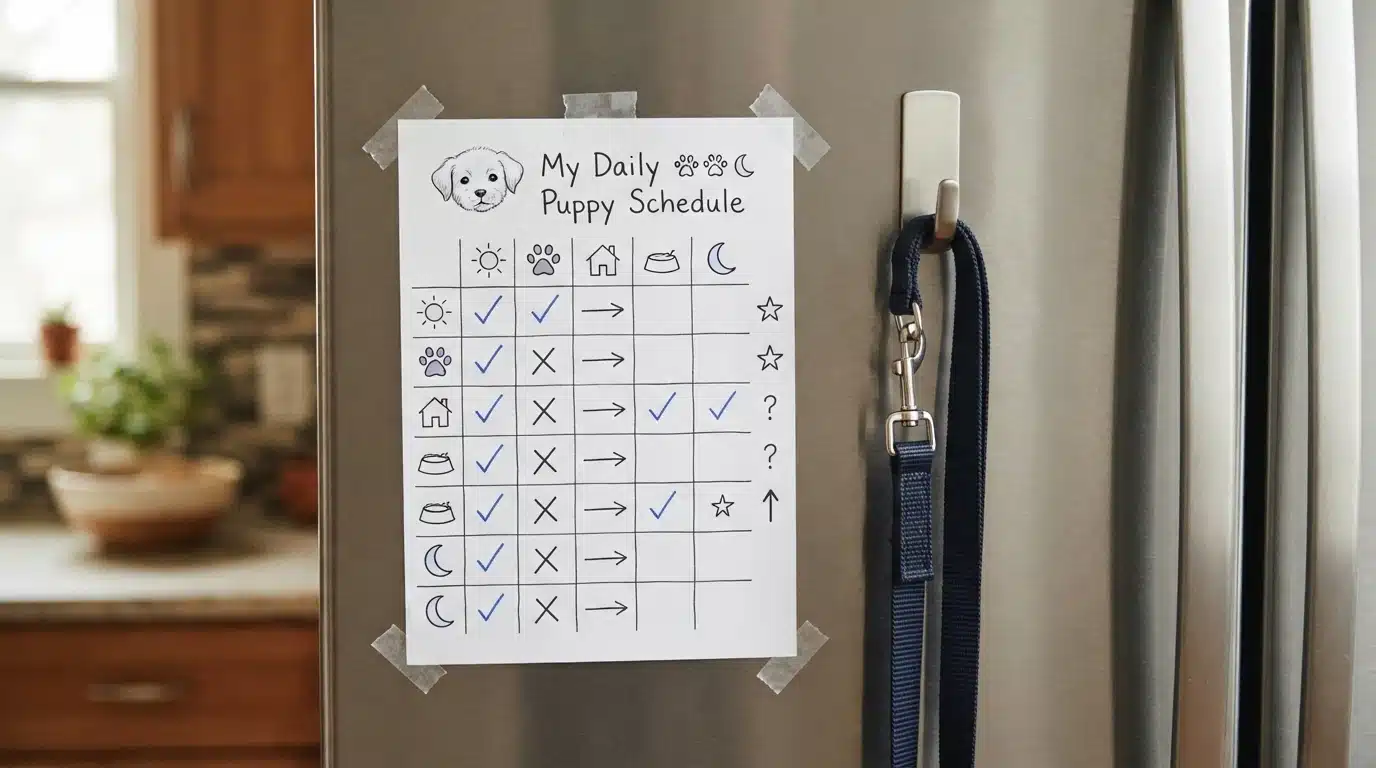
Both breeds respond to the same structure: take the puppy out after every nap, meal, and play session. Young Havapoo and Havanese puppies can only hold their bladder for about one hour per month of age, so an eight-week-old needs a trip out roughly every two hours during the day.
Write the times down. A simple chart on the fridge, keyed to your puppy’s actual schedule, beats any generic timeline you find online. As the weeks pass, stretch the gaps slowly and watch for accidents. If you see more than one miss, shorten the interval again. That feedback loop, not a fixed deadline, is what real progress looks like.
Covering the Middle of the Workday
Most full-time owners need help between a morning and evening break. The kindest option is a midday visit: a neighbor, a family member, or a paid puppy sitter who takes the puppy out and plays for fifteen minutes. Many families arrange this before pickup day, not after the first accident.
If no one can come, set up a small pen with the crate, a patch of grass or turf pad, and water. This is where litter training for small breed puppies can bridge the gap, since some Havanese and Havapoo owners teach a pad as a backup spot. Avoid leaving a puppy crated longer than its bladder allows.
A long midday confinement stretch does more harm than one missed walk. Plan the middle hours first, then build the rest of the schedule around them.
Weather, Travel, and Schedule Disruptions
Utah winters bring snow and cold snaps, so keep a cleared path and a covered spot ready. Both breeds have low-maintenance coats, but a wet puppy needs a quick towel-off before going back in the crate. On travel days, pad the schedule with extra potty stops and keep the crate secured in the car. Consistency matters more than perfection.
Which Should You Choose: Havapoo or Havanese for Crate and Potty Training?
Both breeds train well with reward-based crate training, so the choice comes down to which puppy fits your daily rhythm. Neither breed is easier by default. Individual temperament, your schedule, and your consistency matter more than the label on the pedigree.
Choose a Havapoo If
Pick a Havapoo if you want a flexible companion that usually adapts to a crate routine quickly and stays motivated by food rewards. Havapoo potty training tends to go smoothly when you keep a tight schedule, because these puppies are eager to please and quick to connect the crate with rest and the yard with relief. They suit households where someone is home often during the first months.
Choose a Havanese If
Pick a Havanese if you want a people-focused dog that bonds deeply and responds well to gentle, patient sessions. Havanese crate training may take a few extra short sessions at first, since they dislike being alone more than most small breeds. Plan crate practice near family activity and build alone-time slowly to prevent separation anxiety in small breeds.
Next Steps for Either Choice
Whichever puppy you choose, set up a crate with a divider panel, plan potty trips after every meal and nap, and keep sessions short and positive. Expect progress in weeks, not days, and adjust to your individual puppy. If you are preparing for a Sage Puppies puppy, review the first-week checklist before pickup or delivery day. Consistency in the first month shapes housebreaking habits for life.

Still deciding between a Havapoo and a Havanese? Both train well with patience and a small crate, so pick the one that fits your home and schedule. At Sage Puppies, Cassie matches each family with the right puppy and shares honest prep guidance from day one. Start with the application and ask your crate questions early.
Frequently Asked Questions
Q1: Do Havapoo and Havanese puppies need crate training?
Yes. Both breeds benefit from it, and for small breeds it speeds housebreaking and keeps puppies safe when unsupervised. The crate works as a den, not a punishment, so keep sessions short and reward-based from the first week home.
Q2: Are Havapoo puppies easier to potty train than Havanese?
Only slightly, if at all. Havapoos sometimes connect the routine a bit faster thanks to their Poodle line, but Havanese are biddable too. Your schedule and consistency matter far more than breed.
Q3: How long does it take to potty train a Havapoo puppy?
Many owners report two to four weeks of steady progress, with some puppies needing three to four months. Age at pickup, bladder capacity, and consistency shape the timeline, so treat any figure as a range.
Q4: What size crate does a Havapoo or Havanese puppy need?
Most adults land between 10 and 20 pounds, so a crate around 24 inches long works. Use a divider panel to shrink the space early, so the extra corner never becomes a bathroom.
Q5: What should I do when my puppy cries in the crate?
Check the basics first: potty break, recent play, and crate location near family activity. Reward quiet moments, keep visits calm, and extend alone-time slowly so you don’t feed separation anxiety.
Q6: Can I leave my puppy crated while I work?
Young puppies can hold it about one hour per month of age. Arrange a midday visit or use a pen with a pad for backup rather than long confinement.
Conclusion
Neither breed wins crate or potty training by default. Havapoos often connect the routine a touch faster, while Havanese puppies may need extra patience with alone-time, but your schedule and consistency matter more than either pedigree. Use a properly sized crate with a divider, reward success within seconds, and keep trips frequent during the first week with a new puppy. Avoid fixed timelines, because individual puppies vary widely in both breeds. Whichever puppy joins your family, expect progress in weeks to months and adjust the plan to the puppy in front of you.