Quick Summary: Small breed puppies need adult supervision and careful handling because their thin bones make drops and rough play dangerous. Set family rules before the puppy arrives, rehearse handling with a stuffed toy, keep early sessions on the floor, and teach children to lift with one hand under the chest and one under the rear while seated and supervised. Watch for stress signals such as lip licking, yawning, pinned-back ears, or turning away, and give the puppy access to a quiet, child-free rest space whenever needed. Sage Puppies, which raises Havanese, Havapoo, and Cavapoo puppies near South Jordan, Utah, recommends treating constant supervision as a permanent condition, not a stage children outgrow.
A Havanese or Cavapoo puppy can weigh less than the pillow your child just tossed off the couch. That is the whole problem in one picture. A 4 year old scooping a 6 pound puppy up with both hands under its belly looks sweet, and it can go wrong in about a second. Most small breed puppy accidents with kids start in this ordinary moment, not in the dramatic cases that make the news. This guide covers kids puppy safety for Havanese, Havapoo and Cavapoo puppies: a teaching sequence you can rehearse with your child, correct lift and set down technique, and how to set up a rest space your puppy can count on. It comes from Sage Puppies in South Jordan, Utah, where Cassie Milar raises small breed puppies for families. No breed is safe with unsupervised children, so every rule here assumes you are watching.
Why Small Breed Puppies Need Their Own Handling Rules
A Havanese puppy weighs less than a bowling ball, and that changes everything about how kids should treat it. Most child and dog advice assumes a large dog, where a rough grab hurts the child. With a small breed, the puppy is the one who gets hurt.
The physical difference that changes the rules
A 6 pound puppy has thin bones and loose joints. A drop from a child’s waist height can break a leg. Small breeds like Havanese, Havapoo, and Cavapoo are also quick to scramble when startled, so a squeeze or a sudden lift can trigger a flail and a fall. Growth plates stay soft for months, which makes even gentle tugs on the legs a real risk.
Why children pick up puppies more than adults expect
Kids love to carry things. When a puppy follows them around the house, carrying it feels natural, so it happens constantly and out of view. That is why kids puppy safety can’t rely on “don’t drop the dog.” It has to teach the correct lift and set down instead.
The principle this guide follows
No puppy is safe with a child. Supervision is the rule, not a suggestion. Everything below treats puppy handling safety as something you rehearse with your child before pickup day, then repeat daily.
How Do I Teach My Child to Safely Handle a Small Breed Puppy?
Kids learn puppy handling the same way they learn anything else: clear rules, then practice, then real contact with you beside them. This four-step sequence works because it lets your child build the skill before a 6 pound puppy ever pays for a mistake.
Step 1: Set the rules before the puppy arrives
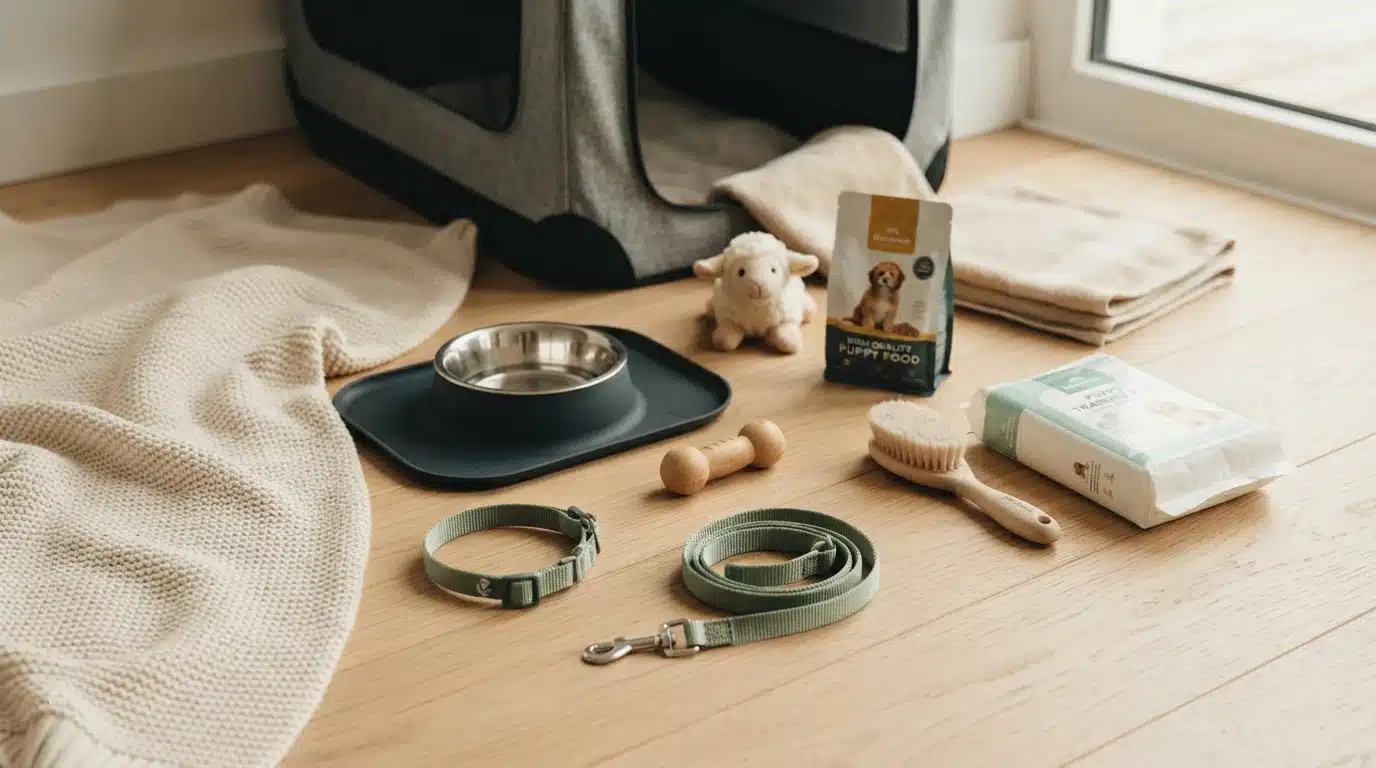
Decide your family’s kids puppy safety rules before pickup day, and write them down where everyone can see them. Keep it short: the puppy is picked up only by an adult or with an adult’s hands on it, no carrying on stairs, no grabbing, and the crate or playpen is a no-kid zone. Children follow rules they helped practice far better than ones invented mid-meltdown, so say them out loud now. If you want a fuller prep list, our guide on bringing home a puppy covers the first weeks in detail.
Step 2: Rehearse with a stuffed toy puppy first
A stuffed animal lets your child practice without risk to anyone. Show her how to sit on the floor, let the “puppy” approach her, and pet with slow, flat strokes along the back. Then rehearse what not to do: squeezing, hugging tight, picking the toy up under the front legs. Practice a calm “enough” signal too, like hands on knees when the puppy needs a break.
Step 3: Meet the puppy on the floor, with your hands on the puppy
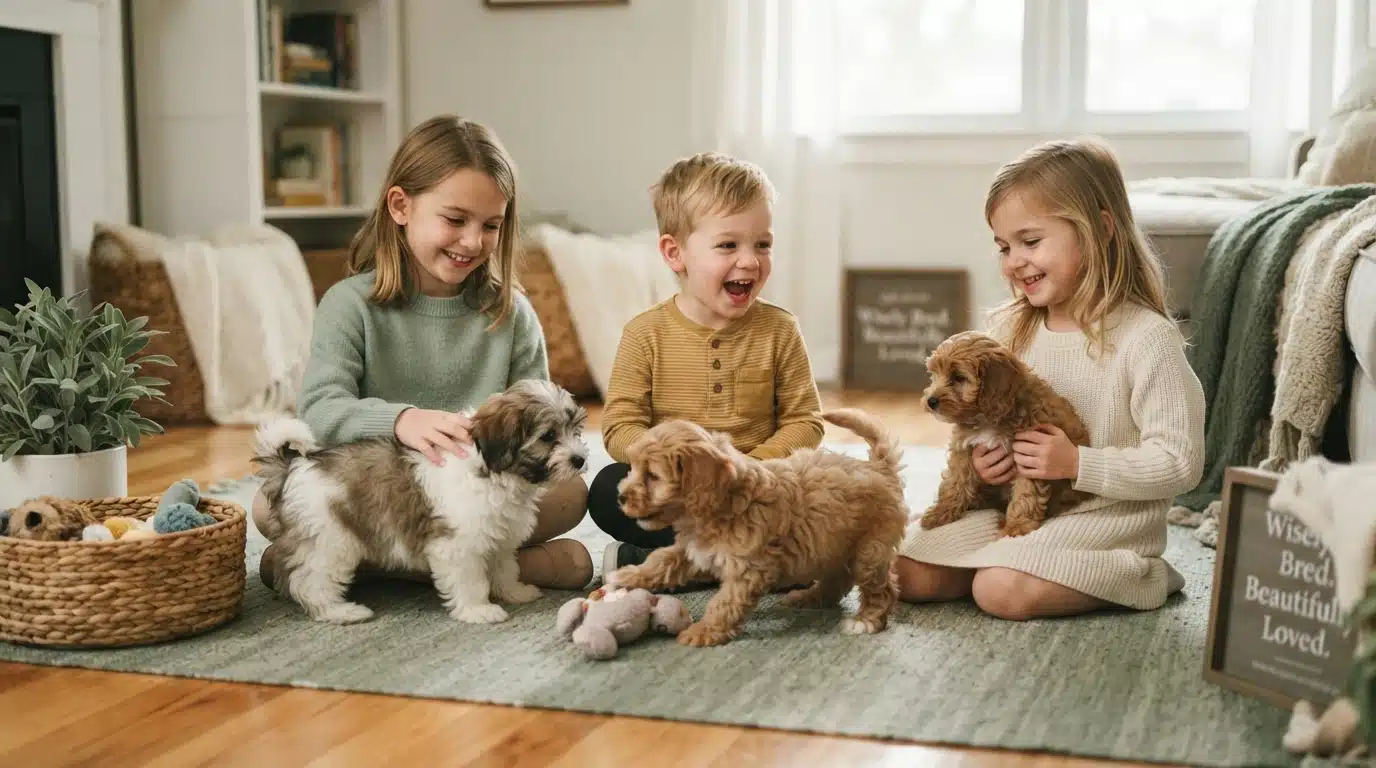
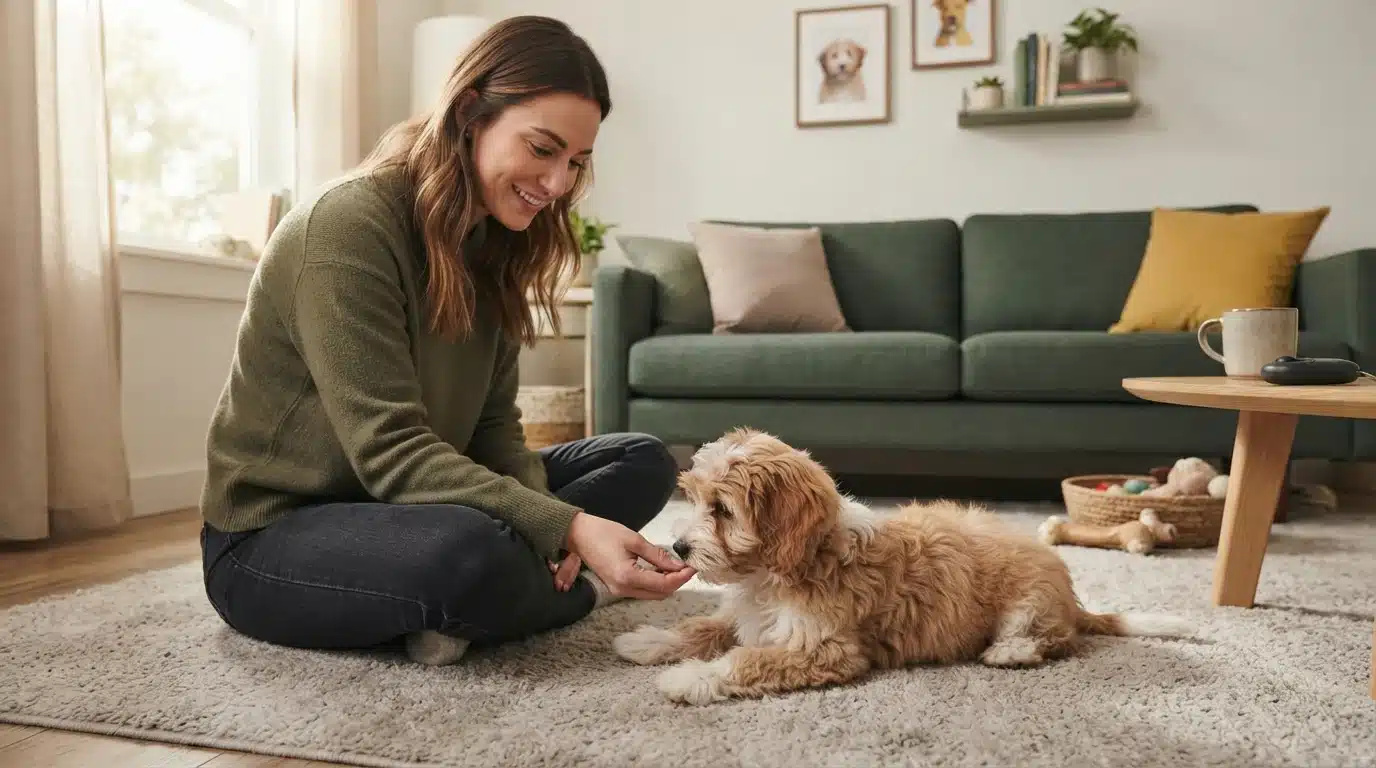
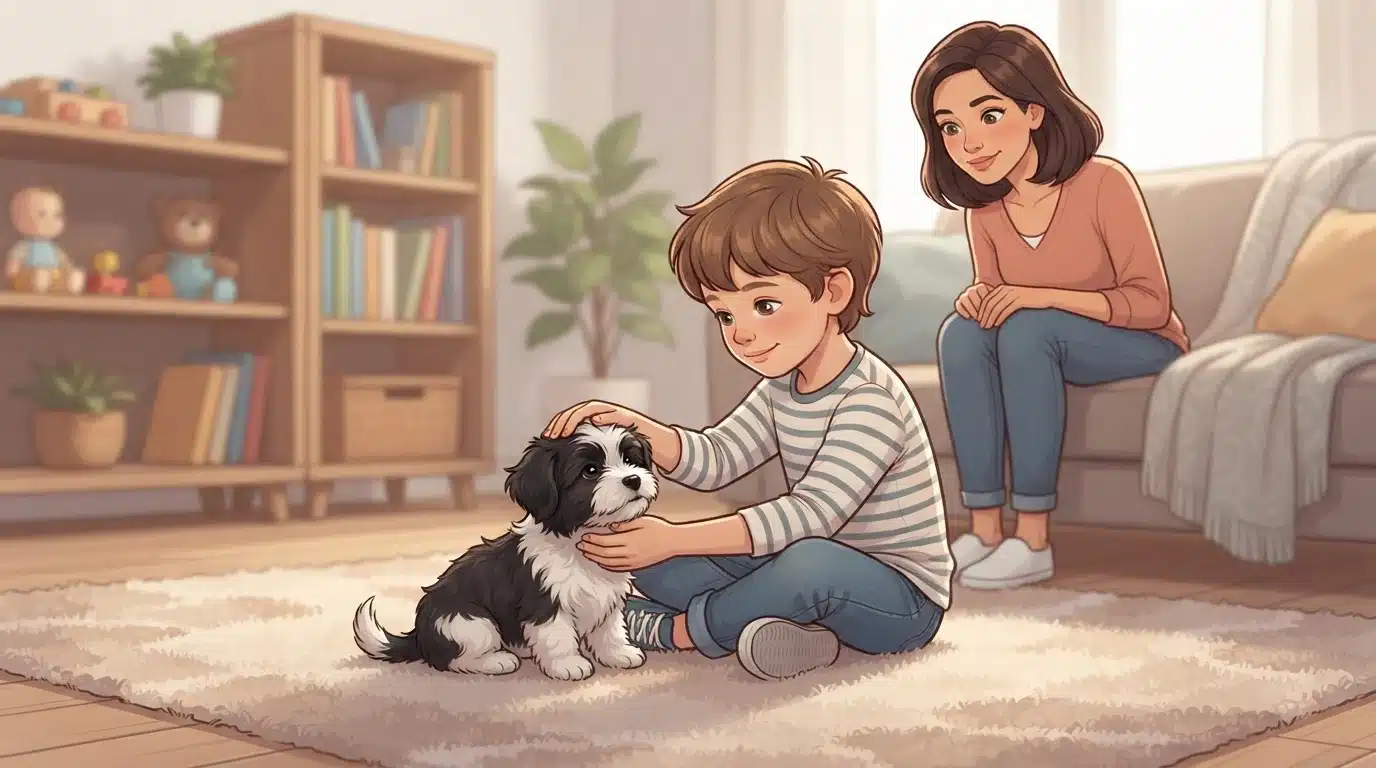
First real sessions happen on the floor. Kneel beside your child with your hands resting on the puppy the whole time, so you can lift it away in a second. Let the puppy come to your child rather than the reverse. Short sessions of two or three minutes end before anyone gets wild or tired.
Step 4: Add one skill at a time
Add one new skill per session. Week one, petting on the floor. Next, help with the food bowl or a treat placed flat on your palm. Carrying comes last, only two-handed, seated, with you alongside, and always under supervision. If the puppy squirms or nips, that session ends and you regress one step. Supervision is not a stage you graduate from; it is the condition that makes everything else safe.
How to Pick Up and Set Down a Small Breed Puppy Safely
The correct two hand lift
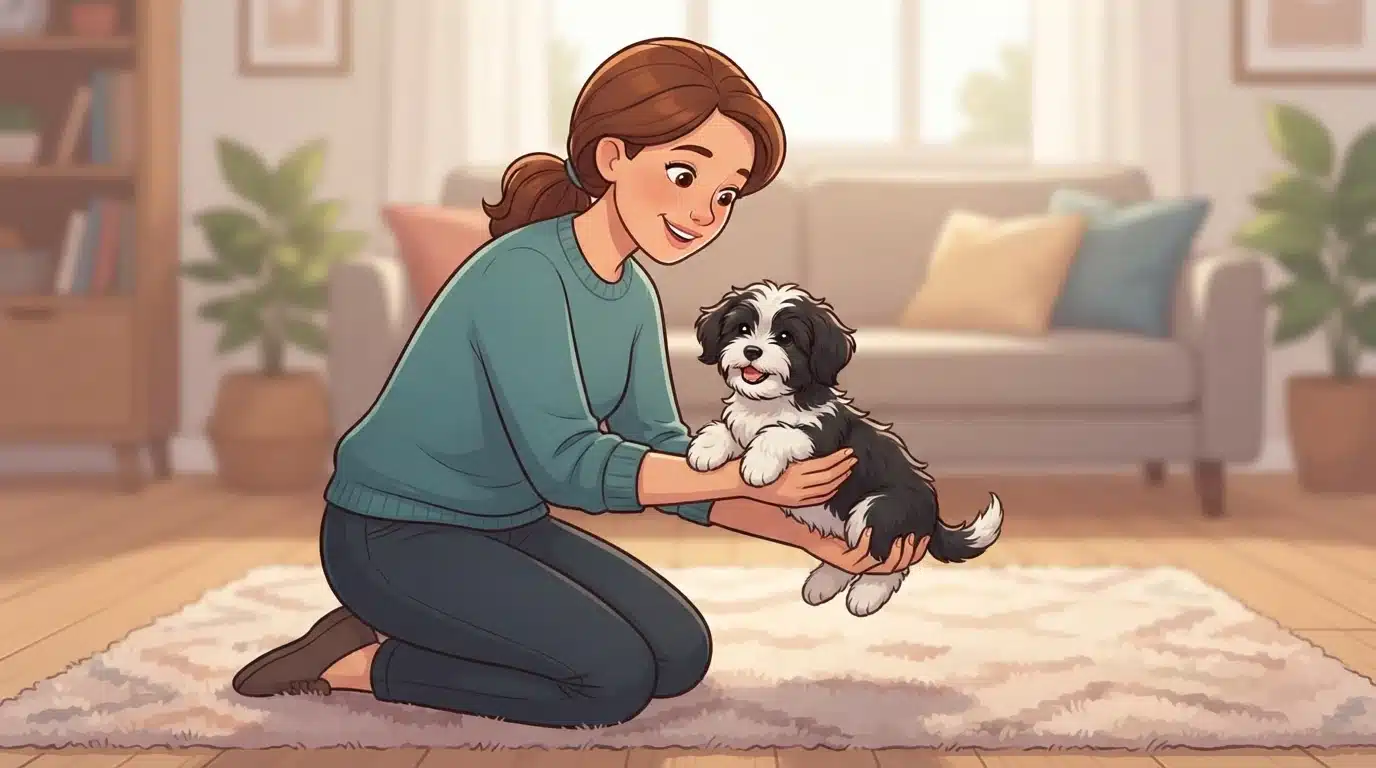
The lift always uses two hands. Place one hand flat under the chest, between the front legs. Slide the other hand under the rear so the puppy’s weight rests on your palm. Lift both ends together and pull the puppy in close to your body. This matches the two handed scoop most vets recommend. Never lift by the front legs, the scruff, or under the belly alone.
Setting the puppy down without a drop
The set down matters as much as the lift, because most slips happen here. Kneel or sit first, so the drop is inches, not feet. Lower the puppy until all four paws touch the floor. Keep a light hand under the chest for a beat, then let the puppy walk away on its own. Rehearse this with your child before any real pick up.
Is it safe to let kids pick up a puppy?
Age matters less than skill. Young children generally should not carry a 6 pound puppy unless they are seated and supervised at every second. Let a child sit on the floor and hold the puppy in their lap instead, and keep lifting a job for an adult. A brief supervised lap hold builds comfort without risking a fall.
Rules for Touching, Petting and Playing Safely
Where to touch and where not to touch
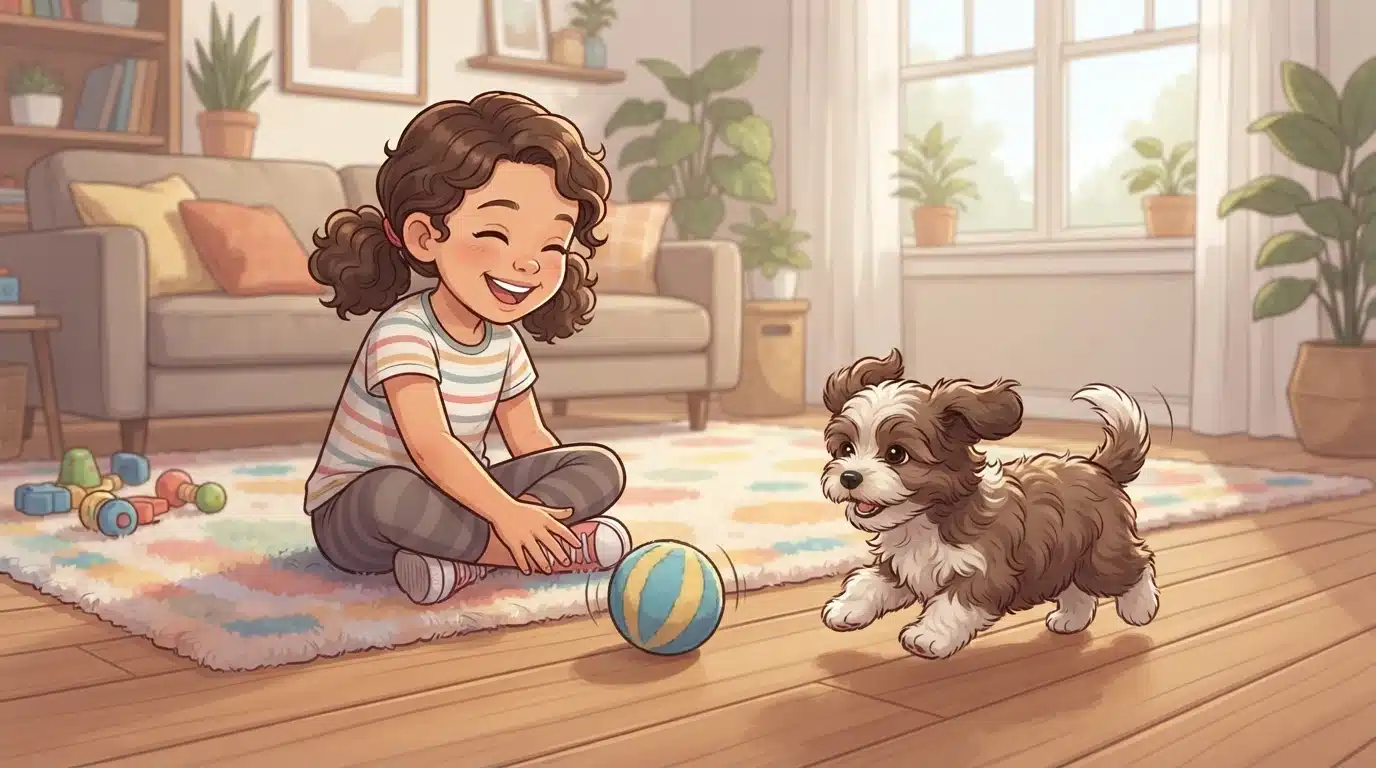
Show your child the safe zones with your own hands first: chest, shoulders, back and the sides of the neck. Then name the no-go spots. Never touch the eyes, ears, mouth, tail or paws without a reason, because those areas are tender and easy to injure on a 6 pound puppy.
Small breed specific rough play prohibitions
Small breeds can’t absorb rough play the way a larger dog can. Ban these outright:
- Wrestling, tug-of-war with the body or lifting by the front legs
- Piggyback rides, dress-up and pulling the puppy across the floor
- Grabbing hugs or squeezing, which can fracture thin bones
- Startle games like sneaking up or loud noises
Any one of these can cause an injury that takes months to heal.
Substitutions that keep the child engaged
Children need a job, not just a rule. Offer swaps: roll a soft ball across the floor instead of tugging, hide treats under cups for a sniffing game, or teach a simple sit with tiny treats. When kids trade rough handling for games the puppy enjoys, they keep having fun and the puppy stays safe.
Reading Your Puppy’s Stress Signals Before the Situation Escalates
A growl is not the first warning. Puppies signal discomfort long before they grumble, and a small breed like a Havanese or Cavapoo cannot push a child away, so the early signals matter even more.
The subtle signals that come before a growl
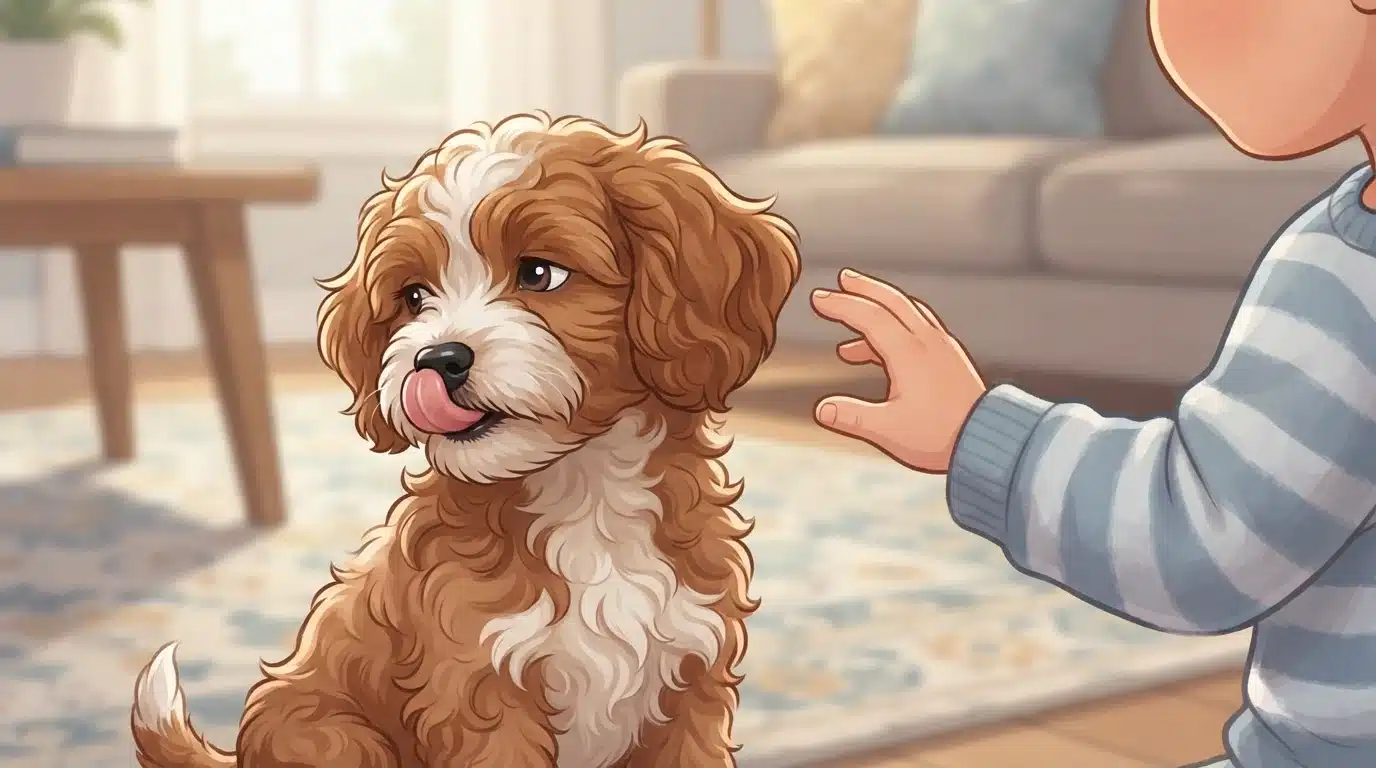
Watch for lip licking, yawning, whale eye, pinned-back ears and a tucked tail, which the AKC lists as common stress signs. Also count turning away, shaking off, and a sudden scratch or sniff of the floor. One yawn means little. Three signals in a minute means the puppy wants the interaction to stop.
What to do the moment you see a signal
Step in calmly. Call your child away instead of pulling the puppy, then give the puppy an exit to its rest space. Praise your child for noticing. The goal is simple: every signal gets a break, so the puppy never learns that growling is the only thing that works.
When discomfort is physical, not behavioral
Some signals point to pain rather than annoyance. Flinching when touched, a hunched back, limping, or reluctance to be lifted can mean sore joints or an injury, which matters more in a 6 pound puppy with thin bones. Skip the handling practice and call your vet when those signs show up together, since repeating the interaction with a sore puppy teaches it that hands predict pain.
How Old Should a Child Be, and What to Do Until Then
What the veterinary and pediatric guidance actually says
There is no magic birthday. Vets and pediatric groups give the same two answers: never leave a baby or small child alone with any dog, even your own, and wait until a child is older than about 4 before expecting real responsibility, per Oklahoma State’s extension guidance. Before that age, a child can pet, learn and help. The AVMA says supervision is constant, not occasional.
Three readiness tests before handling starts
Let your child prove it with a seated lap-hold. First, can your child sit still for a full minute with the puppy on the lap? Second, does your child stop when you say “gentle” without repeating it? Third, does your child stay seated and wait while you place the puppy in and take it out? All three yes means supervised short holds can begin. Any no, and you keep practicing that step.
Bonding with a puppy that the child cannot yet handle
A toddler does not need to lift a puppy to love one. Floor-level time works: let your child sit on the ground and let the puppy climb into the lap, drop a treat under your direction, and help fill the water bowl. The puppy learns that small hands mean calm, good things happen, and your child builds a bond the safe way.
Rest Space, Supervision and When to Separate
Building a small breed rest space that works
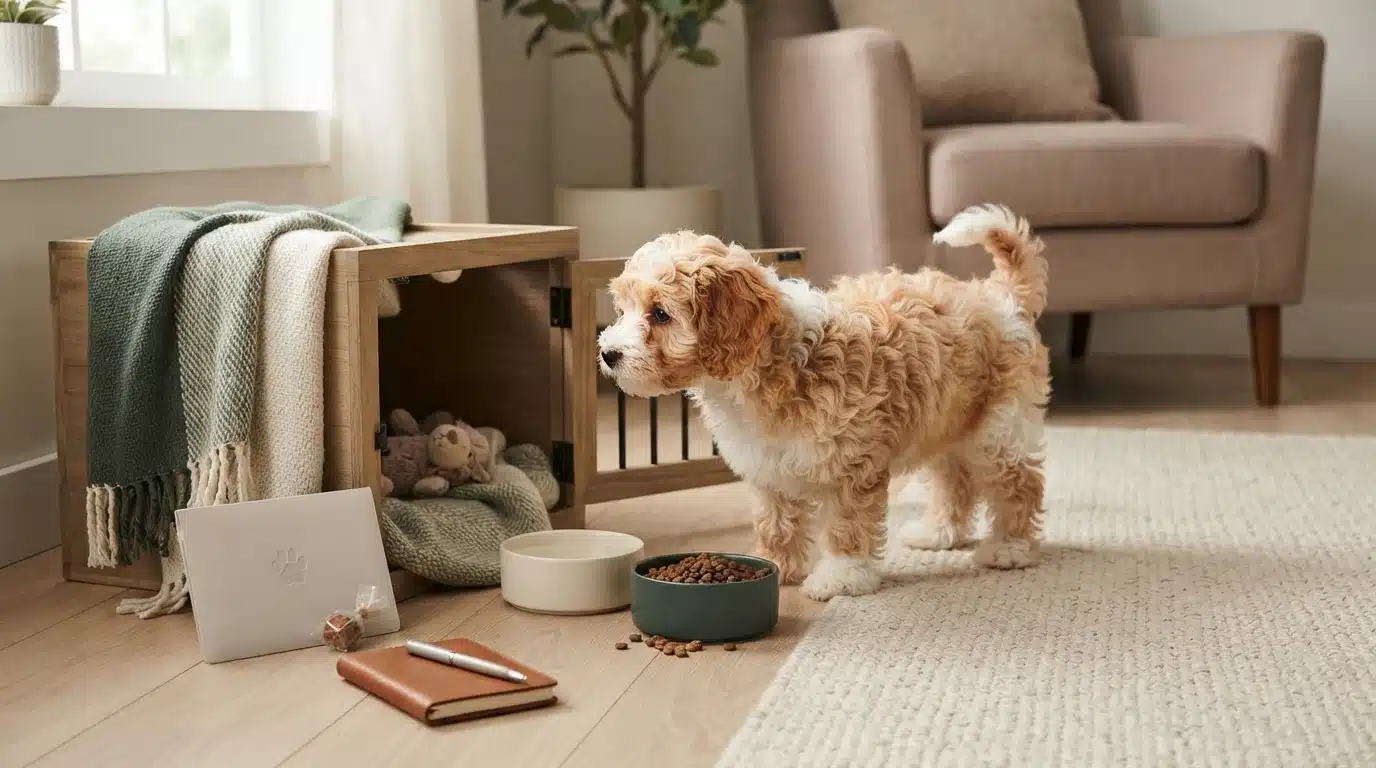
A tired puppy gets grabbed more, so give yours a crate or playpen in a quiet corner. Everyone learns one rule: when the door is closed, hands stay out. That lets your Havanese or Cavapoo nap without being reached for. If you are setting up a small space, an apartment checklist for small breed puppies covers quiet zones and house training together.
The times you separate on purpose
Separation is not punishment. Use it whenever your puppy is sleeping, eating, or chewing in its pen, and any time supervision slips, like when you answer the door. End play on purpose too. Small breeds tire fast, and a puppy that starts squirming or nipping has hit its limit. Walking your child to the gate, instead of calling the puppy away, keeps the routine clear.
Hygiene that goes with handling
Hands go in the wash after every play session, especially before meals. Young kids touch faces and mouths constantly, so make hand washing part of the routine rather than an occasional reminder. Adults should clean up puppy accidents, not children, since waste can carry germs. Supervision and hygiene work together: a child washing hands is also a child pausing, and a pause gives everyone a chance to reset.
Common Mistakes to Avoid
The six errors that show up most often
Watch for these, because each one causes most small breed handling injuries:
- Letting a child carry a puppy while standing or walking. A drop from waist height can break a small breed’s leg.
- Lifting under the belly only. Always support the chest and rear.
- Grabbing from behind or startling a sleeping puppy.
- Treating supervision as optional once things seem calm. Most bites and drops happen in quiet moments.
- Allowing rough play, tug games, or chasing. Small puppies cannot absorb that kind of contact.
- Ignoring warning signs like flinching, a hunched back, or reluctance to be lifted.
Two habits worth building from day one
First, rehearse the lift and set down routine together before problems start, using a stuffed animal for young children. Second, keep rest space off limits. A puppy that can retreat sleeps more and nips less.
Choosing a Puppy With Children in Mind
What to ask the breeder about a puppy’s handling history
A breeder who raises puppies around children will have specific answers, not vague ones. Ask whether kids have handled the litter, how the breeder teaches visitors to hold them, and which puppy in the litter tolerates noise and sudden movement best. Also ask about temperament notes from early weeks. Good breeders watch each puppy and can describe how it startles, recovers, and settles. If the answers stay general, treat that as information too.
Sage Puppies and families with young children
Because a 5 to 12 pound puppy has less margin for rough handling than a larger dog, matching temperament to your children matters more than picking by coat or color. Sage Puppies raises Havanese, Havapoo, and Cavapoo puppies in the home near South Jordan, Utah, so young kids are part of daily life from the start, and matching considers each child’s age. Our guide to choosing a small breed puppy for families covers that matching process in detail, and we never promise a puppy is safe with children.
The first two weeks at home
Keep the pattern simple during the settling-in window. Seat your child on the floor for every hold. Give the puppy a gated rest space no child enters, even for petting. Run one short practice lift a day, then stop while it is going well.

Ready to raise a puppy your kids can handle with care? The Sage Puppies application matches your family’s temperament and energy to a Havanese, Havapoo, or Cavapoo, and sends you home with guidance like the steps above. Start your application today.
Frequently Asked Questions
Q1: How do I teach my child to safely handle a small breed puppy?
Use the four-step sequence: write family rules before pickup day, rehearse with a stuffed toy, hold floor-level sessions with your hands on the puppy, then add one new skill per session. Carrying comes last, seated, supervised.
Q2: Is it safe to let kids pick up a puppy?
Generally no. Lifting stays an adult job unless a child is seated with an adult beside them. A drop from waist height can fracture a small breed’s thin leg bones, so a lap hold is the safer early option.
Q3: How young should a child be before handling a puppy?
There is no set age, but children under about 4 should not carry a puppy. Use three readiness tests: sits still for a minute, stops at “gentle,” and waits while you move the puppy in and out.
Q4: What is the correct way to pick up a small breed puppy?
Slide one hand under the chest between the front legs and the other under the rear. Lift both ends together, hold the puppy close, and lower it to the floor from a kneeling position.
Q5: When should my puppy’s rest space be off limits?
Always when the door is closed, plus during sleep, meals, and chewing. Separate on purpose anytime supervision slips, like answering the door, so hands never reach into the pen.
Q6: What should I do if my child gets scratched or nipped?
End the session calmly and walk your child away. Wash hands and any broken skin with soap and water, then review which rule or missed stress signal led up to it before trying again.
Conclusion
A 6 pound puppy breaks before a child’s rules hold, so the structure you set matters more than good intentions. Write your family rules before pickup day, rehearse the lift and set down with a stuffed toy, and keep floor-level sessions short with your hands on the puppy. Lifting stays an adult job until your child passes three readiness tests, and even then it happens seated, supervised, one skill at a time. Watch for stress signals early, because a growl is the last warning, not the first. Protect the rest space completely, separate on purpose when supervision slips, and treat watching your child and puppy as a condition that never ends, not a stage you outgrow.