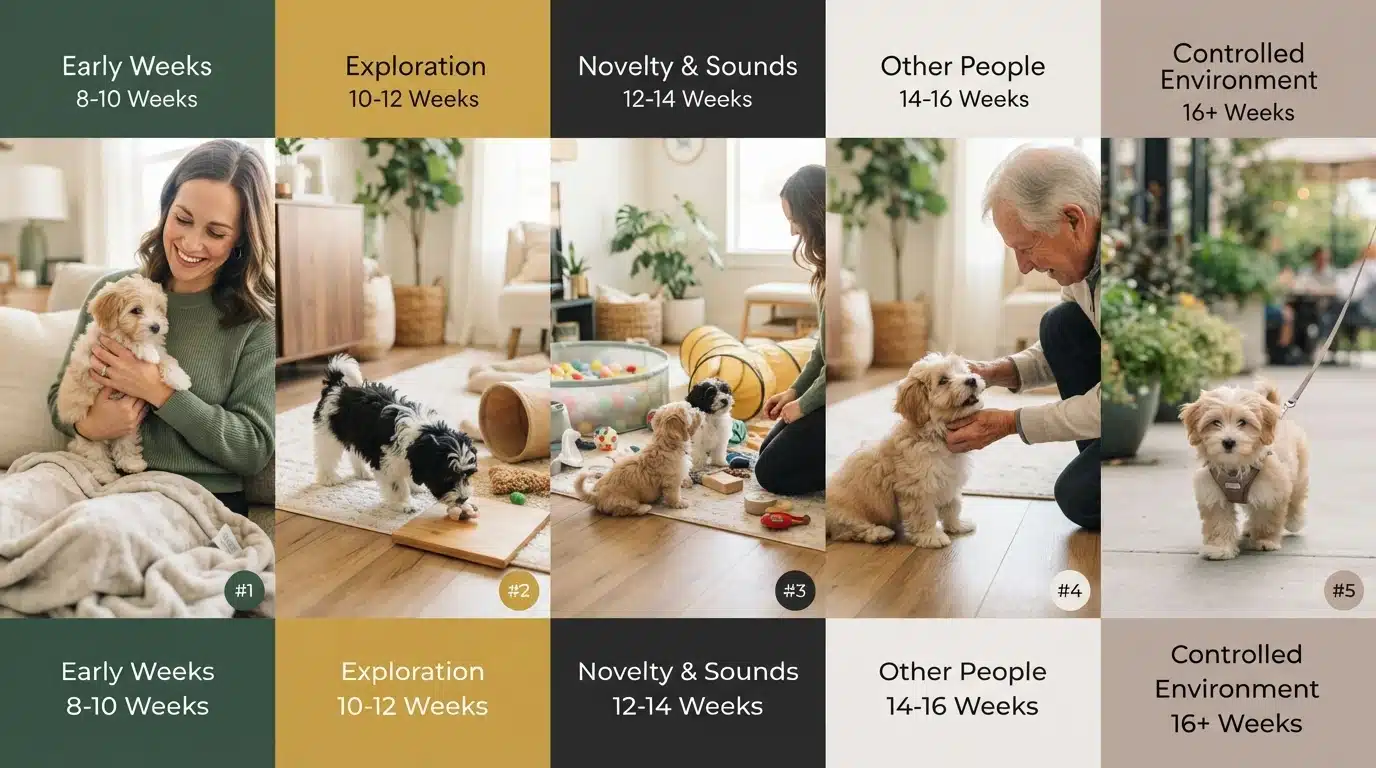
Quick Summary: Havanese puppies are the more predictable choice for small apartments because their AKC standard fixes adult size at 7 to 13 pounds, while Havapoos vary depending on the Poodle parent. Both breeds need daily activity, regular brushing, and gradual alone-time training, and neither handles long workdays without a midday break or planned care. Choose based on your schedule, building rules, grooming budget, and need for predictable size rather than assuming one breed is quieter or easier for apartments.
If your apartment has thin walls and you are gone nine hours a day, the Havanese is the more predictable pick for a small living space. Choose a Havapoo if an adult is home more often, or if you want a dog that trains quickly and settles well indoors. Size rarely decides it. Noise tolerance, hours alone, and coat care do. The Havanese carries an official breed standard; the Havapoo, a Havanese and Poodle cross, does not, so comparing them by fixed numbers misleads buyers. This Havapoo vs Havanese apartment guide works through the dimensions that matter in a studio or one-bedroom: adult size, exercise without a yard, barking, grooming, time alone, and health costs. It shows where published data ends and individual puppies begin, then gives you a rule for choosing and the health records to request before you reserve. We raise both breeds in South Jordan, Utah, so we know where first-time owners misjudge Havanese apartment suitability.
Havapoo vs Havanese for Small Apartments: Side-by-Side Comparison
| Havanese puppies | Havapoo puppies | |
|---|---|---|
| Expected adult size | 8.5-11.5 inches at the withers, 7-13 pounds per the AKC standard | Varies widely by Poodle parent; typically under 15 pounds when sired by a Toy or Miniature Poodle |
| Exercise needs | moderate: brisk daily walk plus owner play, per AKC | Moderate daily exercise plus mental work; described as energetic and quick to bore |
| Coat and grooming | Long, silky double coat requiring regular brushing to prevent matting | Low-shedding wavy or curly coat that still needs daily brushing to prevent matting |
| Noise and barking tendency | Sociable companion breed; watchdog vocalization reported by owners, individual variation | Alert and people-oriented; can bark for attention or when left alone too long |
| Best for | Small apartments, owners wanting a standardized, predictable small companion | Apartments where an owner is often home and values trainability over fixed size |
How Havanese and Havapoo Puppies Differ
Havanese puppies
The Havanese is the only dog breed native to Cuba, an AKC Toy Group companion that grows to 7-13 pounds and has become popular with city dwellers. It suits owners who want a standardized, apartment friendly Havanese with a predictable adult size.
Key strengths
- Fixed breed standard: 8.5-11.5 inches tall, 7-13 pounds
- Moderate exercise: a brisk daily walk plus play
- Cheerful, people-focused temperament
Havapoo puppies
A Havapoo crosses the Havanese with a Toy or Miniature Poodle. The AKC does not recognize it, so there is no breed standard and adult size, coat, and looks vary widely. It fits apartment owners who are often home and value trainability over a fixed size.
Key strengths
- Low-shedding wavy or curly coat
- Quick to train, eager to engage
- Usually under 15 pounds with a Toy or Miniature Poodle parent
Are Havapoo or Havanese Puppies Better for Small Apartments?
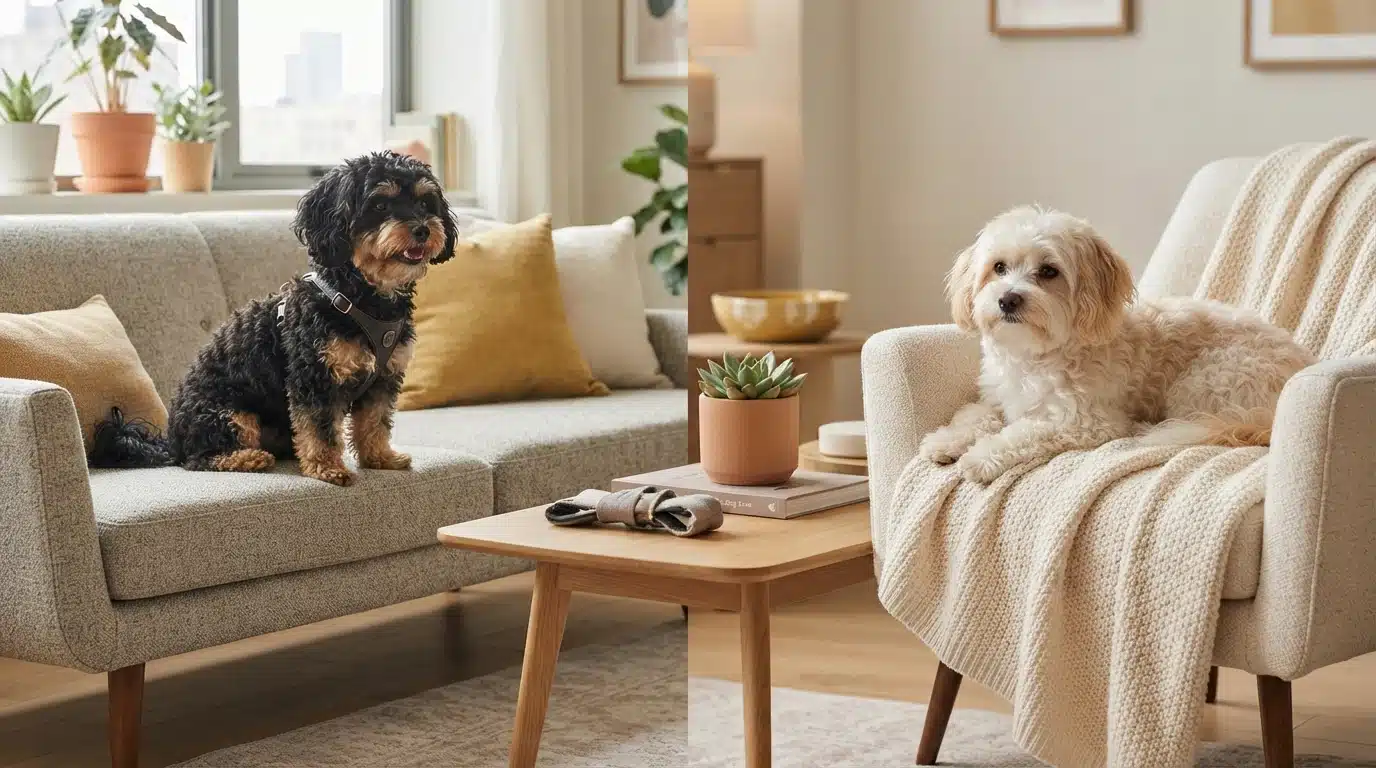
Both breeds fit a small apartment well, so the better choice depends on what you can predict and control. The Havanese gives you a fixed size range under the AKC standard. The Havapoo gives you more variety, because its adult size follows the Poodle parent. If you want certainty on space, lean Havanese; if you want coat options and can accept some size variation, a Havapoo works too.
What the Havanese Breed Standard Actually Fixes
The AKC breed standard locks in the numbers: 8.5 to 11.5 inches at the withers and 7 to 13 pounds. That range fits a crate, a playpen, and a lap in a compact home without guesswork. When breeders screen breeding dogs through programs like the Havanese CHIC health listing, you also get documented results you can review before reserving. A fixed standard is why many first-time owners treat the Havanese as the best apartment friendly Havanese starting point.
Why the Havapoo Has No Fixed Answer on Size
Havapoos are a cross, so no kennel club standard defines their height or weight. Adult size depends on whether the Poodle parent is a Toy or a Miniature. A Toy-sired Havapoo usually lands under 15 pounds; a Miniature-sired one can run larger and taller. Responsible breeders estimate adult size by weighing the parents, not by promising a number. Ask which Poodle type was used, and ask to see both parents so you can judge the likely range for your apartment.
Space Requirements and Indoor Exercise Without a Yard
Matching Daily Walks to What Your Building Actually Offers
Neither breed needs a yard, and a small apartment suits both when you plan the walks. A Havanese does well on about 30 minutes of total daily activity, and PetMD suggests splitting that into short 10-minute walks or play sessions. A Havapoo can ask for more, since Poodle energy varies by parent, so check what each puppy’s parents actually do. Before you commit, walk your own route: count the flights, time the trip to grass, and note elevator waits during rush hour. Two 15-minute outings plus indoor fetch usually cover a Havanese apartment day.
Mental Work for a Dog That Boredom Turns Into Barking
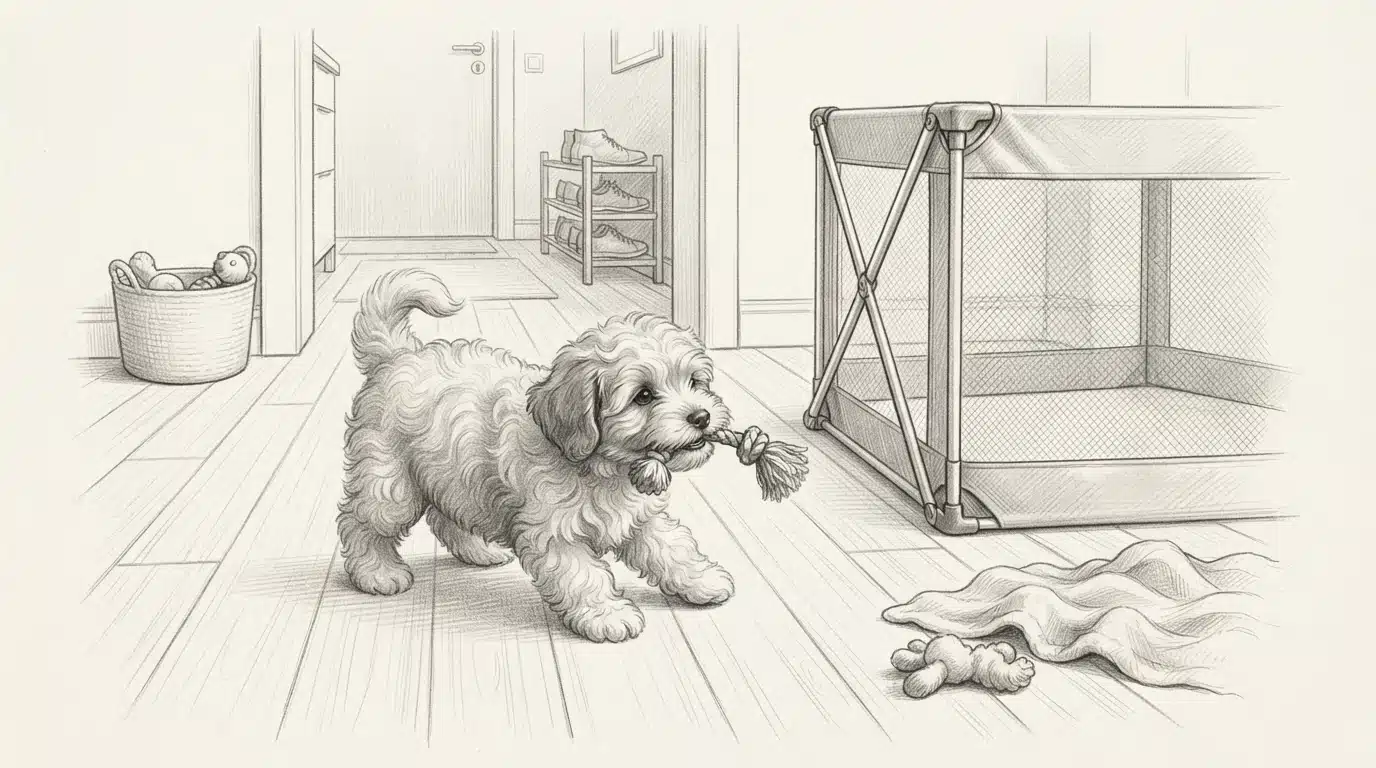
Physical walks are only half the job. These companion breeds were bred to stay close to people, so an understimulated dog often fills the quiet with barking your neighbors will hear. Rotate food puzzles, snuffle mats, and two or three short training sessions a day. Nose games behind the couch tire a puppy faster than another lap around the block. Building calm-alone time early matters more in a shared-wall building, which is why our small breed puppy apartment checklist focuses on noise and training together. A tired brain keeps both breeds quiet between your work calls.
Noise Radius, Barking, and the Neighbor Below
Alarm Barking, Attention Barking, and Separation Distress
Both breeds can bark, but the reasons differ. Havanese tend toward alarm and attention barking: a door slam upstairs, a person in the hall, or you on a phone call. Havapoos usually inherit a softer Poodle voice, yet some lines are just as chatty, so individual temperament matters more than breed.
The real apartment risk is separation distress. Both breeds bond hard, and both can whine or howl shortly after you leave. Neighbors often hear it before you do, since many owners only learn about it after a complaint or an eviction warning. That pattern shows up constantly in owner reports of dogs barking “all day” once left alone. Short, graded alone-time practice starting in puppyhood does more for your shared walls than any breed choice. For breed-specific patterns, see our guide to Havanese barking, energy, and apartment living.
A Practical Shared-Wall Plan for Either Breed
Whichever puppy you choose, the plan looks the same:
- Reward quiet the moment it happens; ignore demand barking.
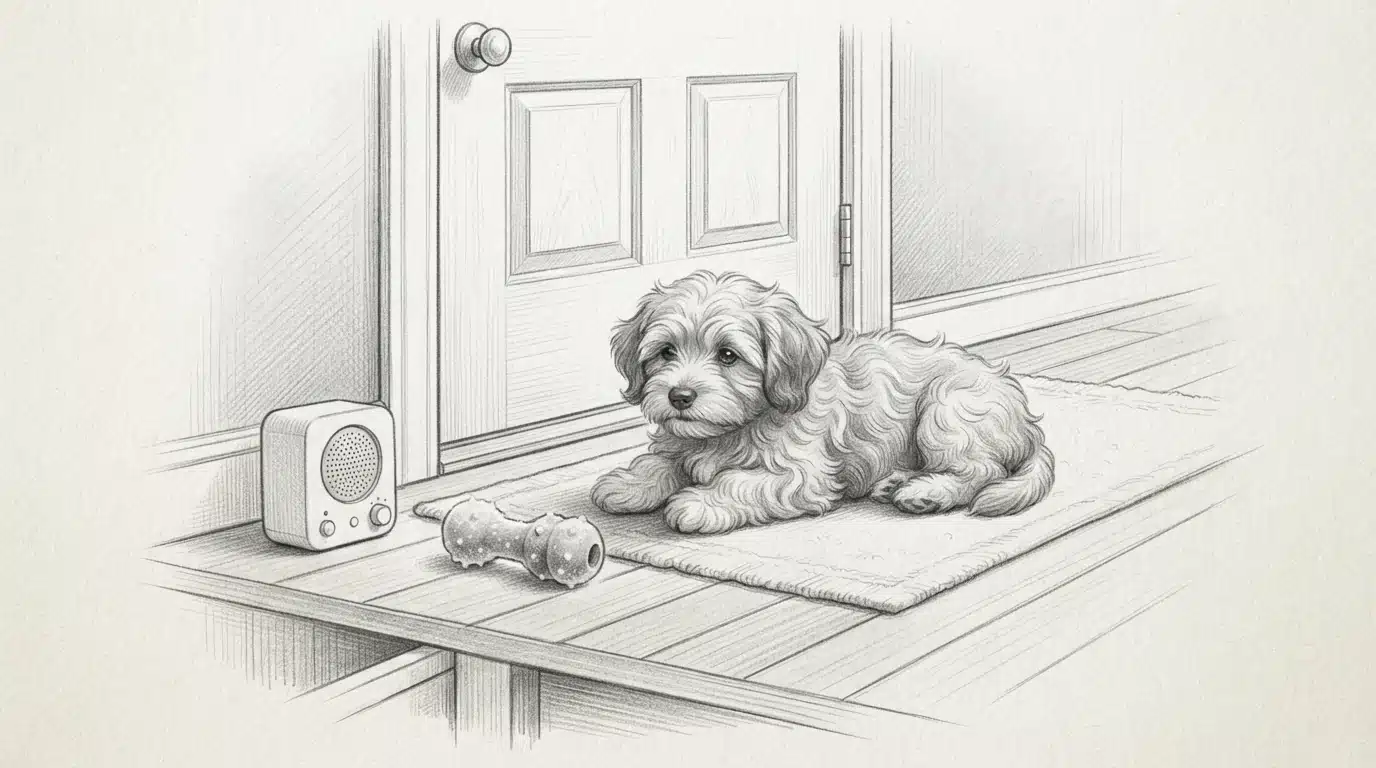
- Desensitize door and hallway sounds with low-volume recordings and treats.
- Build alone time in small steps, starting with one minute.
- Tire the brain before departures with a snuffle mat or frozen chew.
- Add a white-noise machine near the entry wall.
- Ask a neighbor to text you if they hear anything.
Coat Maintenance, Shedding, and the Indoor Footprint
Both coats sit low on shedding, but neither is maintenance-free. What changes between them is the brushing schedule and where that work happens: at a table, on the couch, or in a small apartment bathroom.
Brushing Time and Where You Do It
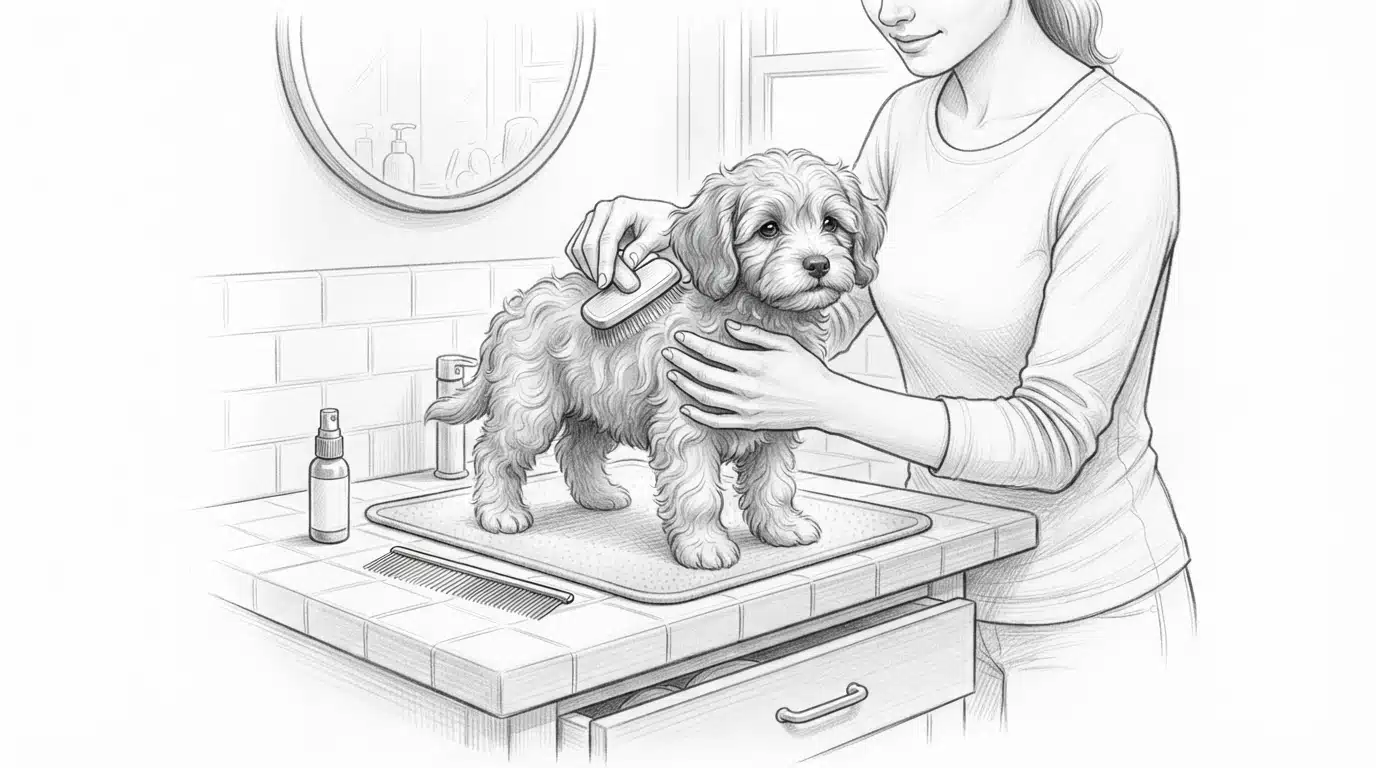
Plan on brushing either breed several times a week to prevent mats. A Havanese carries a long double coat, so many owners brush daily and book professional trims every six to eight weeks. A Havapoo often has a wavier, Poodle-influenced coat that mats a bit more slowly, though curls vary litter to litter. Grooming gear is small: one slicker brush, a metal comb, and a spray bottle fit in a closet drawer. If you want a routine walkthrough, our Havapoo grooming essentials page covers brushing, coat types, and trims step by step. Small homes work fine because the coat handles itself between sessions.
Shedding, Allergies, and What the Evidence Does Not Support
Neither breed blows coat seasonally, so fur on the couch stays minimal compared with a husky or lab. On allergies, the honest answer: no dog is truly hypoallergenic. The AAAAI notes pet allergy comes from dander and saliva, not fur alone, and reactions vary by individual dog. Some Havapoo and Havanese homes do well, others do not. Spend time with the specific puppy before you commit, and talk with your allergist if symptoms run in the family.
No breeder can promise an allergy-proof puppy. Treat “low-shedding” as accurate and “hypoallergenic” as marketing.
Hours Alone at Home and Apartment Separation Dynamics
Neither breed is a “leave-it-alone” dog. Havanese and Havapoo puppies both bond hard with their people, so the difference shows up less in the breed and more in how you build your absence routine.
Gradual Independence Is a Training Plan, Not a Breed Trait
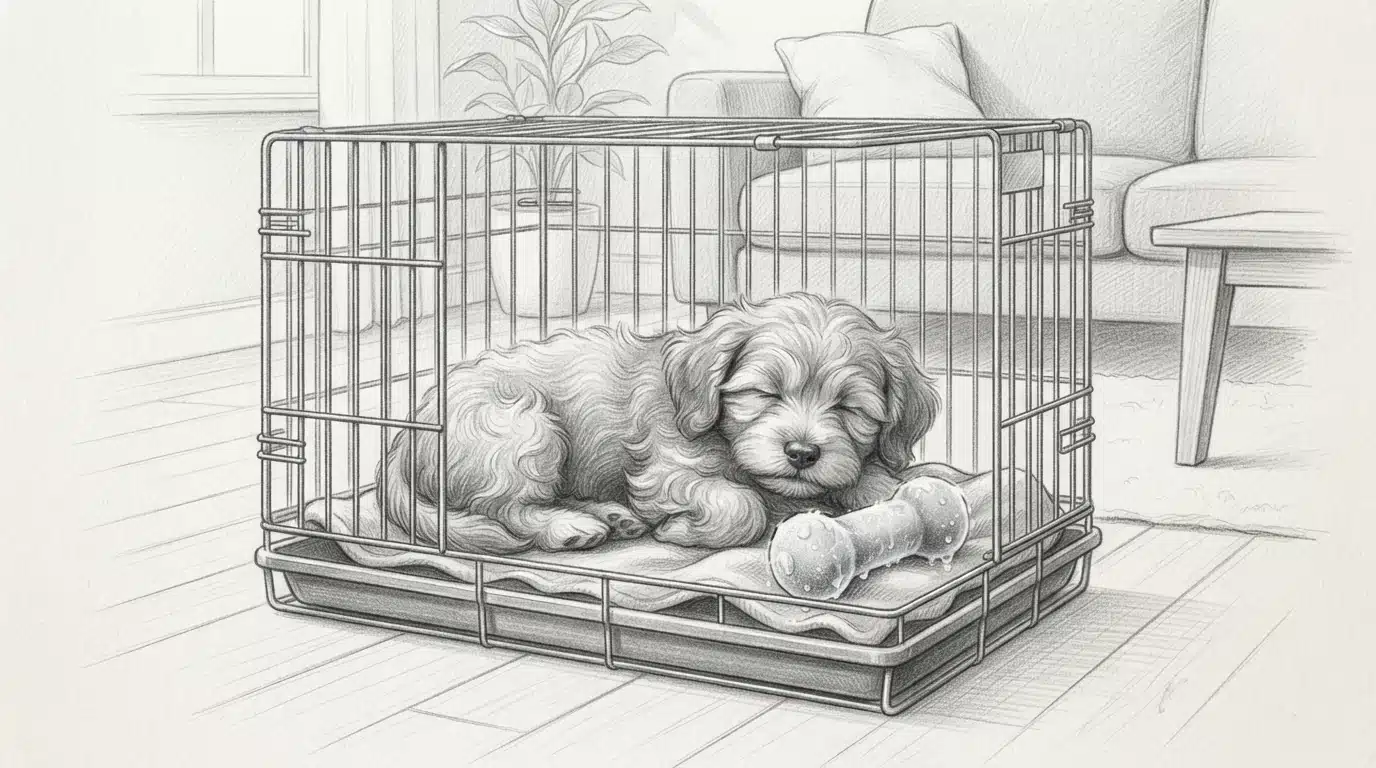
A Havapoo may inherit a slightly more easygoing Poodle streak, but no puppy arrives knowing how to be alone. Start with short separations of a few minutes in a pen or crate, then stretch them over weeks. Pair departures with a frozen chew toy so being alone predicts something good. Skip dramatic goodbyes; they feed the anxiety. Done right, this works for either breed in an apartment, where your neighbor hears the whining even if you don’t.
Matching Your Actual Workday, Not an Idealized One
Be honest about your schedule. An adult small companion dog can hold it for roughly four to six hours, but a young puppy needs a midday break for potty and play until about six months old. If your workday runs long, plan dog walkers, lunch visits, or doggy daycare before you choose a puppy, whichever breed you pick. Havanese apartment suitability depends far more on this plan than on breed stats, and a training-essentials routine helps you start it early.
Small-Breed Health, Vet Care, and Ongoing Apartment Costs
What Health Records to Request Before You Reserve
Before you pay a deposit, ask the breeder for three things:
- Puppy exam records: a licensed vet’s wellness exam, current vaccines, and deworming dates
- Parent clinical screening: OFA eye, hip, and patella results, shared openly in the public database
- DNA variant results: panel testing on both parents for breed-relevant conditions
For Havanese, the Havanese Club of America lists three required CHIC tests, including annual eye certification. CHIC certification means every parent-club-recommended test was done and the results are publicly searchable. Havapoo breeders follow no fixed standard, so written results matter more there. We explain exactly what to ask for in what health tests a puppy breeder should provide.
The Recurring Costs a Small Apartment Still Carries
A labeled budget example, one-time versus recurring:
- One-time: puppy purchase, crate, gate, first vet visit, spay or neuter
- Recurring: food, monthly parasite prevention, grooming every 4-8 weeks, dental cleanings, pet rent where it applies
Small breeds carry extra dental-care costs, and joints and teeth deserve early attention. For line-by-line numbers, see our small breed puppy year-one budget.
Which Should You Choose: Havapoo or Havanese for Apartment Living?
Both breeds fit a compact home. The difference comes down to what you can predict. A Havanese gives you a fixed template. A Havapoo gives you a mix that leans on its parents.
Choose a Havanese When Your Apartment Values Predictability
Pick the Havanese if you want numbers you can plan around. The AKC standard locks adult size at 7 to 13 pounds, so a crate, playpen, and carrier you buy today still fit in three years. Noise tolerance matters too. A well-bred Havanese is an alert dog, but training and a steady routine keep barking manageable in a shared-wall building. If you searched for the best apartment friendly Havanese, this is the case for it: known size, known coat, known exercise needs of roughly 30 minutes a day.
Choose a Havapoo When Your Schedule and Goals Favor It
Pick the Havapoo if you want a shorter coat option and accept some uncertainty. A Toy Poodle parent usually means an adult under 15 pounds with curlier, lower-shedding fur. That often means less fur on your sofa, though grooming still runs every 4 to 8 weeks. Ask the breeder about both parents, since a Miniature Poodle parent can push the adult size and height up. If a first-round match matters, some programs, including Sage Puppies, help families match temperament to their building and schedule.
When Neither Breed Fits the Apartment Yet
Wait before you adopt if nobody is home most of the day. Both breeds bond hard and can struggle with long hours alone. If your building bans dogs, has strict weight limits under 7 pounds, or you cannot commit to daily walks and grooming, neither breed will thrive yet.

Still torn between the two? Both breeds fit a small apartment beautifully when the match fits your routine. The team at Sage Puppies raises the best apartment friendly Havanese and Havapoo lines in South Jordan, Utah, with honest matching and nationwide delivery. Start your application today.
Frequently Asked Questions
Q1: Are Havapoo or Havanese puppies better for small apartments?
The Havanese is more predictable: the AKC standard fixes adult size at 7-13 pounds. Pick a Havapoo if an adult is home often and you value trainability over fixed size.
Q2: Which Havapoo or Havanese puppy is better for a small living space?
Neither wins on space alone. Noise tolerance, hours alone, and grooming decide it, so match the puppy’s temperament to your building and workday.
Q3: Are Havapoo puppies good apartment dogs?
Yes. With a Toy Poodle parent they usually stay under 15 pounds and train quickly. Because no breed standard exists, ask which Poodle type was used before reserving.
Q4: Do either breed shed a lot in an apartment?
Shedding stays minimal for both. The real work is brushing several times a week to prevent mats, plus professional trims every four to eight weeks.
Q5: Can either breed be left alone while I work?
Not for long stretches. Adults manage roughly four to six hours; young puppies need a midday potty break until about six months old. Plan walkers or daycare.
Q6: Which breed costs more to keep?
Havapoo grooming often runs more often because coats vary. Both carry small-breed dental costs and monthly prevention, so budget for recurring care either way.
Conclusion
The Havapoo vs Havanese apartment decision comes down to predictability. The Havanese offers a fixed AKC size range of 7 to 13 pounds and roughly 30 minutes of daily activity, which makes Havanese apartment suitability easier to plan. The Havapoo brings trainability and lower-shedding coats, but adult size depends on the Toy or Miniature Poodle parent. Both breeds fit a small space, and both need alone-time training, brushing several times a week, and small-breed dental care. Ask for vet exams, parent screening, and DNA results before you reserve. Size rarely decides it; your schedule and building do.