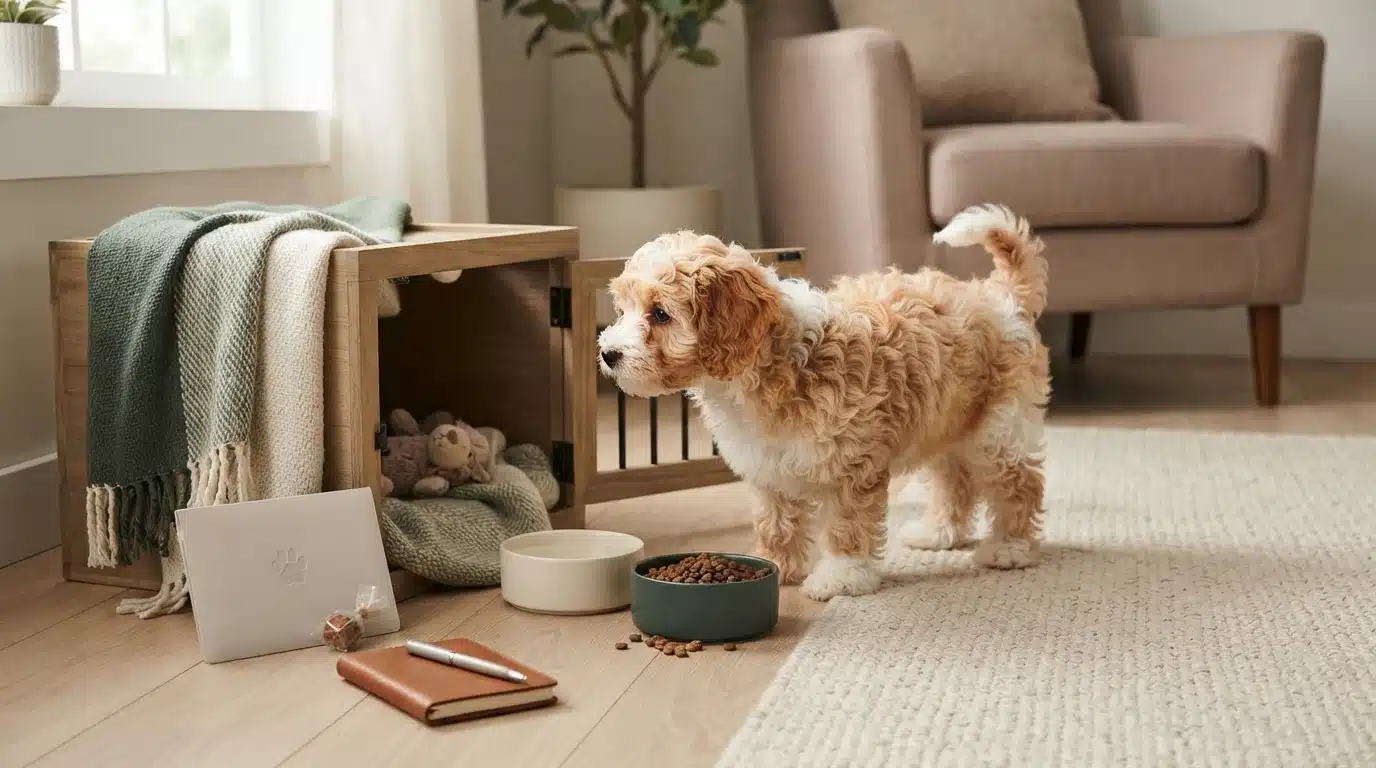
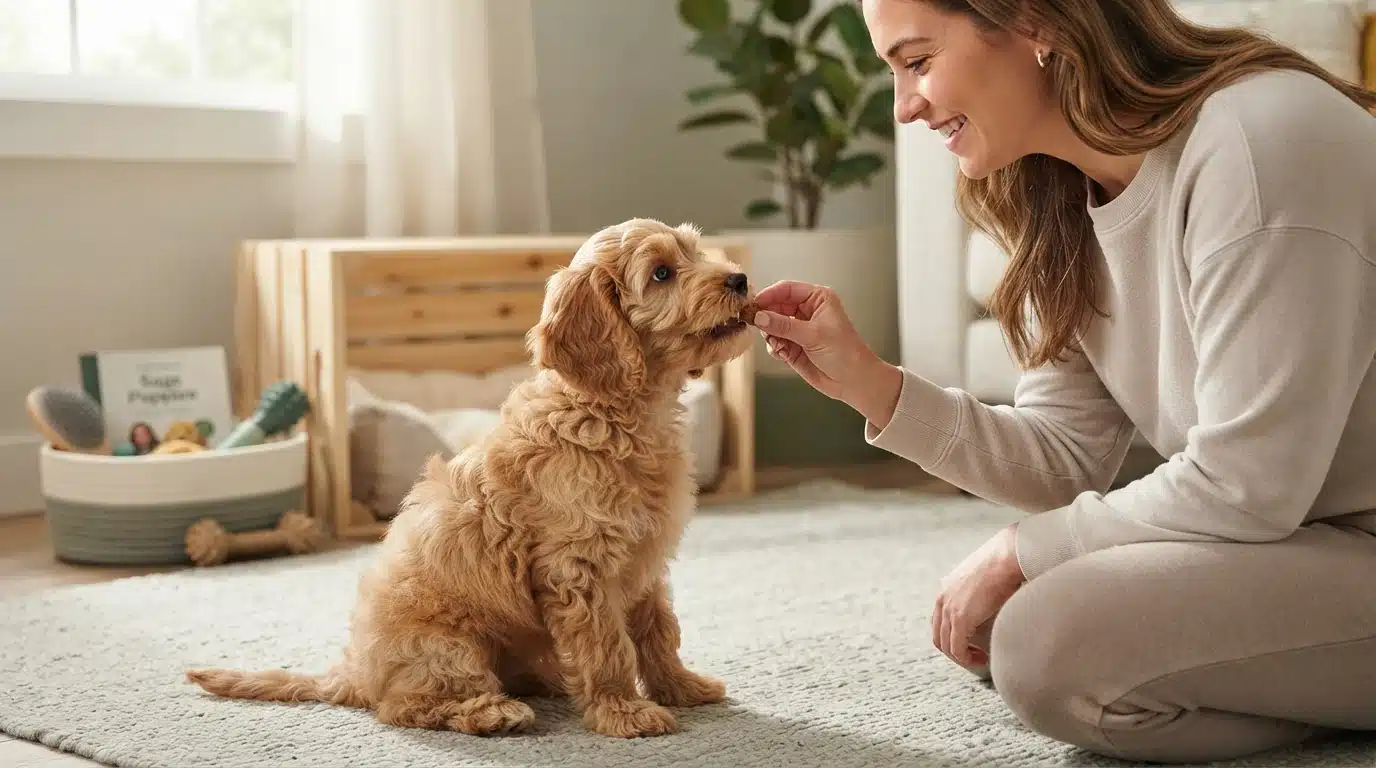
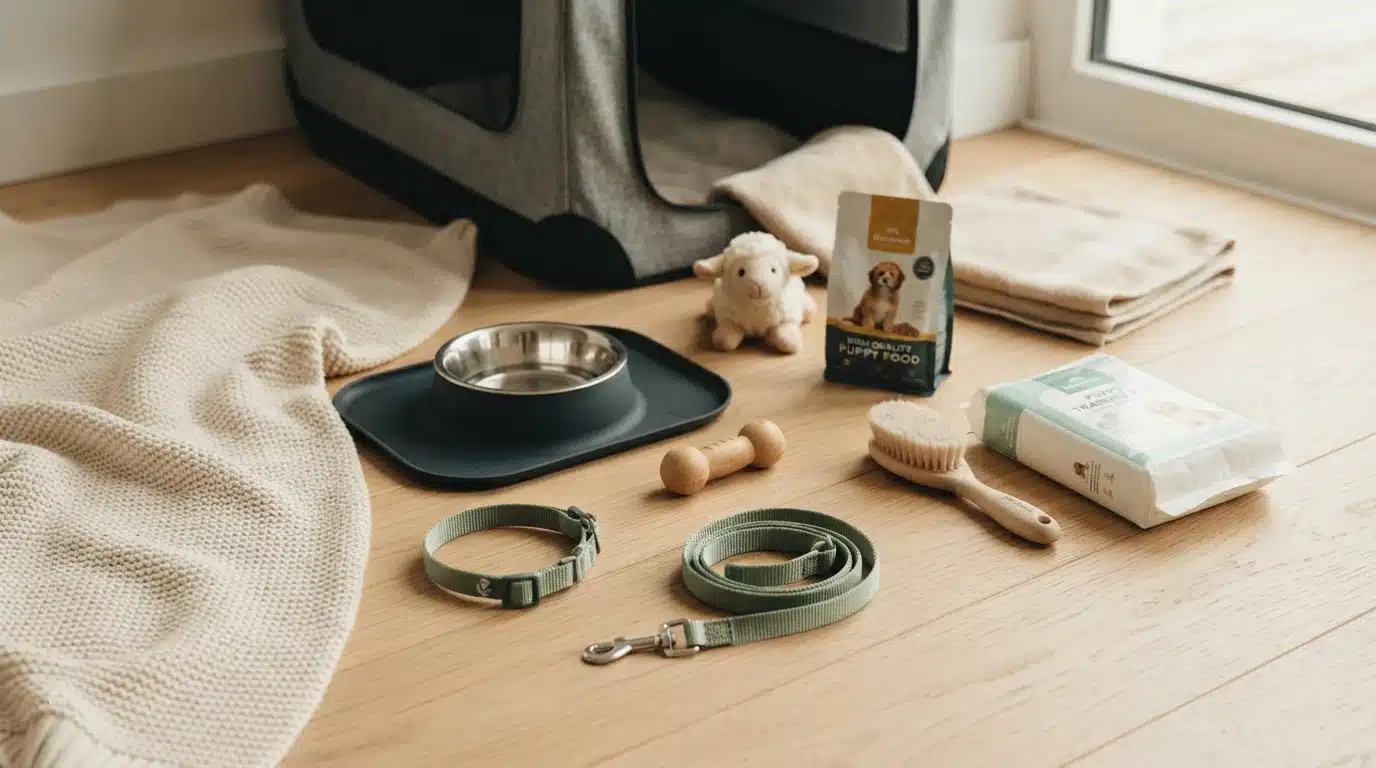
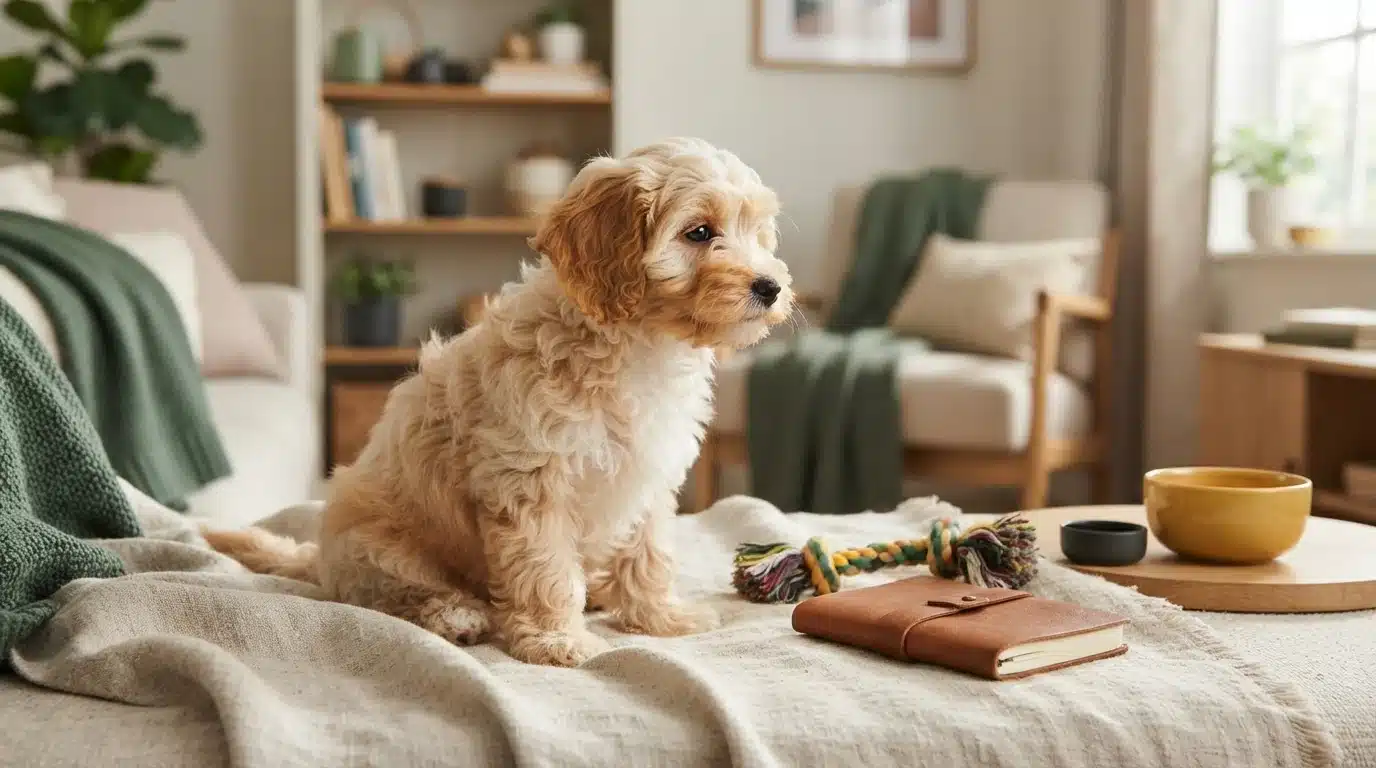
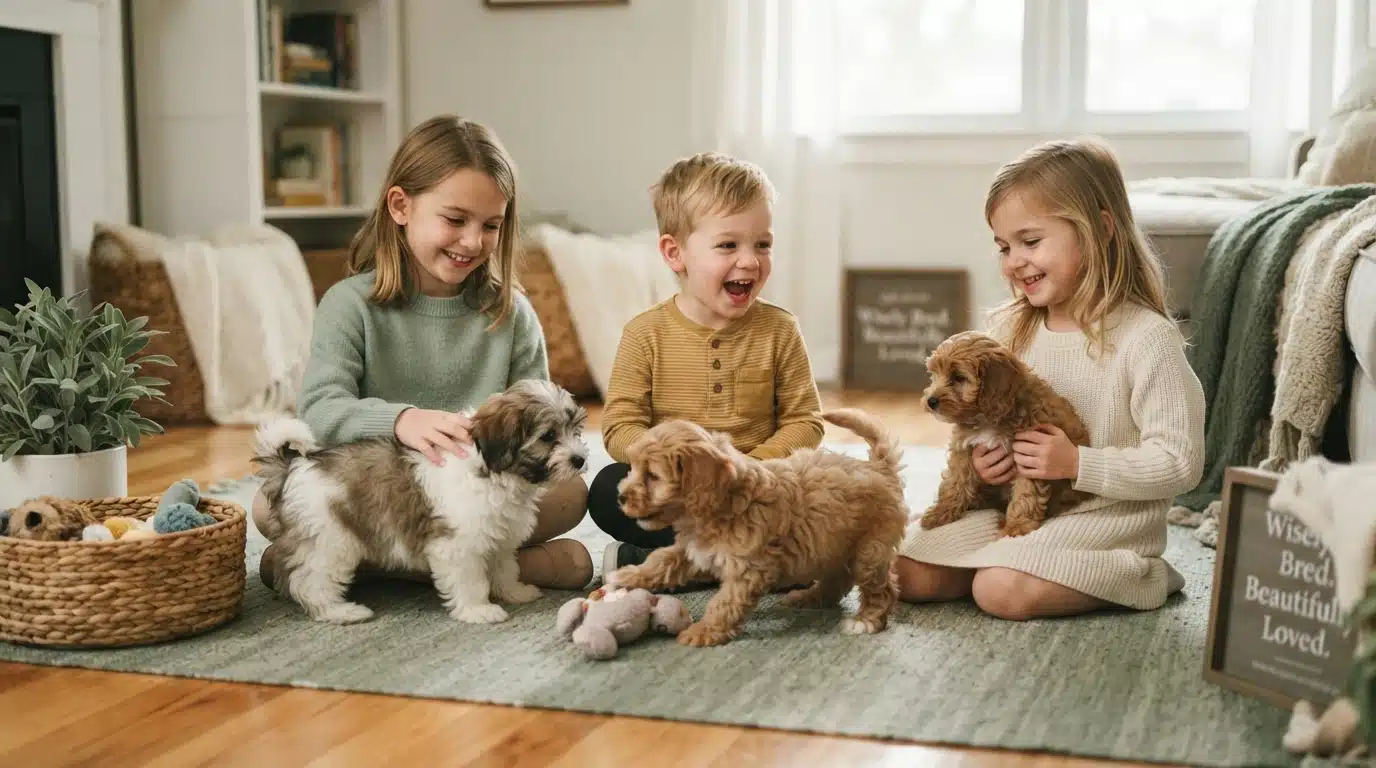
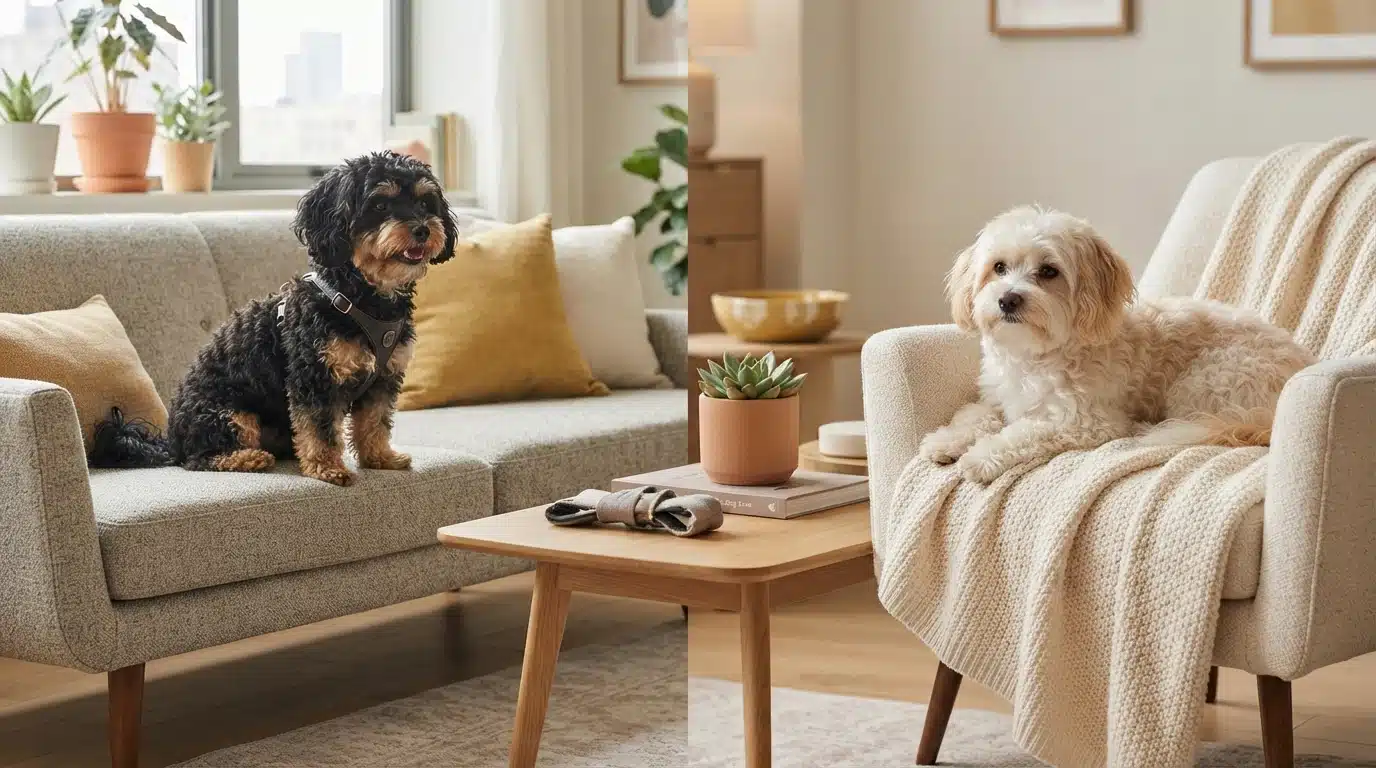
Quick Summary: Choose a Havanese, Havapoo, or Cavapoo based on your actual schedule, household noise, energy, and grooming time, not just the puppy’s appearance. Havanese suit quieter homes with lighter exercise needs, Havapoos suit playful energy, and Cavapoos suit steady family routines, but all three need company, daily walks, brushing several times a week, and regular professional grooming. Sage Puppies also recommends planning house training and midday care before pickup and asking for written health testing and parent health records.
Two families can fall for the same puppy photo and end up with completely different years. One house sits quiet all afternoon, while the other stays loud until nine at night. The photo does not care about your schedule. Your small breed puppy will, and its lifestyle fit shows up in barking, house training, and grooming routines long after pickup day. That is the challenge this guide solves: choosing between a Havanese, Havapoo, or Cavapoo based on how your household actually lives, not how a listing looks. You will get a simple decision path for first-time dog owners, honest notes on space, energy, apartment friendliness, shedding, and coat care, plus what health testing and paperwork should come with a well-bred puppy. It draws on documented experience from Sage Puppies in South Jordan, Utah, so the advice ends in a real next step, from application to nationwide delivery.
Start With Your Real Week, Not the Puppy You Saw Online
A puppy photo can’t tell you how your small breed puppy lifestyle will actually run on a Tuesday. Your real week can. Before you compare Havanese, Havapoo, and Cavapoo, write down what a normal day looks like: when you leave, who comes home, and how much noise your place carries. That short list will decide more than any breed chart.
The Five Questions That Decide Most of It
Answer these before you look at a single litter:
- How many hours is someone home each day?
- How loud is your home? Kids, roommates, thin apartment walls?
- How much time can you give grooming and coat care?
- How many minutes a day can you walk and train?
- What happens on the days that don’t go to plan?
A first-time dog owner who answers these honestly often finds one breed clearly fits and two don’t. That’s the point. Havanese, Havapoo, and Cavapoo are all companion dogs, so the differences come down to coat, energy, and how much alone time they tolerate, not temperament extremes. If you live in an apartment, it helps to plan for noise and training habits early.
How Many Hours Is Someone Home
Puppies under four months need a bathroom break every few hours, so an eight-hour empty house is the biggest hurdle to name out loud. If everyone works away, you’ll need a midday visitor, a dog walker, or a neighbor on standby during house training. Havanese bond hard with their people and do best where company is regular. Havapoos and Cavapoos tend to flex a bit more, but no small breed puppy enjoys ten-hour days alone. Build the schedule first, then pick the puppy.
Quiet Home or Busy Home
A Havanese in a calm adult home often settles into a soft, watchful routine. The same puppy in a house with three kids may stay wired, which some families love and others find loud. Havapoos and Cavapoos usually absorb busy-household energy well, though each puppy leans toward one parent breed. Match the puppy’s pace to your household’s pace, not the other way around.
Match Your Space: Apartments, Stairs, and Yards
So, are small breed puppies good for apartments? Yes. Havanese, Havapoos, and Cavapoos are small enough for tight quarters, quiet enough for shared walls, and adaptable enough to thrive indoors. Apartment success depends less on square footage and more on your plan for potty breaks, barking, and stair time. Before move-in day, you need three things sorted:
- A potty routine with exits you can reach fast
- Sound training so barking stays manageable
- Puppy-proofed floors, since small spaces magnify clutter
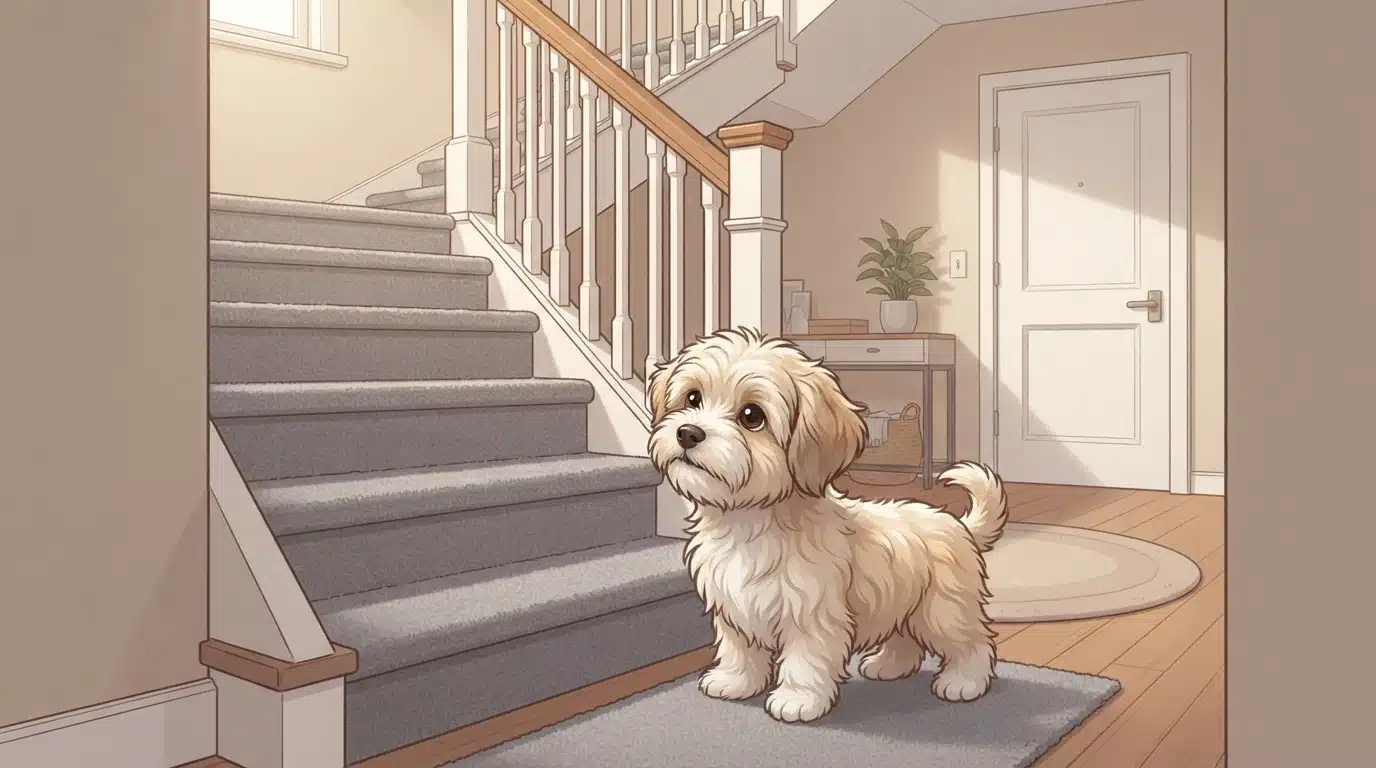
What Apartment Living Actually Looks Like With a Puppy
Expect trips outside every two to three hours at first, because young puppies cannot hold their bladder long. The AKC recommends working potty breaks around a set schedule and using short crate breaks between outings when you live in an apartment. Noise matters too. Whining at 2 a.m. travels through thin walls fast, so crate training and calm goodbyes protect your lease as much as your sleep. For a room-by-room setup, the small breed puppy apartment checklist covers noise control and training step by step. This is the core of a small breed puppy lifestyle in a smaller home: routine beats space.
Stairs, Hallways, and Very Small Puppies
Stairs look harmless to adults and loom large over a puppy that weighs four pounds. Keep young puppies off long flights until their joints mature, and carry them up and down in the meantime. Tile hallways get slippery, so add a short run of rug for traction. Elevators are fine with practice, but start with quiet times of day so the ride stays calm.
Yards Do Not Replace Walks
A fenced yard feels like a huge win, yet it changes less than you think. Puppies still need leashed walks to learn leash manners, meet new people, and hear traffic sounds, and the AKC’s apartment potty training guide applies to houses too. Dogs left alone in a yard miss the socialization window. Fifteen minutes of sniffing on a sidewalk teaches more than an hour of solo yard time, so treat your yard as a bonus, not the main event.
Energy Match: Companion Dog or Walk Partner
Small breed puppies rarely need marathon runs, but they do need movement every day. Most adult small breeds do well with 30 to 60 minutes of activity, split into short sessions, while puppies do better with less. Match the daily total to your own pace and your days feel easier.
How much exercise does a small breed puppy need each day?
- Havanese tendency: 20 to 30 minutes of gentle play and short walks
- Havapoo tendency: 30 to 45 minutes, plus a game or training session
- Cavapoo tendency: 30 to 60 minutes, often happiest with two walks
- Example schedule: a 15-minute morning walk, 10 minutes of fetch at lunch, and a short evening stroll covers most days
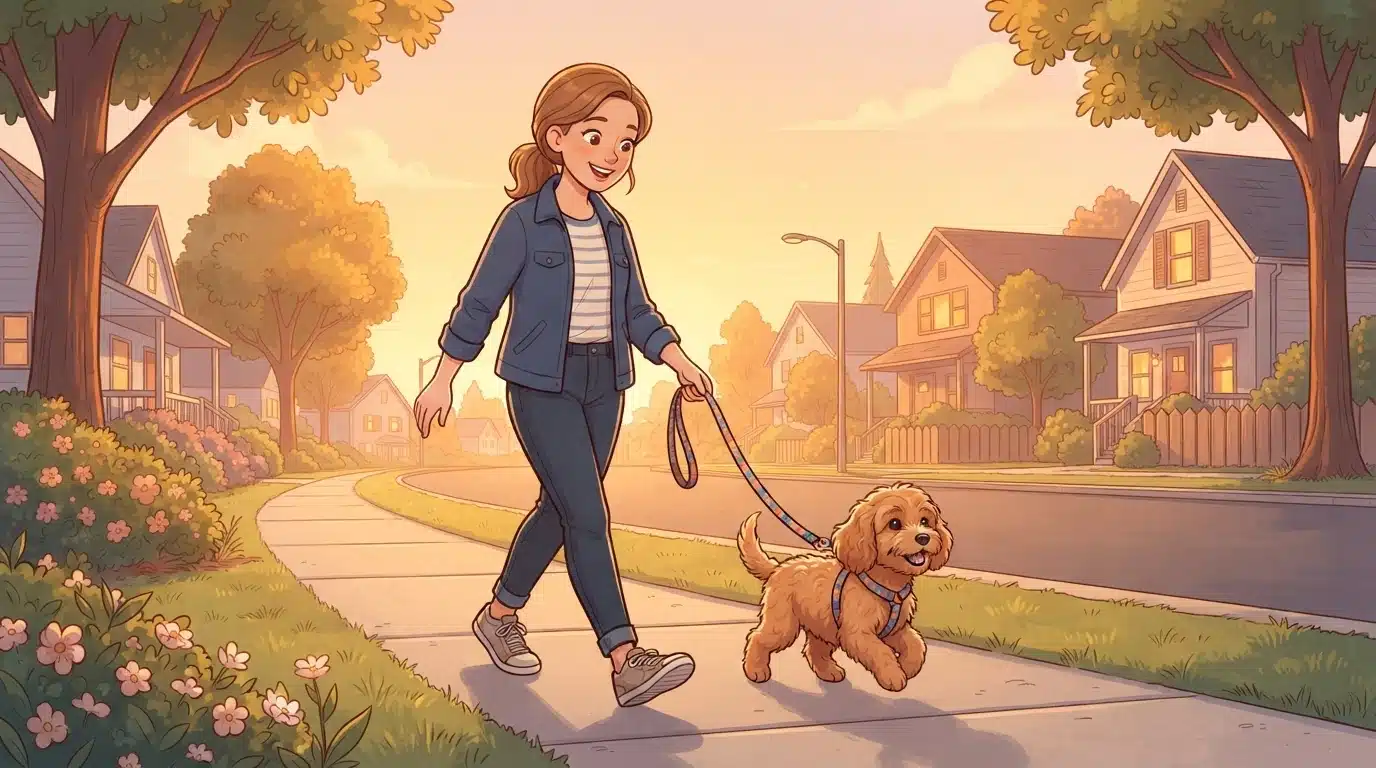
Turning Energy Into Daily Minutes
A common rule of thumb is five minutes of structured exercise per month of age, up to twice a day. So a three-month-old puppy handles about 15 minutes per session. Because growth plates are still forming, long runs and stairs matter less than frequency. The AKC notes most puppies do better with several short walks and play sessions spread through the day than one long workout. If you live in an apartment, planning potty breaks and activity together keeps the routine simple.
Mental Enrichment Counts as Exercise
Ten minutes of sniffing, puzzle toys, or training can tire a small puppy as much as a walk. These three breeds were developed as companions, so their brains want work, not just miles. Rotate a snuffle mat, hide treats around a room, or practice five-minute sits and names. For renters, a few of these ideas pair naturally with a small breed puppy apartment checklist for noise and training, since a tired mind barks less.
Havanese, Havapoo, and Cavapoo Tendencies
Havanese usually settle into cheerful couch-companion mode after play, which suits quieter homes. Havapoos often carry a bit more sparkle and enjoy games. Cavapoos tend toward steady, easygoing energy and love routine walks. Individual puppies vary, so watch your puppy rather than the breed chart.
Grooming Load, Coats, and the Allergy Question
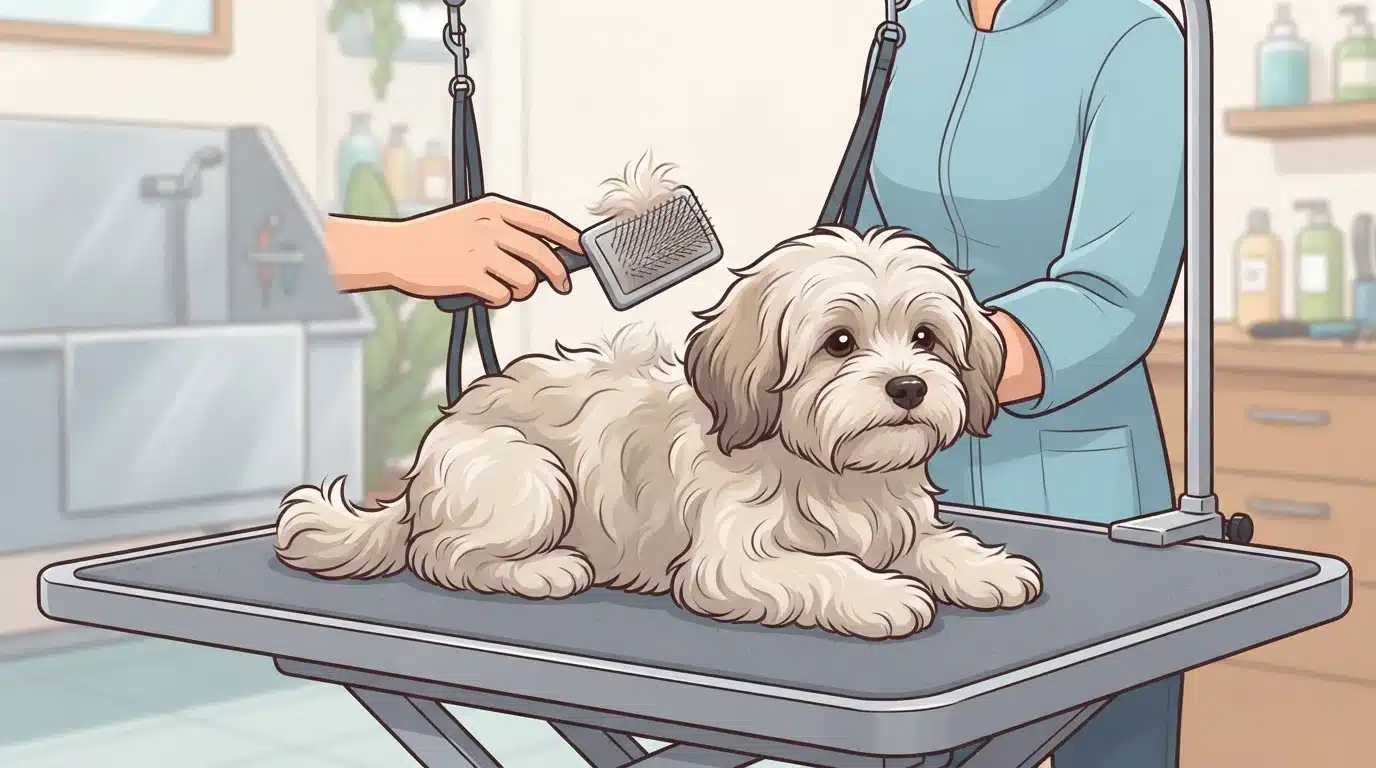
All three coats need real upkeep, but not the same kind. Havanese need brushing about four times a week, a trim every 6 to 8 weeks, and nail trims every 2 to 3 weeks. Havapoos and Cavapoos need brushing three or four times a week to stop mats behind the ears and under the legs, plus a full groom every 8 to 10 weeks. Plan 15 to 20 minutes per session.
| Breed | Brushing | Full Groom |
|---|---|---|
| Havanese | 4x per week | Every 6 to 8 weeks |
| Havapoo | 3 to 4x per week | Every 8 to 10 weeks |
| Cavapoo | 3 to 4x per week | Every 8 to 10 weeks |
What the Coat Actually Requires Week to Week
Start brushing the day your puppy comes home, even if the coat looks easy. Ten minutes with a slicker brush and a metal comb covers the ears, armpits, and tail, where mats form first. Run the comb down to the skin. If it stops, there is a tangle hiding there. Short, frequent sessions beat one long fight on Saturday, and treats keep it pleasant.
Low-Shedding Is Not Allergy-Free
Havanese, Havapoos, and Cavapoos shed very little, which is why allergy-sensitive families often choose them. But no dog is truly hypoallergenic. Most reactions come from dander and saliva, not hair. If someone in your home has allergies, spend an hour with the breed before you commit, and wash hands after early cuddles.
Budgeting for Ongoing Care
Professional grooms run roughly $60 to $100 for a small breed, so figure $400 to $700 per year, every year. Add a slicker brush, a comb, nail clippers, and puppy shampoo at the start. Skipping grooms to save money usually ends in a shaved dog and stressed one, so set the budget before pickup. If you live in an apartment, grooming sessions double as quiet bonding time that pairs well with the routine in the apartment checklist.
Kids, Other Pets, and How Much Barking You Can Live With
Homes With Young Children
All three breeds score well for families because they are small, sturdy enough to bounce back from clumsy handling, and eager to be part of the group. The AKC rates the Havanese highly for patience with children, and the Cavapoo’s gentle reputation makes it a common first pick for families with kids. Puppies under four months still need calm, supervised introductions.
Teach children to sit on the floor and let the puppy come to them. A tired toddler rule and a tired puppy rule look surprisingly similar.

Homes That Already Have a Dog or Cat
Havanese, Havapoos, and Cavapoos were all bred for companionship, so most settle into multi-pet homes within a couple of weeks. The usual friction is energy mismatch, not aggression. A senior cat or an older dog may find a puppy relentless, so plan a separate puppy zone with its own crate, water, and toys. Feed pets apart at first, keep early meetings short, and reward calm behavior from both sides. Good puppy socialization during the first month prevents most territorial squabbles later.
Barking, Alertness, and Your Neighbors
Havanese were once watchdogs in Cuba, so they tend to announce strangers with a sharp alert bark. Havapoos and Cavapoos usually inherit the poodle’s quieter streak, though any puppy left bored or crated too long will make noise. In an apartment, neighbor tolerance matters more than breed averages, so the real question is how much training time you can give in the first three months.
Which Small Breed Puppies Suit First-Time Owners
Havanese, Havapoo, and Cavapoo puppies suit first-time owners best because all three are small, people-focused, quick to train, and low shedding. Their needs differ in exercise and coat care, so the right pick depends on your schedule and space.
Here’s why these three come up so often for new owners:
- Havanese: gentle play of 20 to 30 minutes daily and a cuddly, adaptable nature
- Havapoo: moderate energy at 30 to 45 minutes, eager to please and easy to motivate
- Cavapoo: 30 to 60 minutes spread over two walks, soft-tempered and family friendly
All three are companion breeds, so they want to be with you. That makes house training and socialization easier, but it also means none of them belong alone all day.
Each breed trades a little grooming effort for that easy temperament. Brushing several times a week and a professional trim every 8 to 10 weeks keeps their coats healthy.
When a First-Time Owner Should Think Twice
Pause before choosing any of these breeds if your household is gone for long stretches, since all three bond closely with people. Also reconsider if no one can commit to regular brushing, because a skipped coat turns matted fast. First-time owners working full days should plan a midday break or dog-walker backup before picking up a puppy. These dogs thrive on attention, so an absent household can lead to separation stress.
The Skills a First-Time Owner Actually Needs
You don’t need prior dog experience, but three basics matter most: a consistent house training schedule, early puppy socialization, and patience with grooming routines. Learning to read your puppy’s signals helps too. Small breeds respond best to short, upbeat training sessions rather than long drills.
Common Mistakes to Avoid
Before you bring a puppy home, check five things most families get wrong:
- Choosing on looks alone. Coat and size matter less than temperament and energy.
- Skipping health testing and paperwork. Ask for parent health records in writing.
- Underestimating grooming time. Three to four brushing sessions weekly, plus regular trims.
- Underestimating alone time. Puppies need company and a plan, not long empty days.
- Rushing the first week. Set a house training and socialization routine before pickup.
If looks pulled you in, match temperament and energy first with this puppy temperament and size guide.

Ready to meet your match? Browse the current Havanese, Havapoo, and Cavapoo puppies at Sage Puppies, then fill out the short application to start owner-managed matching. Pickup in South Jordan, Utah, or delivery anywhere in the country.
Frequently Asked Questions
Q1: Which small breed puppies suit first-time owners?
Havanese, Havapoo, and Cavapoo all suit beginners because they are small, people-focused, and low shedding. Pick by your schedule: Havanese for quieter homes, Havapoo for playful energy, Cavapoo for steady family routines.
Q2: Can a small breed puppy live happily in an apartment?
Yes. Success depends on potty trips every two to three hours, barking training, and daily walks, not square footage.
Q3: How much grooming does a Havapoo or Cavapoo need?
Brush three or four times weekly and book a professional groom every 8 to 10 weeks, about $60 to $100 per visit.
Q4: Are these breeds truly hypoallergenic?
No. They shed very little, but reactions come from dander and saliva, so spend time with the breed first if allergies exist.
Q5: Can they be left alone while I work?
Not for ten-hour days. Plan a midday visitor, dog walker, or neighbor help during house training.
Q6: How much daily exercise do they need?
Havanese need 20 to 30 gentle minutes; Havapoos and Cavapoos need 30 to 60, split into short sessions.
Q7: Are they good with kids and other pets?
Yes, all three adapt well within a couple of weeks. Use short supervised introductions and a separate puppy zone at first.
Conclusion
Matching a small breed puppy to your lifestyle comes down to your real week, not a photo. Pick Havanese for quieter homes and lighter exercise, Havapoo for playful energy, or Cavapoo for steady family routines. All three are apartment friendly, low shedding but not allergy-free, and they need daily brushing time plus a groom every 8 to 10 weeks. Check your schedule for alone hours, confirm health testing and paperwork, and set a house training plan before pickup. When lifestyle fit leads the decision, first-time dog owners end up with a companion that suits their space for years, not just for the first adorable month.