
Quick Summary: When buying small puppies, ask breeders for health testing results, socialization routines, and clear contracts before making a commitment. Focus on how puppies are raised, their temperament, and the breeder’s transparency to avoid red flags. Proper questions and careful review help ensure a healthy, well-matched puppy and smooth transition home.
If you are searching for small puppy breeders near me in South Jordan, Utah, or anywhere in the U.S., ask this first: can you show me health testing, socialization details, and the contract before I reserve? That one question tells you more than puppy photos ever will.
Most families get stuck sorting through cute listings, mixed promises, and unclear pickup or delivery details. The real issue is simple – how do you tell a careful breeder from a risky one?
This guide gives you a clear set of questions to ask small puppy breeders near me, what answers matter, and what red flags should stop you. We focus on the same screening points good breeders should welcome, especially for families comparing small puppy breeders near me with local pickup or nationwide delivery options.
1. Ask About Health Testing Before You Talk About Price
Price should be your second question, not your first. Start with the parents. Ask the breeder which health tests were done on the sire and dam, who performed them, and whether you can verify the results. The AKC notes that health testing should follow breed parent club recommendations, not a one-size-fits-all list, and that testing can include both DNA and physical exams like eye, hip, and heart checks based on breed guidance.
Use this short checklist:
- What exact tests were done on both parents?
- Can you show me the results, not just say “cleared”?
- Were the results posted publicly through OFA or CHIC?
- Which tests are recommended for this breed or mix’s parent breeds?
- What health issues have appeared in related dogs, if any?
If a breeder shifts the talk back to deposits, color, or pickup dates before answering health questions, slow down.
A reassuring answer sounds specific. You want real test names, real dates, and real paperwork. OFA tells buyers to ask to see health screening results and to be cautious if results cannot be verified through breeder screening questions.
Good signs include:
- The breeder names the tests without hesitation.
- They explain why those tests matter for that breed.
- They share parent names so you can match records.
- They admit limits honestly. Testing lowers risk, but does not promise a perfect puppy.
A weak answer usually sounds like this:
- “Our vet checked them.”
- “They’ve never had problems.”
- “We don’t need that for small dogs.”
- “The line is healthy.”
That is not enough.
This matters even more for small companion breeds because buyers often focus on size, face, and coat first. Small breeds can still have inherited issues involving knees, eyes, hips, and hearts, depending on breed background. For example, AKC’s toy group list includes patella, eye, hip, and cardiac screening for several small breeds, including Havanese and Cavalier King Charles Spaniels. A careful program, like Sage Puppies aims to show, should be ready to walk qualified families through those records clearly.
Also Read: Small Puppies for Sale Near Me: How to Compare Listings
2. Ask How the Puppies Are Raised Day to Day
Daily life shapes a puppy fast. The AKC notes that a puppy’s first three months strongly affect future confidence and behavior, and good breeders start socialization before go-home day with gentle handling, safe home exposure, crates, sounds, and car rides according to AKC. So ask for the routine, not just cute photos.
Who handles the puppies and how often
Ask who touches, feeds, cleans, and plays with the puppies every day. You want a clear answer.
Good signs include:
- The breeder and family members handle them daily
- Puppies get calm, gentle contact more than once a day
- They are picked up, held, and checked in normal ways
- They stay around people, not apart in a back room
Ask:
- Who handles them most often?
- How do children interact with them?
- Are puppies used to nail trims, brushing, and being held still?
- What happens if a puppy seems shy?
A vague answer like “they’re very loved” is not enough. You want specific routines.
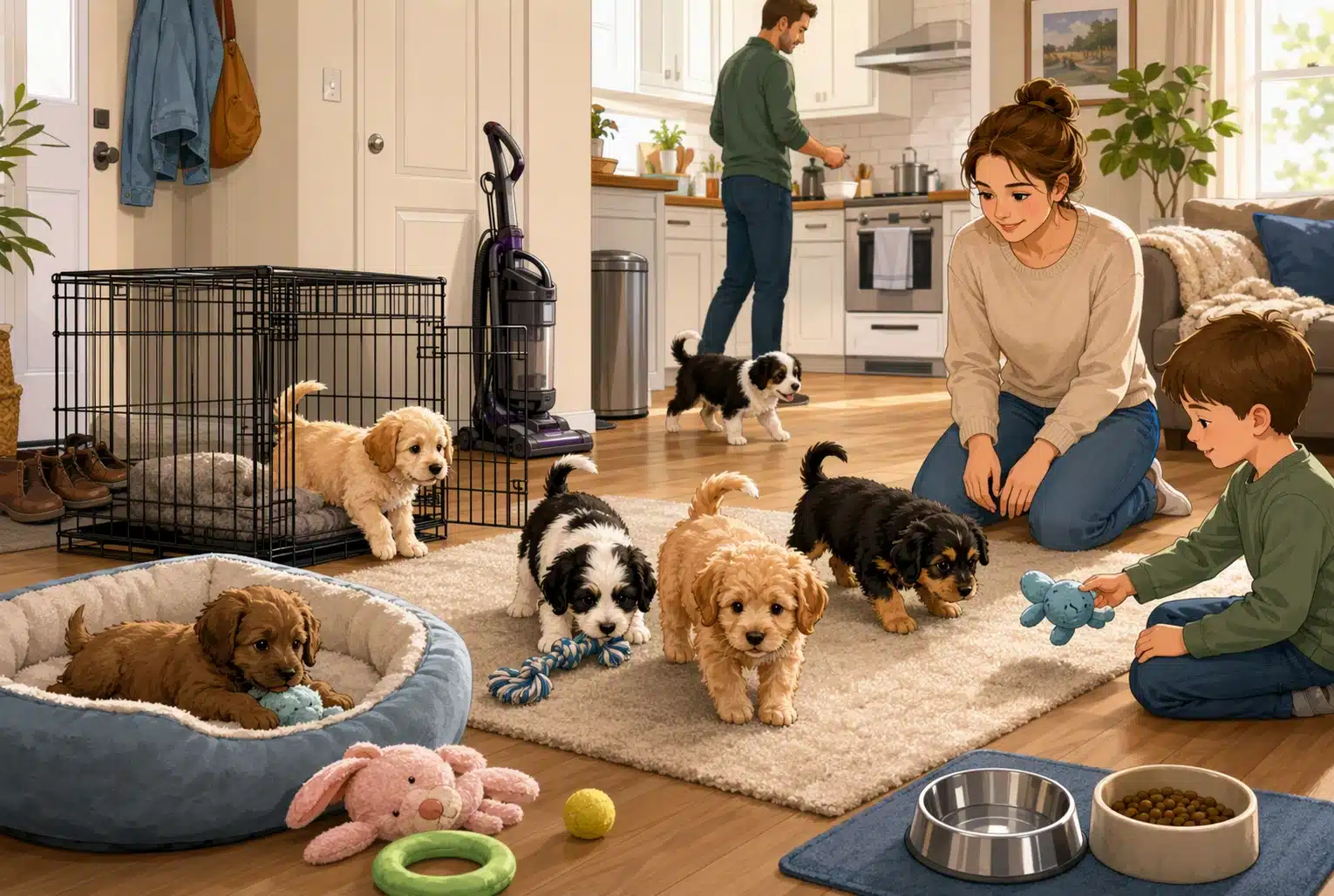
What the puppies are exposed to before go-home day
Ask what the puppies have already seen, heard, and practiced. The goal is safe, positive exposure, not stress. The AVMA review says exposure should begin by or before 3 weeks of age and continue with the owner, with puppies allowed to move at their own pace in this AVMA review.
| Area | Good early exposure |
|---|---|
| People | Adults, gentle children, different voices |
| Home life | Vacuum, TV, kitchen sounds, doors |
| Surfaces | Tile, rugs, grass, crate mats |
| Handling | Ears, feet, mouth, brushing, nail care |
| Transitions | Short crate time, car rides, brief alone time |
What you should observe on a visit or video call
Watch the puppies, not just the setup.
Look for:
- Clean bedding and fresh water
- Bright, curious puppies that recover quickly from small surprises
- Space to move, rest, and play
- Comfortable contact with the breeder
- Honest answers when you ask to see where they sleep and play
If you’re talking with a boutique program like Sage Puppies, ask for a live look at routine care, not only highlight clips.
3. Confirm Temperament, Size Expectations, and Breed Fit
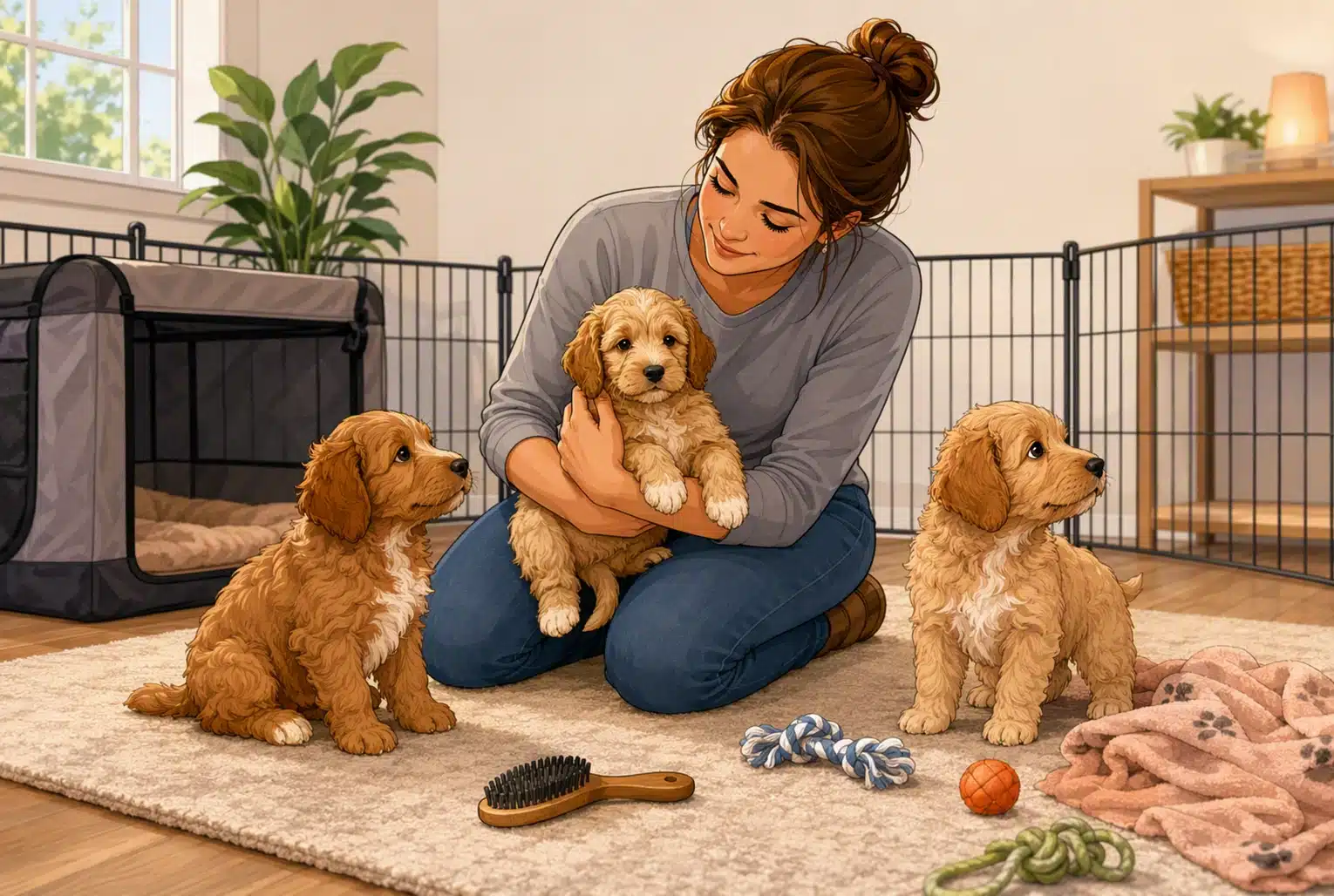
Ask about patterns, not one cute moment. A solid breeder should describe how the puppy acts across days, handling, noise, rest, and play. Cornell notes that early socialization matters, and AKC explains that puppy temperament tests are only a snapshot, not a promise of adult behavior according to Cornell and AKC’s temperament guidance.
Questions that reveal temperament patterns
- How does this puppy respond to new people after the first minute?
- What happens after a sudden sound – quick recovery or long fear?
- Does the puppy settle well after play?
- How does the puppy handle grooming, being held, and short crate time?
Look for answers with examples, not labels like “perfect” or “super calm.”
| Ask this | Good answer sounds like |
|---|---|
| Response to strangers | “Shy for 30 seconds, then seeks contact” |
| Recovery after surprise | “Startles, then re-engages fast” |
| Energy in the home | “Playful, then naps well” |
How to discuss size without guessing
Ask for the adult weights of both parents, past litter ranges, and the puppy’s current weight trend. That is far better than “should stay tiny.” For Havanese, Havapoo, and Cavapoo puppies, small differences in parent size can change adult size more than buyers expect.
- Ask whether the estimate is based on parent weights or just opinion.
- Ask if males and females in past litters finished differently.
- Ask what range is realistic, not the smallest possible number.
Why breed-fit questions matter more than impulse
Breed fit beats color, photos, and fast availability. A small companion puppy still needs the right home rhythm, grooming plan, and daily closeness. If your home is loud, busy, or gone all day, ask which puppy handles change best. At Sage Puppies, that kind of matching matters more than a quick sale.
Also Read: 10 Must-Ask Questions Before Buying a Puppy Locally
4. Review Vaccinations, Vet Care, and Go-Home Timing
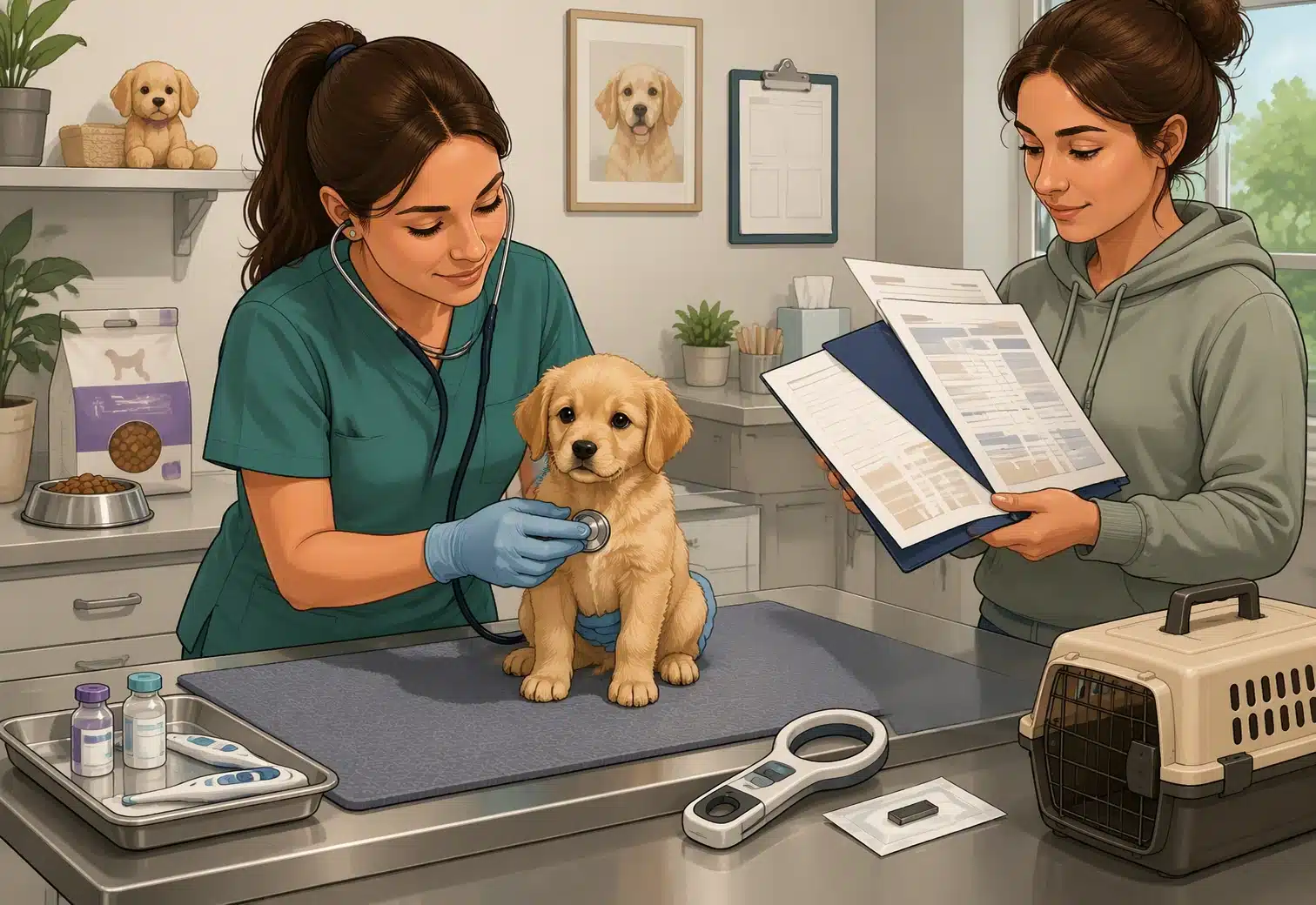
Ask for the health file before you send final payment. A solid breeder should show clear records, not vague promises. According to the AVMA vaccination guidance, puppies usually start vaccines at 6 to 8 weeks and finish the first series at 16 weeks or older, so your puppy will not be “done” before go-home.
What medical records should be available
- A dated vaccine record
- Deworming dates and products used
- Vet exam notes or a health check summary
- Any test results tied to the puppy’s care
- Microchip details, if already placed
- Feeding instructions and current routine
| Record | What to check | Red flag |
|---|---|---|
| Vaccine record | Dates, product names, next due date | No dates or handwritten guesses |
| Deworming log | Multiple dates, product listed | “Done” with no proof |
| Vet exam | Puppy-specific note | Generic form with no exam date |
If a breeder says records will come later, slow down.
Why eight to twelve weeks still matters
Eight weeks is still the baseline minimum for most puppies, and toy-size puppies are often better off staying longer. Cornell notes the ideal window is often 8 to 12 weeks, with extra time helping small, fragile puppies build confidence, learn bite control, and adjust through weaning and litter play during this key development period.
- 8 weeks can work for stable, well-started puppies.
- 10 to 12 weeks often fits smaller companion breeds better.
- Earlier than 8 weeks should raise concern.
How a clear handoff should feel
The handoff should feel calm and organized.
- You know the pickup or delivery date
- You get records before or at handoff
- You understand what the puppy ate and when
- You know the next vet visit should happen within a few days
- You have a direct contact for first-week questions
Good breeders do not rush the transition. They prepare you for it.
5. Read the Contract Before You Reserve
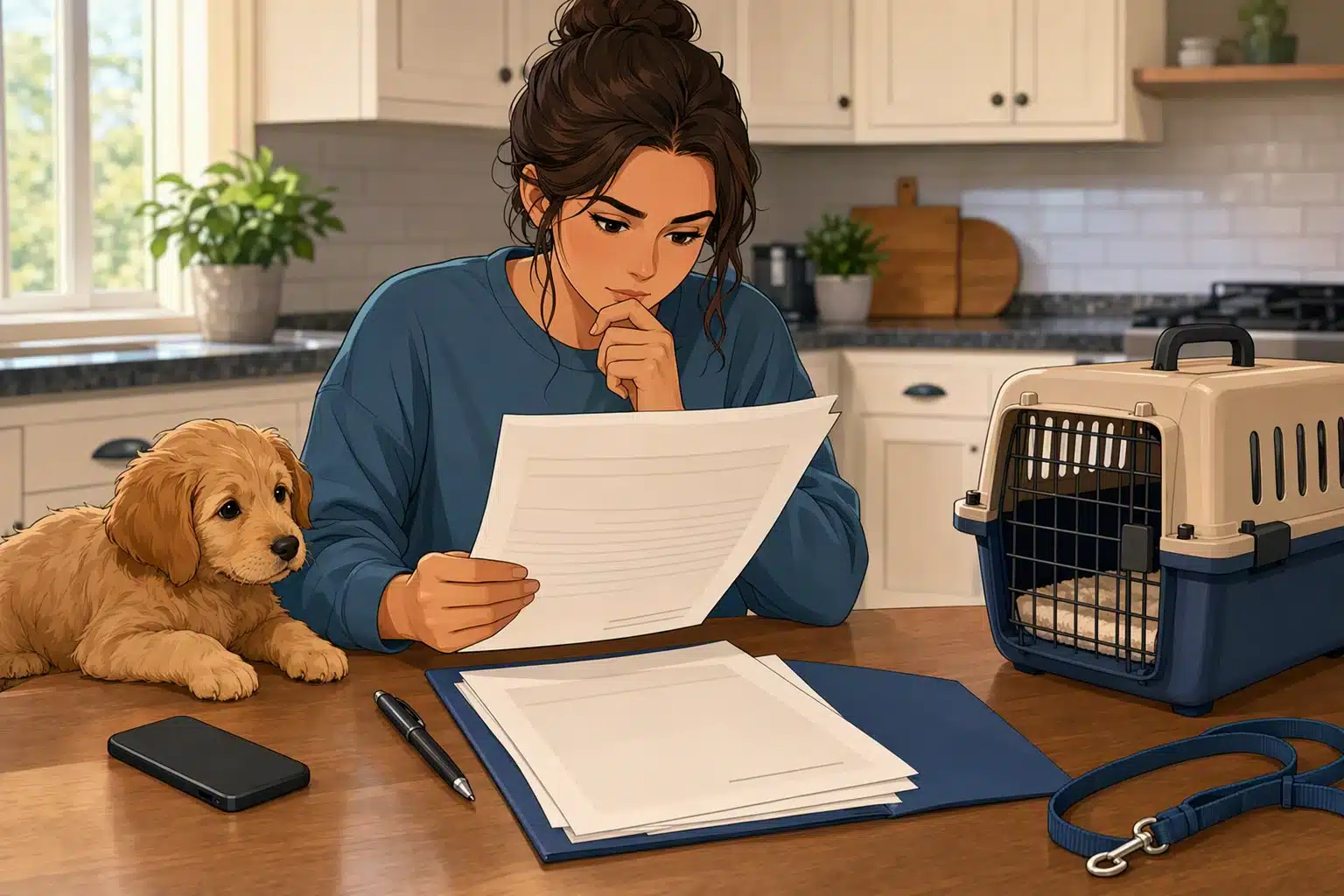
A good breeder should let you read the contract before you send a deposit. AKC notes that the contract should be available for review before you decide to buy, not sprung on you at the last minute in its puppy contract guidance.
The terms that should be clear in writing
Look for plain language on:
- Price and deposit terms
- What makes the puppy yours
- Pickup or delivery timing
- What records you receive
- Return or rehoming rules
- Refund, replacement, or credit terms
A quick check helps:
| Contract item | What should be clear |
|---|---|
| Puppy identity | Breed, sex, birth date, microchip or registration details |
| Payment | Total price, deposit amount, when it becomes nonrefundable |
| Health records | Vaccines, deworming, vet checks already done |
| Buyer duties | Vet exam window, care steps, spay-neuter if required |
If a breeder avoids specifics, pauses when you ask questions, or says “we’ll sort that out later,” slow down.
What a trustworthy guarantee sounds like
A solid guarantee is specific, not dramatic. AKC explains that reputable breeders cannot promise a puppy will never have a health issue, but they often spell out a short vet exam window and clear remedies if a serious problem appears in its breeder contract overview.
Good wording usually covers:
- A deadline for your first vet visit
- What condition qualifies
- What remedy applies
- What buyer care is required
Why contracts support better placements
Contracts protect the puppy first. They also help both sides know what happens if life changes. That matters for small companion breeds, where safe handoff, records, and return planning are part of a responsible match. Programs like Sage Puppies should be happy to walk you through the agreement before you reserve.
6. Pay Attention to the Questions the Breeder Asks You
A good breeder should interview you too. The AKC says responsible breeders should ask many questions and make sure puppies go to prepared homes before placement.
What a careful breeder wants to know
Watch for questions about your schedule, kids, other pets, yard, travel, grooming budget, and who will handle training. A careful breeder may also ask if you rent, whether your landlord allows dogs, and what you will do if life changes. Those are not “nosy” questions. They show the breeder is matching the puppy to the home, not just taking a deposit.
Why selective placement protects the puppy
Screening helps prevent fast, emotional purchases that fall apart later. The AKC notes that one of the best ways to place dogs in safe, loving homes is through responsible breeders who use a buyer screening process and follow up after the sale to support placement. That matters even more for small companion puppies, since they need close supervision, routine care, and a calm handoff plan.
If a breeder never asks about your lifestyle, your home, or your backup plan, slow down.
A simple sign you are dealing with the right breeder
The right breeder wants a long-term fit, not a rushed checkout. If they are willing to say “not yet” or “not this puppy,” that is usually a good sign.
Also Read: Puppy Care Blog & Resources | Sage Puppies
7. Know the Red Flags That Mean You Should Walk Away
Warning signs in the conversation
A bad seller usually pushes speed, not clarity. Walk away if they dodge simple questions, refuse to show health records, or keep changing details about age, parents, or pickup. If they say AKC papers or a USDA license prove quality, be careful. Those claims do not guarantee good care or healthy breeding, according to the ASPCA’s puppy seller guidance.
If the seller tries to rush a deposit before you review the contract, stop.
Warning signs in the environment
The biggest red flag is not seeing where the puppy lives. If the breeder wants to meet in a parking lot, says the home is “hard to find,” or will not let you meet the mother, assume there is a reason. Humane World for Animals warns buyers to see the premises themselves and not trust “family-raised” claims alone in its puppy buying advice. Also leave if puppies smell dirty, seem weak, or look shut down.
When to pause and ask for a second opinion
Pause if anything feels off but you cannot prove why. Send the contract and records to your vet, breeder-savvy friend, or spouse. A good breeder will respect careful buyers. A bad one will get annoyed fast. That reaction tells you a lot.

Ready to move from questions to real answers? Sage Puppies helps qualified families compare options with clear process details, health-tested parent focus, pickup or nationwide delivery, and small companion breeds raised at home. Review available puppies, pricing, and next steps before you decide.
Frequently Asked Questions
Q1: where to find small puppies near me
Start with breeders who show parent health testing, home-raised care, clear contracts, and pickup or delivery details. Ask for recent puppy photos, video calls, and references. Avoid sellers who rush payment, dodge questions, or cannot explain how puppies are raised.
Q2: What questions should I ask before I reserve?
Ask about parent temperament, health testing, vaccine schedule, socialization, feeding routine, size range, contract terms, and go-home support. You also want to know who raised the puppy, how handoff works, and what happens if timing changes.
Q3: Is local pickup safer than delivery?
Not always. Safe delivery can work well if the breeder explains travel steps, timing, and puppy care during transit. Local pickup gives you a direct handoff, but the bigger issue is breeder trust, not distance alone.
Q4: What are red flags in a puppy listing?
Low prices, vague breed details, stock photos, no parent info, no application, and pressure to send deposits fast. A good breeder screens families too. That shows they care where the puppy goes.
Q5: How do I compare small puppy breeders fairly?
Use the same checklist for each one. Compare health testing, raising method, communication, contract clarity, reviews, and handoff options. If you are considering Sage Puppies, look for clear answers, not polished promises.
Conclusion
Buying a small puppy near you should feel clear, not rushed. The best choice usually comes from asking hard questions early, checking health and temperament details, reading the contract line by line, and confirming how pickup or delivery will work. If a breeder offers national handoff, logistics matter too – CDC says dogs entering or returning to the U.S. must meet current import rules, and some dogs need a CDC Dog Import Form. Keep your focus on breeder honesty, puppy care, and a smooth transition home. That is how families avoid regret and choose well.



