Quick Summary: Choosing a small breed puppy works best when you start with your household, not the breed list. The guide walks through five self-assessment questions covering space, schedule, people, budget, and your goal for the dog, then maps those answers to coat type, grooming time, and first-year costs. Because Sage Puppies raises only Havanese, Havapoo, and Cavapoo, the article digs deepest into that trio, noting that Havanese need steady brushing, Havapoos bring higher energy, and Cavapoos settle fastest for quieter homes. It also pushes buyers to verify health testing, vaccination records, and socialization practices before paying $3,500 to $4,500, rather than relying on cute photos.
Two households can fall for the exact same fluffy puppy photo and still end up with very different years. One family has someone home most of the afternoon. The other works long days and travels. The same puppy fits one life and strains the other, so the deciding questions are about your calendar, not the breed.
That is the challenge with choosing a small breed puppy: glossy photos tell you nothing about energy level, grooming time, or how a dog handles hours alone. What helps is a simple self-assessment. Below you will score your own home, schedule, and budget, then use those answers to rule breeds in or out.
You will also get an honest look at what varies in crossbred puppies, plus current guidance from AVMA and AKC sources. We raise only Havanese, Havapoo, and Cavapoo at our Utah program, so choosing a small breed puppy from that trio is where this guide digs deepest.
Start With Your Household, Not the Breed List
Most people start choosing a small breed puppy by scrolling photos. That usually backfires. Two puppies that look nearly identical can grow into very different adult dogs depending on what your home and schedule can actually support. Vets who advise families on picking a pet start with the same question: what role do you want this dog to play, and who will care for it? The AVMA frames the choice around your lifestyle first, then the breed. Work through the questions below before any breeder’s list wins your heart.

The Five Questions to Answer Before You Look at Any Puppy
Write short, honest answers to these five. Each one eliminates breeds that cannot work in your situation.
- Space: Apartment with a shared elevator, or a house with a yard? Small dogs handle apartments better, but every puppy still needs a safe potty spot and room to play.
- Schedule: How many hours is the home empty each day? Puppies need breaks for meals, potty trips, and short training sessions.
- People: Any kids, seniors, or allergy concerns under your roof? This shapes the coat type and energy level you should seek.
- Budget: Purchase price is only the start. Food, grooming, vet visits, and gear run year after year.
- Your goal: Lap companion, walking buddy, or easygoing family dog? Match the breed’s typical temperament to the answer.
The AVMA also asks who in the home will handle daily care, so decide that before you commit.
Who Is Actually Doing the Daily Work?
“I” and “we” are very different answers. If the whole family agrees to share the work, assign names to each job: who feeds, who walks, who trains, who cleans up. Kids help, but a parent always owns the plan. A puppy learns from one consistent person far faster than from five part-time trainers. If your honest answer is one busy adult, choose a breed known for an easygoing nature and keep your routine simple for the first few months.
Comparing the Small Companion Breeds Sage Works With
Sage Puppies works with three breeds only: Havanese, Havapoo, and Cavapoo. All three are small, people-focused companions that fit apartments and family homes well, which is why the program stays focused on them.
| Breed | Typical Adult Size | Coat | Best Fit |
|---|---|---|---|
| Havanese | 7-13 pounds | Silky, low-shedding | Devoted lap dogs for attentive homes |
| Havapoo | 8-15 pounds | Wavy, often low-shedding | Families wanting a playful, social mix |
| Cavapoo | 9-18 pounds | Soft, wavy curls | Calm, gentle companions for first-time owners |
Crossbred pups vary within each litter, so treat these ranges as a guide rather than a promise. If you want a deeper comparison of beginner-friendly options, the guide to small breed puppies for new owners walks through what each breed asks of you day to day.
Match Your Home to Coat, Grooming and Daily Routine
A small dog fits a small home, but the coat you choose decides how your evenings go. Havanese, Havapoo and Cavapoo puppies all shed far less than a double-coated breed, yet each one brings a different amount of brushing, trimming and daily structure into your routine.
Low Shedding Is Not Low Maintenance
Less shedding usually means the loose hair stays trapped in the coat instead of landing on your couch. That hair has to come out somewhere, and that somewhere is your brush. The silky Havanese coat mats quickly when neglected, which is why breed guidance stresses steady brushing and combing to keep an adult coat in shape, as the Havanese Club of America explains. Poodle mixes like the Havapoo and Cavapoo add a wrinkle: coat type varies puppy by puppy, so some adults need near-daily brushing while others stay easy. Plan for several brushing sessions a week at minimum, plus baths, nail trims and eye cleaning. If nobody in the house enjoys grooming, that is a real constraint worth weighing before you pick a puppy. Our Havanese puppy grooming guide breaks the weekly routine into simple steps.
Budgeting for Grooming in Year One
Most families skip the full-length show coat and keep a short “puppy cut,” which still needs a professional trim every four to six weeks according to common owner practice. Prices vary a lot by city and coat condition, so we will not quote a national average. Instead, build your own budget: call two local groomers, ask what a first-time small-breed trim costs, then multiply by roughly nine visits. Add a slicker brush, comb, detangling spray and nail clippers, usually under $100 total. Skipped appointments cost more later, because a matted coat often means a shorter, more expensive shave-down.
Daily Routine Differences Between Havanese, Havapoo and Cavapoo
The three breeds want the same things in slightly different doses. Havanese follow you from room to room and struggle most with long solo days. Havapoos bring the highest energy and need a real play session daily. Cavapoos settle fastest and suit quieter homes. Match the dog to your actual schedule, not your ideal one.
Set a Realistic First-Year Budget
Purchase Price Is Only the Starting Line
The price you pay for the puppy is the smallest part of the first year’s math. Ongoing costs arrive every month, whether or not you planned for them. The AKC’s cost breakdown lists average one-time expenses such as spay or neuter surgery, training classes, crates, and emergency vet visits on top of the purchase fee itself, and it tracks recurring items like food, routine vet care, licenses, toys, and grooming on its cost-of-owning-a-dog page. Add it up and year one often runs well past the puppy’s sticker price.
Small breeds shift a few of these numbers. They eat less, so food costs less. Grooming costs more, because coats like the Havanese need regular professional trims. Pet insurance for a small, healthy breed usually starts lower than it does for a large dog.

Where Sage Puppies Fits, Stated Plainly
Boutique-bred Havanese, Havapoo, and Cavapoo puppies cost more up front than a shelter adoption or a backyard-bred litter. Our current range is $3,500 to $4,500, and you can see how deposits and delivery work on our puppy pricing and reservation page. That price reflects health-tested parents, early socialization, and hands-on matching, not a markup for cuteness. If the purchase price alone strains your budget, the vet bills for a sick puppy from a cheaper source will strain it far harder. Example figures below are illustrative, so confirm current prices with your own vet and groomer.
The One-Page Budget Worksheet
Before you apply, fill in your local numbers:
| Line Item | Typical First-Year Cost | Your Local Estimate |
|---|---|---|
| Purchase price | $3,500-$4,500 (Sage range) | |
| Vet care, vaccines, spay or neuter | $500-$1,000 | |
| Grooming, small breeds | $400-$700 | |
| Food and treats | $200-$400 | |
| Supplies, crate, insurance, training | $300-$600 |
Write your own figures in the last column. Add a cushion for surprises, and you will know, honestly, whether you are ready.
A good breeder welcomes your questions. A vague answer to “how are the puppies raised?” should worry you more than a question you forgot to ask.
Health Testing and Vaccination Questions
Start with the parents’ health. Ask which health tests the parent dogs have had and whether you can see the results. Responsible breeders test breeding dogs for inherited conditions common to the breed and share documentation without hesitation.
Then cover puppy care. Useful questions include:
- Which vaccines has each puppy received, and at what ages?
- Has a veterinarian examined the litter, and can I see the record?
- Are the parents registered, and what is the pedigree?
- What deworming schedule did the puppies follow?
- What does the health guarantee cover, and for how long?
The AKC explains that breeders should screen for breed-specific health issues, so treat “the vet said they’re fine” as incomplete. Written records matter more than reassuring tone.

Socialization, Parents and Home Preparation
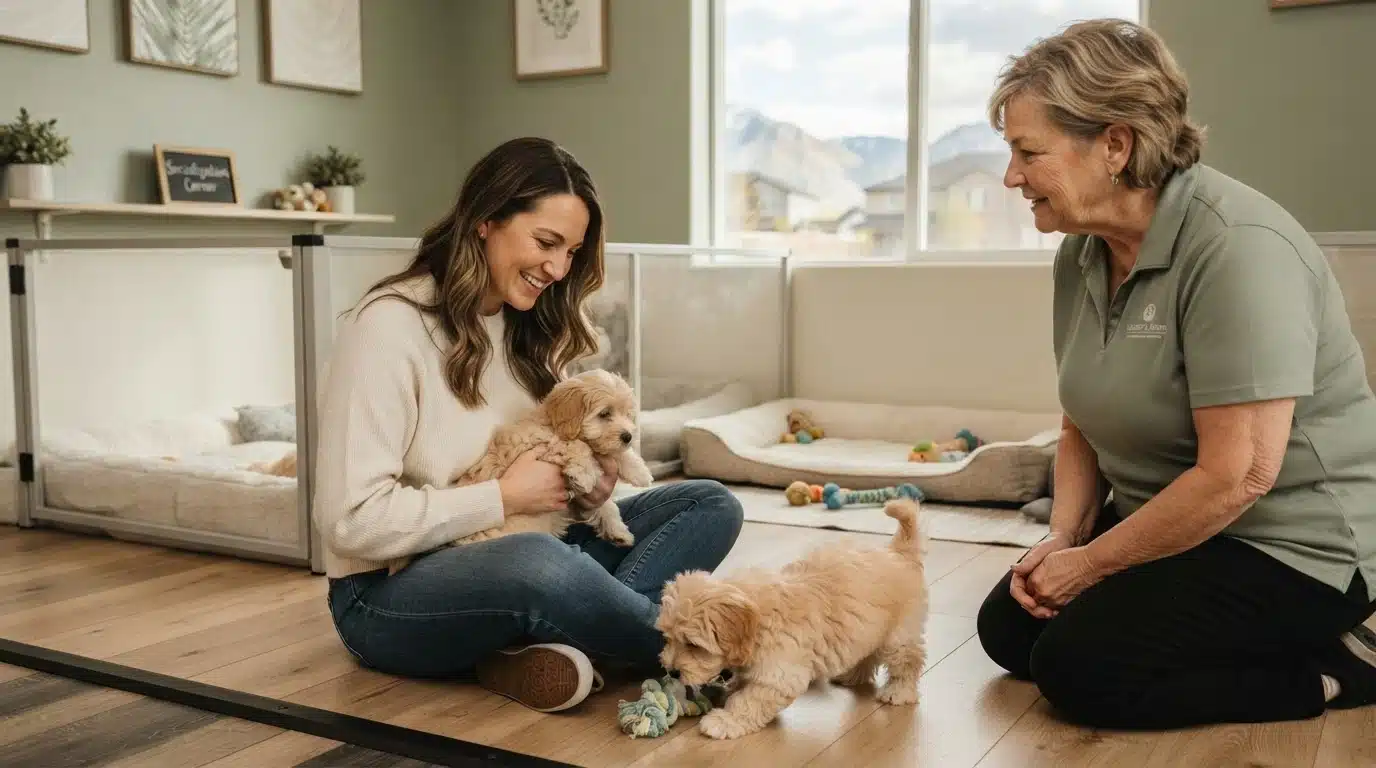
How a puppy spends its first eight weeks shapes its temperament. Ask to visit and meet the mother dog. Watch how she reacts to strangers and whether the puppies approach people willingly.
Good questions here:
- Where do the puppies live, and who handles them daily?
- What sounds, surfaces and people have they already met?
- Can I meet the mother, and what is her temperament like?
- How do you match a puppy to a specific family?
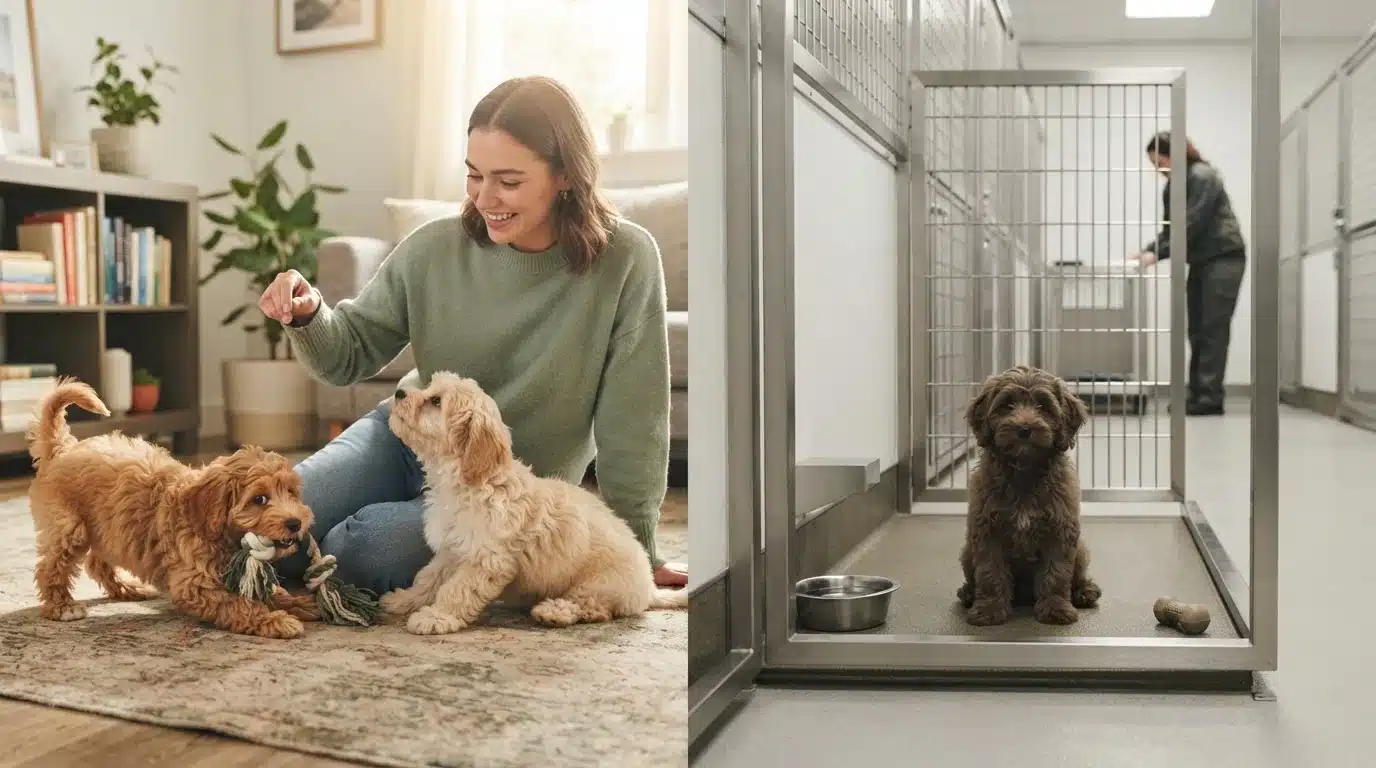
Breeders who raise puppies in the home and handle them from birth usually produce more confident dogs. The AVMA notes early positive experiences reduce future fear and behavior problems. If a breeder refuses visits or offers only to meet in a parking lot, keep looking.
Logistics Questions That Reveal Communication
Finally, test how the breeder communicates. Ask when puppies go home, what the application process involves and what support you get after pickup. Responsible programs stay reachable for the life of the dog, not just until payment clears.
Ask about delivery terms in writing, including who transports the puppy and what happens if travel plans change. Clear, consistent answers matter as much as the answers themselves. A breeder who responds slowly before you pay rarely improves afterward.
Where to Go Next With Your Shortlist
Narrow to One or Two Breeds and Write Down Why
Look back at your self-assessment answers. If your home is small, your workday is long, and nobody in the house can handle daily grooming, some breeds are already out. Write down the one or two breeds that still fit every answer, plus the honest reason each one made the cut. That note matters later, because a cute photo can talk you out of a good decision in about ten seconds. Sleep on the list before you commit to anything.
What the Sage Puppies Application Does
Once you know your breed, the next step is a short application rather than a browse-and-buy flow. Sage Puppies asks about your home, household, schedule and what you want in a companion, then Cassie matches you owner-to-owner instead of letting a waitlist decide for you. That process also gives you a natural place to ask questions before you commit. You can start on the puppy application page.
What Happens After You Decide
Approved families pick their puppy and choose local pickup in South Jordan, Utah or delivery elsewhere in the US. Before the puppy comes home, book a vet, set up a safe space and gather your supplies. Budget the full first year, not just the purchase price of $3,500 to $4,500.

Still torn between a Havanese, Havapoo and Cavapoo? Tell us about your home and schedule, and we’ll help you match with the puppy that fits. Start your application at Sage Puppies, or browse available puppies to see who’s ready now. Utah families can pick up locally, and we deliver nationwide. Wisely Bred. Beautifully Loved.
Frequently Asked Questions
Q1: How do I choose the right small breed puppy for me?
Start with your home, schedule, budget and goal, not photos. Score those four areas honestly, then rule out any breed whose energy, grooming and alone-time needs your calendar can’t support.
Q2: Which of the three breeds tolerates being alone best?
Cavapoos settle fastest and suit quieter homes. Havanese struggle most with long solo days, so they fit households with someone home most afternoons.
Q3: Are Havanese, Havapoos and Cavapoos good for apartments?
Yes. All three are small, people-focused companions that handle apartment living well, as long as the puppy gets a safe potty spot, daily play and regular walks.
Q4: Are low-shedding coats easy to maintain?
No. Low shedding means loose hair stays trapped in the coat, so it needs brushing out several times a week plus professional trims every four to six weeks.
Q5: Why do crossbred puppies vary so much?
Poodle-mix litters produce different coat types and adult sizes within the same litter. Treat published size and coat ranges as guides, not promises about your specific puppy.
Q6: What should the first year really cost?
Expect well past the purchase price. Budget vet care, grooming, food, supplies, insurance and training on top of the puppy fee, and confirm local prices before you commit.
Conclusion
The right small breed puppy comes from your answers, not from a photo. Start with your household: your space, your schedule, your budget, and the person who will own the daily work. Then match those answers against each breed’s energy, coat and grooming needs, since low shedding still means steady brushing and trims every four to six weeks.
Remember that crossbred puppies vary within a litter, so treat size and coat ranges as guides rather than promises. Budget the full first year, not just the purchase price, and confirm local vet and groomer costs yourself.
When your shortlist holds one or two breeds, write down why each one made the cut. A breeder who answers your questions about health testing, socialization and records clearly is worth your trust. Havanese, Havapoo and Cavapoo all make wonderful companions; the best one is simply the one that fits your real life.