
Quick Summary: Buying a puppy in Arizona comes down to verifying the seller, not the listing photo. Ask for health testing on both parents through registries like OFA, get vaccination and microchip records in writing before paying a deposit, and confirm pickup or delivery details early. Sage Puppies, a home-raised Havanese, Havapoo, and Cavapoo program in South Jordan, Utah, walks Arizona families through that same screening process and offers local pickup or nationwide delivery. If a seller stalls on records or pressures you to decide fast, walk away.
Scroll through listings of puppies for sale in Arizona and you will see plenty of charming photos and prices. What you will not see is where each puppy was born, whether the parents passed health testing, or which records come home with you. That missing information is where good decisions get made.
This guide walks you through a simple screening process. You will learn which questions reveal a seller’s true practices, what documents to ask for, and how to handle pickup or delivery when the breeder is out of state.
The advice comes from work on the breeder side. Sage Puppies raises Havanese, Havapoo, and Cavapoo puppies in a family home in South Jordan, Utah, and places them with families across the country, including Arizona. We know exactly what a trustworthy seller should volunteer, so we will show you how to ask for it. For current litters and pricing, start with our page of puppies for sale in Arizona-adjacent states and nearby delivery routes.
Step 1: Screen Arizona Puppy Listings Before You Contact a Seller
Most people browsing puppies for sale in Arizona see a cute photo and hit “message.” Hold off. A listing tells you far more than what the puppy looks like. It tells you how the seller works, what they hide, and whether they can answer the harder questions you will ask later.
Separate the puppy’s source from the listing platform
The website or app hosting the listing is not the seller. Marketplace platforms, classified sites, and breed directories simply connect buyers with breeders, brokers, and sometimes resellers. Two listings that look identical can come from very different places: a family raising one litter in their home, or a broker shipping puppies from a large kennel several states away.
Before you respond, ask one question: where is this puppy being raised right now? If a listing can’t answer that plainly, treat it as a warning sign. Look for language like “raised in our home with our kids” versus vague phrases such as “puppies available now.” Brokers often reuse stock-style photos and never mention the parents at all. A responsible breeder talks about the mother dog by name.
Tip: If a listing offers several unrelated breeds with litters “always available,” the puppies are most likely sourced elsewhere and resold.
Look for specific, checkable information
Strong listings share details you can verify before you ever send a message. Scan for these:
- Parents’ health testing, with names you can look up in a registry
- Birth dates and litter size, not just “8 weeks old”
- Photos or videos of the puppy in a home setting, not only posed studio shots
- Vaccination and deworming records described by age
- Clear terms on pickup, delivery, and what happens if the match isn’t right
A thin listing is not always a bad breeder, but it should make you ask better questions. Start with a complete Arizona buyer’s guide to see what a transparent listing looks like.

Step 2: Ask About the Parents, Health Testing, and Puppy-Raising Environment
A puppy is only as sound as its parents and its first eight weeks. This is the step where serious sellers shine and careless ones stall, so pay close attention to the answers you get.
Ask what was tested and request the supporting records
Start with one direct question: “Which health tests did each parent have, and can I see the results?” A responsible seller answers easily and offers proof without being pushed.
For Havanese, Havapoo, and Cavapoo parents, useful tests include eye exams, patella checks, hip evaluation, and cardiac screening. Ask for the parents’ names and registration numbers so you can look up results yourself on the OFA website. Test results should be dated, and both parents should be covered, not just one.
Words like “vet checked” are not the same as health testing. A vet exam happens on one day and describes one dog. Genetic and orthopedic testing looks ahead at what a puppy could inherit. Ask for both, and keep copies in your puppy file.
Also ask about the parents’ ages. A mother bred on every heat cycle is a red flag. Caring programs space out litters and retire breeding dogs at a reasonable age.
Ask how the puppy is developing at home
Health is more than test results. The first weeks shape a dog’s confidence for life, so ask where the puppies live and who handles them daily.
Good questions include:
- Where do the puppies sleep and play? Puppies raised in a home hear normal sounds: vacuums, doorbells, kids.
- How much handling do they get? Daily gentle contact builds calm, people-focused temperaments.
- What early training has started? Litter box habits, crate intro, and name recognition make your first weeks easier.
- When are they weaned and dewormed? Ask for dates and the vet clinic used.
Ask for recent photos or a short video call. Seeing the puppies move, eat, and play tells you more than any written description. At Sage Puppies, every litter is raised in our South Jordan home with daily family handling, and we share updates until pickup or delivery day.
A seller who answers these questions with patience is showing you how they will treat you after you take your puppy home.
Step 3: Verify the Puppy, Source, and Sale Records
A good conversation is encouraging, but paper is proof. Once a seller answers your questions, ask them to back it up in writing. A responsible breeder will do this without hesitation. A slow or vague response here tells you as much as the answers would.
Review written health and identification information
Ask for documents before you send a deposit. At minimum, you want the puppy’s age, current weight, microchip number, and vaccination and deworming records with dates and products used. Also request a recent veterinary exam note, not just a claim that the puppy “is vet checked.”
Parent health testing deserves the same treatment. Ask to see the parents’ test results through registries like OFA or CERF, or screenshots from the breeder’s account. A serious program like Sage Puppies shares health testing openly because results, not promises, show how a bloodline was built.
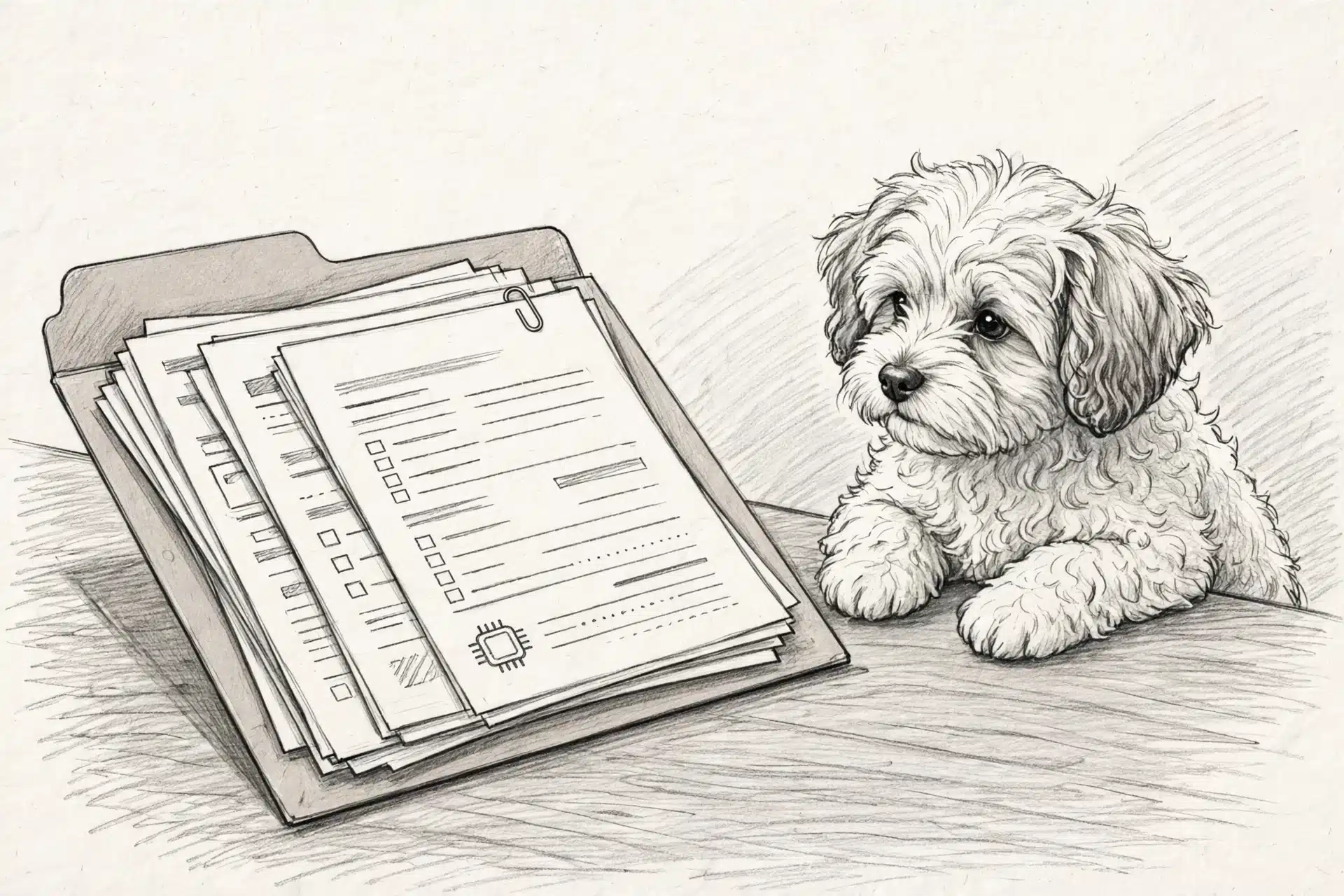
Check that the paperwork matches the puppy. The microchip number on the certificate should match the number scanned in the puppy’s neck. Dates should be consistent, and the vaccine brand should be a recognized product. Small mismatches are worth a question. Bigger ones, like a birthdate that shifts or records that never arrive, are reasons to walk away.
Read the agreement before paying or signing
The sales agreement protects both sides, so read every line. Look for what the price covers, what deposit terms apply, and whether the deposit transfers or is refundable. Confirm when the puppy can go home and what happens if travel or delivery changes.
Health terms matter most. A fair agreement explains what the breeder covers if a genetic issue appears, what documentation you must provide, and what timeline applies. It should also state the breeder’s take-back policy. Ethical programs commit to taking a dog back at any point in its life, no questions about your circumstances.
Watch for red flags: requests for payment apps with no written receipt, pressure to decide within hours, or agreements that waive all health coverage after pickup. If a clause seems unfair, ask for it in writing or step back.
Good records and a clear agreement take an hour to review. That hour protects years.
Step 4: Meet or Observe the Puppy and Confirm Pickup or Delivery Details
Pictures and health paperwork tell part of the story. The next step is watching the puppy itself, in the place where it has been living. This is where a responsible program looks very different from a volume seller.
Observe the puppy in the setting where it is raised
If you can visit in person, ask to see the puppy where it eats, sleeps, and plays. A clean, home-like space with toys, soft bedding, and normal family noise is a good sign. Puppies raised in the middle of daily life are usually calmer, quicker to recover from startle, and easier to house train.
Watch how the puppy responds to you. A well-socialized companion approaches with curiosity, accepts being held, and settles again after play. One shy puppy in a new place is normal. A whole litter that cowers or freezes tells you the environment was not right.
If travel is not realistic, request a live video call instead of a recorded clip. Ask the seller to walk you through the space, show the mother, and let you see the puppy move, eat, and interact. A confident breeder says yes without hesitation. Evasion, pre-recorded footage only, or pressure to “decide from photos” is a reason to pause.
Tip: Pay attention to the breeder as much as the puppy. Someone who talks openly about setbacks, litter routines, and temperament quirks is usually someone you can trust after go-home day.
Confirm the logistics before making travel plans
Nail down the handoff details before you book anything. Ask who transports the puppy, what the puppy travels in, how long the trip lasts, and what happens if a flight or drive gets delayed. Get the go-home date range, the final payment timing, and the exact pickup location in writing.
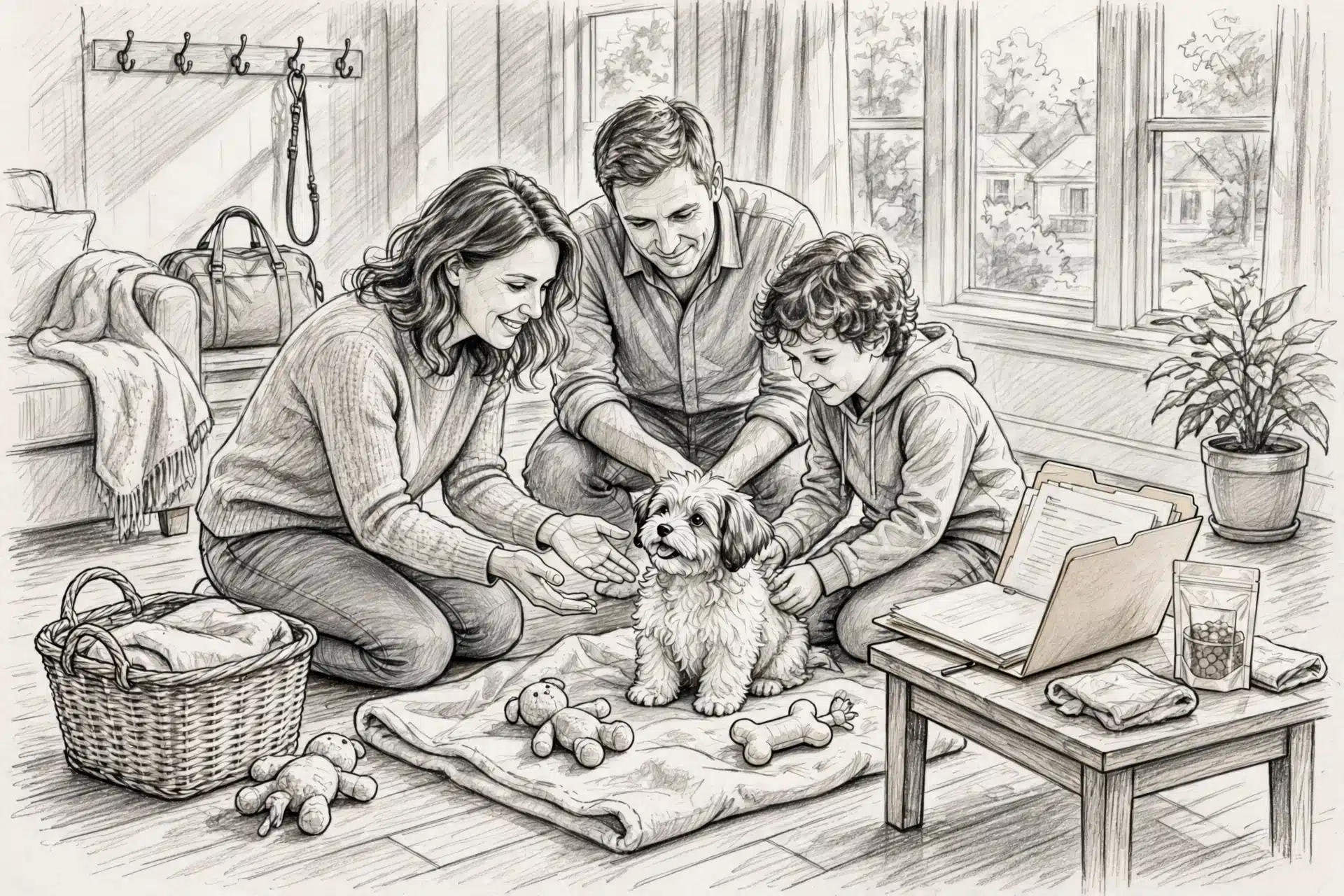
Families flying in from Arizona often find that a short drive to Utah pickup near South Jordan beats a long layover for an eight-week-old puppy. Wherever you pick up, the seller should send feeding instructions, a familiar blanket or toy, and the health records in a folder you keep.
Step 5: Use a Clear Proceed, Pause, or Walk-Away Decision
By now you have gathered health records, met or seen the puppy’s parents, and asked how the puppy was raised. Step 5 turns all of that into one simple call: proceed, pause, or walk away. Deciding ahead of time protects you from making an emotional choice in the moment, which is when sellers who cut corners count on closing the deal.
Proceed when answers and records align
Move forward when everything you verified fits together. The health record lists vaccines and deworming dates that match the puppy’s age. The breeder answers questions about temperament and daily routine without hesitation, and offers a vet exam before go-home. Health testing results for the parents are easy to see, and the contract states its terms in plain language.
If the puppy is coming from out of state, the seller also explains pickup or delivery clearly, including who handles the puppy during travel. A confident seller, like a boutique program pairing health-tested parents with early family socialization, will usually volunteer this detail before you ask. You can see how a structured, step-by-step process looks on Sage Puppies’ adoption process page, then hold other sellers to the same standard.

Pause when something is missing or inconsistent
Pause when a record is incomplete, a date does not add up, or a seller avoids one of your questions. Maybe the vaccine schedule skips a dose, the parent’s health testing “is at the vet,” or the delivery plan changes each time you ask. None of these alone proves a problem, but together they mean you need more answers first.
Send your follow-up questions in writing and set a deadline, such as 48 hours. A responsible seller responds readily. Silence or pressure to “decide today” is your answer.
If the pause turns into a pattern, walk away. There is always another litter, and the right match is worth waiting for.

Ready to meet a puppy raised the right way? Sage Puppies pairs health-tested Havanese, Havapoo, and Cavapoo parents with early socialization in our South Jordan, Utah home, then offers clear pickup or nationwide delivery. Browse our available puppies, review how it works, and submit an application when a family feels like yours.
Frequently Asked Questions
Q1: how to find puppies in Arizona
Start with responsible sellers who share health testing, raising practices, and references. You can pick up locally or use delivery. Sage Puppies, a home-raised program in South Jordan, Utah, offers Havanese, Havapoo, and Cavapoo puppies to Arizona families.
Q2: Should I buy from a breeder outside Arizona?
Yes, if the seller is transparent and health-focused. Ask for parent testing records, socialization details, and a written sale agreement. Out-of-state pickup or delivery is common and safe when handled through a clear process.
Q3: What documents should a responsible breeder provide?
Expect a health record with vaccinations and deworming dates, parent health test results, and sale terms in writing. If any of these are missing or vague, treat that as a red flag and keep looking.
Q4: How much should I expect to pay for a Havanese or Cavapoo?
Well-bred small companion puppies typically cost more than random online listings because health testing and early care cost money. Ask what the price includes, such as vet checks, starter supplies, or support after pickup.
Q5: Can I get a puppy delivered to Arizona?
Many reputable programs deliver nationwide, and Sage Puppies offers both local pickup in Utah and delivery to families across the United States. Ask exactly how the puppy travels and who cares for it along the way.
Q6: When can a puppy come home?
Most breeders release puppies between eight and twelve weeks, once they are eating well, weaned, and vet-checked. Age varies with the breed and litter, so ask for the specific timeline before you reserve.
Choose With Care, Not Pressure
Arizona gives you plenty of puppy options, and that is exactly why a simple screening process matters. Verify the seller’s license and disclosure history, ask about health testing on both parents, and ask how the puppies are raised in the first eight weeks. Get documentation in writing before money changes hands, and confirm pickup or delivery details early so nothing is decided under pressure.
A responsible seller welcomes these questions. A rushed or evasive answer tells you just as much. Take your time, compare answers side by side, and trust the pattern you see. Families who follow this process consistently end up with healthier puppies and far fewer surprises, and you can revisit the Arizona buyer’s guide anytime.



