Quick Summary: Quick Summary: Responsible puppy buying in Arizona means verifying breeder transparency, health testing, and proper socialization, not just looking at cute photos. Avoid listings with vague info, pressure tactics, or suspicious payment methods. Ask breeders for health records, parent details, and after-sale support to ensure a good match. State laws protect buyers, so slow down and check all records before committing.
If you are looking at Puppies for Sale in Arizona, the first cute listing should not decide your choice. The real test is whether a breeder can show healthy parent dogs, clear records, and a careful match for your home. That is where many families get stuck.
A lot of Arizona Puppy Buyers see polished photos, fast promises, and little proof. The hard part is knowing which Puppies for Sale are responsibly bred, well raised, and backed by clear health and contract details.
This guide helps you sort through Puppies for Sale with a calm, smart plan. You will learn how to check breeders, review paperwork, compare pickup and delivery options, and prepare for breeds like Havanese Puppies and other companion dogs.
We built this guide around the questions real families ask before choosing a premium, family-raised puppy, including what to ask next and what to avoid.
How to Tell Whether a Puppy Listing Is Worth Your Time
A good listing answers your basic questions fast. A weak one hides key facts and pushes you to act before you verify anything.
What a trustworthy listing should say upfront
Look for clear facts, not cute photos alone. A listing worth your time should name the breed, age, location, price, and when the puppy can go home.
It should also explain:
- whether the parents had health testing
- what vet care the puppy has already had
- how the puppy is being raised and socialized
- what the deposit, contract, pickup, or delivery process looks like
Cornell notes that responsible breeders should share proof of recommended health screening, support puppies with early socialization, and stay involved after placement, according to Cornell College of Veterinary Medicine.
A solid listing usually leads to a real conversation. Good breeders want to know about your home, schedule, and fit, not just your payment details.
If a listing feels warm, specific, and easy to verify, it is usually worth the next step.
Warning signs that deserve a pause
Some listings are not worth a message back. Skip the ones that rely on pressure, vague claims, or strange payment rules.
Watch for these red flags:
- Price is far below market
- No phone or video call
- No mention of parents, health records, or contract
- Stock-looking photos or copied wording
- Urgent payment requests
- Gift cards, wire transfers, crypto, or payment apps only
The FTC warns that fake pet ads often push buyers to pay up front and use hard-to-recover payment methods like gift cards, wire transfers, or crypto, according to the FTC pet scam alert.
If the seller avoids simple questions, move on. A better listing will save you time and stress.
Also Read: Top 9 Small Breed Puppies for Sale Near You in 2026
What Ethical Breeders Should Be Able to Show You
Health testing and proof, not promises
A good breeder should show you records, not just say the parents are “healthy.” Cornell notes that responsible breeders test for the conditions their breed club recommends and should provide lifelong support if issues come up later Cornell guidance for selecting a puppy.
Ask to see:
- Parent health clearances
- DNA test results, if relevant for the breed
- Vet exam records for the puppy
- Vaccine and deworming history
- A written contract with clear terms
| What to ask for | What it tells you |
|---|---|
| OFA or similar screening proof | The breeder tested for known breed risks |
| Puppy health record | Basic care has already started |
| Contract and return policy | The breeder plans past pickup day |
If a breeder avoids paperwork, changes the subject, or says “trust me,” walk away.

Temperament, socialization, and early care
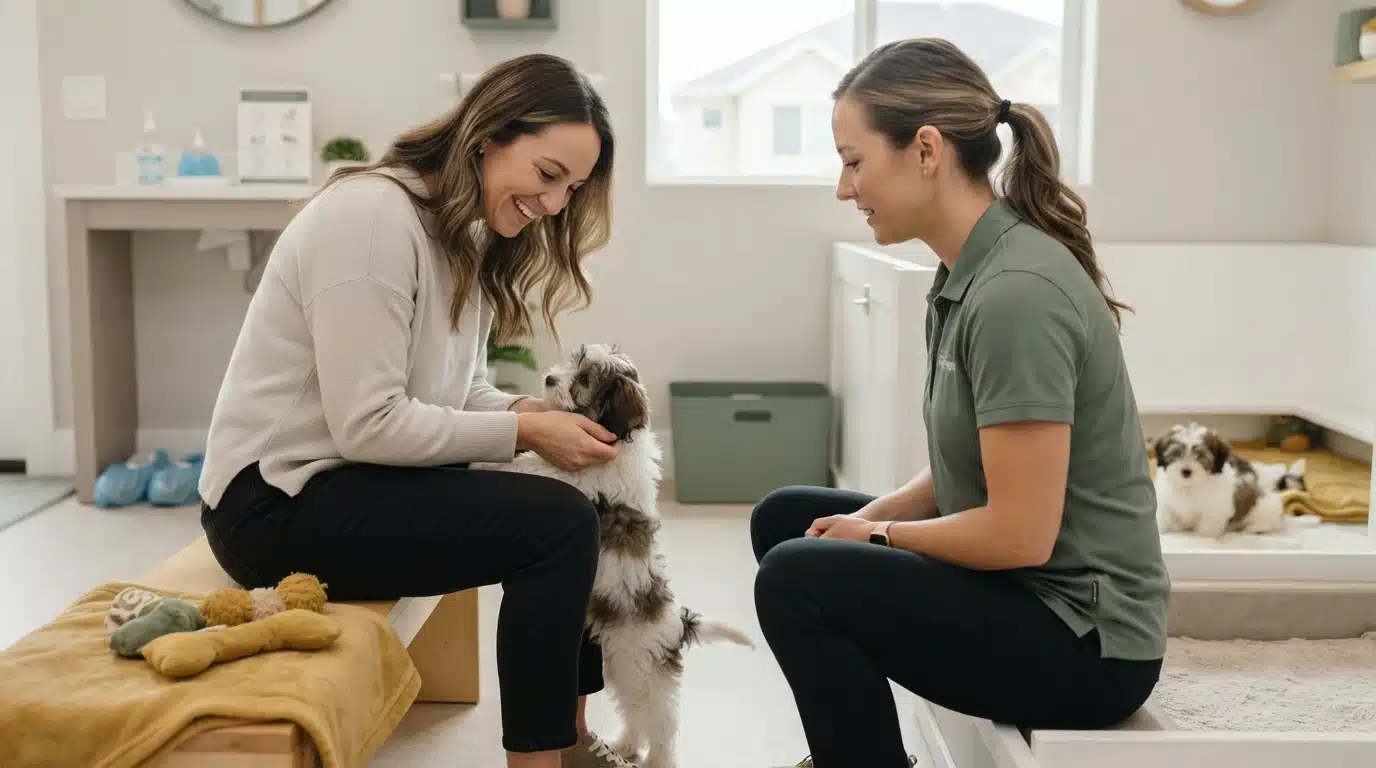
Ethical breeders should explain how the puppies are raised each day. That means where they sleep, what sounds they hear, who handles them, and how they start getting used to normal home life. AKC also advises buyers to ask how puppies are socialized and whether they are comfortable in a household setting AKC breeder questions.
Look for signs like:
- Puppies raised in a home setting
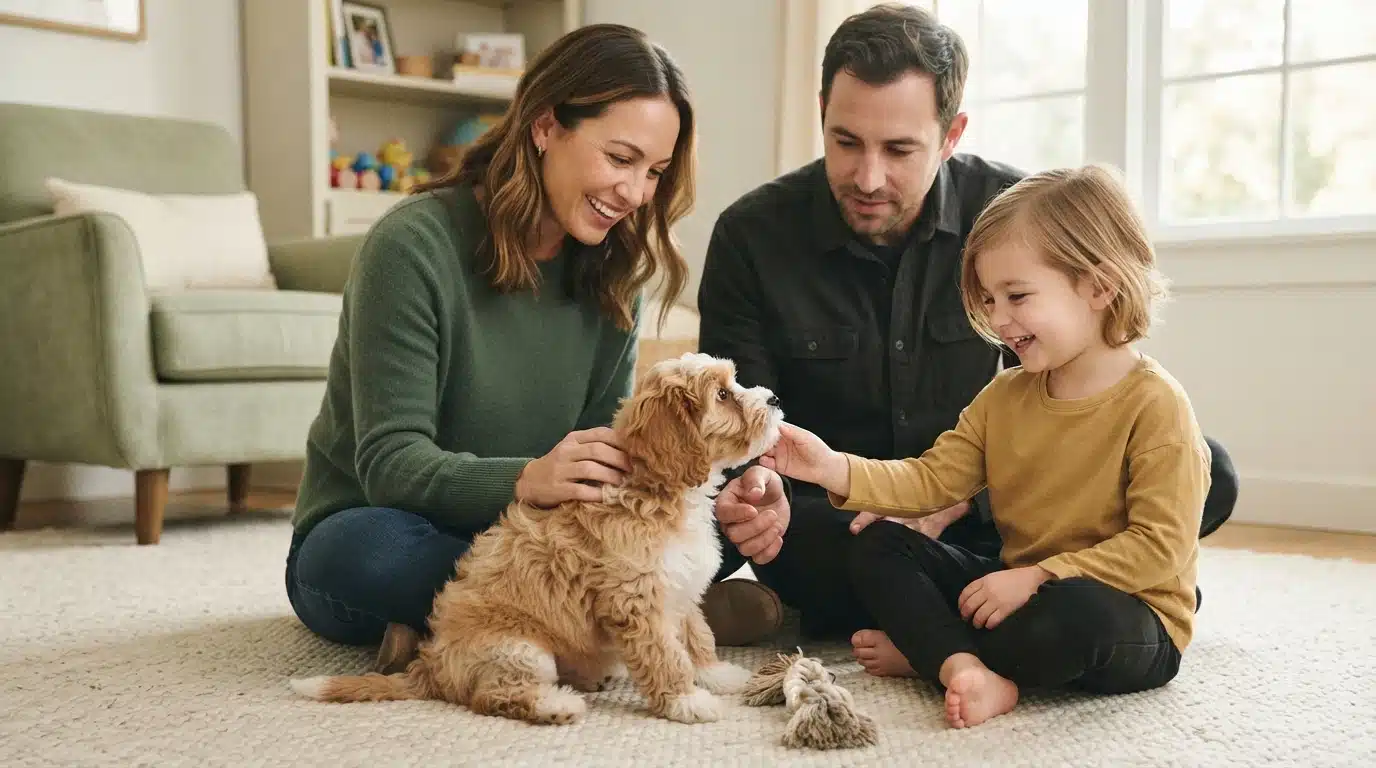
- Regular contact with adults and gentle children
- Early exposure to house sounds, grooming, and handling
- Notes on each puppy’s energy and personality
A careful breeder should be able to match a puppy to your home, not just let you pick by color.
Support after the sale
The best breeders do not disappear after payment. They stay available for feeding questions, training bumps, and health concerns. Many also require that the dog comes back to them if you cannot keep it.
Ask these questions before you commit:
- Will you help after pickup or delivery?
- Do you have a take-back policy?
- What happens if a health issue appears early?
- Can you point me to grooming, training, and transition tips?
Strong after-sale support is one of the clearest signs that a breeder cares where each puppy ends up.
Sage Puppies fits this model by focusing on clear records, family-raised care, and ongoing guidance for new owners.
Also Read: 7 Best Small Breed Puppies For Apartment Living In 2026
How Arizona-Specific Buying Rules Affect Your Search
Why paperwork and records matter in Arizona
Arizona buyers should ask for records early, not after they fall in love with a puppy. State law says pet dealers must give buyers a written statement at sale that covers basics like birth date if known, state of birth if known, vaccines, deworming, identifying marks, and known vet treatment or health concerns under Arizona purchaser rights rules.
That matters because clean paperwork often reflects a clean process.
Ask to review:
- Vaccine and deworming dates
- Vet exam notes
- Microchip details, if used
- Parent health testing proof
- Sales contract and health terms
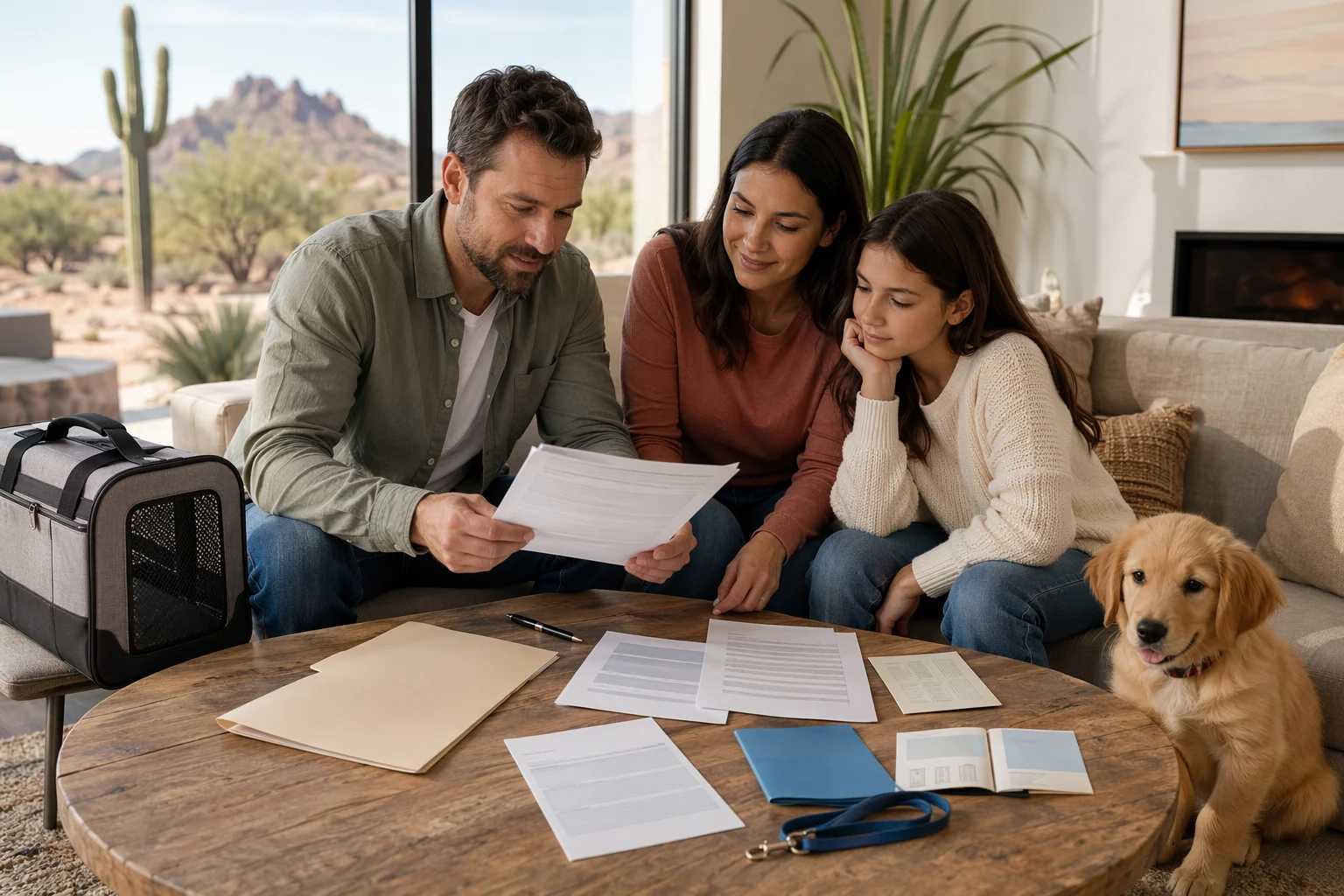
If a seller avoids records, changes details, or says paperwork comes later, slow down.
A strong breeder or seller should answer simple questions with simple proof. You are not being difficult. You are checking that the puppy’s history matches the story.
How to think about licensing and operation size
Do not assume small means good or large means bad. Ask how the program runs and what rules apply.
Arizona law says a kennel permit is required in the county where the kennel is located unless each dog is licensed individually. It also says kennels with 20 dogs or more must allow county inspections as a permit condition under Arizona kennel permit law.
Use this quick lens:
- Small home program – ask about daily care, socialization, and litter limits
- Larger operation – ask about staffing, inspection history, and where puppies are raised
Size matters less than transparency, records, and how the dogs actually live.
Also Read: Home
How to Ask the Right Questions Before You Reserve a Puppy
Good questions help you spot a careful breeder fast. They also protect you from making an emotional, rushed deposit.
Start with the puppy’s background. Ask to see health testing for both parents, not just a note that they are “healthy.” The AKC says responsible breeders should discuss breed risks, share health testing, and explain when puppies can go home, usually around 8 to 12 weeks in many cases AKC breeder questions.
- Ask:
- What health tests were done on the sire and dam?
- Can I see results, pedigree, and vaccine records?
- Have any close relatives had eye, heart, joint, or allergy issues?
If a breeder avoids paperwork or gets vague, pause the process.
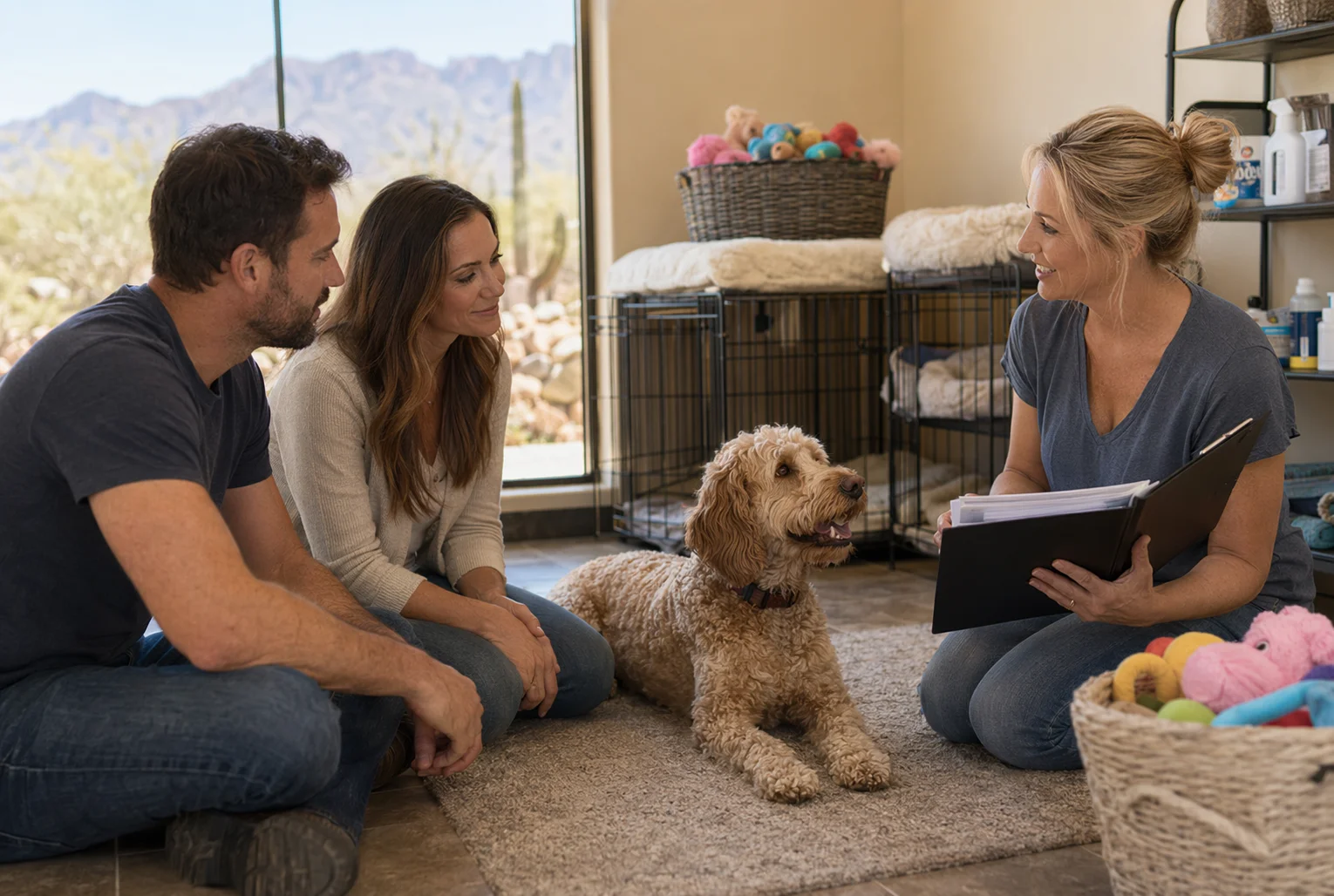
Temperament matters just as much as looks. Ask how the puppy is raised each day and what early learning has started. A good breeder should know which puppy is bold, easygoing, sensitive, or more active. OFA advises buyers to ask where puppies are raised, how they are socialized, and whether the breeder screens buyers too OFA breeder interview guide.
- Ask:
- Has the puppy been around children, guests, sounds, and grooming tools?
- What crate, potty, or sleep routine has started?
- What type of home fits this puppy best?
| Topic | Good sign | Red flag |
|---|---|---|
| Socialization | Raised in the home with daily handling | Raised apart with little detail |
| Temperament | Breeder describes each puppy clearly | “They are all the same” |
| Support | Feeding and transition plan included | No guidance after pickup |
Finish with money and paperwork. Ask for the contract before you send a deposit.
- Is the deposit refundable, transferable, or locked in?
- What happens if the puppy does not pass a vet exam?
- Is there a return-to-breeder clause?
- What are the pickup, delivery, and final payment steps?
Calm, clear answers usually signal a breeder worth trusting.
Why Havanese and Similar Companion Breeds Need Extra Matchmaking
A Havanese can fit many homes, but not every routine fits a Havanese. This breed was made for close human company, so the best match depends more on daily life than square footage. According to the AKC, Havanese are cheerful, social, and do not do well when left alone for long periods AKC breed fit guide.
What kind of home tends to fit a Havanese well
The best home usually has:
- People around often
- Time for grooming
- Gentle, steady handling
- Moderate play and short walks
They can do well in apartments, suburbs, or larger homes. What matters most is daily contact. A calm family, retiree, remote worker, or home with staggered schedules often works well.
If your household is gone 9 to 10 hours most days, a Havanese may feel stressed, bored, or overly attached.
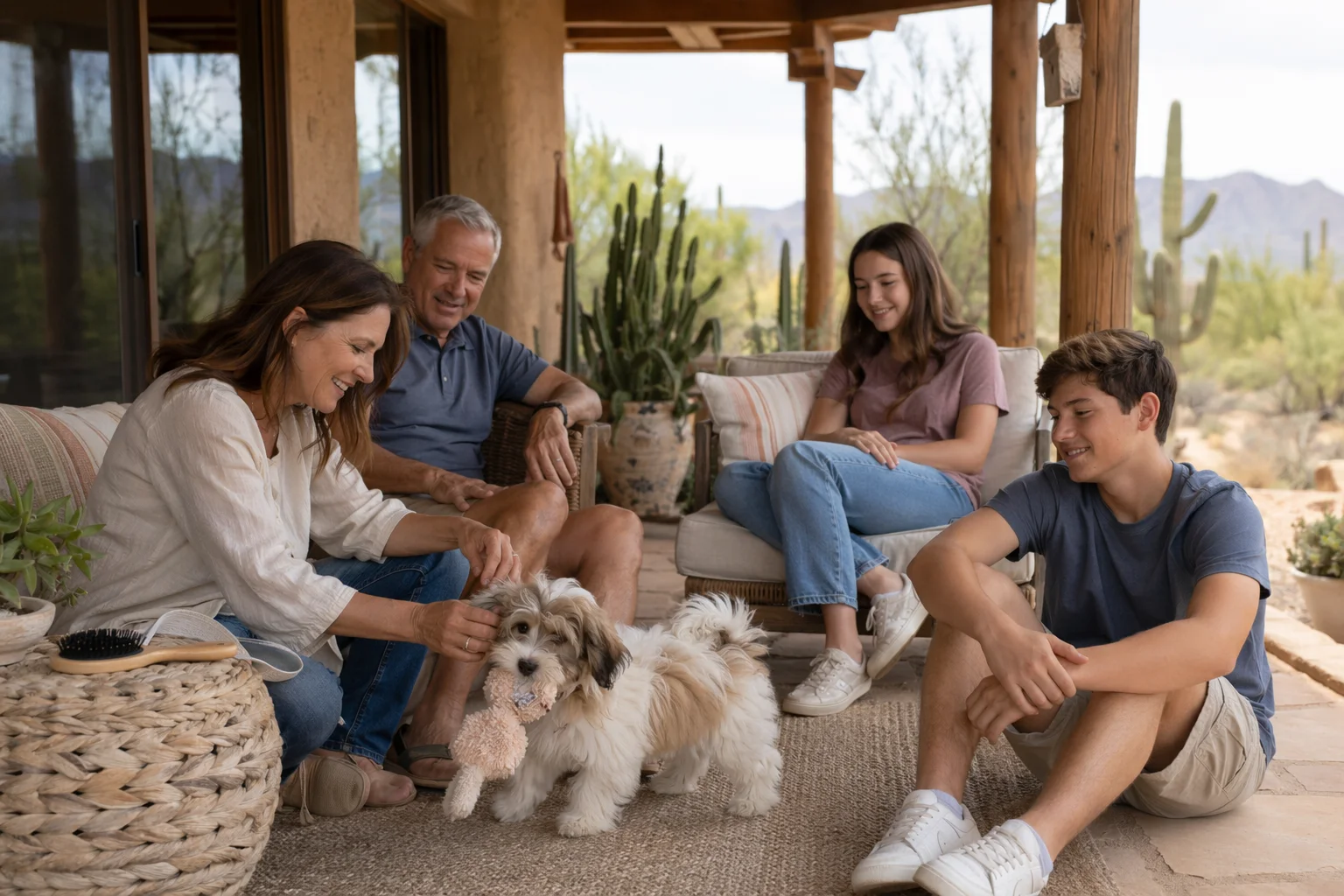
How to compare similar companion breeds thoughtfully
Do not compare breeds by looks alone. Compare the parts of life you will actually live with every day. The AKC breed standard describes the Havanese as friendly, playful, alert, and intelligent with a sweet disposition AKC Havanese standard.
Use this quick check:
| Breed trait to compare | Why it matters |
|---|---|
| Alone-time tolerance | Helps prevent a poor routine match |
| Grooming load | Affects weekly time and cost |
| Energy level | Shapes walks, play, and training |
| Sensitivity | Matters in busy homes with kids |
| Size and sturdiness | Helps match young families or seniors |
A thoughtful breeder should help you weigh temperament, not just reserve the cutest puppy.
Also Read: 10 Adorable Havapoo Colors You Need To See 2026 Guide
What to Prepare Before Your Puppy Comes Home
Set up the home before arrival
Get your puppy’s space ready before pickup day. That lowers stress for both of you and helps your puppy learn the rules fast. Start with one easy-to-clean area, not the whole house.
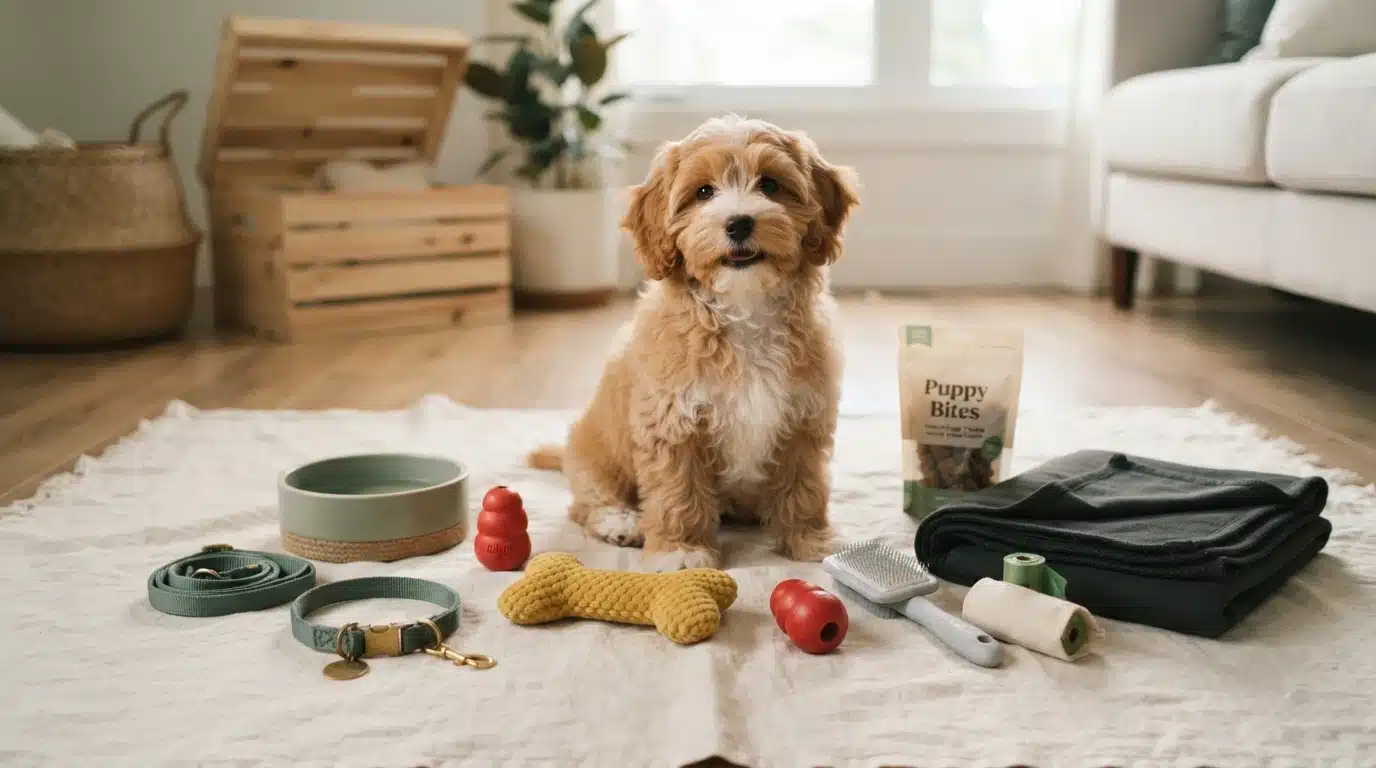
Prepare these basics:
- Crate or pen in a quiet spot near family activity
- Bed, bowls, leash, collar, and ID tag
- Same food the breeder has been feeding
- Enzyme cleaner, poop bags, and safe chew toys
- Baby gates for rooms you want off-limits
Walk through your home at puppy level and remove cords, cleaners, meds, laundry, small objects, and toxic plants. PetMD’s puppy care guide notes that young puppies need frequent potty breaks and should be protected from household hazards.
Keep the first setup simple. A smaller, safe space helps with potty training, rest, and confidence.
Plan for the first week
Your first week should feel calm and repeatable. Puppies do best with short routines, clear boundaries, and lots of sleep. AAHA advises making the crate a positive space and using gentle, managed socialization, not forced exposure.
Use this simple first-week plan:
- Book a vet visit within a few days.
- Follow the current food schedule for now.
- Take potty trips after sleep, meals, and play.
- Keep introductions slow with kids, guests, and pets.
- Start name work, crate comfort, and gentle handling.
- Limit busy outings until your vet reviews vaccines.
| First-week focus | What to do |
|---|---|
| Sleep and rest | Expect lots of naps and quiet time |
| Potty routine | Go out often and praise right away |
| Training | Reward calm behavior and simple wins |
| Health | Review records, vaccines, and next appointments |
Also Read: Puppy Breeder Near Me vs Pet Store: Key Differences
Common Mistakes Arizona Buyers Can Avoid
Regret usually starts before you bring the puppy home. Most problems come from rushing, trusting promises instead of proof, or skipping the fine print.
Common mistakes include:
- Buying from a seller you have not properly verified
- Sending deposits before you confirm the puppy, breeder, and contract
- Focusing on color, size, or price before health and temperament
- Skipping questions about parent health testing and early socialization
- Assuming every health guarantee covers the same things
Arizona buyers also miss their legal window. Under Arizona law, buyers may have remedies if a vet finds an illness within 15 days or a hereditary issue within 60 days, but timing and written notice matter, according to Arizona Revised Statutes § 44-1799.05.
The safest approach is simple:
- Ask for health records, parent testing, and a clear contract.
- Confirm who bred the puppy and where it was raised.
- Book a vet exam right after pickup.
- Keep every email, receipt, and medical note.
The CDC warns that puppy scams often involve fake shipping updates, extra fees, or dogs that do not match what was promised, so never let urgency push you into a blind payment CDC scam guidance.
If you want a puppy with a clear process, strong early care, and honest breeder communication, start with Sage Puppies. Their home-raised Havanese, Havapoo, and Cavapoo puppies come from health-tested parents with family-first guidance, local pickup, and nationwide delivery. Review available puppies, pricing, and the application, then take your next step with confidence.
Frequently Asked Questions
Q1: What are the best ways to find reputable puppies for sale in Arizona?
Start with breeders who share parent health testing, home-raising details, and clear contracts. Check how they answer questions, not just how puppies look online. Avoid sellers who rush deposits, skip video calls, or cannot explain temperament and early socialization.
Q2: How can I identify ethical breeders for puppies in Arizona?
Look for health-tested parents, clean living spaces, age-appropriate placement, and honest waitlist steps. Ethical breeders ask about your home, schedule, and goals. That matters. Good breeders screen buyers because they care where each puppy goes.
Q3: What should I ask a breeder when buying a puppy in Arizona?
Ask about health testing, vaccines, deworming, parent temperament, socialization, food, training start, and contract terms. Also ask what support comes after pickup. A careful breeder should answer clearly and welcome follow-up questions without getting defensive.
Q4: Should I buy locally in Arizona or from an out-of-state breeder?
Both can work if the breeder is transparent and organized. Local pickup is simpler, but distance alone does not prove quality. Programs like Sage Puppies help families nationwide with clear pickup or delivery steps and consistent communication.
Q5: What are red flags when shopping for a puppy?
Watch for same-day pressure, no application, no parent info, vague health records, or many breeds offered at once. > If a seller avoids live interaction or only pushes payment, stop there. Those signs often point to poor breeding practices.
Conclusion
Buying a puppy in Arizona goes better when you slow down and check the basics. Focus on breeder ethics, health testing, temperament, clear records, and a contract you understand. If a seller rushes you, avoids questions, or cannot show how puppies are raised, walk away.
Arizona buyers also have real consumer protections. State law gives remedies when a dog is later found unfit for sale under specific timelines, according to Arizona Revised Statutes § 44-1799.05. Pet dealers in Arizona also face source and recordkeeping rules under A.R.S. § 44-1799.10. The right puppy is not just cute. It is well-bred, well-raised, and a good fit for your home.