
Quick Summary: Buying puppies in Maine requires verifying seller transparency, including written health records, breeder licensing, and breed-specific testing. Avoid listings lacking documentation or rushing deposits, and focus on breeders who assess temperament and socialization carefully. Confirm delivery details early if out of state, and choose sellers who welcome questions and provide clear, legal disclosures to ensure a safe, trustworthy purchase.
If you are looking at puppies for sale in Maine and the seller cannot show a written disclosure, a state license number, and recent puppy records, slow down. That gap tells you a lot. Most families do not struggle to find puppies for sale in Maine. They struggle to tell which seller is careful, honest, and worth trusting.
That is the problem this guide solves. Cute photos and fast replies can hide weak breeding practices, poor records, and vague delivery promises. First-time buyers often do not know what Maine sellers should provide, what questions matter most, or when to walk away.
This guide will help you sort through puppies for sale in Maine with a clear plan. You will learn how to check seller details, review health and care records, spot red flags, and compare pickup or delivery options without guessing.
We focus on practical steps, not hype. If you want a well-raised companion and a smoother buying process, this Maine-specific guide gives you the checklist and context to choose with confidence.
What a Trusted Maine Seller Must Be Able to Show You
A trusted seller should not ask you to rely on promises. They should show you clear records before you pay a deposit. If they dodge basic paperwork, walk away. For the bigger picture on safe buying steps, go back to the main guide on puppies for sale in Maine.
Written disclosure is not optional
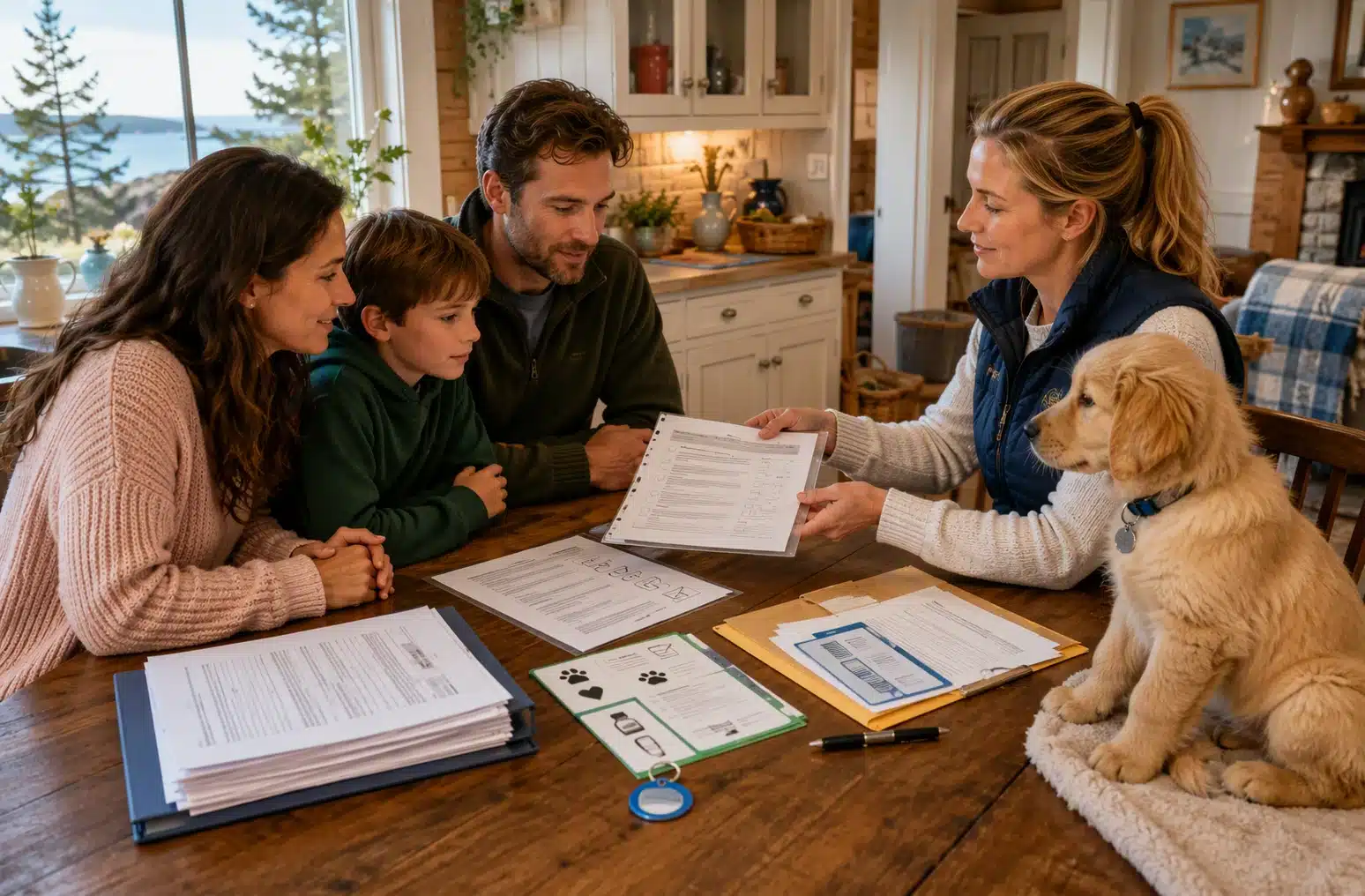
Maine law says a seller must give the buyer a written disclosure with the puppy’s history, ID details, treatment record, and a signed health statement. The buyer must be able to see that information before purchase, and both sides sign it under Maine’s disclosure law.
Ask to see these items in one packet:
- Date of birth
- Breed, sex, color, and marks
- Microchip, tag, or other ID number
- Vaccine and deworming record
- Any vet exam or treatment while the seller had the puppy
- A signed statement listing known health problems, or stating none are known
- The date the puppy was last seen by a vet
A health certificate alone is not the same as full disclosure.
Use this quick check:
| Document | Why it matters | Red flag |
|---|---|---|
| Written disclosure | Shows the puppy’s paper trail | Seller says it comes after payment |
| Signed health statement | Confirms known issues were disclosed | Vague wording with no date |
| Treatment record | Shows care already given | Missing vaccine or parasite dates |
Ask for the breeder’s license or business details
A serious Maine seller should give you their license number or business details without acting offended. Maine breeding kennels must be licensed, and the state-issued kennel license number must appear in ads and be provided to the buyer under Title 7, §3931-A.
Ask for:
- Full business name
- State kennel license number, if applicable
- Physical location
- Who bred the puppy
- Who had possession of the puppy before sale
If the puppy is coming into Maine from out of state, ask who handled transport and whether any broker was involved. Good sellers answer fast and in writing.
If the ad has no license number, no last name, and no real location, treat that as a warning.
Look for breed-specific testing, not just a general vet check
A clean vet exam matters. It is not enough by itself. A trusted seller should explain what health testing was done on the parents for that breed or mix, then show proof. That matters more than broad lines like “vet checked” or “healthy bloodline.”
Ask for a simple list:
- Parent names
- Tests done on each parent
- Date of testing
- Where results can be verified
- Any limits or known risks in the line
For small companion breeds, you may hear about patella, heart, eye, or DNA screening. The exact tests depend on breed. What matters is that the seller can show real records and explain them in plain English. That level of openness is what careful programs, including Sage Puppies, aim to provide.
Also Read: 10 Small Breed Puppies That Stay Friendly & Easygoing
How to Judge the Breeder’s Program, Not Just the Puppy Photos
If you want a healthy puppy, judge the program behind the litter. Cute photos tell you almost nothing. The real clues are the parents, the daily routine, and how the breeder handles buyers. For the full Maine buying process, go back to the parent guide on finding a trusted seller.
Healthy breeding starts with the parents
Start with the sire and dam, not the puppy ad. Ask what health testing was done, what issues the breeder tracks in the line, and how often each parent is bred. A careful breeder should explain this in plain English.
Use this quick screen:
- Ask for parent names and ages
- Ask what genetic or breed-related testing was done
- Ask about temperament, not just coat color
- Ask where the puppies are raised
- Ask whether you can see the mother in person or on video
A good breeder also keeps records. In Maine, sellers must give written disclosure that includes animal history, birth date, identifying info, treatment records, and, for purebred dogs sold as registration-eligible, the sire and dam registration details under Maine’s disclosure law.
If a seller talks fast about “champion bloodlines” but gets vague about health history, slow down.
| What to ask | Good sign | Red flag |
|---|---|---|
| Parent health | Specific test results and family history | “My dogs are healthy” with no proof |
| Mother’s role | Calm, stable, present with puppies | Mother never shown |
| Breeding frequency | Planned litters with recovery time | Many litters, many breeds, always available |
Socialization should be intentional and age-appropriate
Socialization is not a buzzword. It should be a daily plan. The ASPCA notes that the period from 3 to 16 weeks is critical for social development, and puppies benefit from gentle handling, varied surfaces, sounds, objects, and people in a safe way, according to ASPCA puppy socialization guidance.
Ask the breeder:
- What do puppies hear each day?
- What surfaces do they walk on?
- How are they introduced to grooming, crates, and car rides?
- Do they meet different adults and calm children?
- How do you prevent overwhelm?
Look for age-right progress, not forced activity. Eight-week puppies do not need chaos. They need short, positive reps that build confidence.
“Raised in our home” only matters if the breeder can show what the puppies actually learn there.
A good breeder screens buyers carefully
A breeder who will sell to anyone will also breed for anyone. That is not a good sign. Strong programs ask questions because placement matters.
Expect questions about:
- Your schedule
- Children and other pets
- Yard and exercise plans
- Grooming budget
- Travel, pickup, or delivery plans
- Your backup plan if life changes
This is where trusted programs stand out. Sage Puppies, for example, makes the process clear and family-focused instead of treating puppies like quick inventory.
A short application is normal. Pressure to pay before you get answers is not.
What Maine buyers should watch for in listings
In Maine listings, watch for missing basics:
- No seller license details
- No health disclosure
- No clear birth date
- No vaccine or treatment record
- “Ready now” language for very young puppies
If a seller skips paperwork, that matters. Maine buyers also have stated remedies if a veterinarian finds a qualifying health problem after purchase under Maine purchaser rights.
Also Read: 10 Adorable Havapoo Colors You Need to See (2026)
What to Verify Before You Place a Deposit
Before you send money, slow the process down. A good seller will welcome careful questions. This section also pairs well with the main guide on Puppies for Sale in Maine: Find a Trusted Seller, since the deposit stage is where many bad deals start.
Read the contract before money changes hands
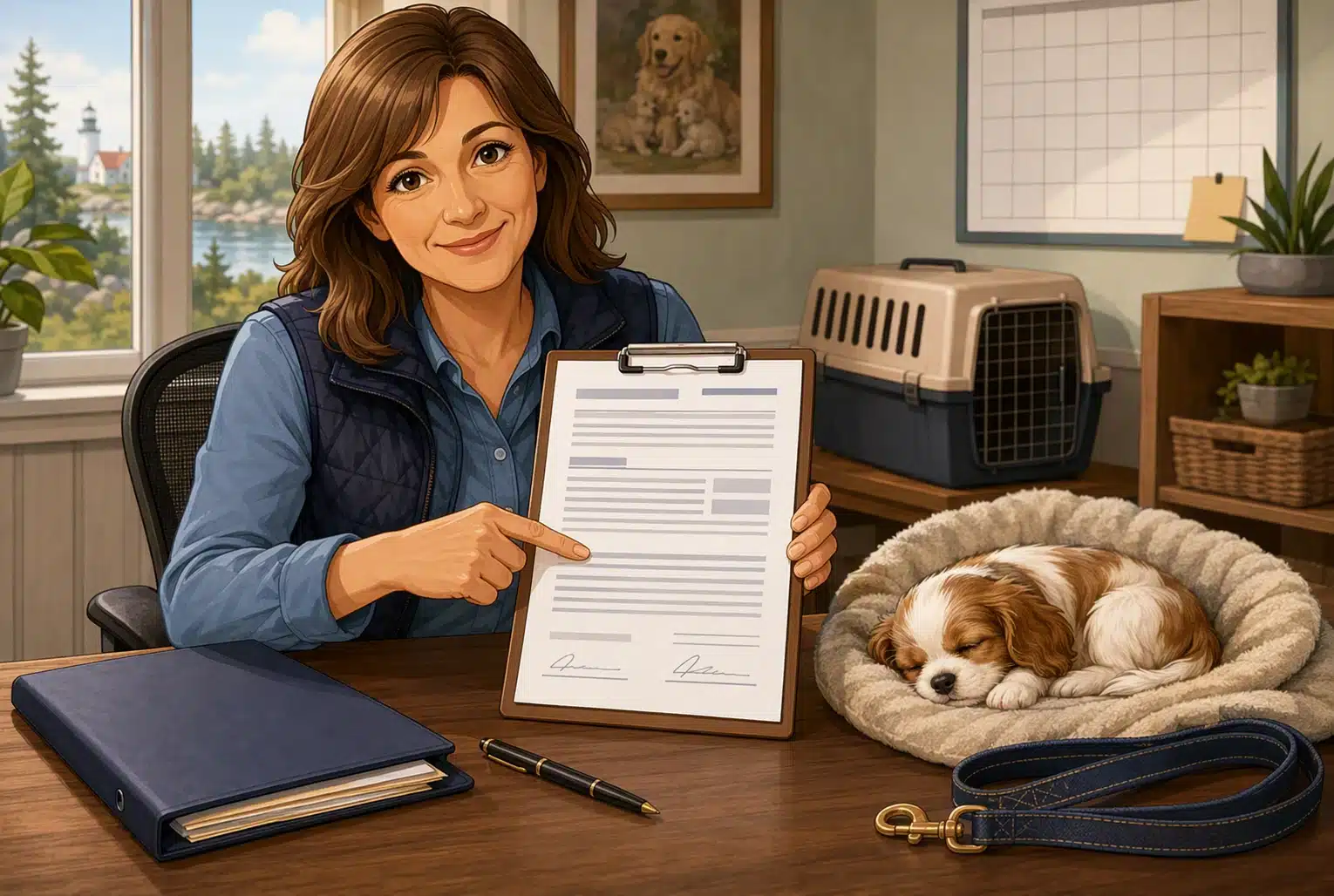
Ask for the full contract before you place a deposit. If a seller will not share it early, walk away. In Maine, sellers covered by the law must provide written disclosures and a signed notice of consumer rights, including the puppy’s health history and warranty details under Maine’s disclosure rules.
Check these points line by line:
- Is the deposit refundable, transferable, or nonrefundable?
- What happens if the breeder keeps the puppy longer?
- What happens if your chosen puppy develops a health issue?
- Are pickup, delivery, and timing terms written clearly?
- Does the contract name the actual seller and license details, if required?
Never rely on a text message summary if the written agreement says something else.
Confirm the veterinary record trail
You want a clean paper trail, not vague promises. Maine law says the written disclosure should include inoculations, parasite treatment, medication, and any veterinary exam or treatment while the puppy was with the seller. The seller must also disclose whether the puppy has any known health problem and when it was last seen by a vet, according to Maine’s consumer rights notice.
Use this quick check:
| Record to request | What it should show | Red flag |
|---|---|---|
| Vaccine record | Dates, product name, age given | No dates or handwritten guesswork |
| Deworming record | Product used and treatment dates | “Done” with no details |
| Vet exam note | Exam date and findings | Seller says exam happened but has no copy |
| Microchip record | Chip number and registration steps | Chip promised later |
If records are “coming soon,” wait to place the deposit.
Ask how the breeder matches puppies to families
A careful breeder does not let families pick only by color or photo. They should ask about your home, kids, work schedule, training plans, and energy level. That matching process matters because temperament fit often shapes the first year more than looks do.
Ask questions like these:
- How do you assess temperament?
- When do you start matching families to puppies?
- Can you explain why this puppy fits our home?
- What happens if the puppy’s personality changes as it grows?
The best answer is specific. At Sage Puppies, for example, families should expect a calm, guided process built around temperament, lifestyle, and realistic expectations.
If the seller pushes for a fast deposit before learning about your family, treat that as a warning sign.
If Your Puppy Is Coming From Out of State, Verify Delivery Details Early
Interstate travel rules can affect timing
Out-of-state delivery can be smooth, but only if you confirm the travel plan early. Families often focus on the puppy and forget the route, timing, and paperwork.
If your puppy is crossing into the U.S. from another country before coming to Maine, the rules are stricter. The CDC says all dogs entering or returning to the U.S. need a CDC Dog Import Form receipt. Dogs from low-risk countries must also appear healthy, have a microchip, and be at least 6 months old at entry, according to the CDC entry rules. APHIS also notes that states may have their own pet entry rules, so buyers should check the destination state’s animal health office too, per USDA APHIS guidance.
That matters because one missed step can delay pickup by days.
Ask these questions before you reserve travel:
- Is the puppy traveling by car, cabin, cargo, or with a flight nanny?
- Who books the route and who pays each leg?
- What happens if weather delays the handoff?
- Which records travel with the puppy, and which arrive by email?
A trusted seller should explain the process clearly before asking you to commit to delivery.

Clarify pickup, transport, and handoff in writing
Get every delivery detail in writing. Verbal promises are easy to forget once dates shift.
Use a simple checklist:
- Pickup date and backup date
- Exact handoff location
- Full name and phone number of the transporter
- Feeding, potty, and comfort plan during travel
- What happens if the puppy seems stressed or travel is canceled
A short table helps keep everyone aligned:
| Item | What to confirm | Why it matters |
|---|---|---|
| Handoff | Airport, home, or meeting point | Prevents last-minute confusion |
| Records | Vaccine record, contract, microchip info | Helps you verify the puppy on arrival |
| Final payment | Due date and approved method | Avoids disputes at pickup |
If you are buying from a breeder outside Maine, this is where a clear program like Sage Puppies can stand out. You should know exactly how delivery or pickup works before the puppy leaves home.
Common Mistakes to Avoid
- Choosing on photos alone
Cute photos can hide weak socialization, poor grooming, or a rushed setup. Ask for current video, parent details, and clear shots of the puppy moving, eating, and interacting with people. A trusted seller should show more than staged pictures. If you are buying into Maine, treat polished listings as a starting point, not proof.

- Rushing because a puppy is available now
Fast availability is not always a win. It can push families to skip key checks just to “claim” a puppy. The Maine Attorney General warns that buying pets over the internet is risky and recommends working with a trusted local seller when possible Maine Attorney General guidance.
If a seller pressures you to pay before you review records, slow down.
- Skipping the paperwork review
This is the mistake that costs people most. Maine law says covered sellers must provide a signed consumer rights notice and written disclosure that includes health history, treatments, identifying information, and any known health problem Maine disclosure requirements. Before you send money, confirm:
- seller name and license details
- birth date and breed details
- vaccine and treatment record
- last vet date
- contract terms for pickup or delivery

If you want a trusted path instead of sorting through risky listings, start with Sage Puppies. Their home-raised Havanese, Havapoo, and Cavapoo puppies come from health-tested parents, with a clear family-first process and pickup or delivery options for Maine families. Review available puppies, check pricing and reservation details, then submit an application when the right fit feels clear.
Frequently Asked Questions
Q1: best Maine puppy breeders
Look for breeders who share health testing, let you ask hard questions, explain pickup or delivery clearly, and raise puppies in a home setting. A trusted seller should discuss temperament, socialization, records, and what support you get after you bring your puppy home.
Q2: What paperwork should a Maine puppy seller provide?
Ask for a sales contract, vaccine record, deworming history, microchip details if used, and parent health testing when available. You should also get feeding instructions, your puppy’s birth date, and any Maine-required disclosures about health, source, or known issues.
Q3: How can I spot a puppy scam fast?
Watch for pressure, vague answers, stock photos, and prices that look too low. A real seller will speak by phone, show current puppy photos, explain timelines, and answer questions about parents, home raising, transport, and what happens if plans change.
Q4: Is delivery into Maine safe for puppies?
It can be, if the breeder uses a clear, humane plan. Ask who handles transport, how long travel takes, what age the puppy leaves, and how handoff works. Good sellers keep travel simple, limit stress, and explain backup plans for delays.
Q5: Should I choose a breeder outside Maine?
Yes, if the breeder is more transparent and better organized than local options. Many families buy from out of state. Sage Puppies, for example, serves families nationwide with pickup and delivery options, but you should still verify records, communication, and puppy care steps.
Q6: What is the biggest red flag during the buying process?
The biggest red flag is missing proof. If a seller avoids questions about health testing, living conditions, or the puppy’s routine, walk away. Trustworthy breeders do not rush you. They welcome careful buyers and make each step easy to check.
Conclusion
Finding trusted puppies for sale in Maine comes down to a few clear checks. Ask for health records, confirm who bred and raised the puppy, review the seller’s process, and make sure pickup or delivery details are plain before you commit.
Maine gives buyers real protections. Sellers covered by the law must provide written disclosure about the puppy’s history and known health issues, along with a notice of consumer rights under Maine’s disclosure rules. The state also explains that certain buyers may have refund, replacement, or fee remedies if a dog is found unfit for sale, as outlined by the Maine Attorney General’s pet purchase guidance.
The safest choice is a seller who welcomes questions, shares documents early, and cares where each puppy goes. That is how families buy with confidence, not guesswork.




