
Quick Summary: Finding a healthy puppy in Kentucky requires verifying breeder credentials, checking health testing and vet records, and ensuring the breeder’s daily care and socialization routines are thorough. Ask detailed questions about health, temperament, and the placement process, and review contracts carefully before reserving. A transparent, organized breeder helps ensure a good match for your family and a safe, well-raised puppy.
If you are looking at puppies for sale in Kentucky, start with proof, not photos. A cute face is easy to post. Clear answers about how puppies are raised, what health testing was done, and what support comes after you reserve are what actually protect your family.
That is the hard part with puppies for sale in Kentucky. Listings can look polished, but the real differences show up in the breeder’s process. First-time buyers often struggle to compare health records, home-raising claims, pickup or delivery details, and whether a puppy truly fits their home.
This guide fixes that. You will learn what to check first, which questions matter most, and how to spot green flags and warning signs before you commit to puppies for sale in Kentucky.
Our perspective is simple and practical. We focus on well-bred companion puppies, family fit, breeder transparency, and a calm buying process. If you want a trusted next step, start with the parent guide, then review Available Puppies, How It Works, and Delivery/Pickup.
1. Verify the breeder before you look at puppies
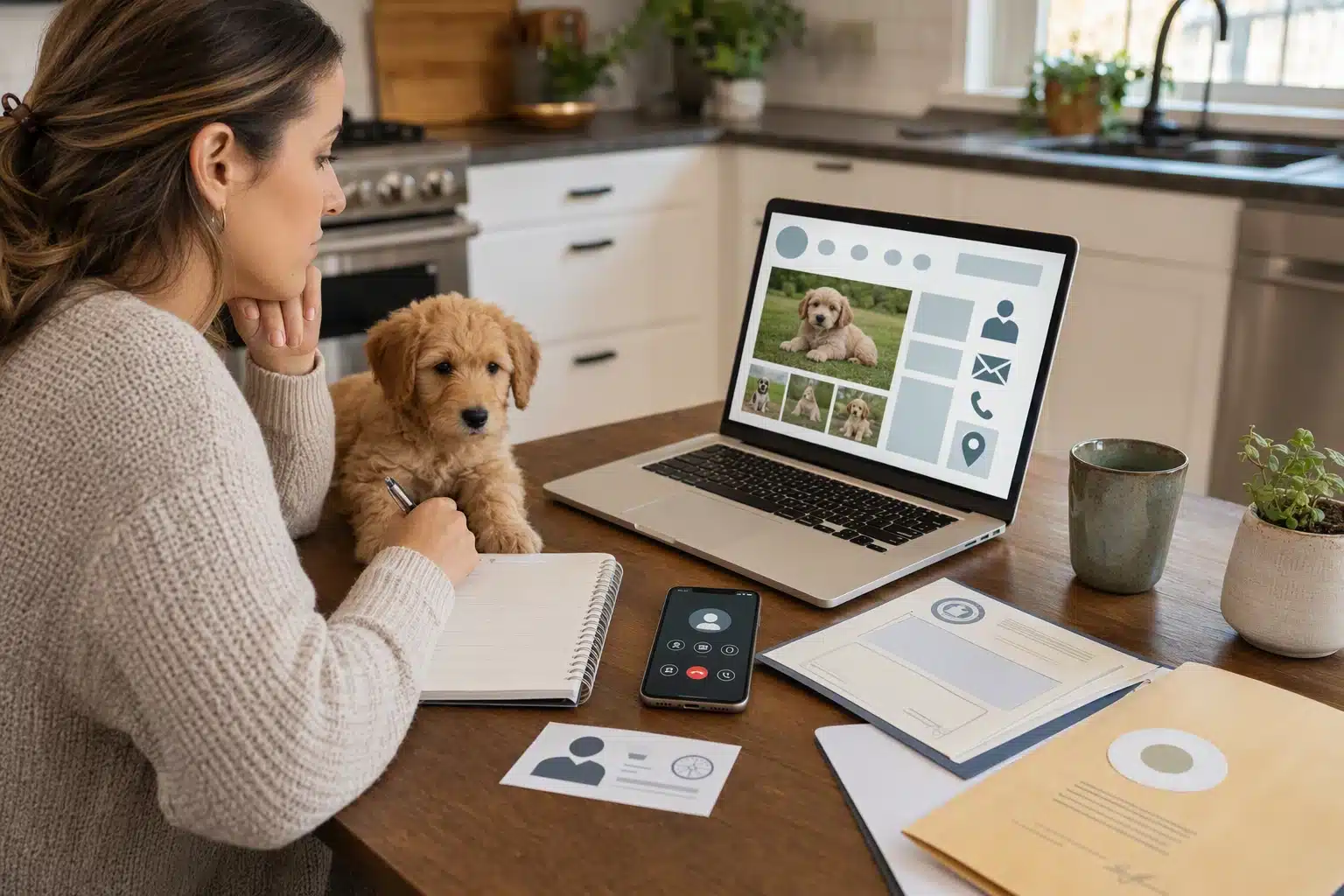
Start here, not with photos. A polished puppy listing can hide a weak breeder. Your first job is to confirm the person behind the litter is real, reachable, and willing to answer direct questions.
Check for a real identity and reachable contact details
Look for signs that the breeder operates like a real business, not a disappearing social profile.
Use this quick screen:
- A full name or business name
- A real phone number
- A physical location, even if visits are by appointment
- A working email tied to the breeder
- Clear breed focus, not endless mixed litters
- A website with health, process, and pickup details
Ask a few basic questions before you ask about price:
- Where are the puppies raised?
- Can you share parent health testing?
- Who is your vet or care team?
- Do you offer pickup, nanny delivery, or both?
- What happens if the match is not right?
A good breeder answers calmly and clearly. They do not dodge. They do not rush you to send a deposit. They also stay consistent across their site, email, and phone call.
If the breeder will only chat by text, avoids live calls, or will not share where the puppy is being raised, stop there.
| Green flag | Red flag |
|---|---|
| Real contact page and breeder story | No last name, no location, no call option |
| One or two breeds done well | Many breeds and constant availability |
| Clear process before deposit | Pushes payment before questions |
Look for licensing or local compliance where it applies
Kentucky buyers need a careful eye here. Kentucky does not have a simple statewide breeder license system you can rely on for every seller. That is why you should ask what rules apply to that breeder’s setup and sales model.
Federal USDA rules may apply to some dog breeders, especially those selling pets sight unseen and keeping more than four breeding females, according to USDA breeder licensing guidance. On the Kentucky side, a 2025 bill defined a “qualified breeder” for retail pet shop sourcing as one licensed by USDA with no direct USDA violations in the last two years, but that bill was not enacted.
That means your checklist should include:
- Ask if the breeder is USDA licensed, and why or why not
- Ask whether local county or city rules apply
- Ask for recent inspection history if they sell at scale
- Confirm the puppy is old enough for placement
- Confirm who bred the puppy and where it was housed
No license does not always mean bad breeder. But unclear answers usually do.
Breeders like Sage Puppies make this easier by explaining how their program works, where puppies are raised, and what families can expect before reserving.
Also Read: 10 Adorable Havapoo Colors You Need to See (2026)
2. Compare health testing and veterinary records
Start here: ask for proof, not promises. A good breeder should show parent testing, puppy care dates, and clear next steps if a health issue comes up. If they dodge paperwork, move on.
Ask for the parents’ breed-relevant health testing
Health testing is not the same as a basic vet exam. You want breed-specific screening on the sire and dam. The OFA CHIC program explains that recommended screenings vary by breed, and results should be public when submitted through CHIC or OFA databases OFA CHIC program.
Ask for:
- Registered names of both parents
- OFA or CHIC records you can verify
- DNA test results if relevant to the breed mix
- Heart, eye, patella, or hip testing if those issues matter for that breed
Use this quick check:
| Record to Request | What It Tells You | Red Flag |
|---|---|---|
| OFA or CHIC result | Parent had breed-relevant screening | Breeder only says “vet checked” |
| DNA panel | Carrier or clear status for known conditions | No copy, no lab name |
| Parent pedigree names | Lets you verify records yourself | Parent names kept vague |
If a breeder says testing is “not needed for small breeds,” treat that as a warning sign.
Confirm litter care, vaccines, and deworming dates
Next, review the puppy’s care sheet line by line. You want dates, product names, and who gave the care. According to AAHA, core puppy vaccines are given in a series from 6 to 16 weeks, and parasite control often starts very early, with deworming beginning around 2 weeks of age in many care plans AAHA vaccine recommendations.
Ask for:
- First exam date
- Vaccine dates and labels
- Deworming dates and product names
- Fecal test results, if done
- Microchip number, if already placed
A clean record should match the puppy’s age. If an 11-week-old puppy has no vaccine history, no deworming log, or only verbal claims, pause the deal.
Ask how the breeder handles follow-up health concerns
This part matters more than many buyers expect. Even careful programs can have questions after go-home day. What matters is how the breeder responds.
Ask:
- Who should you call first if your vet finds a concern?
- Do they want a vet report sent over?
- How fast do they reply?
- What support do they offer without making vague promises?
Look for calm, clear answers. Avoid breeders who get defensive when you ask about records or follow-up.
At Sage Puppies, this kind of transparency should feel normal, not special. You are not being difficult. You are buying wisely.
Also Read: Puppies For Sale Near Me: How to Spot Real Listings
3. Evaluate how the puppies are raised day to day
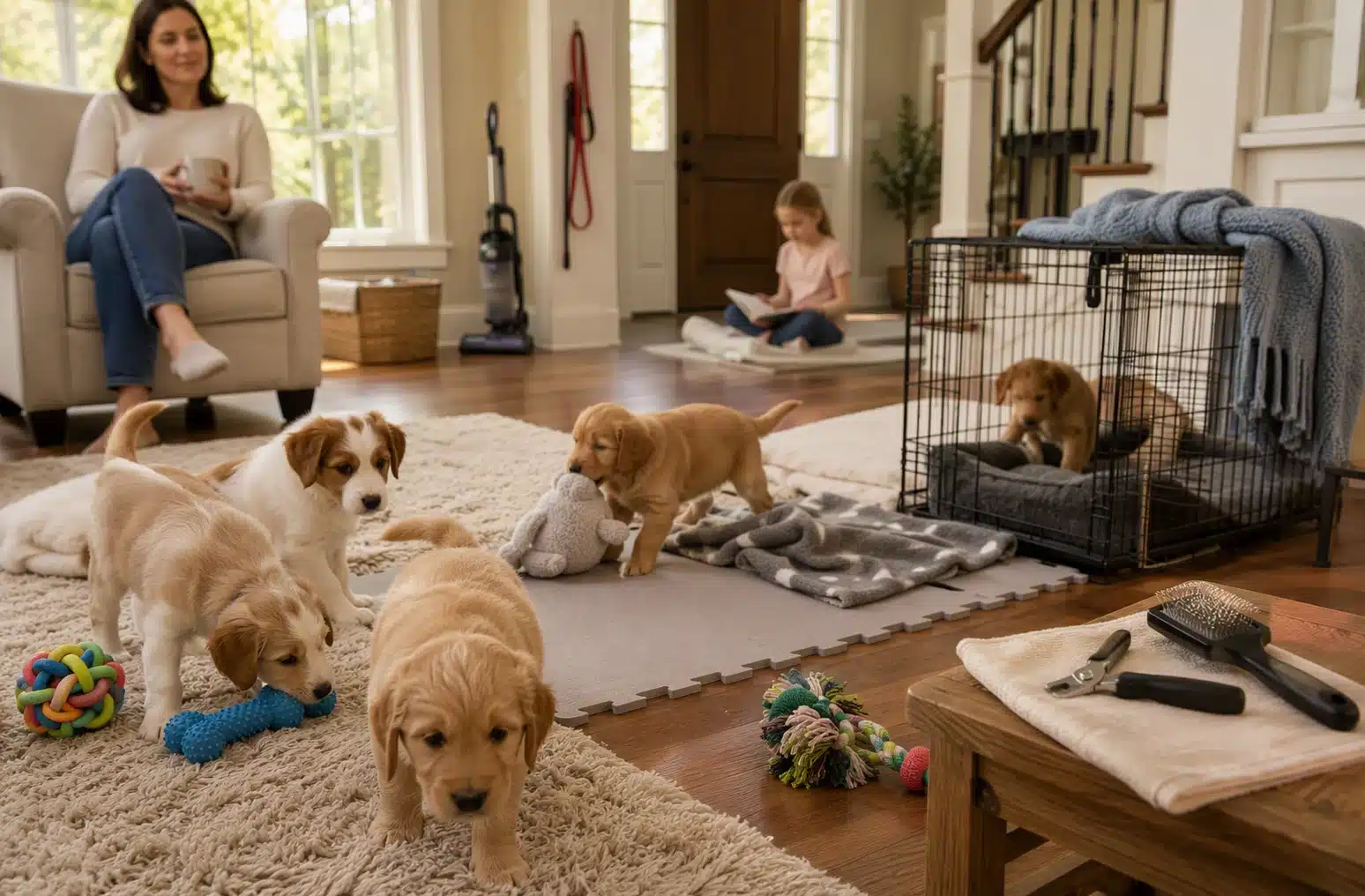
A breeder’s daily routine shapes far more than cute photos. Early, safe socialization during the first weeks helps puppies grow into more confident adult dogs, according to Penn State Extension. So ask what a normal day actually looks like, not just what the breeder plans to do.
Ask what the puppies experience every day
Use simple questions and listen for real details:
- Where do the puppies sleep and play?
- Who handles them each day?
- What sounds, surfaces, and rooms do they experience?
- Do they meet calm adults, children, or other stable household activity?
- Are they introduced to grooming, nail trims, crates, or short car rides?
Good answers sound concrete, like “they hear the vacuum from a distance” or “we rotate safe toys and textures.” Vague answers like “they’re very loved” are not enough.
| What to ask | Strong sign | Red flag |
|---|---|---|
| Daily handling | Gentle, repeated human contact | Only fed and cleaned |
| Home exposure | Normal household sounds and routines | Kept isolated from family life |
| New experiences | Slow, age-fit exposure | Too much too fast or none at all |
Listen for calm, specific answers about temperament
Temperament talk should sound steady, not salesy. The AKC notes that gentle exposure to people, sounds, smells, crates, and car rides during early life can shape how a puppy handles the world later according to AKC guidance.
Ask:
- How do you match puppies to families?
- Which puppy seems more easygoing, observant, or busy?
- How do you respond if one puppy is shy?
You want a breeder who notices differences without labeling a puppy as “perfect.” Strong breeders describe behavior in plain words:
- “This one recovers fast after new sounds.”
- “This one likes people but needs a minute first.”
- “This one may fit a quieter home.”
A trustworthy breeder explains both strengths and limits. That honesty helps you choose the right fit.
Notice whether the care feels organized and intentional
Look for signs that the program runs with purpose, not chaos.
A good breeder usually has:
- A clear feeding and cleaning routine
- A simple socialization plan by age
- Notes on each puppy’s progress
- A smooth handoff plan for pickup or delivery
You are not looking for perfection. You are looking for consistency. At Sage Puppies, for example, the best signal is not polished language. It is whether care feels thoughtful, family-raised, and easy to verify.
If the breeder cannot explain the puppies’ daily life in a calm, clear way, pause your search.
Also Read: 10 Small Breed Puppies That Stay Friendly & Easygoing
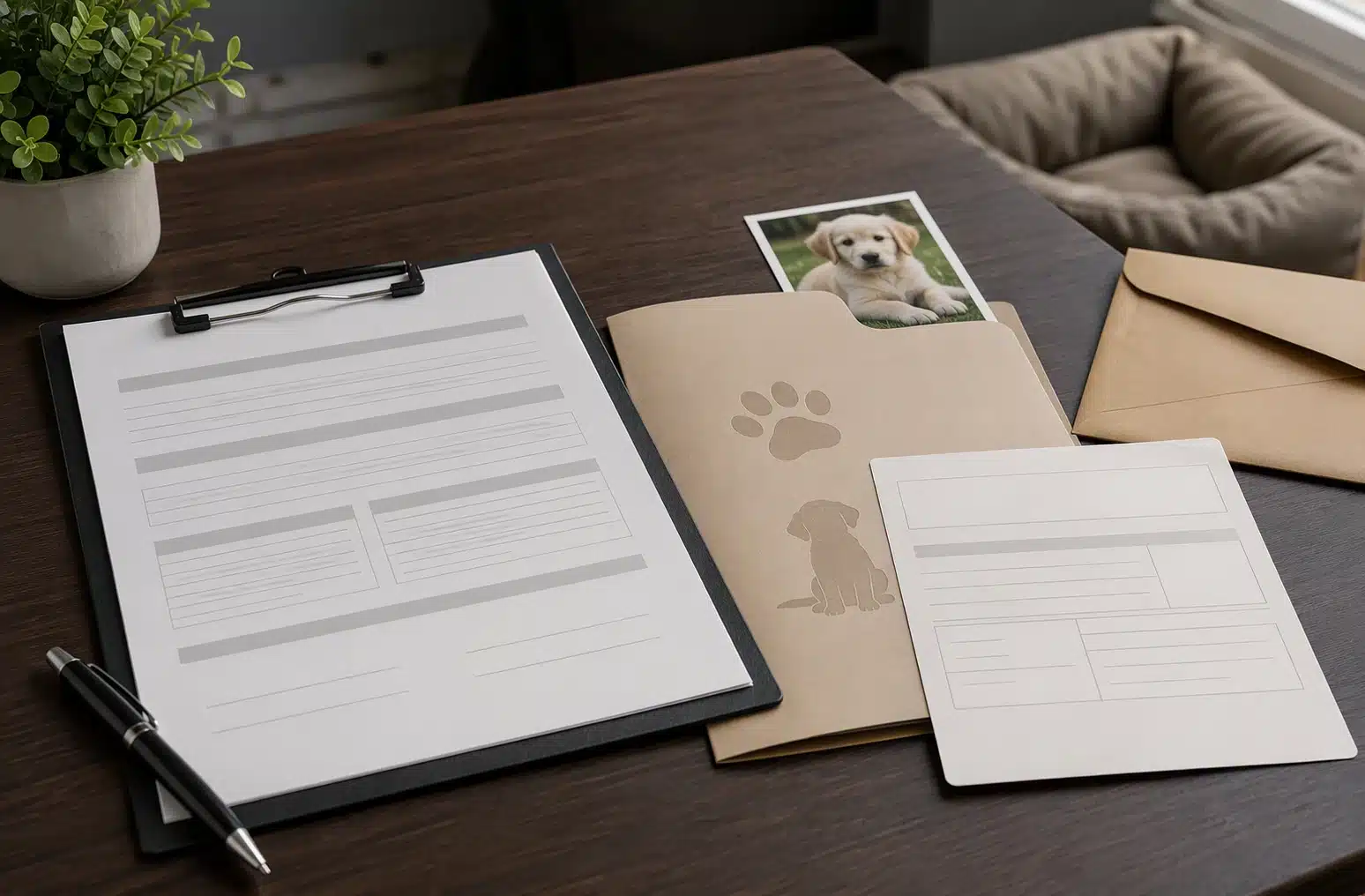
4. Read the contract before you reserve anything
A good puppy contract should answer the hard questions before money changes hands. Read it slowly. If a breeder rushes you, step back. In Kentucky, a recent bill says retail pet shops may sell dogs only from shelters or a qualified breeder, and it defines a qualified breeder as USDA licensed with no direct USDA violations in the last two years under this Kentucky bill.
Check the deposit and reservation terms
Start with the money section. You want plain language, not vague promises.
Ask these questions:
- Is the deposit refundable, partly refundable, or nonrefundable?
- What happens if the breeder, not you, cancels the match?
- Can your deposit transfer to a future litter?
- When does the balance come due?
- Are delivery, pickup, or travel costs separate?
A fair contract should also name the puppy clearly, or explain how selection works if you are reserving a future litter.
If the contract says “all sales final” but says little else, treat that as a warning sign.
| Contract item | What you want to see | Why it matters |
|---|---|---|
| Deposit terms | Exact refund or transfer rules | Prevents surprise losses |
| Reservation process | Clear puppy selection order | Avoids confusion |
| Payment timeline | Due dates in writing | Helps you plan |
| Extra fees | Delivery and pickup listed | Stops hidden costs |
Look for a clear return or rehoming policy
Life changes. A strong breeder plans for that.
Look for wording that explains:
- whether the breeder will take the puppy back
- whether they help with rehoming
- whether refunds ever apply
- what happens if a health issue appears soon after go-home
Many states have pet purchaser protection laws, but they vary a lot. According to the Animal Legal and Historical Center’s state table, 22 states had these laws as of 2023. That makes the breeder’s own written policy even more important.
The best contracts protect the puppy first, not just the sale.
Confirm what is included at go-home time
Before you reserve, make sure the contract lists what you will receive on pickup or delivery.
Check for:
- vaccination record
- deworming record
- microchip details, if included
- health record or exam paperwork
- feeding instructions
- registration papers, if promised
If the puppy will travel across state lines, ask what health paperwork is needed. USDA APHIS notes that state requirements can differ for interstate pet travel, so buyers should check the destination state’s rules before transport.
Also Read: Health-Tested Puppies for Sale Near Me: Buyer Checklist
5. Make sure the breeder’s placement process fits your family
A good placement process should feel careful, not chaotic. You are not just picking a puppy. The breeder is also deciding whether your home is the right match.
Expect questions about your home and routine
Strong breeders ask a lot. That is a good sign. The AKC notes that responsible breeders often ask about your home, work hours, other pets, and who will handle daily care in order to make a better match for the puppy’s temperament and needs according to AKC.
Look for questions like these:
- Who is home during the day?
- Do you rent or own?
- Do you have young kids?
- Have you owned a small breed before?
- What does travel, work, and weekend life look like?
If a breeder asks almost nothing and pushes for a deposit fast, slow down.
| What the breeder asks | Why it matters |
|---|---|
| Your schedule | Helps place a puppy with the right energy level |
| Other pets and kids | Helps lower stress and safety issues |
| Grooming and training plans | Shows if your expectations are realistic |

Check how the breeder handles communication
You want clear, calm contact from first inquiry to pickup or delivery. That does not mean instant replies every hour. It means steady answers, direct next steps, and honest limits.
A solid process usually includes:
- An application or interview
- Clear timing for updates
- Health and contract review before final payment
- Pickup or delivery details in writing
The AKC also says good breeders should encourage contact after the puppy goes home, not disappear after the sale in its breeder question guide.
Choose the path that feels calm and realistic
The best fit usually feels organized and low-pressure. You should know what happens next, what you owe, and when your puppy can go home.
Use this quick check:
- The breeder explains the process in plain English
- You know who to contact
- You understand pickup or delivery
- You do not feel rushed into a choice
If you want a family-first process with clear steps, see the parent guide and then review Sage Puppies’ Application, How It Works, and Delivery/Pickup pages before you move forward.

If you want a safer next step after your Kentucky breeder checklist, start with Sage Puppies. Their home-raised Havanese, Havapoo, and Cavapoo puppies come from health-tested parents, with a clear family-first process, local pickup, and nationwide delivery. Review available puppies, pricing, and how it works, then submit an application when the right fit feels clear.
Frequently Asked Questions
Q1: where to buy puppies in Kentucky
Start with breeders who clearly show parent health testing, home-raising, puppy socialization, and a real application process. Ask for records before you place a deposit. If local options feel unclear, many families also choose trusted programs like Sage Puppies and use delivery.
Q2: What should I ask a breeder before reserving a puppy?
Ask about parent health testing, puppy vet records, early socialization, temperament goals, pickup timing, and refund terms. You should also ask who raises the puppies day to day. Clear, direct answers usually tell you a lot about breeder quality.
Q3: Is delivery safe for a puppy coming to Kentucky?
It can be, if the breeder explains the process well. Ask who handles transport, how long travel takes, what the puppy goes home with, and how handoff works. Good breeders treat delivery with the same care as local pickup.
Q4: How do I spot a red flag fast?
Watch for pressure, vague answers, missing health details, no video calls, and many breeds offered at once. Low prices can be a warning too. If the breeder avoids your questions, move on.
Q5: Should I choose breed first or breeder first?
Choose both together. A good breeder helps match breed, size, energy, and grooming needs to your home. That matters a lot for small companion dogs, especially if you want a calm, family-ready puppy instead of just a cute photo.
Conclusion
A smart Kentucky puppy search comes down to three things: verify the breeder, confirm the puppy’s health work, and make sure the fit is right for your home. If a listing feels rushed, vague, or too cheap, step back.
This guide showed you what to check first:
- breeder identity and real location
- health testing, vet records, and vaccine timing
- temperament and size fit for your family
- pickup or delivery details
- clear answers on pricing, deposits, and support
Kentucky buyers should also remember that animal movement rules can affect paperwork. The USDA notes that interstate pet travel rules depend on the destination state, and buyers should confirm health requirements before travel or delivery with APHIS guidance. Kentucky regulations also outline when a Certificate of Veterinary Inspection is required for animal movement under 302 KAR 20:020.



