Quick Summary: Choosing a healthy puppy in Maryland shelters requires inspecting physical signs like bright eyes, clean ears, and easy movement, rather than just cuteness. Ask detailed questions about health records, behavior, and stress responses to ensure the puppy fits your home and lifestyle. Patience and careful observation help find a puppy with good health and temperament, making for a better long-term match.
At a Maryland shelter meet-and-greet, the best choice is rarely the noisiest puppy pressing at the gate. A stronger pick is often the pup with bright eyes, a clean coat, easy breathing, and calm recovery once the room settles. That is where Healthy Puppy Adoption starts.
The hard part is simple to name. Many first-time families focus on color, size, or the puppy that runs over first. In busy shelter settings, that can hide early health issues, fear, or stress. With Maryland Shelter Puppies, you need a clear way to judge what you are seeing in real time.
This guide helps you do that. You will learn practical Puppy Selection Tips, the health signs worth checking first, and the behavior cues that matter before you say yes. You will also see how Healthy Puppy Adoption works in Maryland, where shelter rules, timing, and follow-up care can vary.
We write for families who want a smart, calm decision, not a rushed one. Our team spends every day helping puppy buyers weigh health, temperament, and fit. If a shelter puppy is not the right match, you can also compare your options with our parent guide and use the same Healthy Puppy Adoption framework there.
1. Start With the Puppy’s Physical Condition
A quick head-to-tail check tells you a lot before staff says a word. Shelter teams should assess each animal at intake, and that exam helps spot urgent health needs early, according to ASPCApro’s intake exam guidance. Your job is simpler. Look for clear signs of comfort, cleanliness, and normal body function.
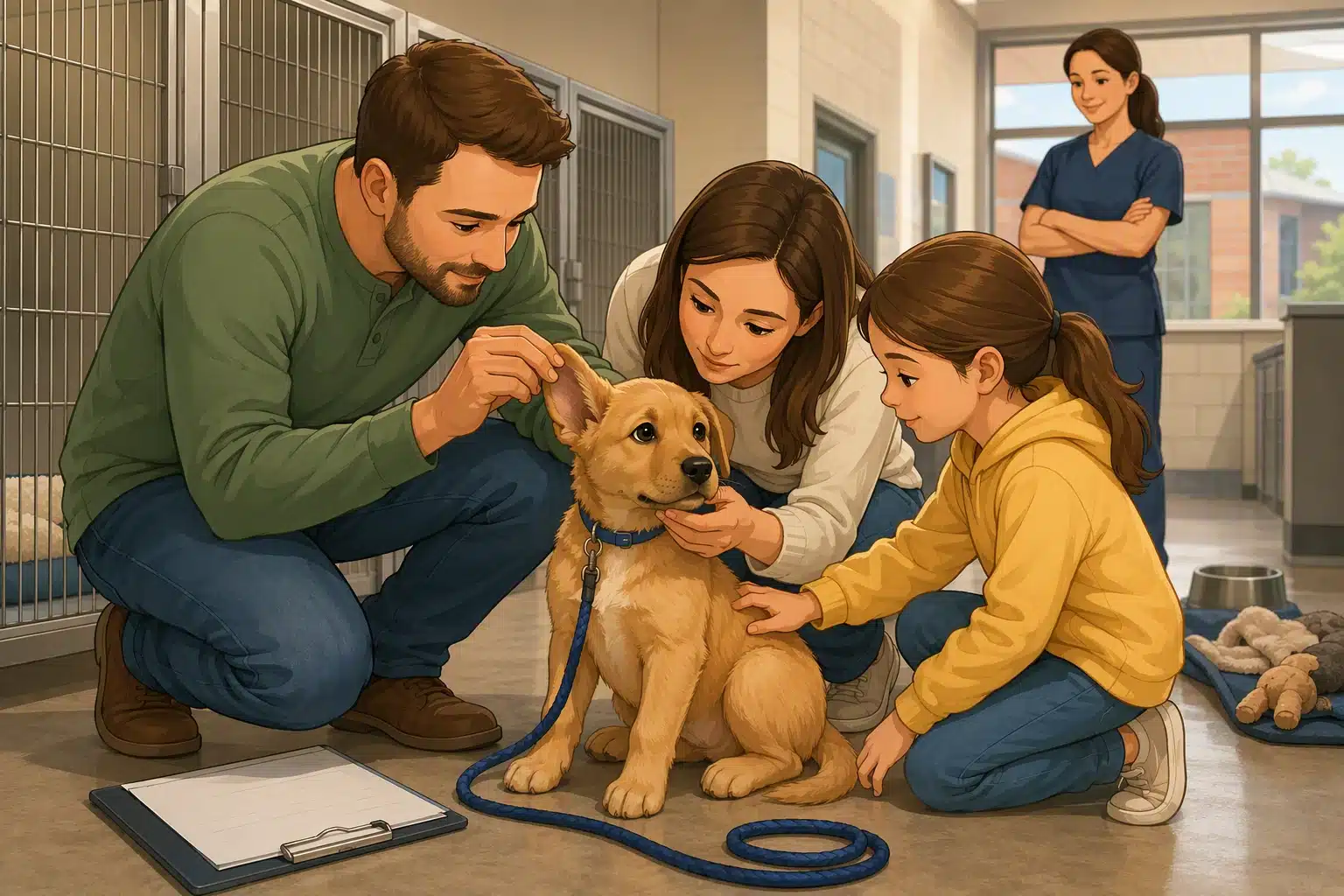
Check the Eyes, Nose, Ears, and Coat First
Start with the face. Healthy puppies usually have:
- Bright, clear eyes
- A clean nose with no thick discharge
- Clean ears without redness, crust, or bad odor
- A soft, clean coat without bald spots, scabs, or flea dirt
The AKC notes that a healthy puppy’s eyes should be clear, ears clean, and coat free of red or bare spots in its healthy puppy checklist. That lines up well with what you want to see in a Maryland shelter.
Watch for small warning signs too:
- Tear staining plus squinting
- Yellow or green mucus
- Ears that make the puppy scratch hard
- Dull fur, greasy patches, or a strong smell
- Pot belly with a very thin frame
A shelter puppy does not need to look perfect. Minor dirt from kennel life is one thing. Signs of infection or parasites are another.
Use this fast screen:
| Area | Good sign | Red flag |
|---|---|---|
| Eyes | Clear and open | Discharge, redness, squinting |
| Nose | Slightly moist, easy breathing | Thick mucus, crusting |
| Ears | Pale pink, no odor | Redness, debris, foul smell |
| Coat | Clean, full, soft | Fleas, bald spots, sores |
Watch How the Puppy Moves and Breathes
Now step back and observe. Do not judge only while the puppy is sitting in a kennel. Ask to see the puppy walk on the floor.
Look for:
- Even steps on all four legs
- Easy breathing with no wheeze, honk, or harsh cough
- Normal energy for the puppy’s age
- Good balance when turning or stopping
A brief nap is normal. Struggling to stand is not. Fast breathing after play can happen. Labored breathing at rest is a problem.
If a puppy pants hard in a cool room, coughs often, or seems weak in the rear legs, pause the adoption and ask for a vet review.
Bring this short checklist with you:
- Walks without limping
- Stands without wobbling
- Breathes quietly at rest
- No repeated cough or gag
- Recovers quickly after light play
2. Read Temperament Before You Read the Kennel Card
Look for Curiosity, Not Just Excitement
A bouncing puppy can win you fast. That does not always mean a good fit. In a shelter, the better sign is curiosity with recovery. You want a puppy that notices you, checks you out, and can settle again.
According to the AVMA socialization review, puppies that get positive early exposure to people, sounds, and new settings are less likely to develop fearful behavior later. So during your visit, watch for interest, not chaos.
Use this quick read:
| Temperament clue | Usually a better sign | More caution needed |
|---|---|---|
| Approach style | Comes near, sniffs, pauses | Charges hard or avoids fully |
| Body movement | Loose, wiggly, balanced | Stiff, frantic, or frozen |
| Attention span | Can re-engage after distraction | Stays overstimulated |
| Recovery | Startles, then checks back in | Startles and stays shut down |
Look for puppies that:
- Walk over on their own
- Sniff your shoes or hand
- Show a soft face and loose tail
- Explore the space without panic
- Bounce back after a brief surprise
A puppy that can calm down after excitement is often easier for first-time families than one that stays in overdrive.
Do not rule out a quieter puppy too fast. Shelter stress can make some puppies seem flat at first, then open up once they feel safe.
Notice How the Puppy Handles Gentle Handling and New Sounds
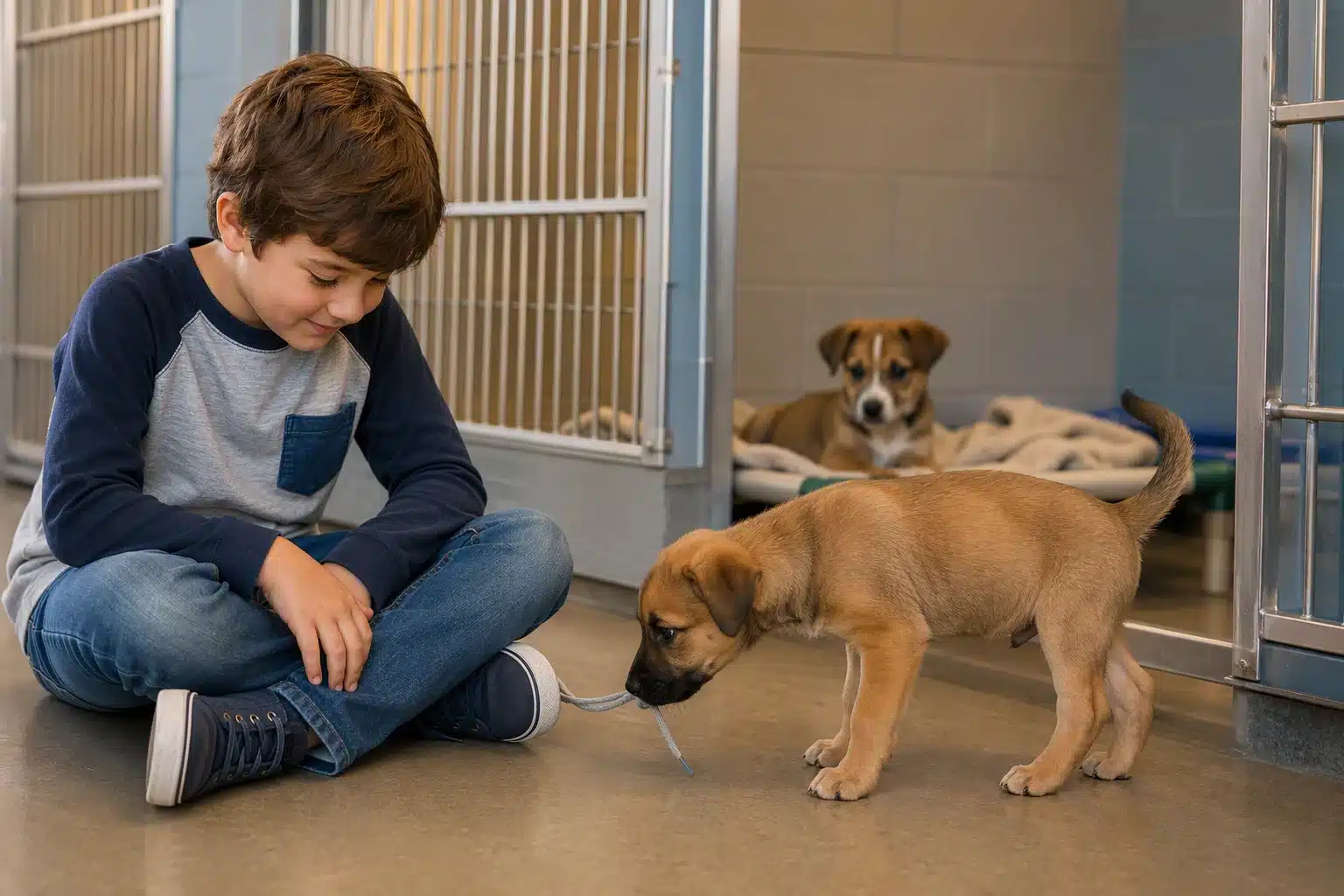
Next, ask for a short meet-and-greet in a calmer space. Watch how the puppy responds to light touch, a new object, or a small sound. The goal is not a perfect reaction. The goal is a manageable one.
The AVSAB puppy socialization statement says puppies should meet new people, places, and stimuli without becoming over-stimulated or showing strong fear, withdrawal, or avoidance. That gives you a solid filter.
Try a simple checklist:
- Pet the shoulder first, not the top of the head.
- Gently touch paws or ears once.
- Drop a soft item like keys on a chair, not the floor.
- See if the puppy recovers within seconds.
Good signs:
- Brief pause, then re-engages
- Accepts touch without mouthing hard
- Leans away mildly, then returns
- Takes treats after the surprise
More concern:
- Trembling, freezing, or hiding
- Repeated hard biting during handling
- Cannot take food after a mild sound
- Escalates instead of settling
Read the puppy in front of you, not the kennel label. A card can tell you age and intake notes. It cannot tell you how this puppy handles your family’s real life.
Also Read: 10 Adorable Havapoo Colors You Need to See (2026)
3. Ask the Shelter the Questions That Reveal the Full Story
A cute puppy can distract you. Good questions keep you clear. In Maryland, shelters must have written veterinary care protocols that cover disease control, behavioral health, and enrichment, and they must make that protocol available on request under Maryland shelter law. So ask direct questions and expect direct answers.
Questions About Medical History and Current Care
Use this short list while you meet the puppy:
- What vaccines has this puppy had, and on what dates?
- Has the puppy been treated for worms, fleas, mange, cough, or diarrhea?
- Has a vet seen this puppy, or only intake staff?
- Is there any current medicine, follow-up care, or surgery still needed?
- Has the puppy been eating normally and gaining weight?
- Has this puppy been isolated for illness exposure?
| Question | Why it matters | Good sign |
|---|---|---|
| Vaccine dates | Tells you what protection started | Shelter gives exact dates |
| Deworming and parasite care | Puppies often carry parasites | Staff can explain treatment |
| Vet exam status | Intake notes are not a full history | Medical record is available |
| Current symptoms | Cough or loose stool can flare after adoption | Staff is honest and specific |
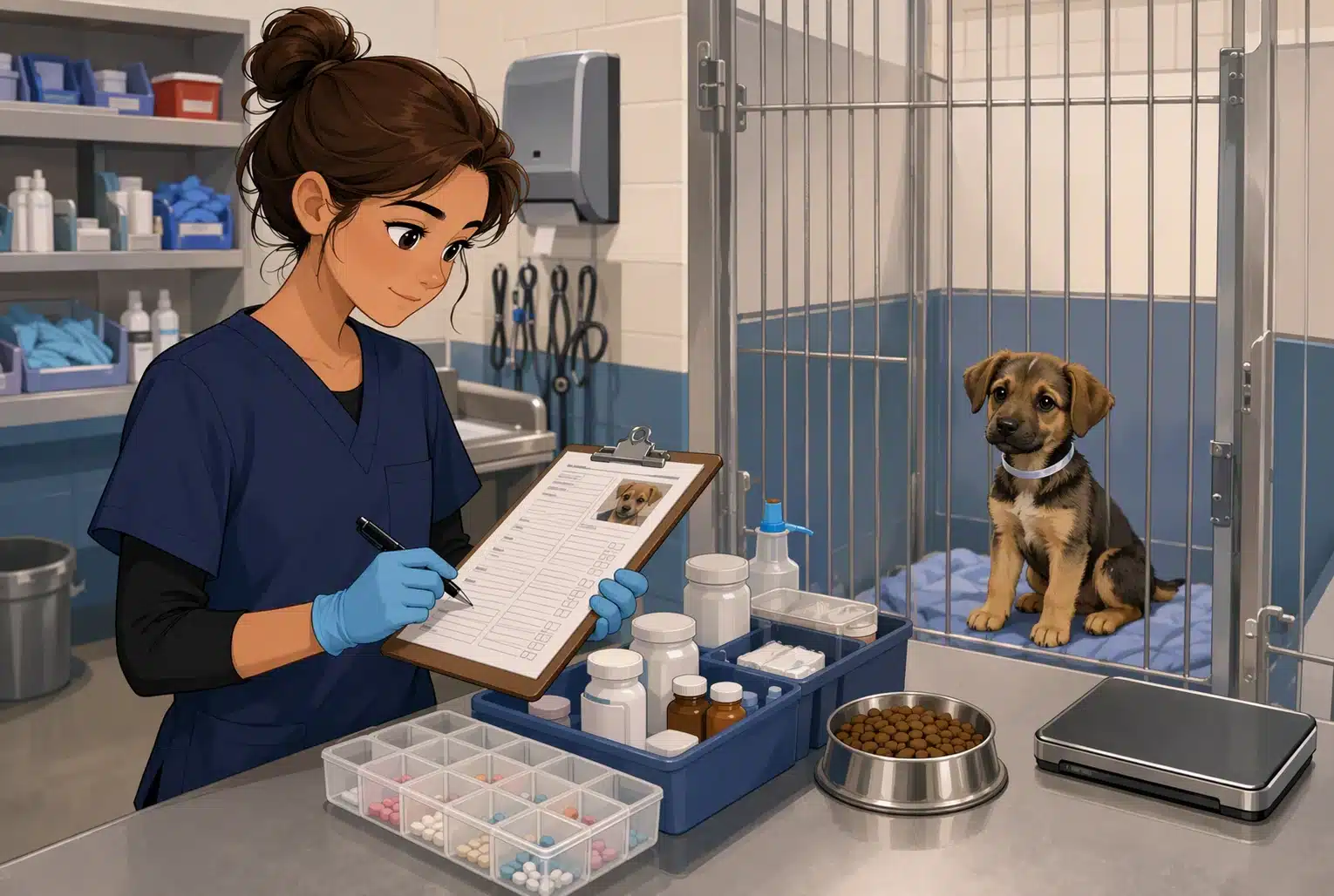
Maryland shelter standards require medical care, sanitation, and record keeping under state shelter regulations. That does not mean every puppy arrives with a full backstory. Strays and transfers often come with gaps.
If staff says, “We do not know,” that is not always a red flag. Evasive, vague, or changing answers are.
Ask for copies of:
- vaccine records
- deworming records
- spay or neuter status
- microchip details
- any discharge notes
Questions About Behavior, Stress, and Social History
Puppies in shelters do not act like they do at home. Stress changes sleep, appetite, barking, and confidence. Ask:
- How long has this puppy been here?
- Was the puppy a stray, owner surrender, or transfer?
- How does the puppy act after leaving the kennel?
- Has the puppy shown fear, guarding, biting, or nonstop barking?
- How does the puppy respond to kids, men, handling, and other dogs?
- Has the puppy spent time in foster care?
A foster update can tell you more than five minutes in a kennel.
| Ask this | What you learn |
|---|---|
| “What happens when the puppy gets stressed?” | Recovery speed and coping style |
| “What does the puppy enjoy?” | Food, toys, touch, or space |
| “Any known triggers?” | Noise, fast movement, restraint, other dogs |
Ask for examples, not labels. “Shy” means little. “Backed away, then returned for treats in two minutes” means a lot.
If you want a more predictable start, this is where a family-raised program like Sage Puppies differs from shelter adoption. Shelter puppies can be wonderful. You just need cleaner facts before you say yes.
4. Match the Puppy to Your Home, Not Your Wish List
A cute face should not make the choice for you. The best puppy is the one that fits your home, your pace, and your limits. Shelter staff in Maryland often try to make that match on purpose, and Montgomery County says counselors help families find the right fit, not just the dog they first notice (Montgomery County adoption process).
Fit for Children, Other Pets, and Daily Rhythm
Start with your real life.
Ask yourself:
- Are your kids calm or loud?
- Do you already have a dog or cat?
- Is someone home during the day?
- Can you handle puppy energy every day?
A good match often looks like this:
| Home factor | Better puppy traits | Red flag to watch |
|---|---|---|
| Young children | Gentle recovery after handling, soft body language | Startles fast, nips hard |
| Other pets | Curious but not pushy, easy to redirect | Fixates, guards toys |
| Busy schedule | Settles after play, can rest in crate or pen | Needs constant action |
| Quiet home | Calm, people-focused, not frantic | Paces, vocalizes nonstop |
Watch one full interaction, not one cute moment.
- See how the puppy reacts to noise
- Notice if it can calm down after play
- Ask if it has lived with kids or pets before
- Bring all decision-makers if the shelter allows it

If a puppy seems sweet but your home is loud, busy, and full of young kids, that mismatch will show up fast.
Choose the Puppy You Can Support Well for the Long Term
Puppies need time, training, money, and patience. The ASPCA advises adopters to think about space, schedule, and unplanned costs before bringing a dog home (ASPCA adoption tips).
Use this quick check before you say yes:
- Time – potty breaks, training, exercise, vet visits
- Budget – food, vaccines, accidents, gear, emergency care
- Skill – can you work through chewing, barking, fear, and house training?
- Housing – landlord rules, yard safety, room for gates or crate
Pick the puppy you can raise well, not the one that matches an old dream. If shelter life feels too uncertain for your family, a structured program like Sage Puppies may fit better because you can weigh temperament, size, and home routine before placement.
Also Read: Puppies for Sale Near Me: How to Spot Healthy Litters
5. Red Flags That Mean You Should Pause, Not Push
If a puppy feels like a maybe, treat it like a not yet. Good shelters will respect that. This guide connects back to the main decision framework in the parent post on choosing a healthy puppy in Maryland shelters.
Health-Related Warning Signs Worth Clarifying
Some issues are fixable. Some need a vet plan before you say yes. Shelter dogs face higher disease exposure, so intake vaccines and close monitoring matter in group settings, according to AAHA shelter vaccination guidance.
Pause and ask more questions if you see:
- Runny nose, coughing, or eye discharge
- Vomiting or diarrhea
- Bloated belly or very thin body
- Hair loss, fleas, scabs, or strong odor
- Limping, low energy, or trouble standing
- No clear medical notes, vaccine record, or deworming history
| Red flag | Why it matters | What to ask |
|---|---|---|
| Cough or nasal discharge | Could be kennel cough or other illness | Has the puppy been seen by a vet? |
| Diarrhea or vomiting | Can point to stress, parasites, or infection | When did it start, and what treatment was given? |
| Skin issues | May be fleas, mites, fungus, or allergy | Is it contagious, and what follow-up is needed? |
A shelter should be able to explain what they know, what they do not know, and what comes next.
Behavioral Warning Signs Worth Taking Seriously
Do not confuse shut down with calm. Stress can hide a puppy’s real personality. Early socialization matters because fear and avoidance in young puppies can grow into bigger behavior issues later, as noted in this AVMA socialization review.
Pause if the puppy:
- Freezes and cannot recover
- Snaps when gently touched
- Panics when separated from littermates
- Shows intense guarding over food or toys
- Stays fearful across repeated, gentle meetings
One nervous moment is not the issue. A pattern is.
Ask for:
- A second visit
- A quiet-room meet
- Notes from foster care, if available
- Honest feedback on how the puppy handles kids, noise, and handling

If you want a clearer, lower-stress path than sorting through shelter unknowns, take a look at Sage Puppies. Their home-raised Havanese, Havapoo, and Cavapoo puppies come from health-tested parents, with early socialization and a transparent process families can actually follow. You can review available puppies, pricing, pickup or delivery, and apply when the fit feels right.
Frequently Asked Questions
Q1: What factors should I consider when choosing a healthy puppy in Maryland shelters?
Check energy, appetite, coat, eyes, stool, and breathing first. Then look at age, vaccine records, deworming, and any known past illness. Ask how the puppy acts around kids, noise, and handling. Pick a puppy whose needs match your home, schedule, and budget.
Q2: How can I assess a shelter puppy’s health and temperament before adoption in Maryland?
Watch the puppy both inside the kennel and out. You want curiosity, recovery after stress, and comfort with gentle touch. Ask for a full health summary and vet notes. If allowed, schedule a pre-adoption exam so you catch issues like worms, skin trouble, or fear signs early.
Q3: What are the benefits of adopting from Maryland shelters vs. buying from breeders for puppies?
Shelters often cost less and may include vaccines, microchip, and spay-neuter support. You also help a puppy that needs a home. A breeder may offer deeper background on parents and early care. The right choice depends on how much history, predictability, and support you want.
Q4: Should I avoid a shy puppy?
Not always. A shy puppy can do well if it recovers quickly and accepts calm handling. Avoid one that stays frozen, shuts down, or snaps.
Q5: What medical records should I ask for before adopting?
Ask for intake notes, vaccine dates, deworming, fecal results, medication list, and vet findings. Clear records help you plan next steps fast.
Conclusion
Choosing a healthy puppy in a Maryland shelter comes down to a few clear checks. Look for bright eyes, clean ears, easy movement, a healthy coat, and calm, curious behavior. Ask direct questions about vaccines, worming, past illness, and what the shelter has seen in foster care or intake notes.
Your best choice is rarely the puppy that seems cutest in the first minute. It is the one whose health, energy, and temperament fit your home.
Maryland shelters must follow minimum care standards, and shelters covered by state law must maintain written veterinary care protocols and disease control plans under Maryland shelter laws. Maryland also requires rabies vaccination for dogs by 4 months old under state rabies regulations.
A good adoption decision balances health, temperament, and fit.
If you stay patient, ask better questions, and trust what you see, you are far more likely to bring home the right puppy for your family.