
Quick Summary: Illinois now bans pet stores from selling puppies unless they come from shelters or animal control facilities, forcing buyers to dig deeper into sourcing. Petland became a test case after complaints alleged its stores skirted the law by selling puppies from breeders under dealer licenses instead. Families should demand proof of the puppy’s breeder, health records, and home-raised environment-never trust a storefront license alone. Sage Puppies offers a clear alternative with home-raised, health-tested puppies and direct breeder access, avoiding the ambiguity of retail sales.
Families searching puppies Illinois near me face new questions at retail stores. Illinois puppy laws, in force since 2022, limit pet-shop dog sales to shelter or animal-control sources. Bills such as SB 2990 and SB 1545 seek stronger enforcement. Petland remains central after reports of affected stores and dealer-license efforts. Illinois puppy laws can confuse buyers. A storefront license or warranty proves little. This guide separates current state puppy regulations from pending bills and compares sellers with transparent, home raised puppies.
What Illinois Law Currently Restricts at Pet Stores
Illinois puppy laws draw a firm line around retail pet-shop sales. A store cannot simply stock puppies from commercial breeders and sell them to walk-in buyers.
The Shelter and Animal-Control Exception
Under Illinois law, a pet shop may offer a dog or cat for sale only if it came from a compliant animal shelter or animal-control facility. The shop must keep source records for two years and provide them to the state when asked.
A store may also give a shelter or animal-control group space to showcase animals for adoption.
| Store activity | Illinois rule |
|---|---|
| Sell a puppy sourced from a breeder | Not allowed for a pet shop |
| Offer a shelter-sourced dog | Allowed if sourcing rules are met |
| Host an adoption event | Allowed when the shelter or agency owns the animal |
| Keep source records | Required for two years |
Ask who owns the puppy today and request the source paperwork. “Rescue” should be easy to verify.
Why a Dog-Dealer License Does Not Settle the Question
A dog-dealer license is not a free pass to operate a retail puppy store. Illinois licenses pet shops, dog dealers, breeders, shelters, and other animal businesses as separate types of operations.
The state defines a pet shop as a business selling animals at retail to the public. It defines a dog dealer more broadly, yet the retail sourcing ban still applies to a pet shop. A license number proves only that a business holds that license. It does not replace the sourcing limits or local rules.
For families searching puppies Illinois near me, treat a license as one check, not the whole answer.
What the Law Does Not Mean for Direct Breeder Purchases
Illinois puppy laws do not ban families from buying directly from a breeder that produced and raised the puppy. The statute specifically treats those breeder sales differently from pet-shop sales.
Still, direct does not mean skip your homework. Verify the parents, health testing, home setting, contract, and pickup or delivery plan. That is the safer path for families looking for puppies Illinois near me.
Why Petland Became the Test Case for Enforcement
Eight Illinois Petland Stores Were Identified as Affected
Petland drew attention because its stores made the gap between Illinois law and retail practice easy to see. Reports and advocacy filings identified eight Illinois Petland locations as part of the wider debate over puppy sales after the state ban took effect.
The key question was simple: can a store still present, market, and arrange puppy sales while operating under a different license type?
Illinois law allows pet shops to offer dogs only when they come from a qualifying animal control facility or animal shelter, with records available to the state under Section 3.8.
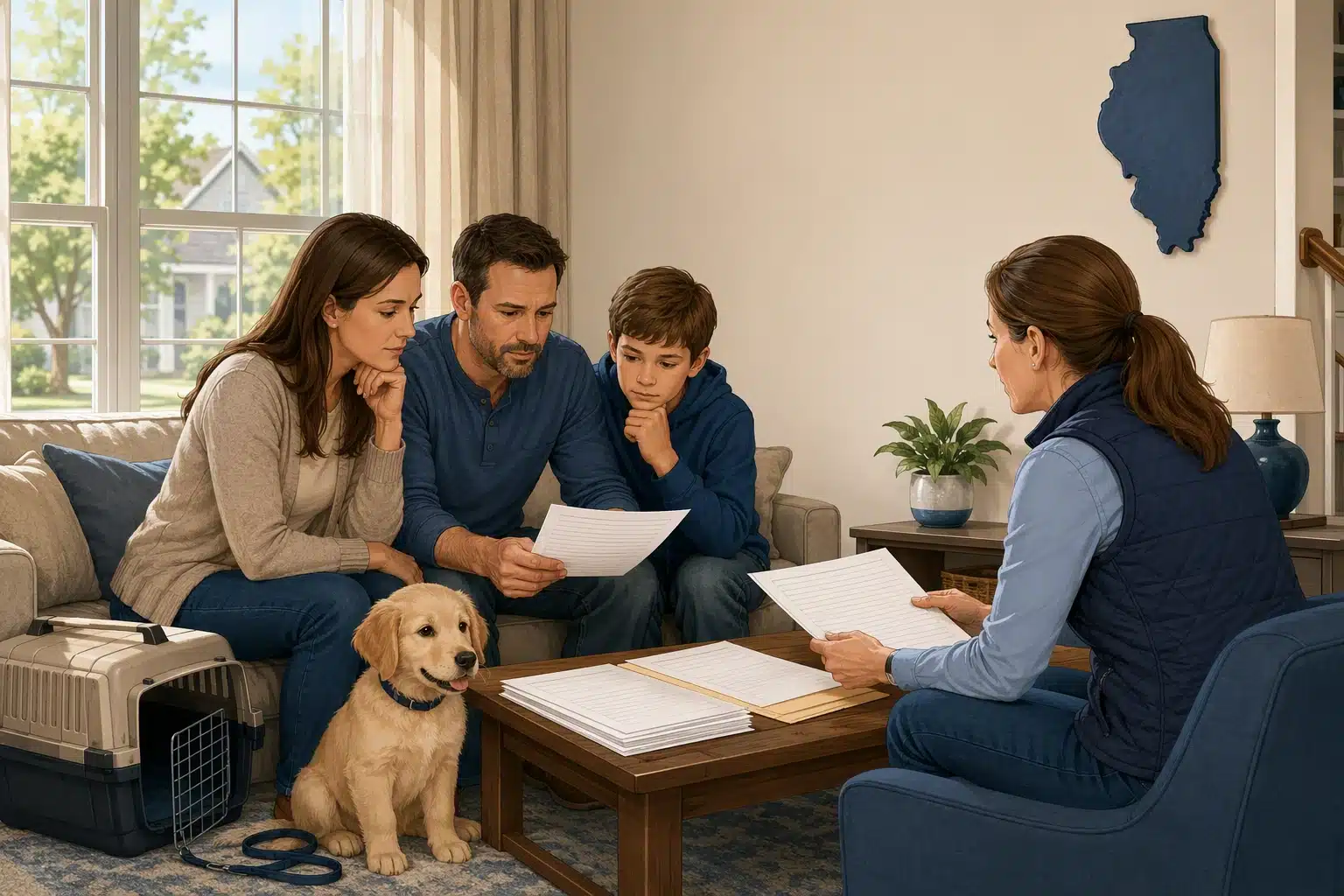
The 2024 Complaint Focused on Sources and Licensing
A June 2024 complaint named Petland Batavia, along with other Illinois businesses and licensees. It asked the Illinois Department of Agriculture to investigate and revoke certain dog dealer licenses.
The complaint alleged that retail puppy sales continued through dog dealer licenses, even though those licenses did not permit retail storefront sales. It also raised concerns about where puppies came from.
| Issue raised | Why it mattered to enforcement |
|---|---|
| Dog dealer licensing | A dealer license was alleged to be used for a retail-style sale |
| Puppy sources | The complaint alleged links to commercial breeders and brokers |
| Storefront display | Showing puppies in a shop can look like a retail sale to families |
| Required records | Source paperwork helps the state check lawful placement |
The Animal Legal Defense Fund said its complaint covered six licensees, including Petland Batavia, and alleged that stores offered dogs from sources other than shelters or animal control facilities in its 2024 filing.
These were allegations, not a shortcut for families to assume facts about every puppy or every seller. Still, the dispute put the burden back where it belongs: on sellers to show clear, checkable records.
What Families Should Take From the Dispute
Storefront ease is not proof of a puppy’s background. Ask for details before you reserve.
- Get the breeder’s full name and location.
- Ask to see parent health testing and puppy care records.
- Confirm where the puppy was raised.
- Speak directly with the breeder, not only a sales team.
- Walk away if records are vague or delayed.
A good breeder welcomes thoughtful questions. Pressure, missing names, and unclear sourcing are reasons to pause.
Sage Puppies gives families a different path: home-raised Havanese, Havapoo, and Cavapoo puppies, clear parent information, and direct support from South Jordan, Utah through pickup or nationwide delivery.
Also Read: 10 Adorable Havapoo Colors You Need to See (2026)
The Consumer Risks Behind a Storefront Purchase
Limited Visibility Into the Breeding Environment
A clean store window does not show where a puppy was born or how its parents live. You may see the puppy for 20 minutes, but never see the mother, littermates, daily care, or adult dogs.
Illinois requires licensed sellers to keep origin and sale records, and to provide pedigree proof for purebred dogs when applicable under state law. Ask for those records before you reserve.
- Breeder name, address, and license details
- Parent health-test results, not just a verbal claim
- Recent videos of the puppy’s home and mother
- Clear answers about who raised the litter
A seller who cannot show the puppy’s start in life is asking you to accept a major unknown.
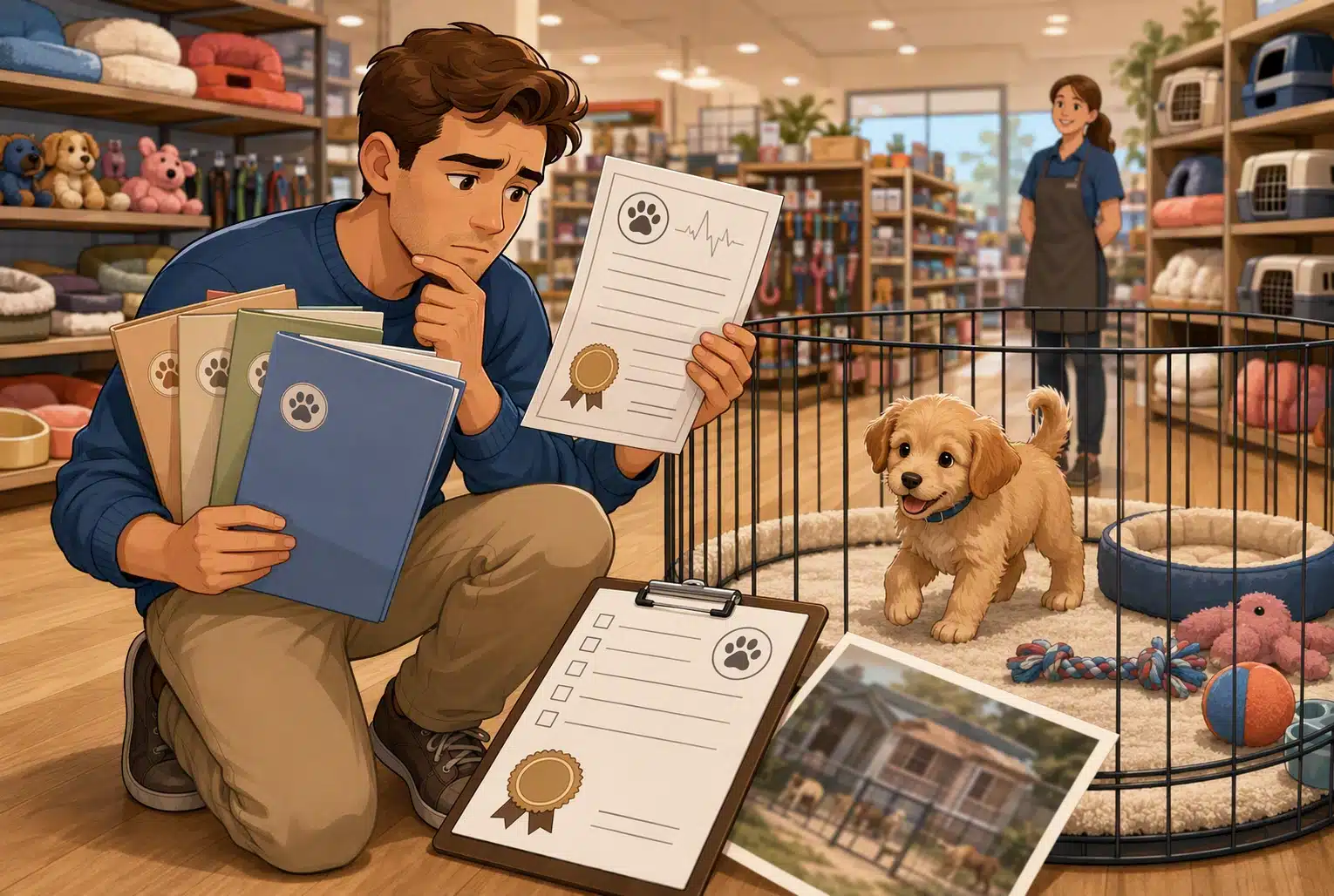
Health, Socialization, and Early Development Questions
Store staff may know a puppy’s age, breed mix, and vaccine dates. That is useful, but it does not replace firsthand knowledge of early care.
Illinois requires pet shops to give buyers disclosures about price, breed, age, medical care, source, return policies, and remedies. Review the required pet-shop disclosures before signing anything.
Ask direct questions:
- Who handled the puppy each day?
- What home sounds, surfaces, and people did it meet?
- Was the puppy observed with its mother and littermates?
- What records can your own veterinarian review?
A family-raised program like Sage Puppies can answer these questions from direct daily experience.
Financing Can Make a High-Stakes Decision Feel Urgent
A monthly payment can make a puppy seem affordable in the moment. It can also distract from the full cost of care, training, grooming, food, insurance, and surprise vet bills.
Pause before applying or placing a deposit. Compare the total cost, read every term, and give yourself a night to think.
| Check before you commit | Why it matters |
|---|---|
| Total amount paid | Fees can raise the true price |
| Refund and return terms | Problems may appear after pickup |
| Breeder records | Source matters more than convenience |
Choose the puppy’s lifelong fit first. Choose payment second.
Also Read: Puppy Breeder Near Me vs Pet Store: Key Differences
What 2026 Illinois Bills Could Change
SB 2990 Targets Classification and Enforcement Gaps
SB 2990 would change how Illinois treats retail puppy sellers under the Animal Welfare Act. Its text says a person selling dogs at retail would not count as a “dog dealer” or animal shelter. It also adds new breeder facility rules.
The proposal calls for compliant primary enclosures and adult-dog exercise areas at least twice the minimum enclosure space. It gives the Illinois Department of Agriculture clearer power to deny, suspend, or revoke licenses for unlicensed activity, according to the bill text.
Key point: This was a proposal, not a blanket new Illinois puppy-sale ban.
| Proposed change | What it could affect |
|---|---|
| Retail-sale definitions | How storefront sellers are classified |
| Enclosure and exercise rules | Licensed breeders with more than five intact females |
| License enforcement | Sellers operating without the right license |
Other Proposals Focus on Professional Breeders and Sourcing
HB 4047 sought to define a “professional breeder” and set care standards, while HB 1902 proposed broad genetic-testing and sterilization rules. Neither advanced in the 2026 spring session. SB 2990 was held on the Senate floor, and its House companion, HB 4778, also did not advance, reports the AKC’s legislative session update.
For families, the useful takeaway is simple:
- Ask who raised the puppy.
- Ask to see parent health records.
- Confirm where the puppy lived and was socialized.
- Do not treat a store label as proof of source.
How to Read Headlines About a New Ban
Read past the headline before changing your search. Check:
- Bill number and current status
- Whether it passed both chambers
- Its effective date
- Which sellers it actually covers
A bill can be introduced, amended, held, or defeated. Those are very different outcomes. Families looking beyond Illinois storefronts can still choose a transparent home-raised program, such as Sage Puppies in South Jordan, Utah, with clear pickup or nationwide delivery details.
How to Find an Ethical Puppy Source in Illinois
Ask Who Raised the Puppy and Where
Start with one plain question: Who raised this puppy from birth, and where? A responsible source can answer directly and show you the setting by visit or live video call.
Ask to meet the mother when possible. Notice whether the puppies are clean, alert, handled gently, and used to normal home activity.
Illinois requires licensed sellers to provide the breeder’s name and address for each puppy offered for sale, along with care records under state law.
- Request the physical location, not just a shipping address.
- Ask who handles daily feeding and social time.
- Walk away if the source will not explain the puppy’s early home life.
A polished website is not proof. Clear answers and open records matter more.
Review Health and Temperament Information Before Reserving
Review records before you send a reservation fee. Ask for parent health testing, puppy vaccine and deworming dates, veterinary care, and notes on each puppy’s temperament.
Illinois rules require a written sales statement with details such as the puppy’s age, breed, sex, weight, immunizations, parasite medicine, and key identification at sale.
| Ask for | Why it matters |
|---|---|
| Parent health results | Helps you assess known breed risks |
| Puppy care record | Shows what care the puppy has received |
| Temperament notes | Supports a better family match |
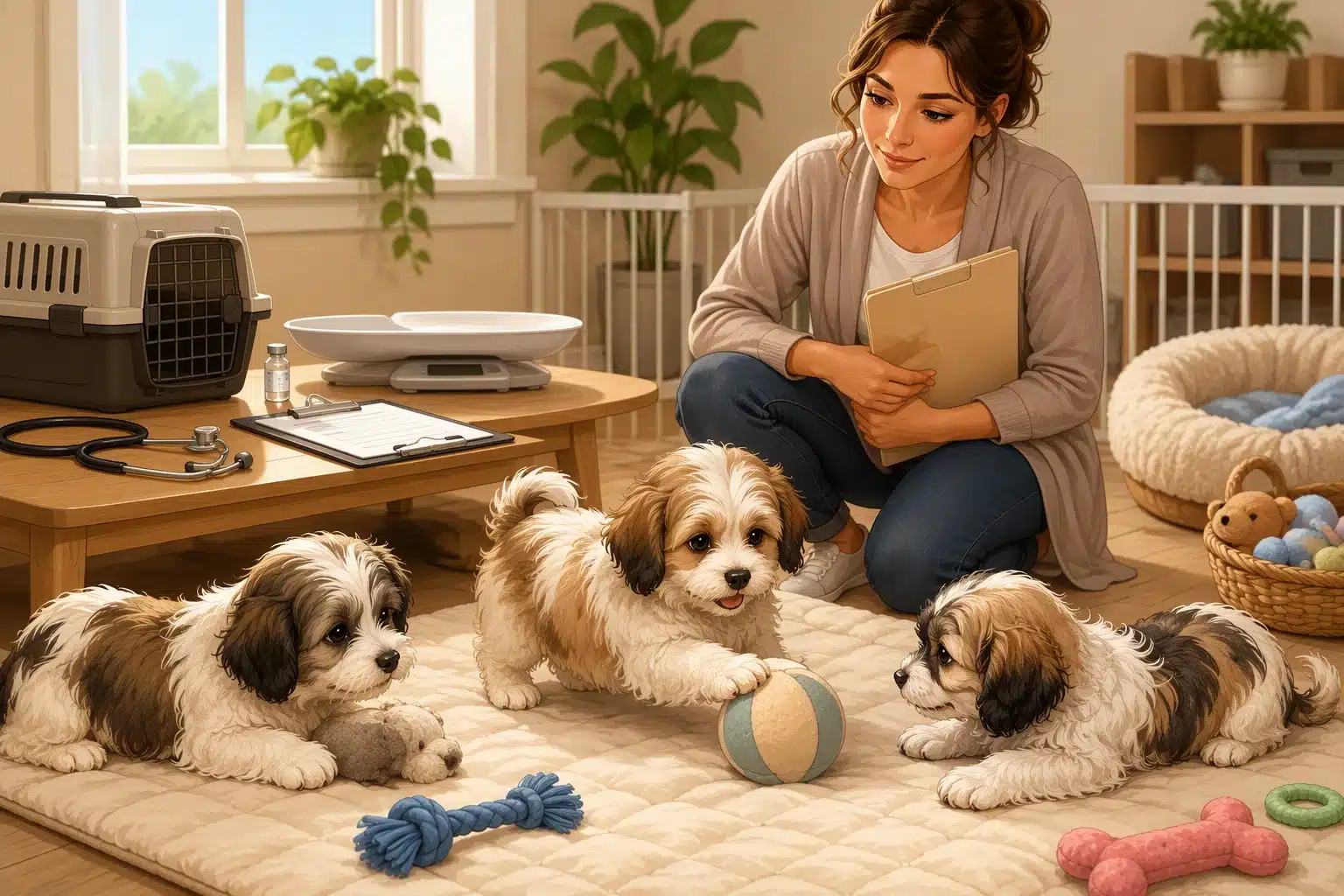
No breeder can promise a perfect dog. Ethical sources explain what they know and what they are still watching.
Compare Pickup, Delivery, and Communication Clearly
Get the handoff plan in writing. Confirm the pickup location, delivery route, timing, fee, and who stays with the puppy during travel. For a distant program, a live video call and regular updates can make the process feel far more personal.
Illinois licenses and inspects regulated animal businesses through its Department of Agriculture, which also lists licensees and reports on its Animal Welfare page.
- Ask for one clear contact person.
- Confirm the pickup or delivery details before payment.
- Save every record, receipt, and message.
Also Read: Puppy Care Blog & Resources | Sage Puppies
How Illinois Reached This Enforcement Debate
The 2021 Law and Its 2022 Effective Date
Illinois passed Public Act 102-586 in 2021. It took effect on February 23, 2022. The law changed what a licensed pet shop may sell.
Under Illinois Animal Welfare Act Section 3.8, pet shops may offer dogs or cats only when they come from qualifying shelters or animal control facilities. The law does not bar a family from buying directly from a breeder who raised the puppy.
That distinction matters:
- Retail pet shops face source limits.
- Direct breeders may place puppies they personally produce and raise.
- Shelter adoption events can still use pet shop space.
A storefront label does not replace proof. Ask who bred the puppy, where it was raised, and whether you can verify both.
Why Local and State Rules Now Overlap
Some Illinois counties and towns had already passed rules aimed at retail puppy sales. The state law created one statewide baseline, while local rules can add their own licensing or business limits.
The fight centers on how a business operates, not just its license name. In 2022, the Illinois Department of Agriculture sought action against Petland Batavia and another store after alleging they sold dogs at retail without pet-shop licenses, according to local reporting on the enforcement notices.
For families, the practical answer is simple:
- Deal directly with the breeder.
- Review parent health records.
- Confirm the puppy’s home-raised setting.
- Keep every promise in writing.
Also Read: 10 Must-Ask Questions Before Buying a Puppy Locally
A Calm Checklist for Families Searching “Puppies Illinois Near Me”
Seven Questions to Ask Before a Deposit
Slow down before sending money. Ask:
- Who bred this puppy, and can I speak with them?
- Can I see the puppy’s living space and mother?
- Which health tests were done on both parents?
- What vet care, vaccines, and deworming has the puppy received?
- May I read the contract and deposit terms first?
- How will pickup or delivery work?
- What support is available after go-home day?
Illinois breeders and dealers must provide key details, including breed, age, vaccination and vet-care records, plus breeder contact information under state law.
A rushed seller treats questions as a problem. A good breeder welcomes them.
| Check | Clear answer looks like |
|---|---|
| Deposit | Written amount, terms, and timing |
| Health | Parent testing and puppy records |
| Source | Named breeder and home location |
When You Are Ready, Choose Transparency Over Speed
A nearby listing is not always the safest choice. Choose a breeder who shows how puppies are raised, explains each record, and gives you time to decide.
The Illinois Department of Agriculture licenses and inspects breeders, dealers, and pet shops, but a license is only one check. Review the state’s animal welfare resources, then verify the daily care behind the paperwork.
Sage Puppies offers home-raised Havanese, Havapoo, and Cavapoo puppies from South Jordan, Utah, with clear pickup and nationwide delivery options.
Trust the breeder who makes the process feel calm, not urgent.

Choose a puppy with facts you can verify, not a storefront promise. Sage Puppies offers home-raised Havanese, Havapoo, and Cavapoo puppies from health-tested parents, with clear adoption steps, local pickup, and nationwide delivery. View available puppies, then apply when the fit feels right.
Frequently Asked Questions
Q1: How does Illinois’ new puppy sales ban affect Petland stores in the state?
Petland stores face tighter limits on puppy sales. They must follow Illinois rules, and any claimed exemption may draw public and legal scrutiny. Families should ask where each puppy was born and review records before paying.
Q2: What are the risks of buying puppies from pet stores after Illinois’ ban?
Storefront sales can hide the breeder behind a supply chain. Risks include weak health records, rushed socialization, and unclear parent history. A clean shop does not replace meeting the breeder or seeing proof.
Q3: How can Illinois pet owners find ethical puppy sources after the ban?
Choose a breeder who shares parent testing, home-raising details, puppy records, and clear pickup or delivery plans. Ask direct questions early. Ethical sources welcome careful families and never pressure a fast deposit.
Q4: Can I buy a puppy from an out-of-state breeder?
Yes, but verify the breeder first. Ask for current puppy updates, parent information, vet records, and written transport details.
Q5: What should I ask before reserving a puppy?
Ask about health testing, daily care, socialization, contract terms, total price, and who to contact after pickup.
Conclusion
Illinois families should separate the law from the sales pitch. State law allows pet shops to sell dogs only when they come from compliant shelters or animal control facilities, with records available to the Department of Agriculture. See the Illinois statute for the exact rule.
The dispute around Petland and similar storefronts shows why source checks matter. Ask who bred the puppy, review health testing, meet the raising environment when possible, and get records before a deposit.
A home-raised Havanese, Havapoo, or Cavapoo should come with clear answers, not workarounds. Transparency is the real replacement for storefront convenience.




