Quick Summary: Before paying a deposit for a Kansas puppy, verify the breeder’s identity, licensing, and health records through direct questions and live video calls. Check that their answers stay consistent across calls, messages, and contracts, and confirm their facility appears on the state’s licensed animal facilities list when required. Walk away if they rush payment, avoid live contact, or cannot provide clear documentation. A trustworthy breeder welcomes careful questions and provides specific, verifiable details about the puppy, parents, and pickup or delivery plan.
Ask for a live conversation before you reserve a Havanese, Havapoo, or Cavapoo. Talk through the parents, health records, daily care, contract, and pickup or delivery plan. Then compare each answer with the written details.
Many Kansas puppy breeders sound helpful online but become vague when you ask direct questions. That gap can hide missing records, unclear payment terms, or a puppy you cannot truly verify.
This guide gives families a simple way to assess Kansas puppy breeders before sending a deposit. You will learn how to verify breeder credentials, test whether communication stays consistent, check reviews, and spot reasons to pause.
Buying puppies Kansas families can feel good about starts with clear, steady answers. Kansas puppy breeders who welcome questions and document their care make it easier to choose with confidence.
Step 1: Establish Who You Are Communicating With
Ask for a Complete Identity and Contact Record
Get the breeder’s full name, business name, physical address, phone number, email, and website before you discuss a deposit. Ask who owns the parents and who will handle pickup or delivery.
For Kansas breeders, compare those details with the state’s licensed animal facilities records. Kansas requires licensing for breeders that produce, offer, or sell three or more litters in a state fiscal year.
Use this quick check:
| Ask for | What to confirm |
|---|---|
| Legal name | It matches the license or business record |
| Facility address | It is a real Kansas location |
| Phone and email | The same details appear across their public channels |
| License number | It connects to the breeder, not a vague third party |
A breeder who avoids basic identity questions is not ready for your money. Pause before sharing a deposit or personal details.
Use a Live Call or Video Conversation
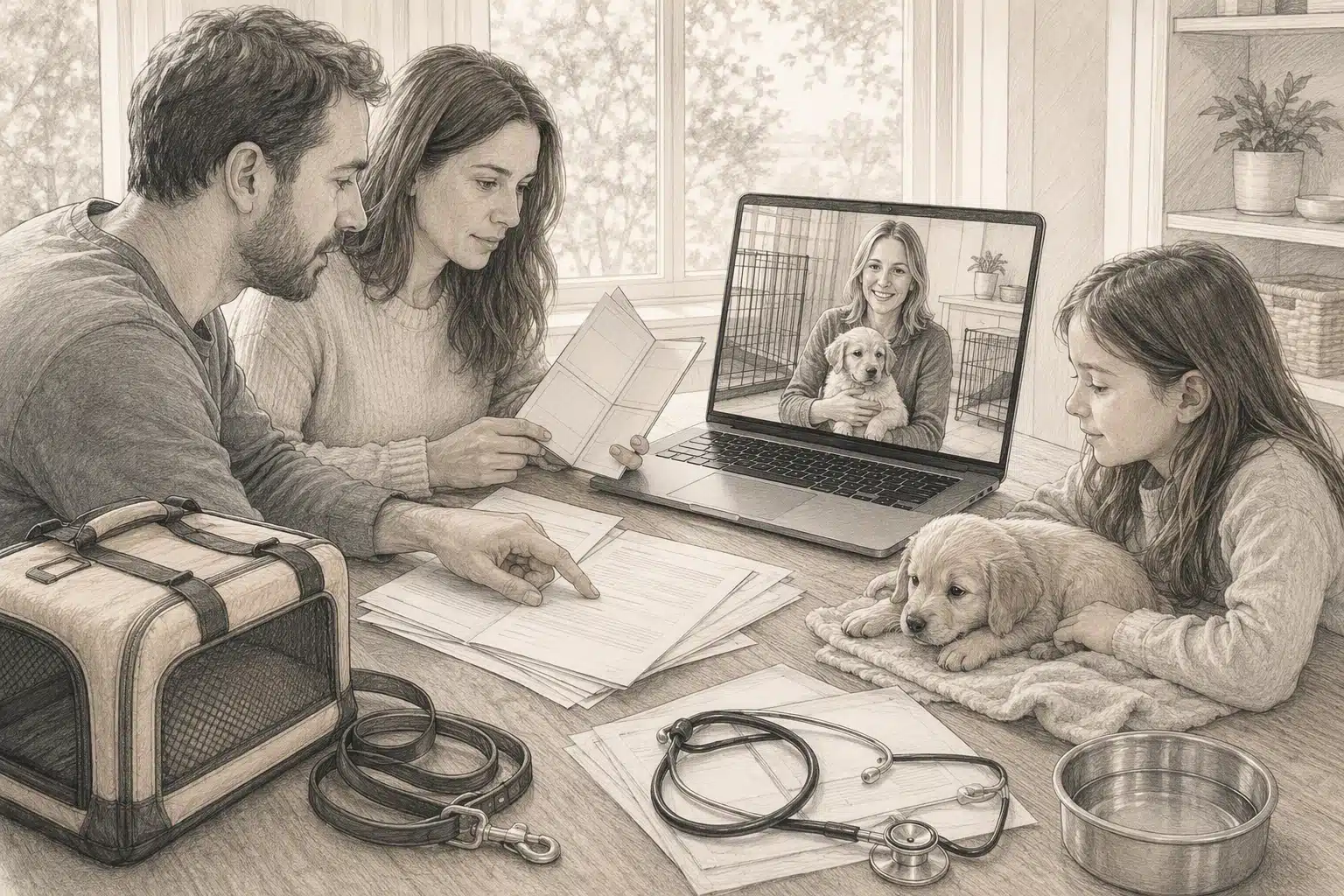
Text messages are easy to copy. A live call makes it harder to hide who you are dealing with. Ask for a brief phone or video chat, then listen for clear, direct answers about the puppy, parents, health records, and timeline.
During a video call, ask to see the puppy in its current space and confirm the breeder’s name. You do not need a perfect tour. You need a real person who can answer normal questions without rushing you.
The Kansas Department of Agriculture licenses and inspects dog breeders under the Kansas Pet Animal Act, so you can also ask how their facility fits those rules. The state explains its inspection role here.
Continue only if the identity, location, and answers stay consistent across calls, documents, and public listings.
Also Read: 10 Adorable Havapoo Colors You Need to See (2026)
Step 2: Test Whether Answers Are Specific and Consistent
Ask Questions That Require a Real Answer
A trustworthy breeder can answer direct questions without vague promises or pressure. Ask the same core questions by phone and in writing. Note whether names, dates, and details stay the same.
Use questions such as:
- Which health tests were completed for this puppy’s parents?
- May I see the test results and the parents’ registered names?
- Where has the puppy been raised, and who handles it daily?
- What food, routine, and social experiences does the puppy have now?
- What happens if pickup or delivery plans change?
- Which vet records and transfer papers will I receive?
A clear answer includes facts you can check, not only phrases like “fully health tested” or “raised with love.”
In Kansas, many breeders must be licensed and inspected under the Kansas Pet Animal Act. The state says licensed facilities are held to its care standards and receive inspections. Review the Kansas Animal Facilities Inspection guidance alongside the breeder’s answers.
Compare the Conversation With the Written Record
Save texts, emails, screenshots, invoices, and the listing. Then compare them before sending a reservation payment.
| Check | Consistent sign | Stop and ask |
|---|---|---|
| Puppy details | Breed, birth date, sex, and price match | Key facts change |
| Parent records | Names match health documents | No names or partial papers |
| Pickup or delivery | Terms and timing are written clearly | New fees appear late |
| Payment | Payee and refund terms are clear | Urgent payment to a different person |
Small mistakes happen. Major changes need a plain explanation in writing.
Ask the breeder to correct any mismatch before you move ahead. If they dodge questions, rush you, or refuse records, pause the process. Kansas also provides a way to report concerns about licensed or suspected unlicensed facilities through its small animal facility complaint process.
Also Read: Havanese, Havapoo & Cavapoo Puppy Care Blog
Step 3: Verify Health, Development, and Placement Claims
Ask What Has Been Tested and What the Results Mean
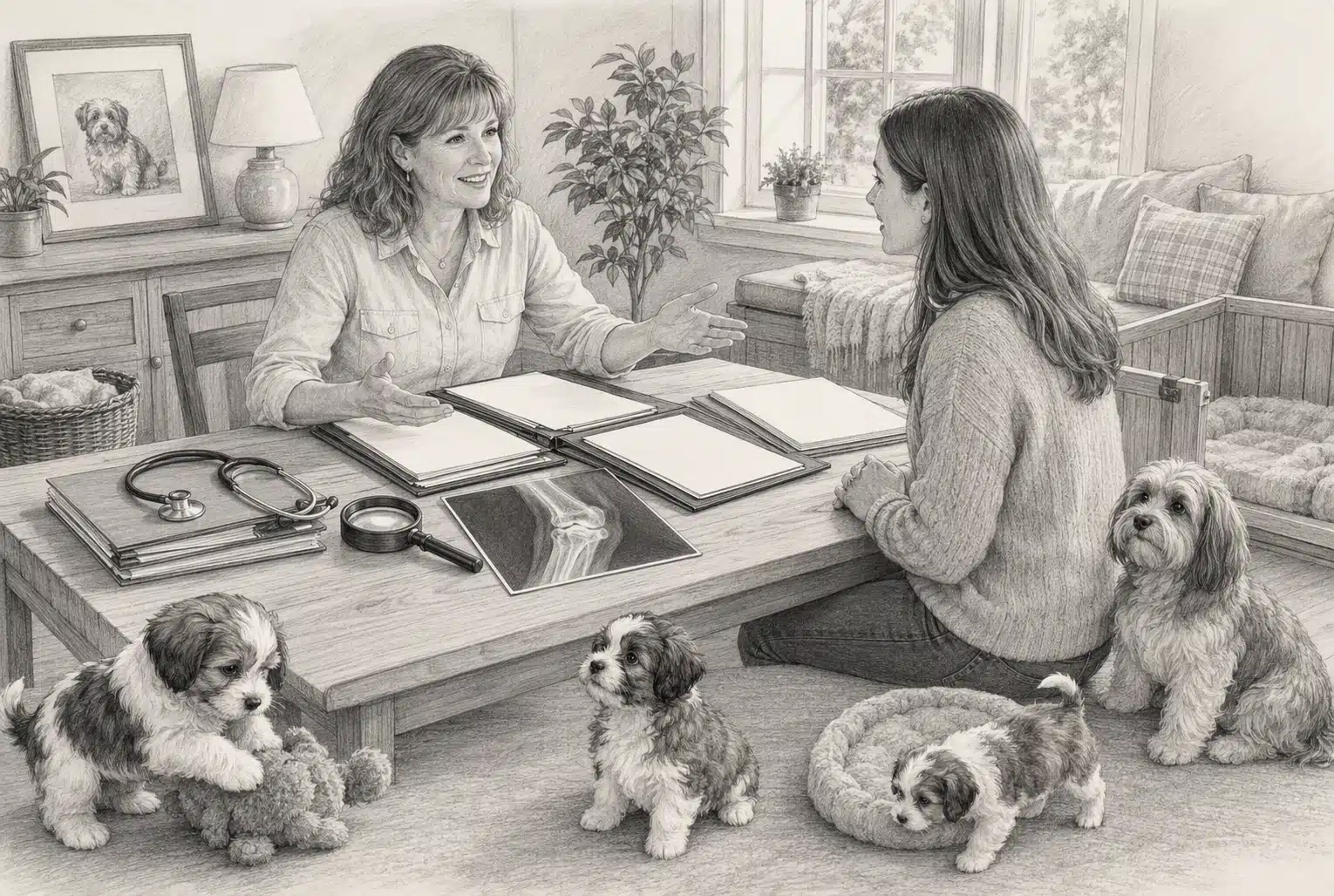
Ask for the parents’ actual health records, not a broad promise that they are “health tested.” Get each parent’s registered name, test type, date, and result.
For Havanese, Havapoo, and Cavapoo litters, ask which checks fit each parent breed and why. A DNA result, eye exam, heart exam, or joint evaluation answers a different question. A breeder should explain this in plain language.
The OFA advises buyers to review parent screenings and verify records rather than relying on verbal claims.
| Ask for | What to check |
|---|---|
| Parent names | Names match records, pedigree, and contract |
| Test reports | Test type, date, lab or registry, and clear result |
| Public records | Searchable results where available |
| Breeder explanation | Honest limits of each test, without health promises |
Warning: Health testing lowers known inherited risks. It cannot promise that any puppy will never get sick.
Pause if records are cropped, names do not match, or the breeder avoids direct questions.
Confirm Puppy Records and Placement Readiness
Request the puppy’s care record before you pay the final balance. It should show birth date, vaccine and deworming dates, vet details if provided, feeding routine, and any notes about the puppy’s care.
A careful breeder also explains how the puppy has lived: household sounds, gentle handling, grooming practice, play, rest, and time with littermates. Ask what the puppy is like on a normal day, not only in a polished photo.
| Claim | How to verify it |
|---|---|
| “Ready to go home” | Confirm the pickup or delivery date and why it fits the puppy’s age |
| “Well socialized” | Ask for specific daily experiences and a recent live video |
| “Healthy puppy” | Review records and book your own vet visit after arrival |
| “Nationwide delivery” | Get the travel plan, handler details, and handoff process in writing |
The OFA notes that puppies are generally ready around eight weeks. Do not rush a breeder who sets a later date for the puppy’s welfare.
Also Read: 10 Red Flags to Avoid When Visiting a Local Puppy Breeder
Step 4: Check Kansas Licensing and Inspection Context
Ask Whether the Breeder Is Covered by Kansas Requirements
Ask directly: “What Kansas license category applies to your breeding program, and may I verify it?” A clear answer should include the business name, facility location, and license status.
Kansas requires licensing and inspection for breeders who produce, offer, or sell three or more litters in a state fiscal year. The rules also cover hobby breeders and other pet animal facilities under the Kansas Pet Animal Act, according to the Kansas Department of Agriculture.
Use this short check:
- Compare the breeder’s name and county with the state’s licensed-facility list.
- Ask if the puppies are bred and raised at the listed address.
- Ask what happens if a buyer wants to visit or use a live video call.
- Save their reply with the listing and payment details.

A breeder may be outside a licensing threshold, so lack of a listing is not proof of a problem. Evasive answers, changing names, or refusal to explain their setup are the real concern.
| Response | What it suggests | Next move |
|---|---|---|
| Clear license details | Easy to verify | Continue checking |
| Not covered, with clear reason | May fit a smaller program | Verify care and records |
| Avoids the question | Trust gap | Pause payment |
Use Inspection Information as One Layer of Due Diligence
A license is a helpful baseline, not a full character reference. Kansas licensed facilities receive regular, performance-based inspections and must have a veterinarian involved in animal care, per the Animal Facilities Inspection Program.
Pair that context with what you can confirm yourself:
- Recent puppy and parent photos or a live video view
- Health-test records that match the parent dogs
- A written contract, pickup plan, and clear payment trail
- Reviews that name the breeder and describe the full process
Do not treat one clean inspection result as a reason to skip your own questions. Continue only when the paperwork, communication, and living conditions tell the same story.
Step 5: Review the Contract, Payment, and Reservation Process
Read Every Reservation Term Before Paying
A clear reservation agreement protects both your family and the breeder. Ask for it before you send any money. Read it slowly, then save a copy with your payment receipt.
Check that it states:
- The puppy or planned litter it covers
- The reservation amount and total price
- Whether the reservation is refundable, transferable, or applied to the final price
- What happens if the breeder cannot place that puppy with you
- Your pickup window or delivery plan
- Health record and contract timing
| Question | Good sign | Stop and ask |
|---|---|---|
| Who receives payment? | Name matches the breeder or business | Name changes during the conversation |
| What is reserved? | Specific puppy, litter, or place in line | Vague promise with no terms |
| What happens if plans change? | Written refund or transfer terms | “We will figure it out later” |

Do not let a “someone else is waiting” message rush you past unclear terms. A sound breeder will answer fair questions before accepting a reservation.
Trace the Payment and Delivery Conversation
Match every payment request to the written agreement and the breeder’s known contact details. Keep emails, texts, invoices, and receipts in one folder. If delivery is involved, confirm the route, date range, handoff person, and any fee before payment.
The FTC warns that puppy scammers often demand payment up front and favor gift cards, wire transfers, cryptocurrency, or payment apps because recovery is difficult. Review its pet scam payment guidance before you pay.
Use this final check:
- Confirm the breeder by phone or live video.
- Review the exact amount and due date.
- Ask whether any delivery costs remain.
- Pay only through the agreed method.
- Get a dated receipt right away.
Walk away if new “insurance,” crate, flight, or inspection fees appear after you reserve. A real process stays consistent.
Also Read: 10 Signs a California Puppy Listing Is a Scam – Sage Puppies
Step 6: Validate Reviews and References Beyond Star Ratings
Look for Specific Experiences and Consistent Details
Read the words, not just the score. Strong reviews name real parts of the process: how quickly the breeder replied, what health records arrived, pickup timing, and how the puppy settled at home.
Check recent reviews across more than one platform. The FTC advises buyers to check reviewer history and watch for sudden bursts of reviews.
| Green flag | Reason to trust it |
|---|---|
| Details match your questions | The family describes a real experience |
| Small, fair criticism | It sounds balanced, not scripted |
| Similar facts across reviews | Patterns can confirm clear communication |
| Recent posts over time | It suggests steady service |
Search the breeder’s name with “complaint” and “scam,” too. One unhappy review is not proof of a bad breeder. Repeated reports of missed calls, changing prices, or absent paperwork are.
Stop if glowing reviews are vague, copied, or all posted within a few days.
Ask for References Without Requiring Private Information
A responsible breeder should protect past families’ privacy. Still, they may offer a recent reference who agreed to speak, or share a review source you can verify yourself.
Ask:
- “May I speak with a past family who has agreed to be contacted?”
- “Can they share how communication went after pickup?”
- “What records did they receive before taking their puppy home?”
Keep the call short and respectful. Do not ask for private health details, addresses, or family photos.
Continue only if the breeder welcomes fair questions and gives clear, consistent answers.
Also Read: Kansas Puppies: Breeder Waitlists Compared by Breed and Availability
Step 7: Make a Stop, Pause, or Continue Decision
Continue When the Evidence Aligns
Continue only when the breeder’s words, records, and actions match. You should have clear answers about the puppy, parents, health testing, pickup or delivery, payment, and what happens next.
Use this final check:
| Evidence | Continue if you can confirm it |
|---|---|
| Communication | Answers stay specific, calm, and consistent |
| Documents | Records match the breeder, puppy, and stated plan |
| Access | You have had a real-time conversation and clear contact details |
| Payment | Terms are written, traceable, and never rushed |
| Kansas status | The facility appears on the state licensed animal facilities list, when licensing applies |
A good breeder welcomes careful questions. You should feel informed, not pushed.
Pause or Walk Away When Accountability Breaks
Pause if one detail does not add up. Ask for a direct explanation in writing, then compare it with earlier messages and documents.
Walk away if the breeder:
- Avoids live contact or changes key facts.
- Won’t show records before requesting payment.
- Pressures you to send a deposit immediately.
- Uses a payment method with no clear paper trail.
- Refuses reasonable questions about the puppy’s care or parents.
- Cannot explain licensing when required.
Kansas regulates and inspects dog breeders that fall under the Pet Animal Act, and the state accepts complaints about licensed or suspected unlicensed facilities through its Animal Facilities Inspection Program.
No puppy is worth ignoring a serious concern. A short delay protects your family and the dog.

Clear answers and open communication should come before any puppy deposit. Sage Puppies makes the process simple with family-raised Havanese, Havapoo, and Cavapoo puppies, health-tested parents, and clear pickup or delivery details. Review available puppies, ask your questions, and take the next step when you feel fully informed.
Frequently Asked Questions
Q1: How can I verify a Kansas puppy breeder’s reputation?
Check reviews for specific details, ask for recent buyer references, and compare their answers over time. A sound breeder welcomes clear questions and gives records that match their claims.
Q2: What questions should I ask a Kansas puppy breeder?
Ask about parent health testing, the puppy’s daily care, vet records, socialization, pickup timing, and payment terms. Request direct answers in writing before you send a deposit.
Q3: What are red flags when buying a puppy in Kansas?
Walk away from rushed payment requests, vague answers, copied photos, no live call, missing records, or pressure to meet in a parking lot. Trust gaps rarely improve after payment.
Q4: Should a breeder let me see the puppy live?
Yes. A live video call can confirm the puppy, its setting, and the breeder’s access. Ask to see normal behavior, not only a posed photo.
Q5: What documents should I receive before pickup?
Request a signed agreement, health records, parent testing details, payment receipt, and clear pickup or delivery plan. Review each item before the final balance is due.
Conclusion
A trustworthy Kansas breeder answers direct questions, shares records, allows real-time access, and explains payment and pickup terms clearly. Check that the details stay consistent across calls, messages, contracts, and reviews.
Use a simple stop-or-continue rule: proceed only when the breeder is open, patient, and specific. Walk away if they rush payment, avoid live contact, or cannot support key claims with documents.
Kansas licenses and inspects many dog breeding facilities under the Pet Animal Act, so families can also check the state inspection program. Clear communication will not replace careful research, but it often reveals whether a breeder treats each puppy and family with care.