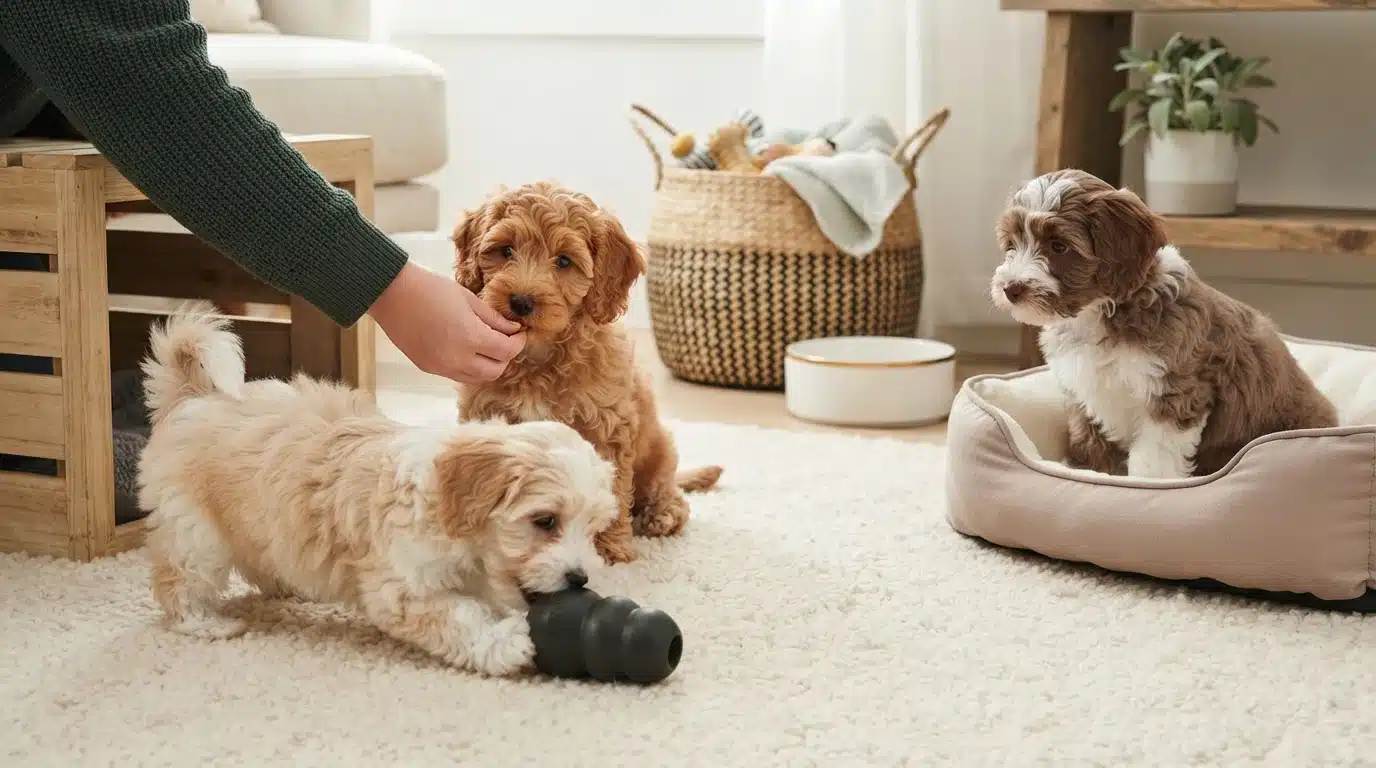
Quick Summary: Prepare one gated, puppy-safe zone before your new puppy arrives, then puppy-proof the rest of your Maine home at floor level to remove cords, small items, and winter hazards like ice melt. Stock day-one supplies including a crate, food, leash, and warm gear, and set clear family rules for feeding, potty trips, and supervision. For Maine winters, clear a short potty path, use pet-safe ice melt, and keep trips brief while drying paws afterward. A calm first week with a consistent routine helps your puppy adjust, and having vet contacts and records ready ensures you can act fast if health issues arise.
Look below knee level before your puppy comes home. A loose boot lace by the door, rock salt on the floor, an exposed heating cord, or a gap under the deck can become a real risk fast.
New puppy prep in Maine needs more than a bed and food bowl. Cold weather, mud rooms, icy walkways, and busy family routines create hazards that small, curious puppies cannot spot.
This guide walks you through puppy proofing home spaces, choosing practical puppy supplies Maine families need, and planning a calm first day. You will also learn how to handle winter potty trips, safe pickup or delivery, and family boundaries.
Thoughtful new puppy prep protects your puppy and makes the first weeks feel far less stressful. Families choosing a health-focused, family-raised companion deserve a home that is ready from day one.
Step 1: Create One Safe Puppy Zone Before Arrival
Choose a Calm, Easy-to-Supervise Location
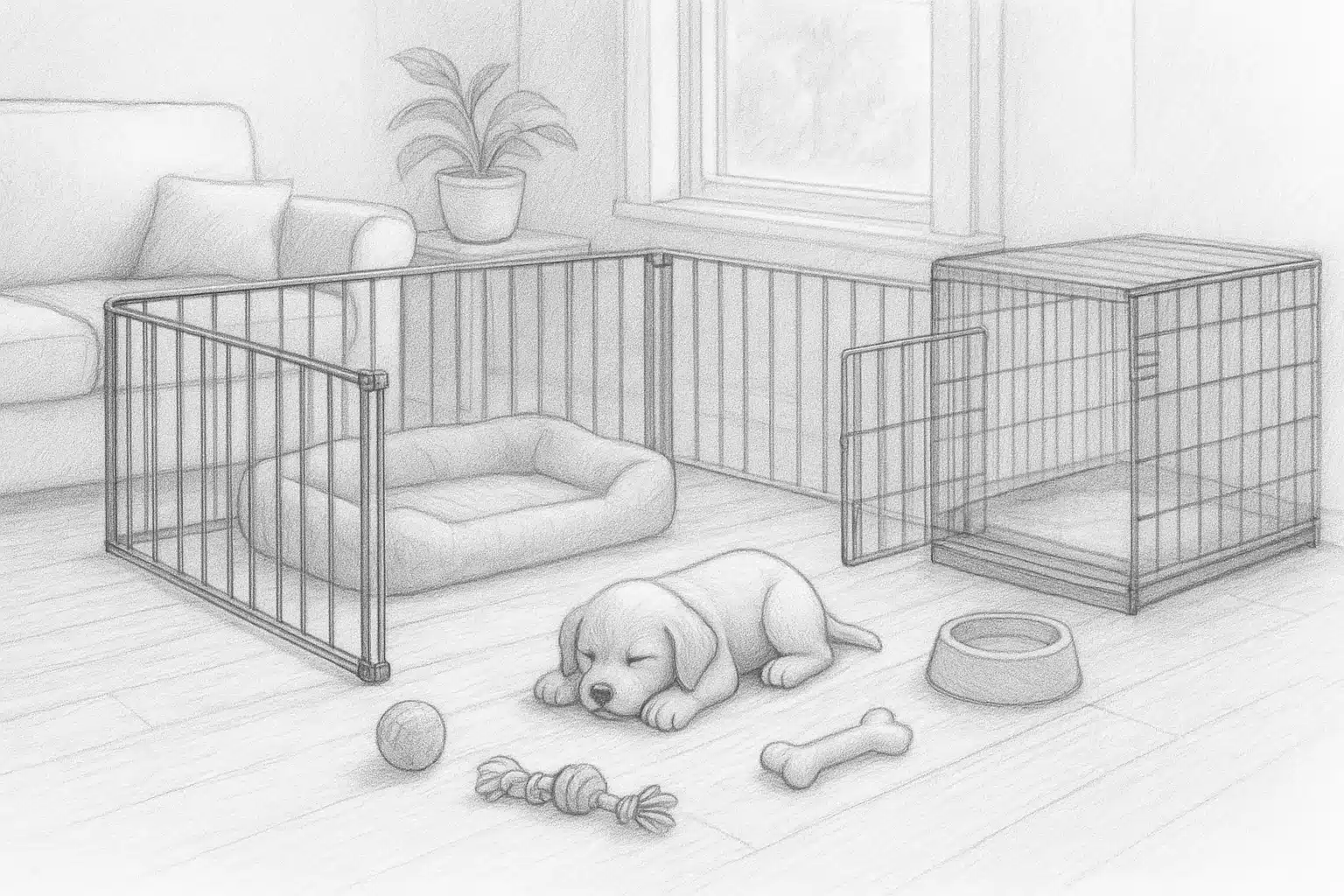
Start your new puppy prep with one small indoor area, not the whole house. A gated corner of the kitchen, family room, or home office works well. Choose a spot near family life, but away from front-door traffic, loud speakers, and stairs.
Remove cords, shoes, plants, children’s toys, and anything small enough to swallow. Puppies explore with their mouths, so prevention matters. The Humane World guide on chewing also recommends a dog-proof space with safe toys and water.
Keep this zone on one easy-clean floor. Winter slush, accidents, and spilled water are simpler to handle there.
| Good choice | Avoid |
|---|---|
| Kitchen corner with a baby gate | Isolated basement room |
| Living room pen in sight of adults | Busy entryway |
| Room with washable flooring | Space beside stairs or cords |
Set Up the Crate, Pen, and Daily Essentials
Place an open crate inside or beside the pen. Add soft bedding only if your puppy does not chew it. Include a water bowl, two safe chew toys, and a calm resting spot.
For new puppy prep, make the crate a place for naps and treats, never punishment. Keep the pen small enough to supervise, yet large enough for movement.
- Put the crate against a wall.
- Secure the pen so it cannot slide.
- Keep treats and a leash within reach.
- Take your puppy outside after sleep, meals, and play.
A consistent potty routine helps prevent indoor accidents, according to the Humane World puppy house-training guide.
Also Read: 10 Adorable Havapoo Colors You Need to See (2026)
Step 2: Buy the Supplies Your Puppy Needs on Day One
The Day-One Shopping List
Buy the basics before your puppy arrives, then keep the first week simple. A crate, safe chew toys, food, bowls, collar, leash, and a gate or pen form a practical starting kit, as outlined in the AKC new puppy checklist.
| Item | What to choose | Why it matters |
|---|---|---|
| Crate | Room to stand, turn, and lie down | Creates a safe sleep space |
| Food and bowls | The food your breeder recommends at first | Helps avoid a sudden food change |
| Collar, ID tag, and leash | Lightweight and correctly fitted | Makes every potty trip safer |
| Gate or pen | Easy-clean, secure setup | Limits access while training begins |
| Chew toys and treats | Puppy-size and durable | Gives teething a safe outlet |
- Ask your breeder what food and routine your puppy knows.
- Set up the crate and water bowl before pickup or delivery.
- Put treats near the door for quick rewards after outdoor potty trips.
Choose a crate that fits your puppy now, with a divider if needed. Too much extra space can make house training harder.
Add Grooming and Maine Weather Supplies
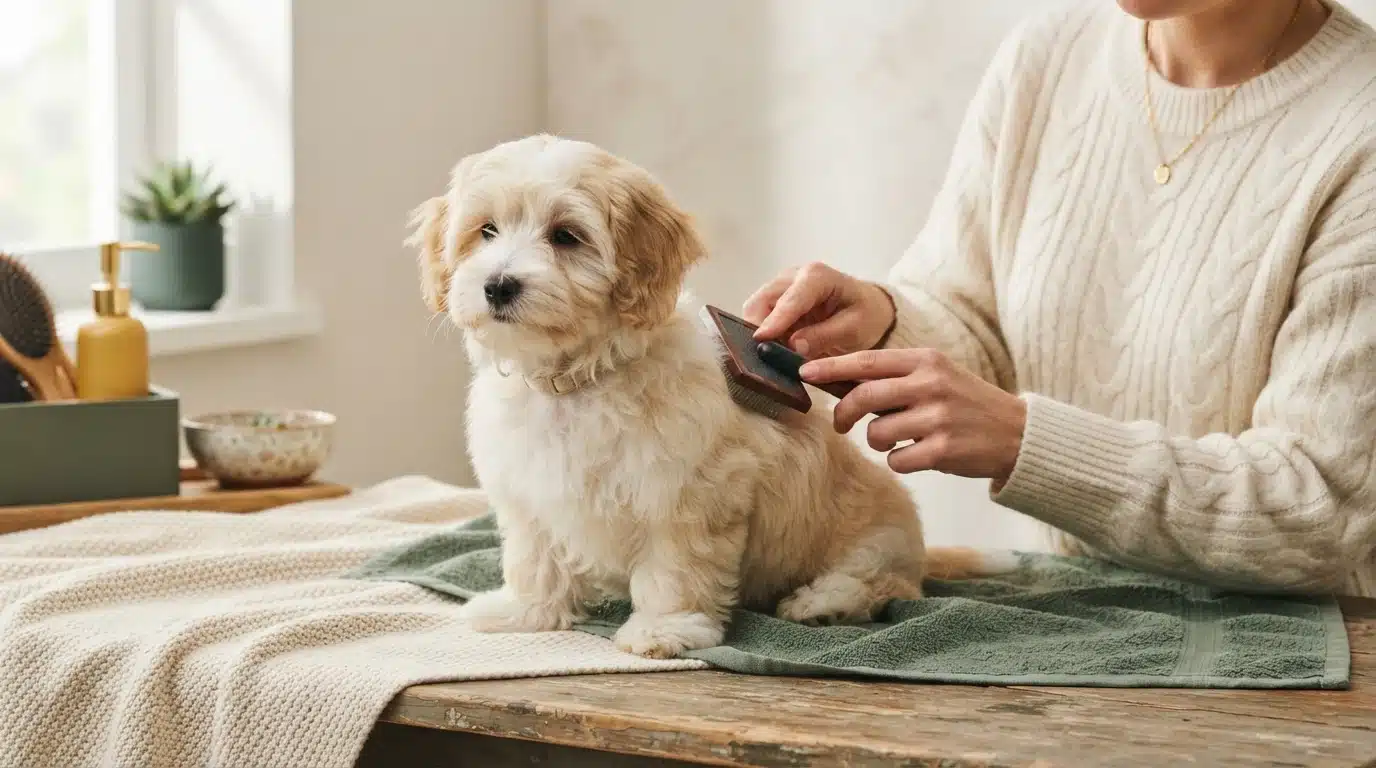
Small companion coats need calm, early handling. Buy a soft brush, metal comb, puppy shampoo, nail trimmers, and absorbent towels. Brief daily brushing helps a Havanese, Havapoo, or Cavapoo learn that grooming is normal.
For Maine winters, add a warm, water-resistant coat, paw balm, and a towel by the door. Clear a short potty path and keep it free of ice.
- Wipe paws and belly after wet or salted walks.
- Use a non-slip mat near the entry.
- Keep a spare towel in the car for pickup day.
Never leave a young puppy outside to “get used to” cold weather. Take short, supervised potty trips instead.
Also Read: How to Keep Puppies Safe During Extreme Weather and Temperature Changes
Step 3: Puppy-Proof Each Indoor Area at Puppy Eye Level
Get on your hands and knees before your puppy arrives. From that view, loose items, cords, and open cabinet doors become obvious. Puppies explore with their mouths, so remove anything small enough to swallow or tempting enough to chew.
Kitchen and Dining Areas
Keep food, medicines, and cleaning sprays behind closed doors. Use a latched trash can, and never leave scraps on low tables or counters within reach.
- Pick up dropped grapes, chocolate, gum, and wrappers right away.
- Store knives, dish pods, and plastic bags in secured cabinets.
- Tuck chair legs and appliance cords behind cord covers.
- Ask children to clear plates as soon as meals end.
The ASPCA recommends covered trash and secured cabinets because kitchens hold many common puppy hazards, including food, medication, and cleaners. Read its room-by-room safety guide.
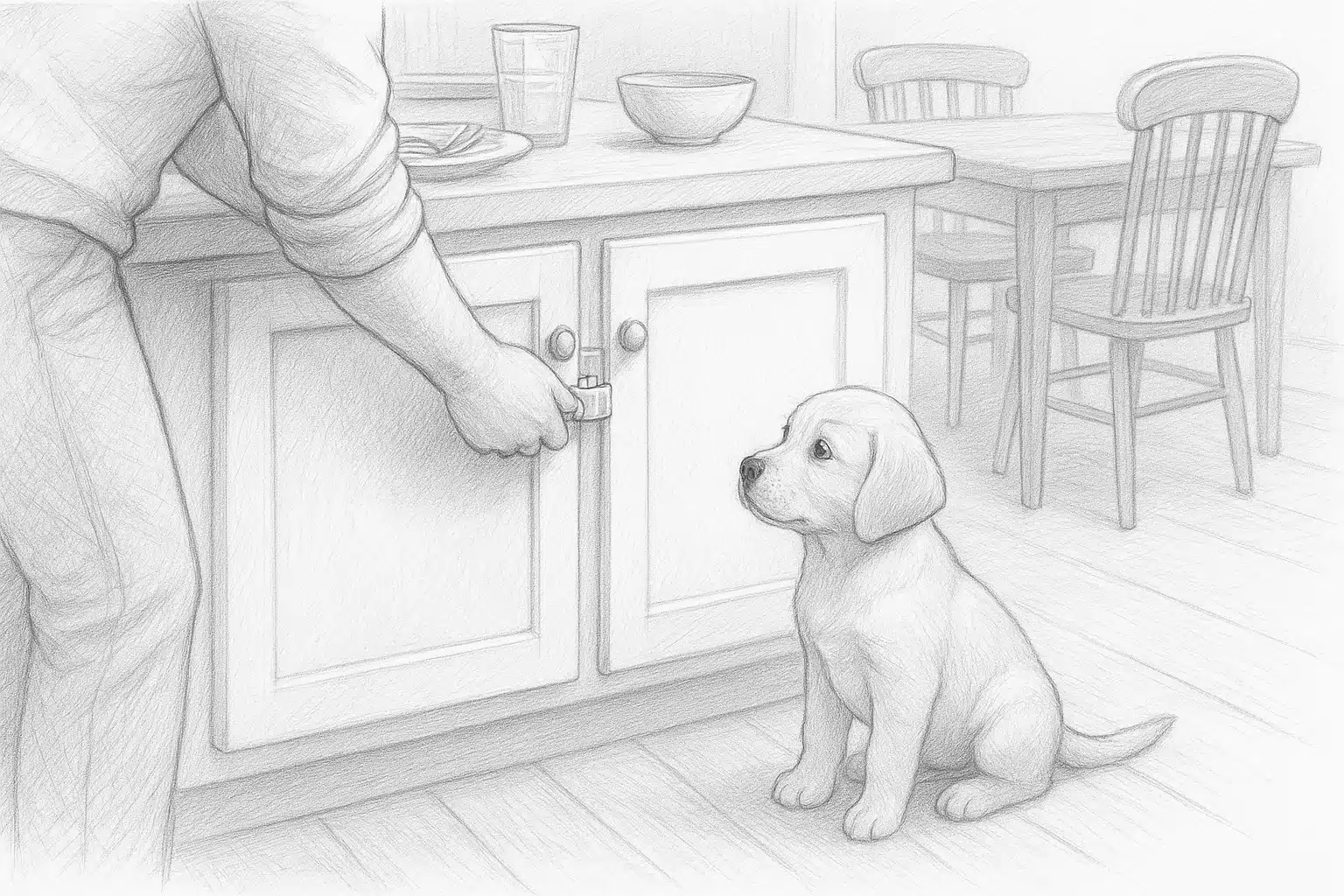
Tip: Set one puppy-safe chew toy near the kitchen gate. It gives your pup a better choice while you cook.
Living Room, Bedrooms, and Family Spaces
Clear the floor every evening. Small companion puppies can quickly find hair ties, coins, children’s toys, socks, and remote controls under furniture.
- Bundle electrical and blind cords well above floor level.
- Move houseplants until you confirm they are pet-safe.
- Put shoes, chargers, and laundry in closed storage.
- Use a gate to limit access until your puppy earns more freedom.
| Area | Check at Puppy Level | Simple Fix |
|---|---|---|
| Sofa zone | Small items underneath | Sweep before bedtime |
| Nightstand | Pills, glasses, cords | Use a closed drawer |
| Play area | Toys with loose parts | Store in a lidded bin |
Warning: Do not rely on “leave it” alone. Prevention is much easier during the first weeks.
Bathrooms, Laundry Areas, and Storage
Keep these rooms closed whenever possible. Put all medicine, toothpaste, cosmetics, and cleaners in high or latched cupboards. Close toilet lids, especially for a small puppy.
Laundry pods, dryer sheets, and fabric softener can cause serious harm if eaten. The ASPCA explains these risks.
- Check the washer and dryer before closing either door.
- Store products in their original containers.
- Pick up loose socks, razors, and cotton swabs immediately.
Step 4: Secure the Yard, Entryway, Garage, and Maine Winter Zones
Make the Entryway a Clean, Controlled Transition
Set up the entry as your puppy’s calm arrival point. Use a baby gate, leash hook, towel basket, and washable mat. Keep boots, bags, mail, and loose mittens off the floor.
- Store shoes in a closed cabinet.
- Keep doors shut while people come and go.
- Wipe paws after every outdoor trip.
- Put a covered bin near the door for waste bags.
Teach every family member one rule: open the outside door only after the puppy is secured.
Check the Yard, Deck, and Fence
Walk the full boundary at puppy height before arrival. Small Havanese, Havapoo, and Cavapoo puppies can slip through gaps that look harmless from above. Check gate latches, deck stairs, loose boards, sharp tools, and standing water.
| Area | What to check | Simple fix |
|---|---|---|
| Fence | Gaps, soft soil, loose panels | Block gaps and secure panels |
| Deck | Wide rails and stair spaces | Add temporary mesh |
| Garage | Antifreeze, fuel, tools | Lock chemicals and close access |
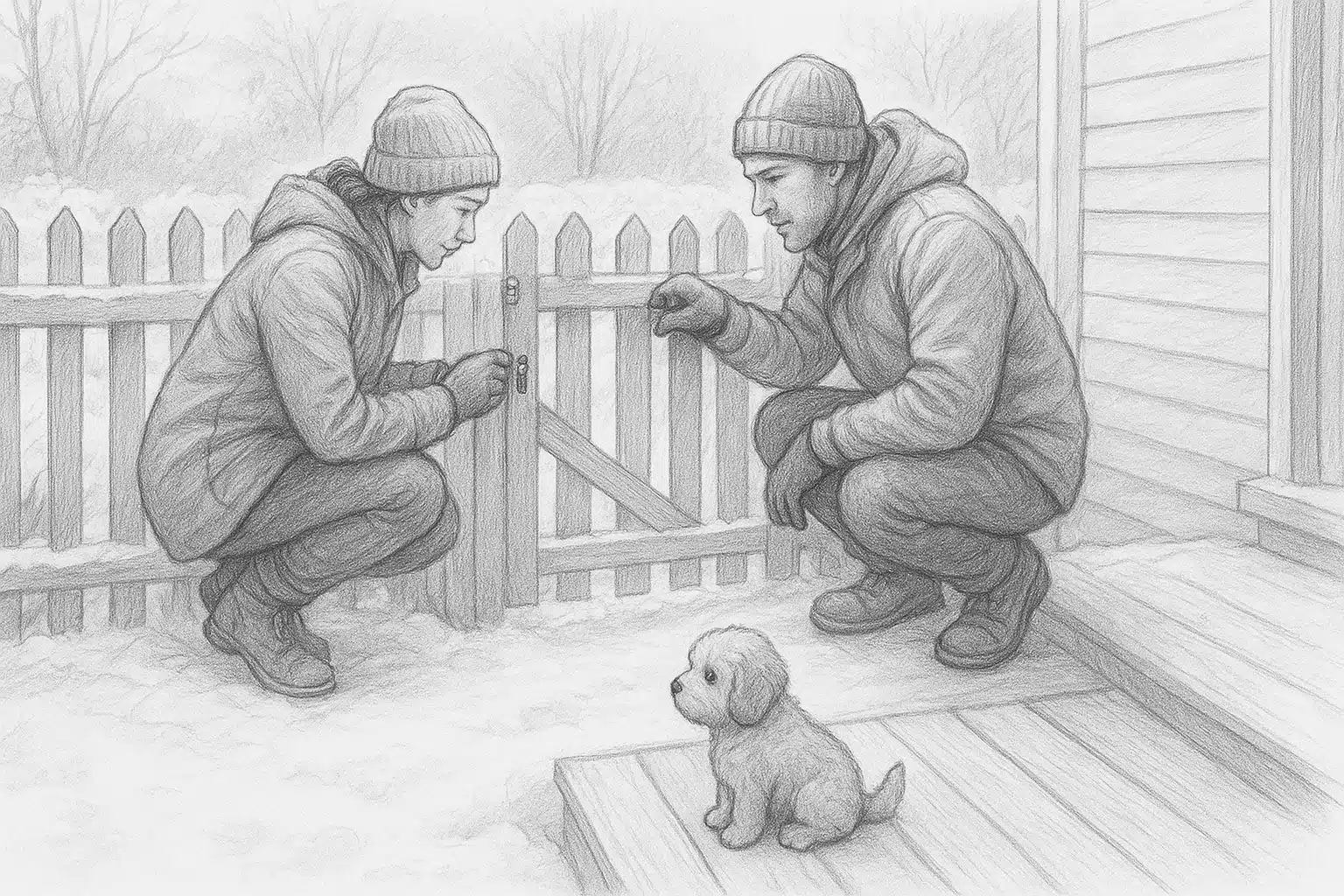
Keep the garage off-limits. Even a small antifreeze spill is dangerous to dogs, so seal containers and clean drips at once, as Maine DEP warns.
Prepare for Cold, Wet, and Slippery Conditions
Pick one cleared potty spot close to the door. Shovel a short path and use a pet-safe ice melt. Salt and other de-icing chemicals can irritate paws and cause illness if licked, according to the Maine Emergency Management Agency.
- Keep early potty trips brief.
- Dry paws, belly, and coat indoors.
- Skip icy deck steps and deep snowbanks.
- Bring a warm towel on car rides.
A puppy should not wait outside for the family to finish shoveling. Prepare the route first.
Also Read: Havanese, Havapoo & Cavapoo Puppy Care Blog
Step 5: Set Family Rules, Routines, and Supervision Before Day One
Agree on House Rules and Responsibilities
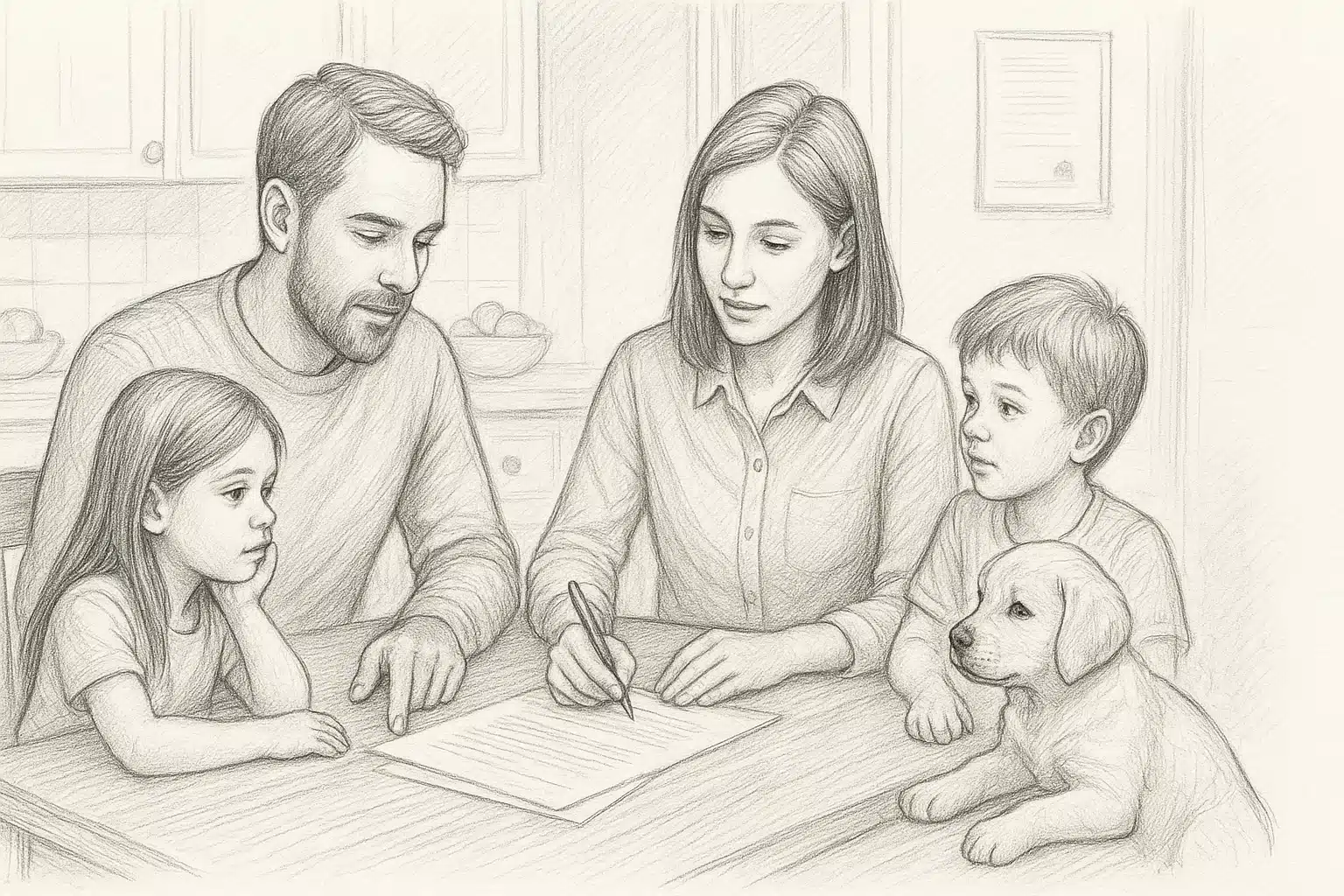
Decide the rules before your puppy arrives. Mixed messages slow learning and create stress.
Agree on:
- Furniture access: sofa, beds, or floor only
- Puppy-free rooms and closed doors
- A calm greeting rule: four paws on the floor
- No teasing, chasing, hugging, or waking a sleeping puppy
- One adult responsible for potty trips, meals, and bedtime each day
Children can help refill water, toss treats for calm behavior, and pick up toys. An awake adult should actively supervise every child-puppy interaction, especially around food and chews. The American Veterinary Society of Animal Behavior notes that food guarding was common in reported child-bite cases.
Use gates, a crate, or a puppy pen when direct supervision is not possible. Separation is smart management, not a punishment.
Build a Flexible First-Week Rhythm
Keep the first week quiet. Your puppy needs sleep, short play, frequent outdoor trips, and time to learn your household sounds.
Follow this simple rhythm:
- Take your puppy outside after waking, eating, drinking, play, and naps.
- Offer meals at regular times, then remove the bowl.
- Plan brief, reward-based training sessions each day.
- Schedule quiet crate or pen naps between activity.
Maine winter weather can make potty trips slower. Carry your small puppy to the potty spot, keep trips brief, and reward immediately after success. AVSAB recommends reward-based methods and advises against fear or pain in training.
Expect adjustments. Consistency matters more than a perfect clock.
Also Read: Puppy Care Blog & Resources | Sage Puppies
Step 6: Coordinate Pickup or Delivery and the First Arrival
Complete the Day-Before Checklist
Confirm the pickup or delivery time, location, and contact number with Sage Puppies. If weather affects Maine roads, allow extra time and keep the handoff plan flexible.
Use this quick checklist:
- Set up the crate or pen before leaving.
- Pack a leash, harness, paper towels, water, and the food your puppy knows.
- Clear your arrival path of ice, salt, and loose items.
- Put family pets in a separate calm space at first.
- Read all health, feeding, and travel records before the trip.
For delivery across state lines, keep required paperwork easy to reach. The AVMA travel guidance notes that destination rules may require a certificate of veterinary inspection.
Tip: Ask one adult to handle the puppy while another carries bags and paperwork. A quiet, organized handoff helps everyone.
Keep the First Hours Calm and Simple
Bring your puppy straight to the potty spot, on leash. Then offer water and let them explore one puppy-safe room.
Keep the first evening small:
- Limit visitors and noisy play.
- Offer the breeder-recommended meal only if it fits the feeding schedule.
- Give your puppy a brief rest in the crate or pen.
- Take them out again after eating, waking, and play.
Travel can be tiring, even for a confident puppy. The AVMA recommends familiar items in the carrier to help pets feel more secure.
Do not expect instant confidence. A calm home and a simple routine are the best welcome.
Step 7: Save a Safety Plan for the First Week
Keep Contacts, Records, and Instructions Together
Make one puppy folder before arrival. Keep a printed copy near the crate and a phone copy for every adult in the home.
- Your regular veterinarian and nearest 24-hour emergency clinic
- Poison-control contact, home address, and your puppy’s current weight
- Vaccination record, feeding plan, and any breeder care notes
- A simple log for meals, water, potty trips, sleep, and symptoms
The AVMA first-aid guide also recommends keeping medical records and key phone numbers ready.
Tell caregivers not to give human medicine or try to make a puppy vomit unless a veterinarian directs them.
Know When to Call for Help
Call your vet the same day if your puppy will not eat, seems unusually tired, has repeated loose stool, vomits, coughs, or acts painful. Small puppies can go downhill fast.
Seek urgent care for trouble breathing, collapse, a seizure, serious bleeding, a possible toxin, or repeated vomiting or diarrhea. The AVMA lists these as situations needing prompt veterinary care.
| What you see | What to do |
|---|---|
| One minor change, puppy alert | Call your regular vet for guidance |
| Fast worsening signs or toxin risk | Call emergency care and leave promptly |
Trust your gut. A quick call is safer than waiting overnight.
Also Read: How to Puppy-Proof Your Georgia Home Before Bringing a Puppy Home
Common Mistakes to Avoid When Preparing a Maine Home
Small gaps create big puppy risks. Avoid these common oversights before arrival:
- Leaving cords, chargers, medicines, and cleaning products within reach.
- Assuming a fenced yard is puppy-safe. Check for loose boards, snow-hidden holes, and toxic ice melt.
- Letting a puppy roam the whole house on day one. Start with one calm, gated room.
- Waiting to choose a vet, pet-safe potty spot, and nighttime crate location.
Maine winters need extra care. Salt and ice-melting products can irritate paws and make dogs sick if licked, warns the Maine Emergency Management Agency.
| Mistake | Better plan |
|---|---|
| Outdoor potty trips without a clear path | Shovel a short path and use pet-safe ice melt |
| Garage left open | Store antifreeze, tools, and chemicals in locked cabinets |
| Busy first evening | Keep greetings brief and let the puppy rest |
Bittering agents in Maine antifreeze do not make spills safe. Clean every drip at once.
Also Read: How to Spot Ethical Puppy Socialization Practices in Maine

Your Maine home is ready for a calm start. Meet a well-socialized Havanese, Havapoo, or Cavapoo through Sage Puppies, with health-tested parents and clear pickup or nationwide delivery options. Start your family’s application today.
Frequently Asked Questions
Q1: What should I buy before bringing a new puppy home?
Buy a crate, bed, food and water bowls, puppy food, a collar, ID tag, leash, toys, enzyme cleaner, and a baby gate. Add a warm coat for Maine winter walks.
Q2: How do I puppy-proof my home before bringing a puppy home?
Move cords, cleaners, medicine, shoes, and small items out of reach. Block stairs and unsafe rooms. Check floors for dropped pills, coins, gum, or foods that can harm puppies.
Q3: What is the best way to prepare my home for a new puppy?
Set up one calm puppy area before arrival. Keep the first week quiet, use a steady feeding and potty routine, and make sure every family member follows the same rules.
Q4: How do I prepare for Maine winter potty breaks?
Clear a small, salted-free potty path near the door. Keep trips short, dry paws after each outing, and watch for shivering.
Q5: Should I let my puppy explore the whole house?
No. Start with one or two safe rooms. Expand access slowly after your puppy shows reliable potty habits and does not chew unsafe items.
Conclusion
A calm first week starts before your puppy arrives. Puppy-proof one main space, set up a safe sleep area, stock simple supplies, and agree on family rules for feeding, toilet trips, and quiet time.
Maine weather deserves its own plan. Keep young puppies warm, limit cold outdoor time, and wipe paws after walks. Ice melt can irritate paws and cause illness if licked, as Maine Emergency Management Agency warns.
Keep health records, a carrier, food, water, and warm bedding ready for storms. A prepared home gives your new companion the steady, loving start they need.