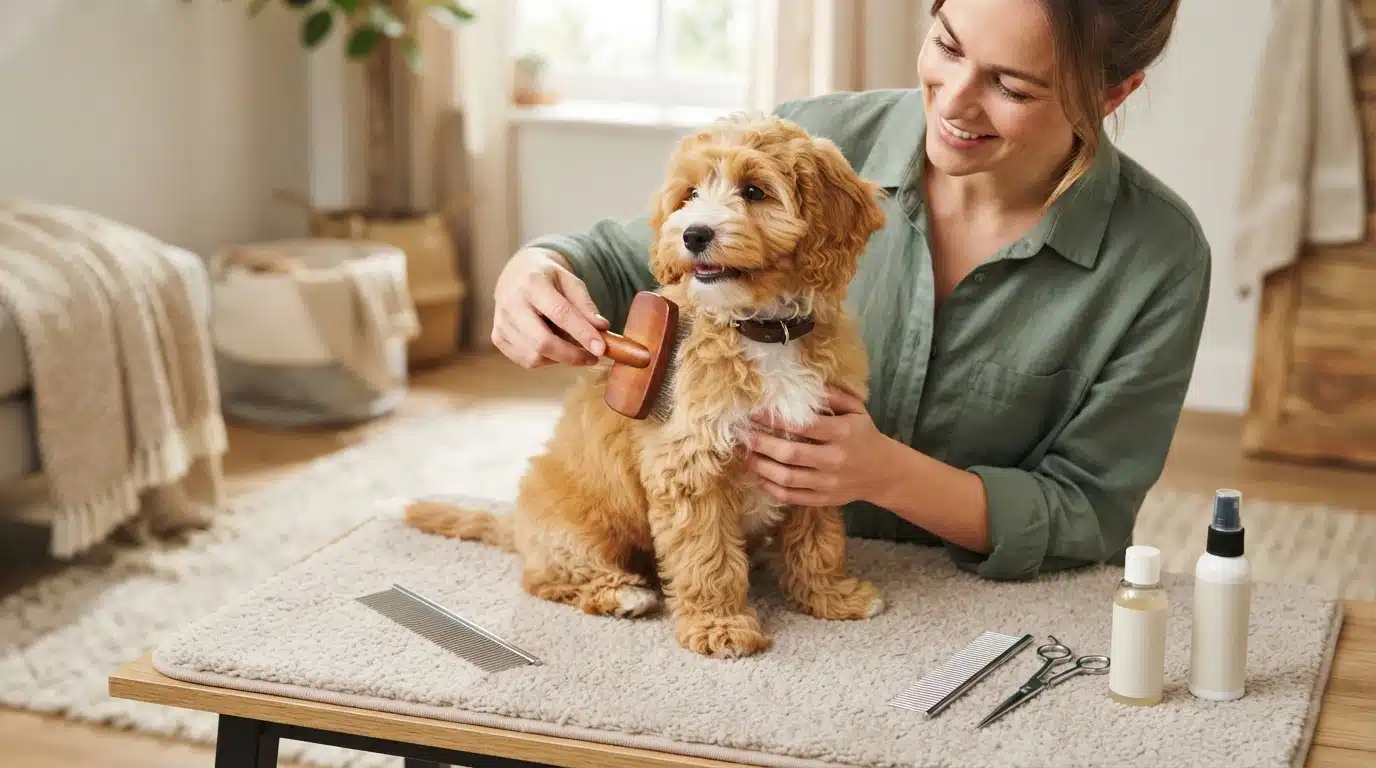
Quick Summary: Comparing Havapoo puppy contracts means checking five key areas: puppy identity, health guarantee details, deposit rules, spay/neuter terms, and the return clause. The most important thing is to read the fine print on vet exam deadlines, what conditions are actually covered, and whether the breeder will take the dog back at any age. A clear, fair contract shared before you pay is a better sign than a long, vague one. Ask breeders blunt questions about coverage and refunds, and walk away if they resist.
Two Havapoo listings can look equally adorable, yet the paperwork behind them can differ wildly. One Havapoo puppy contract spells out the vet exam deadline, hereditary coverage, reservation terms, and return process in plain detail. The other leaves those promises vague or missing.
That gap matters. A Havapoo puppy contract is where a breeder’s real standards show up in writing, not just in photos. This guide gives you a practical breeder contract checklist and walks through the puppy contract clauses worth reading closely, so you know exactly what to ask before you place a deposit. As a home-raised Havapoo program in South Jordan, Utah, we’ve seen how much clarity protects both families and puppies. Here’s how to compare with confidence.
1. Confirm the Contract Identifies the Right Puppy and People
Before you read anything else in a Havapoo puppy contract, check the top of the page. Who is selling, who is buying, and which puppy does it describe? If any of those three is wrong or vague, the rest of the agreement protects no one.
Match the Buyer, Breeder, and Payment Recipient
The names in the contract should match the real transaction. The seller’s name should match the breeder or program you applied with, and the buyer’s name should match the adult who will legally own the puppy.
Then compare the contract to the payment request. The person or business receiving your deposit should be the same one named in the agreement. A mismatch is a classic scam signal – Dogster’s puppy scam guide lists unusual payment methods and sellers who avoid verifiable identity as top red flags.
| Check | What you should see |
|---|---|
| Seller name | Matches the breeder’s website and application |
| Buyer name | Matches the legal adult owner |
| Payment recipient | Same name as the contract |
| Contact details | Phone, email, and location match everywhere |
If the deposit goes to a personal account under a different name, stop and ask why.
Tie the Agreement to One Specific Havapoo
A valid Havapoo puppy contract names one dog, not a hypothetical one. Look for breed, sex, birth date, color and markings, and any microchip or ID number, written exactly. Vague phrases like “similar puppy” leave you with no proof of what you reserved. Fake sellers often include polished-looking paperwork for dogs that do not exist, which is why Michigan’s consumer guidance on puppy scams urges buyers to verify the animal and seller before any money moves. At Sage Puppies, every reservation points to a specific, home-raised puppy with records you can review before pickup in South Jordan or delivery anywhere in the country.
Also Read: What Iowa Puppy Contracts Should Include Before You Sign
2. Compare the Health Guarantee Line by Line
Health guarantees look similar on the surface. The differences live in three places: the vet exam deadline, what conditions are actually covered, and what the breeder owes you if something goes wrong. Read each one separately, and you will spot weak contracts fast.
Check the First Veterinary Exam Deadline
Most contracts require a vet exam within 48 to 72 hours of pickup or delivery, and missing that window usually voids the guarantee entirely. That makes it the single most time-sensitive line in the document, as this breeder contract overview explains.
Before you sign, ask:
- What is the exact deadline in hours or days?
- Does it apply to delivered puppies, or only local pickup in South Jordan?
- What proof does the breeder want, and by when?
Book the appointment before puppy comes home. If your vet finds an issue, notify the breeder in writing the same day.
Separate Hereditary, Congenital, and Routine Conditions
A serious guarantee covers life-threatening genetic problems, often for one to two years. It does not cover normal puppy stuff like loose stool from travel, mild parasites, or a missed meal. Confusing the two is how families get frustrated later.
| Likely covered | Usually excluded |
|---|---|
| Serious congenital heart defect | Minor parasites with treatment |
| Severe inherited eye disease | Travel stress or low appetite |
| Genetic condition that shortens life | Small umbilical hernia |
Ask one blunt question: “What exact diagnosis would qualify?” A clear answer is a good sign. A vague one is not. Strong programs, including ours at Sage Puppies, pair this coverage with health-tested parents, because a guarantee is only as good as the genetics behind it.
Compare the Remedy, Proof, and Exclusions
This is where contracts quietly differ most, and where reading the fine print pays off.
- Remedy: replacement puppy, partial refund, or full refund. Some require returning the puppy first, which families rarely want.
- Proof: written diagnosis from a licensed vet, imaging results, or a specialist’s report.
- Exclusions: missed vaccines, injuries, and owner neglect are normal. Fine print that buries half the guarantee is not.
Put the three contracts side by side. The clearest one, not the longest one, is usually the breeder you can trust.
Also Read: Havapoo Puppy Checklist: Supplies, Scheduling, and First-Week Tips
3. Verify What the Contract Says About Early Care and Records
A contract should not just cover price and guarantees. It should tell you exactly what care your puppy received before go-home day and what paperwork proves it. The AKC’s contract guidance notes that saying up-to-date health records will be provided is standard among careful breeders, so vague language here is a flag, not a formality.
Inventory the Records Provided at Go-Home
Ask for a list of every document you will receive, then compare it across breeders. A complete packet typically includes:
- Vaccination records with dates, products, and the next dose due
- A full deworming history
- A recent vet exam summary tied to your specific puppy
- Microchip number and registration details
- The signed contract copy for your own files
The Royal Kennel Club’s buyer checklist recommends confirming the puppy pack contents before you pay anything. Also confirm names, dates, and microchip numbers match across every page.
Connect Home-Raised Care to Specific Promises
“Home-raised” means little unless the contract reflects it. Look for written commitments on socialization, the food and routine your puppy follows, and breeder support after go-home. At Sage Puppies, puppies are raised inside the family home in South Jordan, and that early handling is part of what gets documented and handed off.

4. Review Price, Deposit, and Reservation Clauses Before You Pay
Money clauses are where most surprises live. Read this part twice before you sign anything or send a payment.
List Every Amount and Due Date
Write down four numbers: the total purchase price, the deposit, the balance due, and the deadline for that balance. If the contract does not state all four clearly, ask the breeder to add them before you pay. Also check what the deposit covers. Does it apply to the final price, or is it a separate holding fee? A good contract spells this out in plain words. Payment methods, pickup dates, and delivery fees should each appear with a dollar figure and a date attached.
Understand Cancellations, Transfers, and Breeder Changes
Ask one simple question: what happens if plans change? Find out whether the deposit is refundable, non-refundable, or transferable to a future litter. Then flip the scenario. If the breeder cancels, delays the litter, or cannot provide the puppy you reserved, most contracts entitle you to a full refund. Confirm that is stated in writing. Under the Uniform Commercial Code, deposit forfeits also have legal limits, so vague or extreme penalty clauses deserve a closer look.

Also Read: Guides – Sage Puppies
5. Clarify Ownership, Registration, and Companion-Puppy Terms
This part of the contract decides what you actually own and what the breeder still controls. Read it before you pay anything, not after.
Check When Ownership Transfers
Most contracts transfer ownership when the puppy is paid for and picked up or delivered. Some add conditions, like keeping the puppy through a trial period. Look for a date, not a vague phrase. A well-written contract names the buyer, lists the puppy’s microchip number, and states the exact transfer moment.
Ask one question here: “If something changes in my life, is this dog fully mine, or does the breeder hold first refusal?” Good breeders build in a return-to-breeder clause so the puppy never lands in a shelter. That protects the dog. It should still be spelled out clearly.
Read Registration and Spay or Neuter Terms Literally
Companion Havapoos are sold as pets, so expect limited registration or a spay or neuter requirement. Limited registration means the dog can join almost every AKC activity except conformation, and any puppies it produces cannot be registered. If a clause names a deadline for surgery, read it literally. Note the exact age, the proof required, and what happens if you miss it.
Also Read: Havapoo Puppy Availability Review: How Sage Puppies Handles Reservations
6. Compare Return, Rehoming, and Lifetime-Placement Clauses
This clause tells you what happens if life changes and you cannot keep your dog. Strong breeders want the dog back. Weak contracts leave the puppy’s future vague.
Look for a Clear Safety-Net Process
The best version of this clause is simple: contact the breeder first, never surrender the dog to a shelter, and the breeder will take the dog back or help you rehome it. The AKC’s guidance on breeder contracts points to this return-to-breeder promise as a mark of a responsible program. Real examples exist too – some breeders, like this lifetime takeback contract, promise to accept any dog they bred, at any age, for any reason.
When comparing contracts, check three things:
- Does the breeder require notice before any rehoming?
- Who covers transport if the dog returns?
- Is there a clear process, or just a vague promise?
A breeder who will take a dog back at any age is telling you they stand behind every puppy they place. That matters more than any health guarantee.
Separate Responsible Placement Terms from Overly Broad Control
There is a difference between a safety net and a leash. A fair clause says you must notify the breeder before rehoming. An overly broad one lets the breeder reclaim the dog, ban rehoming entirely, or void guarantees for normal life changes. Some contracts even list penalties like reclaiming the dog with no refund for contract slips. That is control, not care.
Read this section twice before signing. Sage Puppies uses these terms to keep every puppy safe for life, not to keep a hand on your household. Ask any breeder to explain the clause in plain words. If the answer sounds like punishment, walk away.
7. Confirm Pickup, Delivery, and Risk-of-Travel Details
Most contract disputes after payment come down to one question: who was responsible for the puppy while it traveled? A good contract answers it before travel day, not after.
For South Jordan or Local Utah Pickup
Local pickup keeps things simple, but the contract should still be specific. Look for:
- The exact pickup location and who hands the puppy over
- A date range, plus what happens if you need to move it
- When responsibility transfers from breeder to you
- What to bring: payment balance, ID, and a crate for the ride home
Families who visit Sage Puppies in South Jordan meet the puppy where it was raised, which makes the handoff clear and low-stress.
For Families Arranging Nationwide Delivery
Delivery adds real complexity, so the contract needs more detail. Federal rules under the Animal Welfare Act set standards for commercial transport, including the 8-week minimum age for interstate travel.
Check that the contract states:
- Who arranges transport and who pays for it
- The method: flight nanny, ground transport, or cargo
- Health certificate timing; most states require one issued within 10 days
- What happens if weather, flight delays, or illness push the date
- Who carries responsibility for the puppy during each leg
Avoid standby flight nannies. They fly without confirmed seats, so delays and missed connections are common, and many lack USDA registration or insurance.
Ask for the transporter’s name, insurance proof, and refund policy in writing before signing anything.
Also Read: How to Spot Responsible Havapoo Puppy Sellers Near You
8. Use a Final Havapoo Breeder Contract Checklist Before Signing
Before you sign anything, score each contract side by side. This is the step most families skip, and it’s the one that protects you. The AKC notes that a good contract should be available to review before you decide to buy, not sprung on you at pickup (see AKC guidance).
Score Each Contract on Clarity, Evidence, and Fairness
Give each breeder’s contract a simple 1-5 score in three areas:
- Clarity: Can you understand every clause without a lawyer? Vague terms lose points.
- Evidence: Does the contract reference health testing records, vet exams, and vaccination history you can actually see?
- Fairness: Are obligations balanced? A puppy contract should cover the health guarantee, return terms, and what happens if you can’t keep the dog.
Add the scores. The breeder with the clearest, fairest terms usually wins, even if the price is slightly higher.
Ask These Questions Before You Commit
Before signing, ask each breeder directly:
- What exactly does the health guarantee cover, and for how long?
- What vet exam do I need in the first days, and what happens if something’s found?
- Is the deposit refundable, and under what conditions?
- Will you take the puppy back at any point if our family can’t keep her?
At Sage Puppies, we walk families through every contract line, so nothing is a surprise on pickup day in South Jordan or on delivery day anywhere in the US. A breeder who resists these questions is telling you something. Listen, and choose the one who welcomes them.

Ready for a Havapoo raised under a contract you can trust? At Sage Puppies, health-tested parents, clear guarantees, and family-raised care come standard. Browse our available Havapoo puppies or apply today for South Jordan pickup or nationwide delivery.
Frequently Asked Questions
Q1: What should I look for in a Havapoo puppy contract?
Focus on five things: the health guarantee window, what voids it, spay/neuter terms, return policy, and who pays for shipping a sick puppy back.
Q2: What are the key terms in a Havapoo breeder contract?
The guarantee length, genetic conditions covered, vaccination requirements on your side, and any clauses about rehoming. Every term should be in writing, not verbal.
Q3: What health guarantees should a Havapoo contract include?
Look for coverage of serious genetic issues for at least one year, proof of parent health testing, and a vet-exam requirement within a set number of days.
Q4: Should a contract state where the puppy was raised?
Yes. Home-raised puppies with documented socialization, like those at Sage Puppies, show clearer early care than kennel-raised litters.
Q5: Can I get a contract review before pickup or delivery?
Good breeders share contracts early. Ask for a copy before paying a deposit so you can compare terms calmly, not under pressure.
Conclusion
A Havapoo contract tells you more about a breeder than any photo gallery. Compare the same five things across every program: puppy identity details, health guarantee terms, deposit and payment rules, spay or neuter requirements, and the return clause. Ask what each guarantee actually covers, since no breeder can promise a lifetime free of health issues – they can only show health-tested parents and clear remedies. As the American Kennel Club notes, a fair contract should be shared before you commit, never sprung at signing. Clear terms protect your puppy and your peace of mind.