
A Connecticut breeder may say the kennel is licensed. Ask the next questions: Which license applies, which address does it cover, and can you verify the related inspection record?
That detail matters. A town kennel license, a state commercial kennel license, and breeder inspection reports can each show part of the picture. None should be treated as a full approval stamp on its own.
This guide helps you build a clear evidence trail before you place a deposit. You will learn where to check license status, how to match records to the breeder’s real location, and what breeder inspection reports can – and cannot – tell you about puppy care.
The process also helps families compare local options with a carefully planned delivery from Sage Puppies in South Jordan, Utah. Read breeder inspection reports closely, ask calm, direct questions, and keep copies of every record you verify.
Identify the Connecticut License That Should Apply
Start With the Two-Litter Rule
Ask one direct question first: does this Connecticut breeder produce two or more litters in a year? If yes, they should apply for a town kennel license. The Connecticut Department of Agriculture states this rule plainly and says its Animal Control Unit investigates complaints involving town kennel licensees. Read the state guidance.
Use the breeder’s physical town, not a mailing address, to check the record.
- Call or email the town clerk.
- Ask if the kennel license is current.
- Confirm the licensed name and property address match.
- Ask whether local zoning approval is also required.

A town kennel license confirms a local licensing duty. It does not prove health testing, careful puppy raising, or a clean inspection history.
Do Not Confuse a Commercial Kennel With a Breeder License
A Connecticut commercial kennel license is a state pet-facility license. It applies to a place maintained for boarding or grooming dogs or cats. It is not the same thing as a license for someone breeding puppies. The state’s commercial kennel definition makes that distinction clear.
| Record | What it usually covers | What it cannot confirm |
|---|---|---|
| Town kennel license | Breeder with two or more litters yearly | Parent health tests or puppy temperament |
| State commercial kennel license | Boarding or grooming facility | That the business breeds puppies |
| Inspection record | Conditions reviewed on a given date | Conditions before or after that visit |
A breeder may hold both records if they run different activities. Ask why each license applies. Clear answers matter.
Verify the Breeder’s Identity, Address, and Current Status
Capture the Details Before You Contact the Agency
Save the breeder’s full name, business name, phone number, email, website, and the exact street address where puppies are raised. Screenshot the puppy listing, too. Names can vary across ads, social pages, and license files.
Connecticut says breeders with two or more litters per year must apply for a town kennel license, while state staff inspect commercial kennels and investigate complaints involving town kennel licensees, according to the Connecticut Animal Control Unit.
Use this quick record before you call:
| Detail | Why it matters |
|---|---|
| Legal name and business name | Confirms you are checking the right person |
| Physical puppy address | Helps the town identify its kennel record |
| License number and expiration | Lets the agency confirm current status |
| Ad screenshots and dates | Preserves claims if details later change |
A license tied to a different address is not a small mismatch. Ask why before sending a deposit.
Ask the Right Verification Questions
Call the town clerk or animal control office for the address first. Then ask the Connecticut Department of Agriculture if a state pet-facility license applies. The state’s commercial kennel page defines this license around boarding or grooming operations, so do not assume it proves a breeder’s program or puppy care practices. See the state license definition.
Ask direct questions:
- Is this person or business currently licensed at this address?
- What license type do they hold, and when does it expire?
- Has the address changed since the license was issued?
- Were recent complaints, orders, or inspections recorded?
- Can you share the inspection date and any public outcome?
A current record is a starting point, not a full endorsement. Match it with a live video call, parent records, health testing, and clear pickup or delivery details. This matters for any breeder, including an out-of-state program such as Sage Puppies in South Jordan, Utah.
Also Read: 10 Must-Ask Questions Before Buying a Puppy Locally
Find or Request Connecticut Breeder Inspection Reports
Know Which Agency Handles the Record
Start with the breeder’s full legal name and physical Connecticut address. The right office depends on what type of kennel you are checking.
The Connecticut Department of Agriculture Animal Control Unit inspects commercial kennels and handles complaints involving town kennel licensees. Breeders producing two or more litters per year must apply for a town kennel license, according to the state’s Animal Control Unit guidance.
| Record you need | Best first contact | What it can show |
|---|---|---|
| Town kennel license | Town clerk or local animal control | Local license status and town records |
| Commercial kennel inspection | Connecticut Department of Agriculture | State inspection reports and enforcement records |
| Complaint history | Local animal control and state Animal Control Unit | Whether reports or case records exist |
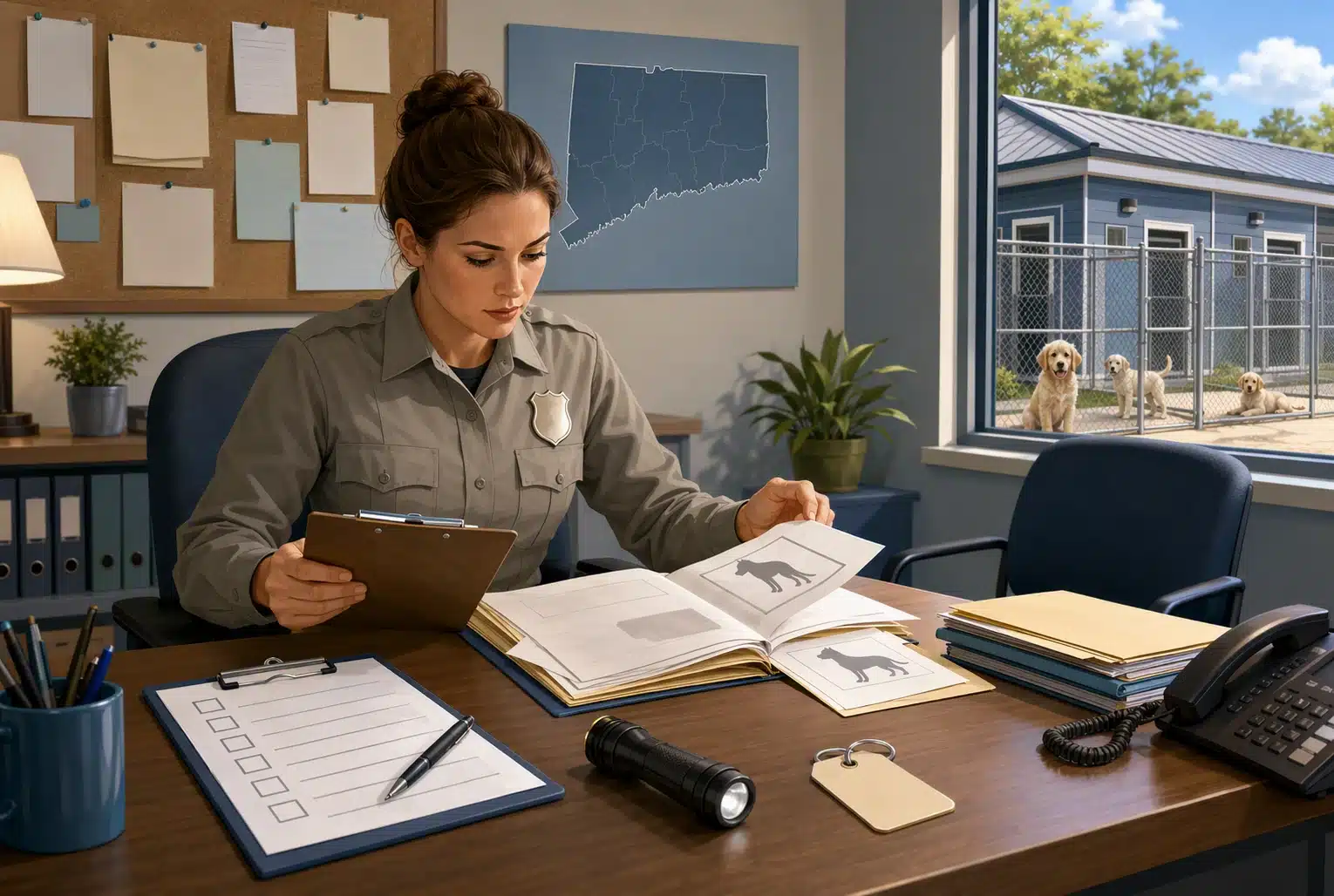
A license proves a breeder met a filing requirement. It does not, by itself, prove healthy puppies, strong social care, or good buyer support.
Make a Specific Written Request
Ask for records in writing. Name one facility location and request a clear date range. Connecticut DoAg says each FOIA request may identify only one licensee or specific facility, and electronic records are provided at no cost when they already exist electronically. Use the department’s FOIA request process.
Include:
- Breeder or business name, plus any known alternate name.
- Street address and town.
- “All inspection reports, notices of violation, complaint records, and enforcement correspondence.”
- A date range, such as the past three years.
- A request for electronic copies.
Keep your wording calm and narrow. Broad requests can slow the search.
Read the report, not just the result. Check dates, repeat issues, correction deadlines, and whether the listed address matches where puppies are raised.
For an out-of-state program such as Sage Puppies in South Jordan, Utah, Connecticut inspection files will not apply. Ask the breeder directly for current health-testing records, home-raising details, transport plans, and the documents tied to the puppy you reserve.
Also Read: Sage Puppies vs Happytail Puppies: Which Offers Better Connecticut Puppies?
Read an Inspection Report Without Overinterpreting It
An inspection report is a useful snapshot, not a full biography of a breeder. Read the date, facility address, inspector, and each finding before you draw a conclusion.
Look for the Core Welfare Categories
Focus first on conditions that affect daily care. Connecticut’s commercial kennel rules cover sound housing, cleanable surfaces, ventilation, suitable temperature, sanitation, safe water, wholesome food, and isolation space for sick dogs. Review the state’s kennel regulations beside the report.
| Report area | What to check | Why it matters |
|---|---|---|
| Housing | Clean, safe pens and adequate space | Prevents injury and stress |
| Water and food | Fresh water and clean bowls | Supports basic daily health |
| Sanitation | Waste removal and clean runs | Lowers disease risk |
| Isolation | Separate area for illness | Helps limit spread |
| Records | Dates, names, and follow-up notes | Adds context to findings |
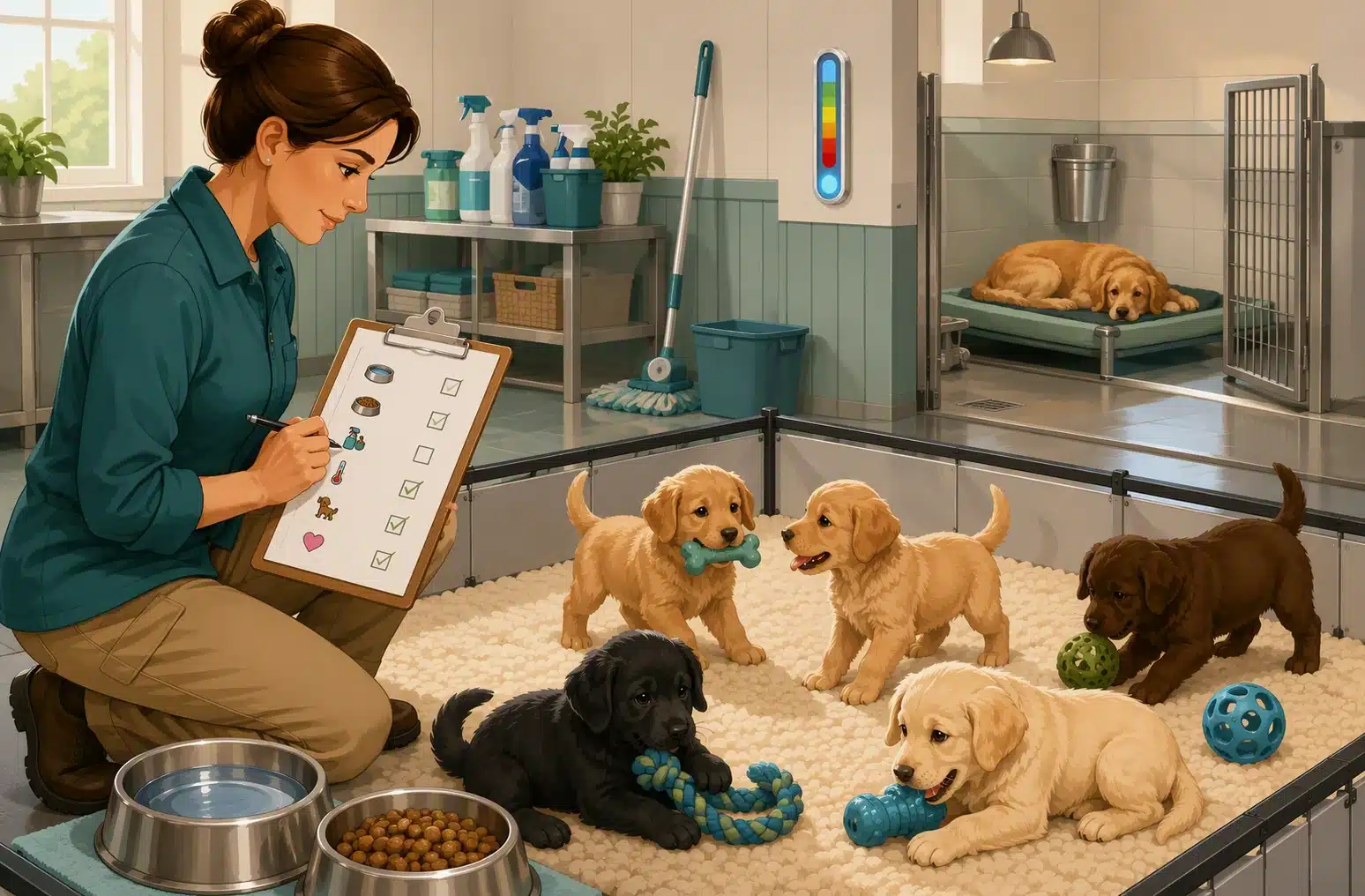
A clean report is encouraging. Still, it does not prove parent health testing, puppy socialization, or how a breeder supports families after placement.
Ask for current photos, parent records, and a live conversation. An inspection cannot answer every care question.
Separate Corrected Findings From Open Concerns
Read the action line carefully. A finding corrected during the visit differs from a problem that stayed open, repeated, or led to enforcement.
Use this quick filter:
- Note the inspection date. Old reports have less weight than recent ones.
- Read the exact issue. “Dirty bowl” and “no fresh water” are not equal.
- Find the correction status. Look for recheck dates or proof of closure.
- Compare reports over time. Repeated welfare issues deserve direct answers.
Connecticut’s Animal Control Unit inspects certain pet facilities and investigates complaints involving town kennel licensees, according to the Department of Agriculture. That role is meaningful, but an inspection still reflects what staff saw that day.
Treat serious, uncorrected, or repeated welfare findings as a reason to pause. One minor issue fixed promptly calls for questions, not an automatic verdict.
Use Licensing Records Alongside Health and Care Evidence
A license or inspection record is a useful starting point. It does not prove a puppy was raised with the care, planning, and support your family needs. Connecticut’s Animal Control Unit inspects certain pet facilities and investigates complaints involving town kennel licensees, but buyers still need to review the breeder’s own evidence. Connecticut’s Animal Control Division explains those separate roles.
Ask for Evidence a License Cannot Provide
Ask for records tied to the actual puppy and its parents:
- Parent health-testing results and the dogs’ registered names
- Vaccination and deworming dates for the litter
- A clear account of early handling, home sounds, grooming, and social time
- Current photos or a live video visit showing where puppies sleep and play
- A written contract, health details, and take-home plan
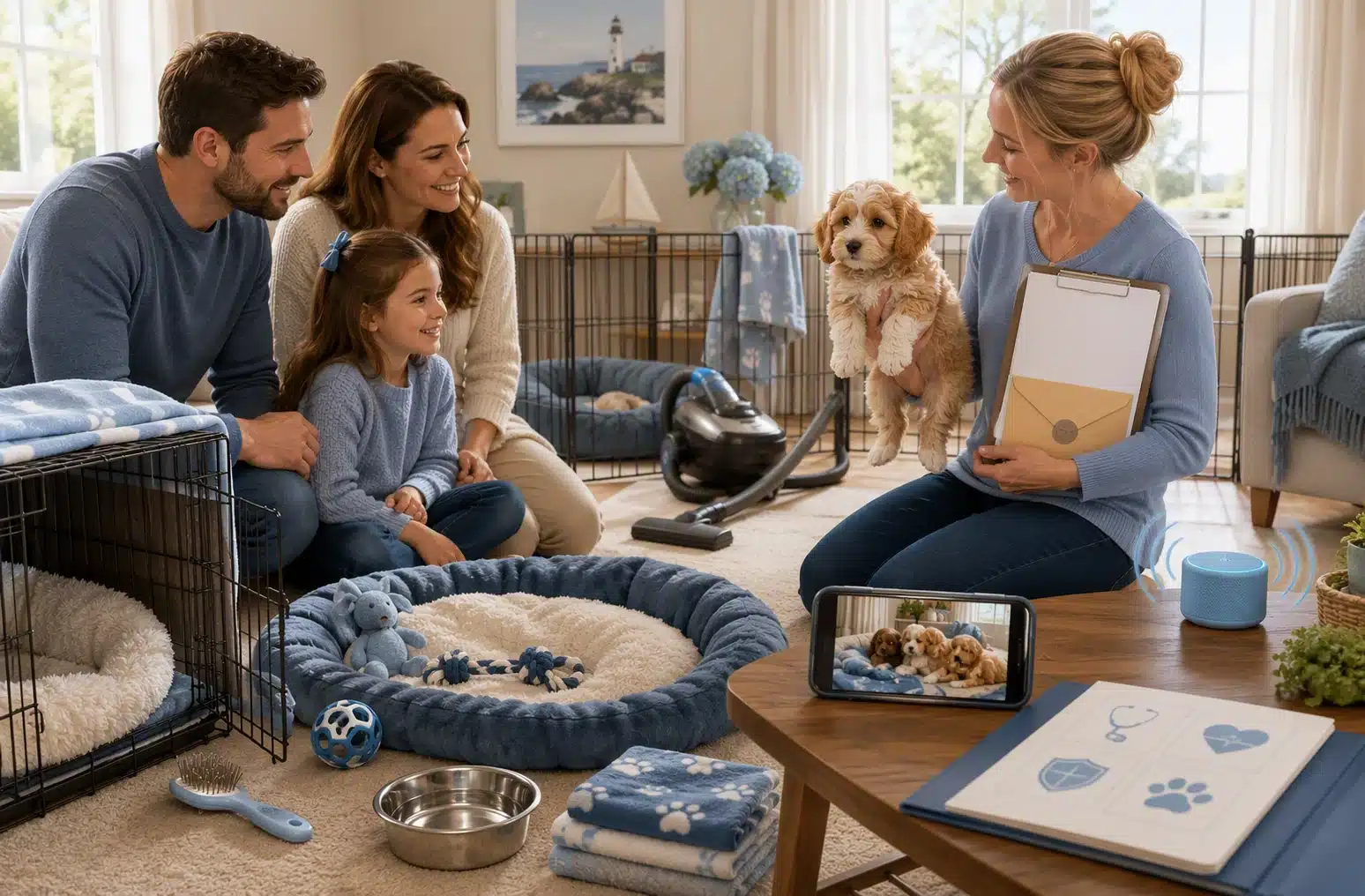
Tip: A breeder who shares records before you place a deposit gives you time to read, compare, and ask better questions.
Connecticut commercial kennel rules cover basics like clean water, sanitation, shelter, ventilation, and isolation areas. The state regulations do not replace breed-specific health screening or proof of thoughtful puppy raising.
| Evidence | What it helps you confirm |
|---|---|
| Parent records | Health planning behind the litter |
| Live visit or video | Current care and puppy behavior |
| Written agreement | Clear duties after placement |
Evaluate Transparency in the Buyer Process
Watch how the breeder handles normal questions. A careful program asks about your home, schedule, and goals too.
- Confirm the puppy’s birth date, pickup date, and exact price in writing.
- Ask who provides support after pickup or delivery.
- Request a direct answer if a record is missing.
- Walk away if you feel rushed, blocked from seeing evidence, or pushed to pay by an unsafe method.
Sage Puppies welcomes families from Connecticut to ask these questions, whether they choose local pickup in South Jordan, Utah, or planned delivery.
Also Read: 10 Signs a California Puppy Listing Is a Scam – Sage Puppies
Know When a Missing or Unclear Record Is a Red Flag
Separate a Search Problem From a Compliance Problem
A missing online result does not automatically mean a breeder broke a rule. Names change, records may sit with a town clerk, and a home breeder may not need the same state license as a boarding kennel.
Ask for the breeder’s full legal name, facility address, license number, and the issuing office. Then check that each detail matches.
| What you find | What it may mean | Best next step |
|---|---|---|
| No state commercial kennel listing | The operation may not fit that license type | Ask which license applies and why |
| No town kennel record | The town search may use another name or address | Call the town clerk or animal control office |
| Expired or mismatched details | The record needs a clear explanation | Pause until you receive proof |
Connecticut says breeders with two or more litters per year must apply for a town kennel license, while the state also inspects commercial kennels and other pet facilities through its Animal Control Unit. See the Connecticut Animal Control guidance.
A record is useful evidence, not a complete health or care review.
Pause When the Story Does Not Match the Records
Walk away, or slow down, when answers shift. A breeder who claims to be licensed should provide the license type, number, address, and current status without pressure.
Watch for these warning signs:
- A different business name on every document
- An inspection date that cannot be confirmed
- A license for boarding or grooming presented as breeder approval
- Refusal to share parent health records or where puppies are raised
- Urgency to send a deposit before your questions are answered
Commercial kennel rules cover basics such as clean housing, fresh water, ventilation, sanitation, and puppy-litter separation, as shown in the state’s commercial kennel regulations. They do not prove careful breeding choices or good temperament work. Ask for both the records and a clear, consistent account of puppy care.
Also Read: 10 Adorable Havapoo Colors You Need to See (2026)
Compare a Connecticut Breeder With a Transparent National Option
Use the Same Evidence Standard Across State Lines
Distance should not lower your standards. Ask a Connecticut breeder and a national breeder for the same proof: parent health testing, puppy care records, clear contract terms, references, and a direct answer about where puppies are raised.
Connecticut breeders with two or more litters each year must apply for a town kennel license. The state also inspects commercial kennels and related pet facilities, as explained by the Connecticut Animal Control Division.
| Check | Connecticut breeder | National option |
|---|---|---|
| Local licensing | Confirm with the town | Confirm home-state rules |
| Parent records | Ask to review them | Ask to review them |
| Delivery plan | Confirm pickup details | Confirm travel and handoff |
A license or inspection supports accountability. It does not replace your own review of health, care, and communication.
Take the Next Thoughtful Step
Compare written answers, not polished claims. A strong breeder explains testing, socialization, timing, payment, and what happens after your puppy comes home.
Sage Puppies in South Jordan, Utah, welcomes this level of review for Havanese, Havapoo, and Cavapoo families. Ask how nationwide delivery works, then compare that answer with a local option.
- Request records before placing a reservation.
- Confirm the puppy’s travel plan in writing.
- Read the agreement before sending funds.
- Choose the breeder who is clear, patient, and consistent.

After you check Connecticut license and inspection records, ask the same clear questions about care, parent health testing, and puppy raising. Sage Puppies offers home-raised Havanese, Havapoo, and Cavapoo puppies with a transparent process, plus Utah pickup or nationwide delivery.
Frequently Asked Questions
Q1: How do I check if a Connecticut puppy breeder has a valid license?
Ask the breeder for the license number, issuing town, and expiration date. Confirm it with the town clerk or animal control office. Match the licensed address to where puppies are raised.
Q2: What are the requirements for a Connecticut kennel license for dog breeders?
Rules vary by town. Many towns require a kennel license once a breeder keeps or sells dogs above a set number. Local zoning, sanitation, care standards, and renewal fees may apply.
Q3: Where can I find Connecticut puppy breeder inspection reports?
Start with the town animal control office that issued the kennel license. Ask for recent inspection records, complaint history, and any correction notices tied to the breeder’s address.
Q4: Does a kennel license prove a breeder is ethical?
No. A license shows basic legal compliance, not breeding quality. Review parent health testing, living conditions, socialization, contracts, and how openly the breeder answers hard questions.
Q5: Should I check records before placing a deposit?
Yes. Check first, then reserve. A careful breeder welcomes reasonable questions and provides clear records before asking your family to commit.
Conclusion
A Connecticut breeder check works best as an evidence trail, not a single document. Confirm the town kennel license first. Then ask whether the operation also fits the state’s commercial kennel rules and request the relevant inspection record.
The Connecticut Department of Agriculture says breeders with two or more litters per year must seek a town kennel license, while its Animal Control Unit investigates complaints involving those licensees and inspects covered pet facilities. Review the state’s guidance
A license or inspection supports basic compliance. It does not replace proof of health testing, clean care, honest records, and a puppy’s well-matched temperament.




