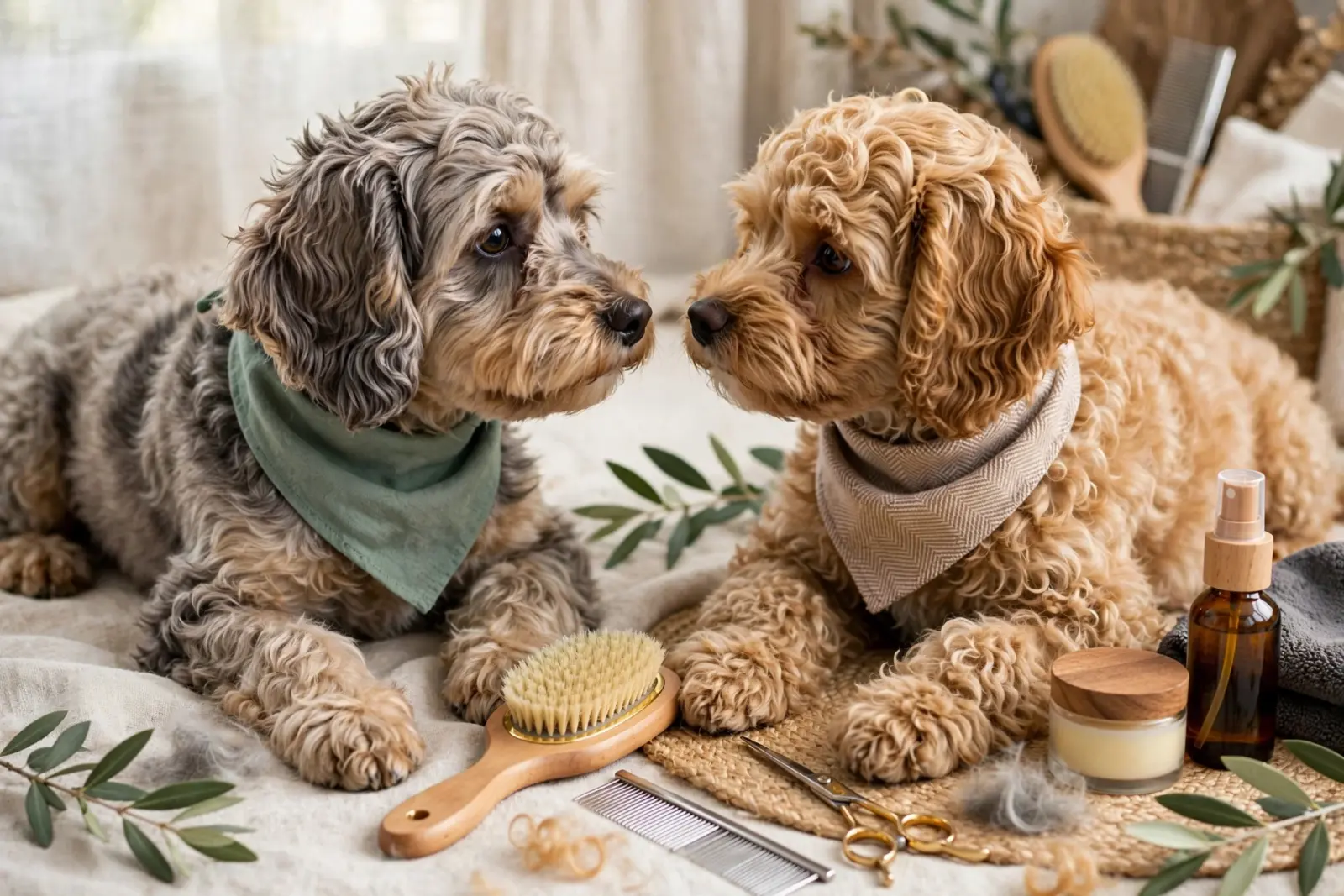
Quick Summary: Maltipoos generally shed less than Havapoos because their Maltese parent contributes a hair-like coat, while Havapoos often have a fuller, silkier Havanese-style coat. Neither breed is hypoallergenic, since both produce dander and saliva allergens, but regular brushing, HEPA filtration, hot-washed bedding, and keeping the puppy out of an allergic person’s bedroom can reduce exposure. Choose based on the individual puppy’s coat and your household’s ability to manage grooming, and consult an allergist if asthma or dog allergies are present.
If someone in your home sneezes around dogs, here is the honest answer on havapoo vs maltipoo shedding and allergies: neither cross is hypoallergenic, but they shed and carry dander differently. Maltipoos usually shed less because both Maltese and Poodle parents grow hair-like coats. Havapoos inherit the Havanese’s longer, silkier coat, so you may notice more hair even on a low-shedding puppy.
That matters because breeder pages repeat hypoallergenic without defining it, and allergic families cannot tell whether the hair on the sofa or the allergens in the air are the real problem. This guide separates the two. It covers coat texture, the three sources of dog allergens, how each parent breed contributes, the steps that genuinely cut allergens at home, and a clear framework for choosing. Sage Puppies raises Havapoos in South Jordan, Utah, and wrote this with allergy-conscious households in mind.
Havapoo vs Maltipoo: Shedding and Allergies At a Glance
| Havapoo puppy | Maltipoo puppy | |
|---|---|---|
| Typical shedding level | Low overall, but many shed moderately; individual variation by coat type | Minimal to light; hair-like coat sheds less than fur |
| Allergy risk in a sensitive home | Lower than many breeds, but not hypoallergenic | On the lower end of the spectrum, still not hypoallergenic |
| Grooming and coat maintenance | Regular brushing plus routine professional trimming | Frequent brushing and scheduled coat trims to prevent matting |
| Dander and saliva allergen load | Present, as in all dogs; saliva allergens unaffected by coat length | Present, as in all dogs; reduced dander, unchanged saliva |
| Best fit for allergy-conscious homes | Households prepared for a longer, fuller coat | Households wanting the least visible loose hair |
How Havapoo puppy and Maltipoo puppy Compare
Havapoo puppy
A Havapoo crosses a Havanese with a Poodle, and the Havapoo vs Maltipoo shedding and allergies question starts with that mix. Its coat usually comes in longer, silkier or wavier than a curly doodle, so many shed a little more than minimal, though most still stay low shedders overall. This pup suits homes ready to brush a fuller coat regularly and book routine trims.
Key strengths
- Longer, silky or wavy coat with generally low shedding
- Lower allergy risk than many breeds, though never zero
- Manageable care with regular brushing plus professional trims
Maltipoo puppy
A Maltipoo mixes a Maltese with a Poodle, giving it a hair-like coat that sheds minimally and carries less dander than many breeds. Allergen levels sit on the lower end of the spectrum too, but the dog is still not hypoallergenic. Families wanting the least visible loose hair on furniture tend to choose this cross.
Key strengths
- Hair-like, minimal-shedding coat
- Reduced dander and low allergy risk
- Straightforward routine of frequent brushing and scheduled trims
How Much Do Havapoo and Maltipoo Puppies Actually Shed?
For the Havapoo vs Maltipoo shedding and allergies question, both breeds shed very little. Neither drops hair the way a double-coated breed does. The practical differences come down to coat texture and how each coat holds dander, not visible fur on your sofa.
| Breed | Typical Shedding | One-line Verdict |
|---|---|---|
| Havapoo | Low; a little more when the coat leans Havanese | Slightly more loose hair, easier brushing |
| Maltipoo | Very low; hair-like coat, minimal seasonal drop | Least visible shedding, more matting risk |
Coat texture inherited from the Havanese and the Maltese
Both parent breeds were chosen for low-shed coats, and the Havanese vs Maltese coat difference shows up in their puppies. The Havanese has a silky double coat that sheds lightly. The Maltese grows hair more like a human’s, so it loses almost nothing visibly. Havapoos fall somewhere between; Maltipoos usually lean toward the fine, hair-like end. If you want more on coat care, our Havapoo temperament, size, and care basics page covers grooming routines.
Why puppy coat change can look like heavy shedding
Around 6 to 12 months, many poodle-mix puppies swap their soft puppy coat for a denser adult coat. That transition, sometimes called a coat blow-out, can produce a few weeks of noticeably more loose hair. It is temporary. Once the adult coat settles, shedding drops back to minimal.
Seasonal shedding and how it compares year round
Both breeds may shed slightly more in spring and fall as daylight and temperature shift, though Maltipoo seasonal changes are usually minor. Regular brushing matters more than the season, because trapped loose hair and dander build into a matted coat if you skip it. Consistent grooming keeps either breed’s year-round shedding close to invisible.
Both breeds sit firmly in the low-shedding category; the real allergy story is dander, which the next section explains.
Why Low Shedding Is Not the Same as Hypoallergenic
So, are Maltipoos hypoallergenic? No breed is, and that includes Maltipoos and Havapoos. The honest answer is that both breeds shed very little but still produce the proteins that trigger dog allergies. Low shedding reduces how much allergen spreads through your home. It does not remove it.
The allergens dogs actually produce
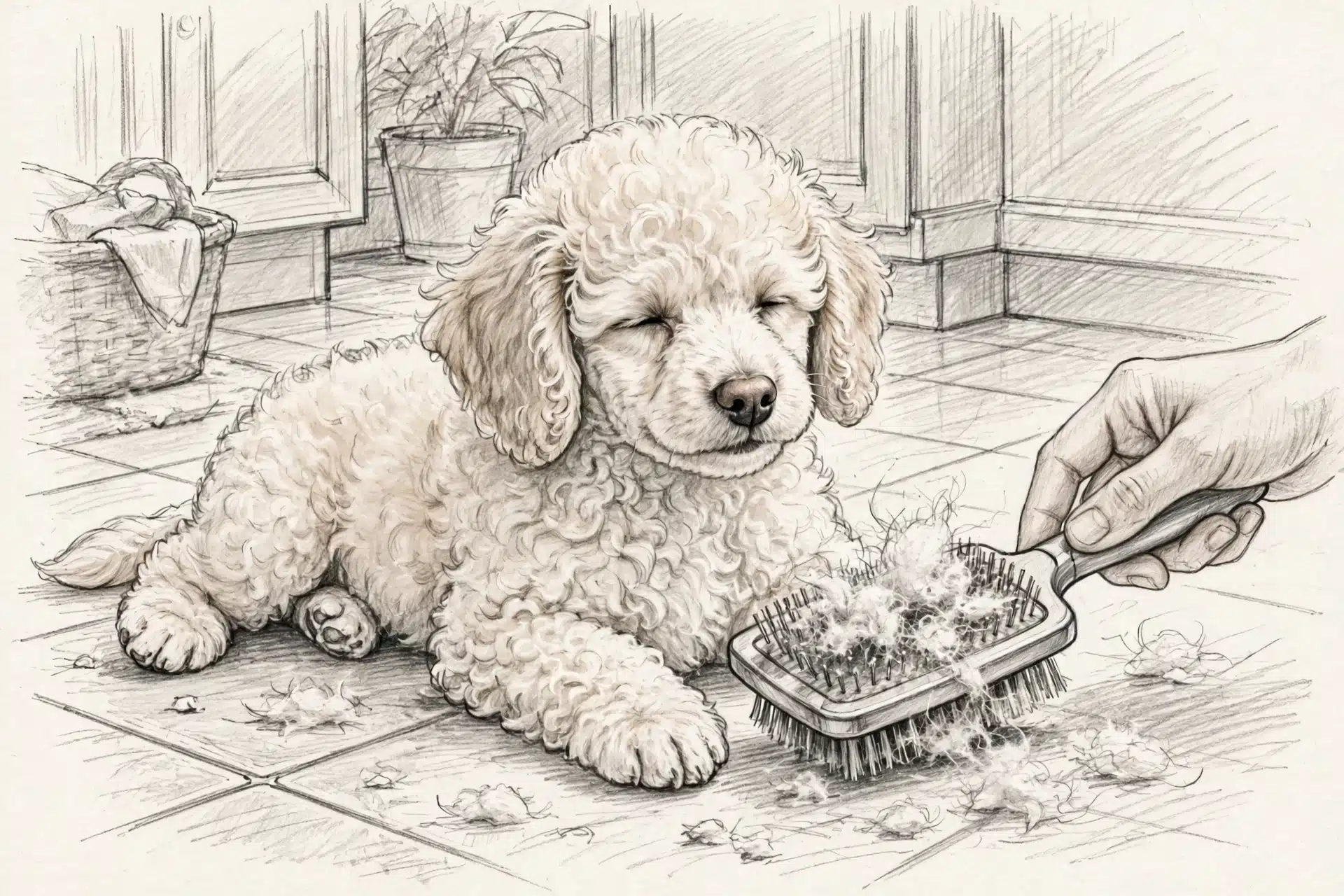
Dogs make several allergenic proteins, and the main ones are Can f 1, Can f 2, and Can f 3. Can f 1 is the biggest problem for most people. It is made in the tongue and skin, then shows up in saliva and dander. Can f 2 comes from the tongue and salivary glands, and Can f 3 is another serum and skin protein. Fur itself is not the allergen; it is the vehicle that carries these proteins around your house.
What allergy research actually shows about breed
Studies comparing breeds found no reliable difference in Can f 1 levels between so-called hypoallergenic dogs and others. One widely cited review notes that hypoallergenic breeds sometimes had more allergen on their coats, and home dust samples showed no clear breed advantage. The AAAAI’s summary puts it plainly: there is no consistent evidence these breeds produce fewer allergens.
Skin health, stress, and allergens beyond the coat
Allergen output varies by the individual dog, not the breed label. Dry, itchy skin increases dander. A matted coat traps it, so regular grooming matters more than genetics here. This is why we focus on coat care basics for Havapoos and Maltipoos rather than allergy promises no breeder can honestly make. Ask your allergist before committing, and spend time with the specific puppy.
Where the Havanese and Maltese Parent Breeds Change the Picture
The Havanese side of a Havapoo coat
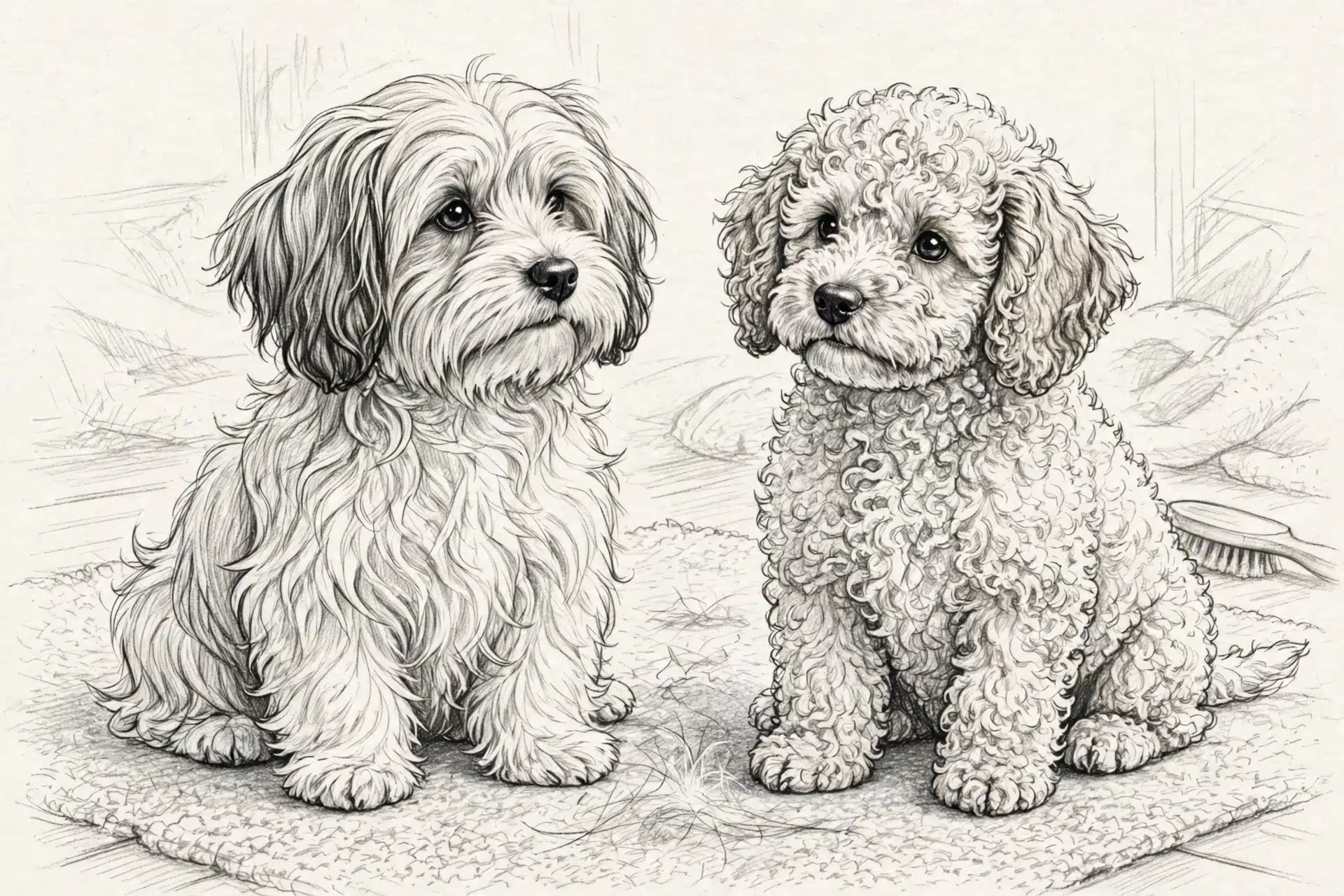
The Havanese carries a long, silky coat with a soft undercoat. It sheds very little, and much of the loose hair stays caught in the coat instead of landing on your sofa. That makes the shedding invisible, not absent. Dander and saliva proteins still travel on the dog and on the trapped hair, so a Havapoo inherits a low-shedding tendency rather than an allergy-free one. If you want a closer look at this parent breed, our guide to Havanese puppies and how they compare covers coat care in more depth.
The Maltese side of a Maltipoo coat
The Maltese has a single layer of long, white, human-like hair and no true undercoat. Like the Havanese, it drops very little hair day to day. The tradeoff is matting: a tangled coat traps dander and skin oils close to the dog, so grooming matters as much as genetics. A well-brushed Maltipoo usually leaves less visible hair around the house than a poorly brushed one.
Why two puppies with the same name can behave differently
Every puppy gets a mixed shuffle of parent genes. In one Havapoo litter, some pups may lean toward the Havanese’s silky hair while others take after the poodle’s dense curls, and the same split happens in Maltipoo litters. Coats also change between 6 and 12 months, when the puppy coat gives way to the adult one. As ASPCA Pet Insurance notes, no breed is truly hypoallergenic, so judge each puppy individually.
Managing Allergens in a Home With a Havapoo or Maltipoo
You cannot make either breed allergy-proof, but you can cut the allergen load in your home. Both coats hold loose hair and dander well, so the work is mostly routine, not expensive. These steps tackle where Can f 1 actually lives: on the coat, in bedding, and in settled dust.
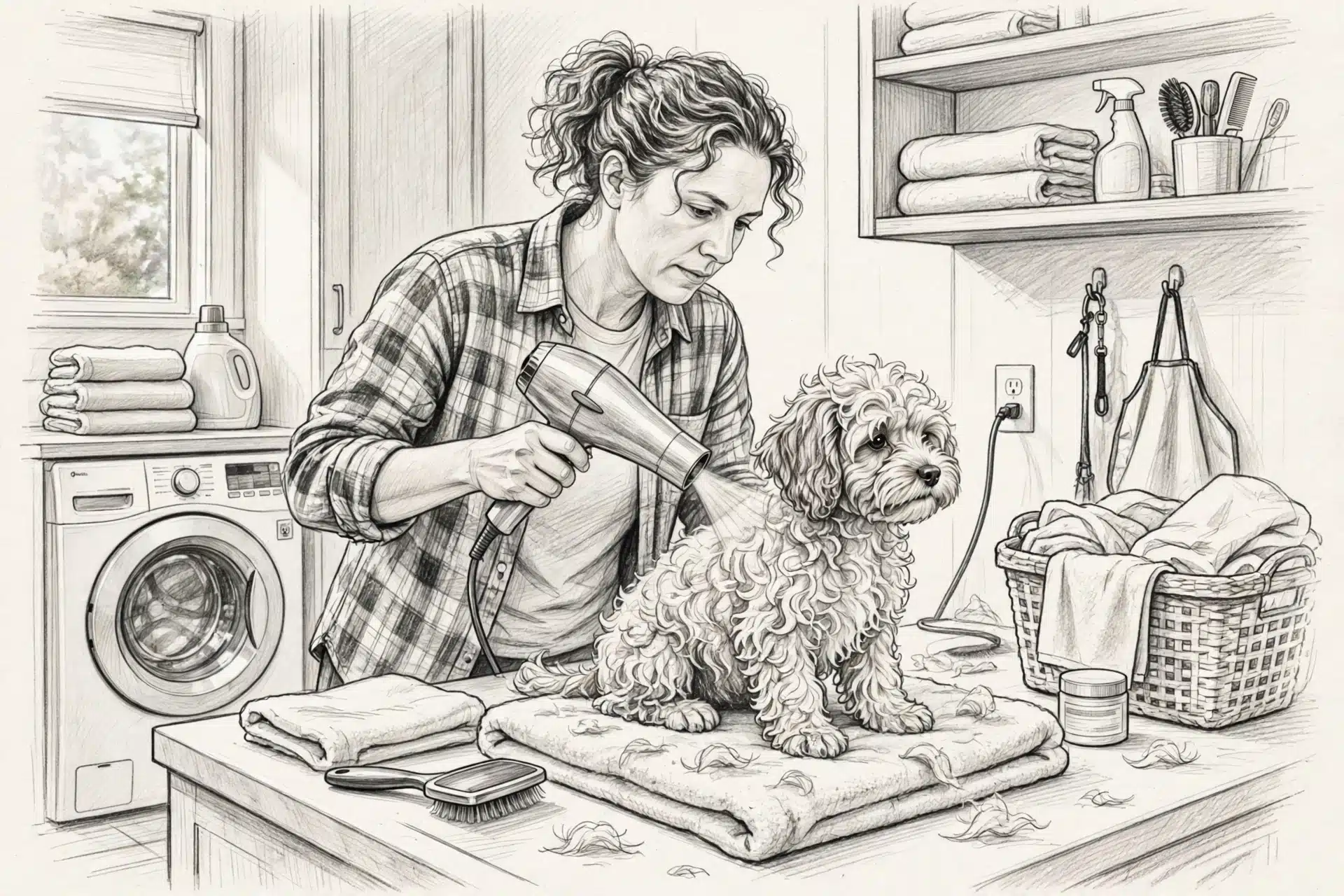
Grooming routines that reduce loose hair and dander
- Brush three to four times a week. This removes trapped dander before it spreads to your furniture.
- Bathe every two to four weeks. Bathing washes allergens off the skin and coat, but over-bathing dries skin and can backfire.
- Book professional trims every six to eight weeks. A matted coat traps dander close to the skin.
- Brush outdoors or in the garage when possible, so loosened hair never lands on your carpet.
Coat changes around 6 to 12 months call for extra brushing, since the puppy coat sheds as the adult coat comes in.
Cleaning the home, not just the dog
Vacuum carpets, rugs, and upholstery at least weekly with a vacuum that has a HEPA filter, since ordinary vacuums can stir dander back into the air. Wash your puppy’s bedding weekly in hot water, and dry it on a hot cycle. Add a HEPA air cleaner in the room where the puppy sleeps most. Hard floors beat wall-to-wall carpet, and keeping the puppy out of the allergic person’s bedroom removes the biggest single exposure.
Working with your clinician and your veterinarian
If someone in the house has asthma or known dog allergies, loop in an allergist before and after the puppy arrives. They can confirm which proteins trigger symptoms and discuss options such as medications or immunotherapy. Your veterinarian, meanwhile, rules out skin conditions that raise dander. Sage Puppies walks every family through coat-care basics before pickup, and ongoing coat care between professional grooms keeps the routine manageable. Neither dog is hypoallergenic, but consistent care keeps symptoms within a range your clinician can actually treat.
Choosing Between the Two for Your Household
Both breeds can work in a home with allergies, but they fit different situations. Match the puppy to your household, not to a marketing claim.

When a Maltipoo is the easier fit
A Maltipoo suits families who want a very small dog with a tightly curled, poodle-like coat that holds loose hair instead of releasing it. If you can commit to brushing several times a week and professional grooming every six to eight weeks, that trapped dander stays manageable. Maltipoos also tend to be a bit smaller, which means less total coat and less allergen spread through the house.
When a Havapoo fits better
A Havapoo fits households that want a slightly sturdier, more playful companion with the silky Havanese influence in the coat. That softer, wavier coat needs steady brushing to prevent a matted coat, but many families find it easier to maintain than a dense curl. Havapoos are often a touch larger and more social with kids, which matters in busy homes.
Questions to ask any breeder before you commit
Ask to see both parents and how each coat actually sheds. Ask how many prior puppy families had allergy concerns and what happened after 6 to 12 months, when the adult coat comes in. Ask what grooming schedule the breeder recommends in writing. A good breeder will discuss allergens honestly, not promise a dog that will never trigger symptoms. Sage Puppies, for example, matches families through an application process partly so coat and household fit get talked through before a deposit.
Which Should You Choose: Havapoo or Maltipoo?
The short answer for allergy-focused households
Neither breed is allergy-proof, so the honest answer depends on how your household manages allergens, not which puppy you pick. If you want the most consistent, wavy, low-shedding coat, a Havapoo with a fleece-type coat is often the steadier choice, because Havanese coats tend to hold hair instead of releasing it. If your family wants a smaller, slightly lower-maintenance grooming routine and you can commit to weekly brushing, a Maltipoo works just as well for many allergy households.
What matters more than breed is the individual dog. Ask any breeder how many past families had allergy concerns and what happened after 6 to 12 months, when the adult coat replaces the puppy coat. Then run a real test: spend time with the specific puppy, and check with your allergist before you commit.
The winner is the dog whose coat your family actually tolerates, verified in person.
Where Sage Puppies fits, and where it does not
If you have settled on a Havapoo, Sage Puppies breeds Havapoos, Cavapoos, and Havanese in South Jordan, Utah, with local pickup and nationwide delivery, so the Havapoo side of this comparison is fully covered. What Sage Puppies does not offer is Maltipoos, so this comparison ends with a decision, not a sales pitch.
Choose the Havapoo if you want a slightly larger, sturdy companion with a soft wavy coat, and you value meeting a small program that matches puppies to families through an application process. Choose the Maltipoo if a smaller adult size matters more, and you find a breeder who will let you visit before deciding.
Either way, use the household checklist from earlier in this guide: HEPA filtration, hot-washed bedding, and a brushing routine that keeps dander off the coat instead of trapped in a matted one.

Still weighing coat changes and allergen load? Talk it through with Sage Puppies. Our owner-managed matching looks at your whole household, including allergy concerns, before any puppy is placed. Apply at Sage Puppies and get honest answers about which breed fits your family.
Frequently Asked Questions
Q1: How do Havapoo and Maltipoo puppies compare for shedding and allergy concerns?
Both shed very little, but Maltipoos usually shed less because the Maltese passes on a hair-like coat. Havapoos carry the Havanese’s silkier coat, so you may see more loose hair. Neither breed is hypoallergenic; both still produce dander and saliva allergens.
Q2: Are Maltipoos hypoallergenic?
No. They produce the same Can f 1, Can f 2, and Can f 3 proteins as every dog. Their coat sheds less and holds dander, which lowers exposure, but allergic reactions remain possible.
Q3: Are Havapoos hypoallergenic?
No breed is, including Havapoos. Their low-shedding coat keeps allergens from spreading easily, but saliva and dander proteins are still present, so sensitive family members should meet the puppy first.
Q4: Which sheds less, a Havapoo or a Maltipoo?
The Maltipoo, usually. Its fine, hair-like coat drops minimal visible hair, while a Havapoo leans slightly furrier. Grooming consistency matters more than breed, since a matted coat traps dander either way.
Q5: Why is my puppy shedding more at 8 months old?
That is the coat blow-out. Between 6 and 12 months, the soft puppy coat gives way to a denser adult coat, causing a few weeks of extra loose hair. It settles once the adult coat is in.
Q6: What actually reduces allergens in my home?
Brush three to four times weekly, bathe every two to four weeks, use HEPA filtration, and hot-wash bedding weekly. Keeping the puppy out of the allergic person’s bedroom cuts exposure the most.
Q7: Should I ask an allergist before getting a puppy?
Yes, especially with asthma or known dog allergies. An allergist can confirm which proteins trigger symptoms and discuss treatment options, while your veterinarian rules out skin conditions that increase dander.
Conclusion
Neither breed is hypoallergenic. Maltipoos usually shed less because the Maltese coat is hair-like, while Havapoos inherit the Havanese’s silkier coat that holds hair instead of dropping it. Dander and saliva allergens are present in both, so the real question is how well your household manages them. Brushing several times a week, HEPA filtration, and hot-washed bedding lower exposure more than any breed label. Meet the specific puppy before you commit, and loop in your allergist if asthma runs in the house. Choose the puppy whose coat your family actually tolerates, verified in person rather than promised in a listing.