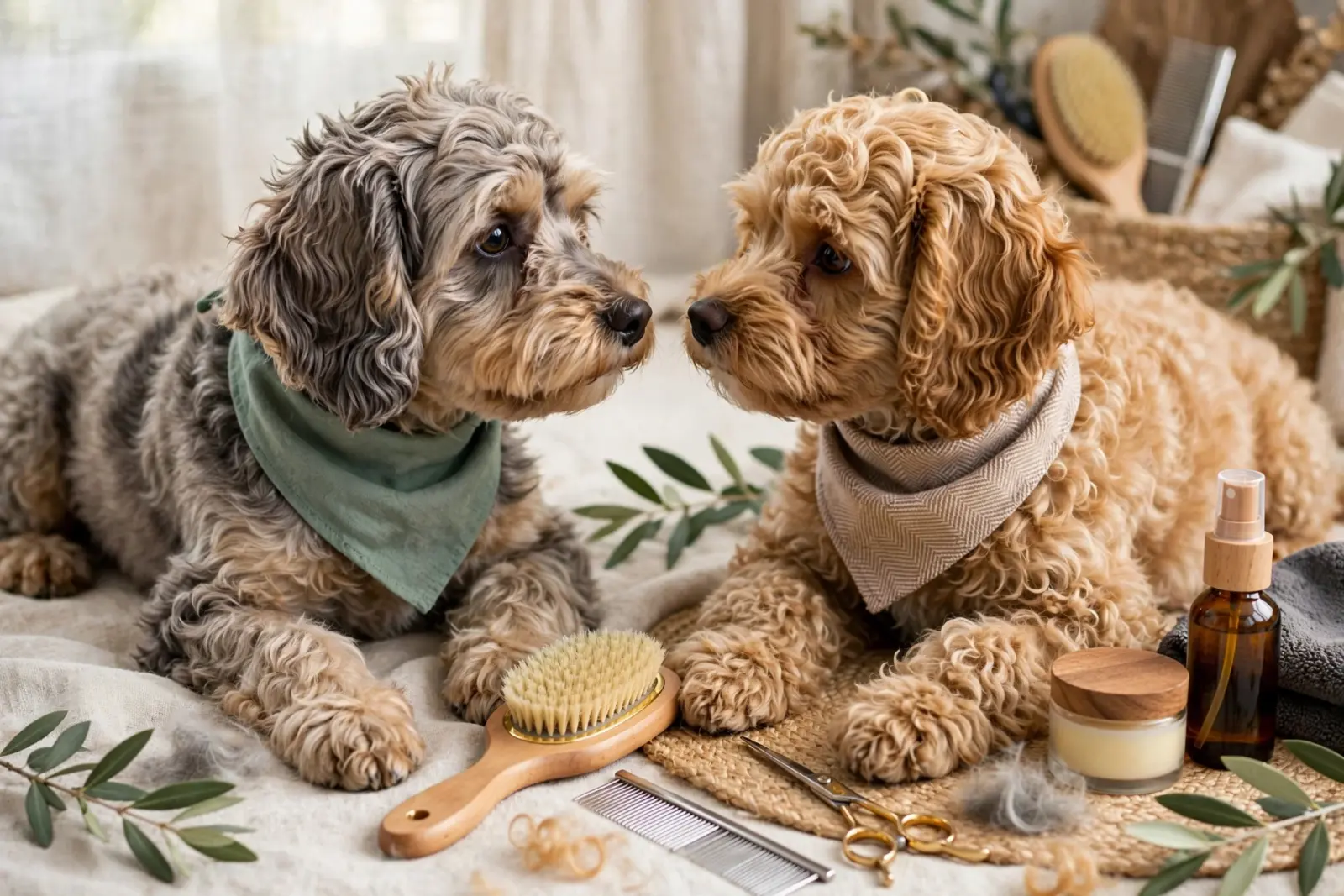
Quick Summary: Havanese puppies usually shed slightly less than Havapoos, but the difference is small and individual coat variation matters more than the breed label. The real tradeoff is grooming: Havanese coats need brushing two to three times weekly, while curlier Havapoo coats usually require daily brushing and trims every 6 to 8 weeks. Neither breed is hypoallergenic, so spend time with the exact puppy before choosing.
Two puppies from the same litter can land in very different homes on one point. In the Havanese vs Havapoo shedding question, the Havanese usually wins: its profuse coat lacks the dense, seasonal undercoat other double-coated breeds drop, so less loose hair reaches your couch and jeans. The Havapoo’s curlier coat holds loose hair instead, which means less on your floor but more matting risk. Most families choosing on coat alone have been told both are “non-shedding” with no clear source, and few realize a low-shedding breed can still need daily brushing, that crossbred coats vary widely, or that shedding can change between eight months and two years. This guide covers the coat mechanics, the grooming load, what it means for dander and allergies, and how puppy coats shift into adult coats, so you can pick the right match for your household.
Havanese vs Havapoo Shedding: At a Glance
| Havanese | Havapoo | |
|---|---|---|
| Shedding amount | Very low; minimal loose hair, no dense seasonal undercoat blowout | Low to moderate; individual variation is wide because coat type is unpredictable |
| Coat type | Profuse, soft double coat that can be brushed straight or corded | variable: may be silky, wavy, or curly, inherited from Poodle and Havanese parents |
| Grooming frequency | Brush and comb 2 to 3 times weekly in full coat, daily when matting risk is high, plus regular professional grooming | Daily brushing recommended to prevent matting, plus regular professional grooming every 6 to 8 weeks typically |
| Dander and allergen notes | Lower hair release than most breeds, but still produces dander; no breed is allergy-proof | Low shedding overall but curlier coats trap loose hair and dander at home rather than releasing it |
| Best household fit | Homes wanting the least hair on floors and clothes and comfortable with consistent coat care | Homes wanting a smaller, lower-energy cross that accepts frequent brushing and coat trims |
How Havanese and Havapoo Compare
Havanese
Cuba’s only native breed, the Havanese is a small companion dog with a profuse, soft double coat. The Havanese Club of America describes it as non-shedding, though the hair grows continuously and needs regular care. This Havanese vs Havapoo shedding matchup starts here because the Havanese side is the more predictable one.
Havapoo
The Havapoo is a designer cross between a Havanese and a Toy or Miniature Poodle, bred for a soft, often curlier coat. Shedding tends to stay low, but individual puppies vary widely because coat texture is unpredictable. A Havapoo suits families who welcome daily brushing and trims every 6 to 8 weeks. Both breeds are raised by programs like Sage Puppies, which keeps its focus on small companion lines.
Which Sheds Less, a Havanese or a Havapoo?
The Short Answer in Plain Terms
Most Havanese shed slightly less than most Havapoos, but the gap is small and individual puppies vary more than the two breeds do. The Havanese’s silky coat sheds very little, and a first-generation Havapoo often matches it. In practice, expect light shedding from either puppy, and judge the individual coat rather than the breed name. The AKC’s Havanese profile notes different coat types carry different shedding levels even within one breed.
Why the Word “Non-Shedding” Is Misleading
No dog is truly non-shedding, and none is hypoallergenic. Allergens come mostly from dander and saliva, not loose hair, so a dog that sheds less still spreads allergens. Low-shedding coats simply trap loose hair until you brush it out, which moves the hair from your floor to your brush.
What Individual Variation Looks Like
Some Havapoos inherit a Havanese-like coat that barely sheds. Others lean toward the Poodle parent and still shed little, but mat faster, so daily brushing matters more. Puppy coats also change around 6 to 12 months, so a 10-week-old tells you little about adult shedding. We match families to the coat in front of them at Sage Puppies, not a breed average.
The Coat Structure Behind the Shedding Difference
Shedding starts at the follicle, so it helps to look at what each parent breed actually passes on. The Havanese and the Havapoo both have hair rather than fur in the everyday sense, but the structure differs in ways that matter for your couch.
What the Havanese Breed Standard Actually Describes
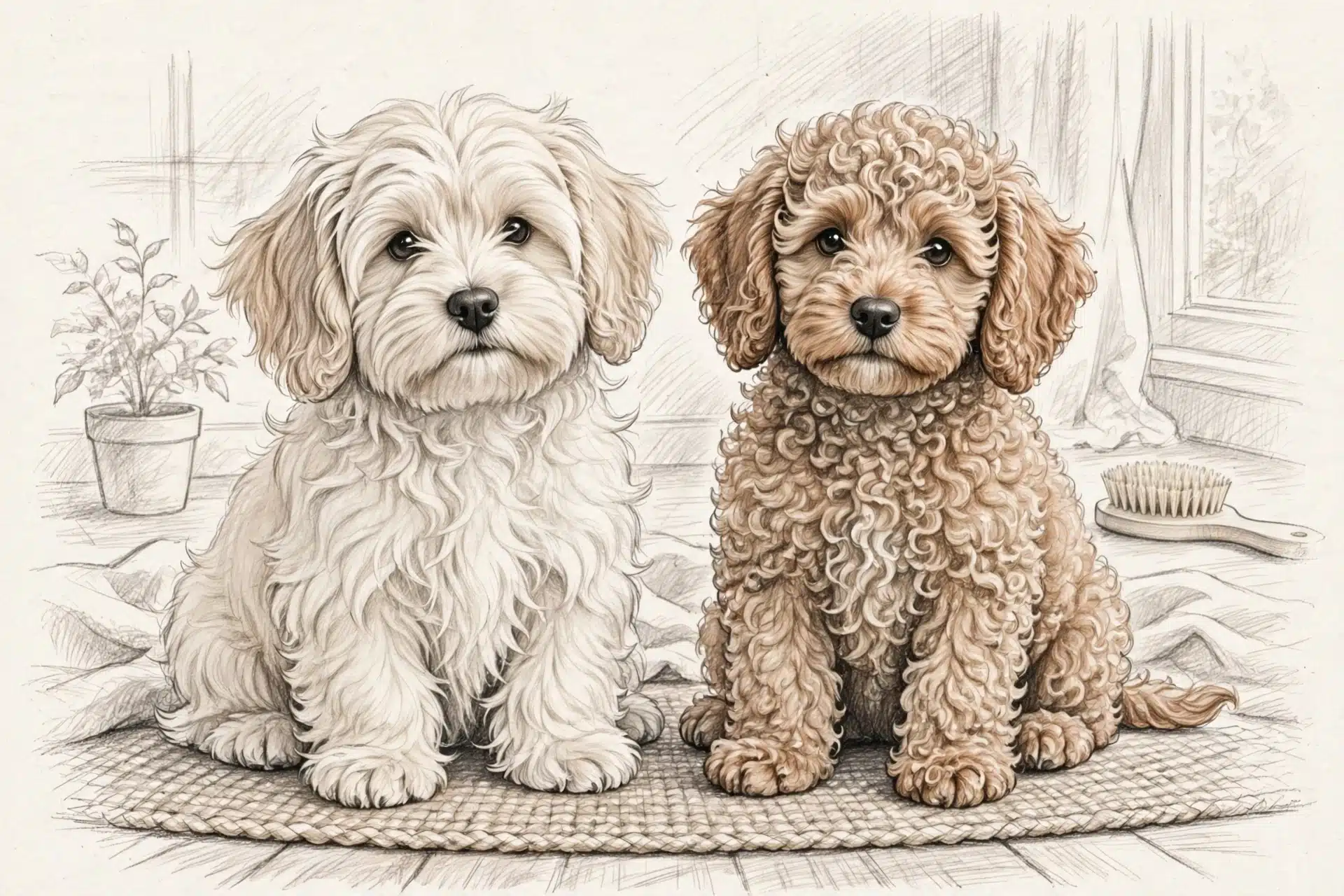
The Havanese carries a double coat, just not the kind most people picture. The AKC breed profile describes a long, silky coat, and the standard specifies a soft double coat without the harsh guard hairs and woolly undercoat of breeds like a husky. That soft undercoat releases hair, but the loose hair usually stays trapped in the outer coat instead of landing on your floor. The tradeoff is matting: trapped hair tangles, which is why brushing matters as much as any shedding claim. We cover this in more depth in our guide to whether Havanese shed.
What the Poodle Contributes to a Havapoo Coat
The Poodle parent adds a curly, low-shedding coat gene that often dominates. Most Havapoos end up with dense curls or loose waves, and the shed hair tends to stay in the curl until brushed out. That means less hair in your home but a higher matting risk, so daily brushing and trims every 6 to 8 weeks become routine.
Shedding and Grooming Are Two Different Jobs
Shedding is how much hair a dog releases into your home. Grooming is how much work that coat demands from you. The two run in opposite directions here, and confusing them is why buyers get surprised.
The Real Cost of a Havanese Coat
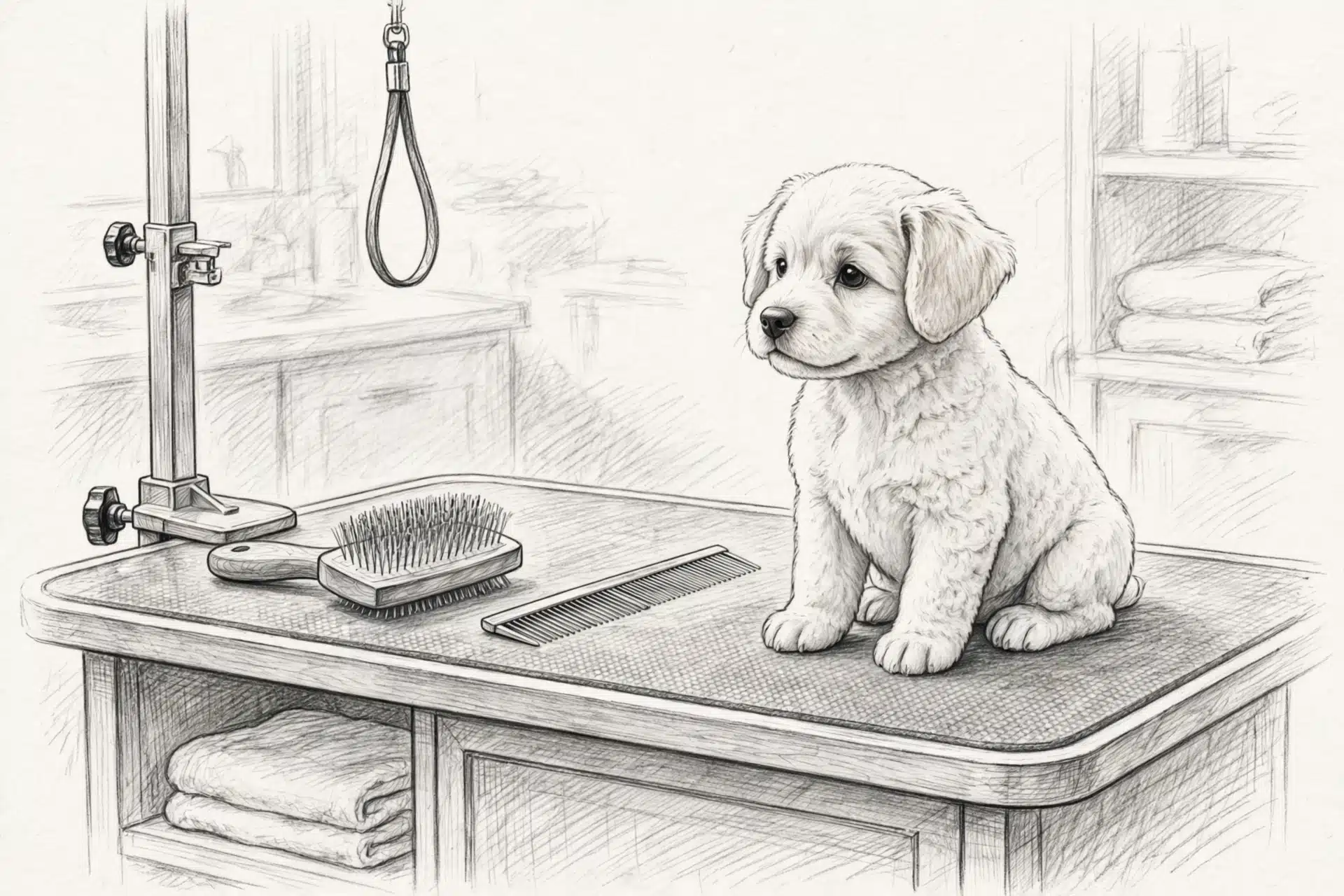
A Havanese releases very little hair, but the coat that stays on the dog needs steady attention. Breed club guidance calls for brushing a full coat two to three times a week, and the long, silky coat mats close to the skin, so a quick once-over misses tangles you work out later. Professional trims every 6 to 8 weeks keep a shorter pet cut manageable. Our guide to Havanese coat care between professional grooms walks through the at-home routine. The work is steady, but planable.
The Real Cost of a Havapoo Coat
A Havapoo trades a little more loose hair for a coat that mats faster. Curly Poodle-type coats tangle quickly, especially where a harness rubs or your puppy naps on fabric. That usually means daily brushing rather than a few sessions a week, plus trims every 6 to 8 weeks. When the puppy coat shifts into the adult coat around 6 to 12 months, matting risk spikes and brushing matters most. The Havanese coat rewards consistency; the Havapoo coat punishes skipped days, so honest grooming time should drive your pick.
Seasonal Shedding, Blowouts and Coat Changes
So do Havanese or Havapoos shed more in summer? No. Neither breed has a heavy seasonal blowout like a Husky or a German Shepherd. You may notice a little more hair release as daylight shifts, but a big twice-yearly dump of hair is not the norm. The exception is a sudden or patchy coat loss, which is a veterinary red flag, not a shedding pattern. Call your vet if hair comes out in clumps or the skin underneath looks irritated. For a fuller look at normal shedding, see our guide to what Havanese owners can expect.
No Heavy Seasonal Blowout, But Hair Is Not Constant
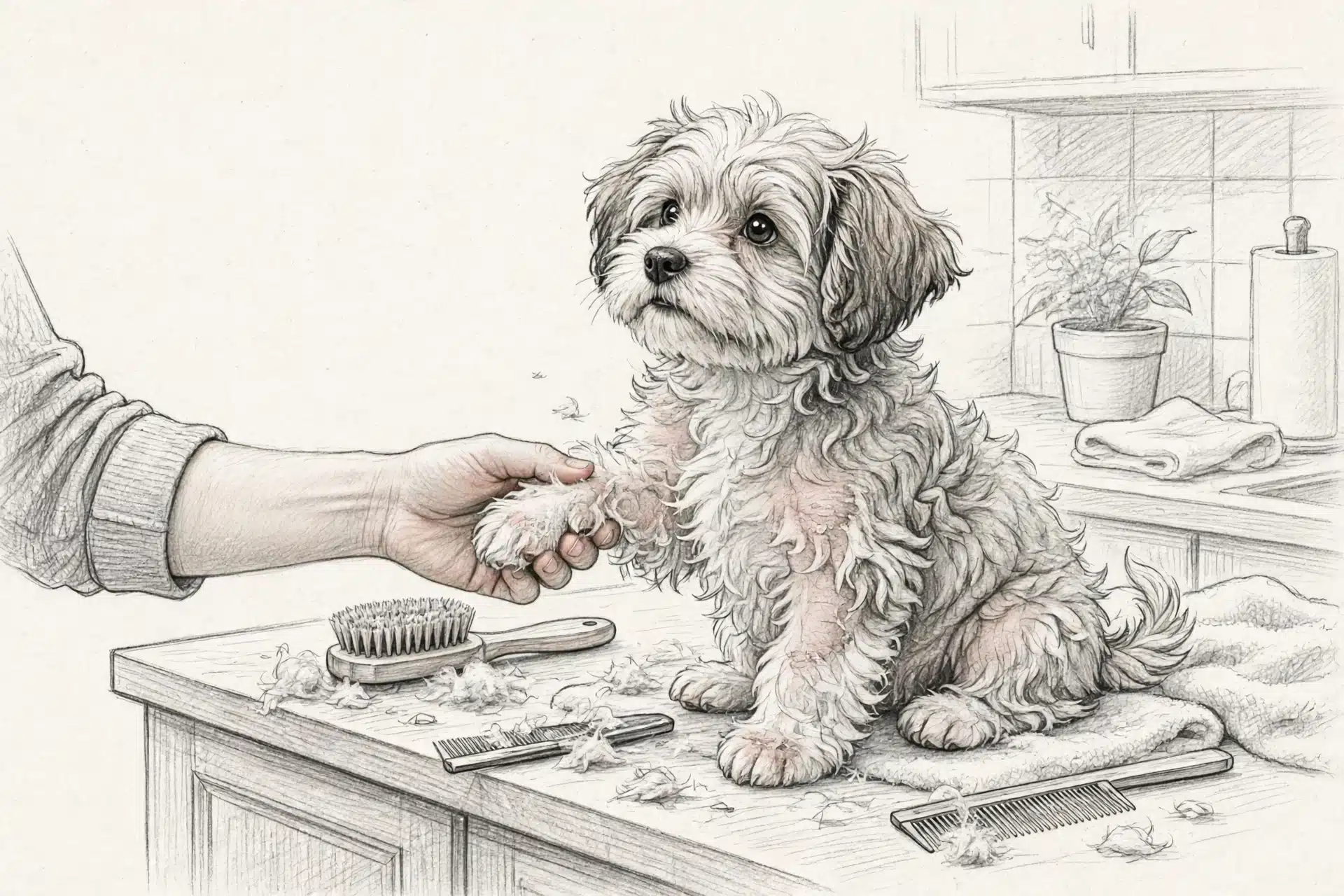
Havanese carry a single silky coat, so they lack the dense undercoat that fuels a true blowout. Hair still releases a few strands at a time, mostly when you brush or bathe. Havapoos behave similarly, and many shed even less because of the Poodle side. Coat care guides, including the basics we cover in Havanese temperament and training, stress routine brushing over seasonal panic.
How the Coat Changes From Puppy to Adult
Puppy fuzz feels soft and sheds almost nothing. Between 6 and 12 months, that fluff gives way to the adult coat. During this shift, dead puppy hair tangles with new adult hair, so mats form fast near the collar and behind the ears. Brush daily through those months and the change passes smoothly.
Allergies, Dander and What Low Shedding Does Not Promise
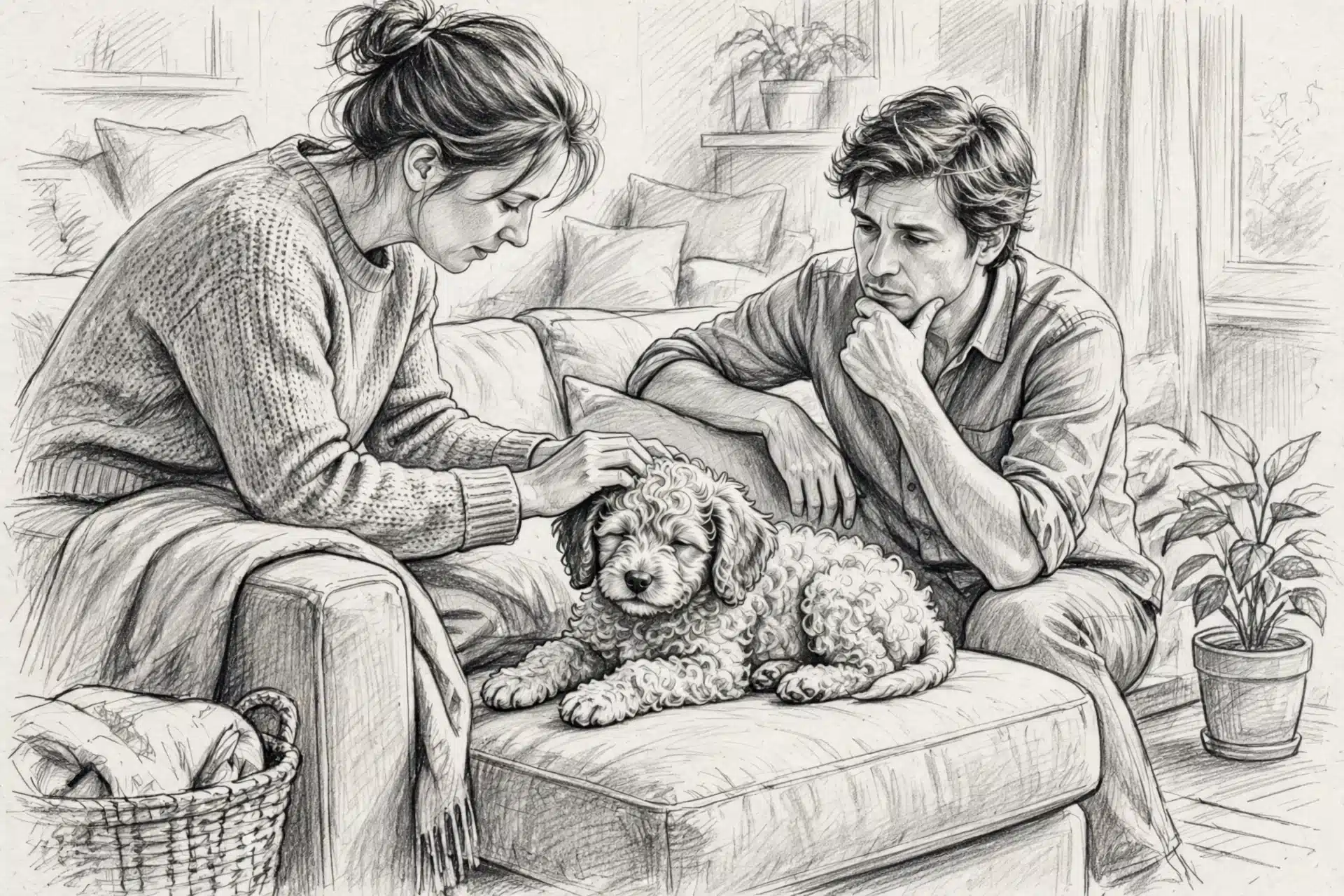
Low shedding means less hair on your couch. It does not mean an allergy-proof dog. Neither the Havanese nor the Havapoo is hypoallergenic, and no breed is. Allergens come mostly from dander, saliva and skin, not the hair itself, and studies find no reliable difference in home allergen levels between so-called hypoallergenic breeds and other dogs. Less shed hair can mean less allergen carried around the house, but that is a tendency, not a guarantee for any individual puppy.
What Low Shedding Actually Changes at Home
Expect fewer tumbleweeds of hair on floors and clothing with either breed. That is the real benefit. What does not change: both coats keep growing, so brushing and trims stay on your calendar. A low-shed coat traps loose hair instead of releasing it, which is why matting risk replaces shedding as your main chore. Think of it as trading hair cleanup for coat maintenance, and plan your grooming time before you choose.
If Someone in the House Has Asthma or Dog Allergies
Spend time with the exact breed first, ideally the same breeding line, before you commit. Reactions vary by individual dog and person, so a 30-minute visit tells you more than any coat description. Allergists note that reactions to so-called hypoallergenic breeds are common. Talk to your doctor, ask your breeder about a visit, and keep the puppy out of the allergic person’s bedroom as an extra layer.
What to Ask a Breeder About Coat and Shedding
Because puppy coats change around 6 to 12 months, the coat in front of you at a visit says little about adult shedding. Good breeders expect coat questions, so ask early and take notes.
Coat Questions Worth Asking Before You Commit
Start with the parents. Ask how much hair you find on their furniture and clothing, since adult coats predict adult shedding better than any puppy photo. Then ask which parent the litter tends to take after, because a Poodle parent often tips a Havapoo toward the curlier, lower-shedding end. Ask whether the Havanese parent carries a cotton or silkier coat, and how that has shown up in past litters. Finally, ask what changed for past buyers once the puppy coat shifted into the adult coat. An honest answer usually mentions extra brushing, not a miracle.
Documentation and Health Records to Request
Ask for written health screening on the parents: patella certification, hip x-rays, and annual eye exams are standard for both breeds. Request the vaccination and deworming schedule in writing, plus a record of any vet visits. For a Havapoo, ask which Poodle type was used, since that shapes coat texture and grooming needs.
A breeder who talks openly about coat changes and shows current health paperwork usually has nothing to hide. Vague answers on either point are a reason to keep looking.
Which Should You Choose: Havanese or Havapoo?
Shedding is a tie. The real choice comes down to grooming time, coat predictability, and how much of the puppy’s early months you want to spend with a brush in hand.
Choose a Havanese If
You want a known quantity. The breed’s silky coat, its shedding level, and its grooming needs are described in detail by the AKC breed profile, so the dog you meet at eight weeks is the dog you will groom for life. A Havanese also skips the coat-change gamble: the adult coat grows in steadily, so there is no 6 to 12 month surprise. Brush two to three times a week in a longer cut, keep up with regular professional grooming, and hair stays manageable. You trade that routine for straight-line predictability, and for a breed history where every generation of the coat looks the same.
Choose a Havapoo If
You want the lowest shedding you can get and you already enjoy grooming. Most Havapoos inherit the Poodle’s low-shed coat, which means less hair on your clothes than even a light-shedding Havanese. The cost is commitment. That curled or wavy coat mats fast, so plan on daily brushing plus trims every 6 to 8 weeks, and expect the coat to shift around 6 to 12 months. You are also betting on a mix, where one litter can produce coats that lean Havanese or lean Poodle. Meet the puppy and its parents if you can. Allergy-wise, no mix outranks a hands-on visit, because dander, not shed hair, triggers most reactions.
Next Steps for Utah and Nationwide Families
Spend thirty minutes with any puppy you are considering before you decide. A short visit reveals more about your own reaction than any coat description, since allergen levels differ dog by dog.
Then ask breeders specific questions. Which parent dogs were health screened for eyes, hips, and patellas? What grooming schedule did the parents need? How did previous litters’ coats turn out?
For Utah families, Sage Puppies offers local pickup in South Jordan, and nationwide families can arrange delivery, with matching handled through a clear application. Choose based on grooming time you will actually enjoy, not just the hair you want to avoid.

Either breed sheds far less than most dogs, so your real choice is grooming style. If that fits your home, see the current Havanese and Havapoo litters at Sage Puppies. Fill out the application, and Cassie will help match the right puppy to your family, honestly and without pressure.
Frequently Asked Questions
Q1: Which sheds less, a Havanese or a Havapoo?
Most Havanese shed slightly less, but the gap is small and individual puppies vary more than breeds do. Judge the coat in front of you, not the breed name.
Q2: Do Havanese or Havapoos shed more in summer?
Neither. Both lack a dense undercoat, so no heavy seasonal blowout. Clumpy or patchy hair loss is a vet issue, not shedding.
Q3: Are either breed hypoallergenic?
No. Allergens come from dander and saliva, not hair. Spend 30 minutes with the exact puppy before committing.
Q4: How often should I brush a Havapoo?
Daily. Curly coats mat fast, especially around 6 to 12 months when the adult coat grows in. Trims every 6 to 8 weeks.
Q5: When do puppy coats change?
Between 6 and 12 months. Dead puppy hair tangles with adult hair, so brush daily through that window.
Q6: Do Havanese need professional grooming?
Yes. Plan trims every 6 to 8 weeks, with brushing two to three times weekly between visits.
Q7: Havapoo vs Maltipoo shedding?
Both cross low-shedding coats with Poodle genetics, so shedding stays low. Coat texture and matting risk vary by individual puppy in either mix.
Conclusion
Neither breed wins the shedding contest by much. A Havanese releases less hair overall, while a Havapoo’s curlier coat traps more of it, but individual puppies vary more than the two breeds do. The real difference is grooming: Havanese coats brush two to three times a week, Havapoo coats usually need daily brushing plus trims every 6 to 8 weeks. Neither breed is hypoallergenic, so spend time with the exact puppy before you commit. If you want a predictable coat, choose the Havanese. If you want the least hair and you enjoy grooming, choose the Havapoo. Either way, match the dog to the grooming time you will actually keep.