Quick Summary: Before paying a puppy deposit, verify health testing, meet the mother and puppies by visit or live video, confirm the puppy is at least eight weeks old, and get veterinary records and a written contract in place. Walk away from breeders who hide health results, offer too many breeds, release puppies too early, skip buyer screening, demand urgent payment, or add shipping fees after your deposit clears. Sage Puppies supports these checks through written applications, owner-managed matching, documented parent health testing, and contracts covering deposits, health remedies, returns, and lifetime support.
A breeder listing three breeds, six puppies of every color, instant availability, and a deposit due tonight is not offering you a rare find. That combination is one of the clearest breeder scam signs, and it shows up in nearly every complaint we hear from families who thought they had found a good deal online. The real problem is that fake breeder tactics look convincing, especially when you are eager to bring a Havanese, Havapoo, or Cavapoo home. This guide gives you ten red flags, tells you how to spot puppy mills before you pay anything, and lists exactly what a good breeder should put in writing, from health records to deposit terms. We raise and place small-breed puppies in South Jordan, Utah, so we have seen what honest paperwork looks like and what happens when it is missing.
The 10 Red Flags of a Bad Breeder, and How to Verify Each One
A bad breeder shows the same ten warning signs almost every time: unverifiable health testing, no access to the puppies or mother, no written contract, constant puppy availability, too many breeds, no buyer screening, early puppy releases, missing vaccination records, no return policy, and no lifetime support. Here is how to check each one before you pay a deposit.
- No health testing you can verify. Ask for the parents’ OFA registration numbers and look them up yourself. Unverifiable results are a classic breeder scam sign.
- No access to the puppies. Refusal to let you visit or video call is a breeder scam sign.
- No access to the mother. If you never meet the dam, the puppies may not be hers.
- No written contract. A verbal deal protects nobody.
- Always puppies available. Litters should be planned and waitlisted, not stocked.
- Too many breeds. Five or six breeds usually means a broker or mill, not a breeder.
- No screening of buyers. A good breeder interviews you.
- Puppies sent home too early. Never before eight weeks.
- Missing records. No vaccine or deworming paperwork.
- No support for life. No return policy and no questions answered later.
Flags 1 to 3: No Verifiable Health Testing, No Access to the Puppies, No Access to the Parents
Start with health testing. Havanese, Havapoos and Cavapoos all have inherited conditions worth screening for, so ask which tests the parents passed. Then verify it yourself: every OFA result sits in a public database, and the OFA’s advice to prospective owners is blunt about beware of breeders whose test results cannot be verified. A CHIC number confirms the parents completed the full test list for their breed or mix.
Next, insist on access. You should be able to visit, or at least get a live video call if distance is the issue. Ask to see where the puppies live and to meet the mother dog. A sick puppy or a dam kept off-site tells you the litter came from somewhere else.
Flags 4 to 6: No Written Contract, Always Puppies Available, and Too Many Breeds
A real puppy purchase contract puts the deal in writing. It should cover:
- Health remedies if a vet finds a problem
- Return terms, including the breeder’s duty to take the dog back
- Deposit terms and what happens if the sale falls through
- Lifetime support and rehoming help
Then watch supply. Reputable programs breed a few planned litters a year, so good puppies are often spoken for. If a seller always has every breed ready to ship this week, treat that as a puppy mill vs backyard breeder warning: mills and brokers hold inventory. Dedicated small-breed programs keep their focus narrow, which is why a boutique Havanese or Cavapoo breeder breeds only its specialty.
Flags 7 to 10: No Screening of Buyers, Puppies Sent Home Too Early, Missing Records, and No Support for Life
A good breeder screens you as hard as you screen them. Expect questions about your home, schedule and experience. No questions means the puppy is just inventory.
How old should a puppy be when it goes home? At least eight weeks, and many small-breed breeders keep puppies until ten to twelve weeks. Those extra weeks with the litter build bite control and confidence, and no responsible seller releases a puppy earlier.
Also demand records: a dated vaccination schedule, deworming dates and a vet exam note. Finish by asking about lifelong support. A breeder who takes dogs back and answers calls years later is showing you a responsibility to the puppies that never ends.
Puppy Mill or Backyard Breeder: How to Tell the Difference
Both produce unhealthy puppies, but they fail in different ways. A puppy mill is a commercial operation that breeds many dogs in poor conditions for profit, while a backyard breeder is usually a hobbyist with one or two dogs and no health testing. Knowing which one you are talking to tells you which breeder scam signs to check first.
What Puppy Mills Actually Do Differently
Puppy mills run on volume. Female dogs are bred every heat cycle until their bodies give out, and puppies are often separated from their mothers too early. Many mills sell only through pet stores, classified sites or brokers, so you never see the property or the mother dog. Watch for breeders who hide behind “USDA licensed” as proof of quality. Licensing sets bare minimum care standards, and USDA-licensed facilities still racked up hundreds of welfare violations in 2025. Lots of breeds available at once is another tell.

What Backyard Breeders Actually Do Differently
Backyard breeders care about their dogs but skip the homework. They rarely do OFA health testing or genetic screening, so problems like heart or hip issues appear later. There is usually no written contract, no return clause and no proof of ancestry for a Havapoo or Cavapoo litter. They may not know why the eight-week pickup age matters, and they often skip first vaccinations and deworming records. Some mean well; the outcome for the puppy is the same.
Five Questions That Sort Out Either Type
| Question | Healthy answer | Warning answer |
|---|---|---|
| Can I visit or video call? | Yes, anytime | No, delivery only |
| Where is the mother dog? | On site, you meet her | No answer or vague |
| What health tests were done? | OFA, genetic panels, records in writing | “Vet checked” only |
| How old is the puppy at pickup? | Eight weeks or older | Six weeks, or flexible |
| What if it does not work out? | Written return policy | No contract at all |
Ask these five questions early. A breeder who dodges more than one is showing you the answer before you pay a deposit.
Health Records a Reputable Breeder Should Provide
A reputable breeder hands over three sets of paperwork before you pay: the puppy’s own veterinary record, the parents’ clinical screening results, and DNA variant testing tied to verified ancestry. If any of these are missing, vague, or promised “later,” treat it as one of the classic breeder scam signs and slow down.
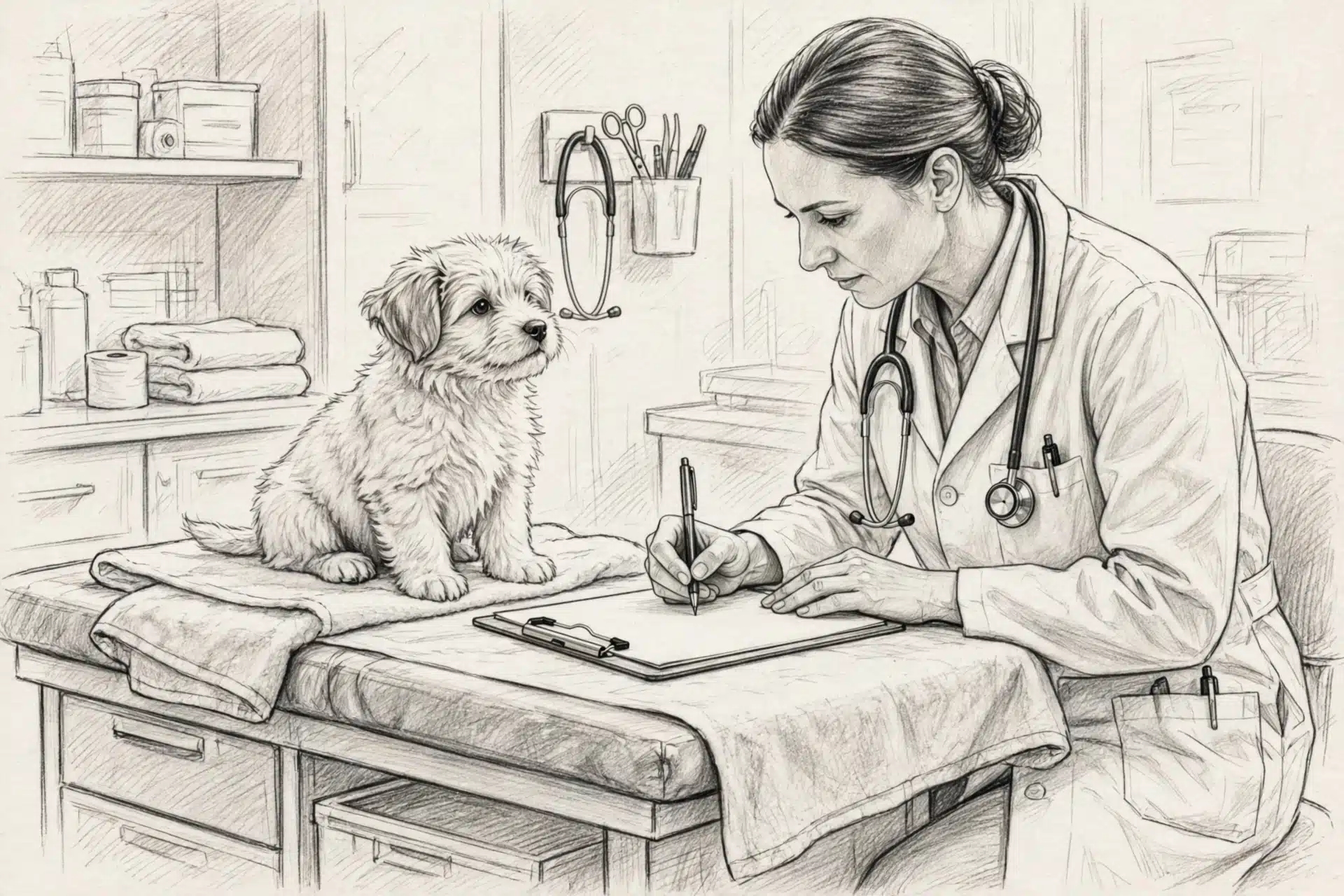
The Puppy’s Own Veterinary Record
Ask for a record from a licensed veterinarian, not a photocopied shot schedule from a feed store. It should list exam date, weight, deworming dates and products, and each vaccine given, including the manufacturer and sticker from the vial. Most puppies go home around eight weeks, so expect the first round of the puppy vaccination records at minimum. Ask which clinic saw the puppy so you can confirm the visit. A breeder record verification this simple takes one phone call and filters out most bad actors.
The Parents’ Clinical Screening
Each parent breed carries known risks, so good breeders screen for those conditions before breeding. Look up the parents on the OFA health testing database by registered name. Havanese records should show eye exams by a veterinary ophthalmologist, patellar luxation evaluation, and cardiac screening. Poodles add hip evaluation to the list. OFA also runs CHIC requirements, a checklist of breed-specific tests; a CHIC number means the parents cleared every required screen. Results stay public for life, so a breeder who claims testing but has no searchable record is telling you something.
DNA Variant Results and Ancestry Verification
Request variant test reports for both parents from a named lab such as Embark or UC Davis. For mixed breeds like a Havapoo or Cavapoo, ask for the parent breeds’ registration or pedigree documents too. Verify ancestry yourself: the dam’s paperwork, not just her photo, should match the DNA report names. Papers that don’t line up are a red flag worth walking away from.
Red Flags in the Sales Conversation: Fake Breeder Tactics and Pressure
How the First Contact Usually Works
Fake breeders move fast. A scammer replies within minutes, sends polished photos of a puppy you did not ask about, and claims several other families want the same litter. Some copy photos and listings straight from real breeders, sometimes even using AI-generated puppy pictures. Real programs work differently: they ask about your home, your schedule and your experience, then talk through a waitlist or an application. Watch for a seller who dodges basic questions. Ask to see the mother dog on a live video call and to view the puppy’s vaccination records. Refusal, excuses or a blurry pre-recorded video are signals to walk away.

Deposit and Payment Red Flags
Money is where most puppy scams show their hand. Pressure tactics like “pay today or lose the puppy” exist to stop you from thinking. The FTC warns never to pay with gift cards, and the same goes for wire transfers, payment apps sent as “friends and family,” Zelle or crypto. These methods are hard or impossible to reverse. A real breeder puts deposit and contract terms in writing first. If a seller sends a contract only after your money clears, that is backwards. We cover the full pattern in our guide to spotting upfront deposit fraud, including fake refund promises.
Shipping and Handoff Tactics
A sudden “courier fee” is a classic scam, often arriving after your deposit. The seller invents a crate, insurance or temperature-controlled transport charge and demands more money. Legitimate breeders quote delivery costs upfront and let you pick up the puppy in person, usually at eight weeks or older. If the “courier” contacts you directly with new fees, end the conversation and report the seller.
What to Do When You Spot a Red Flag
Asking a Question First
One warning sign is not always a verdict. Start with a direct, written question and give the breeder a fair chance to answer it. Ask why the paperwork is missing, whether the mother dog can be seen on video, and how old the puppies will be at pickup. Good breeders welcome these questions and answer them without getting defensive. A vague reply, a rushed excuse, or a demand for a deposit before your questions get answers tells you more than the original red flag did. Keep every exchange in writing so you have a record if things get worse.

When to Walk Away and Where to Report
Some answers end the conversation. No proof of vaccination, no contract, pressure to pay by wire or gift card, or a puppy offered under eight weeks means walk away, no matter how cute the photo is. A breeder who refuses to meet the mother dog or hides where the puppies live is not worth another email.
If you suspect a puppy mill or outright fraud, report it. File a complaint with your state’s attorney general or consumer protection office, and use the USDA APHIS license search to check whether the seller holds a federal license. If money already changed hands, your bank or card issuer is your first call, since deposit scam recovery is rarely guaranteed once a payment clears. Document everything first, then report.
How Sage Puppies Screens Buyers, Verifies Records, and Stands Behind Each Dog
The Screening Process
Screening works in both directions. A reputable breeder interviews you just as carefully as you interview them, so a seller who never asks questions should concern you. At Sage Puppies, every family starts with a written application covering the home, schedule, children, pets, and experience with small breeds. Cassie then matches approved families to a specific puppy based on temperament and lifestyle, rather than handing the first payer whichever puppy is available. That owner-managed matching is the opposite of a puppy mill, where litters move on a first-come basis. You can see how the puppy application works before you commit.
Health Testing and Contracts
Records should come in writing, unprompted. Ask for the puppy’s exam and vaccination history, each parent’s clinical screening results, and any DNA variant testing, then check the parent names in the OFA health testing database. Remember that test requirements differ by breed, and a CHIC listing proves screening was done, not that every result was normal. The purchase contract should state the deposit terms, health remedies, and the breeder’s responsibility to take the dog back if you cannot keep it.
Before Sage Puppies places a puppy, it documents health testing for the parents in writing alongside the contract.

Spotted a red flag and feeling unsure? Trust that instinct. At Sage Puppies, we breed Havanese, Havapoo and Cavapoo puppies with health records, honest answers and owner-managed matching. Browse available puppies, review our pricing, or start an application and ask us anything.
Frequently Asked Questions
Q1: What are the 10 red flags of a bad puppy breeder?
Unverifiable health testing, no access to the puppies, no access to the mother, no written contract, constant availability, too many breeds, no buyer screening, puppies sent home before eight weeks, missing vaccination records, and no return policy or lifetime support.
Q2: How do I tell if a puppy breeder is a puppy mill or backyard breeder?
Mills run on volume and hide the mother dog; backyard breeders keep few dogs but skip health testing. Ask the five sorting questions above. If a seller dodges more than one, walk away before paying any deposit.
Q3: What health records should a reputable puppy breeder provide?
Three things in writing: the puppy’s veterinary record with vaccines and deworming dates, the parents’ OFA screening results with a CHIC number where applicable, and DNA variant reports from a named lab.
Q4: How much should a deposit be, and is it refundable?
Deposits usually range from a few hundred dollars up to half the purchase price. Whatever the amount, get the refund and transfer terms in the contract before you pay, never after.
Q5: Is it safe to buy a puppy sight unseen with delivery?
It can be, but only with live video calls showing the puppy and mother, records sent first, and delivery quoted upfront. Refuse any “courier fee” requested after your deposit clears.
Q6: What questions should I ask a breeder on a video call?
Ask to meet the mother dog, see where puppies sleep, confirm pickup age, and request parent names so you can check the OFA health testing database yourself while the call is still running.
Conclusion
Bad breeders and scammers follow a pattern: unverifiable health testing, hidden mother dogs, missing contracts, and pressure to pay fast. You now know how to check OFA results yourself, sort a puppy mill from a backyard breeder with five questions, and demand written records, from puppy vaccination records and ancestry paperwork to deposit and return terms.
Use the checklist before any money moves. Verify, then trust. A breeder who welcomes your questions is showing you how they will treat you for the next fifteen years.