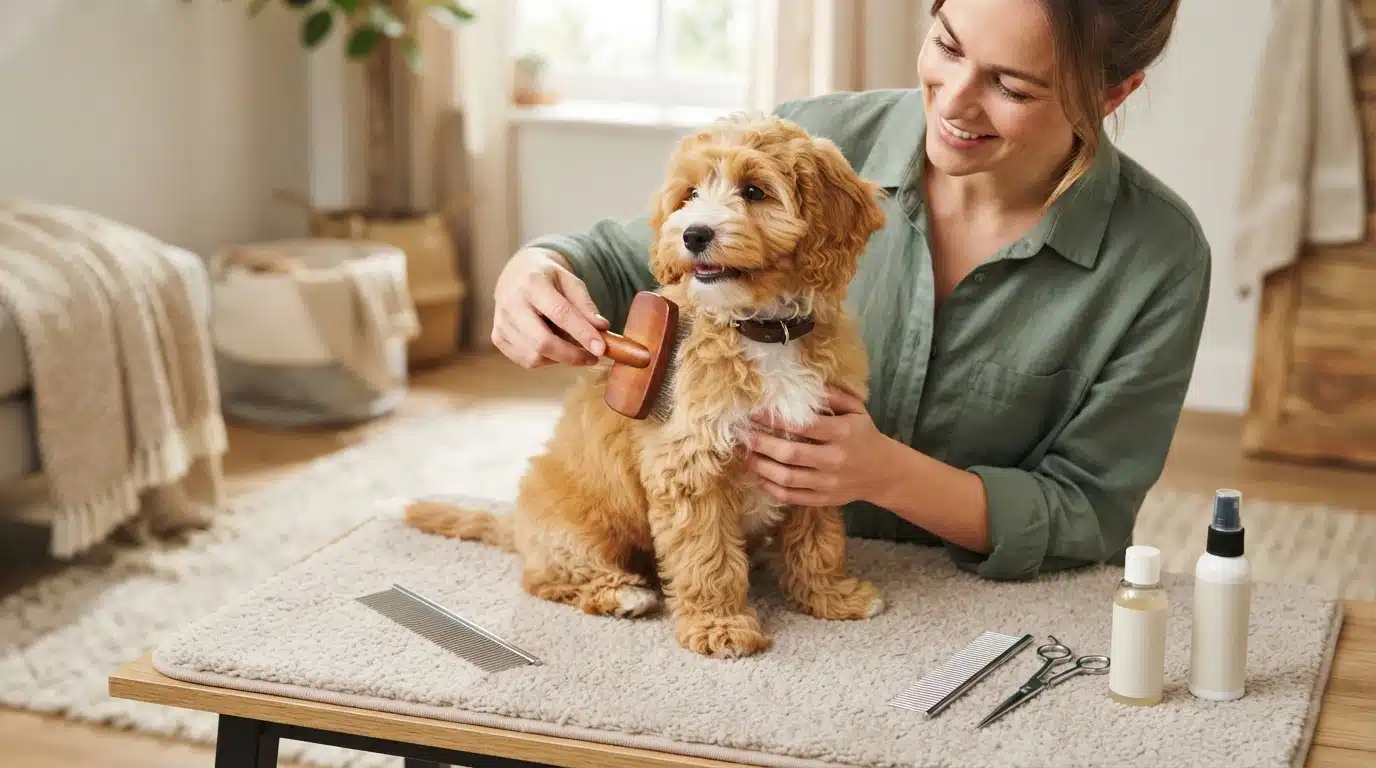
Quick Summary: Havapoos-Havanese-Poodle mixes-are affectionate, smart small dogs that thrive with daily attention, but their coat needs frequent grooming (brushing 3–4 times a week) and their temperament varies by parent traits. Choosing a reputable breeder like Sage Puppies means asking about parent health testing (like patella and eye checks), seeing the puppy’s home environment, and matching energy levels to your lifestyle. They’re great for families who can commit to training, socialization, and handling their alert barking, but require steady routines to prevent clinginess or anxiety when left alone. The first year demands patience for potty training, grooming, and building confidence-skip the breeder who rushes you or avoids health questions.
A Havapoo puppy might trail you from the coffee maker to the front door, then spend the afternoon meeting a grooming brush, learning potty breaks, and settling into your family’s daily pace.
Choosing one is exciting, but it also brings real questions. How do you spot the best Havapoo breeders? What does Havapoo puppy temperament look like at home? Can you keep up with Havapoo grooming needs, training, and social time?
This guide gives you clear answers before you bring a puppy home. You will learn what to expect from this Havanese-Poodle mix, how to compare the best Havapoo breeders, and how to prepare for the first year. Sage Puppies raises family-loved Havapoos in South Jordan, Utah, with thoughtful care for local pickup and coordinated delivery families.
What Is a Havapoo? Meet the Havanese Poodle Mix
A Havapoo is a cross between a Havanese and a Poodle, usually a Toy or Miniature Poodle. Expect a bright, people-focused small dog, but remember that each puppy can lean more toward either parent.
The Havanese and Poodle Contributions
The Havanese side often brings a cheerful, affectionate nature and a love of being close to its people. The breed is known as friendly, playful, alert, and intelligent in the AKC Havanese standard.
The Poodle side often adds quick learning, athleticism, and a curly or wavy coat. Poodles come in Toy, Miniature, and Standard sizes, so the parent’s size matters greatly in a Havapoo litter.
A well-raised Havapoo can suit families, couples, and first-time owners who want a companion dog and can give daily attention.
A mix is not a copy-and-paste blend. Meet the parents, ask about their temperaments, and choose a puppy whose energy fits your home.
Size, Coat, Colors, and Generation Terms
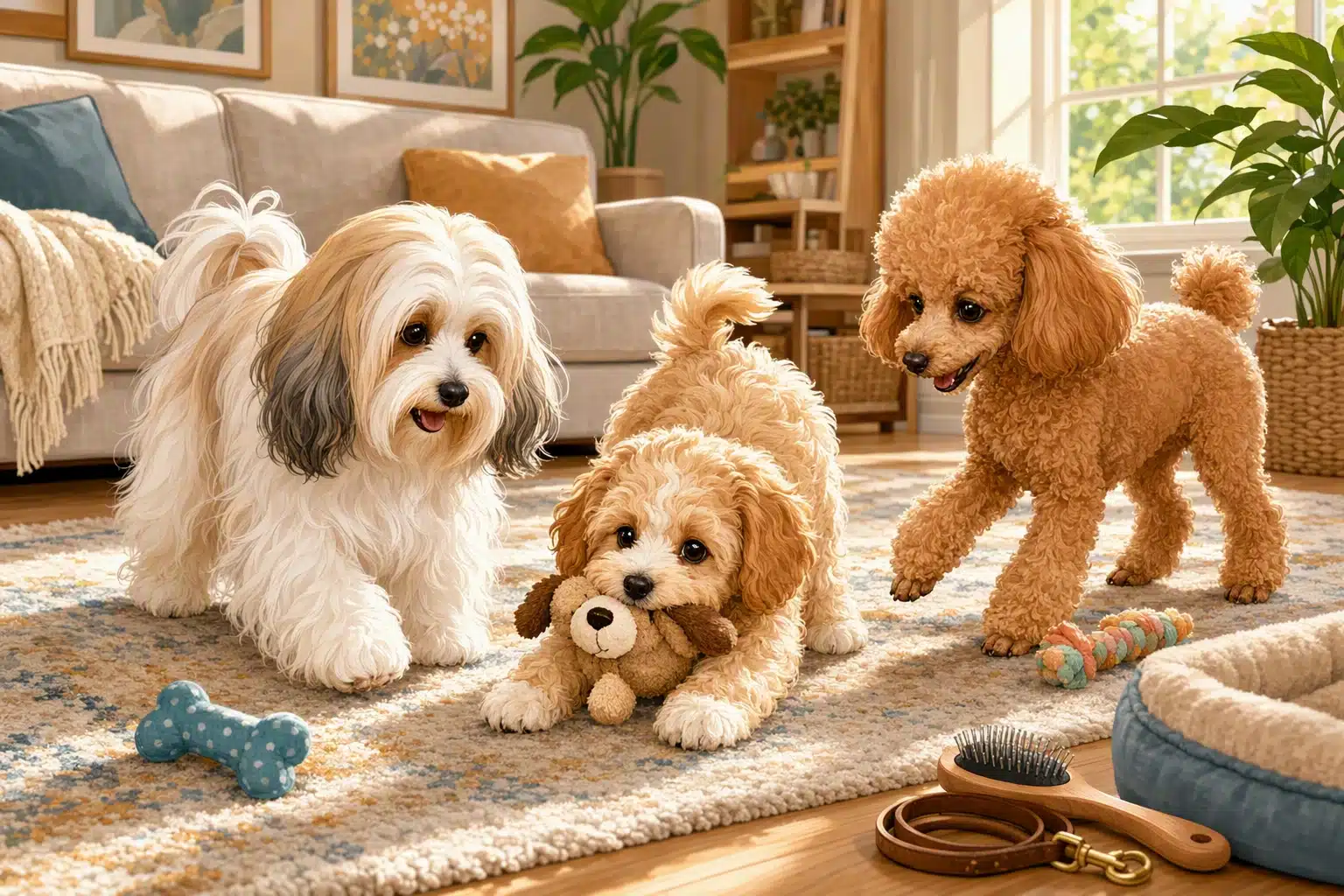
Most Havapoos are small, though adult size depends on the Poodle parent. Their coats may be loose waves, soft curls, or something between. Colors can vary widely.
| Term | Meaning | What it tells you |
|---|---|---|
| F1 | Havanese crossed with Poodle | First-generation mix |
| F1b | Havapoo crossed back to a Poodle | Often a curlier coat |
| Multigen | Havapoo parents in the mix | Traits may vary |
No Havapoo is truly hypoallergenic, and every coat needs regular brushing and grooming. The AKC notes that Poodle coats need intensive care to avoid mats.
When comparing best Havapoo breeders, ask which generation they raise, the likely adult size, and what grooming routine they recommend.
Also Read: Havapoo Puppies for Sale Near Me: What to Ask First
Understand Havapoo Puppy Temperament and Daily Life
Affectionate, Bright, and People-Focused
Expect a Havapoo to want a real place in your day. This Havanese-Poodle mix often brings a cheerful, alert nature, quick learning, and a strong wish to stay close to its people.
Temperament varies by puppy, parent traits, and early care. Still, the Havanese side is known for being social, bright, and playful, while Poodle influence can add eagerness and mental energy. The AKC notes that Havanese respond well to positive training and early social time.
Build a steady daily rhythm with:
- Short play sessions
- Gentle training games
- Snuggle time and supervised family activity
- A calm spot for naps

Tip: Reward the behavior you want right away. A tiny treat, warm praise, or a quick game makes lessons stick.
Companionship, Barking, and Alone-Time Skills
Havapoos usually thrive with people nearby. They can alert bark at a visitor, hallway sound, or doorbell, but training helps them settle instead of reacting to every noise.
Start alone-time practice on day one. Keep it brief, safe, and boring at first.
- Settle your puppy with a safe chew in a pen or crate.
- Step away for a few minutes.
- Return calmly before distress builds.
- Add time slowly over several days.
Avoid making departures or arrivals a big event. Calm routines help prevent clingy habits.
Children, Other Pets, and Home Environment
A Havapoo can fit well in a family home when adults guide every interaction. Teach children to sit on the floor, use gentle hands, and leave a resting puppy alone.
Havanese are often friendly with non-aggressive pets when introduced well, according to the AKC breed guide. Use gates, short supervised meetings, and quiet breaks.
| Home factor | What a Havapoo needs |
|---|---|
| Young children | Close adult supervision |
| Other pets | Slow, positive introductions |
| Apartment living | Daily play, walks, and bark training |
| Busy household | A quiet rest space |
Build a Practical Havapoo Grooming and Health Routine
A Grooming Routine That Prevents Mats
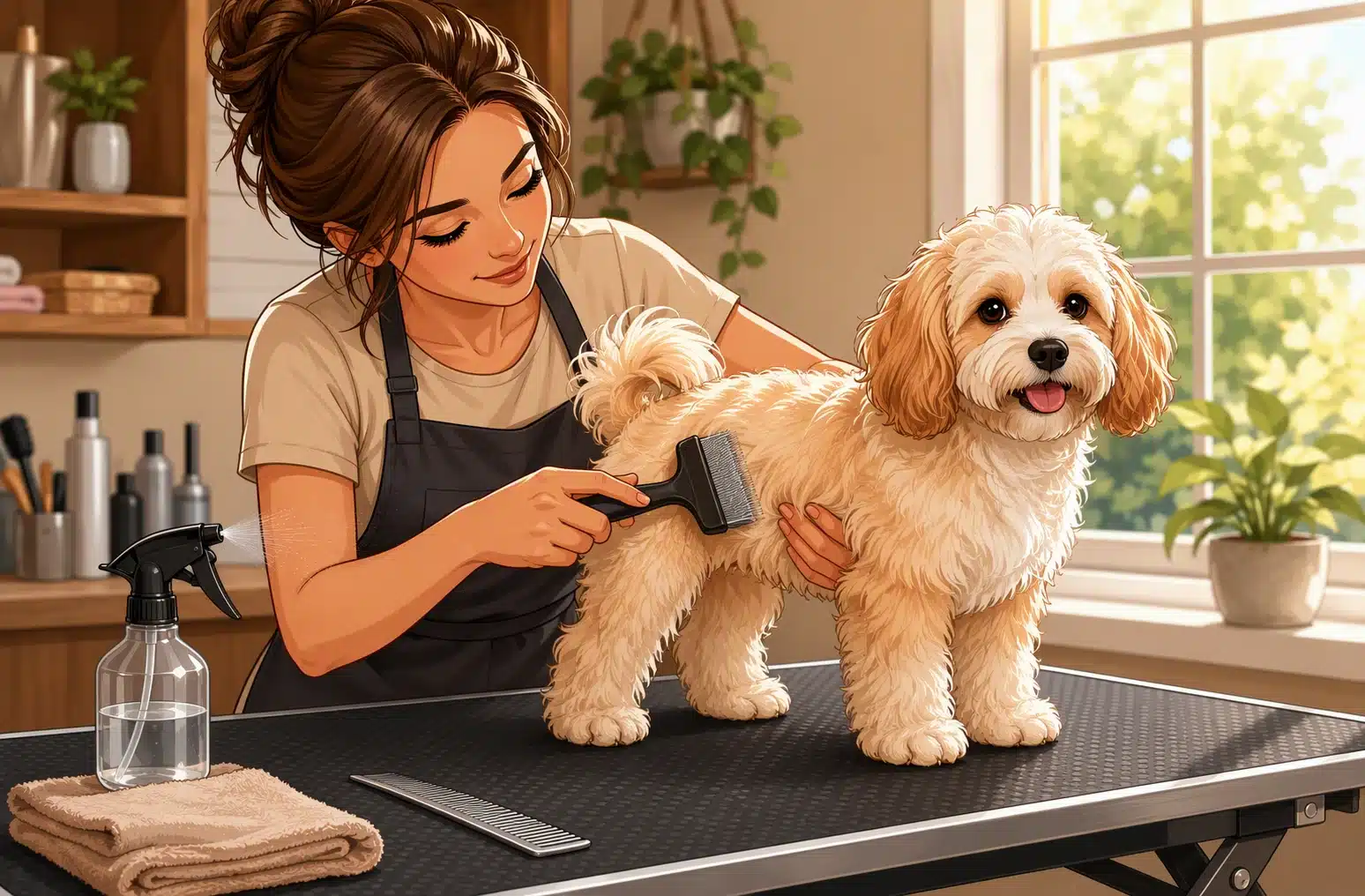
Brush your Havapoo before tangles tighten into mats. Most coats need a slow, line-by-line brush several times a week, with daily checks behind ears, under the collar, at the legs, and around the tail.
- Mist dry coat lightly with dog-safe detangler.
- Use a slicker brush in small sections.
- Follow with a metal comb to find hidden knots.
- Book regular trims based on coat length and your groomer’s advice.
Never pull hard on a mat. Skin is thin in common trouble spots, and severe mats may need safe removal by a groomer.
Dental, Ear, Nail, Nutrition, and Veterinary Care
Small dogs benefit from simple, steady care. Brush teeth with dog toothpaste, check ears weekly for odor or redness, and trim nails before they click loudly on hard floors.
| Care task | Practical routine | Watch for |
|---|---|---|
| Teeth | Brush several times weekly | Bad breath or red gums |
| Ears | Check weekly and dry after baths | Odor, debris, scratching |
| Nails | Trim as needed | Clicking or snagging |
| Food | Feed a complete puppy or adult diet | Weight changes or loose stool |
Keep routine wellness visits and vaccines on your veterinarian’s schedule. Ask before adding supplements or changing food.
Health Questions to Ask About the Parents
A careful breeder welcomes health questions and shows clear records. Ask which tests were completed for both parents, the date of each result, and how you can verify it.
- Were the parents screened for patellas, hips, eyes, and heart health where appropriate?
- Are DNA test results available for inherited conditions?
- Can I see the parents’ registered names or test records?
- What health history is known in close relatives?
Patellar luxation means the kneecap moves out of place, and it is known or strongly suspected to be inherited in toy and miniature dogs, according to the Orthopedic Foundation for Animals. Eye screening also matters because some canine eye conditions have genetic factors, notes OFA’s eye certification guidance.
Sage Puppies can help families understand the health information tied to a planned Havapoo litter.
Also Read: Havapoo Puppy Size Guide: Growth, Weight, and Care Tips
Train, Socialize, and House-Train Your Havapoo Puppy
A calm routine builds a confident puppy. Start on day one, keep lessons short, and reward the choices you want repeated.
Start With a Predictable Potty Routine
Take your Havapoo to the same outdoor spot after waking, meals, play, crate time, and before bed. Young puppies need many chances to get it right.
- Go out on leash and use one cue, such as “go potty.”
- Wait quietly, then praise and treat right after success.
- Supervise indoors or use a properly sized crate for short rest periods.
- Clean accidents well and move on. Never punish them.
The AKC potty-training guidance stresses consistency, close supervision, and positive reinforcement.
Tip: Track meals, naps, and potty trips for the first two weeks. Patterns show up fast.
Use Positive Training and Gentle Socialization
Teach sit, come, leave it, and name response with tiny treats, praise, or a favorite toy. Practice for three to five minutes at a time.
Introduce new people, sounds, surfaces, car rides, and gentle handling at your puppy’s pace. Pair each new experience with calm praise. The AKC training timeline notes that early exposure should help puppies see the world as safe, not scary.
- Let your puppy watch from a comfortable distance.
- Avoid dog parks and unknown dogs until your vet says it is safe.
- End each outing before your puppy gets overwhelmed.
Develop Independence Alongside Attachment
Havapoos often love being close to their people. Build alone-time skills early so attachment stays healthy.
Offer a safe crate or puppy pen with a chew, then step away for a few seconds. Return before distress starts and slowly add time.
Warning: Do not make departures or returns a big event. Quiet exits teach your puppy that alone time is normal.
Choose a Reputable Havapoo Breeder With Confidence
Look Beyond Photos and Availability
A cute photo and an open spot are not proof of good breeding. Look for clear answers about where puppies are raised, how they meet daily household life, and how the breeder supports families after pickup or delivery.
Ask for a live video visit if you cannot visit in person. You should see a clean setting, relaxed adult dogs, and puppies that appear alert and comfortable. The AKC recommends meeting the breeder and dogs in person or by video.
- Be wary of pressure to send money quickly.
- Expect honest talk about grooming, training, and puppy work.
- Choose transparency over a perfect social feed.
A wait for the right puppy is often a better sign than constant availability.
Ask for Parent Health Records and Puppy Details
Health testing does not promise a problem-free life. It does give a breeder useful facts for choosing parent dogs with care. Ask to review the parents’ health records, what each screen means, and how the pairing was chosen.

Request practical puppy details too:
- Birth date and expected go-home timing.
- Vaccine, deworming, and wellness records.
- Socialization experiences and current routine.
- Contract terms, payment steps, and return policy.
According to the AKC guide to canine health testing, breeding evaluations may include DNA tests plus physical screens such as eye, heart, or joint checks. A thoughtful breeder will explain records plainly, not hide behind vague claims.
Understand Sage Puppies Matchmaking
Sage Puppies uses a family-first matching approach rather than treating puppies like a cart checkout. Share your home setup, children’s ages, work schedule, dog experience, and hopes for your future companion.
That helps the team guide you toward a Havapoo whose needs fit your real life. South Jordan families can plan local pickup, while out-of-state families can discuss coordinated delivery options. Start with the Available Puppies page, then complete an Application when you see a possible fit.
Know the Questions a Responsible Breeder Should Ask You
Good questions protect the puppy and your household. A responsible breeder should ask about:
- Your daily schedule and time alone
- Grooming and training plans
- Other pets and young children
- Housing rules and long-term commitment
If the only question is how fast you can pay, pause and keep looking.
Also Read: 10 Adorable Havapoo Colors You Need to See (2026)
Prepare for Go-Home Day in Utah or Across the Country
Plan Your Puppy’s First Week
Keep the first week quiet, predictable, and close to home. Your Havapoo needs time to settle, learn your routine, and build trust with you.
- Set up a safe sleep space, crate, food and water area, and a puppy-proofed potty spot before arrival.
- Keep visitors limited. Let children sit calmly and allow the puppy to approach.
- Start a simple rhythm for meals, potty breaks, naps, play, and bedtime.
- Book your first vet visit and bring all health records.
Puppies need frequent supervision, feeding, training, and social time, according to the American Veterinary Medical Association.
Keep early outings low-risk until your veterinarian guides you on vaccines and safe social exposure.
Compare Local Pickup and Coordinated Delivery
Choose the option that lets your family arrive calm, prepared, and fully present. Sage Puppies families near South Jordan, Utah can plan a local pickup. Families farther away can ask about coordinated delivery.
| Option | Best fit | Prepare for |
|---|---|---|
| Local pickup | Utah families who want to meet in person | A secured crate or carrier and a direct ride home |
| Coordinated delivery | Nationwide families needing travel support | Confirmed timing, contact details, supplies, and travel paperwork |
For any interstate trip, confirm destination rules early. The AVMA notes that states may require a certificate of veterinary inspection.
Also Read: 10 Must-Ask Questions Before Buying a Puppy Locally
Decide Whether a Havapoo Is the Right Match for Your Family
A Havapoo can be a lovely family dog, but it still needs daily care, training, and close contact. Choose the puppy that fits your real routine, not just your ideal weekend.
A Havapoo May Suit You If…
You want a small, people-focused companion and can make time for play, walks, grooming, and gentle training. Havanese are known for friendly, playful, alert temperaments, traits that may appear in Havapoos as well, according to the AKC breed standard.
- You have time for daily interaction.
- You want a dog that can live well in a smaller home.
- You will include children in calm, supervised puppy care.
Consider the Commitment Before You Reserve
A puppy needs more than affection. Plan for house training, coat care, routine vet visits, social time, and a budget for the unexpected.
- Set up a safe daytime routine.
- Practice short, calm periods alone.
- Agree on who handles feeding, walks, and grooming.
A companion-minded puppy is not a fit for a home where it will be alone for long, regular days.
Havapoo, Havanese, or Cavapoo?
| Breed | May fit families seeking | Key consideration |
|---|---|---|
| Havapoo | A small, bright mixed-breed companion | Coat and traits vary by puppy |
| Havanese | A playful, devoted purebred companion | Regular grooming is needed |
| Cavapoo | A gentle, social companion | Needs steady training and care |
Ask Sage Puppies about each puppy’s temperament and home needs before you reserve.
Also Read: Havapoo Puppies: Costs, Coat Type, and Family-Friendly Traits

Ready to choose a Havapoo with care? Sage Puppies raises Havapoo puppies in a loving South Jordan home, with health-tested parents and early socialization. View available puppies, ask questions, and begin a clear, family-first adoption process with local pickup or nationwide delivery.
Frequently Asked Questions
Q1: How do I choose a reputable Havapoo breeder like Sage Puppies?
Ask for parent health testing, home-raising details, clear pricing, and honest answers. A good breeder welcomes questions, shares puppy care information, and helps match temperament to your household.
Q2: What’s the ideal grooming routine for a Havapoo puppy?
Brush your puppy three to four times weekly, focusing on ears, legs, and collar areas. Schedule professional grooming every six to eight weeks, plus regular nail trims and ear checks.
Q3: How long does it take to house-train a Havapoo puppy?
Most puppies make steady progress within several weeks. Expect a few months for reliable habits. Keep a tight schedule, reward outdoor potty trips, and supervise closely indoors.
Q4: Are Havapoos good with children?
Yes, with kind handling and adult guidance. Teach children to respect rest time, avoid rough play, and give the puppy space during meals.
Q5: Do Havapoos bark a lot?
They can alert bark, especially when bored or unsure. Early social time, daily play, and calm training help build quieter habits.
Conclusion
A Havapoo can be a loving, bright companion for a home ready to give time, structure, and close contact. Choose for temperament and fit, not coat color or a quick timeline.
Plan for daily training, gentle social time, regular grooming, and a realistic budget for lifelong care. Ask breeders clear questions about parent health testing, early puppy care, and how they match puppies to families. The AKC lists patella, hip, and eye checks among recommended health tests for Havanese, which are useful questions to raise with any Havapoo breeder in its health-testing guidance.
A well-matched puppy and a prepared household matter more than finding the first available litter.