Quick Summary: The Havanese is the smaller, more predictable choice, with adults staying in a tight 7 to 13 pound range set by the AKC standard. The Havapoo spans roughly 7 to 20 pounds because its size depends on whether the Poodle parent was a Toy or a Miniature, so a mini Poodle cross can push adults noticeably bigger than any Havanese. Both breeds finish most of their growth by 8 to 12 months and fit well in apartments or on laps, but the right pick comes down to how much size uncertainty you can live with. Sage Puppies raises both in South Jordan and matches families based on the parents’ actual weights.
Any Havapoo size comparison starts with one problem: the Havanese has a published AKC range, roughly 7 to 13 pounds, while Havapoo adult weight can swing from 7 to 20 pounds depending on whether the Poodle parent was a Toy or a Miniature. So Havanese Havapoo size is not a coin flip between two equal options. One breed is predictable, the other is a range. This guide puts the numbers side by side, explains what drives the Havapoo spread, and shows what each adult size means for your crate, your car seat and your kids’ laps. For the full three-way picture, see our Havanese, Havapoo and Cavapoo pillar guide.
Havanese vs Havapoo Size at a Glance
| Havanese | Havapoo | |
|---|---|---|
| Adult height | 8.5-11.5 inches at the shoulder (AKC) | Roughly 8-15 inches; varies by Poodle variety |
| Adult weight | 7-13 pounds (AKC) | Roughly 7-20 pounds; varies by Poodle variety |
| AKC standard published | Yes, official standard with ideal 9-10.5 in | No – designer cross, ranges are estimates |
| Poodle parent influence | None – purebred lineage only | Primary driver of upper-end size |
| Size predictability | High within the AKC range | Moderate; depends on parents’ measured size |
| Best fit for | Homes wanting a tight 7-13 lb range | Homes open to a range, Poodle-influenced coat |
How Havanese and Havapoo Compare
Havanese
The Havanese is a purebred companion breed from Cuba, recognized by the AKC with a published breed standard. Breeders can predict adult size with confidence because the standard sets a tight height and weight range. Homes that want a known 7-13 pound adult dog start here.

Key strengths
- Official AKC standard with ideal 9-10.5 inch height
- High size predictability within the 7-13 lb range
- No Poodle parent, so lineage is purebred only
Havapoo
The Havapoo is a Havanese crossed with a Poodle, usually a Toy or Mini variety. That Poodle parent is the main driver of adult size, so the cross is not AKC-recognized and its ranges are estimates. For any Havapoo size comparison, predictability depends on the measured size of both parents.
Key strengths
- Flexible adult range of roughly 8-15 inches and 7-20 pounds
- Poodle-influenced coat in the mix
- Good fit for homes open to a wider size span
The short answer: the Havanese is usually the smaller dog. It carries an official breed standard, so adults land in a tight band, roughly 7 to 13 pounds and 8.5 to 11.5 inches tall. The Havapoo’s Havapoo size comparison is less tidy because it depends on which Poodle parent was used, and estimates run from 7 to 20 pounds and about 8 to 15 inches.
Where the two ranges overlap
Both dogs can mature at 7 to 13 pounds, so some Havapoos end up exactly the same size as a Havanese. A Havapoo bred from a toy Poodle on the small side will often match or even sit under a big-boned Havanese. That overlap is real, and it matters if size is your deciding factor. The difference is predictability: a Havanese breeder can point to a written standard, while Havapoo size is a good guess rather than a promise. For families who want certainty, the Havanese gives it.
Where the Havapoo can pull ahead in size
Cross a Havanese with a mini Poodle and you may get a 15 to 20 pound adult, noticeably taller and heavier than any Havanese. Ask the breeder about both parents’ weights, since that is the most useful size clue a Havapoo puppy can offer. Smaller dogs in a litter stay closer to Havanese scale, so siblings from the same pairing can differ by several pounds.
Ask for both parents’ weights and past litter sizes. It is the closest thing Havapoos have to a size guarantee.
Havanese Adult Size: What the AKC Breed Standard Actually Says
The Havanese is the predictable one in this pairing because it has a written standard. The AKC breed profile lists adults at 8.5 to 11.5 inches tall and 7 to 13 pounds, and the Havanese Club of America sets the ideal at 9 to 10.5 inches. A few inches of growth room, but a narrow band overall.
The AKC Havanese standard at a glance
The official standard measures height at the withers, the top of the shoulders. Anything under 8.5 inches or over 11.5 inches falls outside the range, and weight of 7 to 13 pounds is the accepted adult norm. Coat is long and light, so a dog can look heavier than the scale says. If you want a fuller picture of daily care at this size, our Havanese care guide for first-time owners walks through it.
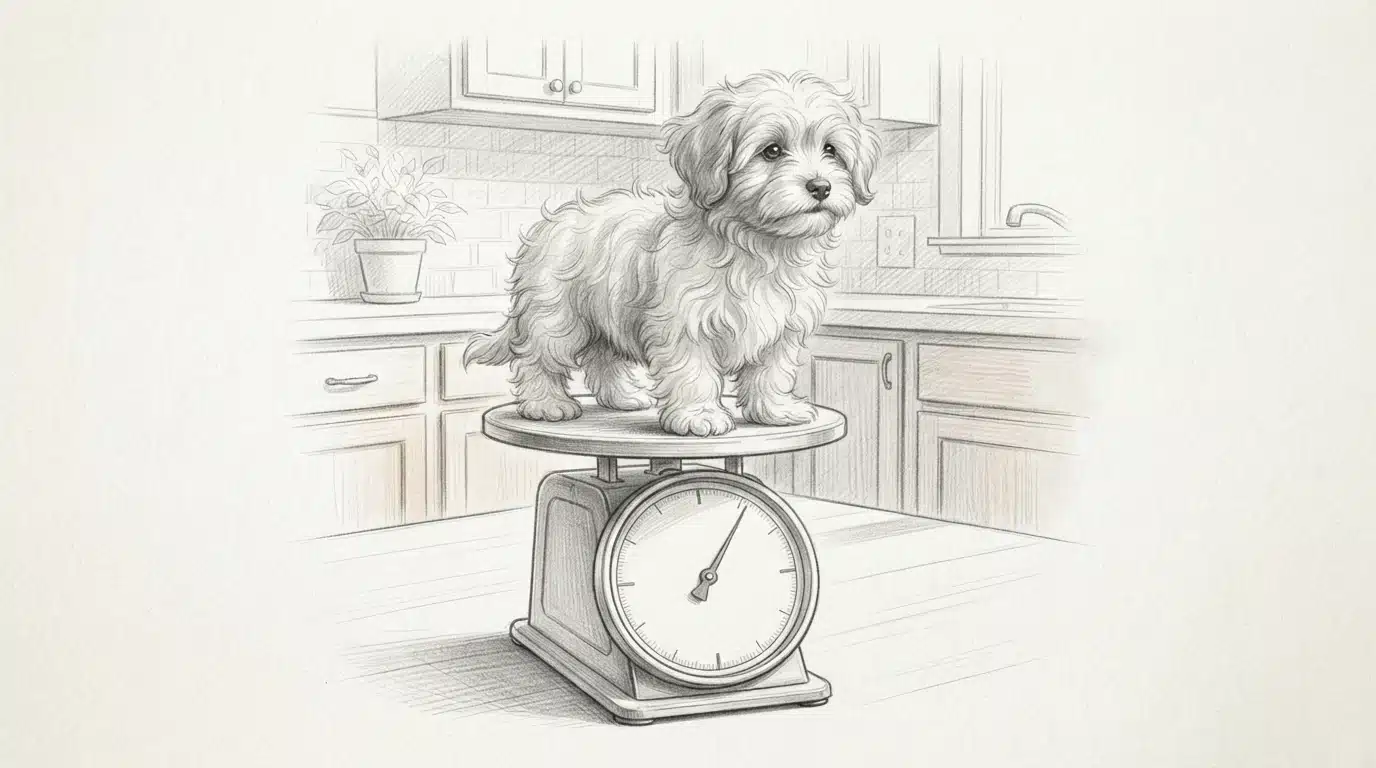
Havanese weight by month (typical curve)
Havanese puppies grow fast early, then slow down. A rough guide:
| Age | Typical weight |
|---|---|
| 8 weeks | 2-3 pounds |
| 4 months | 4-6 pounds |
| 6 months | 5-8 pounds |
| 12 months | 7-13 pounds (adult) |
These numbers are estimates, not promises. Individual dogs vary, so ask your breeder where your puppy’s parents sit in the range.
Havapoo Adult Size: Why the Range Is Wider Than You Think
A Havapoo is a cross between a Havanese and a Poodle, so its adult size depends heavily on which Poodle parent was used. Estimates run from about 7 to 20 pounds and 8 to 15 inches tall, roughly double the width of the Havanese range.
Toy Havapoo vs Mini Havapoo: the size fork that matters
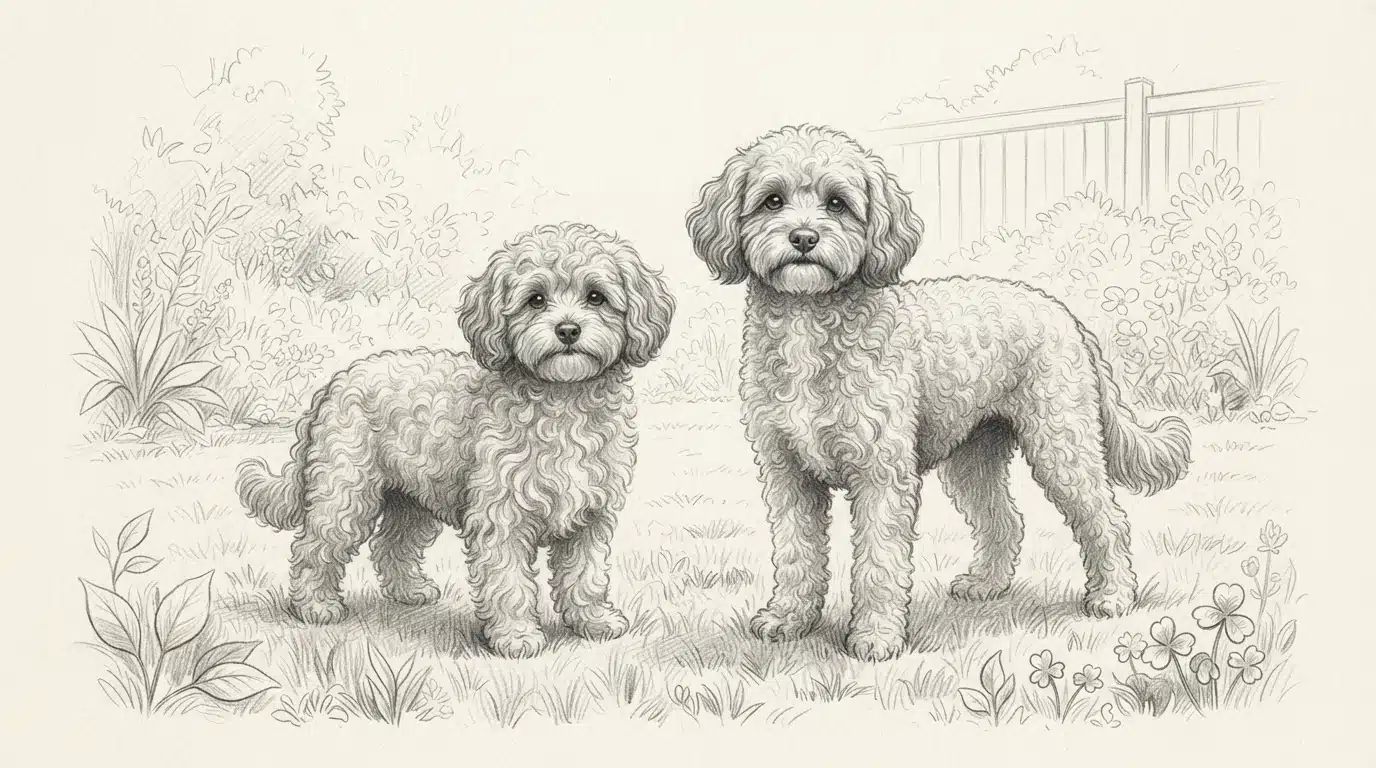
Most breeders sort Havapoos into two rough types based on the Poodle side. A toy-sized Havapoo, bred with a Toy Poodle under 10 inches tall, usually matures near the Havanese range, around 7 to 12 pounds. A mini-sized Havapoo, bred with a Miniature Poodle, can push toward 13 to 20 pounds and stand noticeably taller. So two Havapoo puppies from different litters may end up more than double the weight difference of each other. The Havanese side stays fairly constant; the Poodle side sets the ceiling. If you want to see how this plays out week by week, a Havapoo puppy size chart by age and breed type breaks the growth down.
Why “teacup Havapoo” is not a reliable size promise
“Teacup” is a marketing word, not a size any kennel club recognizes. The Poodle Club of America lists only Standard, Miniature, and Toy, with Toys at 10 inches and under, and ethical Poodle breeders generally refuse the term because tiny dogs often come with health risks. A seller promising a “teacup Havapoo” cannot guarantee a specific adult size, only hope. Ask instead which Poodle variety the parent is and what the parents weigh. That tells you far more than the label.
Reading the Size Numbers: What 7 Pounds, 13 Pounds and 18 Pounds Actually Feel Like
Numbers on a chart don’t tell you much until you picture the dog on your lap. So let’s translate them.
At 7 pounds, you have a true lap dog, lighter than a sack of flour. At 13 pounds, you feel a solid little companion, about the weight of a house cat. At 18 pounds, the dog still fits on your lap but fills it, and you notice the difference when carrying it upstairs.
Carrier, crate and car-seat fit at each size tier
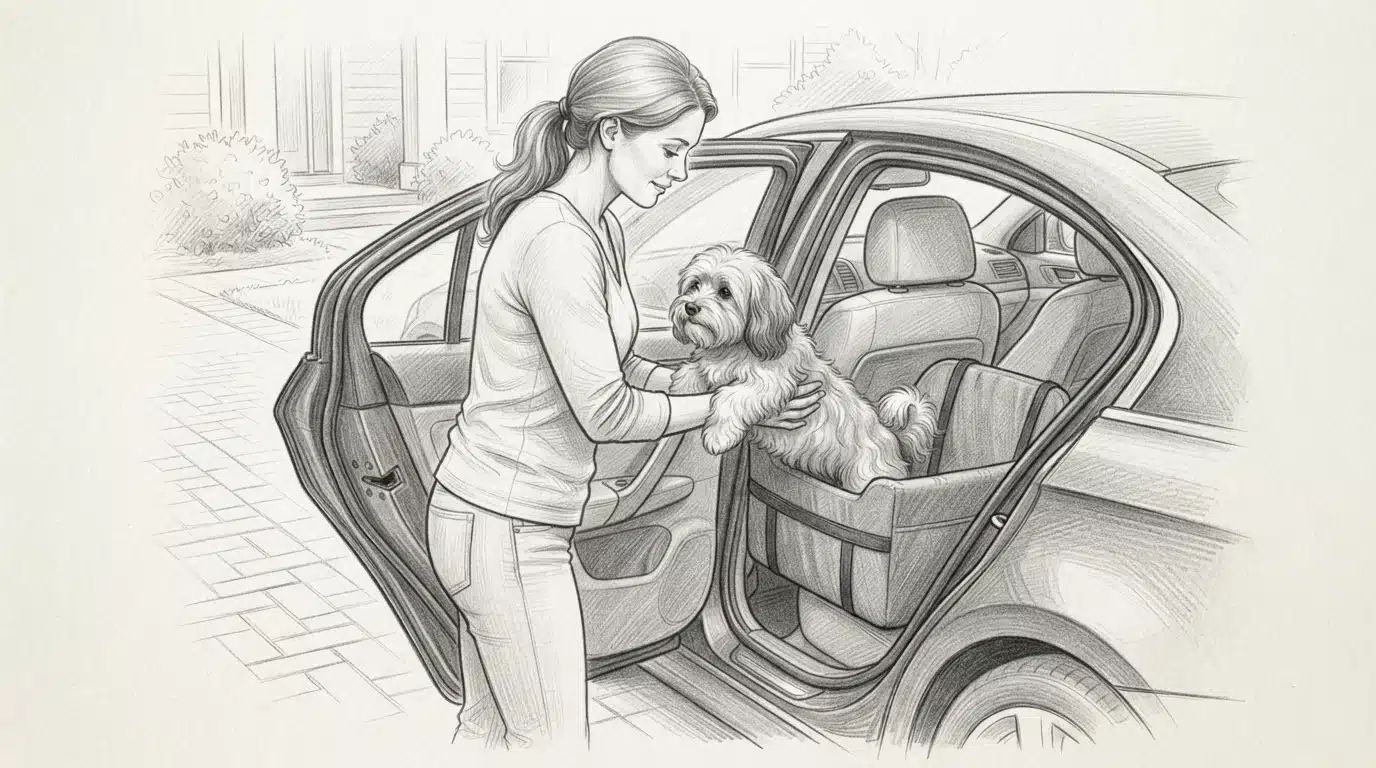
A 7-pound dog fits nearly every carrier and travel crate on the market. An 18-pound Havapoo needs an airline-compliant model rated for 20 pounds or more, and many will be too tall to fly in-cabin as adults. Crate sizing works the same way: the smallest Havanese adults do fine in a 20-inch crate, while the biggest Havapoos want 24 to 30 inches. Car seats, too, have weight caps, so check the label before buying. When families ask Cassie which puppy will fit the gear they already own, that answer depends on which Poodle parent produced the litter.
Lap weight, kid handling and travel day
A 7-pound adult is easy for a small child to hold, but also easy to drop, so supervision matters. A 13- to 18-pound dog handles a hug from a steady 8-year-old and is sturdier on travel days, when you may be carrying a dog through an airport. The bigger the dog, the more it feels like luggage.
Puppy-to-Adult Growth: How Long Each Breed Takes to Reach Its Size
Small breeds grow fast, and both of these dogs finish most of their growing before their first birthday. The difference is how you can predict it.
The Havanese timeline from 8 weeks to 12 months
A Havanese puppy typically weighs 2 to 3 pounds at 8 weeks, hits 4 to 6 pounds by 4 months, and sits near 5 to 8 pounds at 6 months. Full height usually arrives early: Hill’s Pet notes that Havanese reach full size around 6 to 8 months, though they mature closer to 1 year. After that, expect only small changes as muscle and coat fill in. You can follow the month-by-month numbers in this Havanese growth overview to track whether your puppy is on pace for the 7 to 13 pound adult range.
The Havapoo timeline, with the parents as the guide
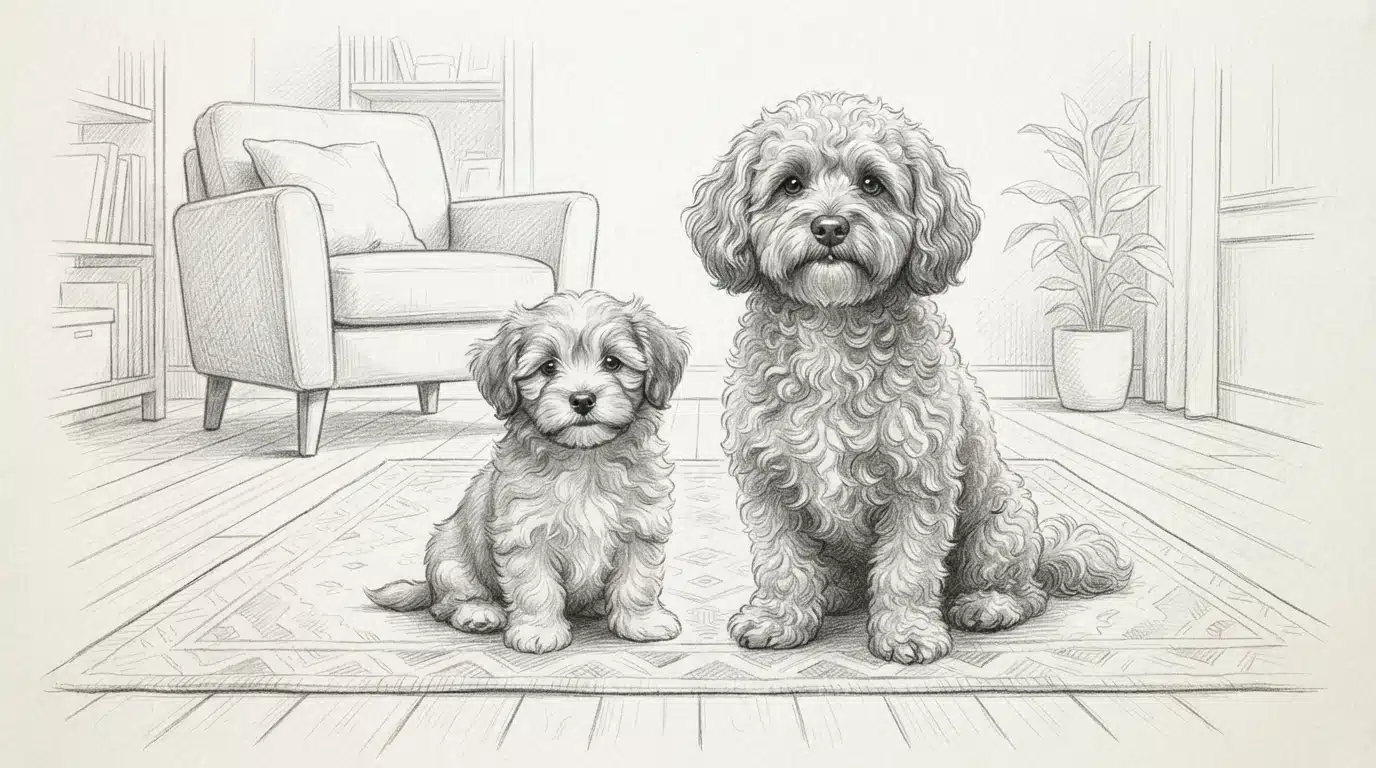
Havapoos follow a similar pace, reaching most adult size by 8 to 12 months. The catch is predictability. Because this cross has no breed standard, the best guide is the parents, especially which Poodle variety was used. A puppy from smaller parents stays closer to Havanese size, while mini Poodle lines can push toward 15 to 20 pounds. Ask the breeder for both parents’ weights and measure your puppy at each vet visit; weight at 4 months gives a reasonable estimate of the adult number.
What the Size Difference Means for Health, Longevity and Day-to-Day Care
Both dogs are small, and small breeds tend to live long lives, often into their mid-teens. But size still shapes health and daily care in ways worth planning for.
Joint, eye and patella screening for both
The size gap matters less than shared breed risks. Havanese lines carry heritable eye disease and patellar luxation, a kneecap that slips out of place, so the Havanese Club of America recommends OFA eye and patella testing for breeding dogs. Havapoos can inherit the same kneecap issue from the Havanese side, since patellar luxation is common in small breeds generally. Ask any breeder for both parents’ eye and patella results, whatever the cross. At Sage Puppies, matching includes talking through each puppy’s health screening, so bring your questions.
Feeding, exercise and weight management at each size
A 10-pound Havanese needs roughly half the daily calories of a 20-pound Havapoo, so food costs stay modest either way. The bigger difference is weight discipline. Every extra pound is harder on small joints, and a Havapoo that matures around 15 to 20 pounds tolerates longer walks and more fetch than a 9-pound Havanese. Keep both lean: measured meals, short daily walks and body-condition checks instead of free feeding.
Matching Size to Your Home: Which One Fits Your Household Best?
Both dogs suit apartments, condos, and houses. The real question is how much size uncertainty you can live with.
If you want the smaller, more predictable profile
Choose the Havanese. Adults land at 7 to 13 pounds and 8.5 to 11.5 inches, no matter the litter, so you can plan crates, carriers, and apartment weight limits with confidence. That predictability matters if your building caps dogs at a certain weight or you want a dog that stays easy to lift. Families who like a defined range often start with the Havanese care basics for first-time owners before reserving a puppy.
If you want room for the upper end of the range
A Havapoo can still mature at 7 to 13 pounds, but some cross a Havanese with a mini Poodle and reach 15 to 20 pounds. That extra heft usually means a sturdier playmate for active kids and a dog that handles longer walks without tiring. Ask the breeder which Poodle parent was used, because that single detail predicts whether you get a small companion or a slightly bigger one. Either way, measure your space for a crate that fits the largest likely adult.
Which Should You Choose on Size Alone: Havanese or Havapoo?
If size is your only deciding factor, the Havanese wins on predictability and the Havapoo wins on flexibility. Here is how each choice makes sense.
When to choose the Havanese on size
Pick the Havanese if you need to know what you are getting. The AKC standard keeps adults in a tight 7 to 13 pound band, so a breeder working with average-sized parents can give you a close estimate before you commit. That matters in condos with weight limits, travel situations where airlines set their own rules, and homes with very small children who handle the dog daily. It also matters if you plan gear purchases early. One crate, one harness, one carrier. The Havanese rarely outgrows them.
When to choose the Havapoo on size
Pick the Havapoo if a range feels like freedom rather than a risk. Since the Poodle parent can be toy or mini, you may meet a litter where one pup projects toward 9 pounds and a sibling toward 18. Ask the breeder which Poodle variety was used and what past litters from the same pairing actually weighed. A toy parent keeps you near Havanese size. A mini parent often produces the 15 to 20 pound adult. Either way, you choose the pairing, not just the puppy.

Still weighing that 7-13 pound predictability against the Havapoo’s wider range? Both breeds are raised here in South Jordan with honest size guidance from Cassie. Start your application at Sage Puppies and let’s match you with the right puppy.
Frequently Asked Questions
Q1: How big do Havapoo and Havanese get as adults?
A Havanese matures at 7 to 13 pounds and 8.5 to 11.5 inches, per the AKC standard. A Havapoo ranges wider, roughly 7 to 20 pounds and 8 to 15 inches, depending on whether the Poodle parent is Toy or Miniature.
Q2: What is the average weight difference between a Havapoo and a Havanese?
There is no single average. Most Havapoos sit within a few pounds of a Havanese, but mini Poodle pairings can add 5 to 10 pounds, so a Havapoo may weigh up to 7 pounds more at the top of the range.
Q3: How tall is a full grown Havanese vs Havapoo?
A Havanese stands 8.5 to 11.5 inches at the shoulder. A Havapoo runs about 8 to 15 inches, with toy-based crosses near the lower end and mini Poodle crosses at the taller end.
Q4: Which puppy will stay small enough for my apartment’s weight limit?
The Havanese, because its AKC range is fixed at 7 to 13 pounds. For a Havapoo, ask the breeder which Poodle variety was used and what both parents weigh before reserving.
Q5: At what age are Havanese and Havapoos full grown?
Both reach full height early, often by 6 to 8 months, and finish filling out near their first birthday. A Havapoo’s 4-month weight gives a reasonable adult estimate.
Q6: Does a bigger Havapoo need more exercise and food?
Yes. A 15 to 20 pound Havapoo needs roughly double the daily calories of a 10-pound Havanese and tolerates longer walks, though both breeds stay lean with measured meals and short daily outings.
Conclusion
The Havanese is the predictable pick: adults land in a tight 7 to 13 pound, 8.5 to 11.5 inch band backed by the AKC standard. The Havapoo trades certainty for range, maturing anywhere from 7 to 20 pounds depending on whether the Poodle parent is Toy or Miniature. Both dogs reach most of their size by 8 to 12 months and suit apartments and laps alike. The deciding factor is how much size certainty your home needs, and the single best question for any Havapoo breeder is what both parents actually weigh.