Quick Summary: Havanese puppies are more predictable in size and longevity, typically reaching 7 to 13 pounds and living 14 to 16 years. Havapoos usually live 12 to 15 years and range from under 10 pounds to the high teens, depending on whether the Poodle parent is a Toy or Miniature. Both mature quickly, need regular grooming and dental care, and should come from parents with documented health screenings.
Choosing between a Havanese and a Havapoo comes down to one tricky fact: Havanese vs Havapoo size is easy to research but hard to predict. A Havanese lands in a narrow band near 7 to 13 pounds. A Havapoo can finish anywhere from under 10 pounds into the high teens, depending on whether a Toy or Miniature Poodle parent contributed the genetics.
Most breeder pages list a single weight estimate with no growth pace or lifespan context, so buyers get partial answers. This comparison lines up adult weight and height ranges, growth timelines, Havanese lifespan and Havapoo lifespan figures, common health conditions, grooming load, and household fit, then closes with the breeder questions worth asking. The numbers come from breed standards and current club screening requirements, with honest notes where crossbred size stays uncertain.
Havanese vs Havapoo: Size and Lifespan at a Glance
| Havanese | Havapoo | |
|---|---|---|
| Adult weight | 7 to 13 pounds (AKC breed standard) | Roughly 7 to 18 pounds, depending on the Poodle parent |
| Adult height | 8.5 to 11.5 inches at the withers | Roughly 7 to 12 inches, depending on the Poodle parent |
| Typical lifespan | 14 to 16 years (AKC) | Typically 12 to 15 years, often between the parent ranges |
| Size predictability | High, breed standard is fixed and consistent | Lower, adult size varies with the Toy or Miniature Poodle parent |
| Coat and grooming load | Double coat, daily brushing, regular professional grooming | Low-shedding but matting-prone, daily brushing and groomer visits |
| Best for | Families wanting a consistent small dog and a long companionship | Households wanting Poodle trainability with a Havanese-style companion |
Havanese and Havapoo Compared
Havanese
The Havanese is an AKC-recognized Cuban companion breed with a double coat and a narrow, predictable adult size near 7 to 13 pounds. It suits families who want a consistent small dog built for a long companionship, often 14 to 16 years.
Key strengths
- Fixed breed standard, so adult havanese adult weight and height are easy to predict
- Long typical lifespan of 14 to 16 years
Havapoo
The Havapoo crosses a Havanese with a Poodle, pairing Havanese warmth with Poodle intelligence. Adult size varies with the Toy or Miniature Poodle parent, so it fits households that value trainability and can accept a wider havapoo adult size range.
Key strengths
- Often low-shedding coat
- Trainable, people-focused temperament
How Big Do Havanese and Havapoo Puppies End Up?
Most Havanese vs Havapoo size questions come down to predictability. A Havanese puppy grows into a narrow adult band near 7 to 13 pounds and 8.5 to 11.5 inches tall. A Havapoo puppy can finish anywhere from under 10 pounds into the high teens, so the Poodle parent matters more than the puppy’s current weight.
Havanese adult size follows a tight breed standard
The AKC breed standard sets Havanese height at 8.5 to 11.5 inches at the withers, with weight in proportion, usually 7 to 13 pounds. Because both parents come from that same band, a Havanese puppy’s adult size is easy to predict. Growth is steady, and most dogs reach adult height by 8 to 10 months, then fill out in weight.
Havapoo adult size depends on which Poodle is the parent
A Havapoo is a cross between a Havanese and a Poodle, and that second parent drives the range. A Toy Poodle parent often produces adults under 10 pounds. A Miniature Poodle parent can push a Havapoo into the high teens. Breeders estimate adult size by averaging the parents’ weights, but the estimate carries real uncertainty. Ask which Poodle variety was used and what each parent weighs before you reserve.
Growth Timelines: When Each Breed Reaches Full Size
Small breeds mature earlier than large breeds
Small dogs grow fast and finish early. A Havanese reaches most of its adult height by 8 to 10 months, then fills out in weight, and many are fully mature around their first birthday. That fits the general pattern for toys: Havanese often hit full size near 6 to 8 months, per Hill’s Pet. A Havapoo follows a similar clock, though its final weight depends on the Poodle parent. Knowing the timeline helps you plan, because a puppy that looks small at 12 weeks may still have months of growing ahead.

Growth charts and weight checks for a young Havapoo
A Havapoo’s adult size is harder to predict, so simple tracking beats guessing. Weigh your puppy every week or two, and plot the numbers on a growth chart like the ones we use to track Havapoo puppy growth by age. Ask the breeder for the parents’ weights first. A Toy Poodle parent usually means an adult under 10 pounds, while a Miniature Poodle parent can push the high teens. Puppies grow fastest before 6 months, so early weigh-ins tell you the most. Steady gain is a good sign; a sudden stall or jump deserves a vet visit.
Which Breed Typically Lives Longer?
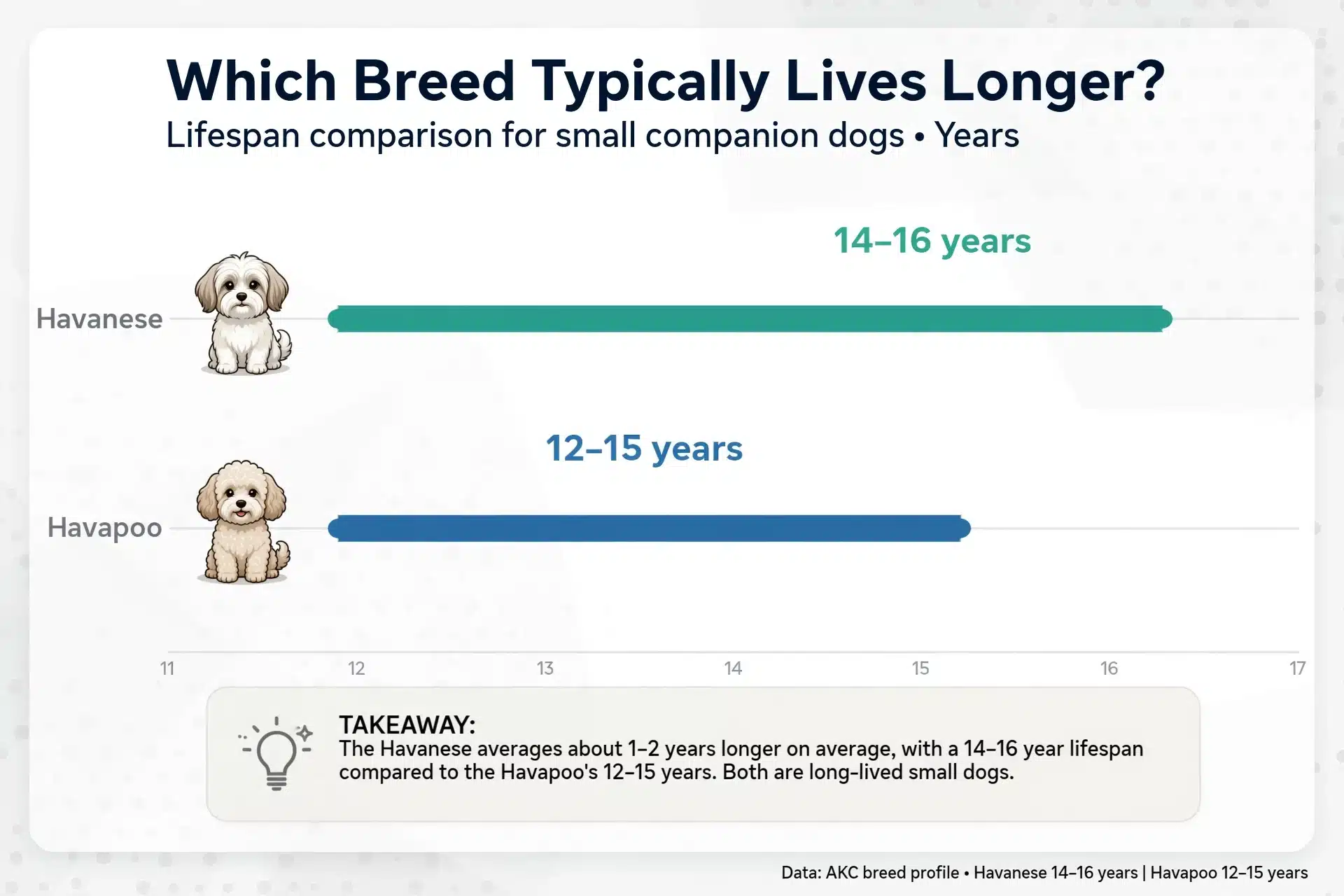
A healthy Havanese usually lives 14 to 16 years, per the AKC breed profile. A Havapoo typically lives 12 to 15 years. So the purebred parent breed holds a slight edge on paper, though both are long-lived small dogs by any standard.
Published lifespan ranges for both breeds
Breed registries and vet sources put the numbers in a tight band. The Havanese Club of America lists the breed among the longest-lived toys, with 14 to 16 years as the common range. Havapoo lifespan estimates run 12 to 15 years, since crossbreeds inherit a mix of Havanese and Poodle longevity. Neither figure is a promise. Some dogs pass 17; others face health problems early.
What actually shortens a small dog’s life
Lifespan depends far more on care and screening than on the label. Watch for these common risks:
- Dental disease, the top problem in small breeds, which can spread infection to the heart and kidneys
- Patellar luxation, loose kneecaps that worsen without management
- Progressive retinal atrophy and Legg-Calve-Perthes disease, both screened for in parent dogs
- Obesity, which shortens life measurably in every breed
Ask any breeder for documented parent health tests before you buy. The dogs that reach their late teens usually come from tested lines, kept lean, with teeth cleaned and weights tracked from puppyhood.
Health Conditions That Affect Size, Mobility, and Longevity
Size matters less than whether a dog can move well and live out its 14-plus years. A few conditions show up repeatedly in small companion breeds, so they deserve attention before you pick a puppy.
Knees, hips, and eyes in small companion breeds
Patellar luxation, a kneecap that slips out of place, is the most common mobility problem in tiny breeds, and extra weight makes it worse. Havanese can also carry Legg-Calve-Perthes disease, which breaks down the hip joint in young dogs, plus hip dysplasia in milder form. Eyes matter too: progressive retinal atrophy slowly causes blindness, and early cataracts appear in both breeds’ relatives. None of these change adult size much, but they shape comfort, vet bills, and how long a dog stays active. Choose a puppy whose parents were screened, and keep your adult lean to protect those joints.

What current parent screening actually covers
So what health tests do Havanese parents need? The Havanese Club of America requires three results for a CHIC certificate:
- OFA hip evaluation
- OFA patella (kneecap) evaluation
- Annual CAER eye exam by an ophthalmologist
Responsible programs often add cardiac exams, BAER hearing tests, and DNA panels for eye disease. For Havapoos, ask about both parents, since Poodle screening covers the other half. Sage Puppies documents each parent’s results before matching, and our checklist of Havanese health tests to ask a breeder walks you through the paperwork.
Grooming and Daily Care Load Compared
Double coat versus Poodle-influenced coat
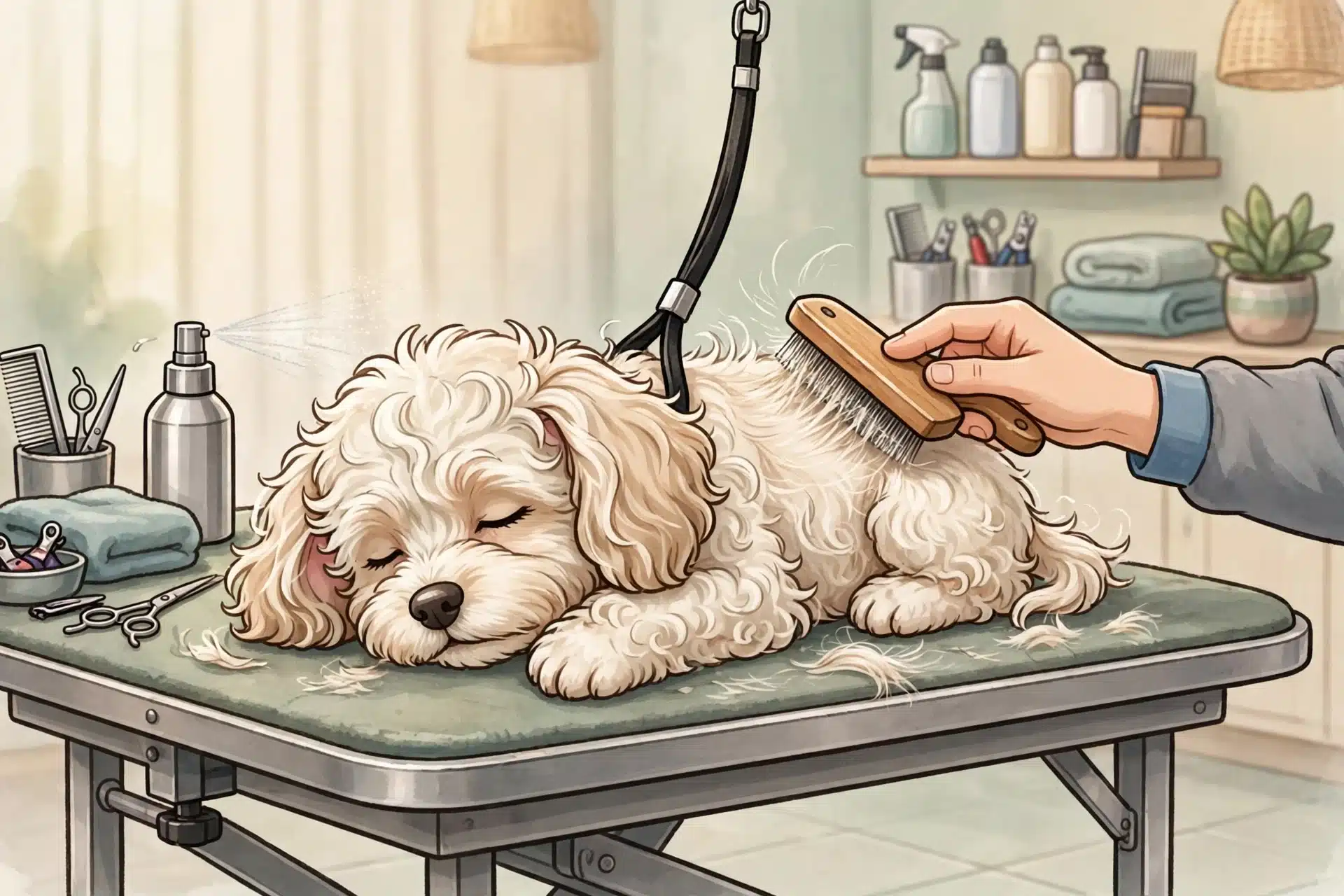
A Havanese carries a soft double coat that sheds very little but mats fast. The Havanese Club of America notes that a full-coated adult needs brushing two to three times a week, and daily brushing if you keep the long show coat. A Havapoo often inherits a wavier, Poodle-like coat, which can trap loose hair close to the skin and tangle just as badly. Either way, the grooming commitment is real. A short puppy cut keeps both breeds manageable, and our Havanese puppy grooming schedule walks through the tools and timing.
Cost and time of professional grooming
Both breeds need professional trims roughly every 6 to 8 weeks, so budget for the same appointment rhythm. Expect around $60 to $100 per visit for a small dog, though prices vary by city and coat length. That adds up to $500 or more a year. Between visits, plan on 10 to 15 minutes of brushing, plus nail trims and ear checks at home. If that routine sounds heavy, a puppy cut shortens the workload without changing the dog’s health.
Matching Size and Lifespan to Your Home
Homes with children, stairs, and small spaces
Both breeds fit apartments and small yards because neither adult crosses 18 pounds. What matters more is daily handling. Young children can drop a 9-pound dog on the stairs, so teach gentle carrying early. Watch hips and knees too: patellar luxation shows up in small breeds, and hard landings make it worse. A Havanese gives you a predictable adult near 7 to 13 pounds, which helps when you plan crates, carriers, and car seats. A Havapoo might finish under 10 pounds or in the high teens, so ask the breeder about the Toy versus Miniature Poodle parent before you buy gear.
Planning for a long commitment
A 14-to-16-year Havanese lifespan means your puppy may attend college move-ins with your kids. Budget for the full run: annual vet visits, dental cleanings, and senior care in the final years. The Havapoo’s 12-to-15-year range is shorter on paper, but both dogs will share most of your child’s childhood. Either way, pick a breeder who documents parent health screenings, because a decade and a half starts with the parents’ genetics. Write the timeline down before you commit, not after.
Questions to Ask a Breeder About Adult Size and Longevity
Size and health questions to put in writing
Ask which Poodle parent the Havapoo litter has. A Toy Poodle parent usually means an adult under 10 pounds, while a Miniature parent can push the high teens, so this single answer narrows the estimate more than any weight chart.
Then ask about health screening. A good breeder can name the tests done on both parents. For Havanese, the Havanese Club of America requires OFA Hips, OFA Patellas and annual eye exams for a CHIC number, and the patella test screens for the knee problems common in small breeds. Ask whether results are registered publicly with the OFA, and whether DNA testing covered progressive retinal atrophy and Legg-Calve-Perthes disease. Request parent health records in writing before you place a deposit.
What transparent pricing and availability look like
Honest breeders state the total price up front, including what a deposit covers and whether it is refundable. For reference, Sage Puppies puppies run $3,500 to $4,500, and the program uses an application-first reservation process so matching starts with your household, not a shopping cart.
Ask how the adult size estimate connects to that price, and what happens if a puppy’s growth surprises everyone. You want clear answers, current litter dates, and written pickup or delivery terms, not vague promises about the next litter.
Which Should You Choose: Havanese or Havapoo?
Choose the Havanese when size consistency matters most
Pick the Havanese if you want to know exactly what you’re getting. The AKC breed standard locks adult size into a narrow band, so a puppy that fits your apartment or travel plans today will stay that size. You also get the longer lifespan, often 14 to 16 years. The trade-off is coat care, since that silky double coat needs regular brushing to prevent mats.
Choose the Havapoo when trainability and coat matter
Pick the Havapoo if you want a wavy, low-shedding coat and a Poodle’s quick learning. Ask the breeder whether the Poodle parent is a Toy or Miniature, because that answer sets the adult size more than the puppy’s current weight does. A Toy Poodle parent usually means an adult under 10 pounds. The wider size range and shorter typical lifespan of 12 to 15 years are the honest trade-offs. Ask for documented parent health testing before you commit either way.

Still weighing the size and lifespan trade-offs? Sage Puppies raises both breeds in South Jordan, Utah, and shares documented parent health information before you commit. Start the application, or pick up locally if you’re nearby. Wisely Bred. Beautifully Loved.
Frequently Asked Questions
Q1: How do Havanese and Havapoo puppies compare in size and lifespan?
Havanese land at 7 to 13 pounds and often live 14 to 16 years. Havapoos range from under 10 pounds into the high teens, with a typical lifespan of 12 to 15 years, depending heavily on the Poodle parent.
Q2: Which Poodle parent makes a bigger Havapoo?
A Miniature Poodle parent can push a Havapoo into the high teens, while a Toy Poodle parent usually produces adults under 10 pounds. Ask for both parents’ weights before reserving.
Q3: When will my puppy reach full adult size?
Both breeds mature quickly. Expect most adult height by 8 to 10 months, with full weight around the first birthday.
Q4: Can I predict my Havapoo’s adult weight from its current size?
Not reliably. Weekly weigh-ins and the parents’ weights predict better than any puppy weight chart.
Q5: What health tests should a breeder document?
For Havanese, CHIC requires OFA hips, OFA patellas, and an annual CAER eye exam. Ask about Poodle screening too, plus DNA tests for progressive retinal atrophy.
Q6: Which breed sheds less?
Both shed very little. The Havapoo’s wavy coat often traps more loose hair, but each mats without daily brushing.
Conclusion
The core comparison comes down to predictability. A Havanese holds a fixed AKC standard near 7 to 13 pounds and 8.5 to 11.5 inches at the withers, and often lives 14 to 16 years. A Havapoo’s adult size range depends on the Toy versus Miniature Poodle parent, running from under 10 pounds into the high teens, with a typical lifespan of 12 to 15 years. Growth finishes early in both, around 8 to 10 months for height. Whichever you choose, ask a breeder for documented parent health testing, since patellar luxation, progressive retinal atrophy, and dental disease shape those long lifespans more than the label on the puppy.