Quick Summary: Socialize a Havanese puppy gradually, not through forced contact: build calm at home, meet known vaccinated dogs at a distance, use parallel walks and brief greetings, and introduce a resident dog through scent and barrier feeding. Avoid dog parks and shared grass until your vet clears full immunity, and never pair a tiny puppy with dogs that body-slam, pin, or chase. Watch for quiet stress signs such as lip licking, yawning, freezing, whale eye, or clinging, and increase distance at the first sign rather than waiting for a growl. Short, calm, successful sessions build the puppy’s confidence that other dogs are safe.
A Havanese puppy that hides behind your legs when a neighbor’s Lab walks past is not a “bad” puppy. At eight pounds, retreat may be the only sensible choice next to a body that could knock her over by accident. The real challenge is teaching your puppy that dogs are safe and predictable, without rushing a fragile little dog into situations her size and vaccine schedule cannot handle yet.
This guide gives you a gradual socialization ladder built for Havanese, Havapoo and Cavapoo puppies. You will learn how the timing of shots changes where a Havanese puppy with other dogs can safely go, how to set up calm first meetings, and how to read the breed’s stress signals before a good introduction turns bad. We draw on the documented experience of our Sage Puppies program in South Jordan, Utah, where Havanese litters are raised for confident, friendly temperaments.
Step 1: Build a Calm, Socialized-at-Home Foundation
Before your Havanese meets other dogs, she needs skills that make those meetings safe. A puppy who settles quickly, accepts handling, and recovers from startle sounds is far easier to introduce than one who has only known chaos at home. Build this base first, and every later step gets simpler.
Teaching a Marker and a Handling Routine
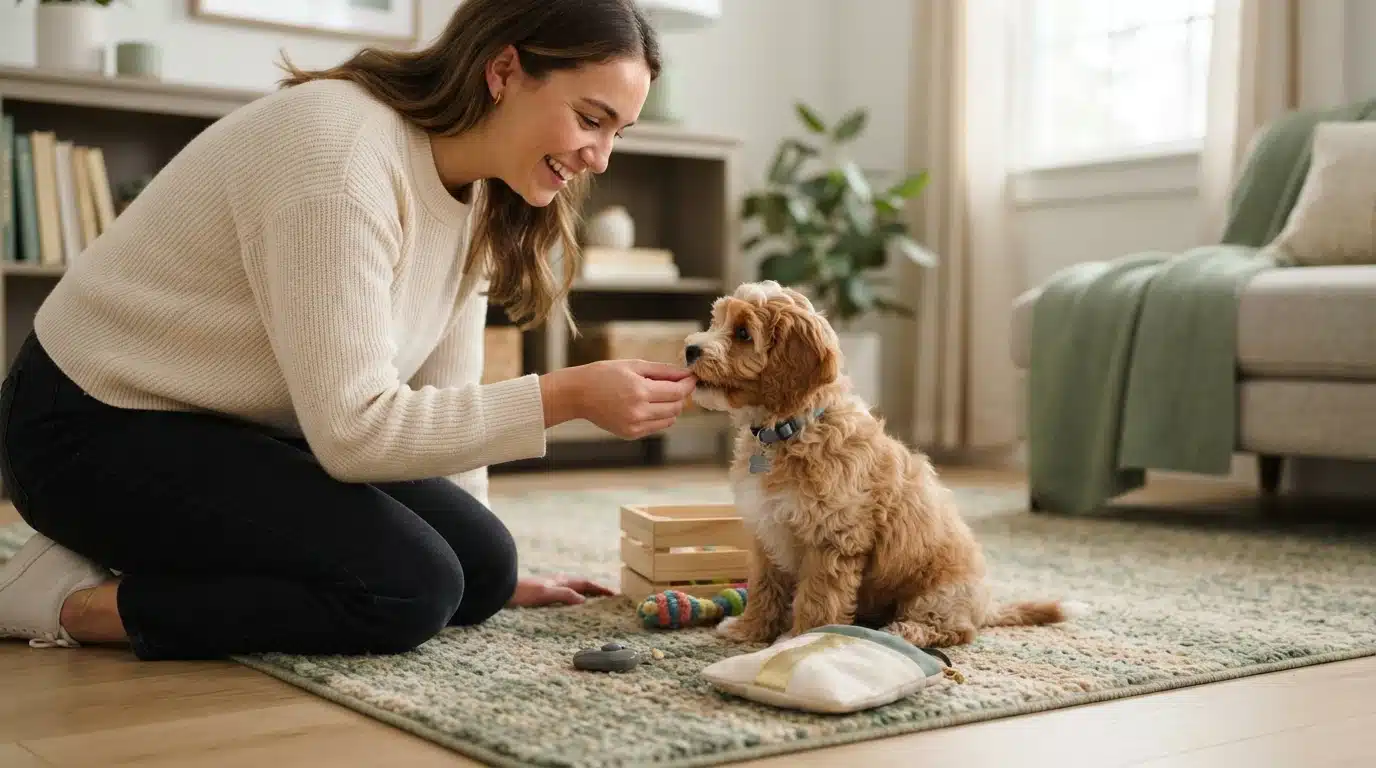
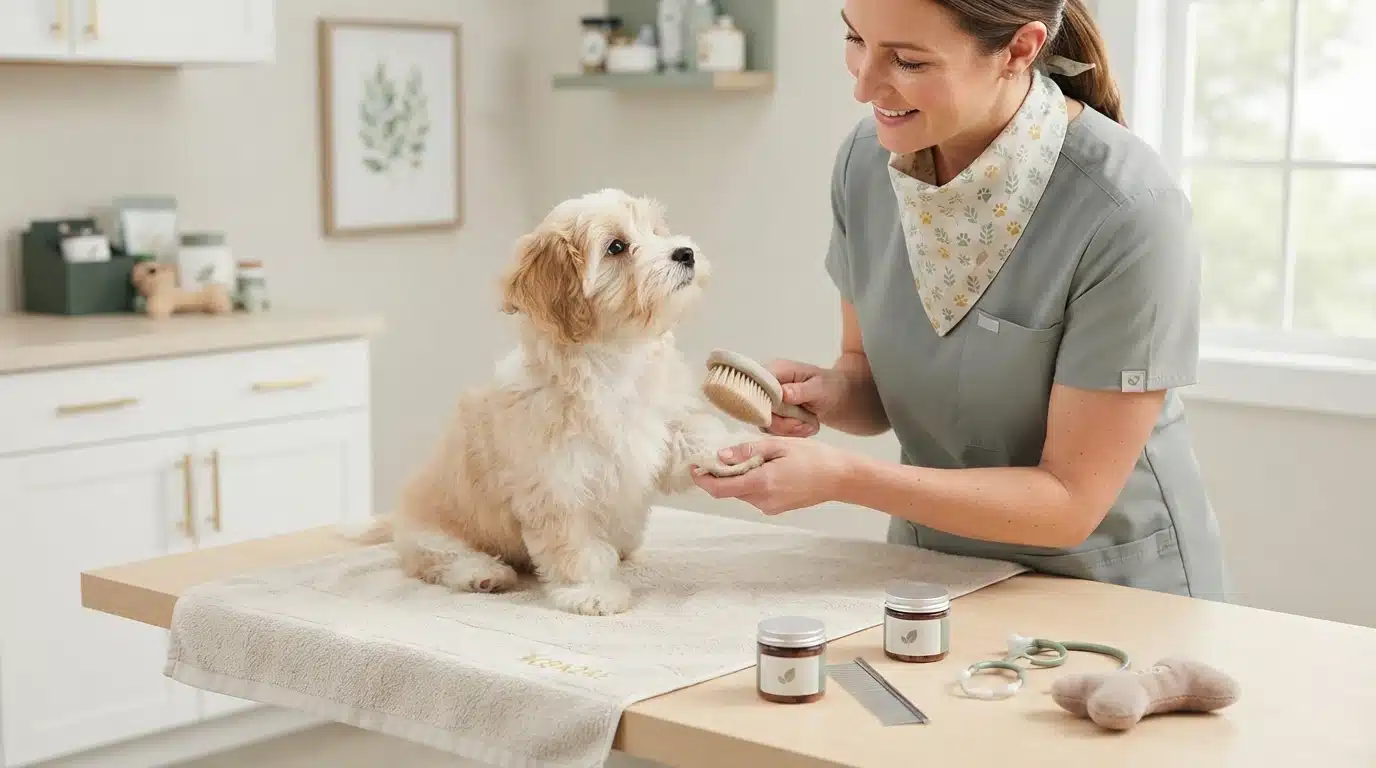
Pick a short word like “yes” as your marker. Say it, then give a treat within one second, ten times in a row. Now your puppy knows that sound means a reward is coming, so you can mark calm choices the moment they happen. Pair this with daily handling: touch paws, ears, tail, and mouth gently, then mark and reward. This routine builds the calm tolerance a puppy needs before introducing dogs safely.
Using Household Sounds and Calm Practice
Havanese are alert little dogs, so everyday noise is your first socialization test. Play recordings of doorbells, vacuums, and distant barking at low volume while your puppy eats or chews. Keep the volume low enough that she notices but keeps eating. Mark and reward relaxed behavior, then raise the volume slightly over several days. If she startles, pause, let her recover on her own, and resume at an easier level later.
Settling Independently Before Adding Dogs
A dog who cannot settle at home will not settle around other dogs either. Teach a simple mat cue: lure your puppy onto a mat, mark, and reward. Feed a few treats for lying down calmly, then stretch the gaps between them. Practice while you eat dinner or work nearby. Aim for a few quiet minutes on the mat without constant treats before you plan any dog-to-dog meetings.
Reading Everyday Comfort Signals
Learn her baseline now, so you can spot changes later. Comfort looks soft: loose body, easy breathing, playful bows, and willing eating. Watch for the early signs of stress too: lip licking, yawning, a stiff freeze, turning her head away, or scratching suddenly. Keep a simple note of what triggers each sign. When you know her normal, you can step in early, and every introduction that follows starts from a calmer place.
Step 2: Clear the Health and Safety Gate Before Dog Contact
What the AVSAB Guidance Actually Says
Good socialization does not mean waiting for the last vaccine. The AVSAB’s position statement supports socializing puppies before they finish their shots, because the first three months are the window that shapes adult behavior. The practical gate: at least one vaccine set and a first deworming given a week or more before a class, with your puppy healthy and up to date afterward.
Parvovirus and Communal Dog Areas
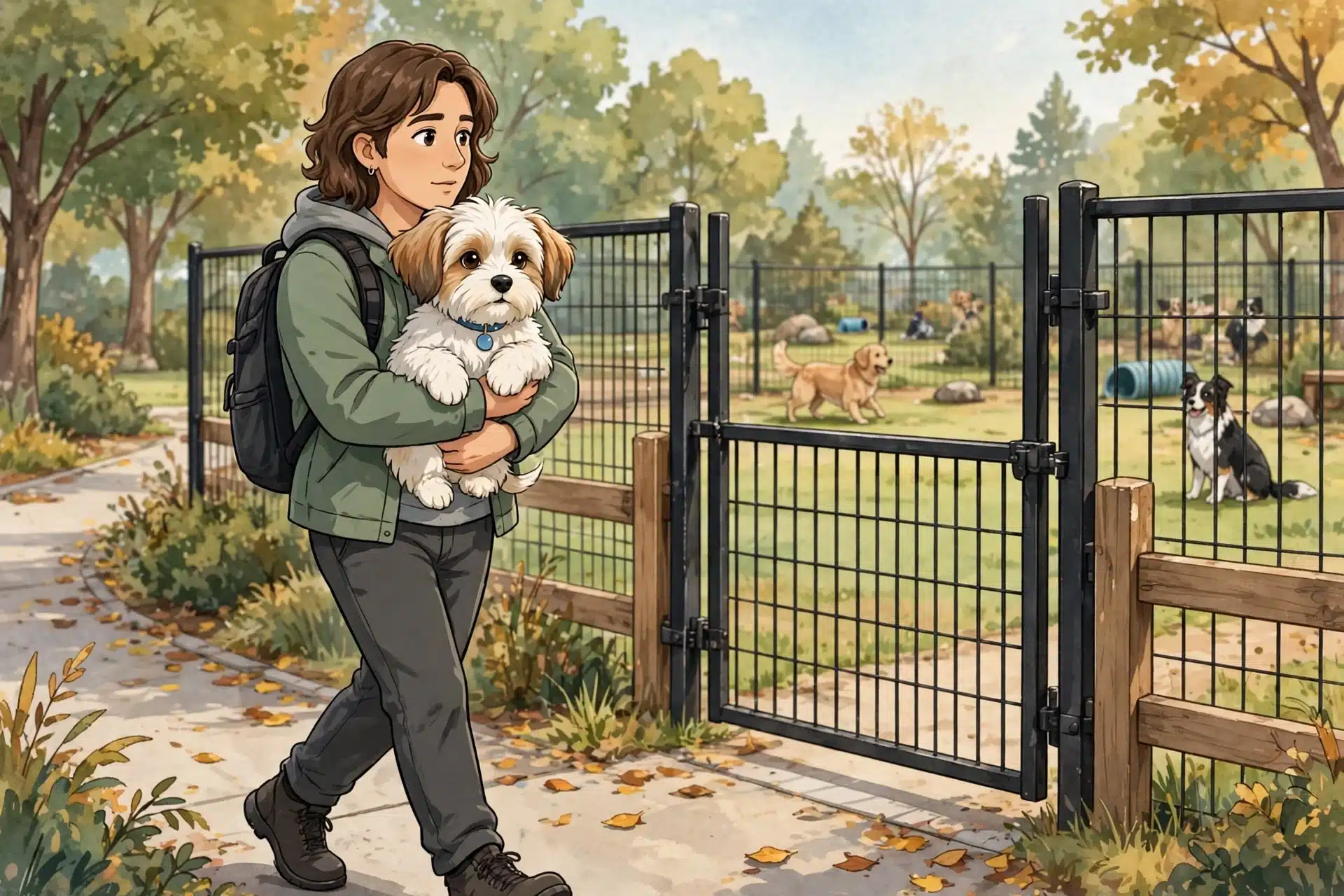
Parvovirus is the real reason for limits, and it survives in soil for months. Until your vet clears full immunity, skip dog parks, pet-store floors, and grass where unknown dogs roam. Instead, carry your Havanese through busy areas so they see the world without touching it. Set up havanese meets other dogs moments with vaccinated, healthy dogs you know, in spaces you control.
Size-Related Physical Risk With Larger Dogs
A 6-pound Havanese puppy can be hurt fast, even by a friendly giant. Choose first dog partners that match your puppy’s size and play style. Watch for body slams, pinning, and relentless chase, and end the session at the first sign either dog is overmatched. Calm, controlled introductions beat rough “confidence building” every time.
Sanitation and Post-Contact Hygiene
Carry your puppy rather than letting them walk in shared spaces, and wipe paws after contact with unfamiliar areas. Wash your hands after handling other dogs before touching your puppy’s face or food. Wash bowls and bedding on hot cycles weekly. These small habits add a layer of protection without cutting off social experience.
Step 3: How to Socialize a Havanese Puppy With Other Dogs Safely
When a Havanese meets other dogs, the setup matters more than the greeting. Keep the leash loose, stay calm, and let distance do the work at first. A Havanese puppy that is allowed to watch other dogs from ten feet away learns they are safe. A puppy pushed nose-to-nose with a stranger learns they are risky. Your job is to keep every first meeting boring, because boring means safe.
The Distance Ladder: Treat, Parallel Walk, Greet
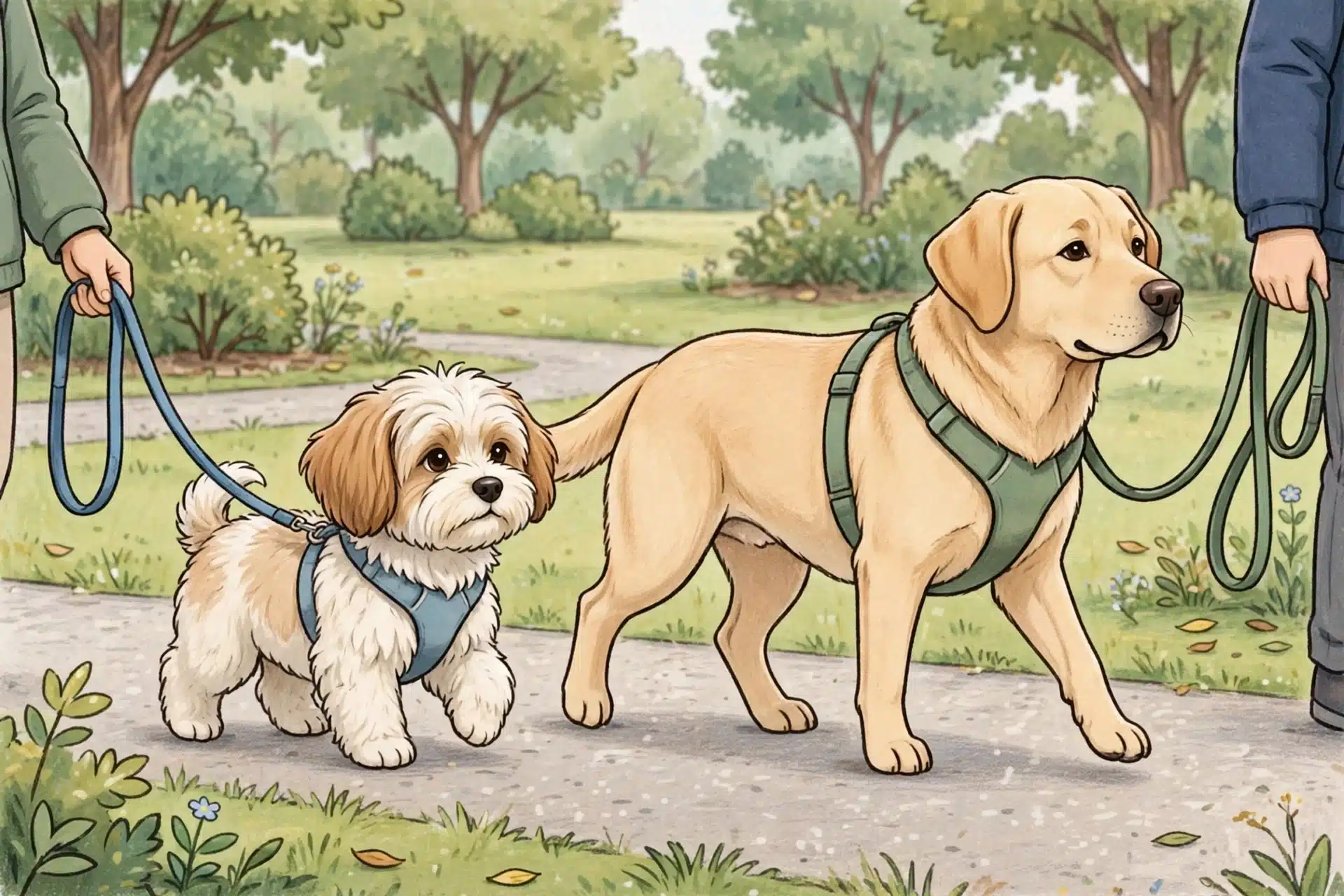
Build distance into the plan. Start far enough away that your puppy notices the other dog but can still eat a treat. Feed one treat per glance at the dog, then move a few feet closer. When your puppy stays relaxed at that distance, shift to a parallel walk in the same direction. Save the actual greeting for the last rung, and keep it brief: three seconds, then call your puppy away happily.
Parallel Walking With a Calm Adult Dog
Parallel walking is the safest first contact. Ask a friend with a steady adult dog to walk beside you, ten to fifteen feet apart, moving the same way. Side-by-side motion with no face-to-face pressure lets dogs gather information without tension. Shorten the gap over several outings as your puppy settles. If your puppy stares hard, freezes, or stops taking treats, widen the gap and try again another day.
Choosing Safe Dog Partners
Not every dog is a good teacher. Pick known, vaccinated, calm adults over unknown park dogs, because one rough episode can shape a small puppy for months. Skip pushy players, dogs who pin or body-slam, and any dog whose owner is not watching. A 6-pound Havanese can be hurt fast, even by a friendly giant, so size mismatch matters too.
Rewarding Without Coercing
Mark good choices instead of forcing contact. Quiet watching, a loose body, or a soft sniff all earn a treat. If your puppy hides or backs up, never push them forward or lift them into a greeting. That teaches helplessness, not confidence. Let your puppy choose to approach, then pay well for the choice. Confidence grows from choices, not from pressure.
Step 4: Introduce a Havanese Puppy to Your Resident Dog
Your resident dog sets the tone for every future dog encounter. Go slow here, because a rough first meeting can shape how your Havanese reads other dogs for months. Most residents tolerate a puppy better after a few calm, staged steps than after a face-to-face free-for-all on day one.
Scent Swapping and Barrier Feeding First
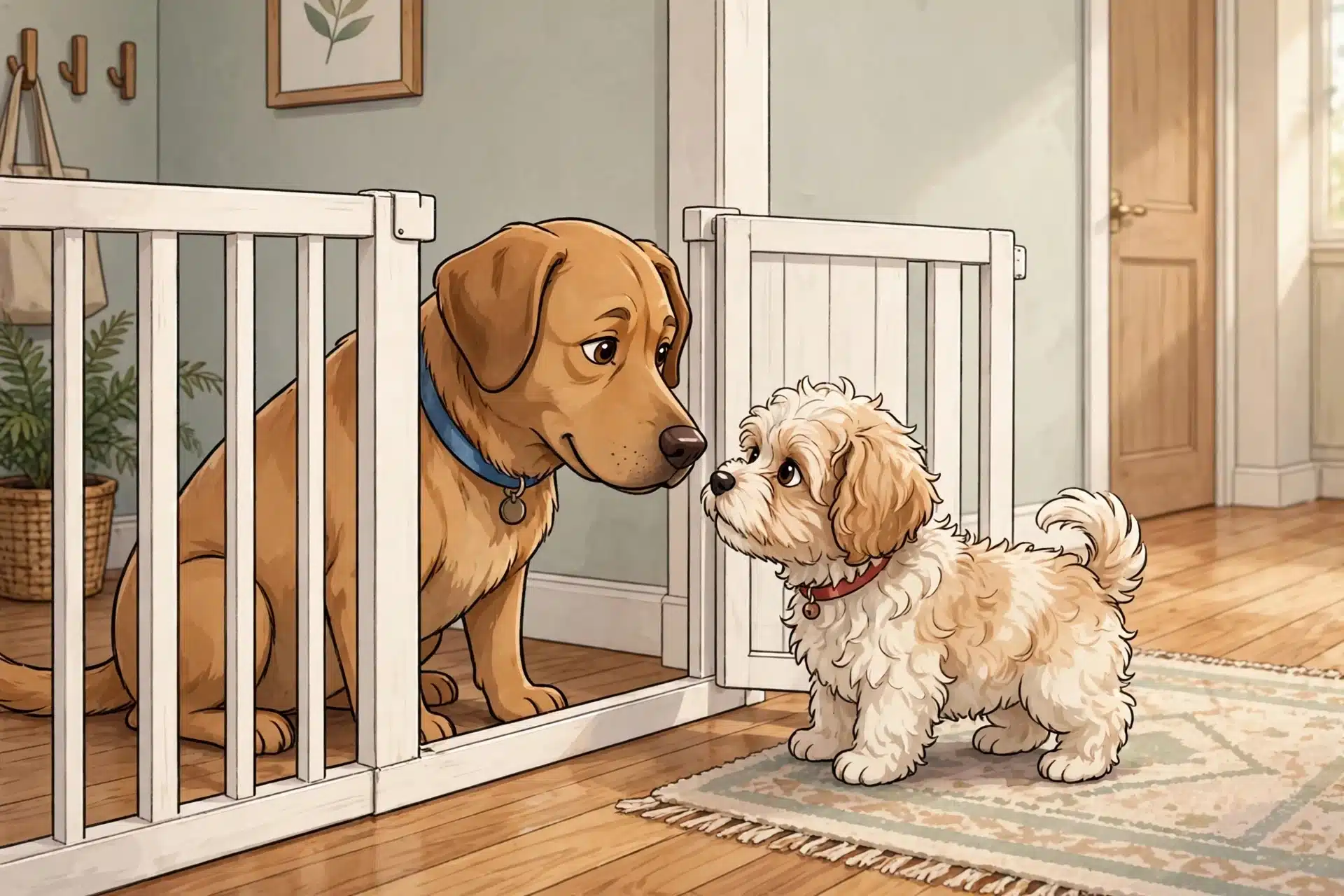
Start before they see each other. Swap bedding and toys between the dogs so each picks up the other’s smell. Then feed them on opposite sides of a closed door or baby gate, moving the bowls closer over several days. Eating near each other through a barrier builds a quiet association: good things happen when this new dog is around. Keep these sessions short and end on a calm note.
Leash Introductions in a Neutral Area
Pick a spot neither dog considers home turf, such as a quiet sidewalk or a neighbor’s yard. Walk both dogs on loose leashes, with one handler per dog, moving in the same direction a few feet apart. Let them sniff briefly, two or three seconds, then call them away before either fixates. Repeat over several short sessions. Keep first meetings upbeat and loose; tension in the leash travels straight down to the dogs.
Managing Resource Guarding Signals
Resource guarding means a dog stiffening, hovering, or stiffening over food, toys, or even a favorite person. Watch for a hard stare, a frozen body, a curled lip, or a sudden speed-up in eating. Feed your resident dog separately at first, and pick up high-value toys during the early weeks. If your puppy pesters a guarding dog, interrupt calmly and give each dog space. Never punish a growl; it is useful information, and punishing it can push a dog to skip warning signs next time.
When the Plan Needs a Professional
Call a certified trainer or veterinary behaviorist if you see stiff staring, prolonged growling, snapping, or a resident dog that stops eating or hides. Small Havanese puppies can be injured quickly, so escalate at the first real warning rather than hoping it self-corrects. A few sessions with a professional cost far less than an emergency vet visit. Most pairs settle within two to four weeks of steady management, so early help protects that timeline.
Step 5: Progress From Controlled Meetings to Everyday Dog Contact
Once your Havanese handles calm one-on-one meetings, everyday dog contact becomes the goal: strange dogs on sidewalks, relatives’ pets, and busy public settings. This step widens the world without skipping the safety rules you have already built.
Moving From Known Dogs to Groups
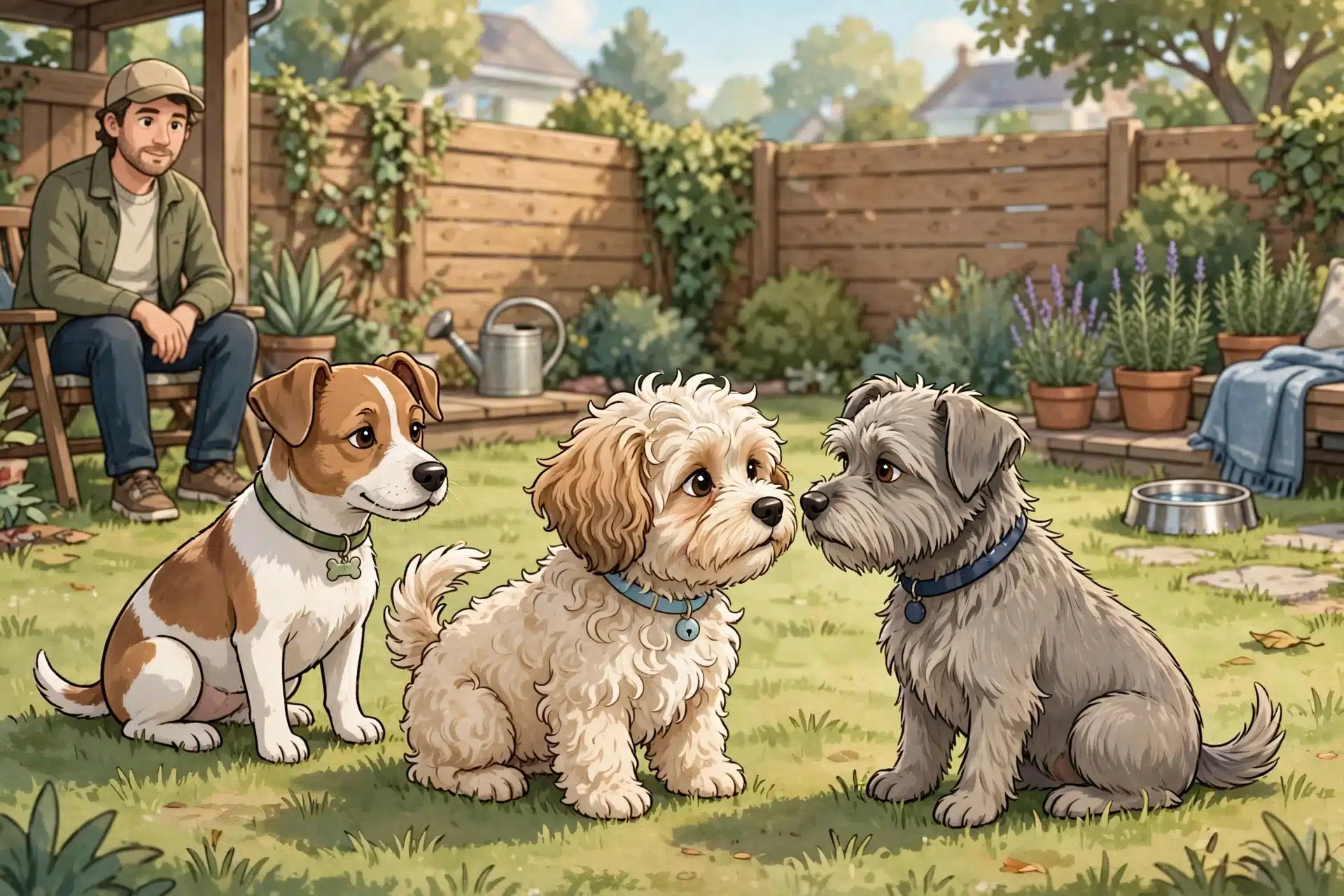
Start by adding one new dog at a time to a known, friendly partner. Three dogs change the math: play gets faster, and a small puppy can get pinned or trampled. Keep group sizes to two or three calm adult dogs, and end the session while everyone is still loose and happy. Short and successful beats long and chaotic every time.
Auditing Public and Private Dog Settings
List every place your puppy will meet dogs: pet stores, patios, friends’ homes, the vet lobby, training class. Rate each one for dog traffic, leash space, and exit options. Save high-traffic spots like pet store aisles for later, once your puppy can disengage from a dog on cue. In private settings, ask hosts about their dogs’ history first, then set up the first meeting on neutral ground outdoors.
Keeping Progress Gradual as Your Puppy Grows
Growth is not a finish line. A confident eight-month-old Havanese can still learn bad habits from a rough play group, so keep screening partners at every age. If your puppy gets pushy, fearful, or fixated, drop back to easier settings for a week. Rude greetings, like charging head-on or dragging you forward, get reset to calm, parallel walking before any sniffing happens again.
Documenting a Socialization Plan
Track each new setting, dog type, and outcome in a simple note on your phone: date, place, dogs met, and how your puppy responded. Patterns show up fast. Two shaky sessions with big dogs means you adjust before a third. A breeder like Sage Puppies can also review your log and flag gaps worth filling.
Step 6: Read Havanese Stress Signals and Adjust the Plan
A Havanese will usually warn you before it shuts down, but the warnings are quiet. Watch for the body, not the bark.
Havanese-Specific Warning Signs
Small companion breeds often show stress as soft signals: lip licking with no food around, yawning, a closed tight mouth, turning the head away, or showing the whites of the eyes, sometimes called whale eye. Havanese tend to add a Havanese twist: a suddenly “puppy quiet” pup that stops playing, freezes mid-greet, or clings to your leg instead of exploring. Tail clamped low, ears pinned back, or scratchy snapping when a bigger dog sniffs too long all mean “too much, too close.”
Reducing Difficulty Before the Puppy Refuses
Step in at the first soft signal, not after a growl. Increase distance until your puppy can watch calmly, then reward. That might mean 20 feet instead of 6, a shorter visit, or one calm dog instead of three. Keep sessions under ten minutes when your puppy is new to this. Watching from far away still counts as socialization, and it builds confidence faster than forced contact ever will.
If your puppy has to hide, growl, or freeze to end an interaction, the setup was too hard. Change the distance or the dog, not the puppy.
After a Bad Encounter
One scary moment does not ruin a puppy, but it can leave a mark. Let your puppy sleep and reset for a day or two. Then rebuild the same step at a much easier level: a calmer dog, a bigger gap, half the time. Pair calm sightings with treats so the association repairs itself. Never rush a “fix-up” meeting with the same dog right away.
When Fear Persists
If your puppy stays worried after a week of easy exposure, or the fear spreads to other dogs, places, or handling, bring in a certified professional who uses positive methods. The ASPCA notes that early signs like lip licking and yawning often appear before obvious fear, so catching them early is your best tool. Progress that stalls for weeks deserves expert eyes, not more pressure.

A well-socialized Havanese grows into a calm, confident companion, and the plan above gives you each step. Want a puppy raised with this kind of care from day one? Explore available Havanese, Havapoo and Cavapoo puppies at Sage Puppies, or start your application today.
Frequently Asked Questions
Q1: How do I socialize a Havanese puppy with other dogs?
Start far away, feed a treat for each calm glance at the other dog, then close the distance gradually. Move to parallel walking with a known, vaccinated adult before any greeting. Keep first meetings short and boring, and reward choices rather than forcing contact.
Q2: When can my Havanese puppy meet other dogs safely?
The AVSAB supports socializing before the vaccine series ends. A practical gate is one vaccine set plus a first deworming given at least a week before group settings. Until full immunity, avoid dog parks and shared grass, and carry your puppy through busy areas instead.
Q3: How do I introduce a Havanese puppy to my resident dog?
Swap bedding first, then feed on opposite sides of a closed door or gate. Next, leash both dogs in a neutral spot, let them sniff for two or three seconds, and call them away. Feed separately and watch for guarding signals.
Q4: How long should a first meeting between dogs last?
Keep it around three seconds for a greeting, or under ten minutes for a full session. End while both dogs are still loose and relaxed, so the experience stays positive.
Q5: What stress signs mean my puppy needs more distance?
Watch for lip licking, yawning, a stiff freeze, whale eye, a clamped tail, or a puppy that clings to your leg instead of exploring. Increase distance at the first soft signal, not after a growl.
Q6: Can a big friendly dog safely play with a tiny Havanese puppy?
Not as rough play. Even gentle giants can injure a 6-pound puppy by accident. Choose calm adults, skip body slams and pinning, and end the session at the first sign either dog is overmatched.
Conclusion
Socializing a Havanese puppy around other dogs works best as a ladder, not a leap. Clear the health gate first: one vaccine set plus a deworming, and stay off shared ground until your vet clears full immunity. Build calm skills at home, then progress through distance work, parallel walks, and brief greetings with known, vaccinated dogs. Introduce a resident dog slowly, and screen every partner for size and play style. Most of all, read the quiet signals, lip licking, yawning, freezing, and reduce difficulty at the first one. Short, boring, successful sessions teach a small puppy that dogs are safe, and that belief lasts a lifetime.