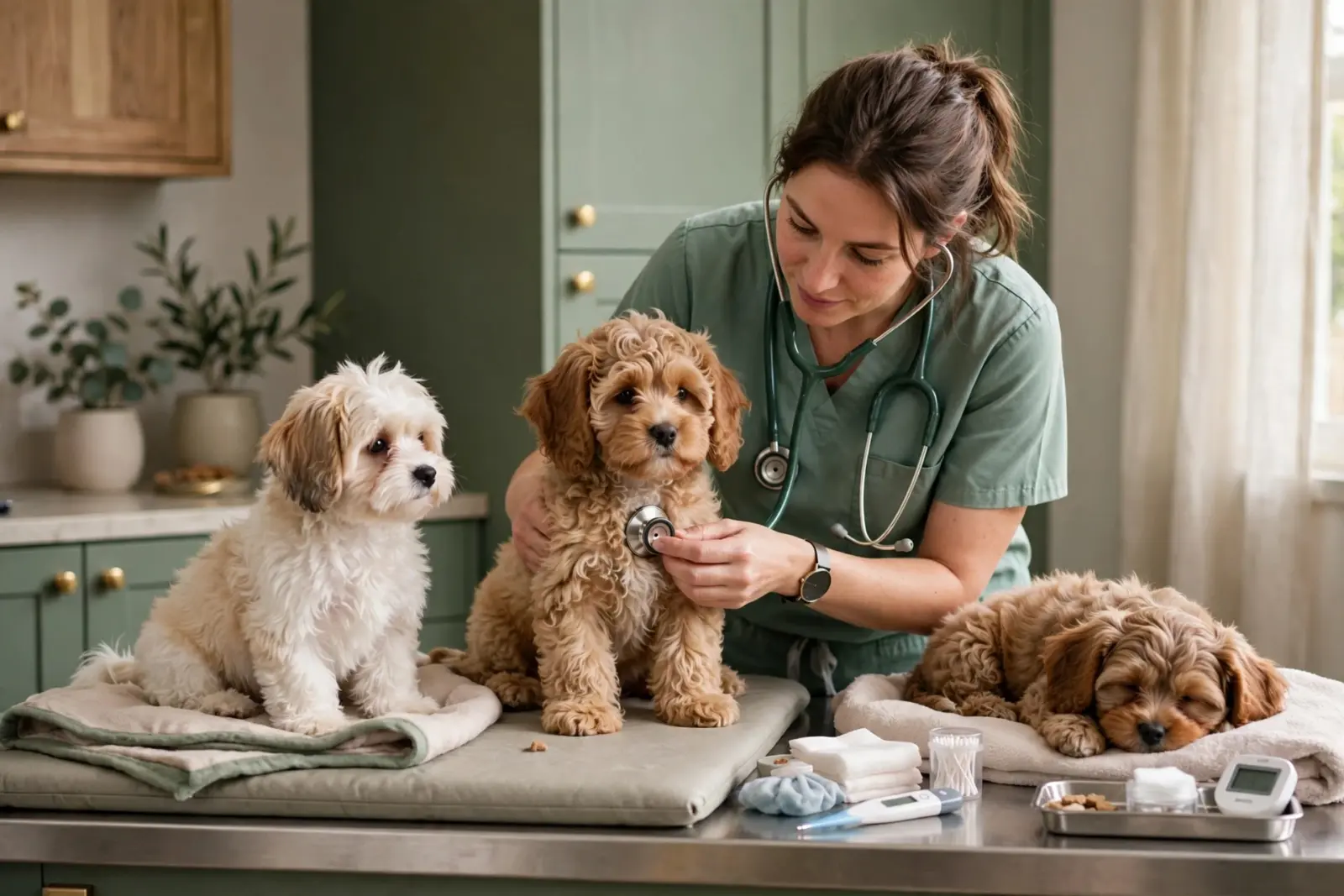
Quick Summary: Havanese puppies need frequent small meals, regular weight checks, early veterinary care, and attention to breed risks such as eye disease, liver shunts, slipped kneecaps, heart murmurs, and dental disease. Training and socialization should begin around 8 weeks with short, positive sessions, while grooming and gentle exercise become regular habits from the first week home. Before buying, ask a breeder for both parents’ health test results, the puppy’s veterinary records, past customer references, and clear written contract terms.
A Havanese puppy leaves its breeder between eight and twelve weeks old, and the first question most families ask is oddly specific: how often should this dog eat, and how much per meal? That question matters more than it looks, because Havanese puppy nutrition drives growth, energy and everything else that follows.
This guide answers it with numbers, then walks through Havanese health basics, Havanese grooming basics and the first steps of training. You will find age-based meal counts, portion guidance, the watch items worth knowing, and what to expect from a breeder’s health testing and records.
The advice here comes from documented experience raising Havanese, Havapoo and Cavapoo puppies at our South Jordan, Utah program. Whether you pick up locally or arrange puppy delivery, you will leave with a realistic care plan for week one and beyond.
Havanese Puppy Basics: What Makes This Breed Different
A Havanese is a small companion breed from Cuba, usually 7 to 13 pounds as an adult, with a silk coat and a strong need for people. Good Havanese puppy nutrition matters from the start because this breed stays small, so portions and meal timing do more work than they would for a larger dog. Expect a social, trainable puppy that does poorly when left alone for long stretches. Height runs 8.5 to 11.5 inches at the shoulder, which makes the breed a good fit for apartments and smaller homes.

Temperament, Size and the Role the Breed Plays in Your Home
Havanese puppies bond tightly with their families and want to be where you are. They are alert but rarely yappy, quick to learn, and gentle with respectful children. Plan for company most of the day, or use a crate and short absences to build comfort alone. At this size, rough play with big dogs needs watching.
Choosing a Havanese, Havapoo or Cavapoo Puppy
All three are small, friendly companion breeds, but they differ. The Havanese is the purebred parent; the Havapoo and Cavapoo mix in Poodle or Cavalier genes, which can change coat, size and shedding. Ask any breeder for health testing on both parents, written terms and full records. Our available Havanese and mixed-breed puppies page explains how matching works before you apply.
Havanese Puppy Nutrition: Feeding Frequency, Portions and Food Choices
A Havanese puppy eats small amounts, often. Follow this age pattern for Havanese puppy meals per day:
- 6 to 12 weeks: 4 meals a day
- 3 to 6 months: 3 meals a day
- 6 to 12 months: 2 to 3 meals a day, then 2 for life
Small breeds burn energy fast, so steady meals prevent blood sugar dips. For how much food should a Havanese puppy eat per meal, start with the daily portion printed on your food’s bag for your puppy’s weight, then divide it by the number of meals. Weigh your puppy every two weeks and adjust so gain is steady but ribs stay easy to feel. A vet visit in the first week confirms the numbers. For a worked example, see our guide to a small breed puppy feeding schedule for week one.

Choosing the Right Puppy Food and Switching Foods Safely
Feed a complete and balanced puppy food made for small or toy breeds, so the kibble size and calorie density fit a 7 to 13 pound adult. Look for an AAFCO growth statement on the label, and ask your breeder what the puppy already eats. For switching puppy food, blend over 7 to 10 days: 25% new food for three days, 50% for three days, then 75%, then all new. Slow changes protect a small stomach. Chewy’s puppy feeding guide backs the four-meals-until-six-months pattern for toy breeds.
Water, Treats, and Mealtime Practicalities
Keep fresh water down all day. Cap treats at 10% of daily calories, and use part of the kibble ration for training. Feed on a schedule, then take the bowl up after 15 minutes.
Building a Budget That Includes Food
Budget roughly $20 to $40 per month for quality small-breed puppy food, plus occasional chews. Food is a small slice of first-year puppy costs, but planning it keeps feeding consistent from day one.
Havanese Health Basics: Vet Visits, Vaccinations and Breed Watch Items
What health problems are common in Havanese dogs? The breeds main watch items are eye disease such as cataracts, liver shunts, luxating patellas (slipped kneecaps), heart conditions and dental disease, per the Havanese Club of Americas health list.
The First Year of Veterinary Care
Plan three to four vet visits in year one. Your puppy gets a wellness exam plus core vaccines, usually DHPP and rabies, in a series ending near 16 weeks. Add stool checks, monthly prevention, and a spay or neuter discussion. Ask which clinic handles after-hours cases before you need one.
Breed Watch Items: Liver Shunts, Kneecaps, Heart and Eyes
| Condition | Why It Appears | Typical Detection Window |
|---|---|---|
| Liver shunt (portosystemic shunt) | Blood bypasses the liver, a small-breed defect | 6 months to 2 years, poor growth or odd behavior |
| Patellar luxation | Kneecaps slip in small legs | Any age, often under 2 years |
| Heart murmurs | Inherited valve or flow issues | First few vet exams |
| Cataracts and eye disease | Inherited eye problems | Young adulthood on |
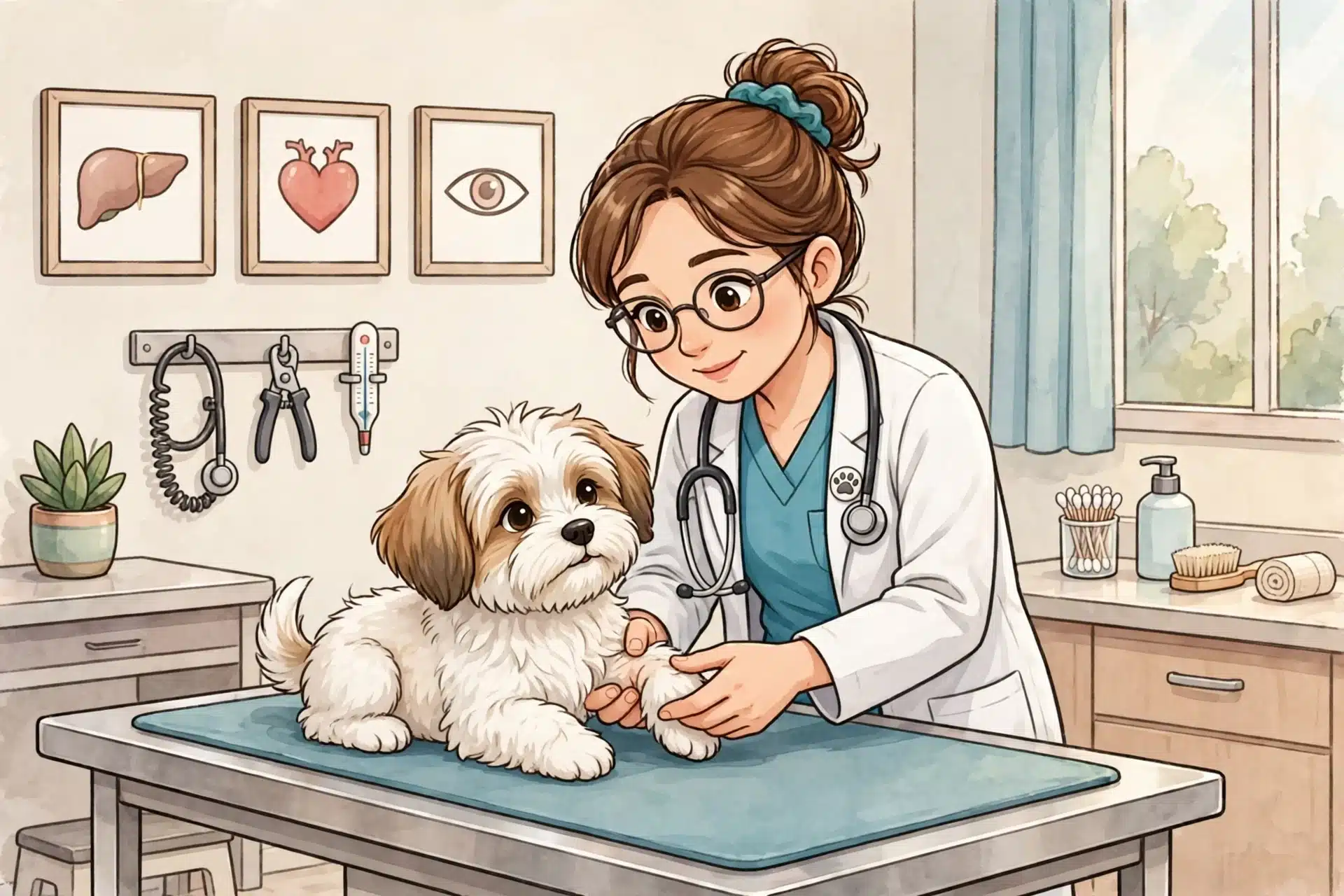
A vet hears many murmurs on a routine visit, which is why skipping checkups costs more later. Ask breeders for patella, cardiac and eye screening on the parents; our guide covers health tests to ask a breeder about.
Teeth, Eyes and Skin: Small Breed Maintenance
Brush teeth several times a week, since tooth and gum disease is common in small breeds. Wipe tear stains daily and check skin folds during grooming.
Signs That Should Prompt a Vet Call
Call about vomiting over 24 hours, limping, squinting, eating without gaining weight, or listlessness.
Havanese Grooming Basics: Coat, Eyes, Ears and Nails
Brushing and Coat Care in the First Year
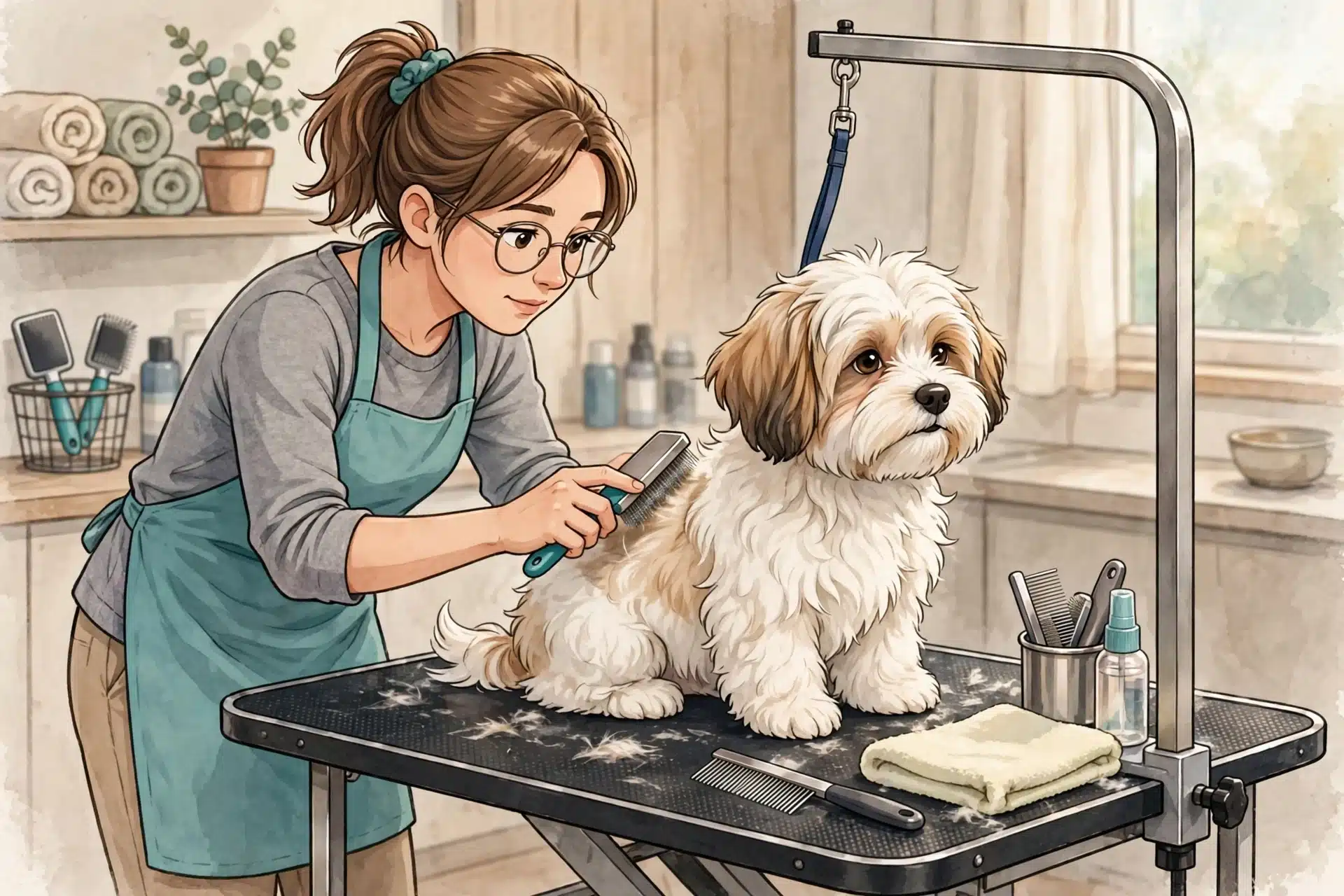
A Havanese coat mats fast, so brush it down to the skin several times a week. Puppies need short, happy sessions with a slicker brush and a metal comb. Always brush before a bath, because water turns loose tangles into tight mats. Our guide to coat care between professional grooms walks through the routine step by step.
Eyes, Ears and Nails on a Weekly Schedule
Once a week, wipe under the eyes with a damp cloth to limit tear stains, check ears for redness or odor, and trim nail tips. Light-colored puppies often stain more while teething. Handle paws daily from week one so nail trims stay calm.
Professional Grooming and Managing Cost
Most families book a full groom every 4 to 6 weeks, often with a puppy trim or teddy bear cut. Budget roughly $60 to $100 per visit depending on your area and coat condition. Between visits, brush weekly and keep the face trimmed short to stretch the schedule without mats.
Training and Socialization: Starting Strong in the First Weeks
When to Start and Which Commands Come First
Start the day your puppy comes home, usually around 8 weeks. Puppies learn fastest between 6 and 12 weeks, so those first weeks matter most. Teach commands in this order: name recognition, sit, come, then down. Keep each session to 2 to 5 minutes, two or three times a day. Short and happy beats long and boring every time.
Formal classes can begin after your vet confirms the vaccine series is on track, often around 10 to 16 weeks.
Positive Reinforcement That Stays Consistent
Reward what you want. Use small treats, praise, or a quick game the instant your puppy gets it right, because timing is what teaches. Every family member should use the same cue words and the same rules, or a clever Havanese will learn which person lets them get away with things. Skip punishment-based methods; they damage trust in a breed built to please.
House Training, Crate Training and Structure
Take your puppy out first thing in the morning, after every meal, after naps, and right before bed. Praise calmly when they go outside. Feed on a set schedule so potty timing becomes predictable. Crate training a Havanese puppy works best when the crate feels like a den, never a punishment, with naps and meals inside so it becomes a safe place.
A Socialization Plan That Fits the Breed
Havanese bond hard with their people, so early socialization prevents clinginess from turning into anxiety. Introduce new sounds, surfaces, gentle handling, and calm dogs of different sizes before 16 weeks. Keep every experience short and positive, and let your puppy opt out of anything that scares them.
Exercise, Play and Mental Stimulation
Daily Movement for a Small Breed Puppy
A Havanese puppy needs short, gentle activity, not long hikes. Free play, a short sniffy walk, and a game of fetch cover it. For structured walks, many vets suggest about 5 minutes per month of age, once or twice a day, so a 3-month-old gets roughly 15 minutes. Note that this popular rule has little hard science behind it, so watch your puppy instead: if he lies down or lags, end the session. Avoid forced running, stairs marathons, and jumping while growth plates are open. PDSA agrees the rule is a guide, not a law.
Mental Work and Safe Play Around the Home
Ten minutes of brain work tires a puppy faster than a long walk. Scatter kibble in a snuffle mat, roll treats into a towel, or rotate two or three puzzle toys so they stay novel. Practice sits and recalls in 2 to 5 minute bursts. Pick toys too big to swallow and skip ropes that fray. At Sage Puppies, puppies go home used to handling and play, so you start with a head start.
Watch for the “zoomies and crash” cycle. If your puppy turns wild in the evening, he likely needs a nap, not more exercise.
The First Week at Home: Setup, Schedule and Supplies
Your puppy’s first week sets the pattern for everything that follows. A calm, prepared home helps a small breed like the Havanese settle fast.
What to Have Ready Before Pickup
Gather the basics early so pickup day stays simple. You will need a small crate, a bed, food and water bowls, a collar, a leash, an ID tag, and a few soft toys. Set up one puppy-proofed room with a fixed potty spot outside, since free run of the house invites accidents and chewing. Buy the same food your puppy has been eating so you can keep meals steady. AAHA’s first-days guide recommends booking a wellness visit within the first week, so call your vet before pickup.
The First 72 Hours, Hour by Hour
Keep the first days quiet and predictable. Use this rhythm:
- Arrival: One potty break, then show the crate and water.
- Meals: Follow your breeder’s feeding times, then a potty trip after each.
- Naps: A puppy this size sleeps most of the day between short play sessions.
- Night: Keep the crate beside your bed the first few nights.
Introduce the crate with treats and praise, and keep visitors to a minimum until your puppy relaxes. Petplace’s day-by-day guide notes calm routines build trust fastest.
Choosing the Right Breeder: Records, Testing and Written Terms
A reputable Havanese breeder will show you four things before you pay anything: health test results on both parents, the puppy’s vet exam record, a written contract, and references from past families. Ask for these as documents, not verbal promises. If a breeder resists, walk away.
Health Testing and Records Worth Asking to See
Request eye exams by a board-certified ophthalmologist, hearing tests, patellar luxation evaluations, and cardiac clearances on both parents. Results should be registered through OFA or CHIC, the Orthopedic Foundation for Animals’ database. Ask to see the puppy’s own vet record, including the first vaccines and deworming dates, so your vet can continue the schedule on time.
Contracts, Deposits and Lifetime Support
A good contract spells out the price, what happens if a health issue appears, and the breeder’s return policy. It should include a spay or neuter clause or similar terms for a companion puppy. Ask how long the breeder stays available after pickup. Programs like Sage Puppies build owner-managed matching and ongoing breeder support into the process, so you know who to call in week one or year five.
Local Pickup in Utah and Delivery Elsewhere
Confirm pickup details in writing: date, location, and what to bring. Families in Utah often collect puppies near South Jordan, while national buyers should ask exactly how transport works, who handles the puppy, and what records travel along. Get delivery costs and timing in the contract, not by text later.

You have the feeding plan, the health watch list, and a training rhythm that works. The next step is a puppy worth the work. Sage Puppies matches families with well-bred Havanese, Havapoo, and Cavapoo puppies, so start the application and bring that roadmap home.
Frequently Asked Questions
Q1: How often should I feed a Havanese puppy and how much per meal?
Feed four meals a day from 6 to 12 weeks, three meals from 3 to 6 months, then two. Split the bag’s daily portion for your puppy’s weight across those meals and weigh your puppy every two weeks.
Q2: What food should a Havanese puppy eat as a new owner?
Choose a complete and balanced puppy food made for small or toy breeds, with an AAFCO growth statement. Ask your breeder what the puppy already eats, so meals stay steady the first week.
Q3: When should a Havanese puppy start training and which commands first?
Start the day your puppy comes home, around 8 weeks. Teach name recognition, sit, come, then down in 2 to 5 minute sessions, twice daily, using treats and praise.
Q4: What health problems are common in Havanese dogs?
Watch items include cataracts, liver shunts, patellar luxation, heart murmurs and dental disease. Ask breeders for patella, cardiac and eye screening on both parents, registered through OFA or CHIC.
Q5: How much exercise does a Havanese puppy need?
Try roughly 5 minutes per month of age, once or twice daily, and watch your puppy rather than the clock. Add ten minutes of brain work, like snuffle mats or short recalls.
Q6: How often does a Havanese need grooming?
Brush to the skin several times a week and book a full groom every 4 to 6 weeks, usually $60 to $100. Wipe tear stains and trim nails weekly.
Q7: What should I ask a Havanese breeder before paying?
Request health test results on both parents, the puppy’s vet record, a written contract and past references. Ask how delivery or Utah pickup works and what the price includes.
Conclusion
Raising a Havanese puppy comes down to a few steady habits. Feed four small meals a day until 12 weeks, then taper to two, splitting the bag’s portion by weight and checking ribs every couple of weeks. Book the first vet visit in week one and keep the vaccine schedule on track. Brush to the skin several times a week, start training at 8 weeks in short, happy sessions, and socialize early to prevent clinginess from becoming anxiety. Before you pay, get health testing on both parents, vet records, and written contract terms. Do those things consistently, and your Havanese grows into the healthy, confident companion the breed is known for.