Quick Summary: Ask Havanese breeders for each parent’s registered names and verify patella, hip, eye, and cardiac test results yourself in the OFA database. A CHIC number only confirms that required tests were published, not that every result was normal. Before paying, request a vet-issued health certificate, DHPP vaccination and deworming records, a written contract, health guarantee, and references from past puppy owners.
You can ask a breeder twenty questions and still not know if the puppy in front of you came from tested parents. The difference between a vague answer and a real one is usually whether the breeder can name the test, the date, and where the result is recorded.
That gap is the problem this Havanese health checklist solves. Havanese are generally sturdy little dogs, but they carry known risks such as luxating patellas, hip issues, inherited eye disease, and portosystemic shunts. A friendly website tells you none of that. Documented screening does.
This guide walks you through the questions to ask when choosing a Havanese breeder, and it ties each one to a named test and registry, including OFA health testing and the Havanese CHIC requirements. You will learn how to verify results yourself on the Orthopedic Foundation for Animals site, what vaccination and deworming records should look like, and which answers signal a breeder to walk away from. Sage Puppies in South Jordan, Utah, wrote this from the breeder’s side of the table, so you know exactly what honest paperwork looks like before you pay a deposit.
Step 1: What Health Tests Should Havanese Parents Have Before Breeding?
A responsible Havanese breeder tests both parents for patellar luxation, eyes, and cardiac health before any breeding, with results recorded in the Orthopedic Foundation for Animals (OFA) database. Hearing testing is also common. Here’s the short version:
- Patellar luxation screening: a vet manually checks that both kneecaps stay in place. Dogs need to be at least 12 months old.
- CAER eye exam: a board-certified ophthalmologist checks for inherited eye disease, including cataracts, and repeats it yearly.
- Cardiac exam: a vet listens for heart murmurs and structural problems, again at 12 months or older.
The Havanese Club of America lists these, plus hip evaluation and hearing, in its health and testing guide.
The Three Screenings That Anchor a Havanese Breeding Decision
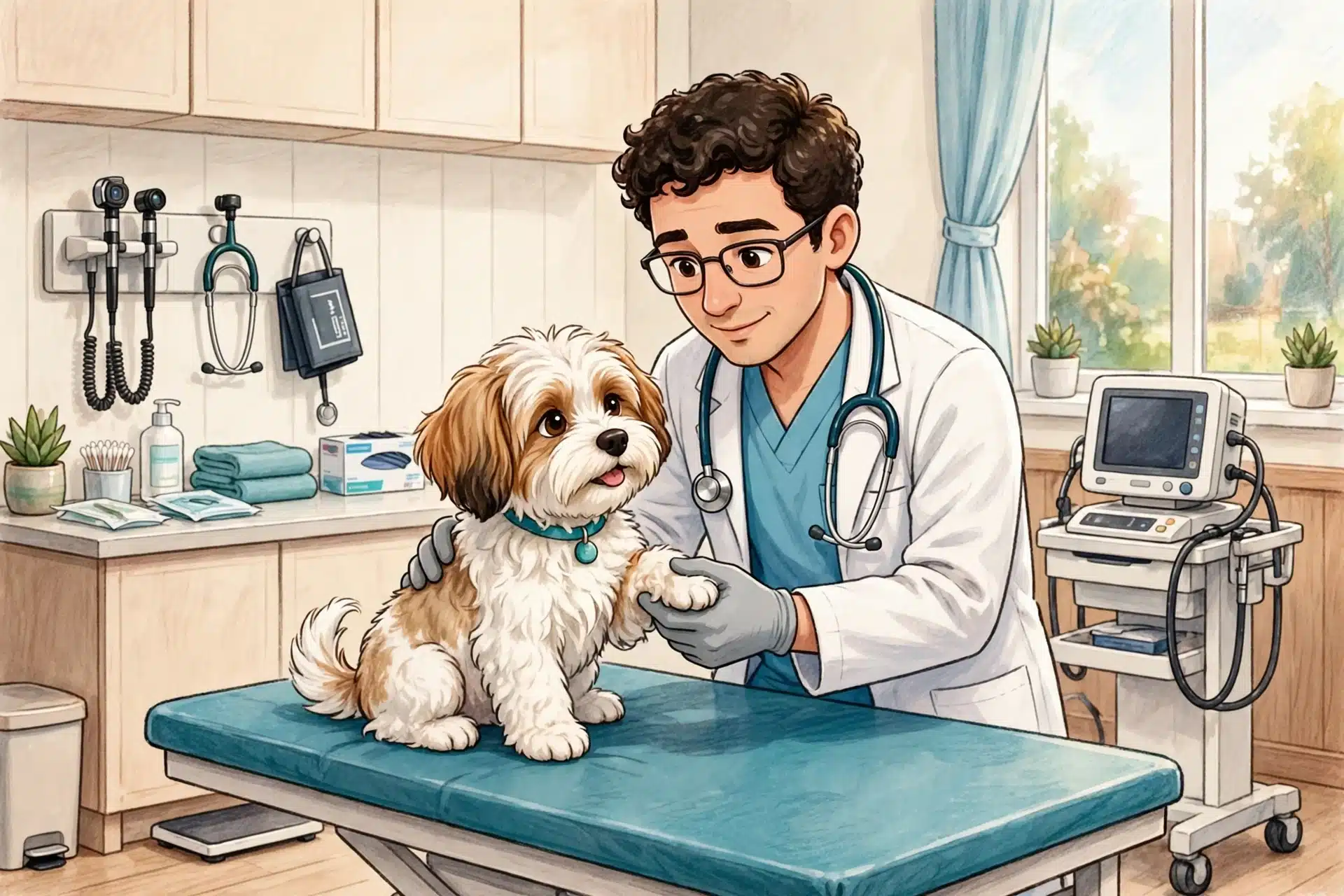
Knees, eyes, and heart come first because they cover the conditions that actually show up in the breed. Patellar luxation is the kneecap slipping out of its groove. It’s painful and often needs surgery. CAER eye exams catch cataracts and progressive retinal issues early. Cardiac screening rules out inherited murmurs.
When both parents pass all three, results earn a CHIC number from OFA. That number means the breeder completed the required panel and agreed to publish results, pass or fail. Ask for it.
Why Liver Shunt, Patellar Luxation, and Eye Issues Come Up So Often
These three conditions appear in almost every Havanese health conversation because they’re the breed’s most documented problems. A liver shunt is a blood vessel bypass that keeps toxins circulating instead of filtering them. Signs can be subtle: poor growth, odd behavior after meals. Some of it is genetic, so parent screening matters, but a shunt can also appear in puppies from fully tested parents.
That’s why testing lowers risk. It doesn’t erase it. A breeder who says “we’ve never had a problem” without results is describing luck, not prevention.
Clinical Screening Versus DNA Results: Keeping the Two Separate
DNA tests are useful, but they don’t replace hands-on exams. A patella check happens in the vet’s hands. An eye exam happens through a specialist’s lens. No cheek swab predicts either one, and OFA sets minimum ages for a reason: young dogs can pass tests that later fail.
So when you run your havanese health questions past a breeder, ask which results are clinical exams and which are genetic. Any breeder worth your deposit, including small programs like Sage Puppies, can show the difference in writing.
Step 2: How to Verify a Breeder’s Health Claims Before You Pay
A serious breeder hands you the parent’s registered names before you ask. That’s your key to checking every claim yourself. Here’s the quick version of how to verify health testing claims:
- Get the dam and sire’s registered names and any testing paperwork in writing.
- Search each parent in the OFA database and read the actual results.
- Check for a CHIC number and confirm the required Havanese tests are there.
- Ask for references and call them before you send a deposit.
If a breeder stalls at any step, keep looking. Choosing a Havanese breeder is easier when everything checks out on paper first.
Running the Parent Names Through the OFA Database
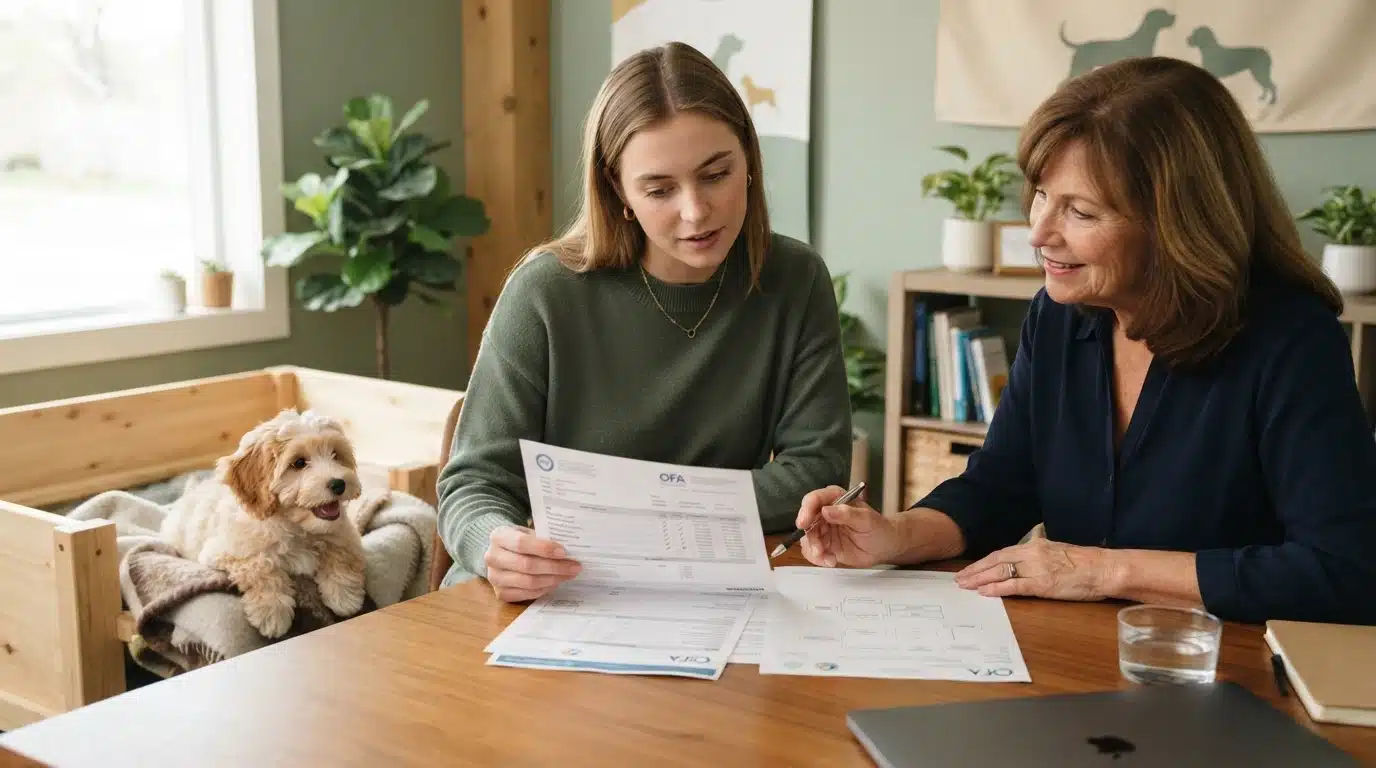
The OFA, or Orthopedic Foundation for Animals, keeps a free public database of test results. Go to OFA’s site, enter the parent’s registered name, and pull up their record. You want to see hip and patella results plus eye exam entries for each parent. Match the name exactly, since kennel names look alike. Screenshot anything you find and keep it with your puppy records.
What a CHIC Number Actually Tells You
A CHIC number from the Canine Health Information Center means a dog completed every test the breed club requires. For the Havanese, that means OFA hips, OFA patellas, and annual CERF eye exams, as the Havanese Club of America notes. Here’s the catch: a CHIC number does not mean the results are normal, only that the tests were done and posted. So read the actual scores, not just the number.
Reputation Signals That Back Up the Paperwork

Paperwork and reputation should tell the same story. Ask for two or three families who bought puppies from recent litters, then call them. Good signs: the breeder answered Havanese health questions easily, shared vet records without prompting, and stayed in touch after pickup. Weak signs: excuses about missing results, pressure to pay fast, or parents you cannot trace at all. A written contract covering the puppy’s return terms matters too.
At Sage Puppies, documentation on both parents is part of the matching conversation, so you see results before a deposit is ever discussed.
Step 3: Which Vaccinations and Deworming Should the Puppy Have Before Pickup?
A healthy 8-week-old Havanese should already have its first round done. Before pickup, expect:
- First DHPP shot at 6 to 8 weeks of age
- Deworming started at 2 to 3 weeks and repeated every 2 weeks
- Written records from a licensed veterinarian, not breeder notes
The AVMA recommends starting the vaccine series at 6 to 8 weeks, because the immunity puppies get from their mother fades at different times in different pups.
What the Puppy’s Vaccine Record Should Show
The record is a small printed or digital sheet, and the details matter more than the paper. It should list the DHPP vaccine (distemper, adenovirus, parainfluenza, parvovirus), the date given, the vaccine manufacturer, and the sticker or serial number from the vial. It must also show the vet’s clinic name and license number. Most Havanese puppies go home around 8 to 10 weeks, before the 10 to 12 week booster, so at least one documented DHPP dose is the baseline. Ask for the health records before you pay a deposit, not after. If the dates don’t line up with the puppy’s stated age, that’s a red flag.
Deworming, Parasite Prevention, and the Vet Visits Behind the Record
Deworming starts earlier than vaccines. Puppies typically begin at 2 to 3 weeks of age and repeat every 2 to 3 weeks until about 12 weeks, because roundworms and hookworms pass from mother to pup before birth, according to Shatto Veterinary Center. Ask which dewormer was used and whether a fecal test was run. Many breeders test a stool sample from the litter; a negative result is good news, but roundworm eggs can shed intermittently, so plan a fecal check at your puppy’s first visit too.
The Pre-Purchase Exam: Your Own Veterinarian’s Look
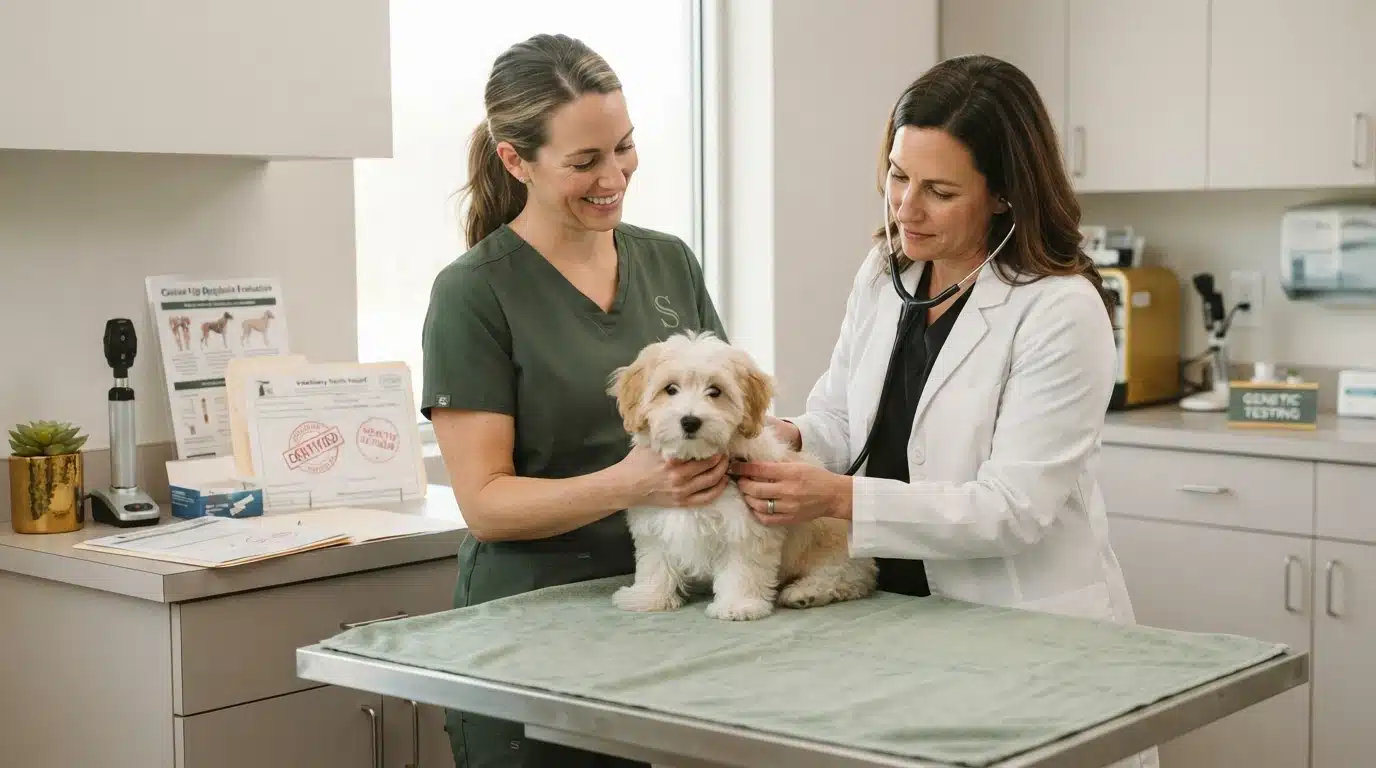
Many contracts require a vet exam within 48 to 72 hours of pickup. Use it. Your veterinarian checks the heart for murmurs, eyes, ears, knees, and overall condition, and can confirm the vaccine schedule. For one Havanese health question to raise there, ask whether the ears show early infection signs, since drop-eared breeds collect moisture easily.
Step 4: Questions About the Litter, the Home, and the Breeder’s Support
The best breeders welcome these questions. If someone gets defensive or vague, that tells you as much as any answer.
Meeting the Parents and the Whole Litter
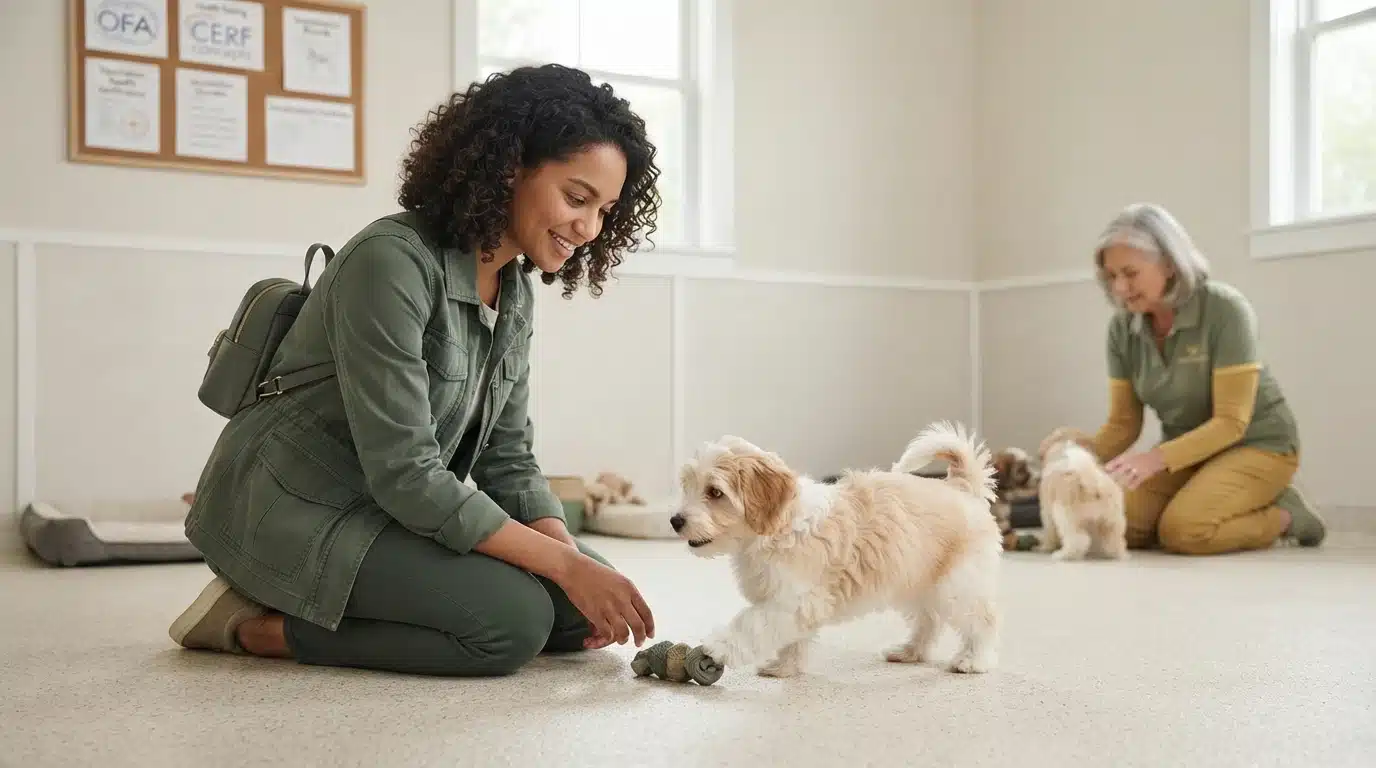
Ask to meet the mother, at least. A temperament check matters here: friendly, calm parents raise friendly, calm puppies. If the father lives elsewhere, ask for his health testing results in writing and a photo or video of his temperament. Watch the whole litter together. You want alert, playful puppies with clear eyes, clean coats, and no limping or head shaking. Ask how many litters the mother has had, and how many per year. A responsible Havanese breeder keeps that number low because a mother needs recovery time between litters. One warning sign: a breeder who only shows you one or two puppies and will not let you see the rest of the litter or the space they live in.

Socialization and the Age You Take Your Puppy Home
Ask what the puppies have experienced by eight weeks. Good breeders expose them to household sounds, different surfaces, gentle handling, and new people, following early socialization windows. Ask how many people and children the puppies meet each week, and whether they have started crate or potty training. Havanese are companion dogs, so early human contact shapes their whole personality. Ask exactly when puppies go home. Most go between 8 and 10 weeks; earlier is a red flag because puppies learn bite control and confidence from littermates.
Support After the Sale and the Paperwork That Comes With It
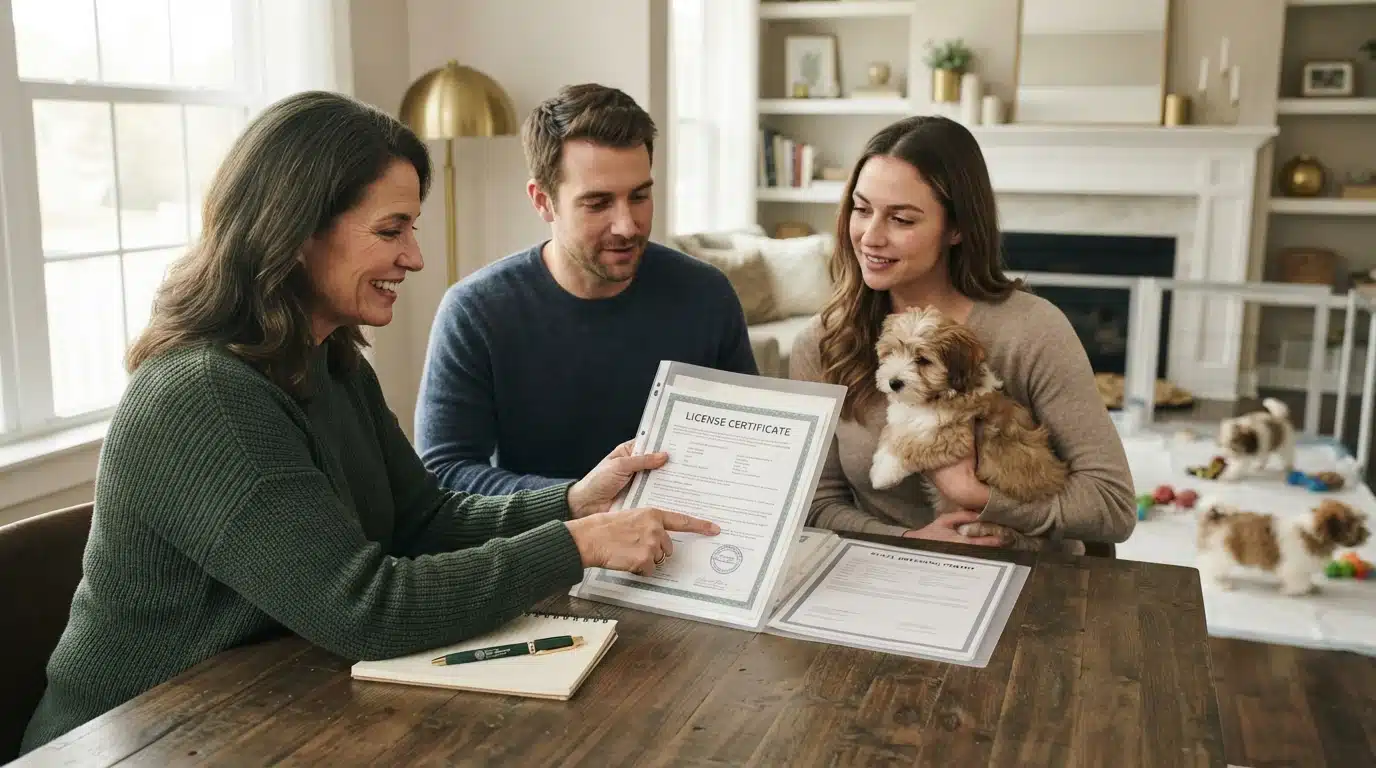
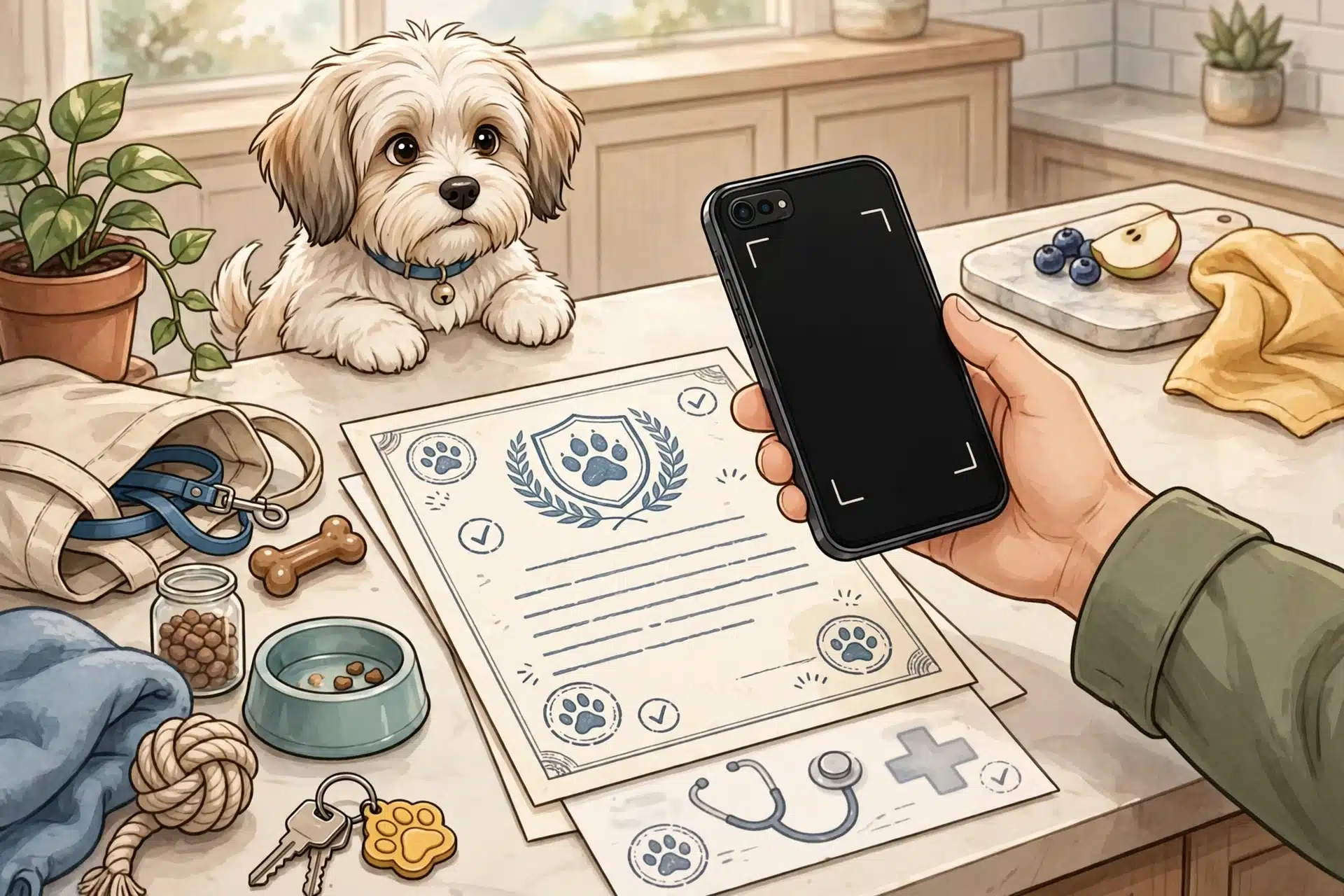
Ask what documents you get on pickup day. The checklist should include a signed purchase contract, the puppy health certificate from a licensed vet, vaccination and deworming records, and copies of the parents’ OFA or CHIC results. Ask whether the breeder offers a health guarantee and how long it lasts, and what the contract requires, such as a vet exam within 48 to 72 hours of pickup. Also ask for two or three references from past puppy families, and call them. Breeders who are proud of their paperwork, including the buyer records Sage Puppies sends Utah families home with, rarely have anything to hide.
Common Mistakes to Avoid
Mistakes That Let a Weak Answer Slide Through
The biggest error is accepting “my dogs are healthy” as an answer. Health claims mean nothing without paperwork. If a breeder says the parents passed their eye exam, ask for the certificate number and look it up yourself.
Another common slip: confusing a puppy health certificate with parent testing. A certificate is one vet visit. OFA health testing Havanese parents is a screening program that takes months. A breeder who shows only a certificate has not shown you the patella and hip results or the eye exam on cataracts.
Also, don’t stop at the deposit. Ask whether the breeder does a pre-purchase exam before you pay anything.
Mistakes That Make a Good Breeder Look Bad
Good breeders will ask you questions, sometimes a lot of them. Treating the interview like an interrogation is a mistake. If a breeder wants to know about your work hours and your yard, that’s choosing a Havanese breeder the right way.
Watch your tone on vaccines too. Questioning the puppy vaccination and deworming records as if the breeder invented them can sour a conversation. Ask to see the dates, not whether the vet was right. For grooming prep, our Havanese puppy grooming guide covers the schedule before pickup. Walking into the call with your Havanese health checklist ready shows the breeder you’re serious, not difficult. That’s the impression you want.

Use this checklist at every breeder you contact, including us. At Sage Puppies, every Havanese comes with documented health testing, an owner-managed matching process, and honest answers to each question above. Ready for the next step? Start our application and ask us anything on the list. We welcome the scrutiny.
Frequently Asked Questions
Q1: What health tests should Havanese parents have before breeding?
Patellar luxation, CAER eye exams, and cardiac screening at 12 months or older, with results published in the OFA database. Hip evaluation and hearing testing are also recommended, and completing the panel earns a CHIC number.
Q2: How can I tell if a Havanese breeder is reputable and health-conscious?
Ask for each parent’s registered name, look up their OFA results yourself, and confirm a CHIC number exists. Then call two or three references. A good breeder shares records willingly and never pressures you to pay quickly.
Q3: Which vaccinations and deworming should a Havanese puppy have before pickup?
Expect a first DHPP shot at 6 to 8 weeks, plus deworming starting at 2 to 3 weeks and repeated every 2 to 3 weeks. Records should come from a licensed veterinarian, not handwritten notes.
Q4: What records should I get when I pick up my Havanese puppy?
Bring home:
- A signed purchase contract
- A vet-issued puppy health certificate
- Vaccination and deworming records
- Copies of the parents’ OFA or CHIC results
Q5: Does a CHIC number guarantee the parents are healthy?
No. It only confirms the required tests were completed and published. Always read the actual scores, because a CHIC number can accompany a failing result.
Q6: When should my Havanese puppy see a vet after coming home?
Within 48 to 72 hours. Many purchase contracts require this exam, and your veterinarian can verify vaccines, check knees and heart, and run a fecal test.
Wrapping Up: Your Health Checklist for the Next Conversation
Your Havanese health checklist comes down to three things. First, parent testing: patella and hip results, CAER eye exams, and cardiac screening, all verifiable in the OFA database. Second, puppy records: a vet-issued health certificate plus complete puppy vaccination and deworming records. Third, the breeder’s own behavior: easy answers, real references, and a written puppy purchase contract and health guarantee.
None of this is about distrusting breeders. Choosing a Havanese breeder goes well when both sides treat paperwork as normal, and good breeders expect exactly these questions. A CHIC number, a printed vaccine sheet, and a calm, documented conversation protect you and the puppy alike.
Bring the printed checklist to your next call, and compare what each program shows you. You can also browse our available Havanese puppies to see what documented testing looks like in practice.