Quick Summary: Cavapoos are usually the easier choice for first-time owners because their Cavalier side tends to make them calmer, quieter, and eager to please. Cockapoos are equally trainable but often need more exercise, focus, and patience because of the Cocker Spaniel side’s energy and independence. Both need daily activity, reward-based training, regular grooming, and health screening, while parent breeds create tendencies rather than guarantees.
Two puppies can look nearly identical, wiry-haired and wide-eyed, and still land at opposite ends of the easy-to-train spectrum. The difference usually traces to which spaniel crossed the Poodle. The Cavapoo or cockapoo temperament question comes down to this: the placid Cavalier King Charles Spaniel on one side, the merry, higher-drive Cocker Spaniel on the other. So if you want the easier starting point, a calmer, more settled Cavapoo usually suits a first-time owner best. A Cockapoo often rewards a confident, playful handler with faster progress in active training.
The problem is that the two mixes look so alike that many families choose on appearance alone, then inherit daily exercise, barking, and training demands that clash with their household.
This guide compares parent-breed traits, energy, trainability, grooming, and household fit, so your choice matches your routine, not a photo.
Cavapoo vs Cockapoo Temperament: Side-by-Side Comparison
| Cavapoo | Cockapoo | |
|---|---|---|
| Temperament | Gentle, affectionate, people-oriented, usually calm and attentive | Playful, sociable, outgoing, often with more independent streak |
| Energy Level | Moderate; daily walks plus short play sessions | Moderate to high; wants longer walks and mental games |
| Trainability | Eager to please and responsive to reward-based work | Very trainable and often highly driven, but needs more focus |
| Barking Tendency | Low to moderate; often described as a quiet dog | Moderate; more vocal when under-stimulated |
| Grooming | Regular brushing plus routine professional trims | Regular brushing plus routine professional trims |
| Best For | First-time owners, calmer homes, seniors, apartment living | Active households, owners who enjoy interactive training |
How Cavapoos and Cockapoos Compare
Cavapoo
A Poodle and Cavalier King Charles Spaniel cross, the Cavapoo is known for a gentle, people-oriented temperament with moderate energy. It suits first-time owners, seniors, calmer homes, and apartment living. Its cavapoo personality traits lean affectionate and attentive, which makes reward-based training feel easy.
Key strengths
- Usually calm and quiet, with low to moderate barking
- Eager to please and responsive to reward-based work
- Content with daily walks plus short play sessions
Cockapoo
A Poodle and Cocker Spaniel cross with a long history as an intentional Poodle mix, the Cockapoo brings a playful, outgoing temperament. It fits active households and owners who enjoy interactive training. Cockapoo personality traits include sociability and a drive that wants both exercise and mental games.
Key strengths
- Very trainable and often highly driven
- Moderate to high energy for longer walks and play
- Confident and sociable with people
Why the Parent Breeds Shape Temperament
A Cavapoo or Cockapoo inherits its temperament from two very different spaniels crossed with a poodle. Knowing what each parent contributes helps you predict the adult dog before you meet the litter.
The Cavalier Contribution in the Cavapoo
The Cavalier King Charles Spaniel was bred to be a lap companion, so cavapoo personality traits lean soft and people-focused. Cavaliers score as adaptable, affectionate companions in AKC breed standards, content to follow their person from room to room. That gives most Cavapoos a gentler energy level and a strong need for closeness.
The Cocker Contribution in the Cockapoo
The Cocker Spaniel is a hunting breed, which is where cockapoo personality traits like drive and playfulness come from. Cockers were developed to flush birds, so they carry more stamina and a busier nose. The AKC describes the breed as happy, smart, and versatile, traits that often show up as higher exercise needs in a Cockapoo.

Tendency Versus Individual Puppy
Parent breeds create tendencies, not guarantees. Each puppy blends those instincts differently, so early socialization and reward-based puppy training shape the adult as much as lineage does. No responsible breeder can promise a fixed personality, only a well-started foundation.
Internal links: I’ll link only if a sentence fits naturally. The grooming page fits the Cockapoo/Poodle coat… not really temperament. Skip internal link. Two external links used, fine. Word count ~215. Good.
Energy Levels and Daily Exercise Needs
Are Cockapoos more energetic than Cavapoos? Usually a little, yes. Cockapoos often carry more of the working Cocker Spaniel’s drive, while Cavapoos lean toward the calmer Cavalier King Charles Spaniel side. Both are moderate-energy Poodle cross breeds, and both fit small breed exercise needs of roughly 30 to 60 minutes a day.
Typical Daily Routine for Each Mix
A workable day looks similar for either dog:
- Cockapoo: a brisk 30-minute morning walk, a short fetch session, and evening play
- Cavapoo: two shorter walks and a few rounds of indoor games
- Both: puzzle toys and a 10-minute training burst for mental work
Neither breed needs hours of running. Consistent daily activity matters more than intensity.
What Under-Exercise Looks Like in Each
An under-exercised Cockapoo usually turns restless and inventive, chewing shoes or pacing between rooms. A bored Cavapoo tends toward clinginess, whining, and shadowing you from sofa to kitchen. Both can develop nuisance barking. The fix is the same for each: more walks, more play, and more brain work. Grooming time doubles as bonding, and brushing after walks keeps coats tidy, a habit that pairs naturally with regular Cavapoo grooming.
Which Is Easier to Train: A Cavapoo or a Cockapoo Puppy
Neither mix is hard to train, but most first-time owners find the Cavapoo slightly easier. Both inherit the Poodle’s quick learning, yet the Cavapoo’s Cavalier side makes it softer and more eager to please, while the Cockapoo’s Cocker Spaniel side adds drive and stubborn streaks. That difference shapes how each puppy responds during reward-based puppy training.
How Both Mixes Learn
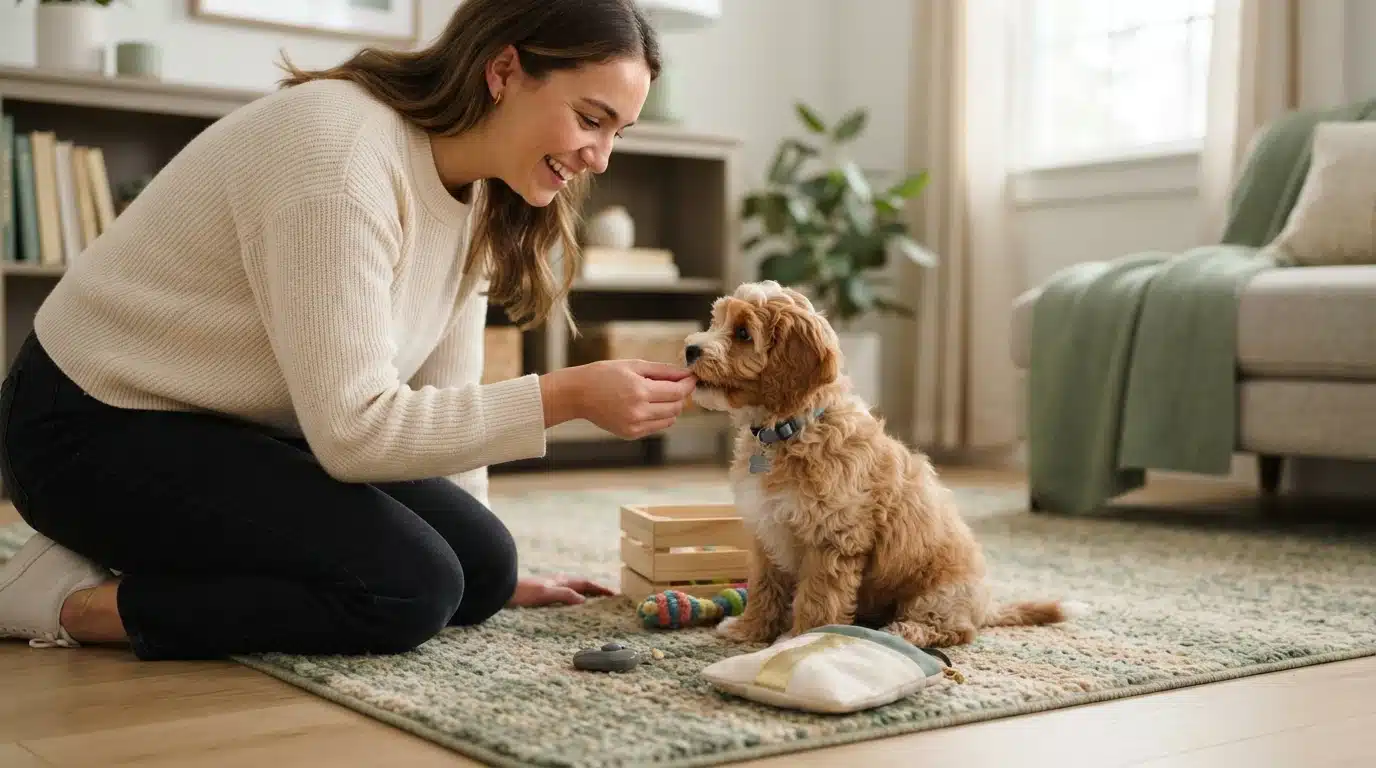
Both breeds score well on trainability because they share the Poodle, one of the smartest dogs alive. Expect fast progress with treats, praise, and short sessions. House training usually clicks within a few weeks for either mix, and both love learning tricks. The main requirement is consistency, not skill.
Where the Two Styles Diverge
The Cavapoo works to keep you happy, so it picks up cues quickly and rarely tests limits. The Cockapoo is just as smart but more curious, and a Cocker’s nose can pull its attention off you mid-session. Neither is defiant; the Cockapoo simply needs more patience and shorter, more frequent reps.
Training for First-Time Owners
Keep sessions to about 10 minutes, reward every success, and practice in different rooms before adding distractions. A simple four-week starter plan: week one, name and crate; week two, sit and house training; week three, come and loose-leash walking; week four, stay and polite greetings. If you want a Cavapoo puppy raised with this kind of early socialization, Sage Puppies matches each puppy to your household. Start these habits the first day your puppy comes home.
Barking, Alertness, and Apartment Living
Which is quieter in an apartment? Neither breed is loud by default, but Cockapoos often bark more at door sounds, while Cavapoos bark more from separation worry. Early training keeps both manageable:

- Reward quiet moments with treats and praise
- Teach a “settle” cue on a mat
- Mask hallway noise with white noise or a radio
- Never yell, which can sound like you are joining in
Typical Vocal Behavior
Both mixes usually bark to alert you, not to be difficult. The Cockapoo leans toward the Cocker Spaniel’s watchful streak, so doorbells and footsteps often get a short burst of alarm barking. The Cavapoo leans toward the Cavapoo’s Cavalier side, which stays softer-spoken but can whine when left alone. Neither is a yappy breed by nature, yet individual puppies vary a lot. Barking is a tendency you can shape, not a guarantee either way.
Small Homes and Shared Walls
Apartment life suits both breeds because of their size and moderate energy, but noise rules matter. A puppy for apartment living plan should include early sound socialization: door slams, elevators, neighbors’ voices, all paired with treats. Structure and positive training reduce most excessive noise, as one Cavapoo barking guide notes. Start this on day one.
Grooming, Coat Care, and Allergy Expectations
Coat Type and Brushing Rhythm
Both breeds inherit the Poodle’s wavy or curly coat, so neither sheds much visibly. The tradeoff is matting. Loose hair stays trapped in the coat, so you need to brush three to four times a week, or daily during coat changes. Plan on a professional groom every six to eight weeks for a trim, and start brushing your puppy early so it becomes routine.

Allergies and Shedding Reality
No dog is truly hypoallergenic, and these Poodle cross breeds are no exception. Allergy triggers are dander and proteins, not just hair. Curly coats usually shed least, while straighter, Cavalier-like coats shed more, so ask a breeder which coat your puppy leans toward. If allergies run in your family, spend time with the litter first. As a pet health guide notes, generation affects shedding most, so litter visits beat breed promises.
Health Screening and Lifespan Expectations
Temperament is partly inherited, but so is health. The same parents who shape a puppy’s cavapoo or cockapoo temperament also pass along health risks, so screening matters before you fall for a face.
Parent-Line Health Risks
Cavalier King Charles Spaniels carry risks for mitral valve disease, a heart condition, and syringomyelia, a neurological problem. Cocker Spaniels can face ear infections, eye disorders, and hip issues. Poodles add risks for progressive retinal atrophy and patellar luxation. Good breeders test parent dogs for these conditions to lower the odds, though no test removes every risk. Both crosses often live around 12 to 15 years, typical for small Poodle cross breeds.
What Health Records to Ask For
Ask for puppy health testing records on both parents before you place a deposit. You want a cardiac exam from a board-certified cardiologist, an eye exam from a veterinary ophthalmologist, and patella evaluation. Request OFA or similar registry numbers so you can verify results yourself. A breeder who shares these documents openly is showing you how they work, not just what they sell. If records are vague or “pending,” treat that as an answer. Any breeder you consider, including small Utah programs, should provide them without prompting.
Choosing a Breeder and a Specific Puppy
Questions That Reveal Temperament and Quality
Ask to see the puppy health testing records for both parents, including heart, eye and hip clearances. Then ask who raised the litter and where. Puppies handled daily in a home tend to settle into family life faster than kennel-raised litters. A good breeder will also describe each puppy’s temperament, not just its coat color, and will match you rather than let you pick on looks alone. Ask what the parents are like with children and strangers. Their answers trace straight back to the cavalier or cocker side of the family.
Local Pickup and Nationwide Delivery
If you are comparing Cavapoo puppies for sale in Utah, visit in person when you can. Meeting the litter shows you how the puppies react to new people, which tells you more than any listing photo. Families outside Utah can still do this well by video: ask for a live call so you can watch the puppy move, play and respond to handling. Sage Puppies offers local pickup in South Jordan and nationwide delivery with owner-managed matching, so distance does not decide temperament for you. Confirm travel details, health paperwork and timing before any deposit.
Tip: Whatever breeder you choose, insist on meeting the parents or seeing them on video. That is the closest thing to a temperament preview you will get.
Which Should You Choose: Cavapoo or Cockapoo
Both breeds are wonderful. The right answer depends on how much exercise time you have, and which parent-breed temperament sounds more like your household. Neither is objectively easier, so use the cavapoo or cockapoo temperament differences below as your guide.
Choose a Cavapoo If
Pick a Cavapoo if you want a gentler, more people-focused companion. The Cavalier King Charles Spaniel side brings softness, affection and a strong desire to stay close to you. Cavapoos usually need less intense play than Cockapoos, so they suit quieter homes, retirees and families with younger children. They tend to handle apartment living well. If you browse Cavapoo puppies for sale in Utah, ask breeders how each puppy leans within its litter.
Choose a Cockapoo If
Pick a Cockapoo if you want more energy, playfulness and drive. The Cocker Spaniel side makes these dogs keen, curious and eager to work, which shows up as quicker fetch games and a real love of training. Cockapoos often suit active families, hikers and owners who enjoy daily sessions of learning together. Expect a dog with slightly higher stamina and a stubborn streak that rewards patient, positive training. Match the dog to your pace, and either breed thrives.

Still torn between the two? Sage Puppies raises Cavapoo puppies with owner-managed matching, so you can compare temperaments, ask questions, and apply in one place. Start the application today and reserve your Utah pickup or nationwide delivery spot.
Frequently Asked Questions
Q1: Which is easier to train, a Cavapoo or a Cockapoo puppy?
Most first-time owners find the Cavapoo easier. Its Cavalier side makes it eager to please, while the Cockapoo’s Cocker drive adds stubborn streaks and a nose that pulls focus during sessions.
Q2: Are Cavapoos easier for first-time dog owners?
Usually yes. Cavapoos are calmer, quicker to settle, and more focused on pleasing you, which suits quieter homes and apartment living. Cockapoos still work well for owners ready for higher energy.
Q3: Are Cockapoos more energetic than Cavapoos?
Usually a little. Cockapoos carry more of the working Cocker Spaniel’s stamina, so they want longer walks and more games. Both fit small breed exercise needs of roughly 30 to 60 minutes daily.
Q4: Which mix barks less in an apartment?
Cavapoos often stay quieter. Cockapoos alert-bark at door sounds, while Cavapoos mostly whine when left alone. Sound socialization and a settle cue keep either manageable.
Q5: Which breed lives longer?
Both often reach 12 to 15 years. Ask for puppy health testing records on both parents, including cardiac and eye exams, to protect those odds.
Conclusion
The Cavapoo vs Cockapoo temperament question comes down to parent breeds. The Cavalier side makes most Cavapoos calmer, quieter, and easier for a first-time owner, while the Cocker side gives Cockapoos more drive and stamina. Neither mix is difficult; both need daily exercise, reward-based training, and consistent grooming. Remember the core rule: parent breeds create tendencies, not guarantees, so health records, early socialization, and honest breeder matching matter as much as the mix you pick. Match the puppy to your household’s pace, verify health testing on both parents, and either breed will settle into family life beautifully.