
Quick Summary: Don’t trust ‘home-raised’ claims without proof-ask to see where the puppies live, meet the mother, and review health records and socialization details before reserving. Sage Puppies, for example, raises Havanese, Havapoo, and Cavapoo breeds in South Jordan, Utah, and provides clear documentation, live video tours, and specific health testing for parents. A breeder should welcome questions about daily routines, vet records, and how they match puppies to your family’s lifestyle, not rush you into payments or avoid direct answers.
A listing can call puppies home raised, but proof matters. Can the breeder show you where the puppies live, introduce the mother, explain daily social time, and share clear health records?
Many families find home raised puppies near them through polished photos and warm promises. The hard part is knowing which claims reflect real care before you place a reservation. A clean website alone cannot answer that question.
This checklist helps you verify home raised puppies with simple, direct questions. You will learn what to look for in the home setting, parent records, puppy routines, breeder communication, pickup plans, and delivery details.
Sage Puppies raises Havanese, Havapoo, and Cavapoo puppies in a home setting in South Jordan, Utah. We know thoughtful families need facts, not pressure, when choosing home raised puppies for a lasting companion.
1. Confirm That the Puppies Are Really Raised in a Home
Ask Where the Litter Was Born and Raised
Ask this before you reserve a puppy: “Where were the puppies born, and where do they spend each day now?” A clear breeder will answer plainly and welcome follow-up questions.
Ask for a live video call, or visit if you are close enough. Utah families can ask to see the space in South Jordan. Families using delivery can request a real-time walkthrough.
- Ask to see the mother with her litter.
- Ask where the puppies sleep, play, and eat.
- Ask who handles them each day.
- Ask what normal household sounds they hear.
A father may live elsewhere, but the mother should be present and calm with her puppies. The AKC’s breeder guidance also advises buyers to look at both the litter and its environment.
A polished photo is not proof. A live call that shows the puppies, mother, and living area is far more useful.
Look for Evidence of Ordinary Family Life
“Home raised” should mean more than puppies inside a building. Look for signs of safe, daily contact with people and age-appropriate household life.
| What to look for | What it can show | Follow-up question |
|---|---|---|
| Clean puppy area and fresh water | Regular care and hygiene | “How often is this space cleaned?” |
| Toys, beds, and play space | Room to explore and rest | “What toys do they use now?” |
| Calm handling by adults | Familiarity with people | “Who handles each puppy daily?” |
| Normal home sounds | Early exposure to real life | “Have they heard vacuums, doors, or visitors?” |
The puppies do not need constant chaos. They need gentle, steady exposure and enough rest. Ask how the breeder responds if one puppy seems shy or needs extra support.
A responsible breeder should also ask about your home, schedule, and children. That two-way conversation is a good sign, as AKC notes.
If a breeder avoids live questions, rushes a deposit, or will not show the puppies’ day-to-day setting, pause before moving forward.
Also Read: 10 Adorable Havapoo Colors You Need to See (2026)
2. Meet the Mother and Assess the Litter’s Everyday Behavior
Observe the Mother’s Health and Temperament
Ask to meet the mother in her normal space, or request a recent live video call if you are arranging delivery. A good visit shows far more than a polished puppy photo.
Look for a mother who is comfortable near her family, alert, and able to settle after greeting you. She may be protective of young puppies, so do not expect instant affection. Still, persistent fear, panic, or uncontrolled aggression deserves a clear explanation.
Ask the breeder to show:
- Her current coat, body condition, eyes, and movement
- Health-testing records for both parents
- How she responds to familiar adults and normal household activity
- Where she rests and spends time away from the litter

A calm mother is one useful clue, not a promise of a puppy’s adult personality. Early care, handling, and each puppy’s own traits also matter.
Early experiences shape how puppies respond to people and new settings. The AVMA review of puppy socialization notes that positive exposure should begin by or before three weeks of age.
Watch the Puppies Before Choosing a Puppy
Do not select the puppy that runs over first. Watch the litter together for several minutes before anyone picks one up.
Healthy play has variety. Puppies may wrestle, nap, explore, chew a toy, then return to their littermates. Look for clean bedding, fresh water, enough room to move, and kind handling from the breeder.
Use this quick check:
| What you see | What it may show | Follow-up question |
|---|---|---|
| Puppies recover after a new sound | Normal curiosity | What household sounds do they hear daily? |
| A puppy hangs back, then explores | Thoughtful confidence | How do you support shy puppies? |
| Rough play pauses and resumes | Normal litter learning | How do you guide safe play? |
Avoid judging a puppy during one sleepy or busy moment. Ask for videos from different days.
A breeder should know each puppy’s usual energy level and match it to your home, children, and routine.
Also Read: Family-Raised Puppies for Sale Near Me: What to Look For
3. Verify Parent Health Testing and the Puppy’s Veterinary Records
Ask for Breed-Relevant Testing for Both Parents
Ask to see the actual results for the puppy’s mother and father before you reserve. A statement like “our dogs are health tested” is not enough.
Testing should fit the parent breeds. For Havanese, Havapoo, and Cavapoo litters, ask which DNA, eye, heart, joint, and patella screenings apply to each parent. Mixed-breed puppies need this care from both sides of their family tree.
The OFA CHIC program lists screening protocols by breed and explains that public results help buyers check breeding dogs. A clear report should show the dog’s registered name or microchip number, test type, date, and result.
Use this quick check:
| Ask for | What you should see | Concern to note |
|---|---|---|
| DNA test results | Lab report tied to each parent | A vague “clear by parentage” claim |
| Physical screening | Eye, heart, hip, or patella result where relevant | No date, provider, or dog ID |
| Parent identity | Photos and matching names across records | Reports for a different dog |
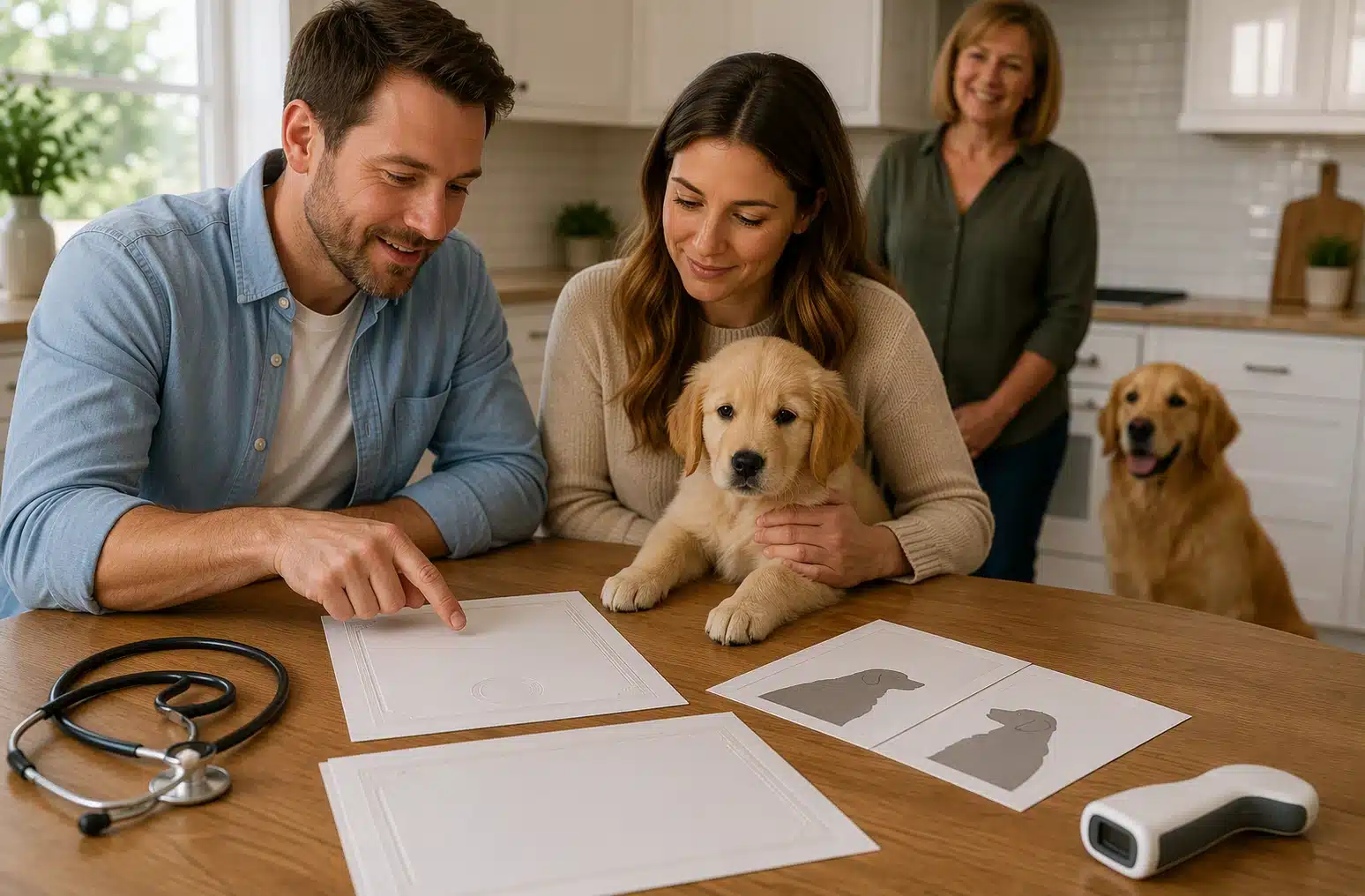
A test result lowers risk. It does not promise that a puppy will never have a health problem.
A careful breeder can explain a carrier result and the pairing used to avoid producing affected puppies. They should not become defensive when you ask.
Review the Puppy’s Take-Home Documentation
Your puppy’s file should make the first vet visit easier, not leave your veterinarian guessing. Request it before pickup in South Jordan or before arranging delivery.
Look for:
- A dated veterinary exam record
- Vaccine and deworming dates, plus product names
- The puppy’s microchip details, if one has been placed
- Feeding instructions and current diet
- Parent health information and registration details, when offered
- A written agreement covering the sale and your next steps
Check that the puppy’s name, birth date, sex, and identifying details match across each record. Ask who performed the exam and when the puppy was last seen.
Do not confuse a vaccine record with a clean bill of health. You want both.
Bring the full packet to your own vet soon after your puppy comes home. Keep digital photos of every page too. Good records let your vet build on the puppy’s early care instead of starting from scratch.
4. Test the Breeder’s Socialization Plan With Specific Questions
Ask What the Puppies Have Actually Experienced
“Socialized” should describe real, calm experiences, not a vague promise. The key window begins early. The American Veterinary Society of Animal Behavior notes that the first three months are especially important for safe exposure to people, places, and everyday stimuli.
Ask the breeder:
- Who handles each puppy, and how often?
- Have puppies met calm adults, children, and healthy dogs?
- Which household sounds have they heard?
- Have they explored different safe surfaces, toys, and spaces?
- Do they ride in a car or rest in a crate?
- How do you respond if a puppy seems unsure?
Look for clear examples and a calm pace. A good plan uses treats, play, rest, and choice. It does not force a worried puppy into noise, crowds, or rough handling.
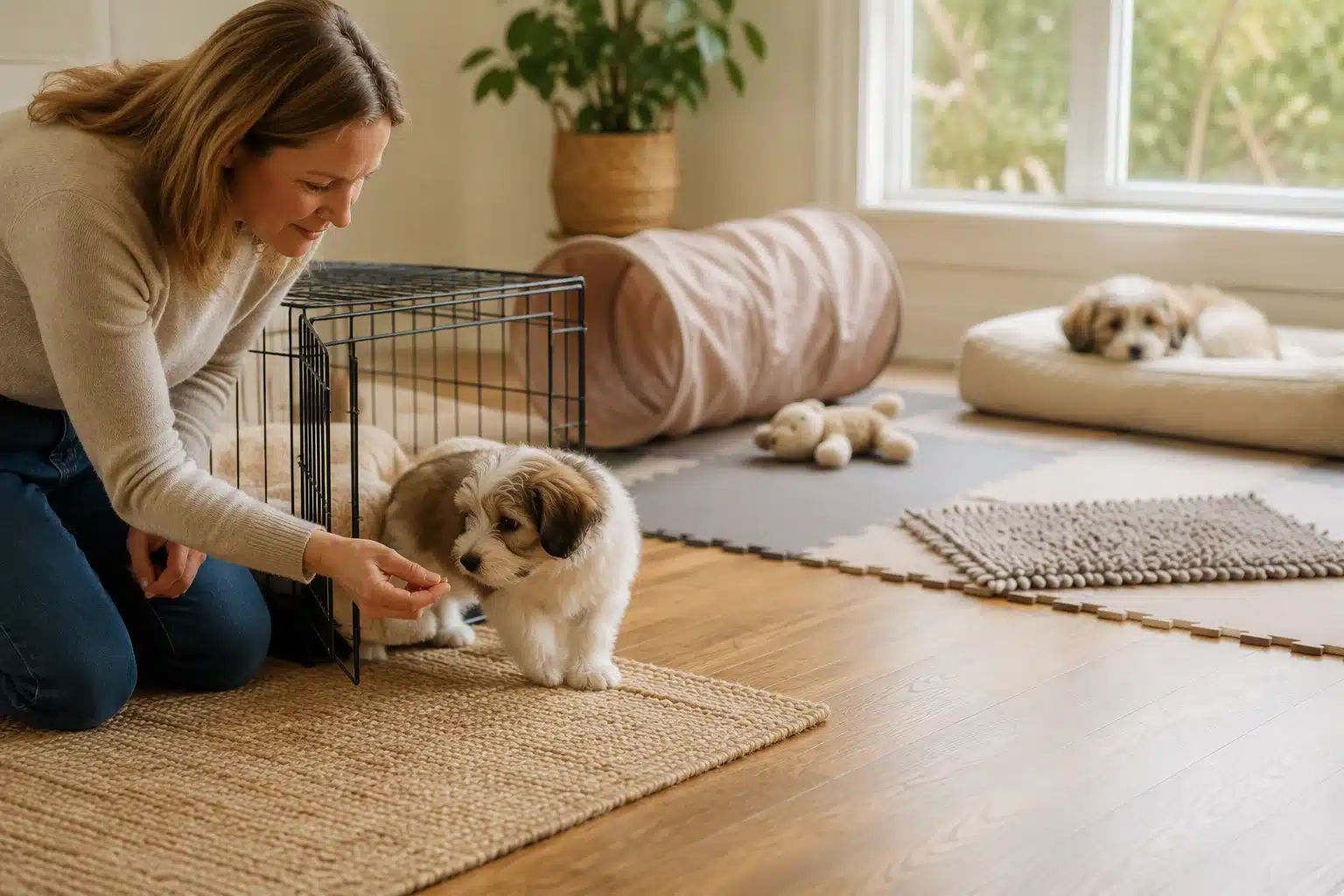
Watch for proof: Ask for recent videos, daily notes, or a simple record of exposures. “They are raised with love” is kind, but it is not a socialization plan.
| Strong answer | Reason to pause |
|---|---|
| Names specific experiences and each puppy’s response | Uses broad claims without examples |
| Explains how puppies get breaks and rest | Treats every puppy the same |
| Uses gentle, reward-based handling | Says fear will be “worked out” later |
Connect the Plan to Your Family’s Home
Tell the breeder what your real life looks like. Mention children, work hours, stairs, visitors, other pets, travel, and whether you need local South Jordan pickup or delivery.
Ask which puppy has shown comfort with the parts that matter most. A quiet family may suit a puppy who prefers gentle play. A busy home needs a puppy that can settle after activity.
- Share your home routine honestly.
- Ask how the breeder matches temperament to that routine.
- Get a handoff plan for the first week.
- Continue short, positive exposures after homecoming.
Slow, positive steps beat overwhelming outings. Watch for relaxed body language and let your puppy set the pace.
Also Read: Family-Raised Puppies for Sale Near Me: Buyer’s Guide
5. Examine the Contract, Reservation Process, and Ongoing Support
Read the Written Terms Before Reserving
Ask for the contract and reservation terms before you send money. A clear breeder will give you time to read them and answer plain questions.
Check these points closely:
- The puppy’s breed, sex, birth date, and identifying details
- Total price, reservation amount, payment due dates, and accepted payment methods
- What happens if the puppy is not a fit, becomes unavailable, or your plans change
- Health records and what paperwork comes home with your puppy
- Any spay or neuter, return, or placement terms
| Item to verify | Clear answer looks like |
|---|---|
| Reservation | Amount, due date, and refund or transfer terms are written |
| Final payment | Balance, deadline, and approved payment method are stated |
| Puppy records | You know which health and care documents you will receive |
| Changes | The process is clear if the planned puppy cannot go home |
Keep copies of every receipt, message, and signed page. The FTC also advises buyers to keep purchase records and review delivery and refund terms before paying online.
Warning: Walk away from pressure to pay by gift card, wire transfer, or cryptocurrency. Those requests are a common pet-scam sign, according to the FTC.
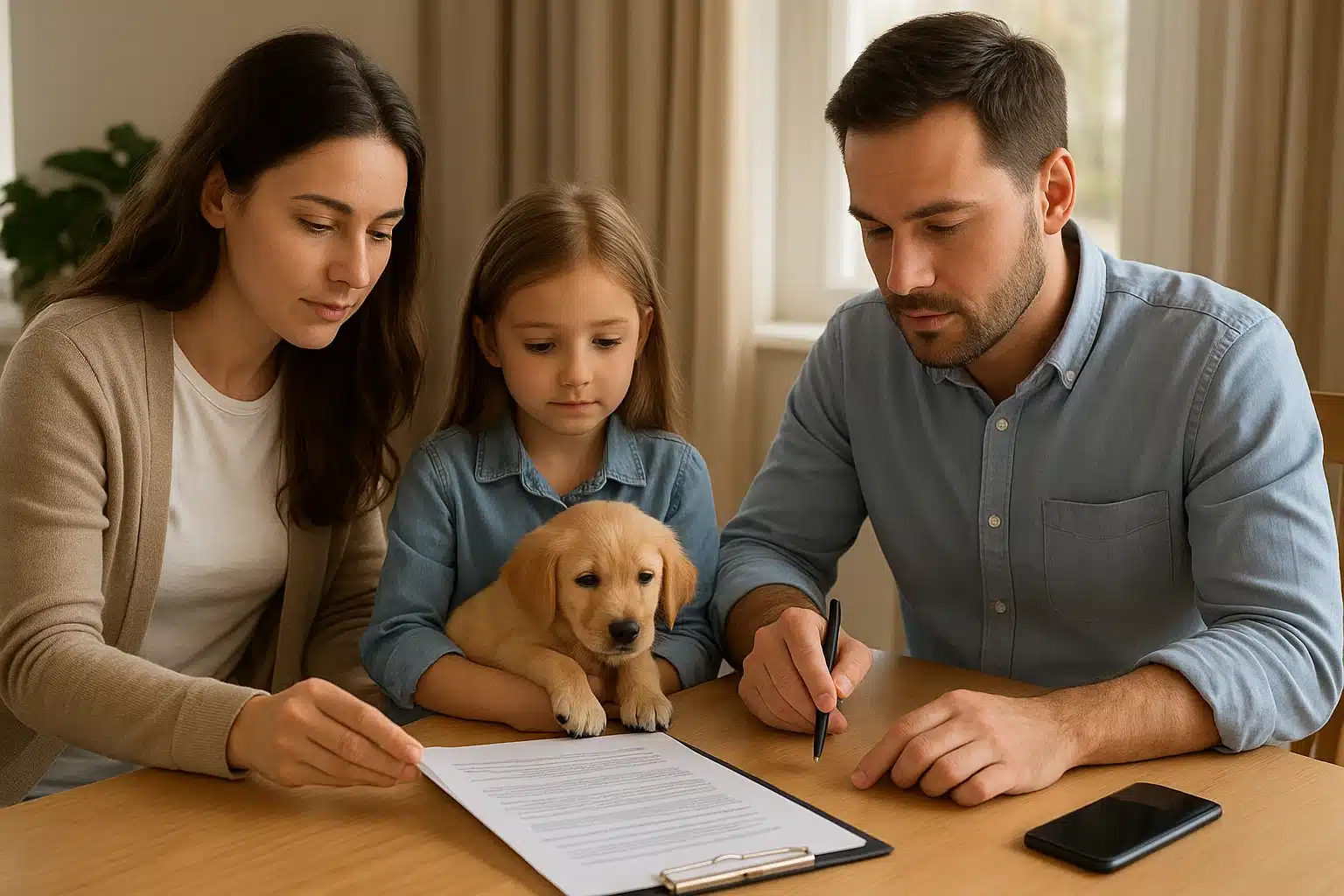
Confirm Pickup, Delivery, and Family Support
Get the handoff plan in writing. For Utah families, ask where and when pickup happens in South Jordan. For delivery, ask who handles transport, how updates work, and what you need ready at home.
Use this short check:
- Confirm the go-home date and pickup or delivery window.
- Ask what your puppy will eat and what routine it knows.
- Request a packing list for the first few days.
- Ask who to contact after homecoming with normal transition questions.
Ongoing support should feel calm and specific, not vague. Sage Puppies families should know the next step, the records provided, and how to prepare for a smooth first night.
A responsible breeder welcomes thoughtful questions before reservation and stays reachable as your puppy settles in.
Also Read: Puppy Care Blog & Resources | Sage Puppies
6. Use a Red-Flag and Evidence Scorecard Before You Decide
Pause When the Evidence Does Not Match the Claim
A polished website or kind message is not proof of home-raised care. Pause if a breeder’s answers, records, and puppy details do not line up.
Give each item a simple score: 2 = clear proof, 1 = partial answer, 0 = missing or unclear.
| Checkpoint | Evidence to request | Red flag |
|---|---|---|
| Parent health | Test results tied to both parents | Broad claim with no records |
| Home raising | Clear account of daily care and social time | Vague answers or rushed replies |
| Puppy records | Vet, vaccine, and deworming details | Records promised later |
| Family fit | Questions about your home and routine | Focus stays on payment only |
| Pickup or delivery | Written plan, timing, and contact details | Last-minute or unclear handoff |
Ask for proof before sending a reservation fee. AKC guidance on breeder questions also stresses asking about parent testing, socialization, records, and ongoing contact.
A single missing item may have a fair explanation. Several gaps point to a pattern. Do not let urgency replace proof.
Make a Decision Based on Consistent, Verifiable Care
Add your score. A strong match usually earns 8 to 10 points and answers follow-up questions with calm, specific detail.
Use this final check:
- Compare every claim with a document, live conversation, or direct observation.
- Confirm the parent names match the health records.
- Read the contract before reserving.
- Make sure the handoff plan works for your family.
- Walk away if you feel pushed, confused, or unable to verify basics.
Health testing should match the breed and the parent dogs, not a generic promise. AKC explains why breed-specific testing matters.
For Utah pickup or nationwide delivery, Sage Puppies should be able to explain the next step clearly and give your family time to decide. The right puppy is worth a careful yes.
Also Read: Family-Raised Puppy Contracts: Key Terms to Review First

Use your checklist, then take the next step with Sage Puppies. Our South Jordan, Utah program raises Havanese, Havapoo, and Cavapoo puppies in a home setting with health-tested parents and clear family support. View available puppies, ask direct questions, and choose local pickup or nationwide delivery.
Frequently Asked Questions
Q1: How do I verify family-raised puppies near me?
Ask for a live visit or video call showing the puppy’s daily space, mother, and routine. Review parent health records, socialization notes, and vet paperwork. Clear answers matter more than polished photos.
Q2: Can I meet the puppy’s mother?
You should ask. A breeder may limit contact to protect the litter, but they should explain why and share current details about the mother’s care and temperament.
Q3: What records should come with my puppy?
Request parent health-testing information, vaccination and deworming records, a vet exam record, feeding guidance, and a signed agreement. Read every document before sending a reservation payment.
Q4: Is local pickup better than delivery?
Local pickup lets you see the setting and meet the breeder. Delivery can work well for distant families when the breeder clearly explains travel plans, timing, handoff, and puppy care.
Q5: What should I ask before reserving?
Ask where the puppy is raised, how it is socialized, what health tests parents completed, and what support is offered after pickup. Sage Puppies should answer each question directly.
Conclusion
A truly home-raised puppy should come with proof, not just a warm label. Ask to see where puppies spend their days, meet the mother when possible, review parent health testing, and get clear answers about vet care, social time, pickup, or delivery.
Use the breeder’s response as part of the test. Calm, specific answers and organized records matter. The AVMA notes that strong veterinary care includes exams, records, and regular oversight.
For a Havanese, Havapoo, or Cavapoo, choose the family and program behind the puppy with the same care you use to choose the puppy itself.
A reservation should follow verification, never replace it.



