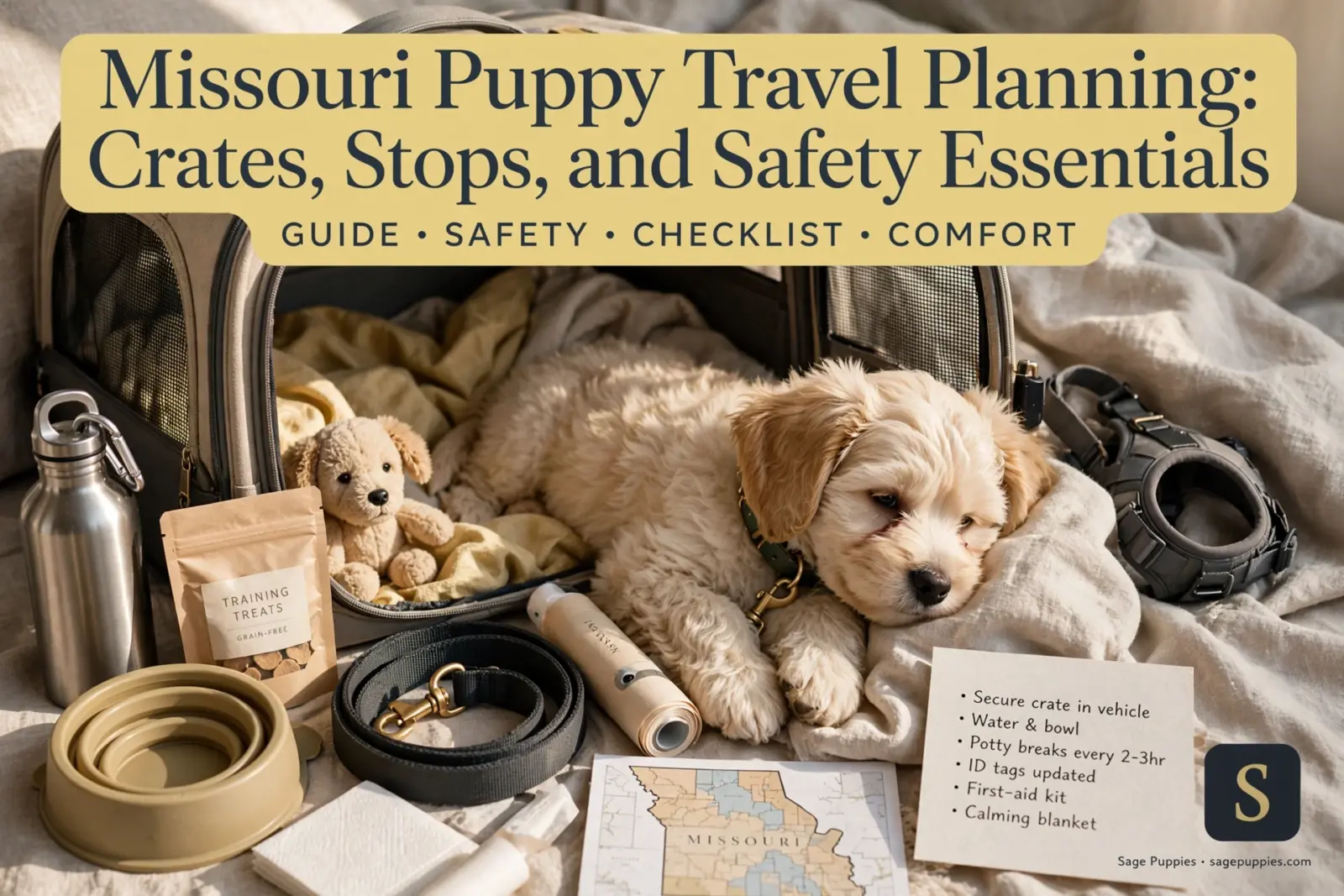
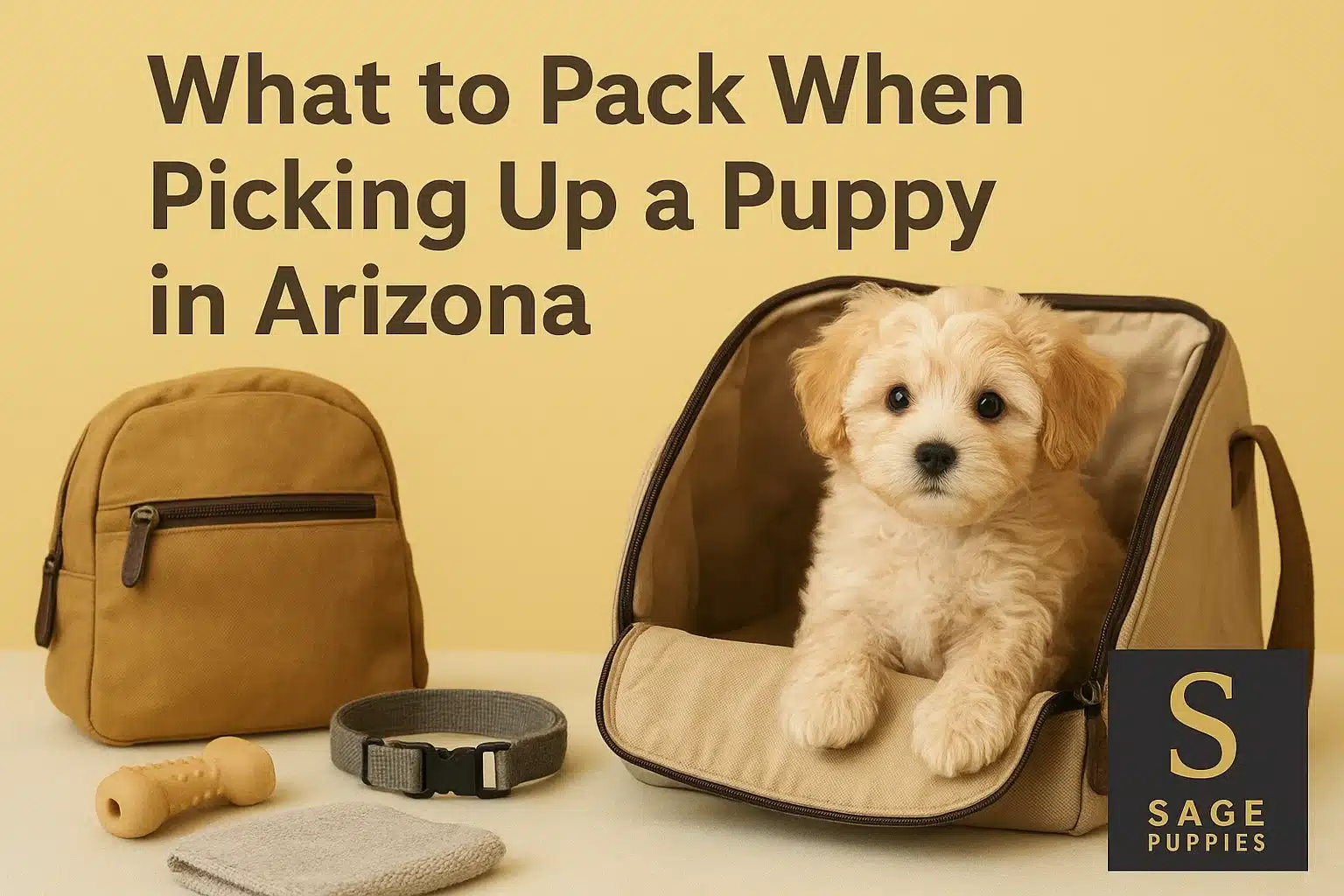
Quick Summary: Choose driving for an Arizona puppy when you can control the car’s temperature, stops, and supervision, especially for nearby families. Flying in-cabin on a direct flight is better for long-distance trips, but only if the puppy is at least 8 weeks old, fully weaned, and meets airline carrier rules. Never leave a puppy in a parked car, as heat can rise about 20°F in 10 minutes. Sage Puppies can help families compare South Jordan pickup with delivery options before booking travel.
Bringing an Arizona puppy home is not about choosing the shortest route. Driving can work well for nearby families because you control the car, carrier, cool air, stops, and pace. For families farther away, flying with puppy in the cabin may be kinder than hours on hot desert roads if the flight is direct and one adult stays focused.
The choice gets harder with heat, airline carrier rules, layovers, and a young puppy’s need for a calm first night. This guide compares driving with dog, flying, and coordinated delivery. Sage Puppies can help families weigh South Jordan pickup and delivery plans before travel is booked.
Driving vs Flying Home With an Arizona Puppy: At a Glance
| Driving home with a puppy | Flying home with a puppy | |
|---|---|---|
| Best fit | Nearby or regional families able to make a direct trip | Long-distance families with a direct or simple itinerary |
| Puppy supervision | Family controls the puppy throughout the ride | High in cabin, limited or indirect in cargo |
| Temperature control | Strong when the vehicle stays climate-controlled | Good in cabin, more complex during airport handling |
| Travel flexibility | High, with planned stops and route control | Limited by airline rules, pet capacity, and delays |
| Main stressors | Long hours, motion, heat exposure, and driver fatigue | Airport noise, carrier confinement, security, and schedule changes |
| First-day recovery | Often straightforward if the route goes directly home | Can be smooth after a direct flight and quiet arrival |
How Driving home with a puppy and Flying home with a puppy Compare
Driving home with a puppy
Driving suits nearby families who can make a direct, air-conditioned trip. You control rest stops, comfort, and supervision from pickup through arrival.
Flying home with a puppy
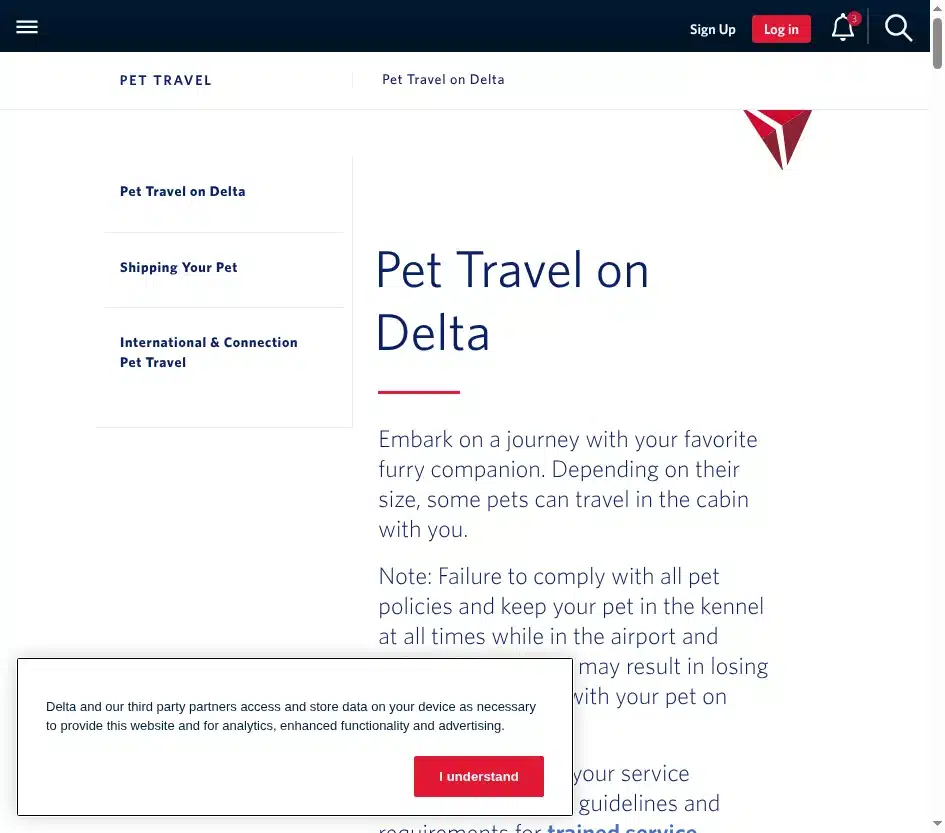
Flying can suit long-distance families with a confirmed, simple cabin itinerary. Airlines set pet rules, and the USDA notes puppies must be at least eight weeks old and fully weaned for air travel USDA guidance.
The Real Question: Which Option Creates the Calmest Puppy Transition?
A simple decision rule for Arizona families
Choose the trip with the fewest stressful handoffs and the most steady supervision. Driving often suits families who can keep the cabin cool, stop calmly, and share the ride. Flying can work well if your puppy travels in-cabin on a direct flight and you are ready for airline rules.
- Drive if you can avoid long, hot stretches and overnight chaos.
- Fly if the route is nonstop and the carrier stays with you.
- Never leave a puppy alone in a parked car. Interior heat can rise quickly, according to the AVMA vehicle safety guidance.
A familiar blanket, secure carrier, quiet voice, and calm adult matter more than speed.
When a third option may be better
Coordinated delivery may be the calmer choice when Arizona heat, flight connections, or a multi-day drive add too many variables. It can reduce handoffs and let your family prepare a quiet home before arrival.
Ask how the puppy will travel, who provides care, and what happens during weather delays. The AVMA advises weighing transit time, climate, and welfare together when planning animal transport.
Also Read: How to Keep Puppies Safe During Extreme Weather and Temperature Changes
Driving With a Puppy: Where the Road Trip Wins
The advantages of a family-controlled car ride
Driving gives you control over your puppy’s first hours with your family. You can keep a small carrier secured near the center of the vehicle, set your own pace, and stop if your puppy needs water, a potty break, or quiet time.
- Keep the cabin cool and calm.
- Bring familiar bedding, paper towels, water, and a leash.
- Choose direct routes and pet-friendly overnight stays if needed.
- Have one adult focus on the puppy while another drives.
The AVMA recommends a crate or carrier that lets a dog stand, turn, and lie down comfortably, secured so it cannot slide during travel. Their vehicle safety guidance also warns against loose pets in the car.
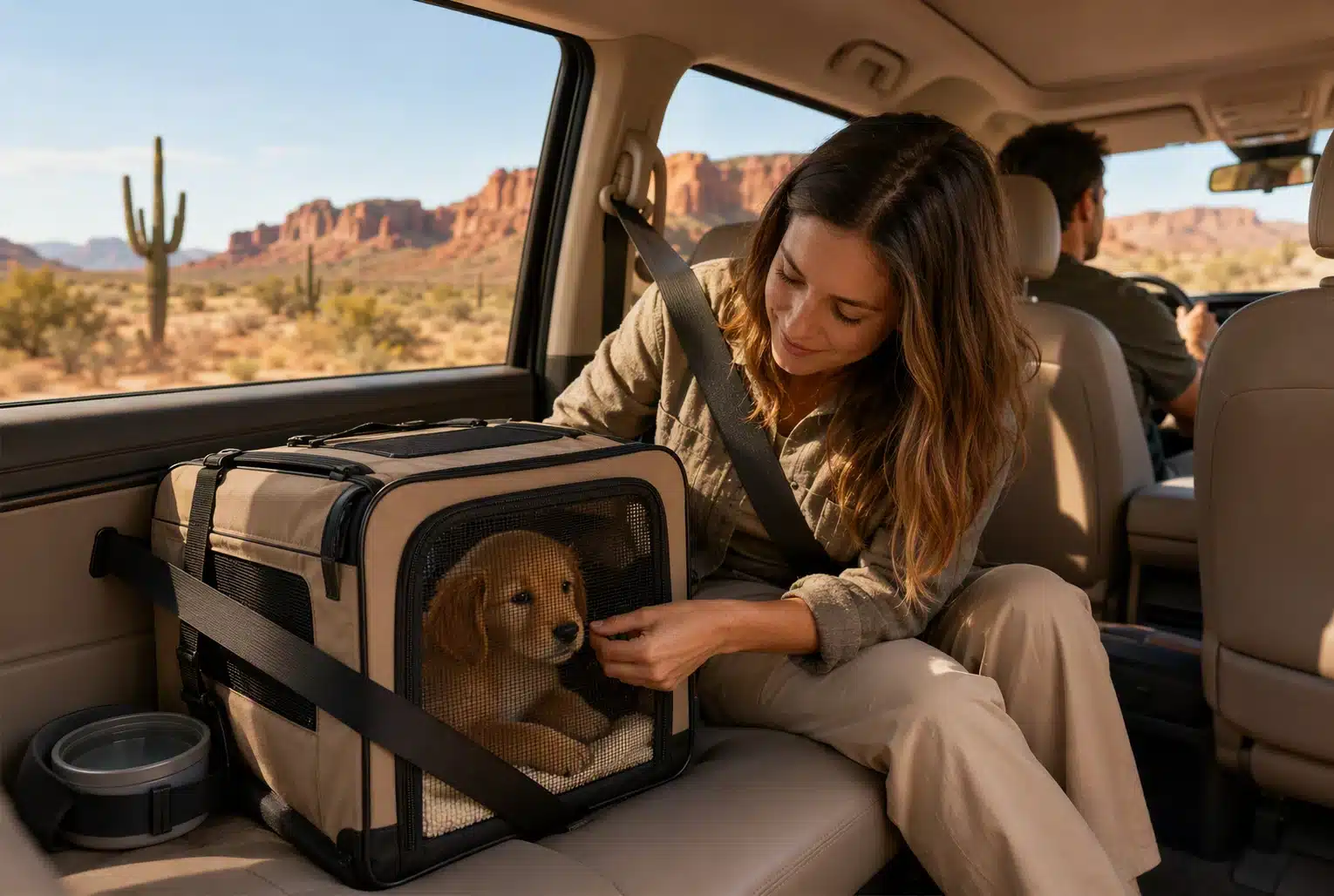
Tip: A calm, supervised drive can be a gentle start, but only if you can give the puppy your full attention at every stop.
The limits of driving from Arizona
A long Arizona drive can mean heat, traffic, hotel planning, and many hours in a carrier. Never leave a puppy in a parked car. Even with cracked windows, the cabin can become dangerous quickly.
| Road-trip concern | Practical response |
|---|---|
| Desert heat | Drive in cooler hours and keep air conditioning running |
| Long travel day | Plan frequent quiet stops and an overnight break |
| Puppy stress | Limit handling, noise, and new people |
Check destination rules before crossing state lines. The AVMA notes that some states require travel paperwork. Review interstate travel guidance early.
Also Read: Havanese, Havapoo & Cavapoo Puppy Care Blog
Flying With a Puppy: When the Airport Is the Better Route
Why in-cabin flying can be less disruptive than a long drive
For a far-away family, a direct in-cabin flight can mean a shorter, more controlled first day home. Your puppy stays beneath the seat in an approved carrier, close enough for you to check on them throughout the trip.
That can be easier than a full day of Arizona heat, highway stops, new sounds, and long stretches in a car. It is often the better choice when you can book a nonstop flight and get home soon after landing.
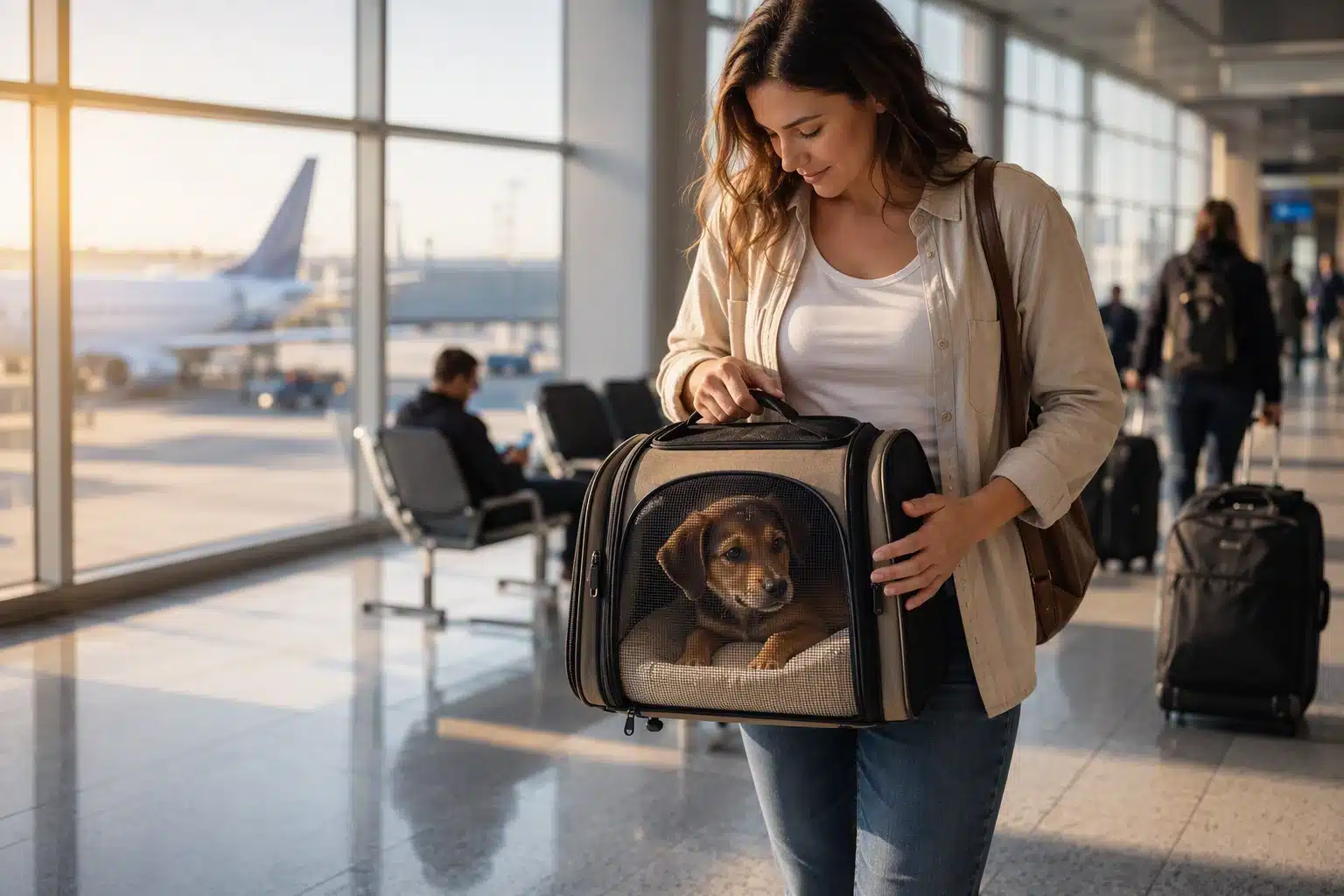
Use this quick check before booking:
| Flying may fit when | Driving may fit when |
|---|---|
| You can take a direct flight | Your trip is short and mild-weather |
| The puppy meets airline cabin rules | You need frequent calm breaks |
| You can go straight home after landing | Your family prefers total schedule control |
Choose in-cabin travel only. Do not treat cargo travel as the same experience.
USDA guidance says puppies must be at least 8 weeks old and fully weaned for air travel, and their carrier must be safe and properly sized. Read the USDA air-travel guidance before you commit.
Why flying can feel harder than the flight itself
The flight may be brief. The planning is not.
Airlines set their own limits for carrier size, puppy age, paperwork, cabin pet spaces, and check-in timing. Confirm every rule before you buy tickets, then call again if your itinerary changes.
Plan these steps:
- Reserve the pet spot as soon as you book.
- Measure the carrier against your airline’s current limits.
- Ask the breeder what records travel with your puppy.
- Avoid tight connections and late-day Arizona heat.
- Have a quiet, secure ride ready at arrival.
Airline rules can differ from health or destination rules, so contact the airline directly before travel, as USDA notes.
Arizona Heat, Supervision, and Stress: The Safety Factors That Decide the Winner
Temperature control matters more than mileage
Choose the option that keeps your puppy in steady, cool conditions from handoff to home. In Arizona, a brief stop in a parked car can become dangerous fast. The AVMA warns that a vehicle can heat up about 20°F in 10 minutes, even on a mild day.
For a summer road trip, drive early, keep the air conditioning running, and take one adult inside at every stop while the other stays with the puppy.
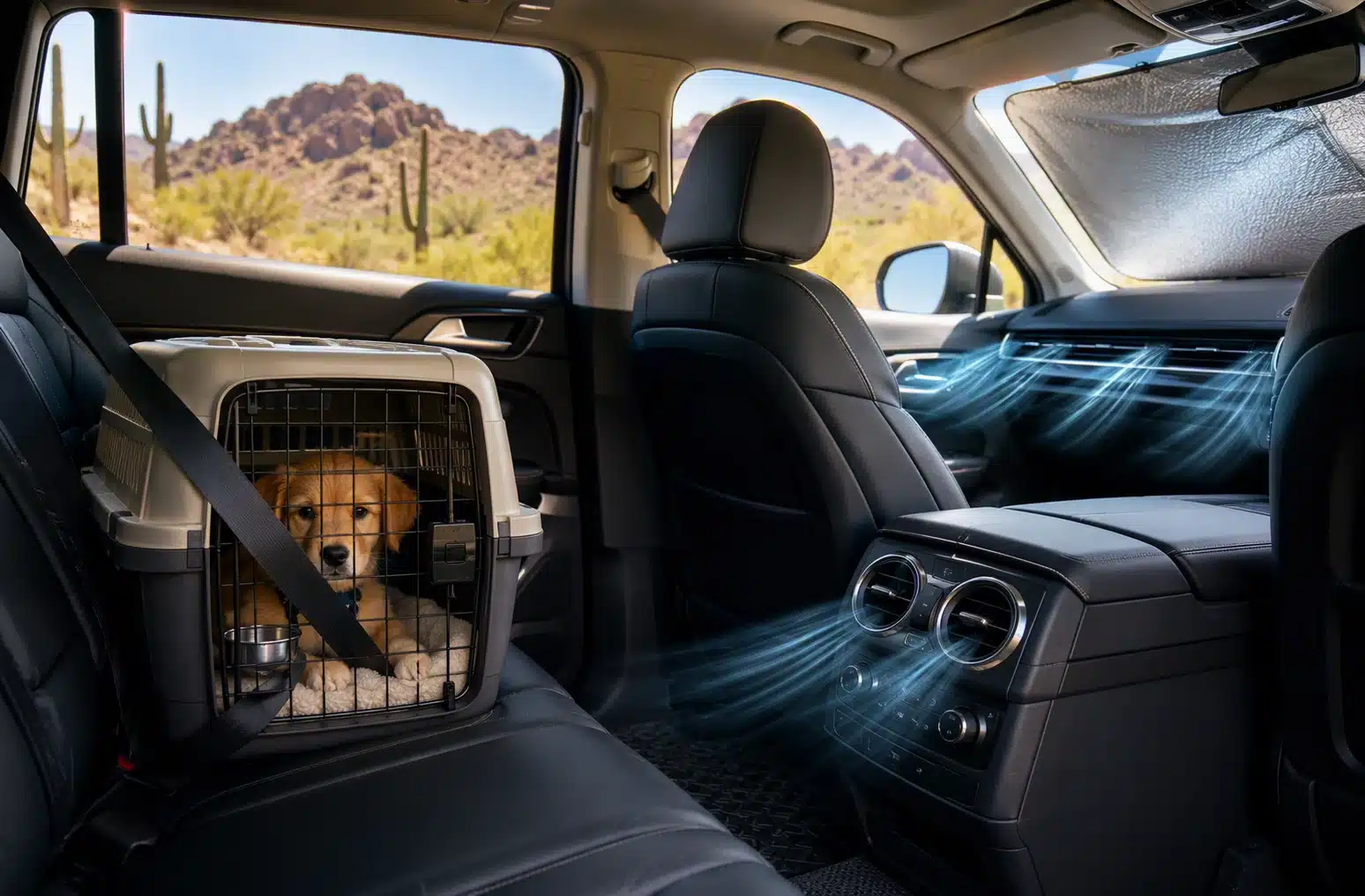
| Travel choice | Heat-control advantage | Main heat risk |
|---|---|---|
| Driving home | You control cabin temperature and stops | Hot parking lots and unattended car stops |
| Flying in cabin | Climate-controlled passenger area | Airport walks, delays, and carrier limits |
| Coordinated delivery | Planned route and experienced handoffs | Confirm the vehicle and timing plan |
Never leave a puppy alone in a vehicle, even with cracked windows or shade.
Supervision, handoffs, and puppy readiness
Driving wins if a calm adult can watch the carrier throughout the trip. Flying in cabin can work well for a small puppy, but it adds security lines, noise, strangers, and schedule changes. Cargo travel gives families the least direct supervision.
Ask these questions before choosing:
- Is the puppy comfortable resting in a secure carrier?
- Who is watching during fuel, meals, and bathroom breaks?
- What happens if heat, traffic, or a flight delay changes the plan?
- Is there one clear, confirmed handoff person at arrival?
The AVMA advises that crate familiarity can reduce travel stress. Sage Puppies can help families weigh pickup and delivery plans around the puppy’s readiness and the real conditions on travel day.
Also Read: Puppy Ground Transport vs Air Travel: Which Option Fits Iowa?
How to Prepare for a Long Car Ride With a Puppy
Set up the vehicle before pickup
Set up the car before your puppy leaves for home. Use a secure, well-ventilated carrier that lets them stand, turn, and lie down. Anchor it near the center of the back seat or cargo area so it cannot slide.
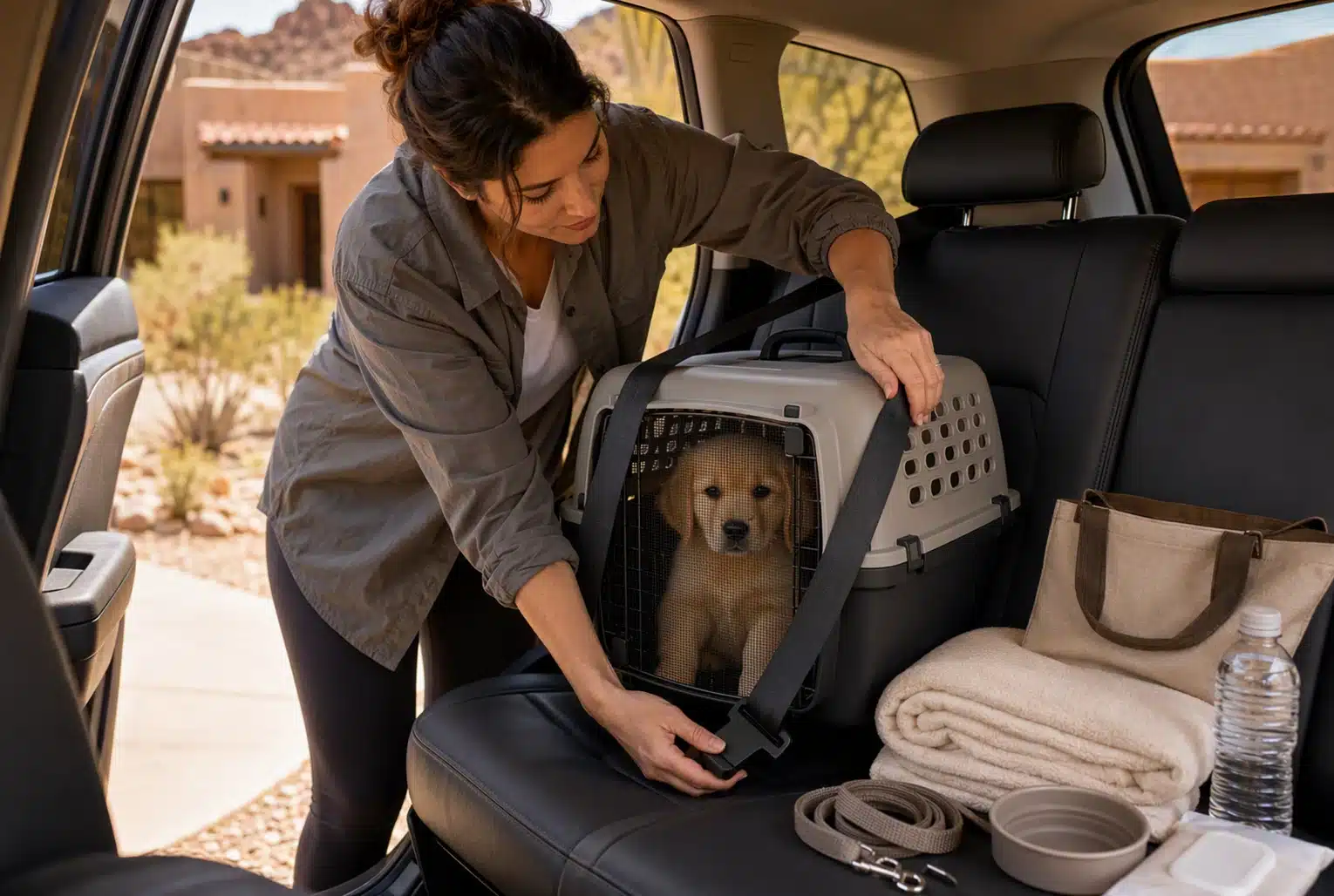
Pack these within reach:
- Water and a small bowl
- Paper towels, waste bags, and enzyme cleaner
- A leash, collar, and familiar blanket
- Your puppy’s food and travel paperwork
The AVMA advises securing pets in a suitable carrier or restraint. Never hold a puppy in your lap while driving.
Keep the cabin cool before loading your puppy. Arizona heat can build inside a parked car fast.
Plan stops around the puppy, not errands
Choose a direct route and make breaks calm and brief. Stop for water, a leash potty break, and a quiet reset. Skip crowded rest areas, dog parks, and hot pavement.
- Park in shade when possible.
- Leash your puppy before opening the carrier.
- Offer water, then give them a few minutes to settle.
- Return them to the secured carrier before driving.
Do not leave your puppy alone in the vehicle, even for a quick errand. The AVMA warns that cars can heat to dangerous levels quickly.
If your puppy pants hard, drools heavily, seems unsteady, or cannot settle, stop in a cool safe place and call a veterinarian.
Also Read: Puppy Care Blog & Resources | Sage Puppies
How to Prepare for Flying Home With a Puppy
Confirm the flight before buying the ticket
Call the airline before you book. Ask if your puppy can fly in the cabin, how many pets are allowed on that flight, and the exact carrier size limit. Policies, fees, age rules, and seat limits vary by airline, as the U.S. Department of Transportation explains.
Confirm these details in writing or save the agent’s notes:
- Pet reservation number
- Cabin carrier measurements
- Health record or certificate rules
- Check-in time and pet fee
- Flight change and weather policy
Choose a nonstop, early-day flight when possible. Avoid cargo travel for a young companion puppy.
Do not assume a puppy reservation is included with your ticket. It is usually a separate booking.
Practice the carrier and simplify travel day
Set up the airline-approved carrier at home several days ahead. Add a familiar blanket and offer treats inside. Keep each practice session short and calm.
On travel day, pack:
| Item | Why it helps |
|---|---|
| Absorbent pad | Handles small accidents |
| Collapsible bowl | Offers water after security |
| Leash and harness | Keeps transfers secure |
| Wipes and bags | Makes cleanup quick |
Feed a light meal well before leaving, unless your veterinarian advises otherwise. Give your puppy a potty break before security and again before boarding.
Keep the puppy in the carrier during the flight, even if they fuss. Calm, steady handling helps more than constant checking.
Questions to Ask Before You Reserve an Arizona Puppy
Questions about the puppy and go-home timing
Ask for the puppy’s birth date, weaning status, health records, and current routine. Confirm the exact go-home date and whether it suits your travel plan.
- What food, sleep schedule, and crate setup does the puppy know?
- Has the puppy met children, handled car rides, or started potty training?
- Which records will come home with you?
USDA rules require puppies traveling by air to be at least 8 weeks old and fully weaned, according to APHIS air-travel guidance.
Ask early, not after reserving. A calm first trip starts with a puppy who is ready to leave.
Questions about driving, flying, or delivery
Get the full travel plan in writing before you book flights or a hotel.
- Will the puppy travel with you in the cabin, by car, or with a delivery provider?
- Who supervises breaks, water, temperature, and handoff?
- What happens if weather or an airline delay changes the plan?
Ask which paperwork Utah requires. Receiving states set their own interstate pet rules, so check USDA’s state-by-state travel guidance.
Also Read: 10 Signs a California Puppy Listing Is a Scam – Sage Puppies
Which Should You Choose: Driving or Flying Home With an Arizona Puppy?
Choose driving when control is the biggest advantage
Drive if you can keep the car cool, plan short stops, and share the ride with another adult. You control the crate, water breaks, noise, and pace. This often suits Arizona pickups, especially during hot months.
- Run the air conditioning before the puppy enters.
- Keep the crate secured on a flat surface.
- Never leave a puppy alone in a parked car.
Choose an early morning pickup to reduce heat exposure and make the first travel day calmer.
Choose flying or delivery when distance changes the equation
For a long trip, flying in cabin or coordinated delivery may spare a young puppy from many hours on the road. Confirm the exact airline rules first. USDA guidance says puppies traveling by air must be at least eight weeks old and fully weaned, with a safe, properly sized kennel according to APHIS.
Ask who stays with the puppy, how transfers work, and what happens during delays. Airlines also protect pets from extreme temperatures, but Arizona heat makes timing vital under USDA handling guidance.
The best next step is a travel conversation before a reservation
Tell Sage Puppies where you live, your travel dates, and your comfort level. Together, you can choose local pickup, a family flight, or coordinated delivery.
Also Read: How to Verify Arizona Puppy Breeder Licensing and Records

Choose a puppy travel plan that fits your family, not just the map. Sage Puppies helps families compare South Jordan pickup with nationwide delivery, so your Havanese, Havapoo, or Cavapoo can travel home with a clear, thoughtful plan.
Frequently Asked Questions
Q1: Is it better to drive or fly with a new puppy from Arizona?
Driving usually gives you more control over breaks, temperature, and comfort. Flying may suit long distances if the puppy can travel safely in-cabin and the airline rules fit.
Q2: How stressful is flying for a puppy compared to a road trip?
A quiet in-cabin flight can be shorter, but airports add noise and crowds. A road trip takes longer, yet allows calm stops and steady supervision.
Q3: What should I prepare for a long car ride with a puppy?
Bring a secured carrier, water, small meals, puppy pads, wipes, towel, leash, harness, and cleaning supplies. Plan shaded potty breaks and never leave the puppy alone in a parked car.
Q4: Can I pick up my puppy in South Jordan instead?
Yes. South Jordan pickup can reduce travel stress and lets families begin the trip home with a planned, calm routine.
Q5: Should a new puppy ride loose in the car?
No. Use a properly sized, secured carrier. It protects the puppy during sudden stops and prevents dangerous distractions for the driver.
Conclusion
Driving gives you the most control over breaks, temperature, and comfort. It often suits nearby families and South Jordan pickup. Flying can save time for distant homes, but airline rules, kennel fit, weather, and your puppy’s readiness all matter.
Choose the trip that keeps your puppy calm, supervised, and protected from heat.
A coordinated delivery may be the better fit when travel plans feel rushed or complex. The USDA notes that safe air travel depends on a puppy’s health, an appropriate kennel, and careful handling (USDA guidance).