Families seeking puppies for sale in West Virginia face a real puppy price increase in 2026. NPR and WBUR report that petflation has raised food, vet, care, and animal transport bills. Local adoption fees may cover exams, vaccines, parasite care, and spay or neuter work, but pet adoption costs do not end there.
Before you adopt puppy 2026, compare what each fee includes and what follows pickup. This guide reviews West Virginia rescue pricing, state aid, and responsible breeder options for puppies for sale in West Virginia, so families can plan pet adoption costs with clear eyes.
Why West Virginia Puppy Adoption Costs Are Rising in 2026
Veterinary care is the largest pressure point
The adoption fee is only the first bill. Rising exam, vaccine, test, and urgent-care prices push pet adoption costs higher after a puppy comes home. The American Veterinary Medical Association reports that veterinary prices rose faster than inflation in 2025.
Families looking at puppies for sale in West Virginia should ask what care has already been done and request records. A low upfront fee can leave more first-year costs on the family.
Tip: Set aside an emergency fund before committing. Routine care is easier to plan for than a late-night illness or injury.
Transport and shelter operations add hidden costs
Shelters pay for fuel, staff time, cleaning, food, safe housing, and transfers from crowded areas. Those costs do not vanish because an animal is adopted.
A $100 dog fee at Mason County Animal Shelter includes spay or neuter, initial vaccines, worming, flea care, and a microchip. That is strong value, but it does not cover every future need.
- Ask whether the puppy has had a vet exam.
- Confirm which vaccines are due next.
- Budget for travel, a crate, and time off work.
Food, medication, and supplies affect the first-year budget
Food, parasite prevention, training treats, bedding, grooming tools, and replacement chews add up fast. Small companion breeds may eat less, but they still need quality nutrition and steady preventive care.
For families comparing puppies for sale in West Virginia, list each recurring item before choosing by price alone. Responsible planning keeps pet adoption costs from becoming a surprise.
| First-year item | What to check |
|---|---|
| Food and treats | Brand, feeding amount, monthly price |
| Preventive care | Flea, tick, heartworm, and vaccine schedule |
| Supplies | Crate, leash, collar, bowls, bed, and toys |
Also Read: Puppy Care Blog & Resources | Sage Puppies
What West Virginia Adoption Fees Actually Cover
An adoption fee is not just a price tag. It often pays for care already given, but the exact package changes by shelter, puppy age, and current funding.
A published West Virginia example
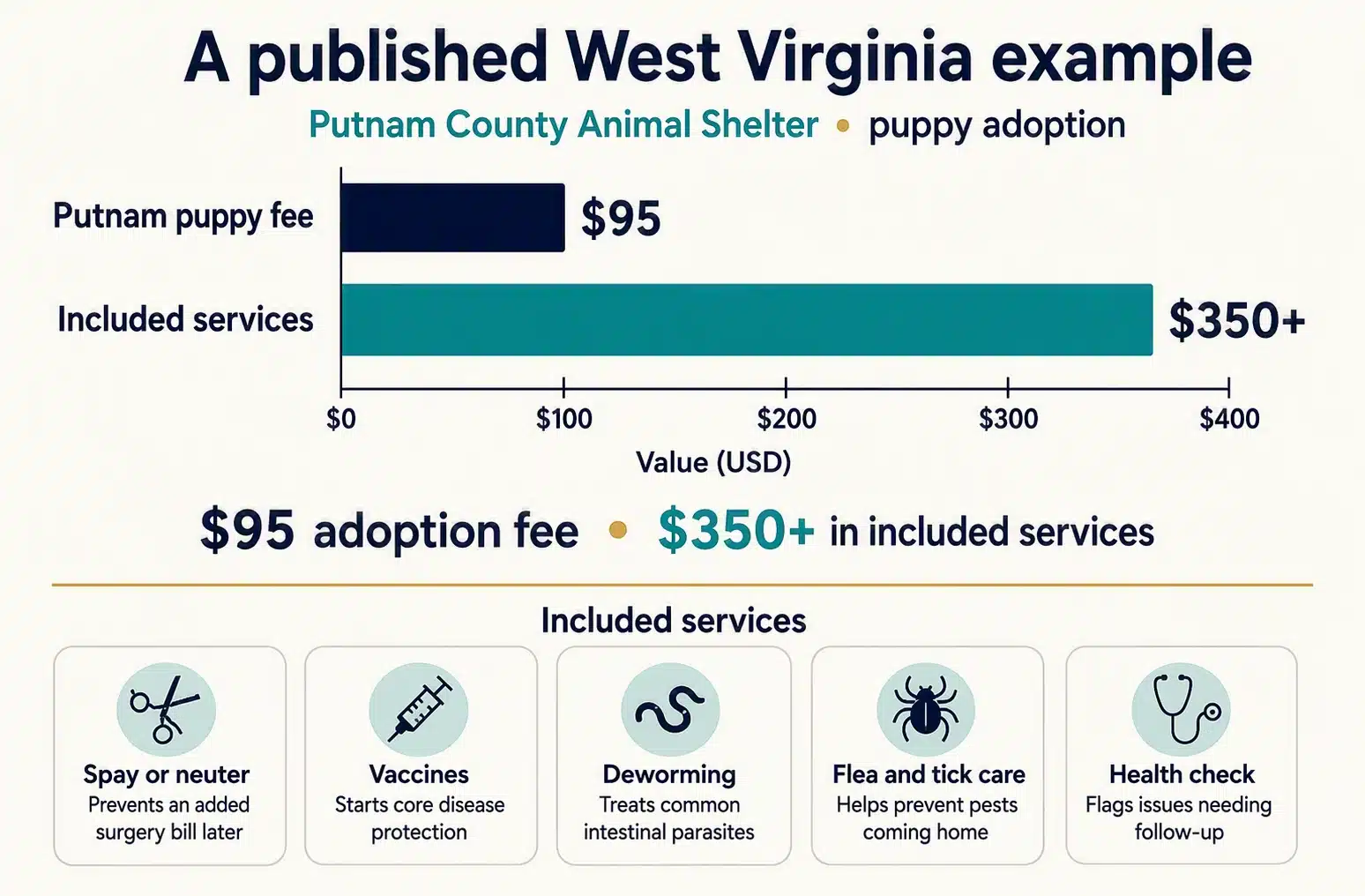
Putnam County Animal Shelter lists a $95 adoption fee for puppies under six months. Its page says the fee includes spay or neuter surgery, current vaccines, deworming, flea and tick treatment, and health checks. The shelter values those included services at more than $350. See the shelter’s published dog adoption fees and services.
Ask for the puppy’s health record before you pay. It should show what has been done and what remains due.
| Fee item | Why it matters |
|---|---|
| Spay or neuter | Prevents an added surgery bill later |
| Vaccines | Starts core disease protection |
| Deworming | Treats common intestinal parasites |
| Flea and tick care | Helps prevent pests coming home |
| Health check | Flags issues needing follow-up |
Tip: A low fee can still be a good value. Check the care record, not the number alone.
Why two puppies can have different adoption prices
Puppies may cost more than adult dogs because they need more early care and often draw more demand. A puppy not old enough for surgery may have a lower upfront fee, yet you may need to pay for sterilization later.
Compare these details before choosing:
- Age and vaccine stage
- Whether spay or neuter is complete
- Microchip status
- Known medical needs
- Required follow-up appointments
Do not assume every rescue includes the same items. Put each cost in writing before you sign.
Temporary promotions can change the number families see
Shelters sometimes lower fees during adoption events. That does not mean the puppy receives less care. It can reflect donor support, space needs, or a limited campaign.
For example, Mercer County Animal Shelter announced a 2026 event with $25 dog adoptions, including spay or neuter, a pain injection, first rabies vaccine, and microchip. Check the event details and dates before you travel.
Warning: Promotions can end quickly. Confirm the live fee, included care, and any age-based surgery requirement by phone.
Also Read: Havanese, Havapoo & Cavapoo Puppy Care Blog
The West Virginia Costs Families Still Need to Budget After Adoption
Predictable puppy expenses
The adoption fee or puppy price is only the starting point. Budget for the care that keeps a small companion puppy healthy and settled at home:
- Quality food and training treats
- Routine vet exams, vaccines, and parasite prevention
- Grooming for Havanese, Havapoos, and Cavapoos
- A crate, bed, leash, harness, toys, and ID tag
- Training classes, license fees, and pet insurance if you choose it
| Cost group | Plan for | Why it matters |
|---|---|---|
| Monthly basics | Food, preventives, treats | These repeat every month |
| Grooming | Regular coat care | Helps prevent mats and skin issues |
| First-year setup | Crate, supplies, training | Most costs hit soon after pickup |
Ask what the puppy already received. Clear health records and a detailed go-home plan prevent duplicate spending.

The rural-access factor
In some parts of West Virginia, the added cost is time and travel. A 2025 USDA listing identifies Ritchie, Wirt, Calhoun, and Gilmer counties as a critical veterinary shortage area for rural practice, which signals why scheduling early matters. USDA’s shortage-area record also names nearby counties that may be served.
Before pickup, call a local clinic and confirm:
- They accept new puppy patients.
- Their first available wellness visit.
- Their after-hours and emergency plan.
- Whether telehealth is available after an in-person exam.
West Virginia law requires an in-person exam within 12 months to maintain most veterinary telehealth care. The state telehealth rule allows exceptions for life-threatening emergencies.
Build an emergency cushion before pickup
Set aside a separate fund before your puppy comes home. It is not a sign you expect trouble. It lets you act quickly if vomiting, an injury, or a late-night concern needs care.
- Keep the fund separate from routine supplies.
- Know the nearest emergency clinic and drive time.
- Save your vet’s number and poison-control contacts.
- Refill the fund after you use it.
A well-bred, carefully raised puppy still needs a family ready for normal surprises.
Also Read: 10 Must-Ask Questions Before Buying a Puppy Locally
How State Assistance and Promotions Can Ease the Cost
What the FY2026 state program does
West Virginia’s FY2026 Spay Neuter Assistance Program does not give cash directly to adopters. Instead, it funds eligible shelters, local governments, and nonprofits that help cover spay or neuter care and rabies vaccines.
The West Virginia Department of Agriculture program asks families to contact a local grantee for available help. That matters because a lower adoption fee may still include core vet work.
- Ask your shelter if WVSNP funds helped pay for surgery.
- Confirm whether a rabies vaccine is included.
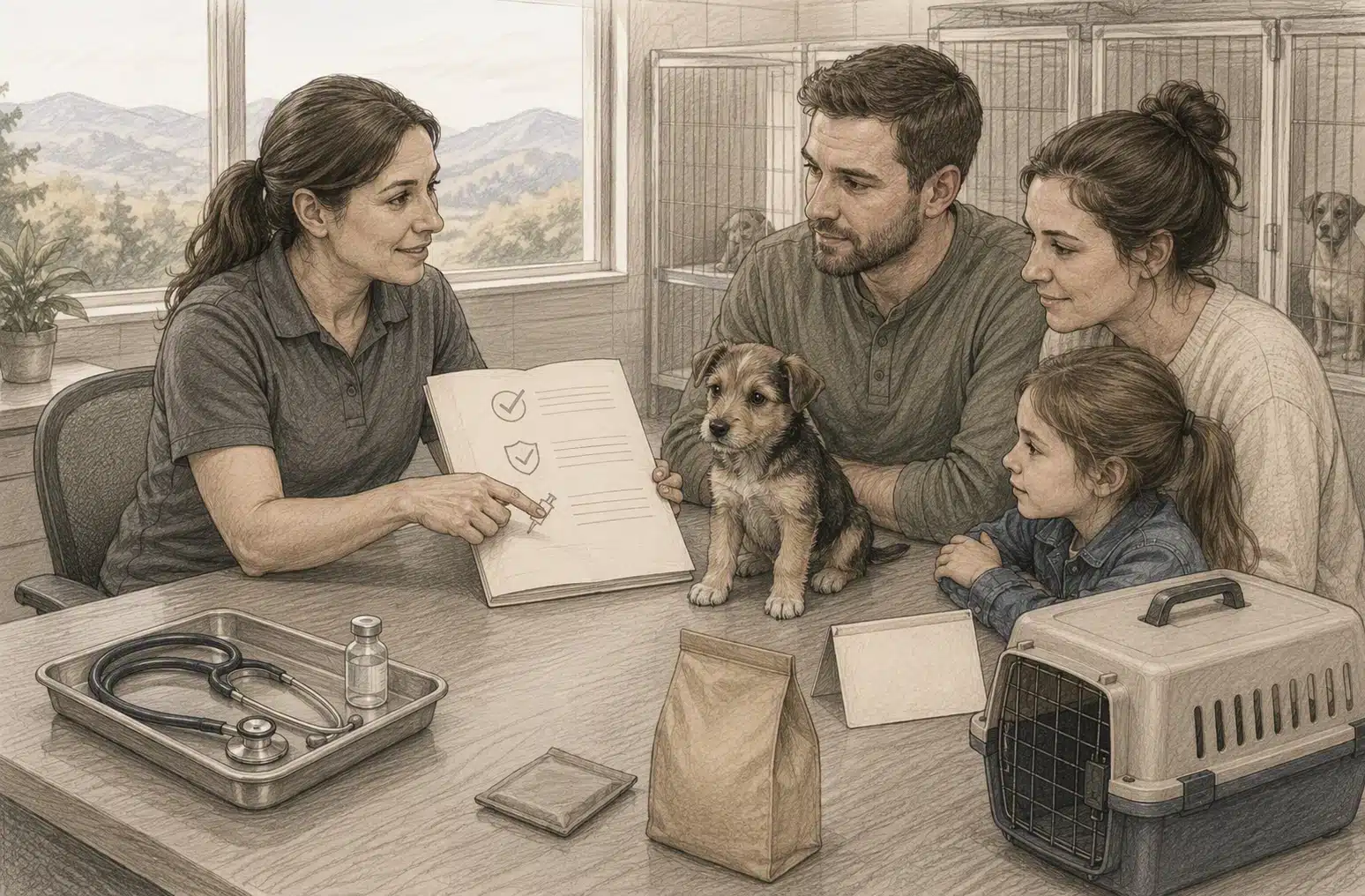
- Get the puppy’s medical record before you leave.
- Budget for the first wellness visit, food, crate, and prevention care.
A low fee is helpful, but it is not a full first-year puppy budget. Plan for care after adoption, too.
Questions to ask about reduced-fee events
Reduced-fee events can be a good fit if the dog matches your home. For example, Greenbrier Humane Society recently offered $20 adoptions during a sponsored event, according to local coverage of the promotion.
Ask these questions before you apply:
- What does the event fee include?
- Is the puppy spayed or neutered already?
- Which vaccines, tests, and preventives are still due?
- Is there a return policy or foster-to-adopt option?
- What is known about the dog’s age, size, and behavior?
Also Read: Find a Reputable Puppy Breeder Near You: Step-by-Step
Where to Buy Puppies in West Virginia Without Losing Sight of Value
Compare the full care package, not just the fee
A lower adoption or puppy price is not always the lower-cost choice. Compare what comes with the dog, what you must arrange next, and how clearly the seller documents care.
| Compare | Ask for | Why it matters |
|---|---|---|
| Health history | Vaccine, deworming, and vet records | Helps you plan near-term care |
| Parent information | Health testing and temperament details | Gives context for a small companion breed |
| Transition support | Food routine and early socialization notes | Makes the first weeks easier |
| Travel plan | Pickup or delivery details and total cost | Prevents surprise charges |
West Virginia law requires commercial breeders to maintain rabies certificates and include their annual permit number in puppy ads, among other care rules. Review the state breeder standards before you compare listings.

Value means clear records, honest answers, and a puppy whose early care is easy to verify.
Questions for a West Virginia puppy seller or rescue
Use these questions before a deposit or adoption fee:
- Can I see the puppy’s health, vaccine, and deworming records?
- Where was the puppy raised, and may I meet the mother or join a live video visit?
- What health testing was done on the parents?
- What is included in the stated price, and what will I pay after pickup?
- How do you match puppies to homes and handle delivery?
A seller who rushes you, avoids records, or will not explain the puppy’s start is not offering real value.
A calm next step for families considering Sage Puppies
Families in West Virginia who want a small Havanese, Havapoo, or Cavapoo can review Available Puppies and begin with an Application at Sage Puppies. The South Jordan, Utah program shares parent health testing, family-raised care, and clear pickup or nationwide delivery details. Start with fit, not urgency.
Also Read: Louisiana Puppy Prices: Breeder Deposits vs Total Cost
How Adoption Pricing Became a Care-Recovery Model
Why the posted fee can look different from the cost of care
An adoption fee is rarely the full price of preparing a puppy for a home. It helps recover part of the shelter’s spending on food, housing, vaccines, parasite treatment, microchipping, and spay or neuter care.
For example, Mason County Animal Shelter lists a $100 dog fee that includes sterilization, early vaccines, worming, flea treatment, and a microchip.
- A young, healthy puppy may help fund care for harder-to-place dogs.
- A fee can change with age, size, medical needs, or demand.
- Donations and local support often cover the gap.
Ask for an itemized list of included care, then budget for a prompt vet visit after adoption.
Why 2026 feels different for puppy families
Families are seeing higher costs before and after adoption. Shelters still need to cover daily care, while many adopters face higher food, grooming, and veterinary bills at home.
West Virginia law also requires adopted dogs and cats to be spayed or neutered, unless an approved agreement sets a later deadline, according to the state spay-neuter law.
- Compare what each fee includes.
- Set aside money for supplies and follow-up care.
- Choose a puppy whose needs fit your long-term budget.
Frequently Asked Questions About Puppy Adoption Costs in West Virginia
What does a West Virginia puppy adoption usually cost? Fees differ by shelter. Putnam County lists puppies under six months at $95, while Kanawha Charleston Humane Association uses dog fees from $50 to $350 based on demand, age, breed, and size. Check what the fee includes before comparing prices. Putnam County’s adoption details list spay or neuter, vaccines, deworming, and flea and tick care.
Will I have costs after the adoption fee? Yes. Plan for a first vet visit, food, a crate, collar, leash, ID tag, training, and ongoing parasite prevention. Ask whether the puppy has had a health check and which shots remain due.
Is spay or neuter included? Often, but confirm the shelter’s policy. West Virginia requires shelter-adopted dogs and cats to be altered or placed under a signed agreement for timely surgery. A shelter may also collect a refundable deposit of up to $50. State law explains the requirement.
Why can a responsibly bred puppy cost more? The upfront price may cover intentional pairing, health testing, early care, socialization, and breeder support. Compare records, parent information, and what happens after pickup, not price alone.
Tip: Keep a separate first-month fund. The adoption fee is only the starting point.
Also Read: 10 Signs a California Puppy Listing Is a Scam – Sage Puppies
Budget for the Whole Journey Home
The puppy fee is only the first line in your plan. Set aside money for the first 90 days, then build a monthly care budget before you commit.
The American Veterinary Medical Association reports average annual veterinary spending of $598 per dog-owning household in 2025, before food, grooming, training, or surprise care. Its cost guide also flags preventive visits, supplies, and emergency treatment as separate needs.
| Budget area | Plan for |
|---|---|
| Bringing puppy home | Fee, travel or delivery, crate, bed, leash |
| First care | Vet exam, vaccine follow-ups, prevention |
| Monthly life | Food, grooming, treats, training |
| Safety net | Insurance or a dedicated emergency fund |
- Ask what the adoption or breeder price includes.
- Price a local vet visit before pickup.
- Keep a cash buffer you will not use for routine shopping.
A lower upfront fee can cost more later if health history, early care, and support are unclear.
Also Read: Family-Raised Puppies for Sale Near Me: Adoption Checklist and Costs

Choose a puppy with clear planning, not surprises. Sage Puppies offers home-raised Havanese, Havapoo, and Cavapoo companions from health-tested parents, with transparent next steps, local pickup, and nationwide delivery. View available puppies, review pricing, and begin your application when your family is ready.
Frequently Asked Questions About Puppy Adoption Costs in West Virginia
Q1: where to buy puppies in West Virginia
Start with county shelters, breed rescues, and breeders who share parent health tests, care details, and clear fees. Avoid sellers who rush payment, refuse questions, or will not discuss a puppy’s background.
Q2: How is petflation increasing adoption costs for puppies in West Virginia?
Higher food, vet, housing, fuel, and supply costs affect rescues and breeders. Adoption fees may rise to cover vaccines, spay or neuter surgery, microchips, and daily care before a puppy goes home.
Q3: What are the biggest factors driving up puppy adoption prices in WV right now?
Vet visits, vaccines, parasite prevention, quality food, transport, and staff time all cost more. Small puppies also need more frequent care, making their placement fees higher than many adult dogs.
Q4: Are West Virginia shelters struggling with puppy adoptions due to rising costs?
Some families delay adoption because startup costs feel steep. Shelters may also face tight budgets, crowded kennels, and higher medical bills, which can limit the help available for each puppy.
Q5: Should I choose a lower adoption fee to save money?
Not always. Ask what the fee includes, then budget for training, food, grooming, supplies, and urgent vet care. A well-documented start can prevent costly surprises later.
conclusion: Budget for the Whole Journey Home
A West Virginia puppy’s fee is only the first cost. Plan for food, routine vet care, training, grooming, supplies, and an emergency fund before choosing a puppy.
Shelter adoption can cost less upfront, while a responsible breeder may offer clearer health and family-history records. Either path still needs a realistic monthly budget.
Pet costs are rising nationally, with Rover reporting higher veterinary and dog-care costs in 2025. Local support matters too: West Virginia made its spay and neuter assistance funding permanent through House Bill 3000.
Choose the puppy and source that fit your home, time, and long-term budget – not just today’s price.