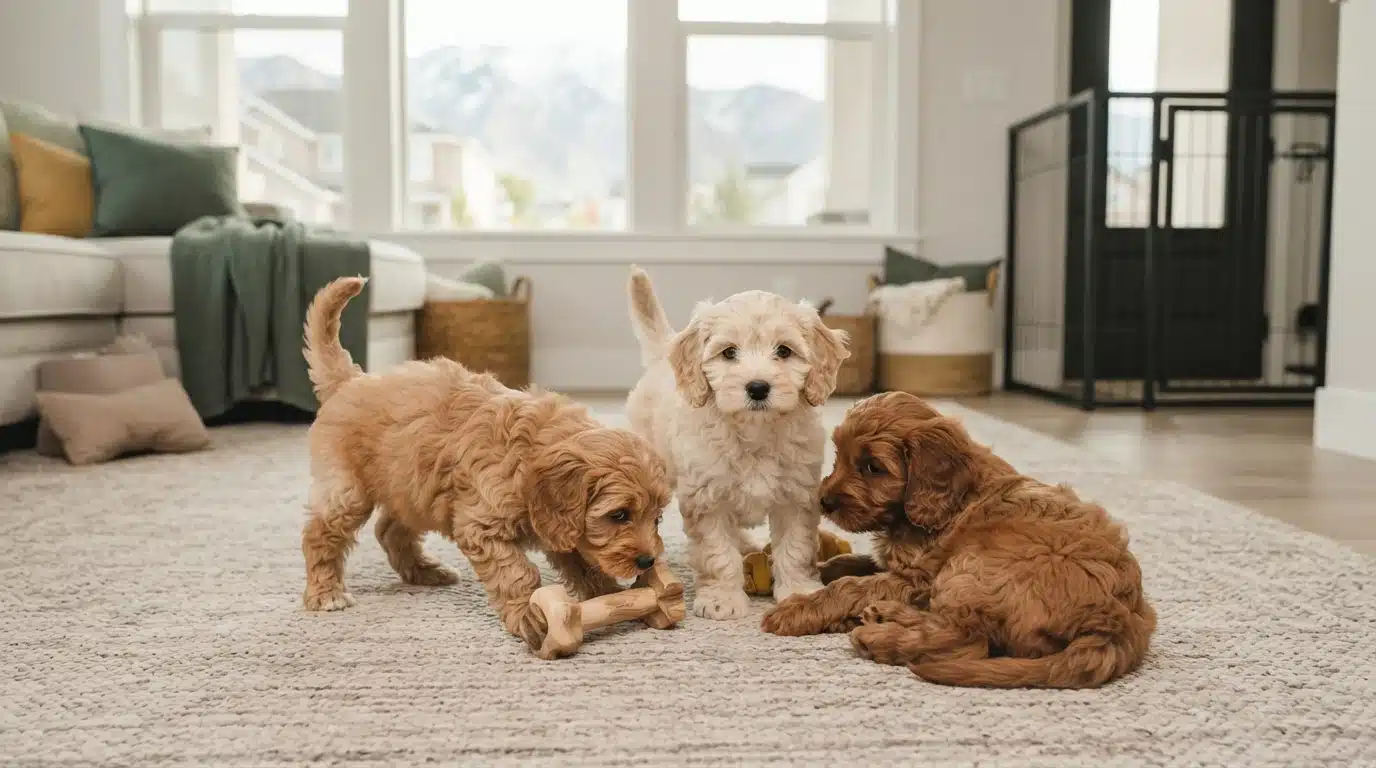
Quick Summary: Utah throws small breeds like Havanese, Havapoos, and Cavapoos into extreme swings, from 148 F sidewalks in July to icy, salt-laced streets in January. Smart care means walking before 9 a.m. or after 7 p.m. in summer, using the seven-second hand test on pavement, and watching for heatstroke signs like drool, red gums, and wobbling. Winter calls for short outings, paw wipe-downs after every walk, a shoveled potty patch, and a humidifier to fight the furnace-dried air. Sage Puppies raises these breeds in South Jordan, so their dogs already know how to handle Utah’s sharp swings and tend to settle in faster than puppies shipped from milder climates.
On a single July afternoon in South Jordan, the sidewalk can read 148 F. That same street turns skating-rink slick in January, and your new Havapoo puppy has to live through both back to back. That is the real challenge of Utah seasonal puppy care: no other state hands a small breed two extremes this sharp in one year.
The good news is that the risks are predictable, so the fixes can be too. This guide walks through each season with Havanese, Havapoo and Cavapoo specifics, from burnt paw pads and heat timing to ice melt, coats and dry winter air.
We raise these three breeds at Sage Puppies in South Jordan, and Utah seasonal puppy care is part of every puppy’s first year here. When you are ready to plan pickup or delivery, start with the verified Utah buyer guide.
Step 1: Map Your Utah Seasons and Your Microclimate
Utah does not have one puppy climate. It has several, and the one that matters is the one outside your door. Before you plan walks, potty breaks, or travel days, map what your address actually does across the year.
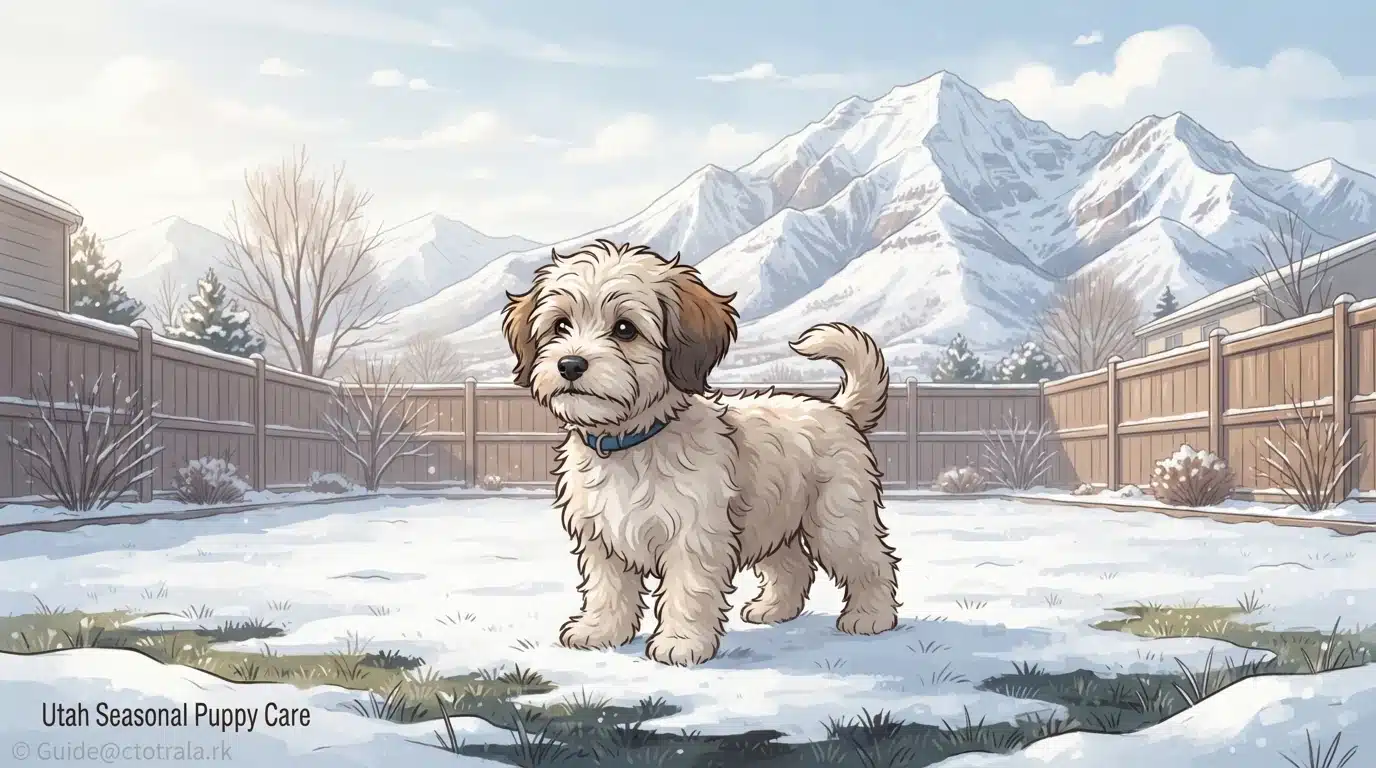
The four seasons a Utah puppy actually lives through
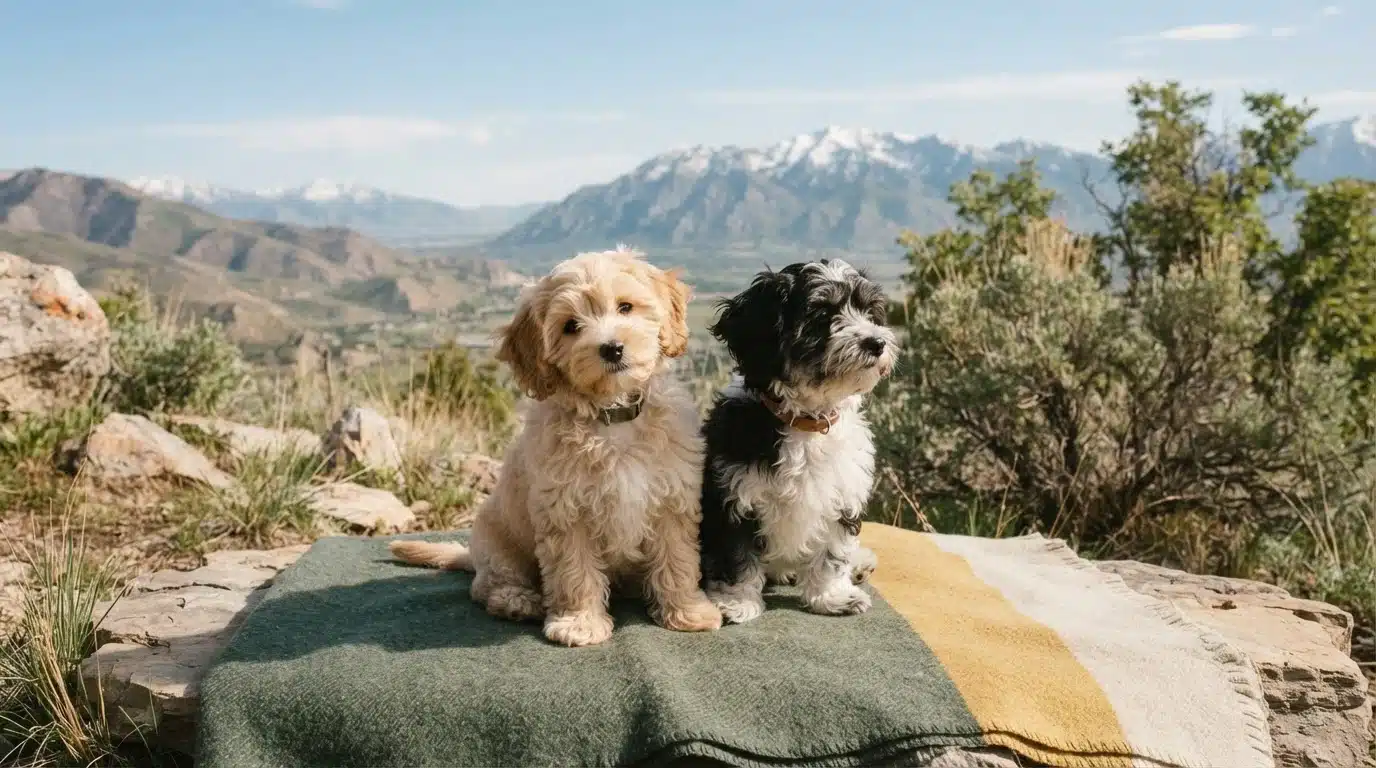
Think in four blocks. Summer runs hot and dry, often past 95 F in the valleys, with pavement hot enough to burn paw pads by late morning. Fall is the easy season, mild days and cool nights, the best window for loose-leash practice. Winter brings inversion fog in the north, icy sidewalks, and road salt that irritates paws. Spring swings hard: snow one week, 70 F the next, plus mud and standing water.
A small breed like a Havanese or Cavapoo feels all of it fast. Their coat insulates well but their low height puts them right at pavement and snow level. Plan short, frequent outings instead of long ones.
Pick the microclimate that matches your address
Utah spans USDA plant hardiness zones 4a to 8b, which tells you how wide the temperature range really is. Look up your zone on the USDA Plant Hardiness Zone Map, then adjust for your street:
- Northern valleys (Logan, Ogden): colder, more snow, longer ice season
- Wasatch Front suburbs (Salt Lake, South Jordan): hot summers, inversions, quick spring swings
- St. George: mild winters, but intense summer heat that starts earlier
Match your walking schedule to your zone, not to a generic puppy calendar. If you are still deciding where to buy, the factors in this Utah puppy buyer’s guide matter as much as climate.
Step 2: Plan a Safe Summer for Your Utah Puppy
Utah summers put two stresses on a small puppy at once: blazing pavement and sudden heat. Plan around both and your Havanese, Havapoo, or Cavapoo gets through July without drama.
Walk early, walk late, and read the pavement
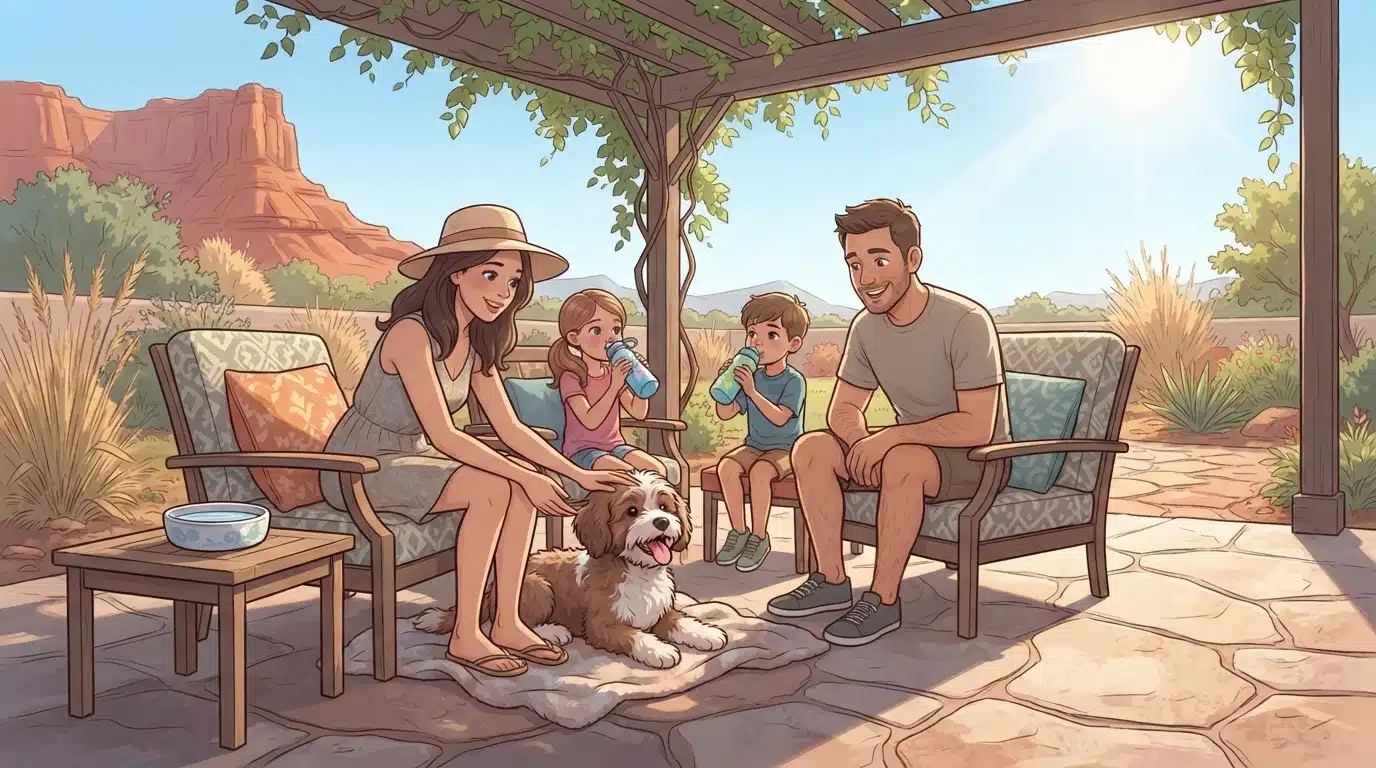
Schedule walks before 9 a.m. and after 7 p.m. in June through August. Midday, the air alone can sit past 95 F in the valleys, and sidewalks hold that heat long after sunset. The seven-second test works anywhere: press the back of your hand to the pavement. If you cannot hold it there for seven seconds, it is too hot for paws. As NBC News notes, asphalt on an 85-degree day can top 130 F, hot enough to burn pads quickly. Choose grass or shaded trails, and check pads for limping, licking, or darkened skin after every walk.
Heatstroke signals to watch for in a small puppy
Puppies under six months overheat faster than adult dogs, and flat-faced mixes struggle even more. Learn the early signs so you can act before it turns serious. According to the Royal Veterinary College, early signs include heavy panting, restlessness, and noisy or labored breathing as things worsen. Watch for:
- Excessive drool or thick, ropey saliva
- Bright red gums, then pale or bluish gums
- Wobbling, stumbling, or collapsing
- Vomiting or diarrhea
- Refusing to move or seeking shade mid-walk
If you see these, get your puppy into air conditioning, wet the belly, chest, and paws with cool (never ice-cold) water, and call your vet. Small bodies decline fast, so skip the wait-and-see approach. For a deeper checklist, our puppy weather safety guide covers heat, cold, and storm days.
Monsoon humidity, storms, and Foxtails
Late July and August bring Utah’s monsoon pattern. After weeks of dry air, humidity spikes, afternoon thunderstorms roll in, and weeds grow fast. That mix creates two problems. First, the humidity makes panting less effective, so your puppy heats up on a 90-degree day that once felt manageable. Shorten outings when the air feels muggy. Second, storms frighten many puppies; set up a quiet interior room with a bed and a chew before the forecast turns. Finally, scan trails and yards for foxtails, the bristly grass seed heads that burrow into paws, ears, and noses. Check between the toes after every grassy walk, and keep fur around the feet trimmed short. A seed caught early is a two-second fix.
Step 3: Ease Through Utah Fall and Winter
Fall gives you a break from the heat, then winter hands you a new set of problems: trapped pollution, bone-dry indoor air, and salt on every sidewalk. Here is how to handle each one.
Inversion air, dry heat, and the indoor humidity question
Utah’s valleys flip in winter. Cold air gets trapped under a warm layer, so the Wasatch Front sees periodic temperature inversions that hold pollution close to the ground. During these stretches, fine particle pollution (PM2.5) climbs, and northern Utah valleys record elevated PM2.5 levels through the winter.
On bad air days, shorten walks and skip fetch sessions. Small dogs breathe faster than we do, so they take in more air per pound of body weight. Watch for coughing, squinting, or low energy after outdoor time.
Indoors, your furnace runs constantly and drops humidity far below the 30 to 50 percent range most homes should sit at. Dry air leads to itchy skin, flaky coats, and cracked pads. A simple humidifier in the room where your puppy sleeps usually solves it.
Cold tolerance in Havanese, Havapoo and Cavapoo puppies
None of these three breeds was built for hard winters, and a puppy has less body mass to hold heat than an adult. A light single or wavy coat insulates less than a heavy double coat, so a 20-degree Utah morning feels colder to your puppy than to you.
Use short test runs. If your puppy lifts paws, shivers, hunches, or stops playing, bring them in. Most trips under 10 minutes are fine once they are past 12 weeks; very young puppies should stay inside on freezing days. A fitted coat helps on longer outings, and potty breaks can stay quick.
Tip: House training in winter works best on a consistent 10-foot patch you shovel clear. Puppies avoid deep snow, and a cleared spot builds the routine faster.
New owners moving in from milder states should expect a two-week adjustment, which is why our winter paw and cold-weather care guide covers arrival-season prep in detail.
Snow days, paw ice, and road salt
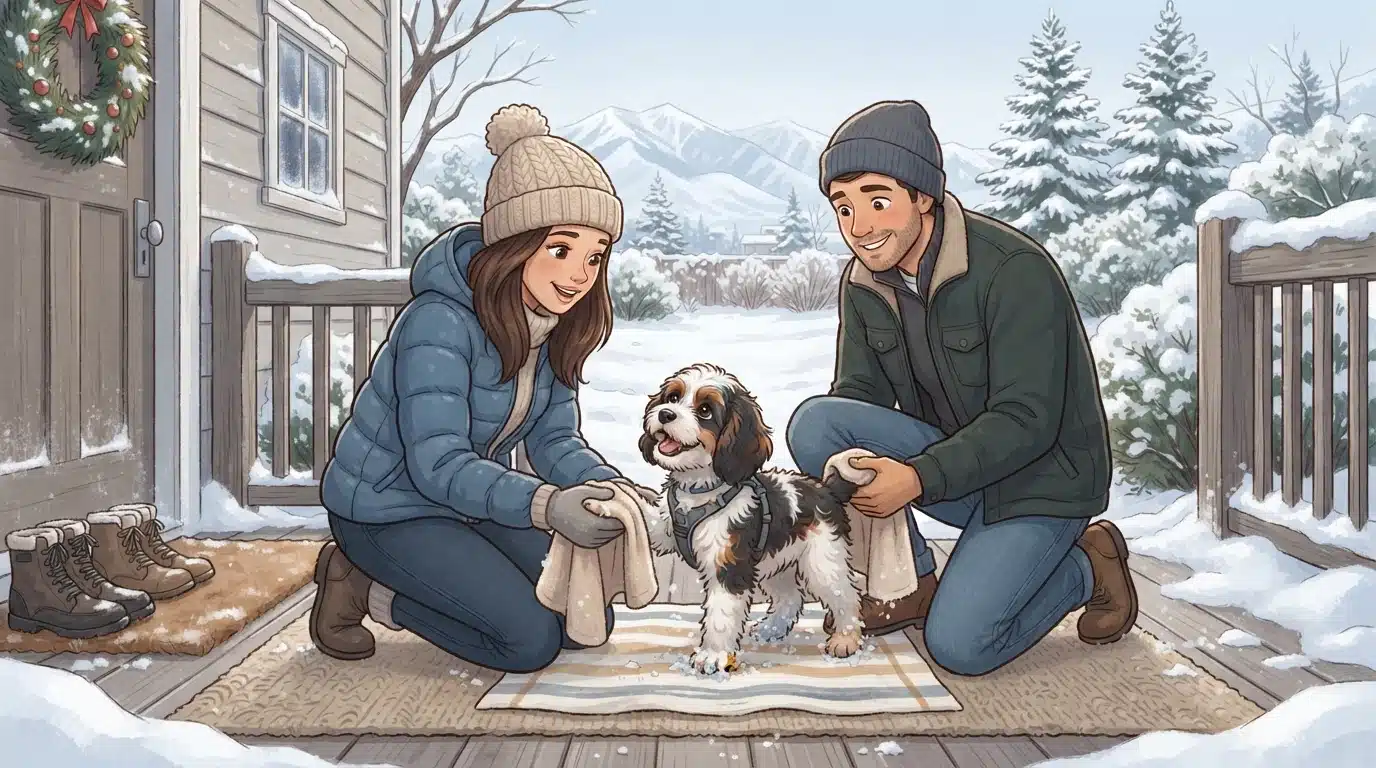
Snow itself is easy. The hazards stick to it. Rock salt and chemical ice melts sting raw pads, and your puppy will lick them off, which can upset the stomach.
Build a quick routine: wipe paws with a damp cloth after every walk, check between the toes for packed ice balls, and keep a towel by the door. At home, use pet-safe ice melt on your own walkways. On neighborhood sidewalks you cannot control, booties or a thin layer of paw balm add a barrier.
Watch for a subtle limp after walks, too. Ice between pads pulls at fur and skin, and a tiny cut from hidden crust can get infected if you miss it.
Step 4: Set Up the Calendar That Ties It All Together
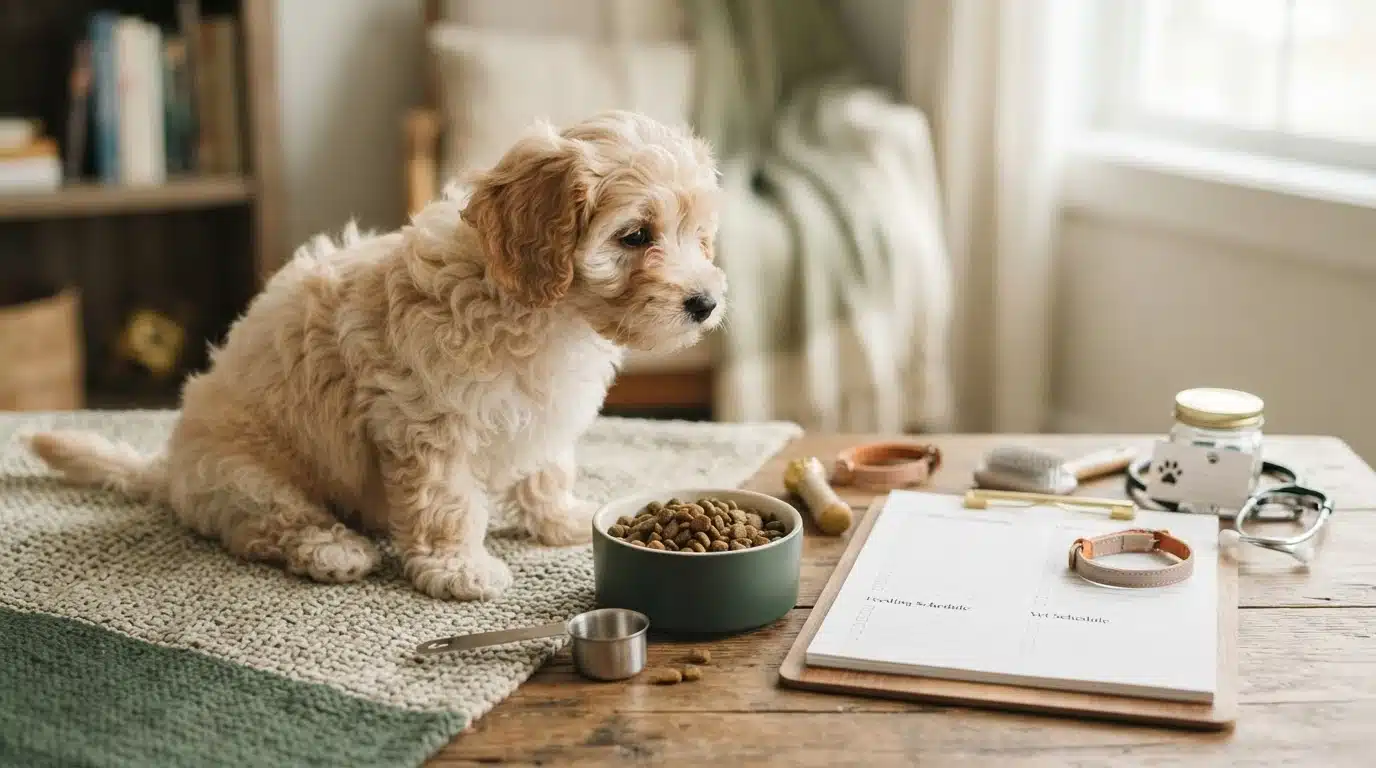
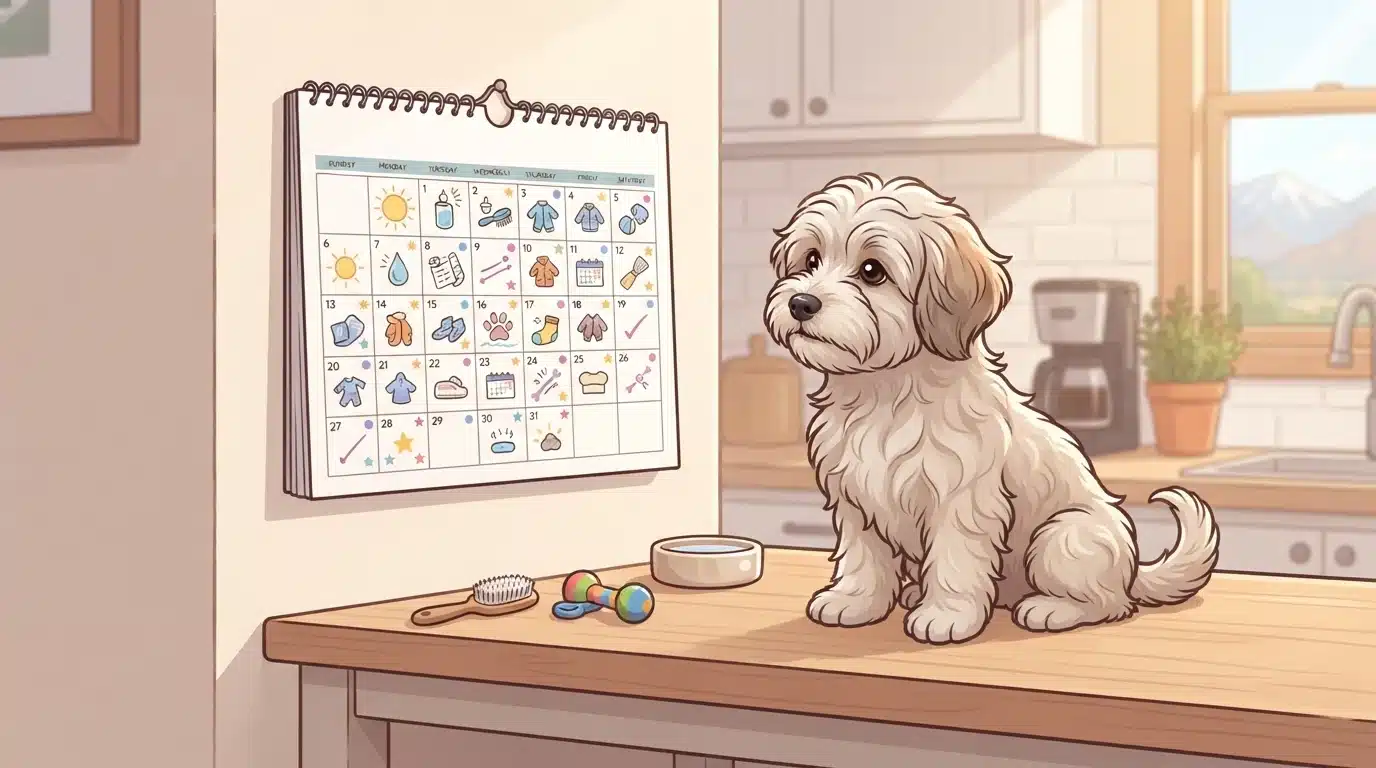
A calendar turns all that seasonal knowledge into habits you do not have to think about. Put the walks, grooming and vet visits in one place, and the year takes care of itself.
Month-by-month anchor for a Utah puppy
Mark these anchors for your first year, then adjust to your actual weather:
| Months | What goes on the calendar |
|---|---|
| May to Sep | Walks before 9 a.m. and after 7 p.m., daily paw checks, shade breaks on any outing |
| Jun to Aug | Cooling mat washed weekly, water bowl refilled twice a day, never a midday errand with the pup in the car |
| Oct | First cold-night check: sweater for potty breaks if your pup shivers |
| Nov to Feb | Short trips only, a shoveled 10-foot potty patch, paw wipe-downs after every walk |
| Dec to Jan | Watch inversion days; skip long play on poor air days |
| Mar to Apr | Mud season: towel by the door, check ears after wet walks |
| Every season | Grooming every 4 to 6 weeks, nail trims monthly, vet visits per your clinic’s schedule |
The rows shift a few weeks depending on where in Utah you live, so treat them as anchors, not dates.
Grooming and coat care that follows the season
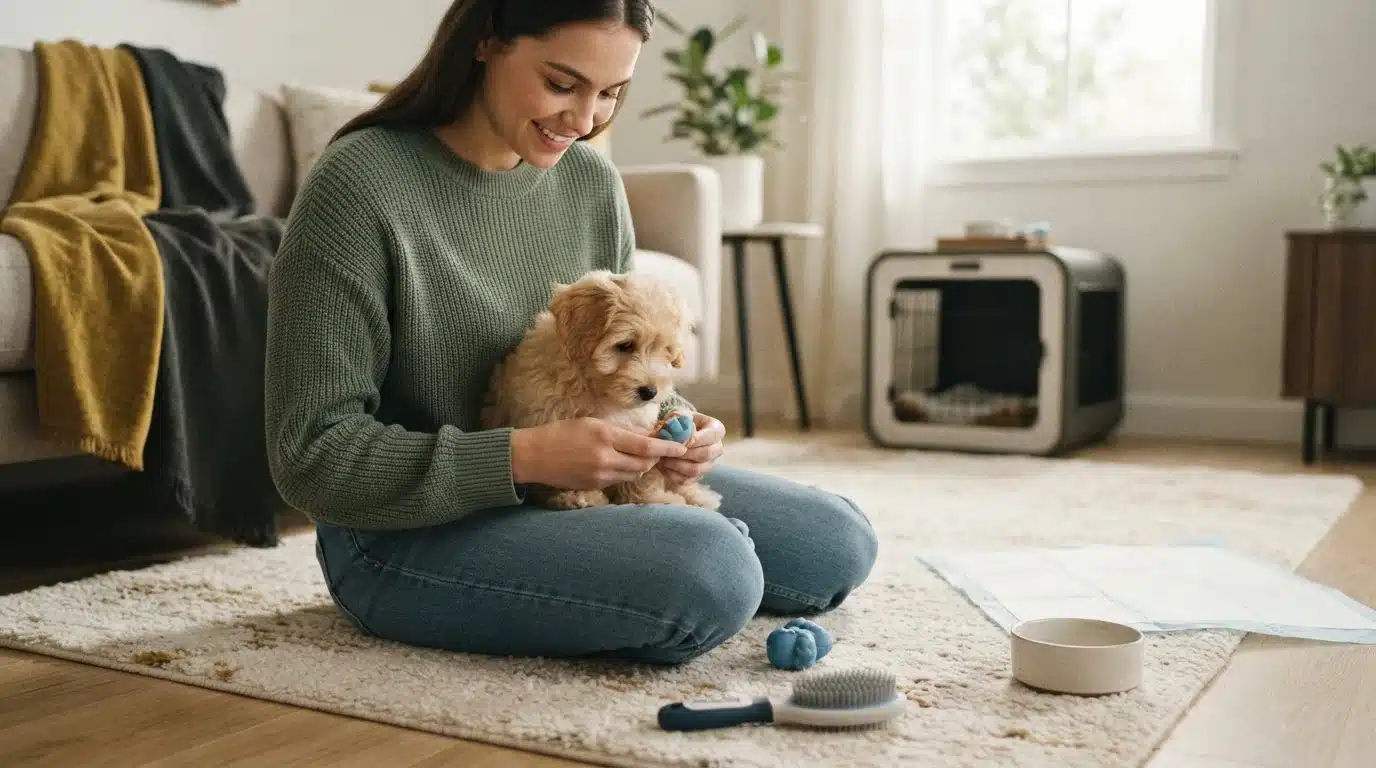
Havanese, Havapoos and Cavapoos all carry hair that grows instead of shedding out, so the calendar does real work here. In summer, a shorter trim helps a puppy cool off, but never shave to the skin. That single coat still blocks sunburn. Brush two or three times a week so lake trips, sprinklers and dusty trails do not turn into mats.
Winter flips the plan. Let the coat grow a little longer, brush before every snowy walk to remove loose hair, and dry the belly and paws after coming inside. Wet hair next to skin chills fast. Matted fur holds that moisture too, which is why a quick comb-through matters more in January than July.
Book grooming appointments a season ahead. Good groomers fill their winter slots early, and a puppy’s first few visits should be short and calm rather than rushed.
Step 5: Spot the Common Mistakes New Utah Puppy Owners Make
Utah’s biggest puppy problems come from habits that seem fine elsewhere. Watch for these in your first year.
Summer mistakes that look harmless but are not
A quick midday walk is the top one. Air in the 90s does not tell the whole story: when the air hits 85 degrees, asphalt can reach about 130 degrees, hot enough to burn pads fast, as one news report notes. Use the hand test before you head out. Another quiet error is leaving water outside in the sun, where it gets too hot to drink. Havanese and doodle coats also hide heat stress, so panting or slowing down mid-walk deserves a pause, not a push.
Winter mistakes that make a small puppy too cold or too hot
Overcoating is the first slip. A sweater plus a long car ride can overheat a small puppy even in freezing air. The second is long outdoor play, since a single light coat insulates far less than a double coat. Third, skip the salty sidewalk melt chemicals: they irritate pads and upset stomachs when licked. Wipe paws after every walk. Finally, do not assume house training fails because of your puppy. Frozen ground and deep snow scare many young dogs, so keep your shoveled potty patch consistent.
Step 6: Plan for the First Year With Your Sage Puppy
Why a Utah-raised small puppy often adjusts faster
A puppy already raised in Utah has lived through the state’s swings. Dry air, hot afternoons and cold mornings are normal to her, so her first summer or winter in your home usually brings fewer surprises. That matters for tiny breeds like Havanese, Havapoos and Cavapoos, whose small bodies feel weather changes quickly. Families moving from milder climates should still expect an adjustment window, but a Utah-raised puppy often settles into the routine faster.
Pickup, delivery, and the first week at home
Plan the handoff around the season. In summer, pick up early or late so the car is cool before she loads. In winter, keep trips short and wrap her in a blanket for the drive.
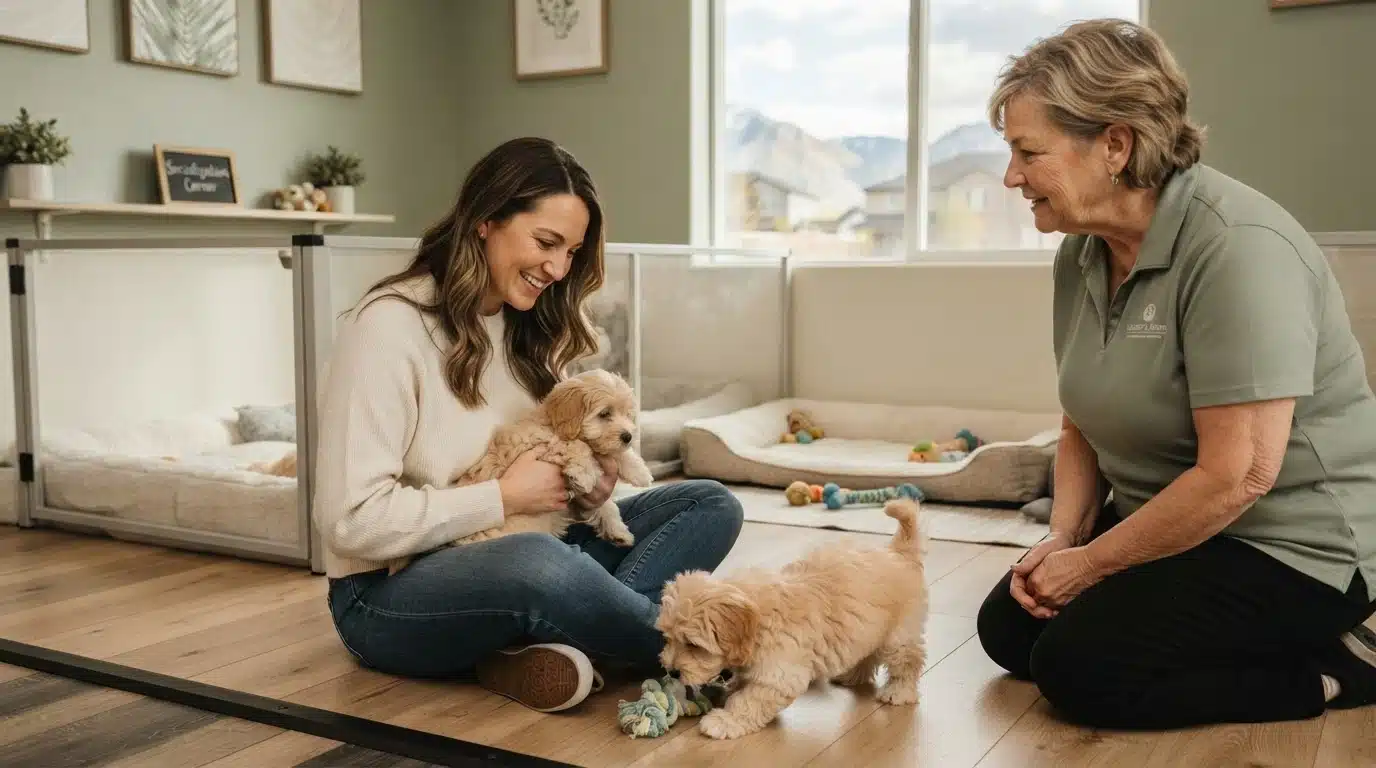
Set up one quiet space before she arrives: a crate, water, food and a potty spot. Keep her schedule boring for the first few days. Short potty breaks, gentle handling and plenty of sleep beat big outings. Call your vet during that first week to book a wellness check and set her vaccine schedule. From there, the seasonal habits above carry you through the year.

Utah seasons change fast, and a small puppy feels every swing. Whether you are preparing for a summer heat wave or your puppy’s first freeze, Sage Puppies can help you plan the next step. Visit Sage Puppies to start your application and bring home a Havanese, Havapoo or Cavapoo raised for Utah weather.
Frequently Asked Questions
Q1: seasonal care tips for utah puppy owners?
Walk early or late in summer, use the seven-second pavement test, wipe salty paws after winter walks, keep a shoveled potty patch, and run a humidifier when the furnace dries the air.
Q2: How cold is too cold for a Havanese puppy in Utah?
Below about 20 F, keep trips under 10 minutes. If she lifts paws, shivers, or hunches, head inside. Puppies under 12 weeks should stay in on freezing days.
Q3: When can my puppy walk on hot pavement safely?
Before 9 a.m. and after 7 p.m. from June through August. Even then, press your hand to the surface for seven seconds first. If it stings you, it burns her.
Q4: How do I handle potty training during a Utah winter?
Shovel one consistent 10-foot patch and use it every time. Deep snow scares young puppies, so a cleared spot builds the routine faster than a new location each trip.
Q5: Should I trim or grow out my puppy’s coat for the seasons?
Trim shorter in summer, never to the skin, since that coat still blocks sun. Let it grow longer in winter, and brush before snowy walks so mats cannot hold moisture.
Q6: Are Utah inversions really a problem for small dogs?
Yes. Small dogs breathe faster, so they take in more polluted air per pound. On poor air days, shorten walks and watch for coughing, squinting, or low energy afterward.
Conclusion
Utah seasonal puppy care comes down to a few repeatable habits. In summer, walk before 9 a.m. or after 7 p.m., test the pavement with your hand, and know the early signs of heatstroke. In winter, keep outings short, wipe salty paws, run a humidifier, and hold the potty routine steady on a shoveled patch. In between, inversion days call for shorter walks, and grooming shifts with the coat’s seasonal needs.
None of this is complicated, but it is Utah-specific. A Havanese, Havapoo or Cavapoo feels the state’s swings fast, so timing matters more here than in milder states. Set the calendar, trust the hand test, and the year mostly runs itself.