Quick Summary: Pick the Papillon if you want a faster learner who thrives on mental games and quick training sessions. Pick the Havanese if you’d rather have a gentler, people-first companion who burns energy through social play and settles easily into family life, since this breed is more forgiving for first-time owners and needs about 30 to 60 minutes of mixed daily activity. Both breeds are smart and moderately active, but their motivation differs: the Havanese works for your attention, while the Papillon works for the task itself. Neither breed handles long empty days well, so honest matching of the dog’s needs to your household matters more than any chart.
In the Havanese vs Papillon decision, the quick answer is this: the Papillon is usually the sharper, faster learner with more athletic drive, while the Havanese is the more emotionally tuned-in companion who still enjoys training but settles sooner each evening. That difference matters if you are a first-time small-breed buyer trying to match a dog to your household’s activity level and training patience. This Havanese vs Papillon comparison looks at daily energy, trainability, and fit so you can pick based on real life. Breed scores are a start, but individual puppies vary, so we will show you what to watch for beyond the breed label.
Havanese vs Papillon: Energy and Trainability at a Glance
| Havanese | Papillon | |
|---|---|---|
| Energy expression | Bouncy, social, settles when included | Athletic, alert, stays busy without a job |
| Daily exercise need | About 30 to 60 minutes of mixed activity | About 30 to 45 minutes plus mental work |
| Typical intensity | Moderate with playful bursts | High, sustained, quick to restart |
| Trainability | Eager to please, responds to gentle methods | Fast learner, eager for new challenges |
| Motivation style | Praise, proximity, food, gentle play | Food, toys, task variety, handler attention |
| Best household fit | Families wanting a tuned-in companion | Active homes that enjoy training and tricks |
How Havanese and Papillon Compare
Havanese
The Havanese is a small Cuban companion breed built for people. It spends energy in playful, social bursts and settles happily once it is included in family life. Sensitive and eager to please, it does best with gentle, praise-based training.

Key strengths
- Tuned-in, people-focused temperament
- Moderate energy with easy settle
- Responds well to gentle methods
Papillon
The Papillon is a toy spaniel with a working mind. Alert and athletic, it stays busy without a job and thrives on tricks, games, and structured activity. Quick learners do well here, so active homes that enjoy daily training get the most from this breed.
Key strengths
- Fast, curious learner
- High, sustained energy for sports and tricks
- Motivated by food, toys, and tasks
How Each Breed Expresses Energy Day to Day
Both breeds land in the moderate range, but they spend that energy in very different ways. The Havanese runs on connection. The Papillon runs on motion and mental sharpness. Watching how each one moves through a normal day tells you more than any energy score does.
The Havanese rhythm: bursts of play and people-focused downtime
A Havanese’s day looks like a series of short sprints. Ten minutes of fetch down the hallway, a quick zoomie around the coffee table, then a settle on the couch next to you. The breed is described as active and playful rather than high-drive, and it likes daily walks and playtime more than long, hard exercise.
The key detail is where the energy points: toward people. A Havanese often waits for you to start the game. Left alone in a yard, it may just potter around and check the door. That makes the daily 30 to 60 minutes easy to hit, since much of it doubles as family time. It also means the breed struggles more with boredom from loneliness than from too little exercise. Rotating toys and short training games fill the gaps well, and our Havanese puppy care guide covers how to structure that routine.
The Papillon rhythm: athletic, alert, and quick to reset
A Papillon’s energy looks different. It is quicker, more self-directed, and more precise. These dogs don’t wait for an invitation. They find one. A butterfly outside the window, a toy under the couch, a sound in the hall: the Papillon is up and investigating before you notice anything.
Papillons are famously athletic for their size and excel at fast, technical activities like agility, where they regularly rank among the top toy breeds. Their bodies reset fast too. After a burst of hard play, a Papillon can flip to calm within minutes, then flip back just as quickly. That on-off switch is real, but it depends on the mental side being met. Puzzle feeders, trick training, and scent games matter as much as walks.
What ‘high energy’ actually feels like in each breed
Neither breed will wear you out the way a Border Collie would. But “moderate” feels different in each. With a Havanese, you feel it as social demand: the dog wants your attention and engagement most of the day. With a Papillon, you feel it as alertness: the dog notices everything and wants a job for its brain, not just its legs.
The honest question isn’t “how much exercise?” It’s “what kind of interaction do I want to give?” The Havanese needs a companion. The Papillon needs a teammate.
Exercise Needs: Minutes Per Day and What Kind of Movement
Both breeds land in the moderate range, but they spend that energy in different ways. A Havanese spreads its movement across the day. A Papillon saves up sharp, focused bursts and wants a job to aim them at.
Walking, play, and brain games for a Havanese
Plan on the same 30 to 60 minutes of mixed activity already covered above, and expect much of it to happen indoors. The Havanese Club of America notes that the breed is often content living indoors and does not need hard exercise to burn off nervous energy. Two short walks plus play sessions cover most dogs.
What matters as much as the walk is variety. Rotate in fetch, tug, a stuffed puzzle toy, or three minutes of trick practice. Many Havanese get their largest share of daily movement through play rather than structured exercise, as Orvis’s breed profile describes. A bored Havanese invents its own games, so a few short bursts beat one long march.
Movement that satisfies a Papillon’s working drive
A Papillon needs roughly 30 to 45 minutes a day, but the mix skews mental. This is a toy breed with a working brain, and it thrives on tasks: trick training, scent games, rally, or backyard agility built from cones and a low bar. A Papillon that only gets leash walks often seems restless indoors even after real exercise.
Give it a session that ends in a earned success and it will settle. Ten minutes of focused training can tire a Papillon more than a half-hour stroll.
When a “short walk” is enough versus when it is not
A short walk is enough when the rest of the day includes play, training, or company. It is not enough when the dog paces, nips at ankles, or barks for attention, since those are signs of unmet needs rather than bad behavior. Watch your own dog, not just the clock.
For a deeper look at routines, Sage Puppies’ Havanese breed guides cover exercise and daily care in more detail.
How Each Breed Learns, and What Slows Them Down
Both breeds rank high on standard intelligence lists, but the scores hide a real difference. The Papillon learns because the work itself is rewarding. The Havanese learns because working with you is rewarding. That single difference shapes how you should train each one.
What “smart” means in the Papillon
The Papillon sits near the top of breed intelligence rankings for a reason. Bred for centuries as a companion to European nobility, it was also expected to perform. Modern Papillons still carry that drive, which is why they dominate small-dog agility and obedience rings.
In practice, this means a Papillon picks up new cues fast, often in a handful of repetitions. The catch is that fast learning cuts both ways. A Papillon will just as quickly learn that jumping on the table gets a reaction, or that ignoring a recall earns a chase game. It also bores easily, so short, varied sessions work far better than long drills.
What “eager to please” means in the Havanese
The Havanese scores well on trainability too, but its engine is different. This breed was developed in Cuba as a companion and performer, and its core motivation is connection. A Havanese wants to be part of whatever you are doing, and training taps straight into that.
That makes it forgiving for first-time owners. A Havanese tolerates imperfect timing and clunky cues without shutting down, because the reward is simply your attention. The trade-off is softness: harsh corrections damage trust quickly, and the breed can become clingy if every interaction is intense. Social time away from you, practiced early, keeps that in check.
Common training pitfalls for each breed
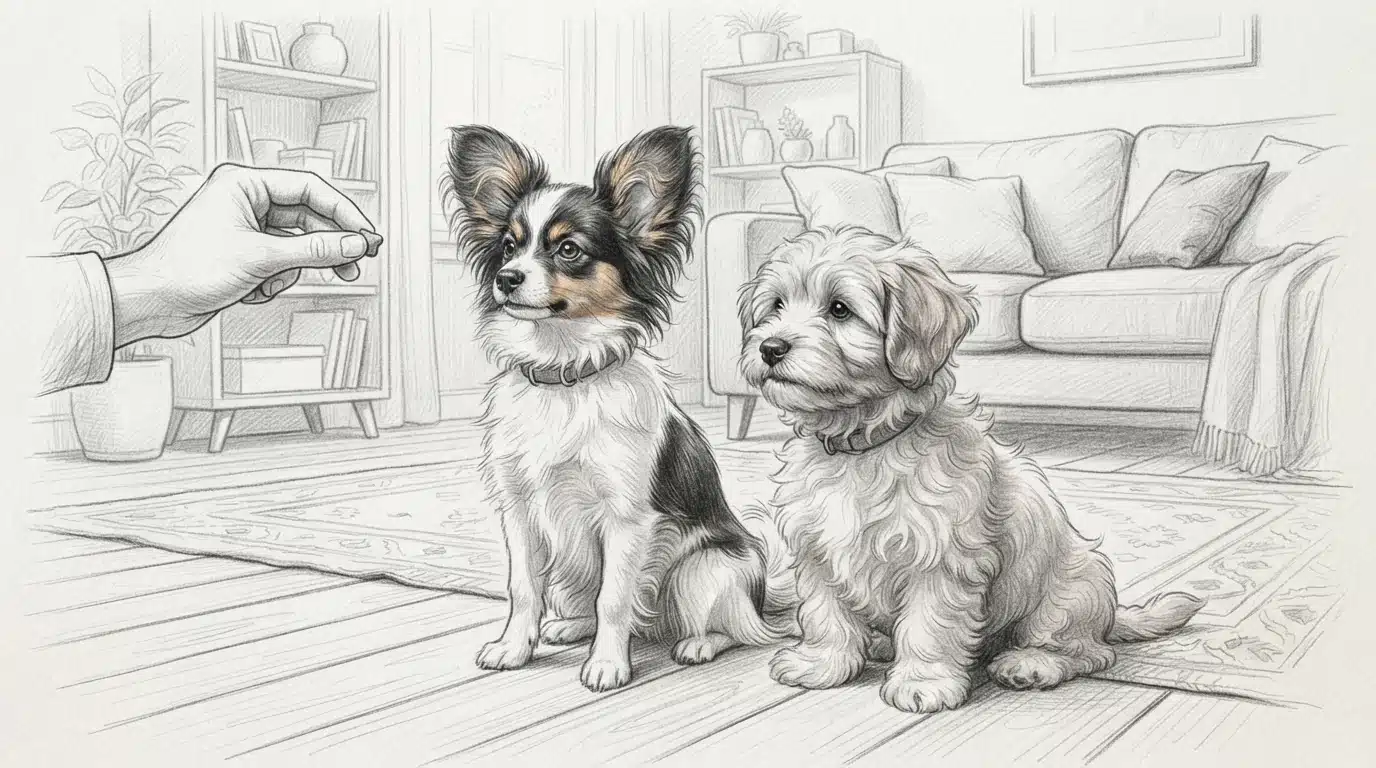
Each breed fails training in its own predictable way. Knowing the pattern ahead of time helps you avoid it.
| Breed | Common pitfall | What helps |
|---|---|---|
| Papillon | Boredom and self-reinforced bad habits | Short 3 to 5 minute sessions, varied rewards, consistent rules |
| Havanese | Clinginess and sensitivity to harsh tones | Gentle methods, calm practice alone, steady routines |
With a Papillon, the biggest mistake is under-challenging it. A bored Papillon invents its own games, and you will not enjoy them. With a Havanese, the biggest mistake is using your bond as a lever, for example scolding sharply or withholding affection as punishment. That erodes the very willingness that makes the breed easy to train.
Both breeds respond best to positive reinforcement and consistency from day one, so decide your house rules before your puppy arrives.
Motivation, Focus, and Off-Switch: What Each Breed Brings Home
Pay matters more than drive. Both breeds are smart enough to learn anything, but they work for different reasons, and that shapes how you train them from day one.
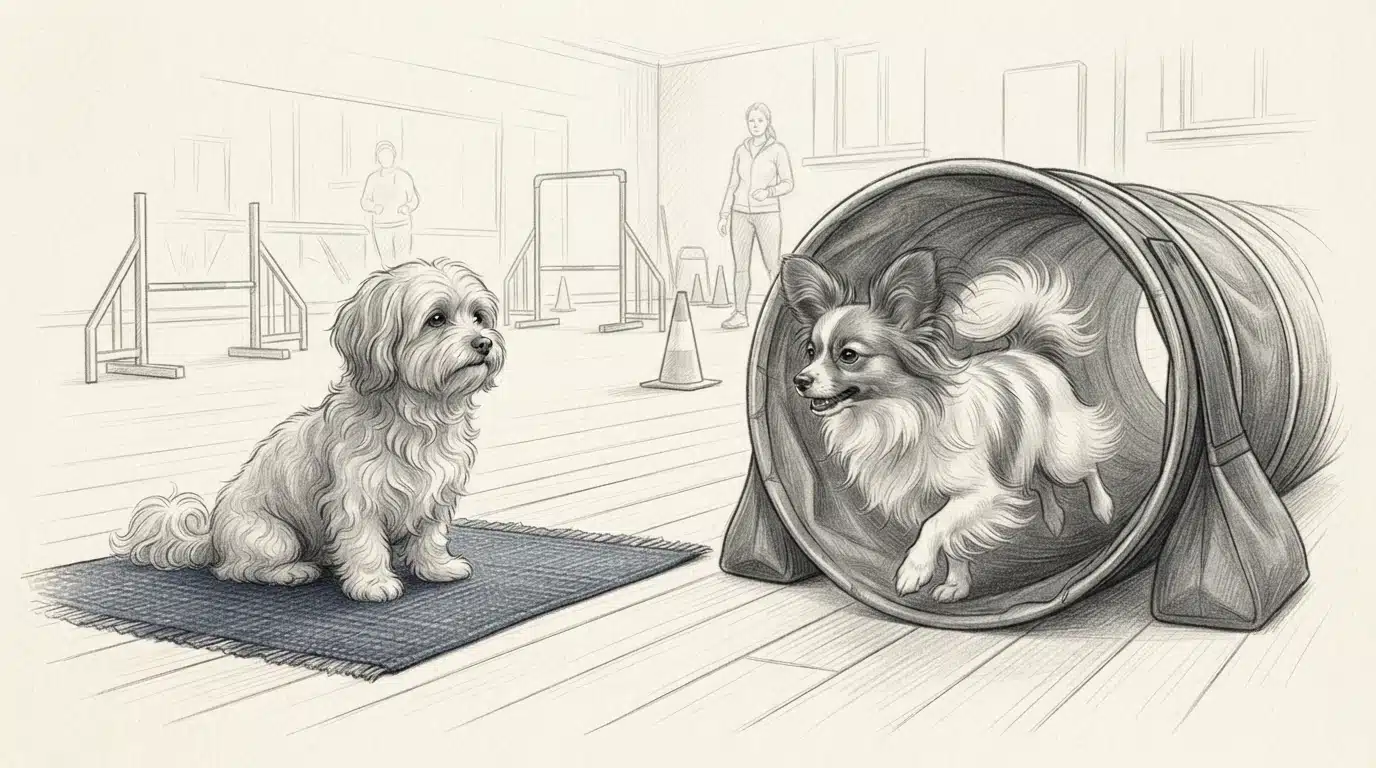
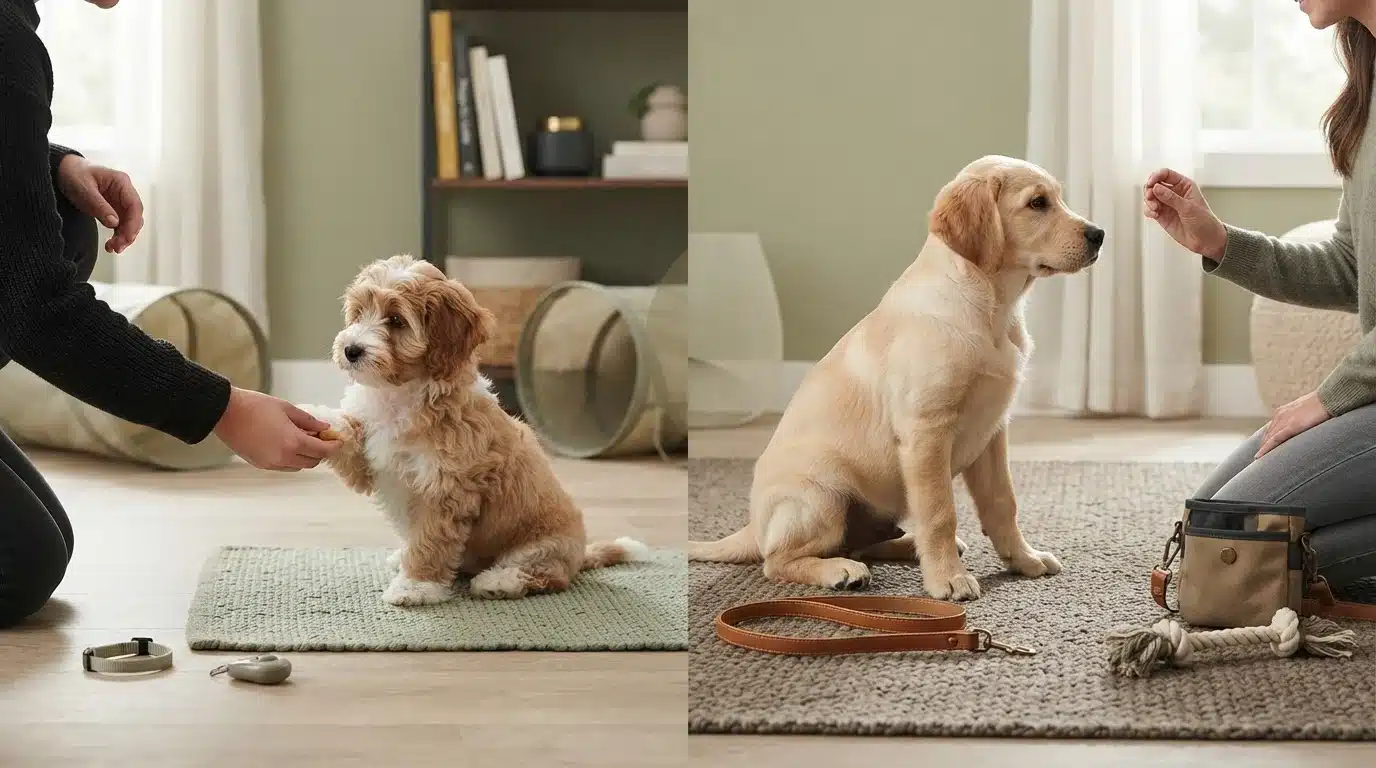
Rewarding a Papillon: food, toys, and task variety
Papillons are true performance dogs. Their motivation runs toward movement, toys, and the job itself, so most respond brilliantly to a tug toy or a food reward after a fast rep. The catch is focus: they get bored with repetition quickly. Keep sessions to 3 to 5 minutes, rotate rewards between treats, play, and a chance to work, and change the exercise often. A Papillon that guesses what comes next stays engaged. One that drills the same sit for ten minutes starts offering barks and spins instead.
Rewarding a Havanese: praise, proximity, and gentle food play
Havanese work for you, not for the game. Their strongest rewards are your attention, a happy voice, and being near their person, so warm praise often outperforms the fanciest treat. Food still helps, especially for first steps of a new skill, but pair it with contact and play. Short, silly sessions with gentle food games, like luring into a spin or a bow, suit their playful nature. Train a Havanese with a flat tone and they stall; train them like a game and they light up.
Building a real off-switch in both breeds
Smart, people-focused dogs need help learning to settle, and neither breed arrives with one. Teach a calm mat behavior daily, reward stillness after play, and keep naps on a loose schedule. Consistent quiet time in a pen or crate builds the habit, so a busy brain learns rest is part of the day too.
Matching the Breed to Your Household (Honest Trade-Offs)
Neither breed wins on paper. Pick the one whose quirks you can live with every day.
| Factor | Havanese | Papillon |
|---|---|---|
| Energy style | Steady, social, indoor play | Bursts, then sharp mental focus |
| Trainability | Eager but sometimes stubborn | Fast learner, needs variety |
| Alone time | Struggles more with long days | Handles structure slightly better |
| Noise | Alert barker | Alert barker, sometimes worse |
| Best fit | Homebodies, families, retirees | Active owners who enjoy training |
Choose a Havanese if your household is busy with people and wants a dog who joins everything. Accept the separation stress and the grooming budget.
Choose a Papillon if you find training fun and can give daily mental games. Accept a dog who invents mischief when bored.
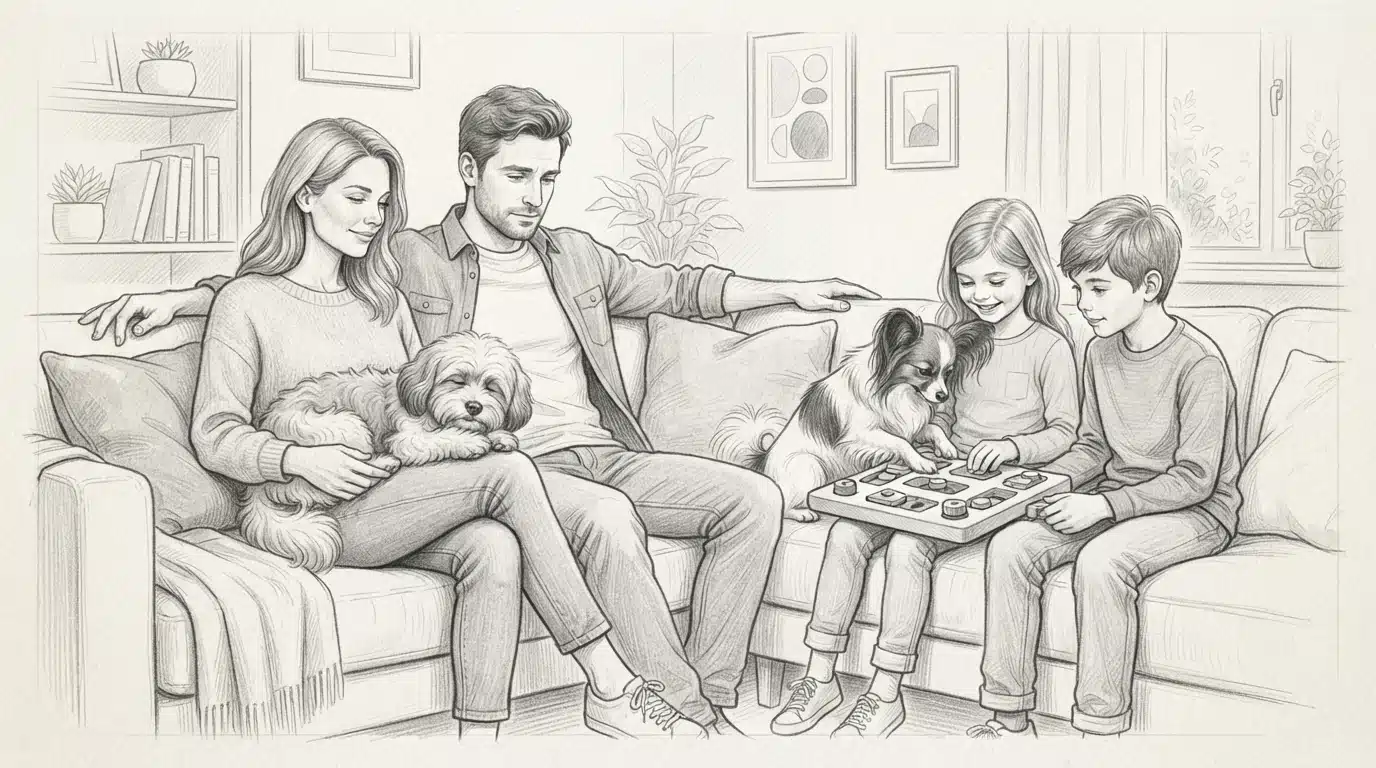
Honest caveat: individual puppies vary more than breed averages. Meet the litter and watch the parents. A breeder who matches temperament to your routine, the way the matching process works at Sage Puppies, helps more than any chart.
Which Should You Choose: Havanese or Papillon?
Pick the Havanese if you want a people-first companion who burns energy through play, cuddles, and time with the family. That same 30 to 60 minutes of daily activity folds easily into a busy household, and the breed’s eagerness to please makes early training forgiving for beginners.
Pick the Papillon if you enjoy a busy, clever dog who wants a job. Their 30 to 45 minutes a day leans mental, so plan puzzle toys, tricks, and short sessions to keep that sharp mind occupied.
Be honest about your schedule and taste for games. Both breeds thrive on attention, so neither suits a home that’s empty all day.
If a velcro-style companion fits your family better, our available Havanese puppies show the kind of temperament Sage Puppies breeds for.

If a Havanese fits your family better, Sage Puppies raises well-bred Havanese puppies with owner-managed matching. Browse available puppies, then submit an application to start the conversation. Cassie will help you find a companion whose energy matches your home.
Frequently Asked Questions About Havanese vs Papillon Energy and Training
Q1: havanese versus papillon energy and training?
The Havanese spends energy in social bursts and settles sooner, while the Papillon runs sharper, more self-directed bursts plus mental work. Both need 30 to 60 minutes daily; the Papillon needs more brain games.
Q2: Are Havanese or Papillons easier to train for first-time owners?
Havanese are more forgiving because your attention is the reward. Papillons learn faster but bore quickly and need short, varied sessions to avoid picking up bad habits.
Q3: Can either breed be left alone while I work?
Neither suits long, empty days. Havanese struggle more with separation, so practice calm alone time early. Papillons handle structure slightly better but need puzzle toys to stay settled.
Q4: Which breed barks more?
Both are alert barkers, and some Papillons are worse. Teach a “quiet” cue early and manage window and door triggers before habits form.
Q5: Do Papillons need agility training, or are walks enough?
Walks alone often leave a Papillon restless. Add ten minutes of tricks, scent games, or backyard agility daily; mental work tires them faster than exercise.
Q6: Which breed sheds or needs more grooming?
A Papillon’s coat needs regular brushing. A Havanese’s hair grows continuously, so plan professional grooming every few weeks along with brushing between visits.
Choosing Between a Havanese and a Papillon With Energy and Training in Mind
Both breeds are smart, social, and moderately active. The real difference is where the energy points: the Havanese trains and plays for your company, while the Papillon wants motion, mental games, and a job.
Pick the Havanese if your home is busy with people and you want a forgiving, people-first learner. Pick the Papillon if you enjoy daily training and can keep a quick mind busy.
Remember that individual puppies vary more than breed charts suggest. Meet the litter, watch how each puppy engages, and match temperament to your routine rather than relying on scores alone.