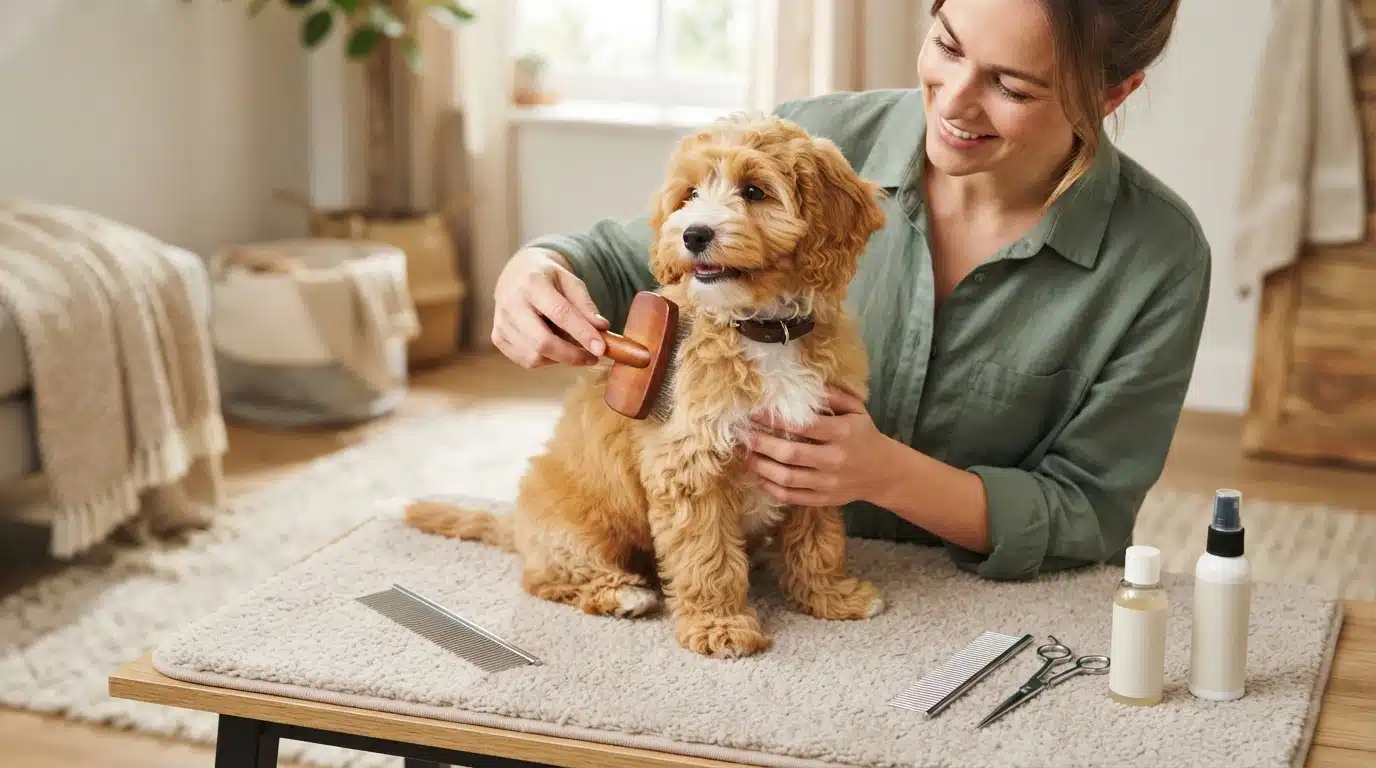
How often should you groom a small puppy? Most small puppies do best with two to five minutes of calm handling practice every day, a thorough brush-and-comb session three to five times each week, nail care every one to two weeks, a weekly ear check, daily toothbrushing, and a bath about every three to four weeks or whenever the puppy is genuinely dirty. Long, wavy, curly, or cottony coats may need daily combing and professional grooming every four to eight weeks.
The exact rhythm depends on coat texture, coat length, activity, skin health, and the haircut you plan to maintain. For Havanese, Havapoo, and Cavapoo puppies, consistency matters more than one long grooming session. Short, positive practice helps prevent mats while teaching a puppy that being brushed, handled, dried, and trimmed is a normal part of life.
A practical grooming calendar for a small puppy
Use the schedule below as a starting point, then adjust it to your puppy. A short puppy cut is usually easier to maintain than a long coat, but even a short coat needs combing in friction areas such as behind the ears, under the collar or harness, in the armpits, and around the legs.
| Grooming task | Starting frequency | What to do |
|---|---|---|
| Handling practice | Daily | Touch paws, ears, muzzle, legs, tail, and belly for a few seconds at a time. Reward calm behavior. |
| Brush and metal-comb check | 3–5 times weekly | Work in small sections and confirm the comb reaches the skin. Groom daily when the coat is long, curly, changing, or mat-prone. |
| Face and eye-area check | Daily | Remove loose debris gently with a soft damp cloth. Do not scrape dried material or use harsh products near the eyes. |
| Nails and paws | Every 1–2 weeks | Check length weekly and remove only a small amount. Inspect paw pads for trapped debris, redness, or hair that interferes with traction. |
| Ears | Check weekly | Look and smell without inserting anything into the canal. Clean only as needed with a puppy-safe product or under veterinary guidance. |
| Teeth | Daily if possible | Use a puppy-sized toothbrush or finger brush with toothpaste made for dogs. Never use human toothpaste. |
| Bath | About every 3–4 weeks | Bathe sooner when truly dirty. Detangle first, use a gentle puppy shampoo, rinse thoroughly, and dry the coat completely. |
| Professional grooming | Every 4–8 weeks | Choose the shorter interval for curly or longer coats and the longer interval only when home maintenance is preventing tangles. |
A professional appointment does not replace home brushing. A groomer can reset the haircut, trim nails, clean up the face and feet, and check the coat. The days between appointments determine whether the puppy arrives comfortable or matted.
How the schedule changes during the first year
Puppy grooming should begin as cooperative-care practice before the coat actually looks untidy. During the first months, the goal is not a perfect haircut. The goal is a puppy who can stand on a nonslip surface, accept gentle handling, and recover quickly after each new sensation.
Build trust with tiny sessions
Practice for one to three minutes. Touch each paw, lift the lips briefly, handle the ears, make one or two brush strokes, and let the metal comb touch the coat. End while the puppy is still comfortable.
Introduce the grooming setup
Use a stable nonslip mat, lengthen sessions to three to five minutes, and introduce grooming sounds at a comfortable distance. A gentle face, feet, sanitary, bath, dry, and nail appointment can be a useful first professional experience when your veterinarian says salon exposure is appropriate.
Watch for faster tangling
As the puppy coat changes, tangles may form more quickly. Increase brushing frequency before mats appear, pay special attention to friction areas, and keep professional appointments on a predictable schedule.
Set the adult routine
Choose a realistic coat length and repeat the same home routine each week. A manageable haircut maintained consistently is kinder than a long coat that repeatedly tangles and requires difficult dematting.
Grooming Havanese, Havapoo, and Cavapoo puppies
Individual puppies can vary even within the same breed, especially Havapoo and Cavapoo puppies whose coats may be straighter, wavier, or curlier. Use these ranges as a planning guide and let the comb—not appearance alone—tell you whether the schedule is working.
Havanese
A Havanese coat can look smooth on top while beginning to tangle closer to the skin. Line brushing and a complete comb check are especially important when the coat is kept long.
- Home care
- Four to seven days weekly; usually daily for a longer coat.
- Professional schedule
- About every four to eight weeks, depending on length and haircut.
- Watch closely
- Behind the ears, legs, chest, tail, and under collars or harnesses.
Havapoo
Wavy and curly Havapoo coats can trap loose hair and form tight knots. Surface brushing is not enough; finish each session with a metal comb that reaches the skin.
- Home care
- Daily or at least four to six days weekly.
- Professional schedule
- Usually every four to six weeks.
- Watch closely
- Face, ears, armpits, inner legs, belly, and harness areas.
Cavapoo
Cavapoo coats commonly need regular brushing around the ears, chest, legs, and other high-friction areas. A practical puppy cut can make home care easier for busy families.
- Home care
- Four to seven days weekly, with daily care for curlier or longer coats.
- Professional schedule
- Usually every four to six weeks.
- Watch closely
- Ears, chest, armpits, legs, tail, and under the collar or harness.
A calm seven-step brush-and-comb session
Keep the first sessions short. You can groom one part of the body in the morning and another later in the day. Completing the entire puppy in one sitting is less important than preserving trust.
- Prepare a safe surface. Use a nonslip mat at floor level or another secure location. Keep tools and small treats within reach before bringing the puppy over.
- Inspect before brushing. Run your fingers through the coat and look for burrs, damp spots, skin irritation, or tight knots. Never pull a brush through a mat.
- Lightly condition the coat. When appropriate for the coat, use a small amount of puppy-safe conditioning spray according to its label. This can reduce static and breakage.
- Brush in small sections. Separate the hair so you can work from the lower layer outward. Use gentle strokes and support the hair near the skin when you encounter a tangle.
- Finish with a metal comb. The comb should pass from the skin to the ends without snagging. Rework any area the comb cannot pass through comfortably.
- Practice face, feet, and ear handling. Briefly touch each sensitive area, reward calmness, and stop before the puppy becomes overwhelmed.
- End with an easy success. Give a reward, release the puppy, and make a note of any area that needs more attention in the next short session.
Baths, nails, ears, eyes, and teeth
Bathing
- Detangle the coat before it gets wet because water can tighten existing knots.
- Use lukewarm water and a gentle shampoo labeled for puppies.
- Rinse thoroughly; leftover product can irritate the skin.
- Blot rather than rub with a towel, then dry completely while gently brushing.
- Bathe about every three to four weeks, or sooner when genuinely dirty.
Nails and paws
- Handle paws daily and check nail length weekly.
- Trim or grind a very small amount every one to two weeks.
- Keep styptic powder nearby and ask a groomer to demonstrate if you are unsure.
- Check between paw pads for debris, irritation, or hair that affects traction.
Ears and eyes
- Check ears weekly for odor, redness, discharge, or discomfort.
- Never insert cotton swabs or tools into the ear canal.
- Wipe the eye area gently with a clean damp cloth when needed.
- Persistent eye discharge, squinting, head shaking, or ear odor should be evaluated by a veterinarian.
Teeth
- Begin with a brief lip lift and let the puppy taste dog toothpaste.
- Build toward daily brushing with a puppy-sized brush.
- Keep the first sessions under a minute and reward cooperation.
- Never use human toothpaste, which is not formulated to be swallowed by dogs.
What you need for home puppy grooming
You do not need a cabinet full of tools. A few correctly sized basics are more useful than specialty equipment used without instruction.
Core tools
- A soft pin brush or gentle slicker sized for a small puppy
- A stainless-steel comb with both wider and finer teeth
- A puppy-safe conditioning or detangling spray
- Small nail clippers or a quiet nail grinder
- Styptic powder
- A nonslip grooming mat
Care supplies
- Gentle puppy shampoo and conditioner when appropriate
- Soft washcloths and absorbent towels
- Dog toothpaste and a puppy-sized toothbrush
- Small, high-value treats reserved for grooming practice
- A written or phone calendar for brushing and appointments
Signs your current schedule is not frequent enough
Increase grooming frequency when:
- The comb catches after the top of the coat looks brushed.
- Knots return within a few days.
- The coat separates into clumps around the ears, legs, or harness.
- Nails repeatedly catch on fabric or affect comfortable footing.
- The puppy becomes restless because sessions are taking too long.
Call your veterinarian when you notice:
- Persistent itching, redness, scabs, bald areas, or skin pain
- A strong ear odor, discharge, repeated head shaking, or tenderness
- Eye redness, squinting, swelling, or persistent discharge
- A sudden coat change, unexplained odor, or discomfort during handling
- Any wound, lump, or problem that grooming alone cannot explain
Common puppy grooming mistakes
- Brushing only the surface. The coat may look fluffy while knots remain close to the skin.
- Waiting for a visible mess. Grooming is easier before the puppy is dirty, overgrown, or matted.
- Bathing a tangled coat. Water can tighten knots and make removal more uncomfortable.
- Making early sessions too long. Several calm minutes build more trust than one forced half hour.
- Using harsh tools or human products. Puppy skin, eyes, ears, and mouths require dog-safe supplies.
- Choosing more coat than the household can maintain. A shorter, consistent haircut is a responsible option.
When should a small puppy visit a groomer?
A puppy can begin positive grooming preparation at home immediately. For a salon visit, coordinate timing with your veterinarian and the groomer so the puppy's vaccination status and exposure risk are handled appropriately. The first appointment should be designed as a gentle introduction rather than a dramatic makeover.
Ask whether the groomer offers a puppy introduction that may include a bath, low-stress drying, a light comb-out, nails, and small face, feet, or sanitary trims based on the puppy's tolerance. After that introduction, reserve the next appointments before leaving so the coat never reaches a crisis point.
Questions to ask
- How do you introduce nervous or first-time puppies?
- How long will my puppy be at the salon?
- What coat length fits the home-care schedule I can maintain?
- What brush and comb do you recommend for this exact coat?
Information to share
- Your puppy's age, health needs, and prior grooming experience
- Any sensitive areas or signs of fear
- Your realistic brushing frequency at home
- The look you prefer and the amount of coat you can maintain
Small puppy grooming FAQ
How often should I brush a small puppy?
Start with a complete brush-and-comb session three to five times each week. Groom daily when the coat is long, curly, changing, or prone to mats. Brief handling practice can still happen every day.
How often can I bathe my puppy?
About every three to four weeks works for many small puppies, with an earlier bath when the puppy is genuinely dirty. Use a gentle puppy shampoo, rinse completely, and dry the coat thoroughly. A veterinarian may recommend a different schedule for a skin condition.
When should my puppy have a first professional grooming appointment?
Begin handling and brushing at home right away. Schedule a gentle professional introduction when your veterinarian says salon exposure is appropriate and the groomer can accommodate a young puppy safely.
Can I brush a puppy too much?
Gentle daily grooming is usually appropriate for a mat-prone coat, but repeated scraping, hard pressure, or the wrong tool can irritate the skin. Use light pressure, work in sections, and stop if the skin becomes red or the puppy shows pain.
What should I do when my puppy hates being brushed?
Shorten the session to a few seconds, pair each touch with a reward, and work below the puppy's stress threshold. Also check for mats, skin irritation, or pain. A qualified groomer or positive-reinforcement trainer can help when fear persists.
Is a short puppy cut easier to maintain?
Usually, yes. A shorter coat can reduce the time needed for brushing and drying, although it does not eliminate grooming. The best haircut is one your household can maintain comfortably between appointments.
Helpful next steps for a new puppy family
Preparing for a Havanese, Havapoo, or Cavapoo puppy?
Explore current availability, learn how the Sage Puppies process works, and submit an application when you are ready to find the right small companion for your family.
This guide provides general grooming education. Coat and health needs vary by puppy. Contact your veterinarian for skin, ear, eye, dental, or pain concerns, and ask a qualified groomer to demonstrate any technique you are not comfortable performing.