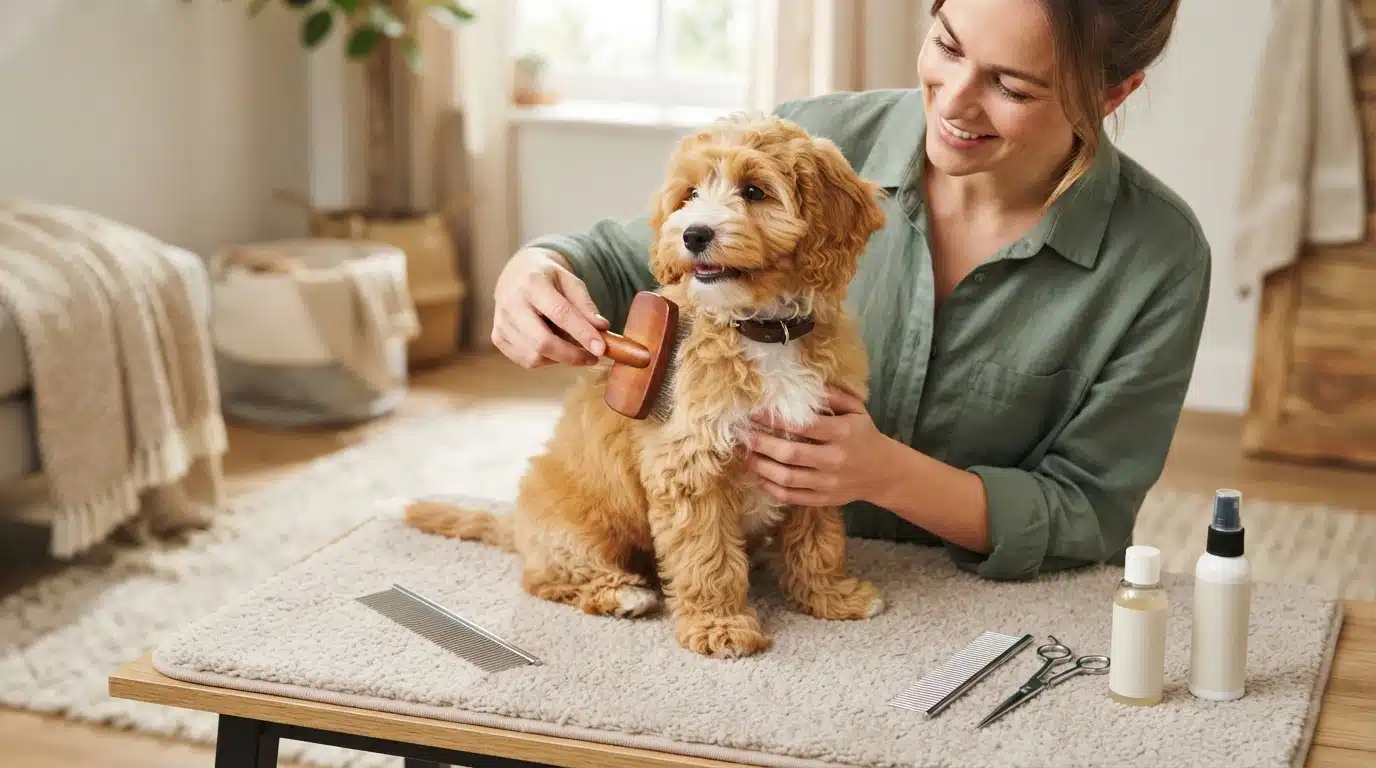
Cavapoo Grooming Guide: Coat Care, Haircuts, and At-Home Maintenance
A practical Cavapoo grooming guide for families in Utah and across the country—focused on keeping a soft, comfortable coat without letting hidden tangles become painful mats. Learn how often to brush, which haircuts are easiest to maintain, what you can safely do at home, and when to call a professional groomer.

Cavapoo grooming at a glance
These are practical starting points. Adjust the schedule for coat density, length, activity, weather, skin sensitivity, and your groomer or veterinarian’s guidance.
Why one Cavapoo grooming routine does not fit every dog
Cavapoos combine Cavalier King Charles Spaniel and Poodle ancestry, so their coats are not identical. One puppy may develop a loose, silky wave while another grows a dense curl that traps shed hair close to the skin. A coat can also become more demanding as the soft puppy coat transitions toward the adult coat during the first year.
The most useful question is not simply, “How often should a Cavapoo be groomed?” It is, “How quickly does this individual coat tangle at the skin?” Coat length, density, curl, collar use, outdoor play, swimming, and even the way a dog sleeps can change the answer. Families still learning about the breed can also review the Sage Puppies Cavapoo guide.
Straighter or loose-wave coat
This coat may feel silky and show more feathering around the ears, chest, legs, and tail. It may release more loose hair than a curlier coat, but it can still tangle behind the ears and anywhere friction occurs.
Wavy or fleece-like coat
A plush wave can look easy on top while forming small tangles underneath. Regular line brushing and a metal-comb check are important because surface brushing can leave the roots untouched.
Curly or dense coat
Tighter curls tend to hold loose hair inside the coat. Longer curly coats often need daily attention, especially during coat change, after outdoor activity, or when the dog regularly wears a harness.
Cavapoo grooming tools worth keeping at home
You do not need a crowded grooming cabinet. A few well-chosen tools, used consistently, are more valuable than a large collection that never reaches the skin.
- Soft or medium slicker brush: lifts and separates the coat without excessive pressure.
- Stainless-steel comb: confirms that brushing reached from the tips to the skin.
- Dog-safe detangling spray: adds slip so dry hair is less likely to break.
- Dog shampoo and conditioner: selected for the dog’s skin and coat, not human hair.
- Absorbent towels: used to blot and squeeze rather than rub the coat into new tangles.
- Low-heat or cool dryer: helps dry the coat fully while it is brushed straight.
- Nail clippers or grinder: whichever tool you can use calmly and safely.
- Dog toothbrush and toothpaste: human toothpaste should not be used for dogs.
- Veterinarian-approved ear cleaner: only when your veterinarian recommends a product and method.
- Non-slip grooming mat: gives the puppy secure footing during short handling sessions.
The comb is your quality check
A coat is not fully brushed just because the top looks fluffy. After brushing, a metal comb should move gently from the skin to the ends without catching. Never force the comb through a snag.
How to brush a Cavapoo without missing the underlayers
Line brushing means working through the coat in small sections rather than sweeping across the surface. It is the most reliable at-home method for finding tiny tangles before they tighten.
- Choose a calm moment. Place your Cavapoo on a non-slip surface after play or a short walk, when settling is easier.
- Lightly mist the coat. Use a dog-safe detangling spray. Avoid repeatedly brushing a completely dry, static-filled coat.
- Separate a small line of hair. Lift the upper coat with one hand so you can see the narrow section beneath it.
- Brush from the skin outward. Use short, gentle strokes. Hold the hair near the skin when working through a snag so you are not pulling directly on the puppy.
- Follow with the metal comb. Check the same section from root to tip. If the comb catches, return to the brush and work in smaller sections.
- Move methodically around the body. Complete one area before jumping to another, paying special attention to friction points.
- End before patience runs out. Several successful five-minute sessions are better than one long struggle.
Where Cavapoos mat—and what to do when you find a tangle
Mats form where hair rubs against hair, moisture stays trapped, or loose coat is not removed. They can tighten against the skin and make normal movement uncomfortable. Prevention is gentler, faster, and less expensive than removing a heavily matted coat.
Check these areas first
- Behind and underneath the ears
- Under the collar and harness straps
- Armpits and the inside of the front legs
- Chest, belly, and sanitary area
- Feet, lower legs, and between the paw pads
- Base of the tail and feathering
Loose tangle versus tight mat
A loose tangle that sits away from the skin may be separated with detangling spray, fingers, a slicker brush, and patient combing. Work from the ends toward the skin in tiny sections. Stop if the puppy shows pain, the skin becomes red, or the knot does not loosen easily.
Do not cut a tight mat with scissors. A mat can pull skin upward into the knot, making it difficult to see where hair ends and skin begins. A professional groomer can determine whether careful removal or a shorter clip is the safest option.
Do not bathe a matted coat first
Water and drying can tighten existing mats. Brush and comb the coat before the bath, or ask a groomer to assess substantial matting before you wash the dog.
Bathing and drying a Cavapoo at home
Many Cavapoos do well with a bath about every three to six weeks, but there is no universal calendar. A muddy dog, a dog with a veterinarian-directed skin plan, or a short-coated puppy may need a different schedule. The goal is a clean coat and comfortable skin—not bathing as often as possible.
- Brush and comb before the bath. Remove loose coat and small tangles before they become tighter when wet.
- Use lukewarm water. Wet the coat thoroughly while keeping a steady hand around the face and ears.
- Use dog-formulated products. Follow label directions and any veterinary recommendations for sensitive skin.
- Rinse longer than you think you need to. Residue can leave the skin itchy and make the coat feel dull or sticky.
- Blot instead of rubbing. Press water from the coat with towels rather than twisting and rubbing the curls together.
- Dry completely on low or cool airflow. Brush in sections while drying. Avoid hot air, and do not leave dense areas damp near the skin.
- Comb once more when dry. The final comb check catches tangles created during bathing or drying.
Popular Cavapoo haircuts and how much upkeep they require
The best Cavapoo haircut is the one your family can maintain comfortably between appointments. A beautiful long coat that mats every week is not kinder than a practical shorter trim. Bring a photo to your groomer, but also describe the length you can brush successfully at home.
Swipe left and right to compare all columns.
| Haircut | What it looks like | Home maintenance | Good fit for |
|---|---|---|---|
| Puppy or teddy-bear trim | Even body length with a softly rounded face and tidy feet. | Moderate. Brush several times each week; daily if kept longer or very dense. | Families who want a plush look without a full natural coat. |
| Lamb trim | Shorter body with slightly fuller legs and a shaped face. | Moderate to high around the legs, where longer hair can collect debris and mat. | Families who enjoy a styled outline and can maintain the leg coat. |
| Short utility trim | Practical, even length with tidy face, feet, and sanitary areas. | Lower, but not zero. Brushing, ears, nails, teeth, and appointments still matter. | Active dogs, busy households, frequent outdoor play, or coats that mat quickly. |
| Long natural trim | Longer body and furnishings with light shaping rather than a close clip. | Highest. Thorough daily line brushing and frequent comb checks are usually needed. | Experienced owners who enjoy regular coat work and scheduled professional shaping. |
What to tell your groomer
Share your preferred body length, face shape, ear and tail length, activity level, matting history, skin sensitivities, and how often you realistically brush. Ask for tidy paw pads, a sanitary trim, and a clear sightline around the eyes.
At-home Cavapoo maintenance beyond brushing
Coat care is only one part of grooming. Short, calm checks of the eyes, ears, mouth, nails, feet, and skin can help you notice changes early and make professional appointments easier.
Face and eyes
- Wipe normal surface debris with a soft, damp cloth.
- Keep hair from rubbing the eyes or blocking vision.
- Ask a groomer to handle precision trimming near a moving puppy’s eyes.
- Call your veterinarian for persistent redness, squinting, swelling, pain, or unusual discharge.
Ears
- Look and smell gently once a week and after bathing or swimming.
- Dry the outer ear area without pushing cotton swabs into the ear canal.
- Use an ear cleaner only as directed by your veterinarian.
- Do not automatically pluck ear hair; ask your veterinarian or experienced groomer what is appropriate.
Nails and paws
- Check nails every two to four weeks and trim before they become overlong.
- Introduce clippers or a grinder gradually, one nail at a time if needed.
- Inspect paw pads for trapped hair, burrs, grit, ice melt, cracks, or irritation.
- Have a groomer trim between the pads if you are not trained to do it safely.
Teeth and mouth
- Brush with dog toothpaste daily when possible, or follow your veterinarian’s dental plan.
- Begin with brief lip lifts and a small amount of dog toothpaste.
- Do not use human toothpaste.
- Ask your veterinarian about odor, bleeding gums, broken teeth, pain, or difficulty chewing.
At-home trimming safety
Full haircuts, clipper work, tight-mat removal, face scissoring, ear-canal care, and sanitary trimming require skill and restraint. Leave these tasks to a professional groomer unless you have been shown how to perform them safely on your individual dog.
Complete Cavapoo grooming schedule
Use this schedule as a starting framework, then shorten or lengthen the intervals based on what your comb, your groomer, and your dog’s skin tell you.
Swipe left and right to compare all columns.
| Frequency | Tasks | Adjust when |
|---|---|---|
| Daily or most days | Quick touch check of ears, feet, collar areas, and visible debris; line brush long, curly, or dense coats. | The coat is long, changing, wet often, or matting between normal sessions. |
| Three to five times weekly | Full brush and metal-comb check, including ears, armpits, chest, legs, belly, and tail. | The comb catches before the next scheduled session—brush more often. |
| Weekly | Inspect ears, skin, eyes, paw pads, teeth, harness areas, and nails. | You notice odor, redness, debris, persistent licking, scratching, or discomfort. |
| Every two to four weeks | Trim nails as needed; refresh paw and sanitary areas through a groomer when needed. | Nails touch the floor, alter gait, snag, or the dog becomes less tolerant of handling. |
| About every three to six weeks | Bath, condition, dry completely, and comb from skin to tips. | The dog is dirty, swimming often, or following a veterinary skin-care plan. |
| About every six to eight weeks | Professional bath, haircut, feet, sanitary trim, nails, and coat assessment. | A longer or denser style needs more frequent reshaping, or a short coat can comfortably go longer. |
How to prepare a Cavapoo puppy for grooming
A puppy does not need to love every grooming step immediately. The first goal is calm, predictable cooperation in sessions short enough to remain successful. Build the experience before the coat urgently needs a full appointment.
- Start with body handling. Briefly touch the chin, ears, legs, feet, tail, and chest, then reward calm behavior.
- Add the tools without using them. Let the puppy investigate the brush, comb, dryer, nail tool, and grooming surface.
- Practice one easy action. Make one gentle brush stroke, touch one nail, lift one ear, or briefly turn on the dryer at a distance.
- Use a non-slip surface. Secure footing can reduce fear and struggling.
- Reward stillness, not wrestling. Pause when the puppy settles, reward, and release before frustration grows.
- Increase duration gradually. Build from seconds to a few minutes over many calm repetitions.
- Schedule an introductory groom. A bath, face-and-feet tidy, or puppy visit can teach the environment before a full haircut is necessary.
Consistency matters more than intensity. A few minutes several times each week can create better lifelong grooming habits than waiting until the coat is tangled and the first appointment becomes difficult.
See how thoughtful handling and confidence-building fit into Sage Puppies’ early development approach, then use the same calm repetition after your puppy comes home.
When to call a groomer—and when to call your veterinarian
Call a professional groomer for
- Tight mats, broad matting, or knots close to the skin
- A full haircut, face shaping, sanitary trim, or paw-pad clip
- A puppy who panics around dryers, clippers, nail tools, or restraint
- A coat that tangles faster than your current routine can manage
- Help selecting a realistic haircut and appointment interval
Call your veterinarian for
- Persistent itching, redness, sores, swelling, or sudden hair loss
- Strong ear odor, discharge, repeated head shaking, or ear pain
- Eye redness, squinting, swelling, pain, or unusual discharge
- Broken nails, bleeding that does not stop, limping, or paw pain
- Any grooming-related injury or behavior that suggests pain
Cavapoo grooming FAQ
Clear answers to the questions families most often ask about Cavapoo coat care and haircuts.
How often should a Cavapoo be professionally groomed?
Many Cavapoos do well with a professional appointment about every six to eight weeks. Longer, denser, or faster-matting coats may need shorter intervals, while a practical short trim may sometimes go longer. Your groomer can recommend the best timing after working with the individual coat.
How often should I brush my Cavapoo?
Brush at least three to five times each week as a starting point. Long, curly, dense, wet, or changing coats often need daily line brushing. Follow every session with a metal comb; if the comb catches before the next session, increase the frequency.
What is the easiest Cavapoo haircut to maintain?
A short, even utility trim is generally easier to maintain than a long teddy-bear or natural coat. It still requires brushing, ear and nail care, dental care, baths, and professional appointments. Ask your groomer for a practical length that suits the coat and your home routine.
Can I groom my Cavapoo entirely at home?
Owners can safely handle regular brushing, combing, bathing, drying, toothbrushing, basic checks, and nail care when trained and comfortable. Full haircuts, face scissoring, tight-mat removal, sanitary work, and difficult nail trims are safer with a professional groomer.
Why does my Cavapoo mat so quickly?
Dense curls can trap loose hair, while moisture and friction from collars, harnesses, sleep, play, and movement create tangles. Surface brushing may also leave knots near the skin. Shorter coat length, more frequent line brushing, complete drying, and closer grooming appointments can help.
Are Cavapoos hypoallergenic or completely non-shedding?
No. Some Cavapoos shed less than some other dogs, especially when their coat is curlier, but coat and allergen levels vary. No breeder can guarantee that an individual Cavapoo will be hypoallergenic or suitable for every person with allergies.
Choose a puppy—and a care routine—that fits your family
Explore Sage Puppies’ Cavapoo information, current puppy availability, reservation process, and application steps. Families can also learn about pickup in South Jordan, Utah and puppy delivery options.