Quick Summary: Small breed puppies (under about 22 pounds) fit apartments, packed schedules, and rentals with weight caps, needing only 30 to 45 minutes of daily activity and often living 12 to 16 years. Medium breed puppies (20 to 60 pounds) suit homes with yards and active families, but require 60 to 90 minutes of exercise and higher food, gear, and medication costs. The article ultimately recommends checking your square footage, daily schedule, and year-one budget, then matching the size to the life you actually live, with family-focused programs like Sage Puppies available to help pair buyers with a Havanese, Havapoo, or Cavapoo that fits.
Here’s the heart of this small breed puppies vs medium breed question: if you live in a 700-square-foot apartment with two school-age kids and a 35-minute lunch break, a small puppy almost certainly fits your life better. Most first-time owners are really choosing between a dog under about 22 pounds and one in the 20 to 60 pound range, yet few have a clear framework for what that size actually changes. This small breed puppies vs medium breed comparison walks through space, exercise, year-one cost, training shape, family fit, longevity, and travel. Then it closes with a clear pick for the most common buyer profile, drawn from years of placing companion-bred puppies with families.
Small Breed Puppies vs Medium: At a Glance
| Small breed puppies | Medium breed puppies | |
|---|---|---|
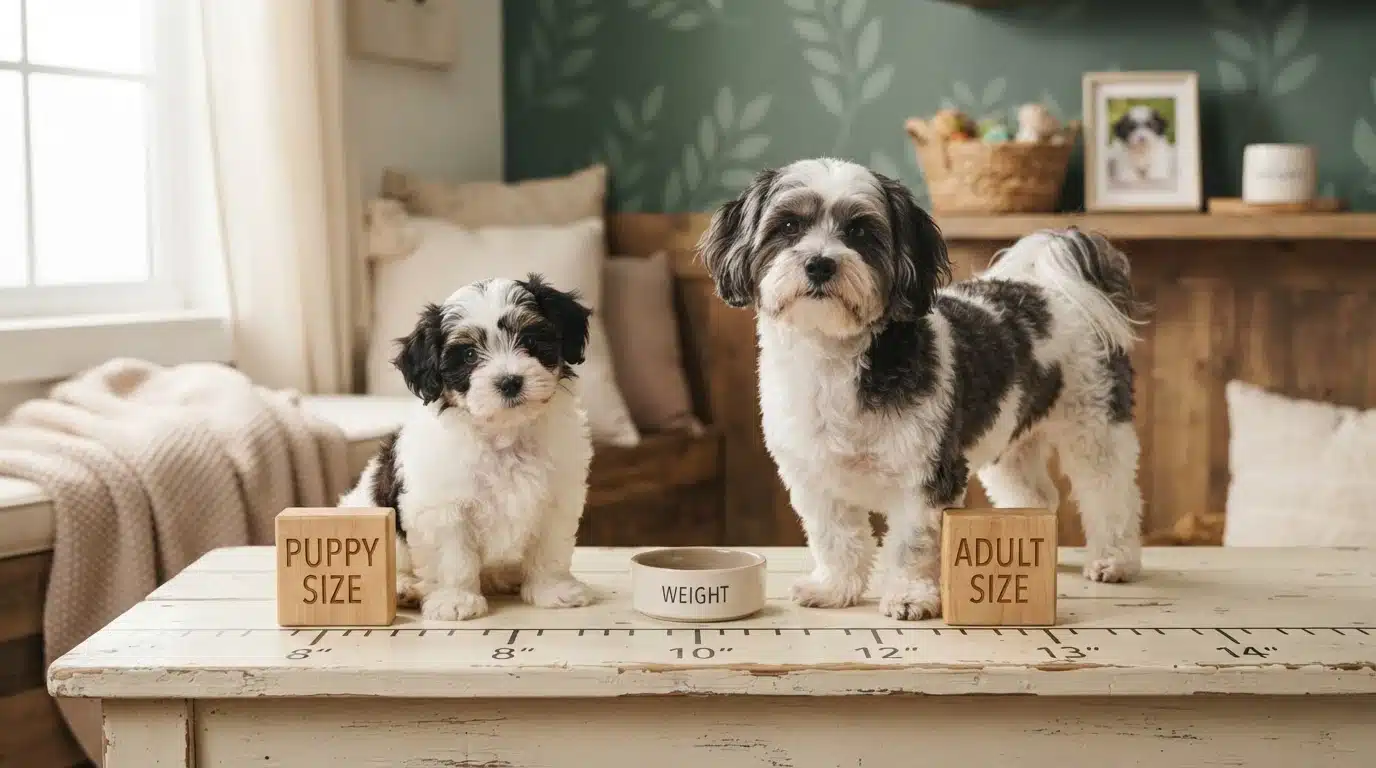
| Adult size range | Roughly under 22 lb and under 16 in at the shoulder | Roughly 20 to 60 lb, up to about 27 in tall |
| Best home setup | Apartments, condos, smaller yards, and frequent travel | Houses with a yard or easy outdoor access, room to roam |
| Daily exercise needed | About 30 to 45 minutes of walking and play, often less intense | About 60 to 90 minutes, often higher intensity |
| Year-one cost shape | Lower food volume, smaller gear, lower many medication doses | Mid-range food, more medication, sturdier training gear |
| Fit for first-time owners | Easier to manage physically and in tight spaces | Doable, but plan more time for exercise and training |
| Lifespan outlook | Often 12 to 16 years, longer on average than larger sizes | Often 10 to 13 years, shorter on average than small breeds |
How Small breed puppies and Medium breed puppies Compare
Small breed puppies
Small breed puppies are companion-sized dogs that usually mature under about 22 pounds and 16 inches at the shoulder. They suit apartments, smaller yards, and families who travel, since they need only 30 to 45 minutes of daily activity. In the small breed puppies vs medium breed decision, they appeal to first-time owners who want an easier physical match and often a longer lifespan of 12 to 16 years.
Medium breed puppies
Medium breed puppies grow into active, sturdy family dogs that generally land between 20 and 60 pounds. They fit homes with a yard or easy outdoor access, and they thrive on 60 to 90 minutes of exercise each day. This route works for first-time owners too, but it asks for more time, training gear, and food budget from year one.
What We Mean by Small vs Medium Breed Puppies
Breeders and vets sort dogs by adult weight and height at the shoulder. The exact cutoffs vary a bit, but the working line between small and medium is simple: small breeds mature under about 22 pounds, and medium breeds land between 20 and 60 pounds.
The Numbers Buyers Actually Use
| Category | Adult weight | Height at shoulder |
|---|---|---|
| Small | Under about 22 lb | Under 16 in |
| Medium | 20 to 60 lb | Up to about 27 in |
That ~20-pound overlap zone is where most of the confusion happens. A Cavapoo bred from a larger parent line can sit right on the border, which is why good breeders quote a predicted range, not a single number.
Why Breed Labels Get Fuzzy Fast
Not every “small” puppy stays small, and some “medium” labels are guesswork. Mixed breeds like the Havapoo and Cavapoo inherit size from whichever parent breed dominates, so two puppies from the same litter can mature several pounds apart. Ask for the weights of both parents, and compare them to breed standards from sources like the American Kennel Club rather than a breeder’s hopeful estimate. When you browse small breed puppies, treat adult size as a range you plan around, not a promise.
Space, Walks, and Daily Routine
Square Footage and Rentals
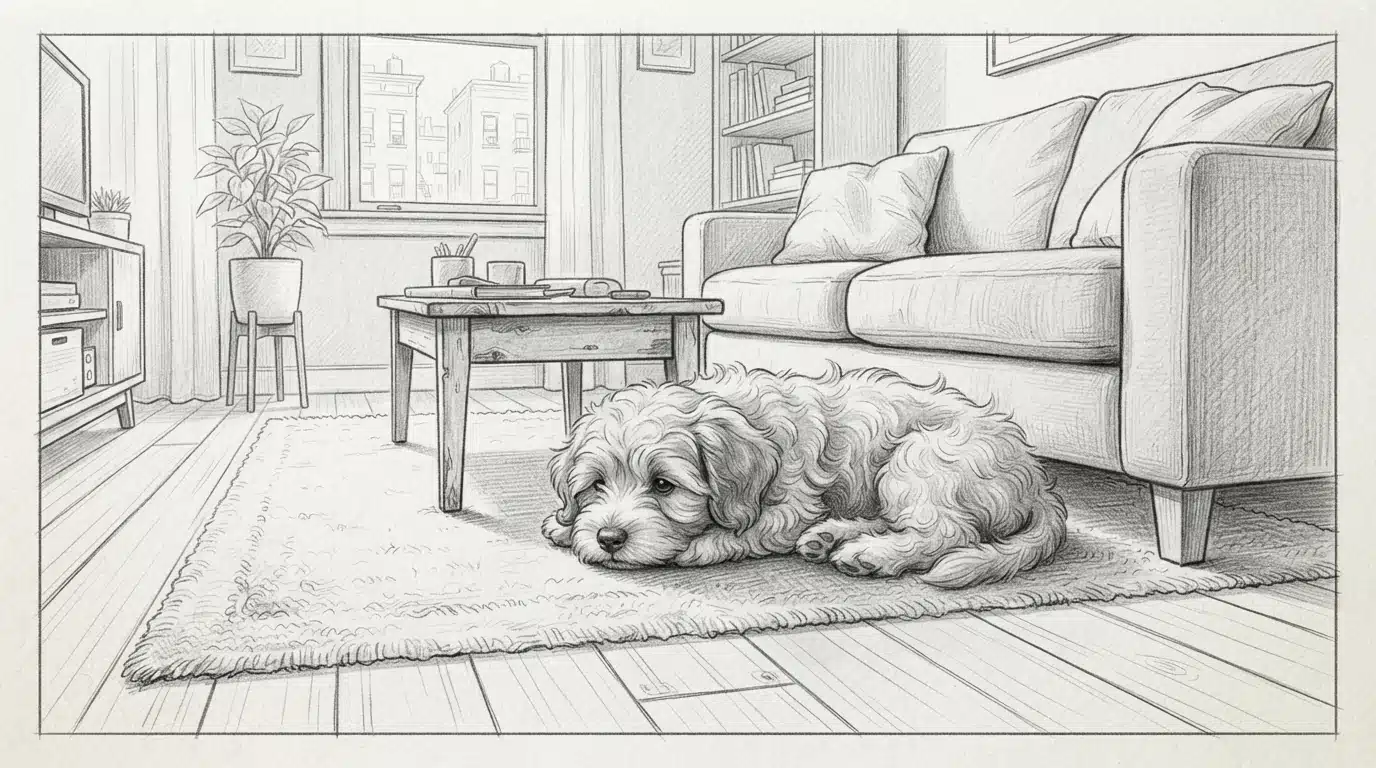
Small breeds settle into apartments more easily because they need less room to play and rest. A 700-square-foot apartment works fine for a dog under 22 pounds, as long as you commit to daily walks and indoor play. Medium breeds can also adapt to apartment life, but they need more floor space, sturdy furniture, and a plan for burning energy outside. If you rent, check pet policies carefully: many landlords set weight limits around 25 to 50 pounds, which can rule out medium breeds before you even meet one. Small breeds often slide under those caps.
How Long and How Often You Walk
Plan on 30 to 45 minutes of walking and play for a small breed, split across two or three short outings. A quick morning walk, a midday potty break, and an evening stroll usually cover it. Medium breeds ask for 60 to 90 minutes, often at a brisker pace, and skipping a day shows up as chewed shoes or restlessness. If your schedule already includes long walks or runs, a medium breed will happily match you. If your days are packed, a small breed fits better. This is one of the clearest dividing lines between the two sizes.
The Energy Caveat
Size is not the whole story. Some small breeds, like Havanese, pack surprising energy into a small frame, while some medium breeds are mellow couch dogs. Breed and individual temperament matter as much as weight, so research the specific breed, not just the size category. Puppies of any size also need more frequent potty breaks, training sessions, and supervision than adult dogs. Build your routine around the puppy stage first, then adjust as your dog matures and settles into a calmer rhythm.
Year-One Cost Shape, Food Through Vet Bills
Size quietly shapes your budget. The purchase price may differ less than you think, but food, grooming, and meds all scale with the dog on the other end of the leash.
Food, Gear, and Preventive Care
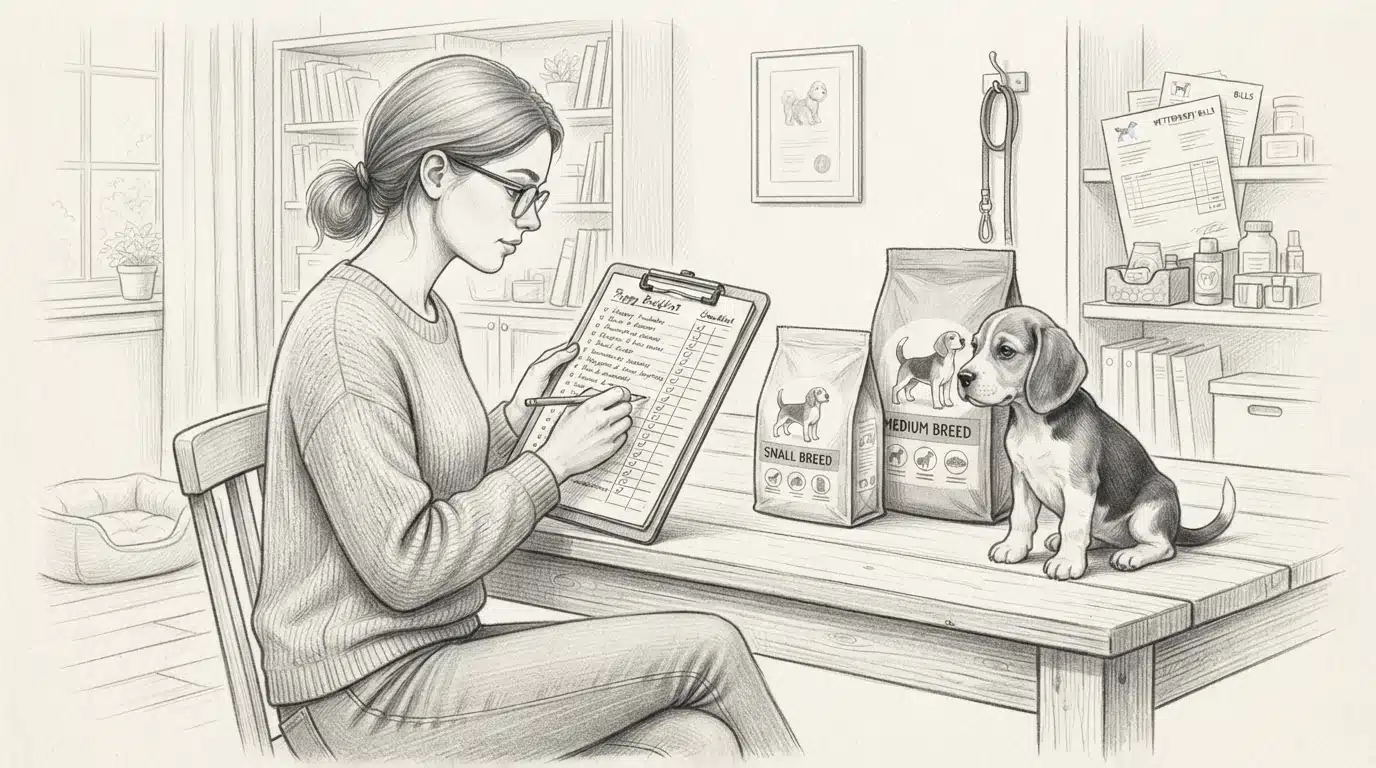
First-year spending runs wide. AKC Pet Insurance pegs a puppy’s first year at $740 to $1,325, with ongoing annual costs of $500 to $875 after that. The AKC’s own survey puts average one-time costs near $2,100, including a crate and spay or neuter surgery.
Food is the clearest size difference. A dog under 22 pounds eats a fraction of what a 50-pound dog does, so a medium breed’s food bill can run two to three times higher each month. Gear follows the same rule: bigger crate, bigger bed, stronger leash. Preventive care, like vaccines and heartworm medication, is usually priced in weight bands, so medium dogs often pay a bit more per dose.
Training, Grooming, and Sitting
Puppy classes often cost the same regardless of size, so training lands evenly. Grooming does not. Curly-coated companion breeds need professional trims every six to eight weeks, and salons charge by coat condition and time. Boarding and pet sitting usually price by dog size too, and many sitters add a fee once a dog tops about 40 pounds.
Set aside a year-one buffer beyond the purchase price. First-year vet work alone, with boosters and a spay or neuter, often lands near $1,000 before anything unexpected happens.
Why Medium Sometimes Costs a Touch More Than You’d Expect
The line items add up. More food, bigger doses, larger gear, higher sitting fees. Alone, each is small. Together, medium breeds often run a few hundred dollars more per year. If you want a fuller breakdown, our puppy pricing and reservation guide shows what a bred puppy’s price actually covers.
Training, Handling, and Behavior Differences
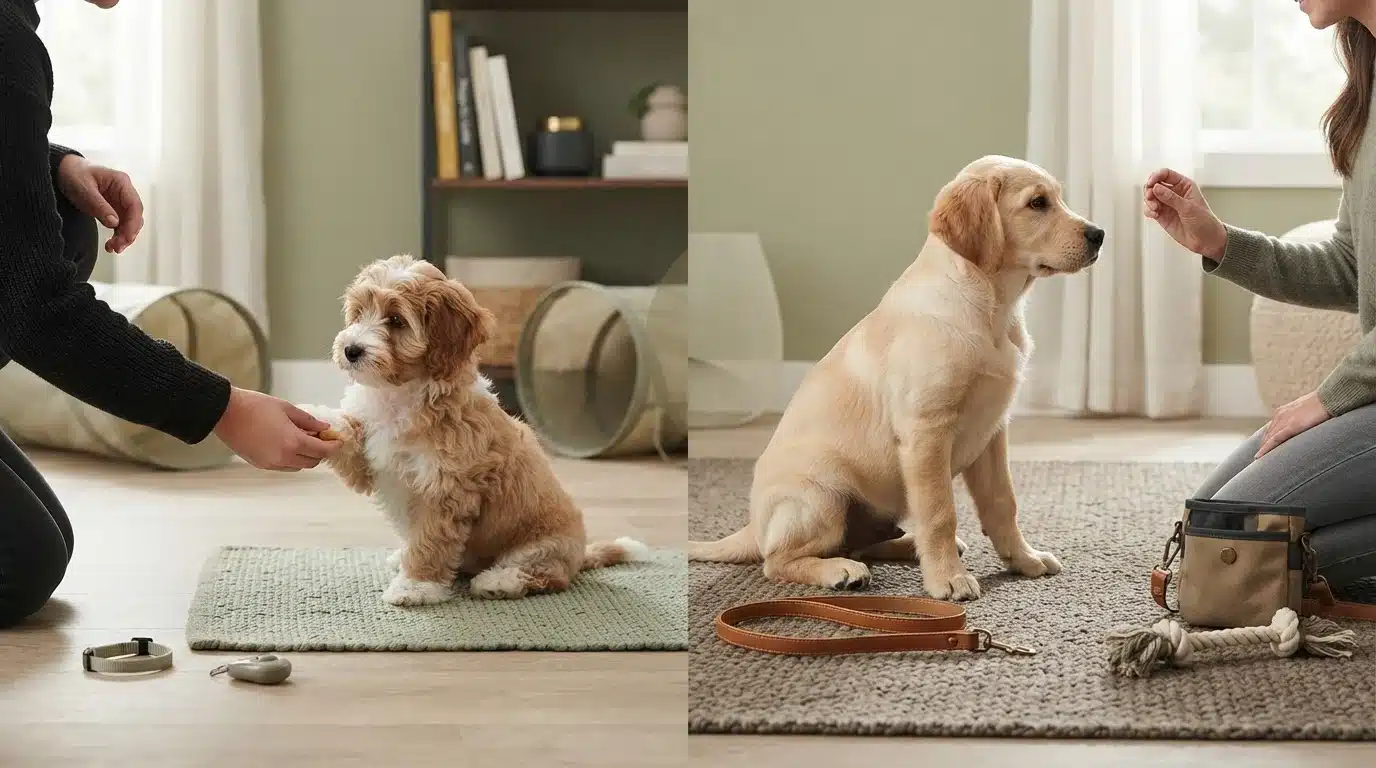
Size changes the physics of training before it changes anything else. You can redirect a 10-pound puppy with one hand. A 40-pound adolescent pulling on a leash is a different workout, and your techniques need to match.
Leash Walks and Handling
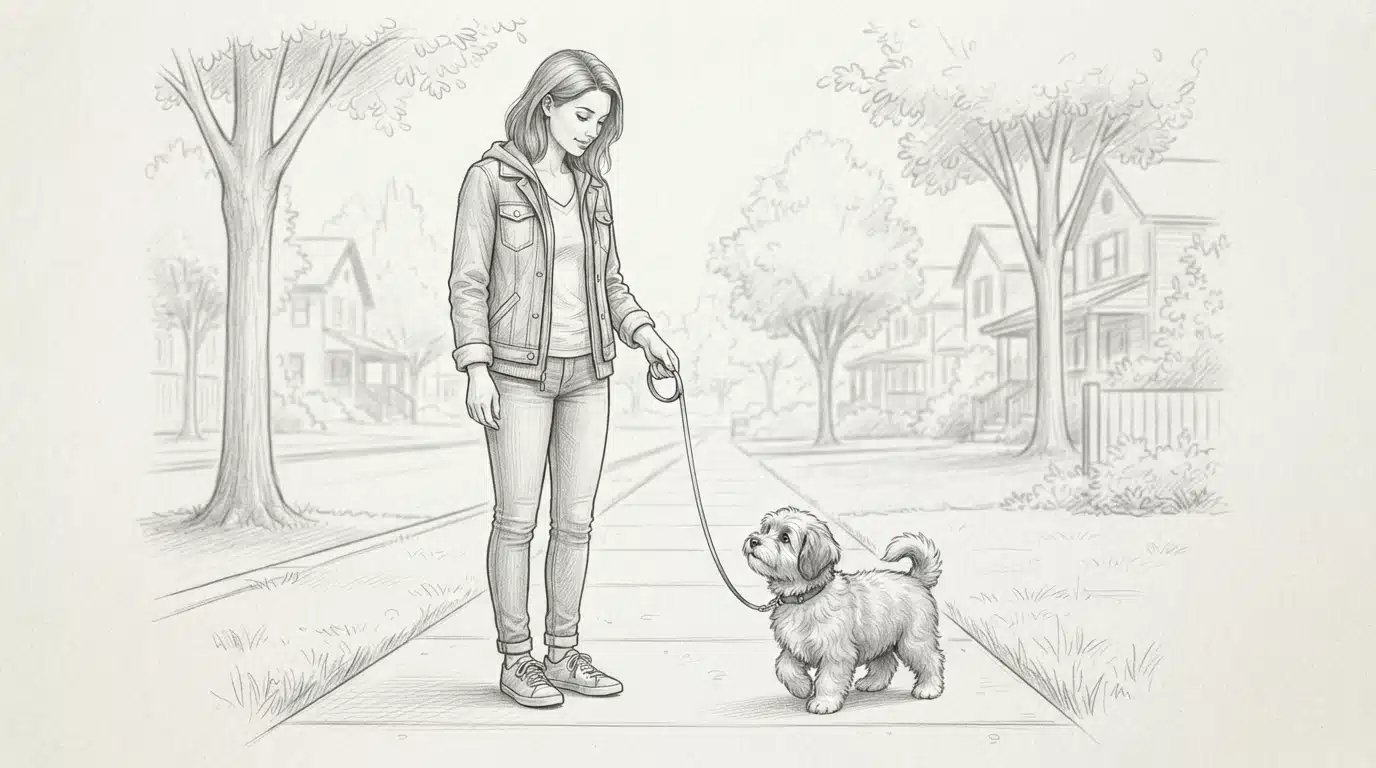
Small breeds like Havanese and Cavapoos learn loose-leash walking quickly because you can physically guide them. Harnesses fit easily, and a sudden lunge rarely knocks anyone over. Medium breeds need consistent leash skills from week one. A medium puppy who pulls at six months becomes a dog that drags you at 40 pounds, so start training earlier and reward calm walking more often. Young kids can safely hold a small dog’s leash, but an adult should always manage a medium breed.
House Manners and the “Small Dog Syndrome” Trap
“Small dog syndrome” is not a breed trait. It is what happens when owners skip training because the dog is easy to pick up and carry. Barking, nipping, and pushy behavior get laughed off in a 12-pound dog that would never pass in a 45-pound one. Hold your small puppy to the same rules you would set for a big one: four paws on the floor to greet people, a solid sit, and quiet on cue. Medium breeds rarely get this pass, which is one hidden advantage they have. Crate training and house training timelines are similar for both sizes; consistency matters more than pounds.
Manners With Visitors and Other Dogs
Medium puppies tend to overwhelm guests with enthusiasm, so teach a calm sit-stay before the door opens. Small breeds can turn yappy or protective without socialization. For either size, plan short, positive meetups with friendly adult dogs, and don’t rely on the dog park to do the socializing for you.
Family Fit: Kids, Rentals, Travel, and the Long View

Kids in the Home
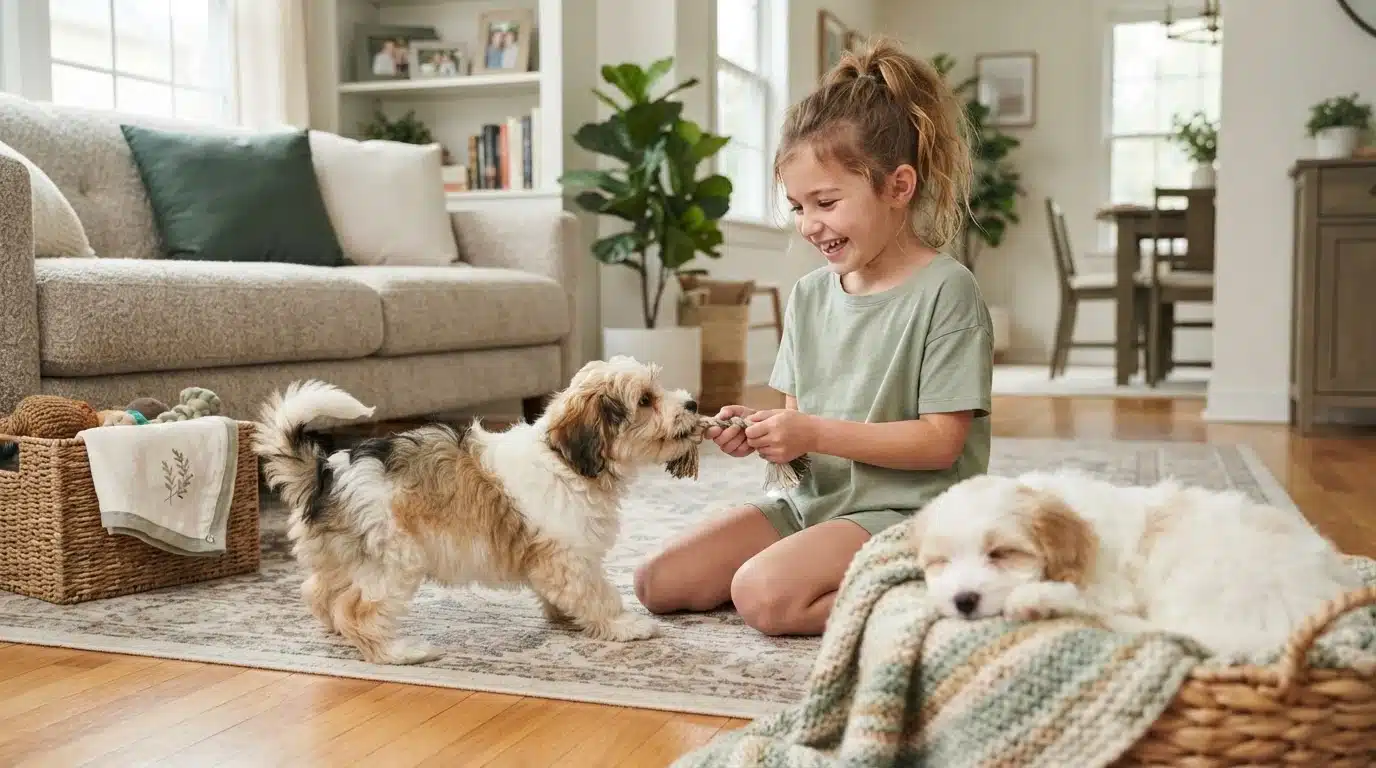
Small breeds usually do well with gentle, school-age kids, but their size cuts both ways. A 10-pound adult can be injured by a toddler’s hug, so supervise and teach calm handling. Medium breeds shrug off rougher play yet can knock over a four-year-old during zoomies. Match the dog to your youngest child’s habits, and give the puppy a kid-free retreat. Many breeders, including family-focused puppy programs, can tell you how a litter behaves around children.
Rentals, Travel, and Overnight Plans
Renting changes the math. Many landlords cap dogs at 25 to 50 pounds, so a medium breed may cost you a security deposit or a second pet fee. A dog under 22 pounds also fits an airline carrier, dog-friendly hotels, and a relative’s guest room. If you board often or travel with your pup, size matters more than breed charts suggest.
The 10 to 15 Year Question
A puppy is a 10 to 15 year commitment, so picture your life in a decade. Smaller homes, kids leaving for college, knee surgery: a dog you can lift will keep its independence longer. Medium breeds age faster on average and need more hands-on care late in life. Choose the size that fits the life you expect, not just the one you have.
Common Buyer Profiles, Matched to Size
Solo Apartment Renter
If your home is 700 square feet or less, start with a small breed. A pup under 22 pounds fits the space, and many landlords cap dogs at 25 to 50 pounds anyway, so a medium breed can get flagged before you apply. Small breeds also manage well on 30 to 45 minutes of daily activity, which fits a workday schedule. We keep this guide to apartment-friendly small breed picks focused on exactly this situation.
Family With School-Age Kids
Kids in the picture tip the scales toward sturdiness, not size alone. A medium breed in the 20 to 60 pound range usually tolerates rough play and backyard chaos better. But a calm small breed, like a Havanese, works well with children old enough to learn gentle handling. Match the dog’s temperament to your kids’ ages first, then sort out the space question.
Active Suburban or Rural Household
If you hike, run, or own acreage, a medium breed often earns its keep. Those dogs thrive on 60 to 90 minutes of exercise and love having a job. A small breed still fits if your pace is moderate and your yard is fenced.
Which Should You Choose: Small Breed Puppies or Medium?
When Small Is the Clear Pick
Go small if your space is tight, your schedule is packed, or your budget leans careful. A dog under about 22 pounds fits a 700-square-foot apartment, needs just 30 to 45 minutes of daily activity, and often stays under rental weight limits. Families with school-age kids get a dog the children can actually walk. Frequent travelers benefit too, since small dogs are easier to bring along. Longer lifespans of 12 to 16 years sweeten the deal.
When Medium Is the Better Fit
Choose medium if you have a yard, an active routine, or older kids who love rough play. Medium breeds handle 60 to 90 minutes of exercise and match families who hike, run, or spend long weekends outside. They also suit owners who want a sturdier dog for fetch, jogging, or guard-dog presence. Just confirm your rental allows larger weights first, since some landlords cap pets around 25 to 50 pounds.
If You’re Leaning Small, Read This Next
If small sounds right, the next step is choosing between breeds like Havanese, Havapoo, and Cavapoo. Each has its own coat, temperament, and grooming needs. Our guide to small breed puppies breaks down those differences so you can match a breed to your home with confidence.

If a small breed fits your home and routine, Sage Puppies can help you match with a Havanese, Havapoo or Cavapoo raised in South Jordan, Utah. Browse available puppies, review the pricing and reservation details, then start the application when you’re ready.
Frequently Asked Questions
Q1: small breed vs medium breed puppies which fits
Small breeds fit apartments, packed schedules, rentals with weight caps, and frequent travel. Medium breeds fit houses with yards, active routines, and older kids who play rough.
Q2: How much daily exercise does each size need?
Plan 30 to 45 minutes for a small breed and 60 to 90 minutes for a medium one.
Q3: Which size costs more in year one?
Medium breeds cost more: bigger food bills, larger gear, higher medication doses, and added boarding fees.
Q4: Are small breeds good with kids?
Yes, with gentle school-age children. Toddlers can injure a 10-pound dog, so supervise handling.
Q5: Which size lives longer?
Small breeds often reach 12 to 16 years; medium breeds average 10 to 13.
Q6: Does a small puppy still need full training?
Absolutely. Skipping training because a dog is easy to carry creates pushy, barky adults.
The Bottom Line
The size question comes down to three honest checks: your square footage, your daily schedule, and your year-one budget. Small breeds, those under about 22 pounds, fit apartments, rental weight caps, and 30 to 45 minutes of daily activity, and they often live 12 to 16 years. Medium breeds suit yards, active households, and older kids who play rough, at a higher cost in time and money. Match the size to the life you actually have, then choose the breed whose temperament fits your family.