Quick Summary: Small breed puppies typically live 12 to 16 years, which makes a $3,500 to $4,500 purchase price only about 10 to 15 percent of a lifetime budget that often hits $25,000 to $35,000 in baseline care alone. Costs break into predictable yearly spending (food at $150 to $400, routine vet visits, grooming at $400 to $800, dental cleanings) plus an unplanned track for emergencies and breed-linked issues like luxating patellas, tracheal collapse, and cataracts that can run thousands per incident. Insuring the puppy early or building a $2,000 to $3,000 emergency fund covers the surprise track, while medium-muzzled breeds like Havanese and Cavapoos tend to face fewer airway and eye problems than flat-faced or tiny toy breeds.
A small breed puppy lifespan often runs 12 to 16 years, so a $3,500 to $4,500 purchase price is really the first line in a budget that stretches across a decade or more. Most families never pencil out that number before they fall in love with a furry face.
That gap is the problem this guide solves. Small dogs live longer than large ones, which is wonderful news and a bigger financial commitment at the same time. Vet care, food, grooming and insurance keep arriving long after the initial cost fades from memory.
Below, we pair veterinary lifespan data with a simple two-track cost model, so you can see the whole picture before you choose. We breed Havanese, Havapoo and Cavapoo puppies in South Jordan, Utah, and we would rather our families plan for 16 happy years than be surprised by year three.
Small Breed Lifespan: What the Data Actually Shows
A small breed puppy lifespan usually lands between 12 and 16 years, but the numbers behind that range are worth reading closely. Studies of hundreds of thousands of dogs show that small, medium-nosed breeds live the longest, while size alone does not tell the whole story.
Why small dogs tend to outlive large dogs
Dogs run against the usual mammal rule. Across species, bigger animals live longer, yet within dogs the smallest breeds age more slowly and outlast giants by years. The AKC’s review of the research notes that large dogs appear to age faster at the cellular level, which helps explain the gap.
Size is not the only factor. A large UK study of more than 580,000 dogs found that small dogs with medium-length snouts had the longest median life expectancy, about 13.3 years, while flat-faced breeds averaged 11.2 years and carried a 40% higher risk of early death, according to coverage in The Conversation. Head shape and breeding choices matter as much as weight. That is why Havanese, Havapoo and Cavapoo lines, all medium-muzzled, sit in the favorable group.
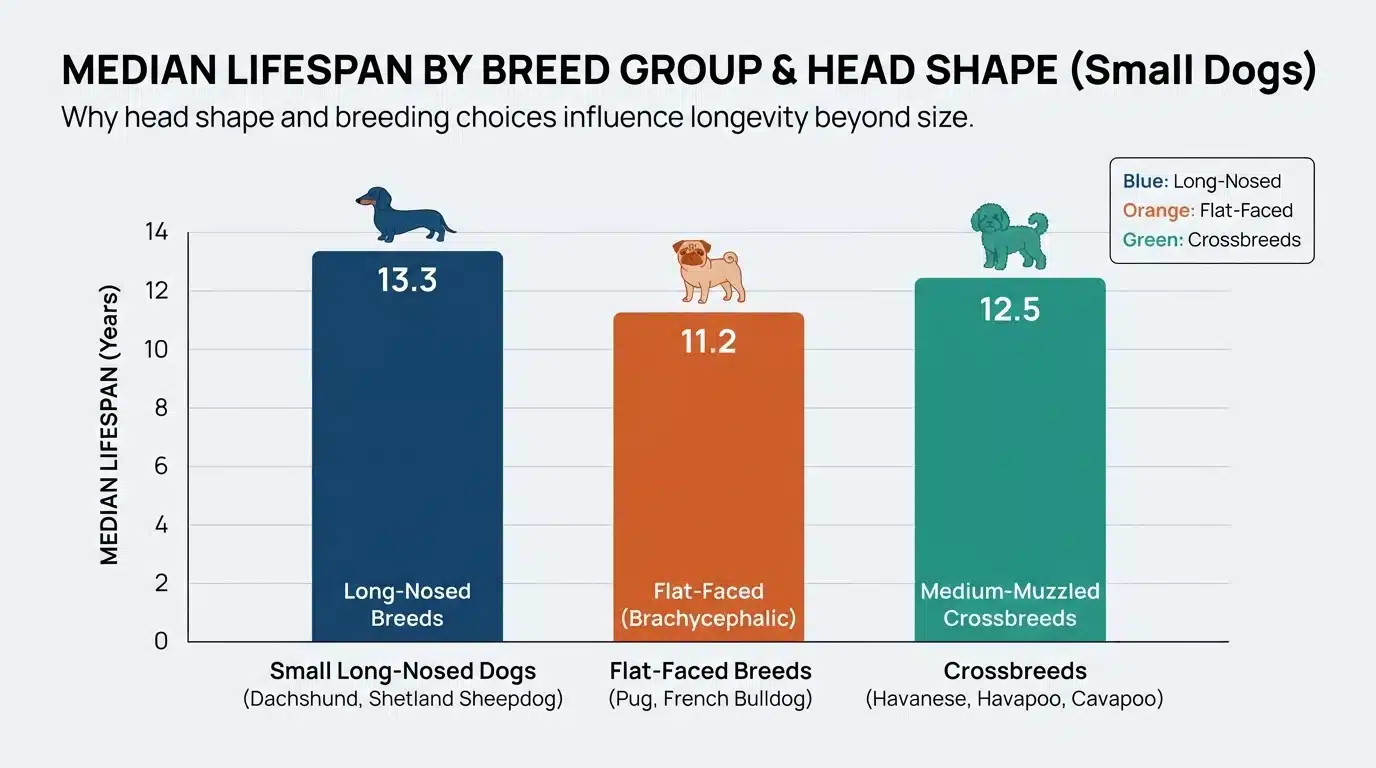
Median lifespans for popular small breeds
Averages vary by source and country, so treat these as ranges rather than promises. PetMD puts small breeds at 10 to 15 years overall, with several common companions well above that:
| Breed | Typical lifespan |
|---|---|
| Chihuahua | 14-16 years |
| Shih Tzu | 10-18 years |
| Pomeranian | 12-16 years |
| Yorkshire Terrier | 11-15 years |
| Cavalier King Charles Spaniel | about 11.8 years (median) |
The same study tracked crossbreeds at 12.0 years, slightly below purebreds at 12.7. For families comparing small companions, our apartment-friendly small breed picks group breeds with similar longevity profiles.
The Two-Track Cost Model: Baseline Care vs. Illness Care
A long small breed puppy lifespan means you will pay for care on two very different tracks. The first is steady and easy to plan. The second is the one that surprises families.
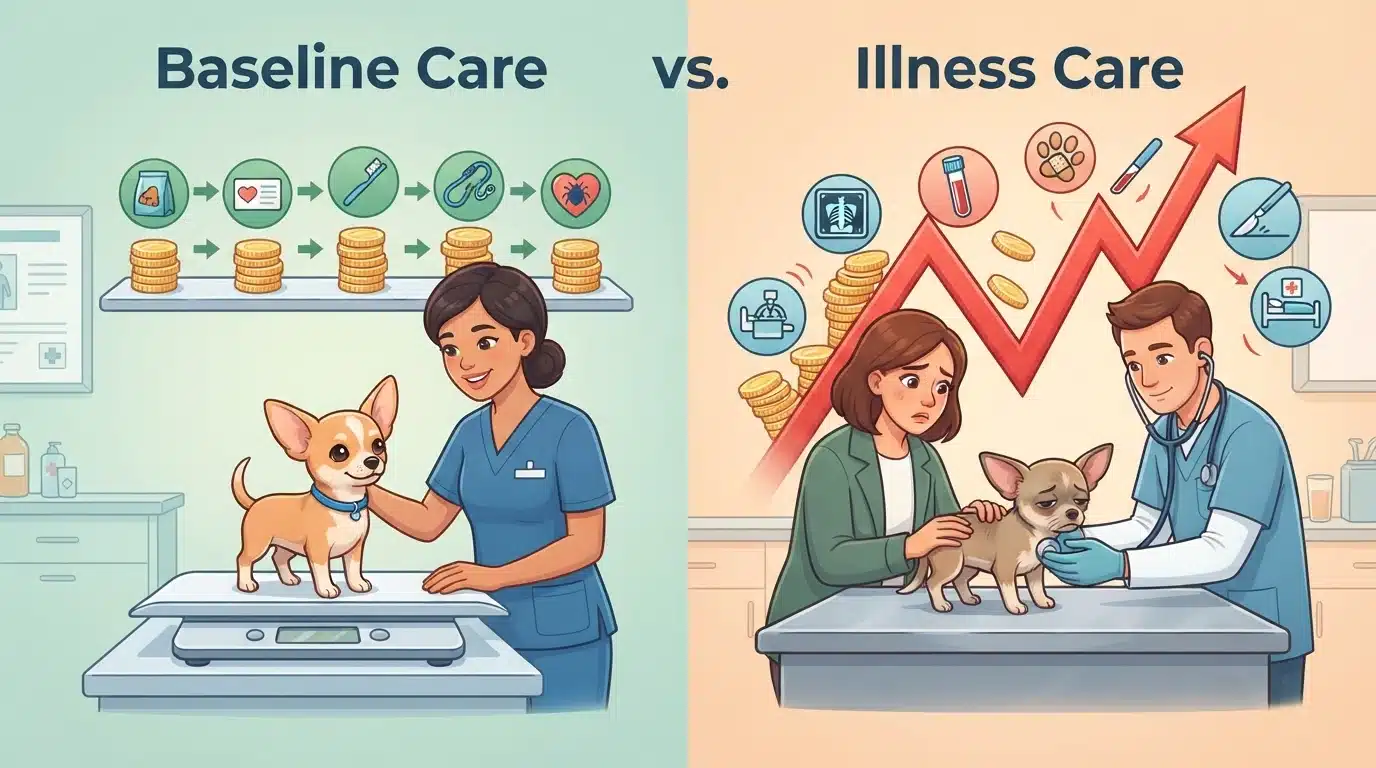
Predictable baseline care every year
Baseline care covers the spending you can forecast: food, routine vet exams, vaccines, parasite prevention, grooming, toys, and an occasional pet-sitter. The AKC puts average annual costs around $2,500 for food, grooming, checkups, and sitting, though small dogs usually land at the low end of that range. Rover’s 2026 estimate runs from $1,930 to $5,305 a year, with size and grooming needs driving the spread.
For a Havanese or a doodle mix, groom every six to eight weeks and budget $50 to $100 per visit. Over a 14-year life, baseline spending alone often totals $25,000 to $35,000. That makes the purchase price one of the smaller lines in the budget, not the biggest.
Illness, accident, and chronic-condition spending
The second track is unplanned. It includes ear infections, dental cleanings under anesthesia, torn ligaments, swallowed objects, and breed-specific risks like luxating patellas or heart disease. A single emergency visit can run $1,500 to $5,000, and ongoing management of a chronic condition adds hundreds each month.
You cannot predict these costs, but you can prepare for them. Pet insurance, an emergency fund of $2,000 to $3,000, or both cover the gap. Ask any breeder which conditions appear in their lines; at Sage Puppies we share health testing results before you commit.
Year-by-Year Cost Categories for a Small Breed
A purchase price is a one-time number. Everything below repeats, in some form, for 12 to 16 years. Breaking the budget into five categories makes it easier to see where the money actually goes, and where a small breed costs less than a big one.
Food and nutrition across the lifespan
Food is the category where small breeds win. A 10-pound Havanese eats a fraction of what a 70-pound Lab eats, so yearly food spending often lands between $150 and $400 instead of $700 or more. Puppies need a formula made for small mouths and frequent meals, adults do well on a steady maintenance diet, and seniors often benefit from food with joint support. Count three phases across the lifespan, not one flat bill. Because the dog lives so long, even modest annual food costs add up to $2,500 to $5,000 over 14 years.
Routine veterinary care and vaccinations
Year one is the most expensive veterinary year. A puppy series of exams and core vaccines, plus spay or neuter surgery, often runs $500 to $1,000. After that, plan on an annual wellness exam with boosters, roughly $200 to $400 per year, moving to twice-yearly visits once your dog becomes a senior. Small breeds need this steady care precisely because they live so long. The American Veterinary Medical Association recommends regular wellness exams for every dog, and prevention is far cheaper than treatment. Over a lifetime, routine care alone can total $3,000 or more.
Dental care and cleanings
Small breeds are famous for dental trouble because their teeth fit in a small jaw. Tight crowding traps plaque, so tartar builds fast. Daily brushing helps, but most small dogs still need a professional cleaning under anesthesia every one to three years. A single cleaning typically costs $500 to $1,000, and an extraction-heavy visit can pass $1,500. Budget roughly $300 to $500 per year across the lifespan so the bill never feels sudden. Skipping dental care is the costly choice, since untreated gum disease spreads infection to the heart and kidneys.
Grooming and skin care
A Havanese, Havapoo, or Cavapoo has hair that keeps growing, so grooming is not optional. Plan on a professional groom every six to eight weeks at $50 to $100 per visit, which matches the figure given earlier in this guide. That works out to $400 to $800 per year, or $6,000 to $11,000 over 14 years. You can cut the cost by learning to brush at home and stretch appointments, but a matted coat turns into a shave-down and sometimes a skin infection. Add shampoo, a slicker brush, and a metal comb to the starter budget.
Supplies, training, and pet-sitting
The first year carries a burst of one-time buys: a crate, a bed, a harness, bowls, and toys, often $300 to $600 total. A puppy class adds $100 to $300 and pays off in easier vet visits and walks. Then comes the recurring line people forget: pet-sitting and boarding. At $25 to $50 per night, two travel weeks a year can add $700 to $1,400 annually. Small breeds travel well, which helps, but the sitting line still belongs in every year of the budget.
If a line item in your plan surprises you, it belongs in the plan anyway. Surprises are what make dog budgets fail.
When comparing programs, it helps that Sage Puppies lists its purchase price openly, so families can spend their planning energy on these year-by-year costs instead.
Health Risks Common in Small Breeds and Their Cost Impact
A longer life gives small dogs more years to enjoy, but it also gives breed-linked problems more time to show up. Each condition below has two costs: the vet bill and the months of management that follow. Knowing which risks match your breed helps you budget honestly instead of hoping.

Musculoskeletal and patellar issues
Luxating patella, a kneecap that slips out of its groove, is the classic small-breed orthopedic problem. Toy breeds like Chihuahuas, Yorkies, and Pomeranians develop it often, and it ranges from a mild skip to a tearful limp that limits walks. Mild cases may need only joint supplements and weight control. Severe cases need surgery, which typically runs $1,500 to $3,000 per knee, and some dogs need both knees done. Legg-Calvé-Perthes disease, a hip joint problem in tiny breeds, usually requires surgery too. Ask breeders whether parents were screened.
Heart, airway, and tracheal conditions
Tracheal collapse affects small dogs whose windpipe rings soften over time. A dry honking cough is the usual first sign, and management often means harnesses instead of collars, weight control, and cough medication that adds up over years. Heart disease is the bigger number. Mitral valve disease is common in aging small dogs and especially in Cavalier King Charles Spaniels. Early stages need only monitoring, but advanced heart disease means daily medication, repeat echocardiograms, and cardiology visits that can reach $100 to $200 each. Flat-faced mixes may also face airway surgery, which runs into the thousands.
Eyes, ears, and skin
Small breeds carry a heavy load of eye trouble. Cataracts, dry eye, and progressive retinal atrophy all appear in toy and companion breeds, and cataract surgery can cost $3,000 or more per eye. Drop-eared and hairy-eared dogs, including doodle mixes, also get ear infections that recur without regular cleaning, adding $150 to $300 per treated flare-up. Skin allergies round out the list, often needing ongoing medication. Havanese and their mixes tend toward healthy eyes and ears, which is one reason parent screening matters when you choose a breeder.
Insurance, Savings, and How to Plan a Lifetime Budget
Pet insurance options for small breeds
Pet insurance pays a set share of vet bills after your deductible. Monthly premiums for small breeds often run $20 to $45, and accident-only plans cost less than accident-and-illness coverage. Because these dogs live 12 to 16 years, an illness plan usually makes more sense than accident-only. Read the fine print on pre-existing conditions, since most plans exclude anything diagnosed before enrollment. Signing up while your puppy is young locks in lower rates and keeps the health record clean.

Building a pet emergency fund
If insurance feels like a stretch, a dedicated savings account works too. Aim for $2,000 to $3,000, which covers a single emergency visit that can run $1,500 to $5,000. Set an automatic transfer of $50 to $100 a month and the fund builds itself in two to three years. Keep it in a separate account so a vacation budget never raids it. Some families do both: a modest fund for small bills, insurance for the five-figure disasters.
End-of-life and senior care planning
Senior small dogs often need more vet visits, bloodwork, and daily medication for arthritis or heart conditions. That chronic care can add hundreds each month, so it belongs in your budget now, not later. Plan ahead for final costs too. Hospice care, euthanasia, and cremation typically run $500 to $2,000 depending on your area and the options you choose. Ask your vet for a senior care estimate around year ten, and adjust your monthly savings before the bills arrive rather than after.
Placing the Puppy Price Inside the Lifetime Total
What the $3,500 to $4,500 purchase actually covers
That range reflects a well-bred puppy from a program like Sage Puppies, and it covers the breeding, care, and early raising behind that puppy, not the years ahead. Exactly what a purchase includes varies by breeder, so ask for the written terms before you commit. Our pricing and reservation page lays out how deposits and travel are handled separately from the puppy price, which is a good model for comparing any program.
Putting it in proportion to lifetime spend
Set the purchase against the totals above. Baseline spending over a 14-year life often reaches $25,000 to $35,000, so the puppy price is roughly 10 to 15 percent of the whole. It is a one-time line, but planning for the recurring ones is what keeps the budget honest.

A 14-year budget is easier to plan when you know the puppy at the start of it. Sage Puppies matches Havanese, Havapoo, and Cavapoo families through a clear, owner-run process. See our available puppies and apply when you’re ready to plan for the long, happy years ahead.
Frequently Asked Questions
Q1: Small breed puppy lifespan and lifetime health costs
Most small breeds live 12 to 16 years. Baseline spending often totals $25,000 to $35,000 over 14 years, with emergencies and chronic care on top. A well-bred puppy from Sage Puppies costs $3,500 to $4,500, roughly 10 to 15 percent of the lifetime total.
Q2: Is pet insurance worth it for a small breed?
Usually yes. Illness plans run $20 to $45 monthly, and these dogs live long enough that illness coverage beats accident-only.
Q3: Which small breed health issue costs the most?
Cataract surgery can exceed $3,000 per eye, and patella surgery runs $1,500 to $3,000 per knee.
Q4: How much should I save for a dog emergency?
Keep $2,000 to $3,000 in a separate account, built by automatic $50 to $100 monthly transfers.
Q5: Why do small breeds need more dental care?
Crowded teeth in small jaws trap plaque, so most need professional cleanings every one to three years.
Q6: What’s the cheapest breed trait for food costs?
Small size. A 10-pound dog eats far less, often $150 to $400 yearly.
Q7: When should I plan for senior care costs?
Budget now. Ask your vet for a senior estimate around year ten, then adjust savings.
Conclusion
Small breeds give you the longest stretch of dog years, often 12 to 16 of them, and that gift shapes the whole budget. The purchase price of $3,500 to $4,500 is only 10 to 15 percent of a lifetime total that often reaches $25,000 to $35,000 in baseline care, with dental work, grooming, senior care, and emergencies on top. Two habits keep the plan honest: insure or save early, and ask breeders about health testing in their lines. Plan for the whole number, and the longest years become the best ones.